
Which Affiliate Channels Convert Best? (Top 5 Ranked)
Discover the top 5 affiliate channels that convert best in 2026. We rank the highest-paying networks based on tracking reliability, EPC, and merchant quality.

Most affiliate marketers start their journey the exact same way: they sign up for two dozen different individual programs, paste a messy spreadsheet of links together, and hope the passive income rolls in. Six months later, they are suffering from severe "dashboard fatigue." They have generated $12 in one portal, $40 in another, and haven't hit the minimum $100 payout threshold anywhere.
The hard truth about performance marketing in 2026 is that generating traffic is only half the battle. If you are sending your hard-earned clicks to poorly optimized, leaky merchant funnels managed on outdated tracking software, you are burning money.
This is why seasoned marketers consolidate their efforts into high-converting affiliate channels—centralized networks that host thousands of merchants, guarantee reliable cookie tracking, and combine your commissions into a single monthly payout.
But not all networks are created equal. Some boast massive directories but suffer from dismal conversion rates. Others have strict entry requirements but offer EPCs (Earnings Per Click) that can triple your revenue. In this guide, we will break down exactly which affiliate channels convert best in 2026, how to evaluate them, and which platforms align perfectly with your specific niche.
Affiliate Channel vs. Affiliate Program: The Crucial Distinction
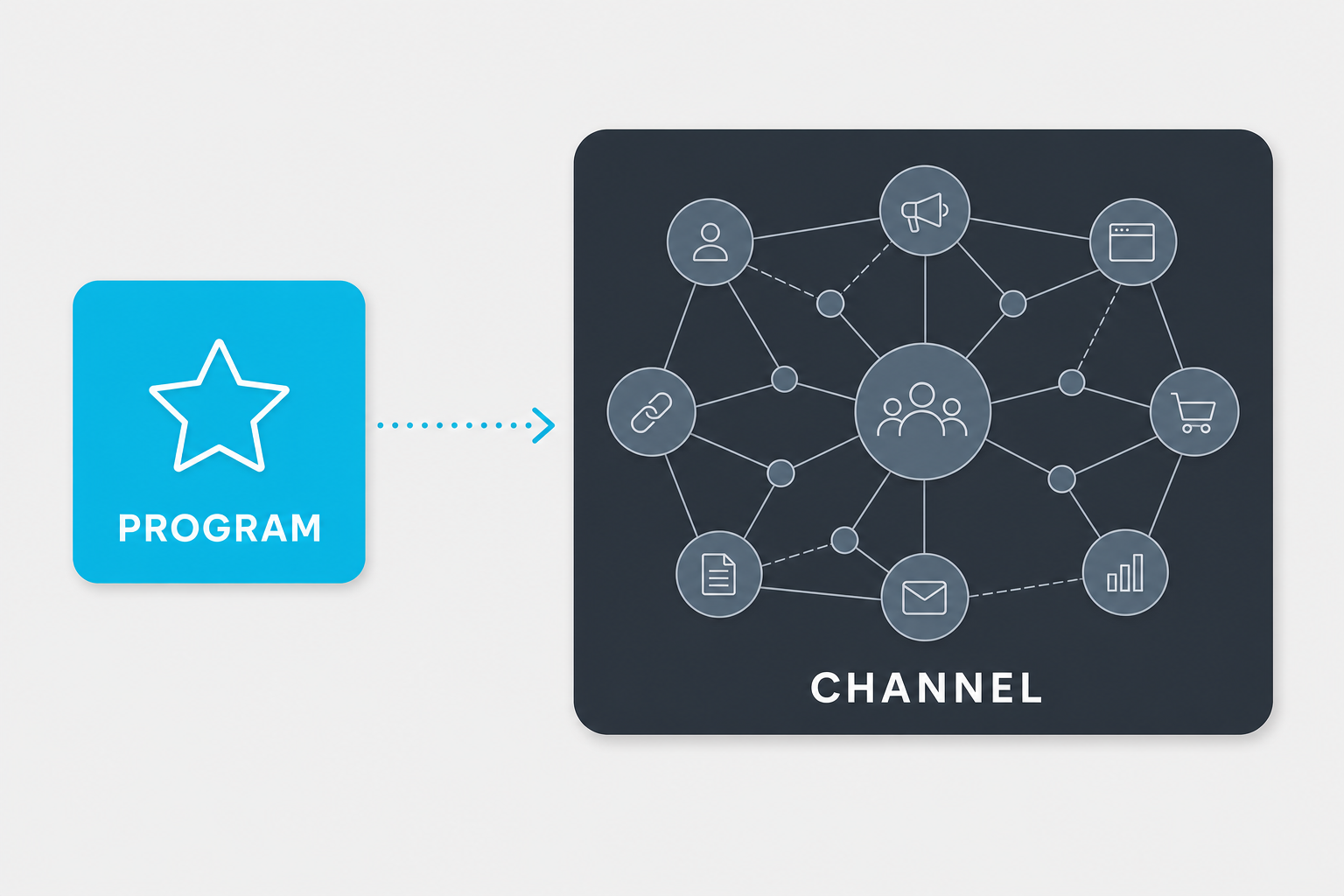
Before diving into the rankings, we need to clarify the terminology. Many beginners use "affiliate program" and "affiliate network" interchangeably, which leads to strategic mistakes when monetizing a site.
The Affiliate Program (The Store)
An affiliate program is a specific revenue-sharing arrangement created by a single brand or merchant. For example, a web hosting company might offer $50 for every customer you refer to them. If you join their direct program, you log into their specific dashboard, use their specific links, and only earn money when promoting their specific products.
The Affiliate Network or Channel (The Mall)
An affiliate network (often referred to as an affiliate channel) is a centralized marketplace that acts as an intermediary between publishers (you) and advertisers (the brands). Think of it as a digital shopping mall. Instead of signing separate contracts with 50 different stores, you sign up for the mall. Once inside, you can access tracking links for hundreds of brands from a single dashboard.
(Note: In the context of digital marketing, this is entirely distinct from a traditional broadcasting network affiliate, which refers to local television or radio stations carrying main network programming).
Why Merchants Use Networks
Brands often prefer to host their programs on established networks rather than building their own tracking software from scratch. Managing payouts, tax forms, and fraud detection is incredibly resource-intensive. You will frequently see e-commerce founders on forums asking how to recruit partners, like this discussion on finding affiliates to sell products. For these merchants, joining an established network provides immediate access to a pool of vetted marketers.
Why Consolidation is the Key to Better Conversions in 2026
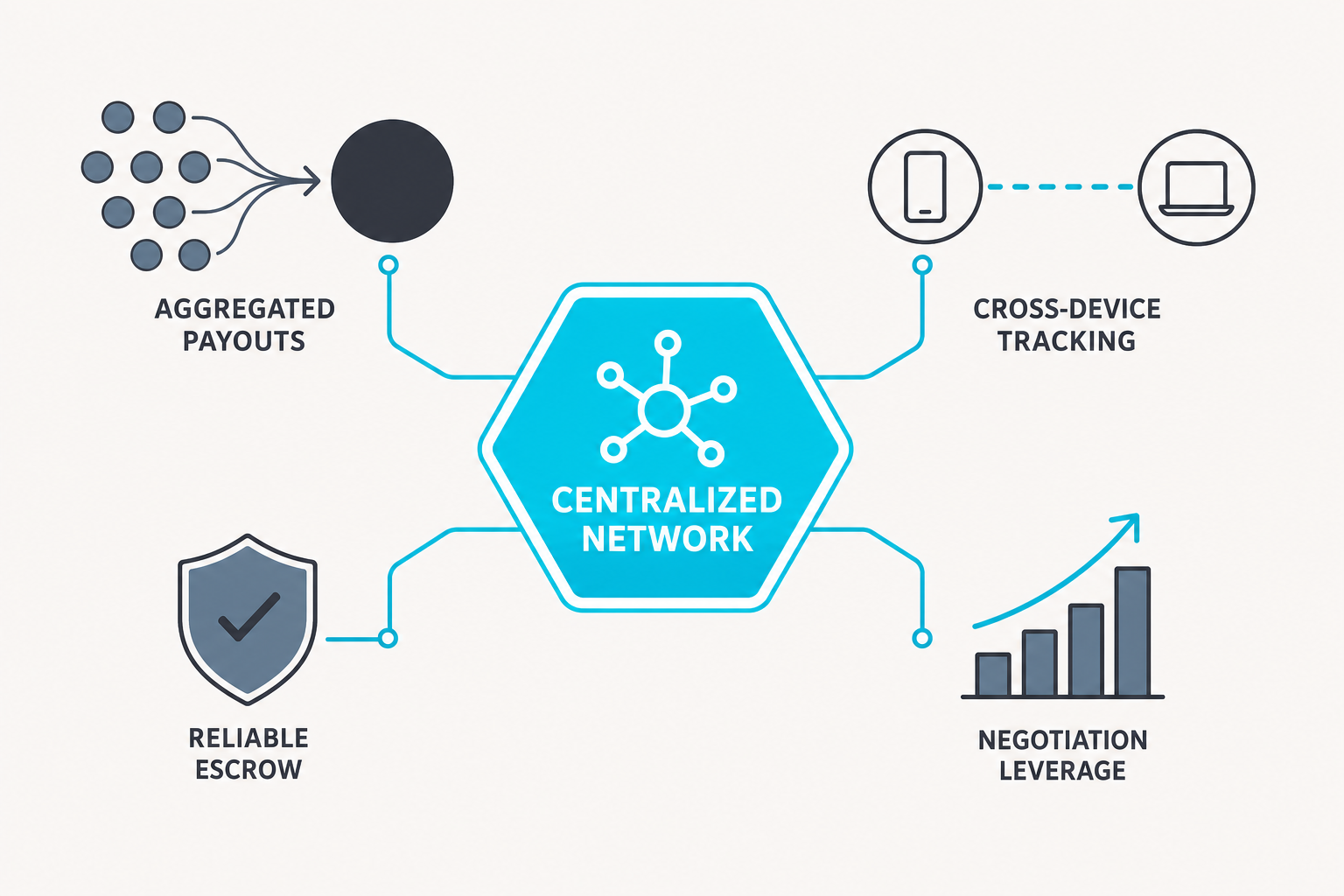
Why should you care whether a merchant uses a network or an in-house program? Because networks directly impact your effective conversion rate and your cash flow. Here is why top marketers push their traffic toward established affiliate channels:
- Aggregated Payout Thresholds: If a network requires a $50 minimum payout, your commissions from all merchants on that network pool together to help you reach that threshold faster.
- Advanced Cross-Device Tracking: Leading networks invest millions into cookieless tracking, fingerprinting, and cross-device attribution. If a user clicks your link on their phone and buys on their laptop two days later, premium networks will accurately attribute that sale to you. Cheap in-house tracking software often loses that conversion entirely.
- Reliable Payment Schedules: Individual merchants can sometimes delay payments due to internal cash flow issues. Major networks act as an escrow buffer, ensuring you get paid on time, every time.
- Negotiation Leverage: When you drive significant volume through a single network, your "Network Earnings Score" increases. This score acts as a trust signal, allowing you to negotiate higher VIP commission tiers with other merchants on the same platform.
The Evaluation Framework: How We Ranked the Best Affiliate Platforms
To determine which channels genuinely convert the best, we cannot just look at the size of their merchant directory. A network with 20,000 terrible merchants is useless to a serious publisher. We evaluated the top platforms using the following strict criteria:
- Tracking Reliability (The Leakage Rate): How robust is their attribution technology? Do they support server-to-server (S2S) tracking to bypass ad blockers?
- Merchant Quality: Are the brands recognizable? High-trust brands convert at significantly higher rates than unknown entities.
- EPC Transparency: Does the platform show you the 7-day or 30-day Earnings Per Click for a merchant before you apply? This data is critical for predicting your own conversion rates.
- User Experience (UX) and Link Tools: Can you easily generate deep links? Do they offer APIs or browser extensions for quick link creation?
- Payment Terms: How quickly are commissions locked and paid out (Net-30, Net-60)?
Based on these criteria, here are the top 5 affiliate channels that drive the highest conversion rates and revenue for publishers in 2026.
Top 5 Affiliate Channels Ranked for High Conversions (2026)
1. Impact (impact.com)
The Undisputed King of SaaS and Modern E-Commerce
Impact has aggressively captured market share over the last few years by positioning itself as a "partnership automation" platform rather than a legacy affiliate network. If you are promoting modern tech tools, DTC (Direct-to-Consumer) brands, or subscription services, Impact is likely where those programs are hosted.
Impact boasts one of the most sophisticated tracking engines in the industry, making it the best affiliate marketing platform for brands, publishers, and agencies looking for highly accurate cross-device attribution.
- Best For: B2B software, DTC brands, finance, and travel.
- The Conversion Advantage: Impact allows for highly flexible contract terms. You can negotiate custom attribution models (e.g., getting paid for a newsletter sign-up even if the user doesn't buy immediately). Their interface is clean, making it incredibly fast to generate deep links and pull performance reports.
- Pros: Outstanding tracking technology; direct communication with affiliate managers via the platform; robust custom reporting.
- Cons: The sheer number of contract variables can be overwhelming for total beginners.
2. PartnerStack
The B2B SaaS Powerhouse
If your audience consists of digital entrepreneurs, freelancers, or small business owners, PartnerStack is a goldmine. While other networks focus heavily on retail, PartnerStack built its entire infrastructure around B2B SaaS (Software as a Service).
Software conversions are fundamentally different from retail. A user might sign up for a free trial today but not upgrade to a paid plan for 45 days. PartnerStack is engineered to track these long sales cycles flawlessly.
- Best For: Marketers in the business, marketing, HR, and tech niches.
- The Conversion Advantage: PartnerStack heavily features recurring lifetime commissions. Instead of a one-time 10% payout on a pair of shoes, you can earn 20-30% of a software subscription every single month for the life of that customer. While initial conversion rates on high-ticket software might look lower on paper, the Customer Lifetime Value (CLV) and effective EPC blow retail out of the water.
- Pros: Massive focus on recurring revenue; integrated marketing assets and training directly from the merchants.
- Cons: Very niche-specific. If you blog about fitness or cooking, PartnerStack has almost nothing for you.
3. ShareASale (An Awin Company)
The Best All-Rounder for Content Creators
ShareASale has been a cornerstone of the affiliate marketing industry for over two decades. While its interface famously looks like it hasn't been updated since 2012, beneath that retro dashboard lies one of the most reliable and transparent networks in the world. It is particularly strong for bloggers and niche site owners promoting physical products.
- Best For: Bloggers, Pinterest marketers, and creators in lifestyle, home goods, fashion, and hobby niches.
- The Conversion Advantage: ShareASale's "Power Rank" metric is legendary. It clearly displays the top 100 performing merchants on the platform at any given time. Furthermore, they are fiercely transparent about a merchant's EPC, average order value, and reversal rate (how often the merchant cancels a commission due to returns). This allows you to filter out poorly converting brands before you waste a single click on them.
- Pros: Incredible transparency on merchant metrics; low $50 payout threshold; highly reliable Net-30 payment schedule.
- Cons: The UI is clunky; finding high-quality merchants requires sifting through thousands of low-tier offers.
4. CJ Affiliate (Formerly Commission Junction)
The Enterprise Heavyweight
When Fortune 500 companies want to launch an affiliate program, they usually go to CJ Affiliate. This network is home to the biggest names in travel, big-box retail, and enterprise technology.
- Best For: High-traffic publishers, large media buyers, and established authoritative websites.
- The Conversion Advantage: Brand trust is the highest conversion multiplier. It is significantly easier to convince a reader to buy a laptop from Best Buy or book a flight through Expedia (both of which have historically used CJ) than to buy from an unknown brand. The conversion friction is virtually zero because the user already trusts the merchant's checkout process.
- Pros: Unmatched roster of premium, globally recognized brands; excellent cookieless tracking technology.
- Cons: Extremely strict entry requirements. If you do not generate sales within your first six months, CJ will routinely deactivate your account. It is not a beginner-friendly channel.
5. Rakuten Advertising
The Global Retail Specialist
Rakuten Advertising (formerly LinkShare) operates on a slightly different model than ShareASale or Impact. They host a smaller, more heavily curated list of merchants, but those merchants are typically massive global brands (think New Balance, Sephora, or Microsoft).
- Best For: Global affiliates, high-end fashion and beauty influencers, and coupon/cashback sites.
- The Conversion Advantage: Rakuten provides some of the best dynamic ad technology in the business. Their tools allow publishers to serve highly optimized rotating creatives that match the user's browsing context, which can significantly lift click-through and conversion rates.
- Pros: Deep linking tools are exceptional; highly curated merchant list means less junk to filter through.
- Cons: Notoriously slow payment schedules (often Net-60 or Net-90, as they wait for the merchant to pay them before paying you).
At-a-Glance Comparison: Top 5 Affiliate Channels
| Affiliate Channel | Primary Focus / Niche | Best For Traffic Level | Avg. Payout Threshold | Top Conversion Feature |
|---|---|---|---|---|
| Impact | SaaS, DTC, Tech | Intermediate to Pro | $10 | Flexible attribution rules and modern UI. |
| PartnerStack | B2B Software | Beginner to Pro | $25 | Best for long-cycle, recurring revenue tracking. |
| ShareASale | Retail, Lifestyle, Hobbies | Beginner to Pro | $50 | Transparent EPC and "Power Rank" data. |
| CJ Affiliate | Enterprise, Big Box Retail | Advanced / High Traffic | $50 | Massive brand trust reduces checkout friction. |
| Rakuten | Global Brands, Fashion | Advanced | $50 | High-quality dynamic ad creatives. |
Niche-Specific Winners: Choosing a Channel by Category
General networks are great, but depending on your specific content vertical, you might need to tap into highly specialized channels to find the best converting offers.
1. Web Hosting & WordPress Ecosystem
The web development and hosting niche is notoriously lucrative, offering massive CPA (Cost Per Action) payouts. If you are writing about site building, you will frequently be dealing with in-house programs or specialized networks.
For example, promoting premium page builders is a high-converting strategy. Elementor is the leading WordPress website builder, powering over 21 million sites, and they maintain a highly competitive affiliate structure. When promoting tools in the WordPress ecosystem, your audience is highly motivated by performance and ease of use, making detailed tutorials the highest-converting content format. Many top-tier hosting companies manage their own direct programs using software like Post Affiliate Pro to maintain strict quality control over their brand image.
2. Mobile & App Installs
If your audience consumes content on mobile devices, promoting desktop software is a fool's errand. You need networks that specialize in Cost-Per-Install (CPI) or mobile CPA.
Platforms specializing in this space are entirely different beasts, focusing on high-volume, low-friction conversions (like downloading a free game). For a deep dive into the top affiliate networks operating in the app ecosystem, you will look at specialized performance channels that prioritize rapid tracking and global mobile traffic optimization.
3. Financial Services & Crypto
The finance niche requires immense trust. Networks like Fintel Connect or Impact (which hosts many fintech brands) are essential here. Financial compliance is incredibly strict; you cannot afford to use a network with sloppy reporting, as regulatory bodies monitor these promotions closely. Conversions in finance rely heavily on detailed comparison tables and clear, compliant disclosures.
The "Hidden" Metrics: How to Evaluate Offers Inside a Network
Once you join a top-tier channel like ShareASale or Impact, the work isn't over. You still have to choose which merchants to promote. Beginners usually make a fatal mistake: they sort the merchant directory by "Highest Commission Percentage" and apply to the top results.
A 50% commission on a product that never converts equals $0. A 5% commission on a product that converts wildly can make you a full-time income. Here is the framework for evaluating offers inside a network:
1. EPC (Earnings Per Click)
This is the holy grail metric. EPC tells you exactly how much money an average affiliate makes for every 100 clicks they send to the merchant.
- Example: If a merchant has a $40 EPC, it means every click sent to them is worth $0.40 on average. Always prioritize high EPC over high commission percentages.
2. The Reversal Rate
Networks will show you how often a merchant reverses a commission. High reversal rates usually mean the merchant has terrible customer service, a high return rate, or is aggressively declining affiliate sales to save money. Avoid any merchant with a reversal rate higher than 10%.
3. Cookie Duration
The cookie duration dictates how long you have to earn a commission after a user clicks your link.
- Physical products: 30 days is standard. Amazon Associates notoriously offers only 24 hours, which is why converting Amazon traffic requires immense volume.
- Software/SaaS: Look for 60 to 90 days. B2B software decisions require multiple touchpoints and committee approvals.
4. Mobile Optimization (The Checkout Test)
Before applying to any program inside a network, open their landing page on your smartphone. Add a product to the cart and go to checkout. If the checkout process is clunky, requires creating an account before showing the price, or doesn't support Apple Pay/Google Pay, do not promote them. You will send them thousands of clicks, and mobile users will bounce at the checkout screen.
How to Get Approved on Premium Affiliate Channels
Networks like CJ Affiliate and Impact do not accept everyone. They actively purge low-quality affiliates to protect their merchants. If you are struggling with auto-rejections, follow this approval checklist:
- Use a Custom Domain Email: Never apply using a
@gmail.comor@yahoo.comaddress. Apply withyourname@yourdomain.com. It instantly signals professionalism. - Have Minimum Viable Content (MVC): Do not apply with an empty website. You need at least 15-20 high-quality, published articles that directly relate to the merchants you want to promote.
- Publish Clear Legal Pages: Affiliate channels will scan your site for a Privacy Policy, Terms of Service, and a clear FTC Affiliate Disclosure. If these are missing, you will be rejected automatically.
- Define Your Promotional Methods: When the application asks how you intend to promote their brands, be specific. Don't just say "SEO." Say: "I generate 10,000 monthly organic pageviews through informational SEO content targeting bottom-of-funnel queries like 'best CRM for plumbers'. I use contextual text links and comparison tables to drive conversions."
The "Direct Program" Dilemma and How to Bypass Directory Clutter
While joining the top 5 networks is essential, relying only on them can leave money on the table. Many incredibly lucrative SaaS tools and digital platforms choose to run their own independent programs using software like Rewardful or FirstPromoter.
The problem? Finding these direct programs is exhausting. Most "top affiliate program" blog posts are wildly outdated, listing commission rates from three years ago or linking to dead pages.
This is where a specialized tool like AffiliList becomes invaluable to your workflow. Instead of hunting through Google or signing up for random networks just to peek at their merchant lists, AffiliList serves as a comprehensive, streamlined directory of over 10,000 curated affiliate programs.
By focusing heavily on SaaS and digital tools, AffiliList allows you to bypass the clutter. You can instantly filter programs by commission percentages, payout terms, and specific niches without jumping through sign-up hoops. It bridges the gap between massive, generalized networks and the high-converting, niche-specific direct programs you need to maximize your revenue.
Frequently Asked Questions (FAQ) About Affiliate Channels
How do affiliate platforms actually track my sales?
When you generate a link inside a channel like Impact or ShareASale, it contains a unique ID. When a user clicks it, the network places a small file (a cookie) on the user's browser. If the user completes a purchase on the merchant's site before that cookie expires, the merchant's checkout page pings the network, reading your ID and crediting your account.
Can I join multiple affiliate networks at the same time?
Absolutely. In fact, it is required for diversification. You might use PartnerStack for your software recommendations, ShareASale for physical lifestyle products, and a few direct programs discovered via AffiliList for specialized digital tools. Just ensure you organize your links using a centralized link management plugin (like ThirstyAffiliates or Lasso) to avoid chaos.
What is the difference between CPA and RevShare?
CPA (Cost Per Action) pays you a flat fee when a specific action occurs (e.g., $100 for a new credit card sign-up). RevShare (Revenue Share) pays you a percentage of the sale amount (e.g., 20% of a $50/month software subscription). High-ticket software often uses RevShare, while financial and service-based programs typically use CPA.
Are there affiliate platforms that review and list the best programs?
Yes. While networks host the programs, directory sites aggregate data about them to help you choose. You can often consult databases like Affiliate.Watch or utilize the streamlined, SaaS-focused filtering of AffiliList to discover and compare program metrics transparently before committing your traffic.
Your Next Steps for Monetization
The landscape of affiliate marketing has matured. You can no longer slap generic Amazon links onto a mediocre blog post and expect a full-time income. Winning in 2026 requires strategic partnerships.
If you are just starting, register for ShareASale to get comfortable with dashboards, links, and physical product promotions. If your content focuses on business, tech, or digital tools, fast-track your applications to Impact and PartnerStack.
Treat your affiliate links like the highly valuable real estate they are. Audit your existing content, identify where your traffic is bleeding out through poor-converting direct programs, and start routing those clicks through the high-performance channels that actually respect your traffic.