
Affiliate Marketing Management: What It Is (2026 Guide)
Discover what affiliate marketing management is in 2026. Learn how to recruit partners, set commissions, and scale high-converting affiliate programs.

Setting up a partner program is easy. Generating actual, sustainable revenue from it is an operational grind. Too many brands generate a referral link, add an "Affiliates" page to their website footer, and assume passive income will inevitably flow. That is not management. That is simply hoping for the best.
In 2026, the "build it and they will come" model is obsolete. The digital market is saturated, and the highest-converting creators have hundreds of partnership options at their fingertips. To win their attention, you need active, strategic affiliate marketing management.
Whether you are a SaaS founder looking to scale customer acquisition, an entrepreneur exploring affiliate marketing jobs, or a content creator wanting to understand how the other side operates, this guide breaks down exactly what affiliate management entails, the daily workflows involved, and the proven strategies for building a profitable partner network.
What is Affiliate Program Management?
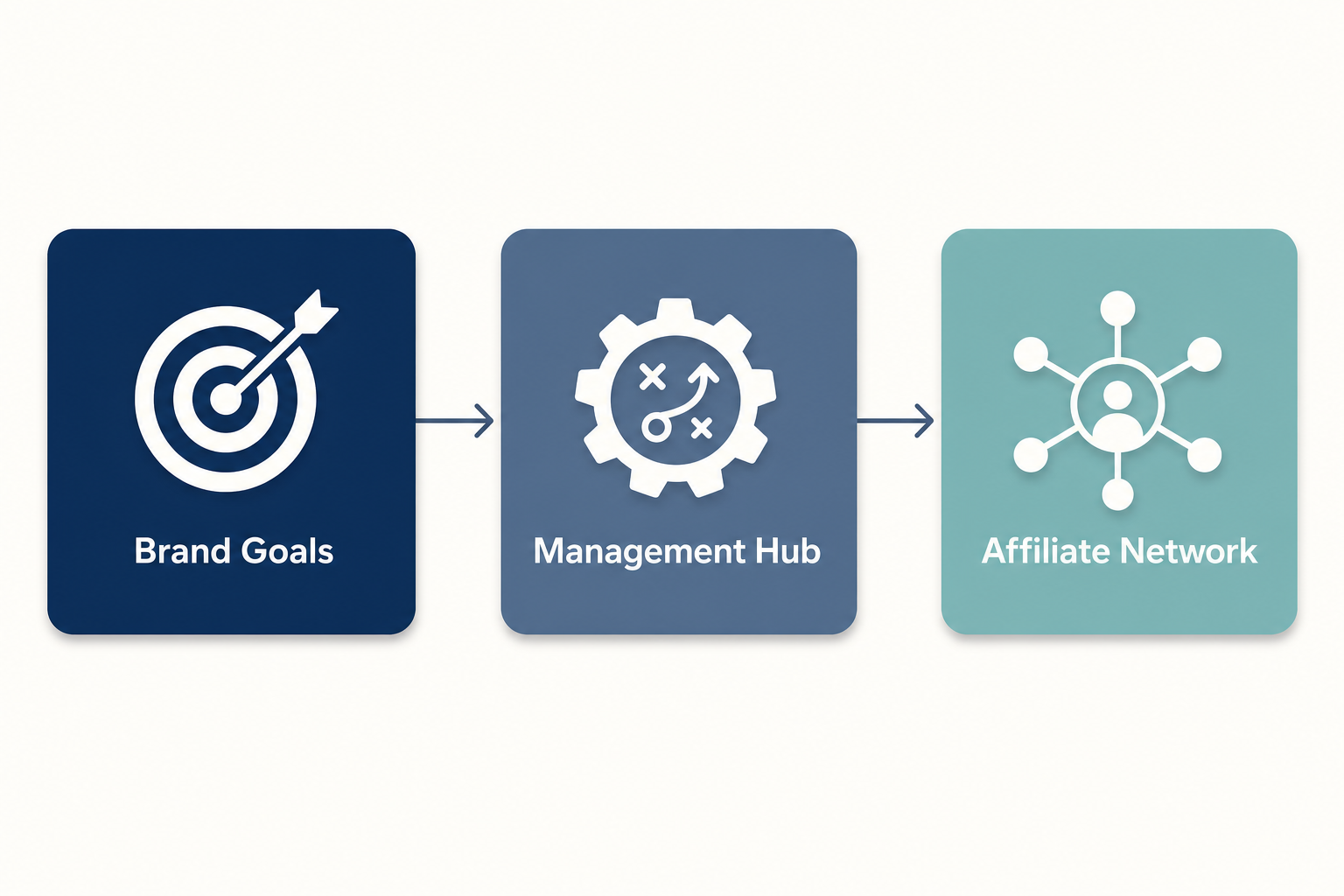
Affiliate program management is the active, ongoing process of overseeing a brand's performance-based marketing network. It bridges the gap between a company's sales objectives and the external marketers who promote the company's products.
At its core, affiliate management is a specialized form of business development. It involves identifying potential partners, negotiating commission structures, providing marketing assets, tracking performance data, and ensuring brand compliance. The ultimate goal is to generate profitable customer acquisition while maintaining a high return on investment (ROI).
If you treat your affiliate program like a hands-off experiment, it will fail. Active management turns a static link into a scalable marketing channel.
The Myth of Passive Income
A common misconception is that an affiliate program runs itself once the tracking software is installed. The reality is quite different. Experienced affiliate managers act as a hybrid of sales professionals and account managers. They spend the majority of their time prospecting, negotiating, and relationship-building. A well-managed program relies on continuous optimization, not a "set it and forget it" mindset.
What Does an Affiliate Manager Do?
The day-to-day responsibilities of an affiliate manager go far beyond approving applications and sending monthly payouts. The role demands a diverse skill set ranging from data analysis to interpersonal communication.
Here are the core pillars of an affiliate manager's daily workflow:
Strategic Recruitment and Onboarding
The most critical function of management is finding the right people to promote the product. Managers actively scout for niche bloggers, industry influencers, and media buyers whose audiences align with the brand's target demographic. Once a partner is identified, the manager guides them through the onboarding process, ensuring they understand the product value proposition and have access to their unique tracking links.
Compelling Incentive Structures
Not all affiliates are motivated by the same rewards. A core management task involves designing commission tiers that drive desired behaviors. This might mean setting up recurring commissions for SaaS products, offering performance bonuses for high-volume partners, or providing exclusive discount codes. Managers constantly analyze margins to ensure the program remains profitable for the brand while staying competitive in the market.
Ongoing Relationship Management
Affiliates are essentially an external sales force. Like any sales team, they need motivation, education, and support. Managers host regular check-ins, send out newsletters detailing upcoming product launches, and troubleshoot technical issues. If a top-performing partner suddenly stops driving traffic, a good manager intervenes immediately to discover why and offer custom solutions to win them back.
Reliable Technology and Tracking
Without accurate tracking, an affiliate program collapses. Managers oversee the technological infrastructure that records clicks, attributes sales, and calculates payouts. They monitor the dashboard daily to spot anomalies, detect fraudulent activity, and ensure that partners are credited fairly for their conversions.
Managing Different Types of Affiliate Marketers
A one-size-fits-all approach to communication will alienate your best partners. Effective management requires segmenting your network into distinct categories based on how they operate.
1. Unattached Affiliate Marketing
These are performance marketers who have no established authority in the niche. They rely heavily on paid advertising—like Google Ads or Facebook campaigns—to drive traffic directly to the merchant's site. Managing unattached affiliates requires strict compliance monitoring to ensure they are not bidding on your trademarked brand terms or using misleading ad copy.
2. Related Affiliate Marketing
Related affiliates operate within your industry but do not necessarily use your specific product. Think of a podcast host who reviews productivity tools or someone who runs an affiliate marketing blog focusing on business software. They have an audience that trusts them. Managing these partners involves providing high-quality content assets, custom landing pages, and early access to new features so they have fresh material to share.
3. Involved Affiliate Marketing
These are your super-users. Involved affiliates are active customers who intimately understand your product and genuinely recommend it based on personal experience. They yield the highest conversion rates because their endorsements are authentic. Managing involved affiliates means treating them like VIPs. Give them direct access to your product team, feature them in case studies, and offer them the highest tier in your commission structure.
Should You Outsource Your Affiliate Program? When to Hire an OPM
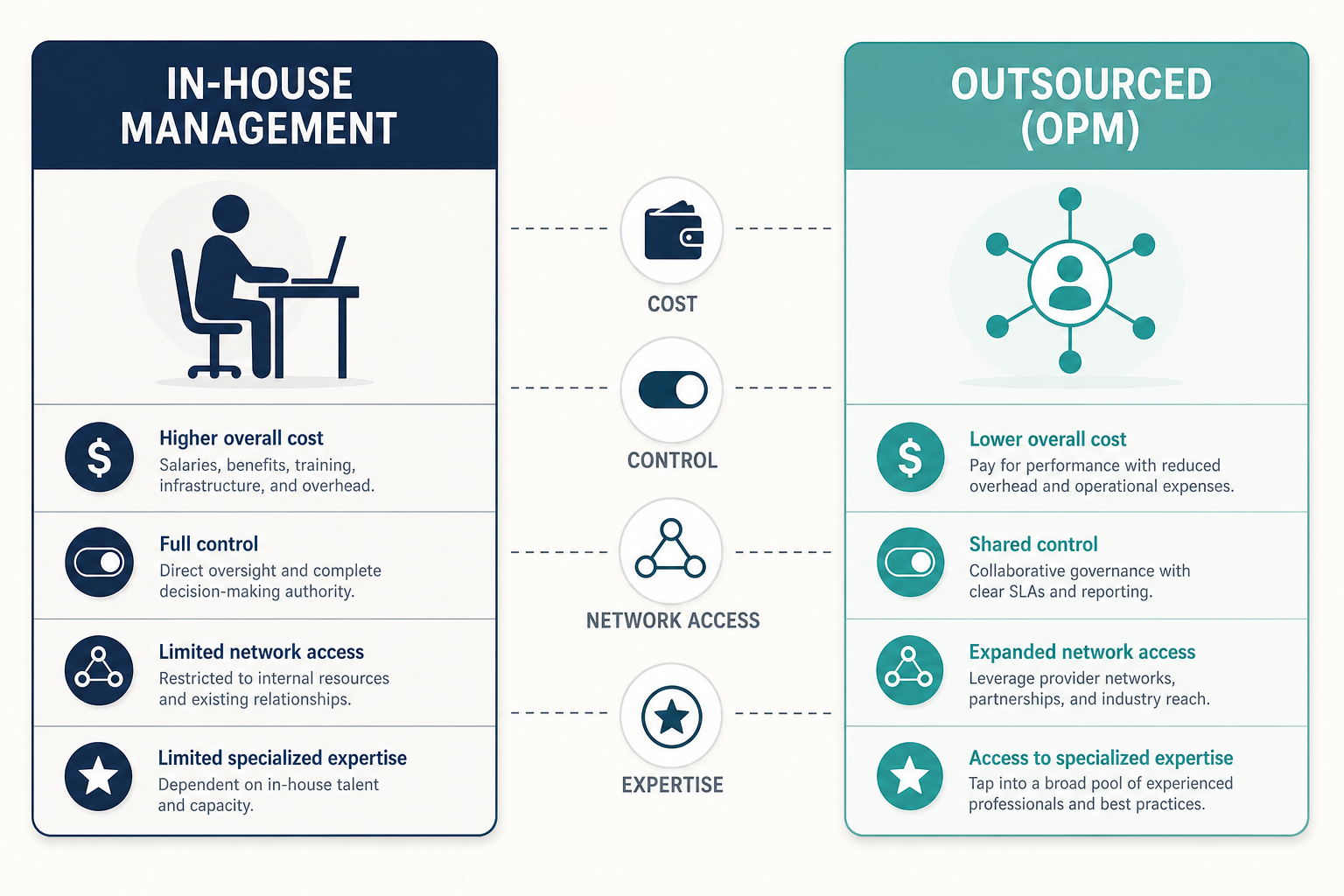
As your program grows, you will face a critical decision: manage it in-house or hire an Outsourced Program Management (OPM) agency.
Many brands start by handling operations internally, but scaling a network of hundreds of partners quickly drains internal resources. Alternatively, companies often turn to affiliate marketing consulting to establish initial frameworks before committing to a full-time hire.
Here is a breakdown of how the two approaches compare:
| Feature | In-House Management | Outsourced (OPM Agency) |
|---|---|---|
| Cost Structure | Fixed salary plus software licensing. | Monthly retainer plus a percentage of affiliate revenue. |
| Control | Complete control over brand messaging and partner selection. | Handing over daily operational control to an external team. |
| Network Access | Requires building relationships from scratch. | Instant access to the agency's established network of top-tier affiliates. |
| Expertise | Dependent on the individual manager's experience. | Leverages a team of specialized experts and established industry benchmarks. |
| Best For | Startups with tight budgets or highly technical SaaS products requiring deep product knowledge. | Established brands looking to scale rapidly without increasing internal headcount. |
Leveraging Technology in Affiliate Management
You cannot manage a modern partner program using spreadsheets. The sheer volume of tracking data, communication logs, and payout schedules necessitates dedicated software.
Affiliate program management tools automate the heavy lifting. Platforms built specifically for this purpose—like Rewardful for SaaS businesses—handle link generation, cookie tracking, and automated commission payouts via Stripe or PayPal.
Beyond tracking software, successful managers use operational tools to keep their workflows organized. For example, using a CRM like monday helps managers track outreach pipelines, document partner negotiations, and schedule follow-up emails, ensuring high-value prospects do not slip through the cracks.
The Power of Premium Directories
One of the biggest hurdles in management is discovery. How do you find affiliates, and how do they find you? This is where strategic placement matters.
For creators and niche site owners seeking high-converting partnership opportunities, AffiliList is the ultimate resource. It is a comprehensive, streamlined directory featuring over 10,000 curated affiliate programs, with a strong focus on SaaS and digital tools.
As a manager, listing your program on AffiliList puts your offer directly in front of professionals who value transparency. Because AffiliList offers open access to program details like commission percentages—without requiring cumbersome sign-ups just to view terms—it allows marketers to skip the noise of cluttered networks. They can quickly compare opportunities and choose the most lucrative options, driving higher-quality applicants directly to your affiliate login portal.
5 Best Practices for Scaling Affiliate Program Management
If you want to move beyond a handful of casual referrers and build a revenue-generating channel, you must implement standardized operational strategies and best practices.
1. Choose the Right Partners
Quality heavily outweighs quantity in the affiliate space. A program with 20 highly engaged niche creators will drastically outperform a program with 2,000 inactive coupon sites. Focus your recruitment efforts on partners who align with the best niches for affiliate marketing. Vet applicants carefully to ensure their audience demographics match your ideal customer profile.
2. Create Compelling Marketing Assets
Do not expect your partners to do all the heavy lifting. The easier you make it for them to promote you, the more they will. Provide a comprehensive swipe file that includes:
- High-resolution logos and product screenshots.
- Pre-written email sequences.
- High-performing social media copy.
- Brand guidelines to ensure messaging consistency.
3. Maintain Strict Compliance
Protect your brand reputation. Clearly define what promotional methods are forbidden in your terms of service. Prohibit bidding on your branded search terms (unless specifically authorized), ban spammy email practices, and clearly outline the FTC disclosure requirements your partners must follow.
4. Optimize the Commission Structure
Flat rates are a good starting point, but scaling requires nuance. Implement tiered commissions to incentivize volume. If you are looking to attract premium partners, you need to offer competitive payouts. Offering high paying affiliate programs with lucrative recurring rates or large flat bounties is the fastest way to convince top-tier marketers to switch from a competitor's product to yours.
5. Provide Ongoing Education
Your product evolves, and your affiliates need to know about it. Host quarterly webinars detailing new feature releases, share data on which landing pages are converting best, and provide case studies they can reference in their own content. An educated partner is a profitable partner.
Advanced Techniques in Affiliate Marketing Management
Once the foundational elements are running smoothly, sophisticated managers implement advanced tactics to squeeze more efficiency out of the program.
Multi-Touch Attribution Historically, programs relied on "last-click" attribution, meaning the final affiliate link clicked before a sale received 100% of the commission. Advanced programs are moving toward multi-touch attribution models. If a user discovers your product through a YouTuber's review, but later converts through a niche blogger's email newsletter, advanced tracking splits the commission between both touchpoints, rewarding top-of-funnel awareness as well as bottom-of-funnel conversions.
Dynamic Payouts Instead of paying a flat rate for every sale, advanced managers adjust commissions based on customer value. If an affiliate brings in an enterprise-level SaaS client who signs an annual contract, the payout dynamically increases compared to a client who signs up for a basic monthly tier.
Automated Activation Sequences The biggest drop-off point in any program occurs right after an affiliate signs up. Advanced managers combat this by building automated email activation sequences.
- Day 1: Welcome email with login details and immediate access to their custom link.
- Day 3: A "Quick Win" guide showing exactly how to make their first sale.
- Day 7: A check-in email offering a brief strategy call or custom landing page setup.
FAQs
What is a reasonable commission rate structure for a new affiliate program?
It depends entirely on your margins and industry. Software and SaaS companies typically offer 20% to 30% recurring commissions because the cost of goods sold is very low. Physical product margins are tighter, usually ranging from 5% to 15%. To remain competitive, research your direct competitors on AffiliList and aim to match or slightly exceed their baseline rates.
How can I effectively manage fraud and ensure compliance in my affiliate program?
Fraud management starts with your vetting process. Manually review all applications instead of auto-approving them. Look for red flags like fake social media followings, domain names that mimic your brand, or a lack of clear promotional strategies. Use affiliate tracking software that includes IP monitoring and unusual click-velocity alerts to catch suspicious activity early. For those wondering, is affiliate marketing legit?, the answer is yes—but only when vigilant managers aggressively weed out bad actors.
What is the role of a dedicated affiliate program manager?
A dedicated manager acts as the CEO of the affiliate channel. They do not just handle administrative tasks; they actively hunt for new revenue opportunities, negotiate custom payout deals with high-traffic websites, audit compliance, and act as the primary liaison between the brand and its external promotional partners.
Next Steps for Your Affiliate Strategy
Affiliate marketing management is a dynamic, high-leverage role that demands a proactive approach. It is not about passively waiting for creators to discover your brand; it is about building a structured environment where partners have the tools, incentives, and support necessary to drive consistent sales.
If you are ready to take your program seriously, start by auditing your current structure. Are your commission rates competitive? Do your partners have access to high-converting assets? Are you manually reviewing applicants or letting anyone join?
For affiliates and content creators looking to bypass outdated lists and find transparent, high-quality partnerships, explore the curated database at AffiliList. By connecting dedicated managers with serious marketers, it is the fastest way to find profitable opportunities in the digital economy.