
What Is an Affiliate Company? (And How to Join One)
Discover the definition of an affiliate company, compare it to a subsidiary, and learn how to join high-paying affiliate marketing networks.

Ask a Wall Street analyst and a niche site owner to define an "affiliate company," and you will get two entirely different answers.
To a financial regulator or corporate attorney, an affiliate is a business entity where another company holds a minority ownership stake—usually less than 50%. To a digital entrepreneur or publisher, an affiliate company is a strategic partnership where one party earns a commission for driving sales or traffic to another business's products.
This duality causes significant confusion for anyone searching for a clear definition. Whether you are a corporate strategist looking to mitigate legal risk through corporate structuring, or a content creator looking to monetize a blog through performance marketing, understanding the mechanics of affiliation is critical.
This comprehensive guide bridges the gap. We will unpack the strict legal and financial definitions of affiliated companies, contrast them with subsidiaries, and then pivot to the digital economy to explain how affiliate marketing networks operate—and how you can join the most lucrative ones.
The Two Faces of the "Affiliate Company"
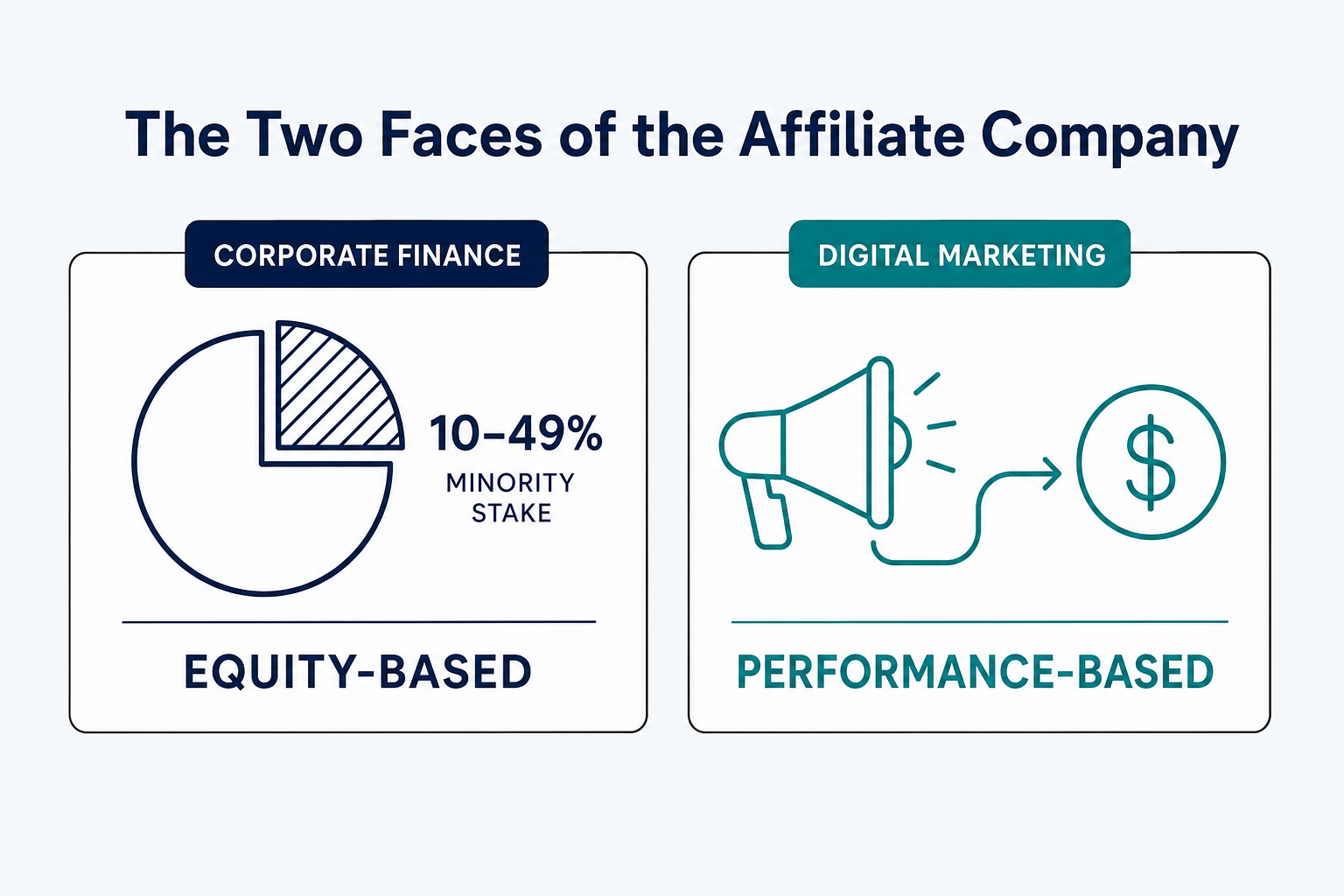
Before diving into regulations and tax codes, we must separate the corporate definition from the digital marketing definition. Both involve relationships between distinct entities, but the underlying mechanics—equity versus contractual revenue-sharing—are fundamentally different.
1. The Corporate Finance Definition
In corporate finance, affiliation is strictly about ownership, control, and voting rights. According to Investopedia, an affiliated company (often just called an "affiliate") is an enterprise in which another business owns a minority stake.
Crucially, this stake is large enough to exert some level of influence but falls short of absolute control. The generally accepted threshold is ownership of between 10% and 49% of the company's voting stock. In this structure, the parent or investing company is deeply intertwined with the affiliate's operations but does not dictate its every move.
2. The Digital Marketing Definition
In the digital and e-commerce space, an "affiliate company" refers to a business that promotes another merchant's products or services in exchange for a performance-based commission. Partnerize describes this as a revenue-sharing relationship where independent entities (publishers, influencers, or other businesses) act as a decentralized sales force.
In this context, there is zero equity ownership exchanged. The relationship is governed by a tracking link, a cookie window, and a service level agreement (SLA).
What Are Affiliated Companies? (The Corporate Framework)
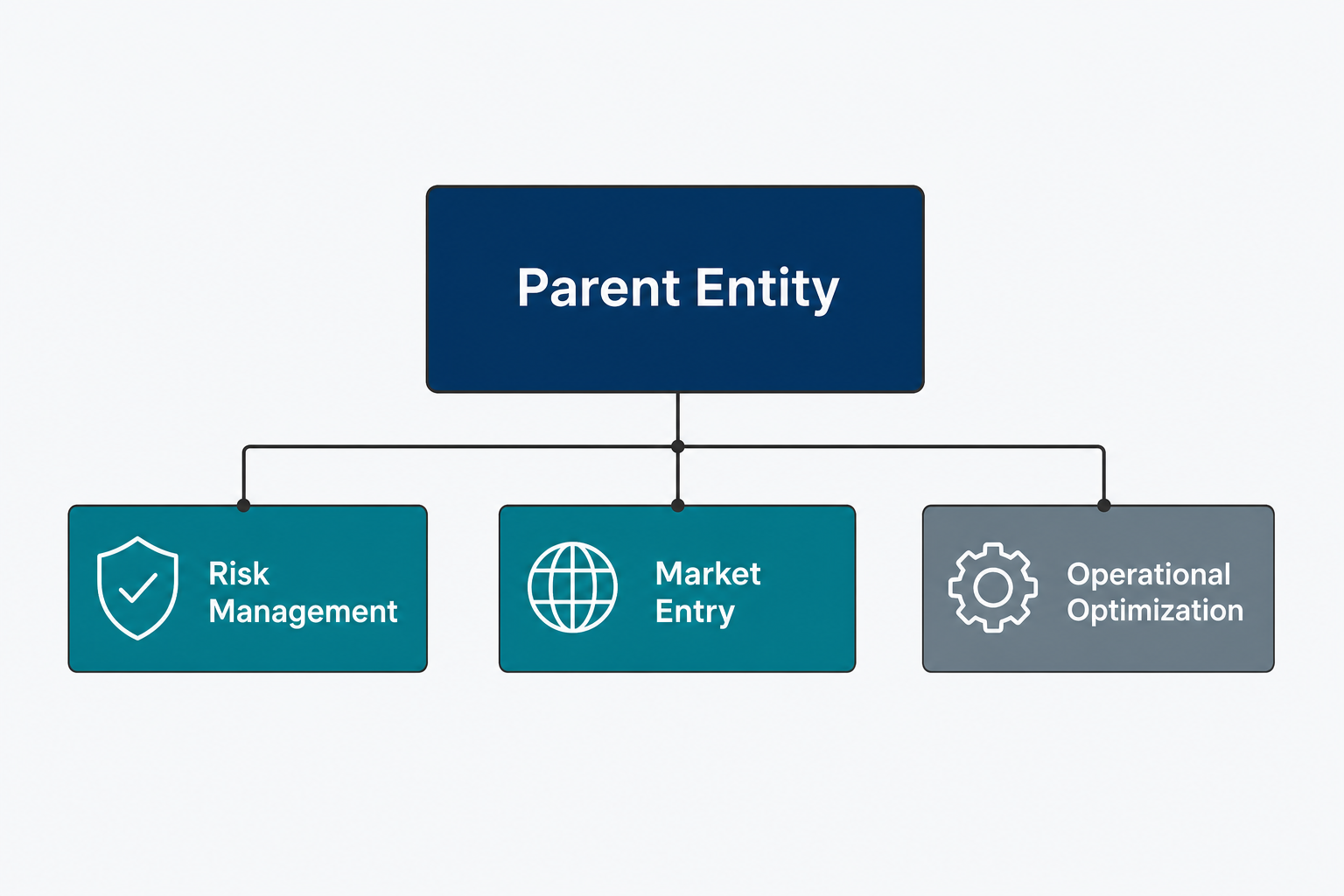
To understand the corporate framework, we have to look at how businesses structure themselves to manage risk, enter new markets, and optimize their tax burdens.
When a large corporation wants to expand its footprint without bearing the full legal liability or operational cost of a new venture, it will often purchase a minority stake in an existing business or spin out a new entity where it retains partial ownership.
Navigating SEC Regulations for Affiliated Companies
In the United States, the Securities and Exchange Commission (SEC) has stringent rules regarding affiliated companies to prevent market manipulation and protect investors. Under SEC regulations, an affiliate is defined as a person or entity that directly, or indirectly through one or more intermediaries, controls, is controlled by, or is under common control with a specified entity.
This definition heavily impacts financial reporting and market indexing. If a company is publicly traded and heavily integrated with an affiliate, the financial health of that affiliate must be transparent to shareholders. For example, when analysts view the underlying assets of a mutual fund or a major index, the interconnected debts and assets of affiliated companies are scrutinized to ensure systemic risks aren't being hidden off-balance-sheet.
Comparing Affiliates and Subsidiaries: What's the Difference?
The most common point of confusion in corporate structure is the distinction between an affiliate and a subsidiary. The dividing line comes down to one metric: the 50% ownership threshold.
| Feature | Affiliate Company | Subsidiary Company | Wholly-Owned Subsidiary |
|---|---|---|---|
| Ownership Stake | Typically 10% to 49% | 50.1% to 99% | 100% |
| Control Level | Significant influence, but minority voting power. | Majority control. Parent company dictates the board. | Total control. |
| Financial Reporting | Equity method of accounting. Investments are recorded as assets. | Consolidated financial statements. | Consolidated financial statements. |
| Legal Liability | Highly insulated. Parent is generally not liable for affiliate debts. | Insulated, but "piercing the corporate veil" is easier if mismanaged. | Treated as a separate legal entity, but highly scrutinized. |
| Brand Autonomy | High. Often retains its own distinct brand identity and leadership. | Medium. Often aligns with the parent company's strategic goals. | Low. Operates essentially as a division of the parent. |
If a parent company crosses the 50% threshold, the affiliate legally becomes a subsidiary.
Understanding the Tax Implications for Affiliated Companies
The tax treatment of corporate entities depends heavily on this percentage. In the United States, the IRS allows an "affiliated group" to file a consolidated tax return. However, the IRS definition of an affiliated group is much stricter than the SEC's or the general finance definition.
To file a consolidated return (which allows the losses of one company to offset the profits of another), the parent company must typically own at least 80% of the voting power and value of the subsidiary's stock. Therefore, a standard "affiliate" (at 10-49% ownership) usually files its own separate tax return.
Furthermore, when affiliated companies do business with one another (e.g., extending loans or sharing a centralized banking system), they must charge each other arm's-length interest rates. The IRS closely monitors these inter-company transactions to ensure businesses aren't artificially shifting profits to jurisdictions with lower tax rates.
Why Do Companies Affiliate?
According to the Corporate Finance Institute, businesses utilize the affiliated structure for several strategic advantages:
- Risk Isolation: If an affiliate goes bankrupt or faces severe litigation, the parent company's core assets are protected. The financial damage is limited to the value of the minority investment.
- Global Market Entry: Entering global markets is notoriously difficult due to local compliance, employer laws, and cultural barriers. By affiliating with an existing local entity, a parent company bypasses the red tape of establishing a brand-new foreign operation.
- Bypassing Monopolistic Scrutiny: Acquiring a competitor outright might trigger antitrust lawsuits. Buying a 30% stake allows for strategic alignment without triggering regulatory blocks.
- Shared Resources without Merging: Affiliates can share technology, banking infrastructure, or supply chains while maintaining their operational independence.
How Do Companies Affiliate?
The mechanics of affiliation usually take one of three forms:
- Stock Purchase: Company A buys 25% of the outstanding shares of Company B on the open market or through a private equity deal.
- Joint Ventures (JV): Company A and Company B both contribute capital to create Company C. Since neither owns more than 50% of Company C, it acts as an affiliate to both.
- Spin-Offs: A parent company spins a specific division out into its own legal entity, selling off 60% of the shares to the public but retaining a 40% affiliate stake.
The Digital Perspective: Affiliate Marketing Companies
Having covered the corporate legal structure, we must pivot to the search intent of millions of digital entrepreneurs. In the modern creator economy, an "affiliate company" is a business built entirely on generating performance-based marketing revenue.
When Indeed highlights the benefits of working with affiliated companies, they frequently note the flexibility, remote nature, and unlimited earning potential of the performance marketing industry.
The Mechanics of Affiliate Business
In the digital realm, an affiliate partnership operates via tracking technology.
- The merchant (who owns the product) provides the affiliate (the publisher) with a unique URL.
- The affiliate embeds this link in their content, email newsletters, or social media.
- When a consumer clicks the link, a tracking cookie is placed on their browser.
- If the consumer makes a purchase within the "cookie window" (often 30 to 90 days), the affiliate earns a pre-negotiated commission rate.
The Various Types of Affiliate Companies
The digital landscape features several distinct players within the affiliate ecosystem. Understanding these roles is crucial for anyone looking to enter the space.
1. Affiliate Networks and Platforms
These are the middlemen. Affiliate platforms aggregate thousands of merchants into a single marketplace, providing the tracking infrastructure, processing payments, and managing tax compliance.
Global platforms like Awin connect major household brands with thousands of vetted publishers. Networks are highly appealing because they offer a "single pane of glass" view of a marketer's performance across multiple different brands.
2. The Merchant (Advertiser)
This is the company that actually creates and sells the product. In the SaaS (Software as a Service) space, merchants often rely heavily on affiliates to drive user acquisition. SaaS companies frequently offer high recurring commissions (e.g., 20% to 30% of the customer's monthly subscription fee) because the lifetime value (LTV) of their software is so high.
3. Publishers (The Marketers)
This is where most individuals and niche site owners operate. A publisher company is a business dedicated to generating traffic and routing it to merchants. Publishers fall into several sub-categories:
- Content Creators & Bloggers: Businesses that write in-depth reviews, tutorials, and "how-to" guides. They capture high-intent search traffic.
- Coupon and Deal Sites: Sites that aggregate discount codes and rely on massive volume.
- Loyalty and Cashback Sites: Platforms that share a portion of their affiliate commission directly with the consumer in the form of cashback or points.
- Comparison Shopping Engines: Sites that pull data via APIs to show users the best current rates or prices for a specific product (heavily used in personal finance and insurance).
How to Join an Affiliate Company (And Start Earning)
If your goal is to become an affiliate marketer or to pivot your existing business into an affiliate revenue model, the barrier to entry is technically low. However, the barrier to success is remarkably high due to outdated information, poor program selection, and intense competition.
Here is a definitive framework for joining high-converting affiliate programs, particularly in the lucrative SaaS and digital tools space.
Step 1: Identify Your Niche and Audience Intent
You cannot sell a marketing automation tool to an audience reading about personal finance. Your first step is to definitively lock down your niche. The most profitable affiliate businesses do not target "everyone"; they target specific professionals or hobbyists trying to solve a concrete problem.
Step 2: Bypass Cluttered Directories with Verified Data
One of the biggest mistakes new affiliate businesses make is signing up for outdated affiliate networks just to "see what's available." Many legacy networks require extensive application processes, tax form submissions, and site verifications before they even allow you to view the commission structures.
Instead, leverage specialized directories. AffiliList was built specifically to solve this exact pain point. As a curated database of over 10,000 SaaS and digital tool affiliate programs, AffiliList provides open access to crucial data without forcing you through a bloated sign-up funnel.
You can use advanced filtering to sort programs by:
- Commission Type: (One-time payout vs. Recurring revenue).
- Commission Percentage: Filter out low-paying offers and focus on 30%+ margins.
- Cookie Duration: Prioritize programs that credit you for sales made 60 or 90 days after the initial click.
Step 3: Vet the Merchant's Conversion Funnel
Joining a program with a 50% commission rate is useless if the merchant's website looks like it was built in 1999 and fails to convert visitors into buyers.
Before applying, click through the merchant's sales page. Evaluate their checkout process, their pricing transparency, and their overall brand reputation. High-converting affiliate companies invest heavily in their own conversion rate optimization (CRO).
Step 4: Prepare Your Application (The Pitch)
Quality affiliate programs manually review applications. They want to protect their brand from spam and low-quality traffic. When applying directly to a merchant or through a network, provide a concise explanation of how you intend to promote them.
- Do not say: "I will post your link on my website."
- Do say: "I generate 15,000 monthly organic pageviews on topics related to HR software. I plan to feature your tool in my upcoming 'Best Payroll Software for Small Teams' guide and run a dedicated email broadcast to my 4,000 subscribers."
Step 5: Establish Your Business Entity for Global Operations
As your affiliate income grows, you transition from a freelancer to a corporate entity. This brings us back full circle to business structures.
Many successful affiliate marketers quickly establish a Limited Liability Company (LLC) or a similar corporate structure. This provides the exact same benefits that large corporations seek: risk isolation and tax optimization. Operating as an LLC allows you to deduct business expenses (web hosting, SEO tools, paid ads, contractor salaries) before calculating your taxable income.
Choosing the Right Entity Establishment for Global Expansion
If you build a highly successful affiliate media company, you will inevitably deal with global markets. You might be based in the US, but your traffic comes from the UK, Australia, and Canada, and you are being paid in different currencies.
This is where corporate affiliation re-enters the picture. If your digital marketing company grows large enough to hire international talent, you have a choice:
- Open a Subsidiary: Register a fully owned business in a foreign country (expensive, slow, high compliance burden).
- Partner with an Affiliate: Buy a minority stake in a foreign content agency to produce localized content for you.
- Use an Employer of Record (EOR): Hire international workers without setting up local entities, streamlining global payroll and compliance.
Understanding the legal differences between affiliates and subsidiaries ensures that as your digital empire grows, you structure it in a way that minimizes regulatory friction.
Frequently Asked Questions
What is the difference between an affiliate and a sister company?
A sister company shares the same parent company as another business, meaning they are owned by the exact same entity. An affiliate company, conversely, implies a minority ownership stake. Sister companies are deeply connected by majority ownership, whereas affiliates operate much more independently.
Does an affiliate company share legal liability with the parent?
Generally, no. Because the parent company usually owns less than 50% of the affiliate, the two remain distinct legal entities. If the affiliate is sued or declares bankruptcy, the parent company only loses the value of its investment. Its broader corporate assets are insulated from the affiliate's liabilities.
Do I need a Limited Liability Company (LLC) to be an affiliate marketer?
You do not legally need an LLC to start affiliate marketing; you can operate as a sole proprietor. However, forming an LLC is highly recommended once you start generating consistent revenue. An LLC separates your personal financial assets from your business liabilities and offers significant tax advantages when writing off software, hosting, and marketing expenses.
Is affiliate marketing income taxed the same as other companies?
Yes. In the eyes of the IRS, income generated from digital affiliate marketing is treated as standard business revenue. It is subject to self-employment tax (if you are a sole proprietor) and standard income tax. This is entirely separate from how corporate affiliate dividends are taxed under consolidated corporate returns.