
Affiliate Marketing for Podcasts: 7 Ways to Monetize
Learn how to monetize your podcast with affiliate marketing. Discover the best programs, verbal FTC disclosure rules, and strategies to convert audio listeners.
The traditional podcast monetization model feels like a frustrating catch-22: you need tens of thousands of downloads per episode to attract sponsors, but you need revenue to fund the growth required to reach those numbers. Most creators burn out and fade away long before hitting the 10,000-download threshold.
Affiliate marketing flips this script entirely. It is a low-barrier monetization strategy that doesn't care about your total download count. It only cares about the trust you have built with the audience you currently possess. If you have 200 dedicated listeners who trust your recommendations, you can start earning revenue today.
But generating affiliate revenue from an audio-only format comes with a unique set of technical hurdles. Unlike a blog post where a reader can easily click a hyperlinked word, a podcast listener is usually driving, cooking, or at the gym.
This guide breaks down exactly how to bridge the gap between audio content and trackable clicks, the strict legal requirements for on-air disclosures, and the highest-converting programs available for podcasters right now.
The Audio-to-Link Challenge: How to Convert Listeners
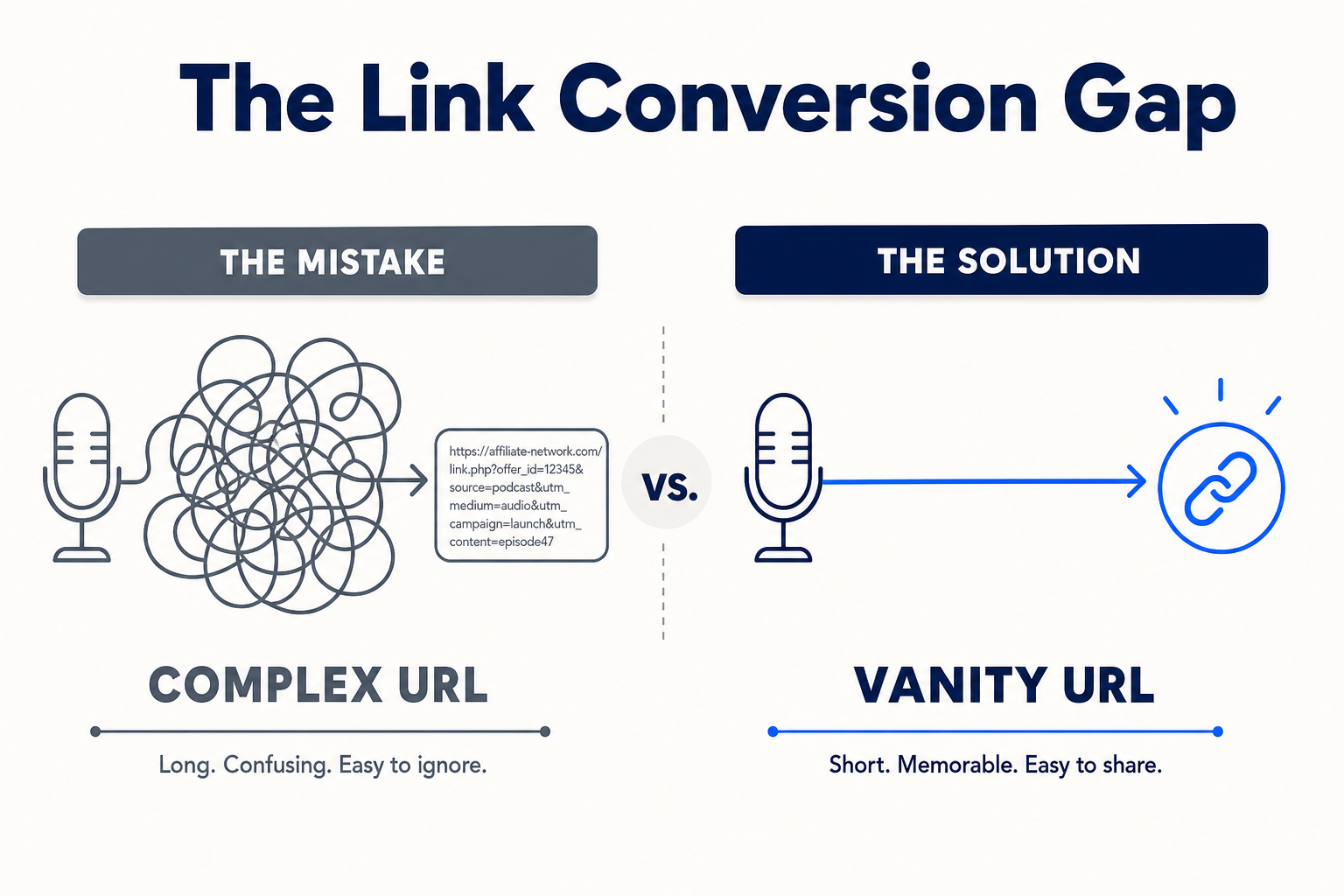
The most common mistake podcasters make with affiliate marketing is reading a raw, complex affiliate link out loud. Reading www.amazon.com/dp/B08F7PTF53/?tag=yourname-20 on air is the fastest way to ensure zero conversions.
To effectively use affiliates to make money podcasting, you must remove the friction between hearing a recommendation and taking action.
1. Use Memorable Vanity URLs
Vanity URLs are custom, easy-to-say redirects that forward to your complicated affiliate links. This is the single most effective technical bridge for podcasters.
Instead of reading a network-generated string, you buy a short domain or use your own site's domain structure. For instance, if your podcast is about freelance design, you tell listeners to visit yourpodcast.com/design-tool.
You can set these up using free WordPress plugins like Pretty Links, or use dedicated link management software. As highlighted in discussions around podcast affiliate marketing, keeping the URL short, phonetic, and memorable directly increases the likelihood of a listener recalling it when they are finally in front of a screen.
2. The "Resources" Hub Strategy
Instead of managing a new vanity URL for every single product you mention, create one permanent "Resources" or "Tools I Use" page on your website.
Direct listeners there consistently: "If you want to see the exact lighting setup I mentioned in today's episode, head over to mypodcast.com/resources." This trains your audience to visit one specific hub where all your categorized, affiliate-linked gear and software recommendations live permanently.
3. QR Codes for Video Podcasts
If you publish video versions of your podcast on YouTube or Spotify, leverage the visual real estate. Add a dynamic QR code to the screen during your mid-roll ad read. Viewers watching on a laptop or TV can scan the code with their phones, instantly bridging the gap from audio/video content to a tracked affiliate landing page on their mobile device.
How to Set Up Your First Campaign
Transitioning from casual mentions to a structured affiliate campaign requires a deliberate process. Haphazardly throwing links into your show notes rarely yields results.
Step 1: Audit Your Niche and Audience Pain Points
The highest-converting affiliate offers solve specific problems. If you run a podcast for HR professionals, a generic meal-kit ad will underperform. Instead, look for software that automates employee onboarding or tracks payroll.
This is where AffiliList becomes an invaluable resource. Rather than relying on outdated blog posts to find offers, AffiliList provides a curated directory of over 10,000 affiliate programs, with a strong focus on SaaS and digital tools. You can bypass the usual clutter and instantly view transparent data—like commission percentages and payout terms—without having to sign up for multiple networks just to see if a program is worth your time.
Step 2: Script Native Reads
Don't use the generic, corporate ad copy provided by the affiliate network. Rewrite the promotion in your own voice. Explain exactly how you use the product, the problem it solved for you, and why the listener should care. Native, host-read ads—even when they are affiliate promotions—outperform pre-produced commercials heavily.
Step 3: Implement the "Rule of 7"
Marketing theory suggests a consumer needs to hear a message seven times before taking action. Do not mention a new affiliate partner in one episode and abandon it if you don't see immediate sales. Commit to running your custom mid-roll read for a minimum of four to six consecutive episodes.
7 Best Affiliate Programs for New Podcasters
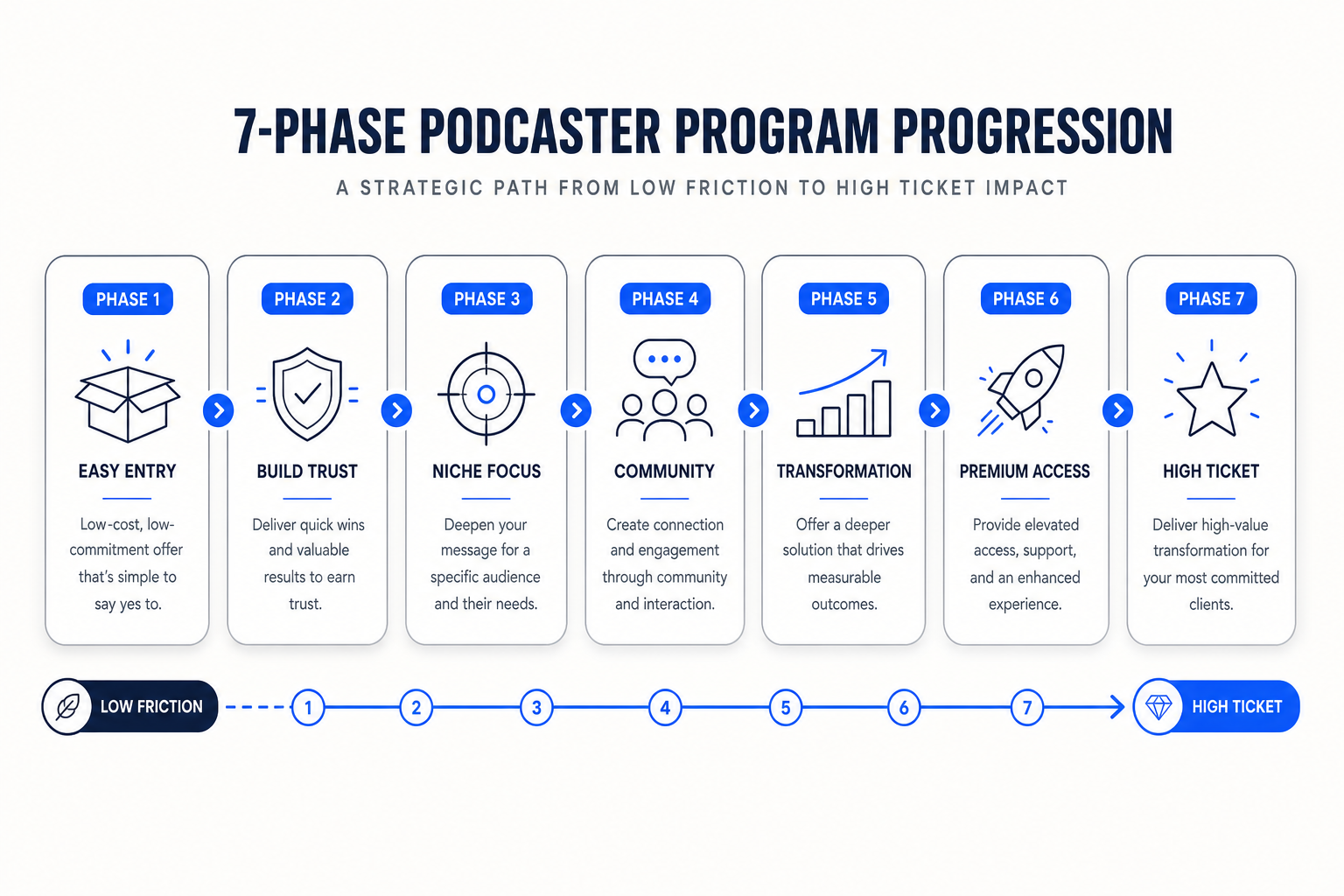
When curating partnerships, start with low-friction, widely trusted brands before moving to niche-specific or high-ticket items. Here are 7 of the best affiliate programs for new podcasters to refer and earn.
1. Amazon Associates
Amazon is the baseline for nearly all content creators. While the commission rates are notoriously low (typically 1% to 4%), the conversion rate is exceptionally high because consumers already trust Amazon and have their credit cards on file.
- Best For: Recommending physical products, books you mention on the show, or your own podcasting gear.
- The Catch: You must generate three qualifying sales within your first 180 days to stay in the program. You also cannot embed Amazon affiliate links directly into emails or offline PDFs; they must reside on a public website.
2. Audible Creator Program
Audible is a natural fit because podcast audiences are already conditioned to consume audio content.
- Best For: Any podcast that discusses books, self-improvement, business, or storytelling.
- The Payout: You typically earn a flat bounty (e.g., $15) for every listener who signs up for a free trial using your custom URL. Because the listener doesn't have to spend money for you to get paid, it is an incredibly low-friction offer.
3. Skillshare
If your podcast teaches a skill, discusses hobbies, or focuses on self-improvement, online learning platforms like Skillshare align perfectly with your listeners' intent.
- Best For: Creative, business, and educational podcasts.
- The Strategy: Pick a specific class you genuinely took and talk about the exact project you created during the course. Specificity sells much better than broadly promoting "thousands of classes."
4. Alitu (and Podcast Software)
If your audience includes other creators or aspiring podcasters, recommending the tools you use to produce your show is highly effective. Alitu, known as the 'Podcast Maker' app, automates audio cleanup and editing.
- Best For: Podcasts about marketing, creation, entrepreneurship, or "behind the scenes" content.
- The Payout: Software affiliates often offer generous recurring commissions. If someone signs up via your link, you continue to get paid every month they remain a subscriber.
5. BarkBox (The Niche Choice)
BarkBox represents the power of extreme niche alignment. If you run a podcast about dog training, an affiliate link for a monthly dog toy subscription will drastically outperform a generic mattress ad.
- The Lesson: You don't always need mass-market appeal. High-converting niche products often offer better flat-rate bounties ($15-$20 per signup) because they know exactly who their customer is.
6. Podcast Hosting (Buzzsprout, Captivate, Podbean)
Similar to software, podcast hosting platforms offer lucrative affiliate programs. When listeners decide to start their own shows inspired by yours, they will need a place to host their RSS feed.
- Best For: B2B, media, or tech-adjacent podcasts.
- The Strategy: Place a "Hosted by [Platform]" link permanently in your show notes. Many hosts will offer either a percentage of the recurring subscription or a high flat-rate bounty for paid sign-ups.
7. High-Ticket SaaS & Digital Tools
For podcasters in the B2B, finance, tech, or marketing spaces, software-as-a-service (SaaS) affiliate programs are the holy grail. Promoting tools like CRMs, email marketing software (e.g., Moosend, ConvertKit), or project management apps can result in substantial passive income.
- Best For: Business and marketing podcasts.
- Where to Find Them: Finding reliable SaaS programs can be tedious, which is a common pain point discussed by creators looking for business affiliate recommendations. Instead of manually searching Google, use AffiliList to filter through thousands of SaaS programs by commission rate, cookie duration, and payout terms, allowing you to instantly compare the most lucrative opportunities for your business audience.
FTC Compliance: Disclosing Affiliate Links on Air
A critical gap in most podcast monetization advice is the legal requirement surrounding disclosures. In the United States, the Federal Trade Commission (FTC) requires creators to clearly and conspicuously disclose material connections with brands.
For podcasters, dropping a legal disclaimer at the very bottom of your show notes is not enough.
The FTC requires disclosures to be made in the medium where the claim occurs. If you are promoting an affiliate link audibly during your podcast, the disclosure must also be audible.
Best Practices for Audio Disclosure:
- Proximity: Make the disclosure immediately before or during the product recommendation. Do not bury it at the end of the episode.
- Clarity: Use simple language. Avoid confusing jargon.
- Example Script: "Before we get into the gear I use, I want to let you know I'm an affiliate for [Brand]. If you buy through the link I'm about to give you, I earn a small commission at no extra cost to you, which helps support the show."
Affiliates for Podcasters: FAQ
Do I need a certain number of listeners to join affiliate programs?
No. The vast majority of affiliate programs have zero listener minimums. Unlike podcast advertising networks that require 10,000 to 50,000 monthly downloads to negotiate CPM (Cost Per Mille) rates, affiliate programs let you join on day one. Keep in mind that a few programs (like Amazon Associates) require you to make a certain number of sales within a specific timeframe to keep your account active.
Can I have more than one affiliate partner?
Yes. You can partner with as many affiliate programs as you want. However, to avoid overwhelming your audience, it is best to limit your active promotions to one or two complementary products per episode. You can cycle through different partners depending on the specific topic of the episode.
How do I find programs specifically for my niche?
Avoid relying on generic "top 10" blog posts that push the same recycled networks. Use a dedicated directory like AffiliList. Its extensive tagging system and advanced filtering allow you to drill down into highly specific categories—from HR software to crypto—so you can find precise, high-converting matches for your exact listener demographic.
Your Quick-Start Action Plan
Monetizing through affiliate marketing doesn't require a massive audience, but it does require strategic implementation. To get started this week, follow this brief checklist:
- Audit Your Content: Review your last five episodes. Identify the tools, books, software, or physical products you naturally mentioned.
- Source the Programs: Search for those exact products on AffiliList to find their commission structures, or apply to beginner-friendly platforms like Amazon Associates and Audible.
- Build the Bridge: Register a memorable vanity URL or set up a dedicated "Resources" page on your podcast's website.
- Script the Read: Draft a 30-second native ad read for your next episode. Include a clear, verbal FTC disclosure and a compelling reason why the product helps solve a listener's problem.
By treating affiliate partnerships with the same professionalism as paid sponsorships, you can turn a small, highly engaged audience into a reliable, recurring revenue stream.