
Affiliate Marketing News: 5 Trends Shaping May 2026
Stay ahead with the latest affiliate marketing news for May 2026. Explore 5 major trends, evolving commission structures, and platform shifts shaping the industry.

The affiliate marketing ecosystem is undergoing a massive structural shift as we hit the middle of 2026. If you are still relying on strategies that worked in 2023—spraying generic links across unedited AI content or fighting for pennies on Amazon Associates—you are likely seeing diminishing returns.
The industry is professionalizing. Brands are heavily scrutinizing the quality of the traffic they buy, while professional affiliates are demanding better tracking, higher payouts, and dedicated support. For anyone asking Is Affiliate Marketing Legit? (How to Spot Real Offers), the answer is a resounding yes, but the barrier to entry for high-quality partnerships has been raised.
From a massive disruption in the software platforms powering these programs to the way independent publishers are pivoting their traffic strategies, the rules of engagement are changing. Based on the latest industry data, platform announcements, and performance metrics across the AffiliList database of over 10,000 programs, we have identified five major trends defining the affiliate landscape right now.
Here is the affiliate marketing news you need to understand to adjust your strategy for the rest of 2026.
Trend 1: The Disruption of Affiliate Platforms (Open Marketplaces vs. Private Networks)
For years, merchants faced a binary choice when launching a program. They could join a massive, legacy open marketplace (like ShareASale or Rakuten) and deal with high network fees and cluttered interfaces, or they could build a bespoke private network that cost tens of thousands of dollars to maintain.
In 2026, the lines have blurred, and SaaS-based tracking platforms are aggressively eating into the market share of legacy networks.
We are seeing platforms like Trackdesk, Everflow, and Impact completely change the calculus for merchants. Recently, Trackdesk transformed the landscape by introducing a free affiliate software package aimed at empowering small businesses to launch private networks without upfront capital. This move has triggered a wave of new, independent affiliate programs entering the market. According to recent coverage on Trackdesk's blog, eliminating the barrier to entry has led to a surge in highly specialized, niche B2B programs.
The Shift for Affiliates
For content creators and publishers, this means the best offers are increasingly hidden off the main networks. Merchants are opting for private networks where they control the data, the tracking, and the affiliate relationships.
This fragmentation is exactly why directories like AffiliList exist. Instead of signing up for twenty different fragmented portals just to check if a SaaS tool has an affiliate program, you need a centralized database to find the verified data, commission rates, and direct signup links.
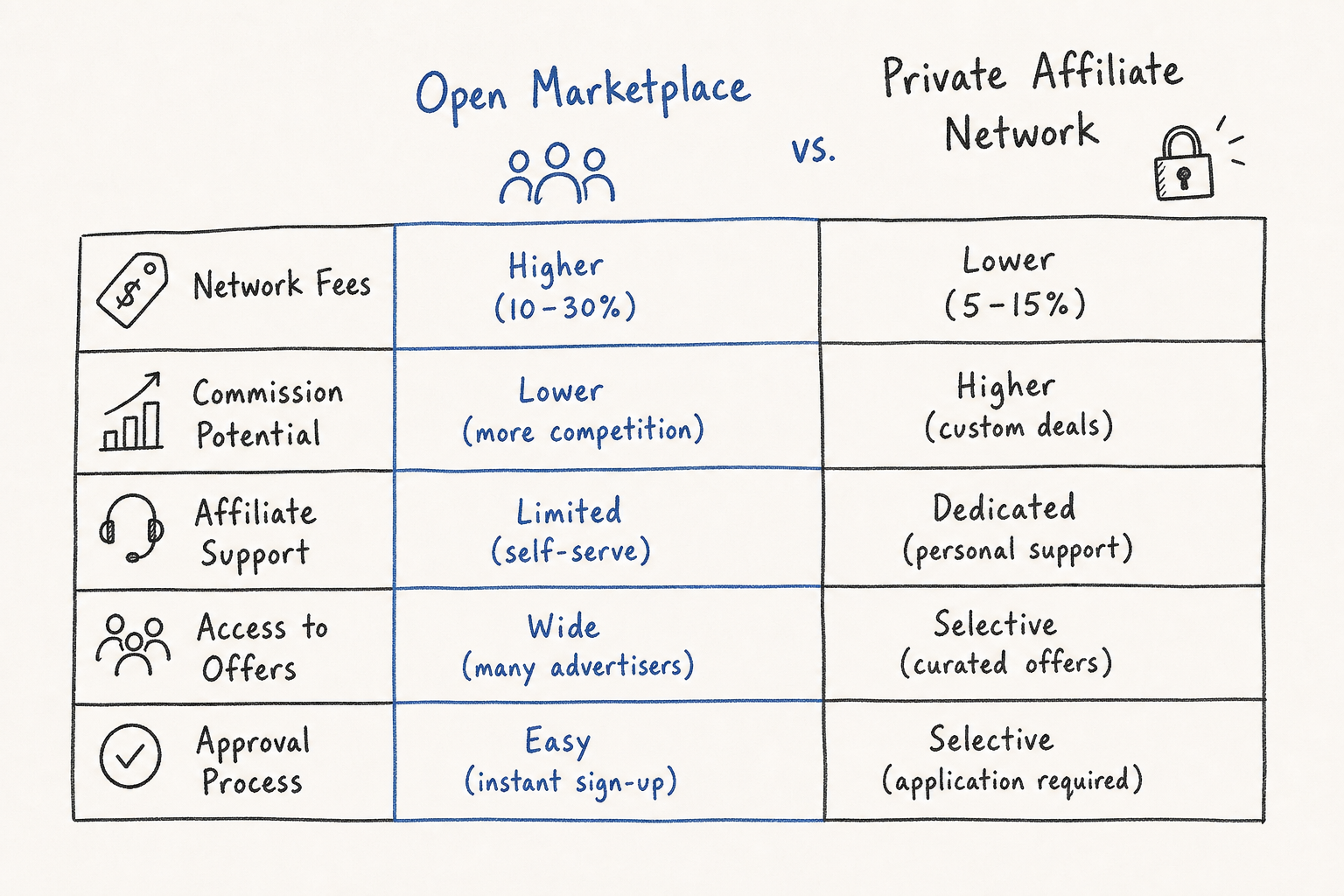
Open Marketplace vs. Private Affiliate Network: Which is Better?
If you are evaluating programs to join, understand the difference in the underlying infrastructure:
- Open Marketplaces: Offer convenience. You sign up once and can apply to thousands of brands. However, commission rates are often lower because the merchant is paying a 20% to 30% override fee to the network itself. Competition is high, and affiliate managers are often stretched thin across hundreds of accounts.
- Private Networks: Require individual sign-ups and often have stricter vetting processes. Because the merchant avoids hefty network override fees, they can pass those margins on to you in the form of higher commissions. You also get a direct line to an in-house affiliate manager.
We expect legacy open marketplaces to continue losing market share to private SaaS platforms through the end of 2026, especially in the B2B and software sectors.
Trend 2: Commission Structures Evolving (Lead Gen and High-Ticket Dominance)
The classic Cost-Per-Sale (CPS) model for physical goods is becoming a volume game that favors only the largest media publishers. If you are an independent affiliate, making a living on 3% commissions for consumer electronics requires an astronomical amount of traffic.
Instead, the most lucrative affiliate marketing news centers around the explosion of high-ticket lead generation and recurring revenue SaaS programs.
Case Studies in Lead Generation
Recent industry data highlights just how profitable specialized lead generation has become. Moving away from direct sales to generating qualified leads allows affiliates to monetize B2B and high-ticket consumer audiences effectively.
- Home Improvement Lead Gen: We recently saw a case study where a brand scaled their home improvement lead generation affiliate revenue by 500% in 90 days. Affiliates in this space are paid per verified quote request (e.g., roof repair, solar installation) rather than a completed sale. The friction is much lower for the user, resulting in significantly higher conversion rates.
- Crypto Wealth Management: Financial niches remain highly lucrative. A recent campaign by a digital asset group built a crypto wealth management affiliate program that achieved 75% profitability within its first two quarters. Affiliates driving high-net-worth individuals to wealth management consultations are earning massive bounties per qualified lead.
- Food & Beverage B2B: Even traditional industries are shifting. A recent case study detailed how a high-trust food and beverage affiliate network drove $390K in B2B wholesale sales in 4 months by leveraging industry influencers rather than traditional broad-reach affiliates.
If you want to capitalize on this trend, review our guide on 11 High Paying Affiliate Programs for $500+ Commissions. The common thread among these top-tier programs is that they sell software, financial products, or high-value B2B services.
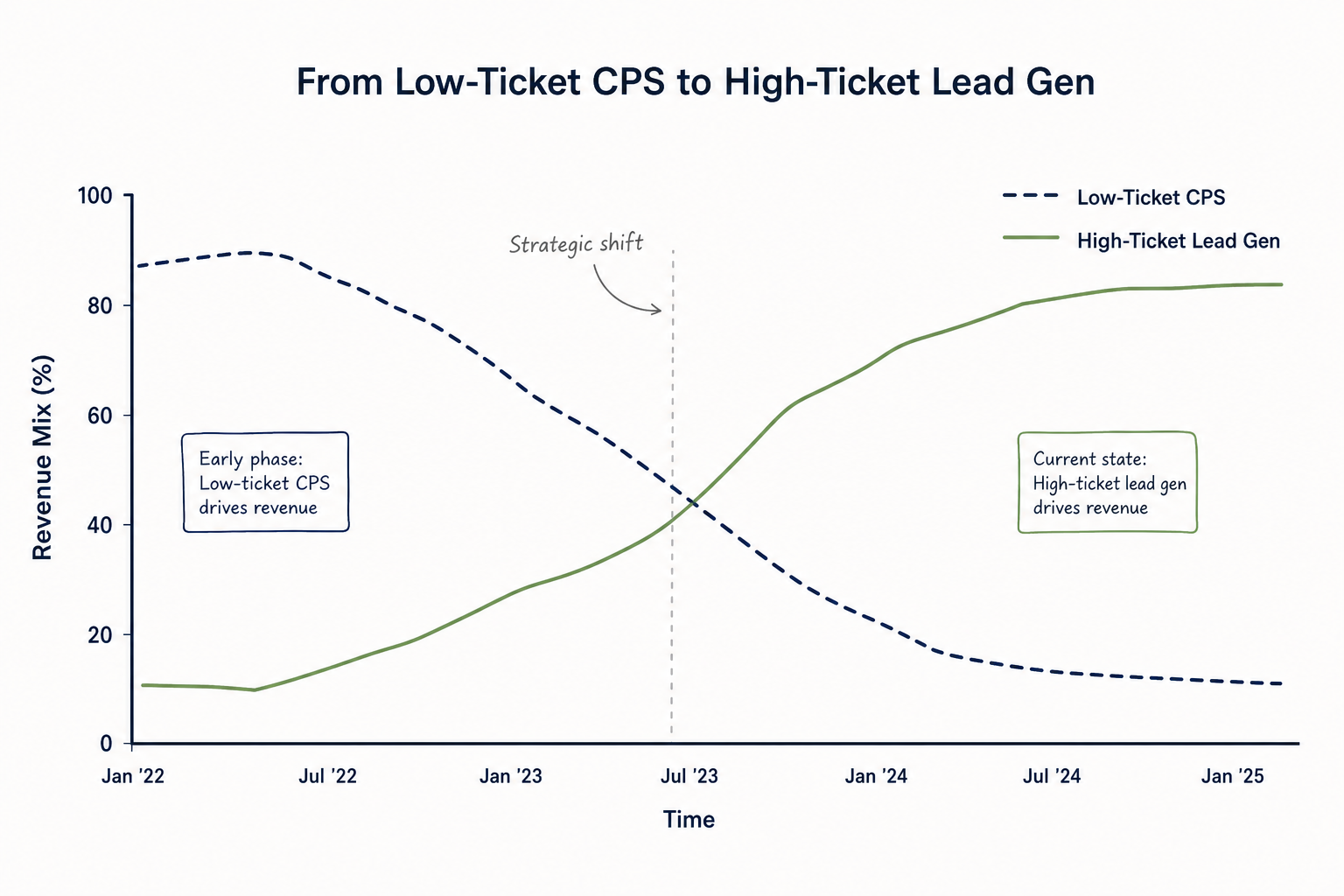
Setting Rates That Do Not Eat Into Profits
From the merchant side, the conversation has shifted toward sustainable margins. In 2024, many software companies offered 40% to 50% lifetime recurring commissions to acquire users at any cost. In 2026, as capital efficiency becomes paramount, merchants are re-evaluating these models.
We are seeing a trend toward "tiered recurring" commissions. An affiliate might earn 30% for the first year of a customer's life, dropping to 15% in year two, and 5% thereafter. This balances the affiliate's need for strong upfront cash flow with the merchant's need for long-term profitability.
Trend 3: The Future of SEO in Affiliate Marketing
Search engine optimization remains the most scalable traffic source for affiliate marketers, but the tactics have fundamentally changed. AI overviews and zero-click search features have severely impacted sites that rely on generic "Top 10" listicles.
The future of SEO in affiliate marketing requires a pivot to extreme first-hand experience and highly specific, long-tail problem solving.
Adapting to AI Search
If an AI can summarize the answer to a user's query by scraping product features, the affiliate site provides no added value. To survive in 2026, your content must offer insights that an AI cannot synthesize from a spec sheet.
- Primary Data Collection: Successful affiliates are conducting their own surveys, running their own speed tests on software, and publishing original data.
- Use-Case Specificity: Instead of ranking for "Best CRM Software," affiliates are targeting "Best CRM Software for Solo Plumbers with Recurring Billing." AI overviews struggle with highly nuanced, multi-variable recommendations.
- Brand Building: Google's algorithms heavily favor recognized entities. Building a distinct brand voice and accumulating direct traffic is no longer optional.
For an actionable blueprint on how to structure an optimized site this year, read our guide on How to Start a Profitable Affiliate Marketing Blog.
Furthermore, industry authorities are taking note of this shift. Analysts at eMarketer frequently highlight how performance marketing budgets are moving toward creators who command high trust and specific audience segments, rather than broad, anonymous review sites.
Trend 4: Social Commerce and Video-First Affiliates
While SEO adapts to new algorithmic realities, the rise of social media-driven affiliate sales continues to accelerate. However, the nature of social affiliate marketing has matured.
Users are skeptical of direct "link in bio" pitches. The highest converting affiliates on platforms like TikTok, YouTube Shorts, and Instagram Reels are integrating products seamlessly into educational or entertainment narratives.
The Resurgence of Pinterest
Pinterest has emerged as a quiet powerhouse for affiliate marketers in 2026. Unlike chronological social feeds, Pinterest functions as a visual search engine. Pins have a dramatically longer shelf life than a standard social media post, often driving traffic months or years after publication.
Affiliates in the home decor, personal finance, software organization, and lifestyle niches are using Pinterest to drive high-intent users directly to their long-form content or email capture pages. If you have not explored this channel, our Step-by-Step: Setting Up Affiliate Marketing on Pinterest tutorial covers the exact technical setup required.
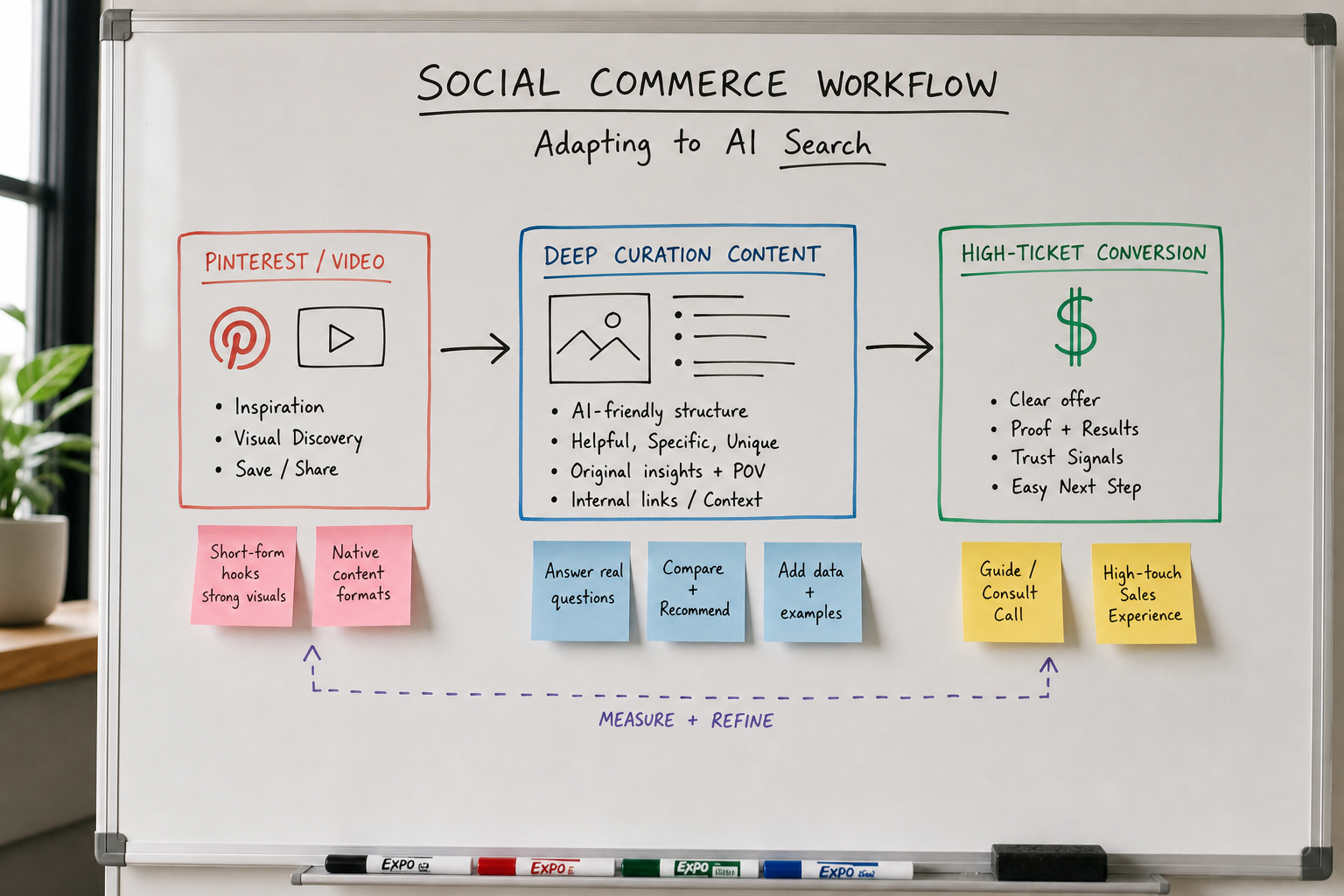
The Creator Economy Overlap
The line between "influencer" and "affiliate marketer" has practically vanished. Influencers who previously relied solely on flat-fee brand sponsorships have realized they are leaving money on the table. By incorporating affiliate links, they capture the long-tail upside of their viral content.
This hybrid approach is an excellent way to build secondary income streams. If you are looking to balance a 9-to-5 with content creation, read Affiliate Marketing Side Hustle: 5 Steps to $1k/Mo (2026) to see how creators structure their initial monetization efforts.
Trend 5: Advanced Affiliate Onboarding and Activation
One of the biggest stories in the affiliate marketing news cycle right now is the realization by brands that acquiring affiliates is useless if those affiliates never generate a sale.
Historically, merchant programs suffered from the "80/20 rule"—where 20% of the affiliates drove 80% of the revenue. In 2026, it is often the 95/5 rule. Programs are bloated with inactive accounts.
To combat this, leading SaaS brands and high-ticket networks are completely revamping their affiliate onboarding processes.
Concierge Onboarding
Brands are moving away from automated "Welcome to the program" emails with a generic link to a Google Drive folder. Instead, they are implementing concierge onboarding for vetted affiliates.
- Custom Landing Pages: Merchants are building dedicated, co-branded landing pages for their top affiliates to increase conversion rates.
- Strategy Calls: Affiliate managers are treating top publishers like strategic partners, jumping on calls to map out content calendars and specific promotional angles.
- Activation Bonuses: To motivate affiliates to place their first link, many programs now offer cash activation bonuses. For example, a program might offer a $100 bonus simply for generating 50 clicks within the first 30 days, regardless of sales.
As noted by Affiverse, the industry's premier news outlet, proactive relationship management is the primary differentiator between stagnant programs and those experiencing hyper-growth.
The Professionalization of the Industry
As the industry matures, the internal operations of affiliate programs are becoming highly specialized corporate functions. Affiliate management is no longer a junior marketing role; it is a critical revenue-driving position requiring data analysis, relationship management, and technical tracking expertise.
This maturation has created a massive surge in career opportunities for those who understand the space. Companies are aggressively hiring affiliate managers, partnership directors, and technical integration specialists. If you are interested in the corporate side of the industry, our breakdown of Who is Hiring? 9 Affiliate Marketing Jobs for 2026 highlights the most in-demand roles and salary expectations.
How to Choose Your Next Move (Niche Selection in 2026)
With these trends reshaping the landscape, selecting the right niche is more critical than ever. You cannot simply pick a high-paying category; you must align the niche with your traffic strategy, your content capabilities, and the evolving commission structures.
If you want to capitalize on the SaaS and digital tool boom, you need to target audiences actively looking for software solutions to business problems.
To help you navigate this decision, we have compiled several resources based on the current data in the AffiliList directory:
- Start with the fundamentals: How to Pick a Niche for Affiliate Marketing in 5 Steps.
- Explore high-growth sectors: 9 Profitable Affiliate Marketing Niches to Start in 2026.
- Focus on software and tech: 11 Best Niches for Affiliate Marketing (SaaS & Digital).
- Review the highest ROI categories: 7 Most Profitable Affiliate Marketing Niches to Target.
Choosing a niche where recurring SaaS subscriptions are the norm will insulate you from the volatility of low-ticket physical product commissions.
Affiliate Marketing FAQ: What Businesses and Affiliates Need to Know
As the industry shifts rapidly, we see the same questions popping up from both merchants trying to build programs and creators trying to monetize them.
Can you generate passive income with affiliate marketing in 2026?
The term "passive income" is slightly misleading. The income can be disconnected from your hourly labor, but building the engine requires intense, active work. However, by focusing on recurring commission SaaS products and leveraging long shelf-life traffic sources like SEO or Pinterest, you can build a portfolio of content that generates revenue for years with minimal monthly maintenance.
Which affiliate platforms offer the best commission rates?
It is rarely the platform itself that dictates the rate; it is the merchant and the niche. That said, private SaaS-based networks (like Trackdesk, Everflow, and Rewardful) often feature higher payouts because the merchant is not paying a 30% override fee to a legacy network. You will find the absolute highest commissions in B2B software, financial lead generation, and crypto wealth management.
How are affiliate payouts tracked today?
Tracking has evolved far beyond simple third-party cookies. Due to privacy regulations and browser updates, modern tracking relies on server-to-server (S2S) postbacks, first-party data integration, and probabilistic matching. This ensures that even if a user blocks traditional cookies, the affiliate is still credited for the conversion. It is highly technical behind the scenes, but completely seamless for the affiliate.
What is the future of affiliate networks?
The massive, uncurated open networks will struggle. As reported by strategy thought leaders at IMD, the future belongs to highly specialized, niche networks and independent in-house programs powered by white-label SaaS tracking. Transparency, fast payouts, and zero clutter are what affiliates demand, and the market is adjusting to provide exactly that.
Moving Forward in the Affiliate Space
The affiliate marketing news defining 2026 paints a clear picture. The easy money of generic content and low-ticket spam is gone. In its place is a highly professional, lucrative industry rewarding those who build actual brands, solve specific problems, and partner with high-quality merchants.
Whether you are a seasoned publisher adapting your SEO strategy or a creator looking to monetize a dedicated audience, success requires accurate data. You need to know which programs convert, what the actual commission terms are, and how to apply directly.
That is exactly why AffiliList exists. By cutting out the noise of legacy networks and providing a clean, curated directory of over 10,000 programs—with a heavy focus on high-paying SaaS and digital tools—we make discovering your next profitable partnership efficient. Keep your strategy agile, stay informed on the shifting platforms, and focus on delivering undeniable value to your audience. The rest is just execution.```