
Which Affiliate Network Pays Best? (Top 5 Compared)
Discover which affiliate network pays best in 2026. We compare the top 5 platforms for SaaS and digital tools, covering payout terms, fees, and reliability.
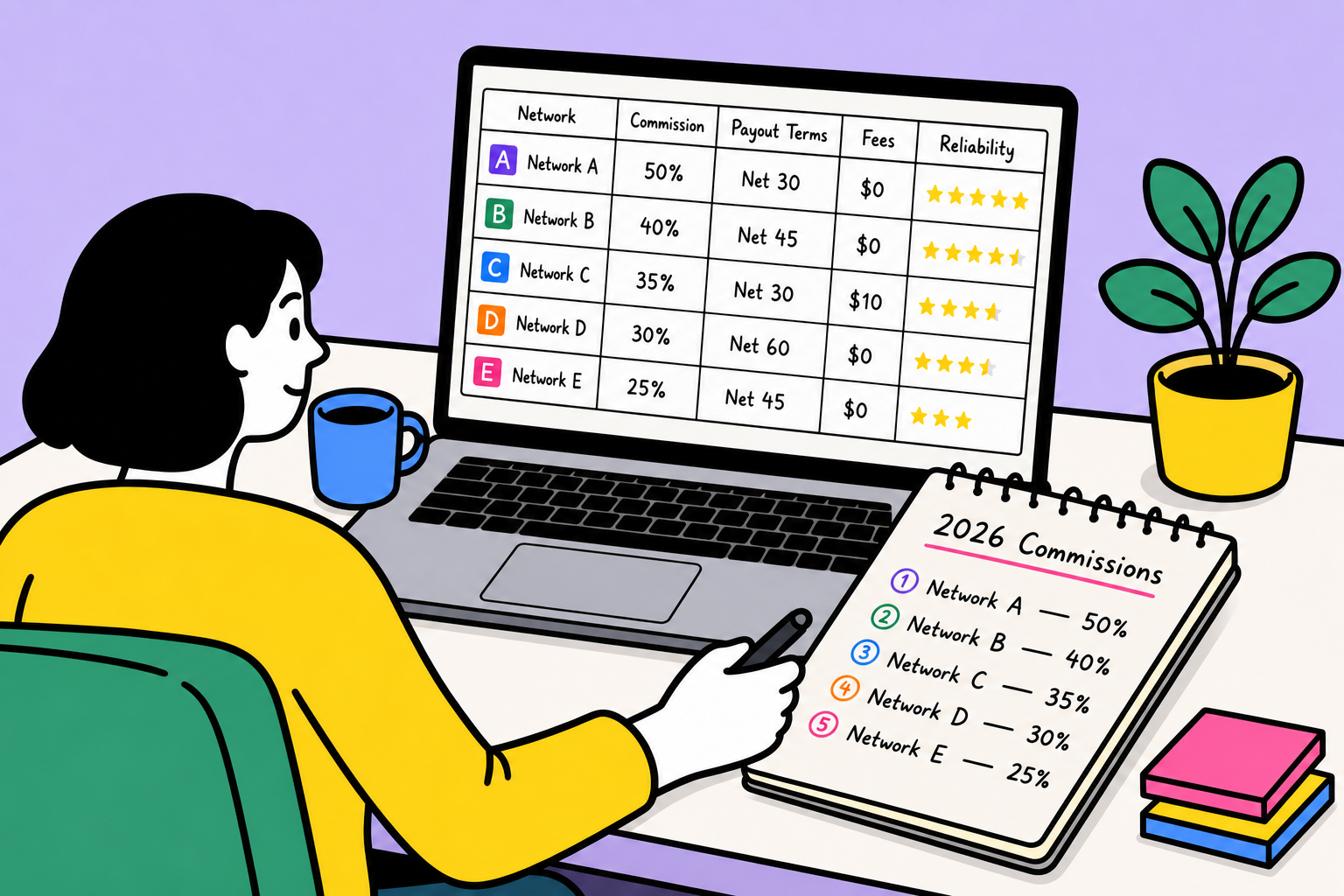
It is a rite of passage for every affiliate marketer: you join a network promising "up to 80% commissions," spend weeks driving targeted traffic, and finally see sales appear in your dashboard. Then, you check the payout terms. The threshold to withdraw is $500, the network operates on a Net-90 payment schedule, and half of your leads were just disqualified for "cookie expiration."
You might be making sales on paper, but you aren't seeing cash in your bank account.
When evaluating an affiliate network, the question isn't just "Who offers the highest percentage?" The real question is "Which network actually gets the most money into my account, reliably, and on the best terms?"
In 2026, the landscape of affiliate networks has fractured. Some platforms cater explicitly to enterprise retail, while others have doubled down on B2B software and digital tools. If you are monetizing a niche site or a newsletter, choosing the wrong network can severely bottleneck your cash flow.
Let’s break down exactly how to evaluate a network's true payout potential, how the underlying mechanics of these platforms impact your earnings, and compare the top five affiliate networks on the market right now.
What Exactly is an Affiliate Network? (And Why It Matters for Payouts)
An affiliate network acts as the necessary intermediary—the bridge—between merchants (brands with products to sell) and publishers (creators and marketers with traffic).
While some brands run their affiliate programs entirely in-house, managing tracking, tax forms, and international payouts for thousands of partners is a logistical nightmare. Instead of building that infrastructure from scratch, merchants rent it from an affiliate network.
For merchants, the network provides link generation, automated click tracking, conversion attribution, and fraud prevention. For you, the affiliate marketer, the network provides something arguably more important: payment aggregation and security.
If you promote five different SaaS and digital tools independently, you have to hit the minimum payout threshold for each individual program before seeing a dime. If those same five merchants are hosted on a single network like Impact or ShareASale, all of your commissions pool together into one unified balance. You hit your minimums faster, you get paid faster, and you only have to deal with one set of tax documents.
Furthermore, reputable networks act as an escrow layer. They collect the money from the merchant before paying it out to the affiliates. If a merchant suddenly goes out of business or tries to dodge an invoice, the network’s corporate weight is there to enforce the contract, ensuring you don't lose your hard-earned commissions.
The "Highest Payout" Evaluation Framework
Before we rank the platforms, we need to define what makes a network lucrative. A high percentage tag is a marketing tactic; true payout potential is determined by a combination of five specific metrics.
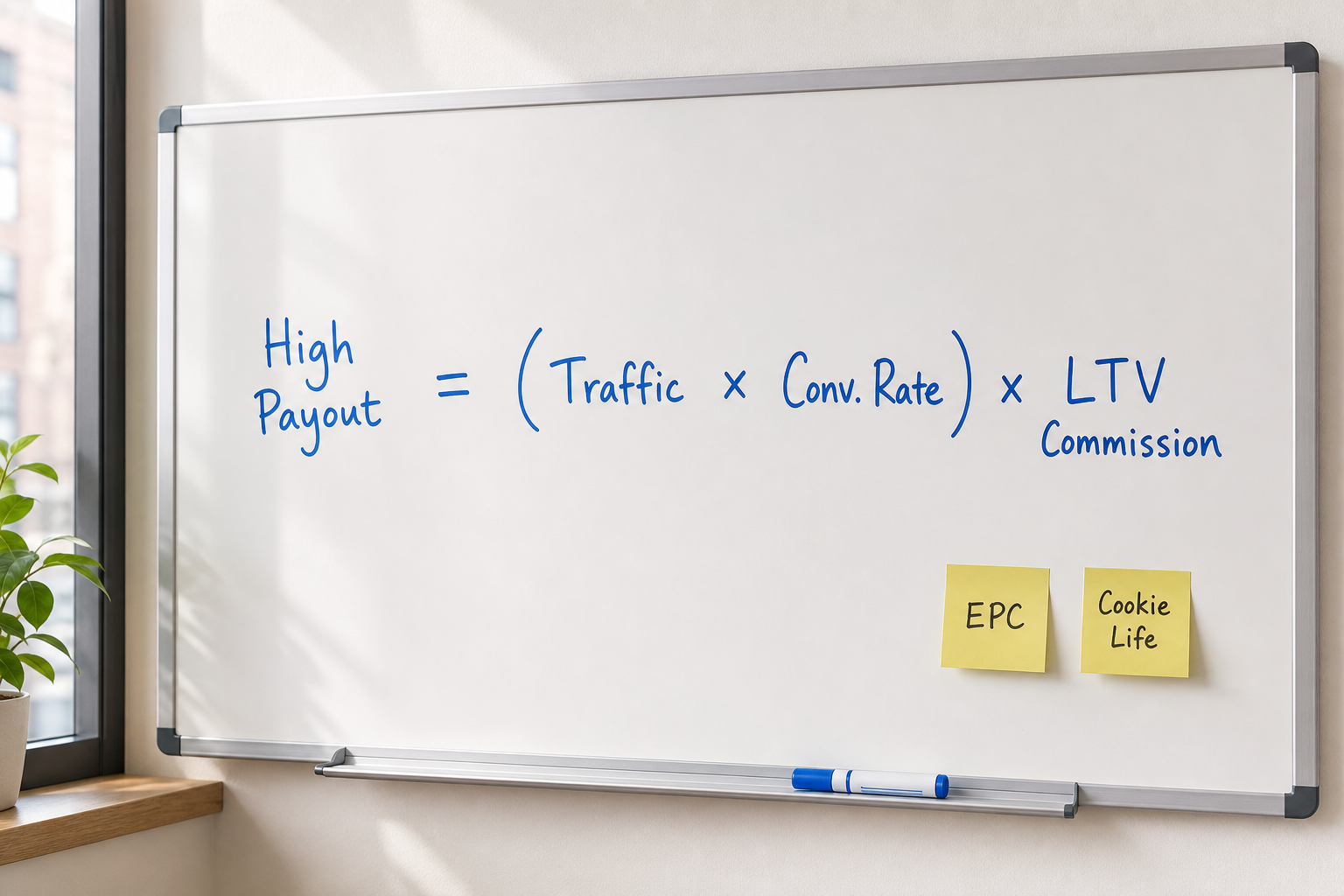
1. Commission Structure (CPA vs. RevShare vs. Recurring)
Your earning ceiling is dictated by the payment model the network specializes in.
- Cost Per Action (CPA): A flat fee paid for a specific action, such as a lead submission or a sale. This is common in finance and high-ticket software.
- Revenue Share (RevShare): A percentage of the initial sale. Common in e-commerce and retail.
- Recurring Commission: The holy grail for digital marketers. You receive a percentage of the customer's subscription fee for as long as they remain a customer. Networks that natively support robust lifetime value (LTV) tracking for SaaS products will almost always yield the highest long-term payouts.
2. Earnings Per Click (EPC)
EPC is the great equalizer. It tells you exactly how much money affiliates are making, on average, every time they send a click to a merchant on the network.
Consider this tradeoff:
- Merchant A offers a 50% commission on a $100 product, but their landing page is terrible. It converts at 0.5%. Your EPC is $0.25.
- Merchant B offers a 15% commission on a $100 product, but their checkout flow is highly optimized. It converts at 5%. Your EPC is $0.75.
The "lower paying" merchant actually pays you three times as much per visitor. The best networks provide transparent, 7-day and 30-day EPC metrics across their merchant base so you can forecast your actual earnings.
3. Payout Frequency and Thresholds
Cash trapped in a dashboard is useless. Payout frequency dictates your operational cash flow.
- Net-15 / Net-30: You are paid 15 or 30 days after the end of the month in which the commission was locked. This is the industry standard.
- Net-60 / Net-90: Avoid these unless the payouts are astronomical. Waiting three months to get paid restricts your ability to reinvest in content or ads.
Similarly, look at the payout threshold. A network with a $50 minimum threshold via direct deposit is vastly superior to one requiring $500 via wire transfer, especially if you are just launching an affiliate marketing side hustle.
4. Cookie Duration and Attribution
When a user clicks your link, a tracking cookie is placed on their browser. If the cookie duration is 24 hours (like Amazon Associates), and the user buys on day two, you get nothing. If the network standard is 30, 60, or 90 days, your effective payout rate increases significantly because you capture delayed conversions.
The Top 5 Affiliate Networks Compared (2026)
We evaluated dozens of platforms based on payout reliability, merchant quality, commission structures, and technology. For marketers focusing on SaaS, tech, and digital products, these five networks represent the most lucrative opportunities available today.
1. PartnerStack: The King of B2B SaaS & Recurring Commissions
If your goal is to build a portfolio of recurring revenue, PartnerStack is currently unmatched. Unlike traditional networks that were built for retail and adapted for software later, PartnerStack was engineered specifically for the complexities of B2B SaaS.
- Best For: B2B software, digital tools, and recurring subscription models.
- Typical Payout Model: 15% to 30% recurring RevShare.
- Payout Terms: Monthly. Once a commission clears the holding period, PartnerStack pays out via Stripe or PayPal with incredibly low minimum thresholds (often as low as $5).
- The Verdict: PartnerStack pays the "best" over the long term. Earning 20% on a $200/month enterprise software subscription yields $480 a year from a single conversion. Because the platform specializes in high-retention software products, your initial effort compounds predictably.
The Tradeoff: The merchant base is strictly software and B2B services. If your audience is looking for physical products or cheap consumer apps, this network will not serve you.
2. Impact: Best for Custom Tech Partnerships & Flexible Terms
Impact (formerly Impact Radius) has completely reshaped the affiliate landscape over the last few years. It positions itself as a "partnership management platform" rather than a traditional affiliate network, which is more than just marketing jargon.
- Best For: Premium direct-to-consumer (DTC) brands, high-growth tech startups, and massive financial services.
- Typical Payout Model: Highly variable. Offers both high flat-rate CPA and recurring RevShare.
- Payout Terms: Configurable by the brand, but Impact allows affiliates to withdraw cleared funds on a set day of the month or whenever a specific threshold is met (e.g., $50).
- The Verdict: Impact excels at custom agreements. Through their electronic Insertion Order (IO) system, you can easily negotiate custom payout rates directly with the brand's affiliate manager right inside the platform. If you drive high-quality traffic, you can leverage Impact's infrastructure to secure private, elevated commission tiers.
The Tradeoff: The interface is incredibly dense. It offers enterprise-grade reporting, which means the learning curve for a new affiliate can be steep compared to simpler dashboards.

3. ShareASale: The Sweet Spot for WordPress Tools & Mid-Market Software
Acquired by the global giant Awin, ShareASale is one of the oldest networks in the game, yet it continues to print money for affiliates. It is deeply entrenched in the mid-market software space, making it a goldmine for creators in the web development, marketing, and design niches.
- Best For: WordPress plugins, themes, SEO tools, and mid-tier digital services.
- Typical Payout Model: Flat CPA or fixed percentage RevShare.
- Payout Terms: Dependable. They pay on the 20th of every month for the previous month's locked commissions, provided you hit the modest $50 threshold.
- The Verdict: ShareASale is the workhorse of the affiliate industry. It rarely misses a payment cycle and hosts thousands of incredibly reliable software merchants (like WP Engine, OptinMonster, and Namecheap). It is arguably the best network for beginners to secure their first consistent payouts.
The Tradeoff: The user interface feels like it hasn't been significantly updated since 2012. You have to sift through a lot of outdated or low-quality merchants to find the gems.
4. CJ Affiliate: Best for Enterprise Software & High-Ticket CPA
CJ Affiliate (formerly Commission Junction) is the corporate giant of the affiliate space. If a massive, publicly traded tech company has an affiliate program, there is a very high probability it is hosted on CJ.
- Best For: Fortune 500 tech brands, enterprise cybersecurity, and major hosting providers.
- Typical Payout Model: Flat-rate CPA. This is where you will find many high paying affiliate programs offering $200 to $500+ per validated lead or sale.
- Payout Terms: Generally Net-20. Payments are issued reliably around the 20th or 28th of the month via direct deposit.
- The Verdict: CJ Affiliate pays incredibly well if you have the audience for enterprise-level products. Their Network EPC metrics are historically accurate, allowing you to confidently predict the value of your traffic.
The Tradeoff: CJ is ruthless about account activity. If you fail to generate a commission within a rolling six-month period, they will deactivate your account. It is not a platform for "set it and forget it" dabblers.
5. ClickBank: Highest Commission Rates for Digital Products
ClickBank operates differently than the previous four. It is both a network and a retailer of digital information products, courses, and software. It is famous for offering some of the highest percentage-based payouts on the internet.
- Best For: Info-products, specialized niche software, and massive RevShare cuts.
- Typical Payout Model: 50% to 75% RevShare.
- Payout Terms: Exceptional cash flow. ClickBank offers weekly or bi-weekly payouts via direct deposit once you meet their Customer Distribution Requirement (a fraud-prevention rule requiring sales from multiple different credit card numbers).
- The Verdict: From a pure percentage standpoint, ClickBank pays the best. Taking home 75% of a $150 product sale allows for aggressive paid advertising strategies that wouldn't be profitable on other networks.
The Tradeoff: Product quality is highly variable. Because the barrier to entry for merchants is lower, there are a lot of low-quality offers on the platform. High refund rates can result in "clawbacks," where your earned commissions are deducted from future payouts. You must rely heavily on their "Gravity" metric to identify products that actually stick.
Affiliate Networks vs. In-House Programs (The Payout Tradeoff)
As you evaluate these platforms, you will inevitably encounter merchants who run private, "in-house" affiliate programs using tools like Rewardful or FirstPromoter.
A common myth is that in-house programs always pay better because there is no "network fee" eating into the merchant's margin. While it's true that a brand might offer a 30% commission privately versus 25% on a network, that 5% premium comes with hidden risks.
When a brand uses a network, they are legally bound to fund their account. The network handles the compliance and the payouts. When a brand runs an in-house program, you are essentially an unsecured creditor relying on the goodwill of their accounting department.
If a startup runs out of funding or decides to pivot, private affiliate payouts are often the first thing to be delayed or cancelled. Giving up a few percentage points to a network like Impact or PartnerStack is a cheap price to pay for guaranteed escrow and reliable payment infrastructure.
The Hidden Costs: How Affiliate Networks Make Money
Understanding how an affiliate network generates revenue is crucial to understanding why some programs pay better than others. Networks are not charities; they take a cut of the action.
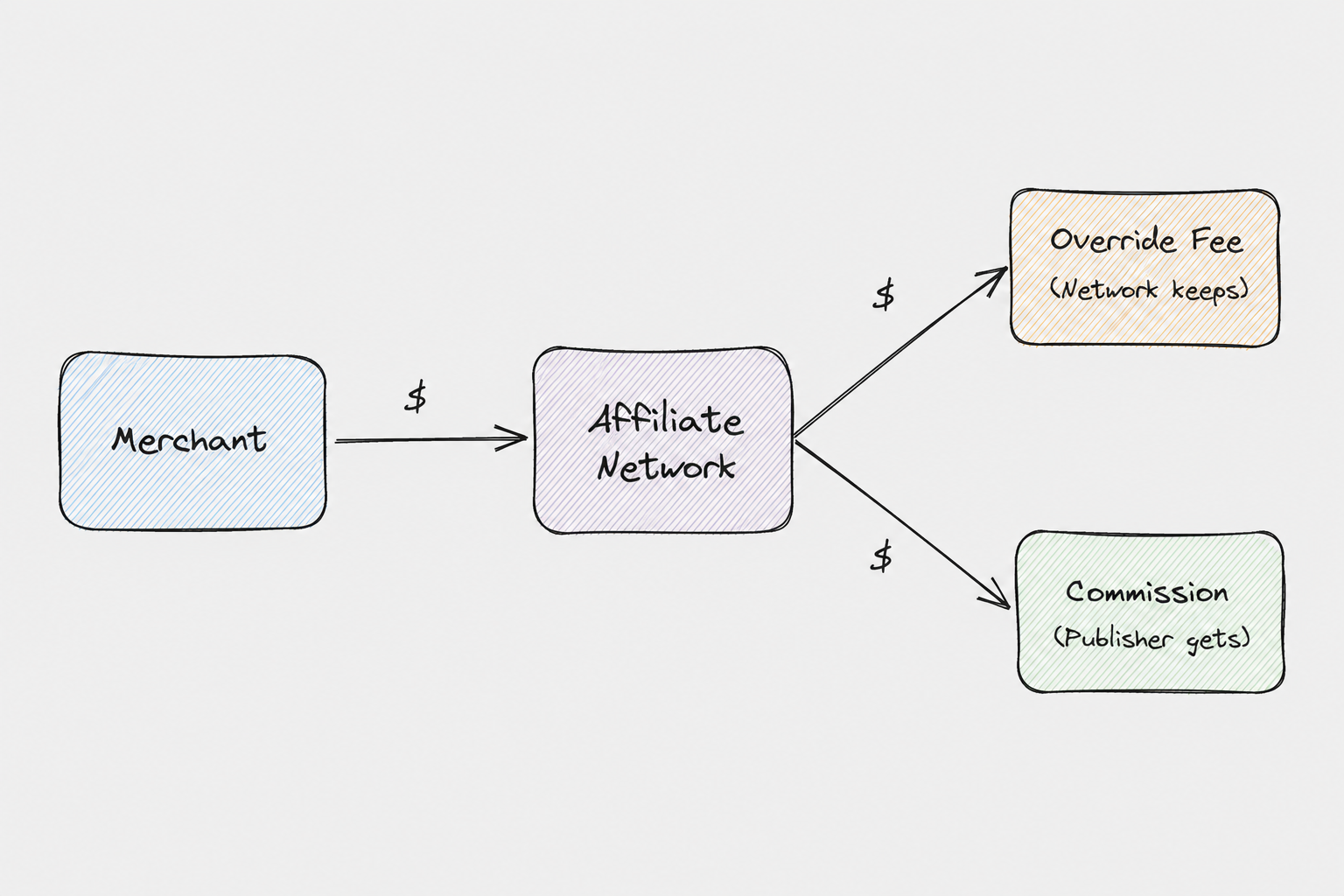 Most networks charge merchants an Override Fee. This is usually a percentage of the affiliate commission, typically ranging from 20% to 30%.
If a merchant agrees to pay you a $100 commission for a software sale, they actually pay $120 to $130 in total ($100 to you, and $20-$30 to the network). Because of this override, brands operating on tight margins might artificially lower the base commission rate they offer to affiliates on the network to protect their profitability.
Additionally, networks charge merchants hefty setup fees and monthly minimums (often thousands of dollars). This acts as a natural quality filter. If a software company can afford the $3,000 setup fee and $500 monthly minimum to be on Impact, they likely have a proven product, stable finances, and the ability to honor your commission payouts.
The 2026 Landscape: AI Agents and Bulletproof Tracking
We cannot discuss payouts without discussing attribution. In 2026, privacy regulations and aggressively strict browser policies (like Apple's Intelligent Tracking Prevention) routinely block traditional third-party cookies.
If a network relies on outdated, cookie-based tracking, you will lose up to 30% of your rightful commissions simply because the browser blocked the tracking script.
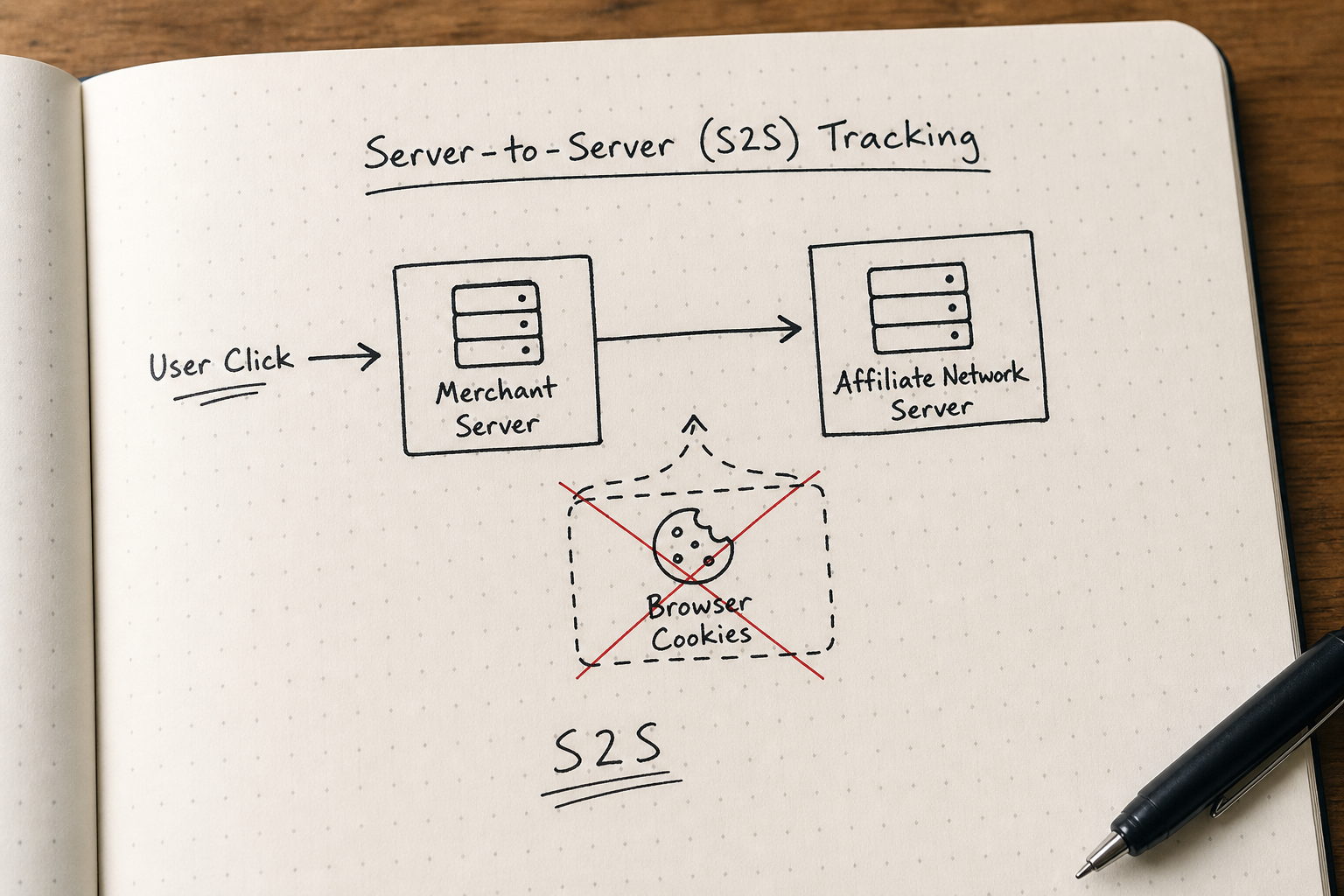
The networks that pay the "best" today are the ones investing heavily in Server-to-Server (S2S) tracking. With S2S, the tracking data is passed directly from the merchant's backend server to the affiliate network's server, completely bypassing the user's browser limitations. Networks like Impact and PartnerStack enforce S2S integrations for their top merchants, effectively guaranteeing your payouts against ad-blockers.
 Furthermore, the integration of AI is changing how affiliates operate. Networks are now deploying AI agents at zero cost to affiliates that analyze audience intent and automatically optimize which merchant links to display. AI is also being utilized heavily on the backend for fraud prevention, ensuring that malicious bot traffic doesn't drain merchant budgets, which keeps payouts high for legitimate human creators.
Red Flags: How to Spot Networks That Won't Pay
While the industry has matured, predatory platforms still exist. If you are questioning whether a specific affiliate marketing offer is legit, look for these three red flags in the network's terms of service:
- Sky-High Payout Thresholds: If a network requires a $500 or $1,000 minimum balance before issuing a payout, they are relying on "breakage"—the statistical probability that affiliates will give up before hitting the threshold, allowing the network to keep the unpaid funds.
- Excessive "Shaving": Shaving is the unethical practice of deliberately failing to record a percentage of legitimate clicks or conversions. If you are sending targeted, high-intent traffic but seeing a 0% conversion rate across multiple days, pause your campaigns immediately.
- Vague Clawback Policies: A clawback is when a network deducts money from your account because a customer refunded a product. While standard, predatory networks will execute clawbacks months after a sale without providing proof of the refund.
How to Get Accepted (And Secure Premium Payouts)
The highest-paying networks actively gatekeep their platforms. They want to protect their merchants from low-quality spam traffic.
If you want to get approved by top-tier platforms like Impact or CJ Affiliate, you cannot apply with a barebones blog or a generic social media account. You need:
- A clear, niche-specific website with at least 15-20 pieces of high-quality content.
- A professional email address tied to your domain (e.g.,
yourname@yourwebsite.com), not a Gmail account. - A transparent disclosure of your traffic sources. If you run paid search, say so. If you rely on SEO, provide your monthly organic traffic estimates.
As the industry grows, so does the demand for experienced partnership managers. It is worth noting that understanding how to navigate these platforms from the affiliate side makes you highly marketable to brands. Many creators eventually leverage this expertise into lucrative affiliate marketing jobs, managing the exact programs they used to promote.
Frequently Asked Questions
Which affiliate network is best for beginners?
For sheer reliability and ease of use, ShareASale is the most highly recommended network for beginners. The $50 minimum threshold is highly achievable, the interface is straightforward, and the approval process is generally more lenient than enterprise networks like CJ Affiliate.
Can I negotiate my commission rate on a network?
Yes, absolutely. Once you prove you can drive volume, almost all top-tier networks allow you to communicate directly with the brand's affiliate manager. You can negotiate custom payout tiers, hybrid models (e.g., a flat $50 CPA plus a 10% RevShare), or request exclusive discount codes for your audience.
Do I have to pay to join an affiliate network?
No. Legitimate affiliate networks are completely free for affiliates to join. The merchants pay the setup fees, monthly minimums, and network overrides. If a platform ever asks you for a "registration fee" or requires you to purchase a product to unlock the ability to promote it, it is likely a scam or an MLM scheme.
How long does it actually take to get paid?
The industry standard is Net-30. If you generate $500 in commissions throughout the month of October, those commissions are typically "locked" (finalized against refunds) by November 15th, and paid out to your bank account by November 30th.
Final Thoughts: Bypassing the Clutter
Determining which affiliate network pays best comes down to matching the platform's strengths with your audience's needs. If you are pushing high-volume retail goods, ShareASale will serve you well. If you are targeting B2B professionals and want to build a compounding income stream, PartnerStack is your best option.
Finding the right programs inside these massive networks can still feel like finding a needle in a haystack. To bypass the outdated lists and fragmented dashboards, you can use AffiliList to filter through over 10,000 curated affiliate programs. By focusing heavily on SaaS and digital tools, you can instantly compare commission structures, payout terms, and network hosts in one streamlined view, ensuring you only partner with brands that actually value your traffic.