
Affiliate Program Database Alternatives for Get Your Affiliate Program Listed in Dire
Discover modern alternatives to legacy affiliate program databases. Learn how to list your program in top directories to recruit high-performing publishers.

Launching an affiliate program is only half the battle. You can configure the most generous commission structure, install tracking scripts, and upload a library of promotional assets, but if active publishers do not know your program exists, your recruitment funnel sits at zero.
Many merchants assume that once an affiliate program goes live, bloggers and content creators will automatically discover it. When organic discovery fails, program managers often hunt for legacy directory databases like Affiliate Program Database (APDB), AffCatalog, or outdated web lists. However, relying solely on legacy submission portals frequently results in dead ends: broken links, cluttered interfaces, unvetted traffic, and hidden listing fees that produce no qualified publisher applications.
To build a high-performing partner channel, you need to understand how modern affiliate program directories operate, what alternatives exist to traditional databases, and how to format your program data so top-tier publishers apply. This guide covers the exact workflow for submitting your affiliate program to directories, optimizing your offer for indexation, and utilizing curated discovery platforms to recruit active, revenue-generating partners.
Why Directory Listings Drive Intent-Driven Affiliate Recruitment
Outbound affiliate recruitment—cold emailing bloggers, sending LinkedIn messages to influencers, and pitching site owners—has an average response rate of less than 3%. It requires heavy manual labor, custom outreach sequences, and constant follow-up.
Directory listings operate on inbound intent. When an affiliate marketer, niche site owner, or media buyer browses an affiliate directory, they are actively looking for products to promote. They already have established traffic, an audience in a specific vertical, and content channels ready for monetization.
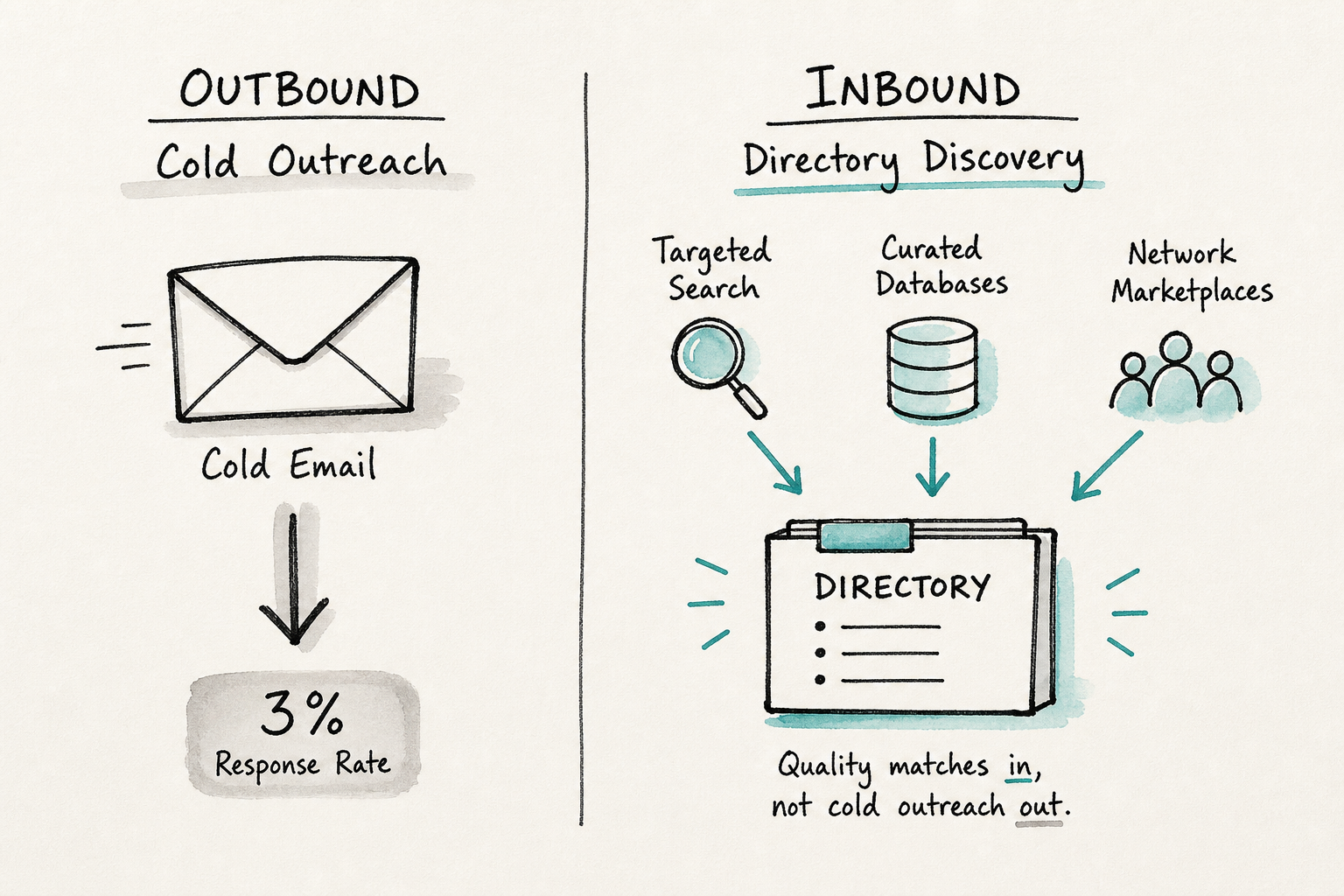 When an affiliate searches for new monetization opportunities, they typically utilize three main discovery paths:
- Targeted Search Queries: Searching Google for queries like "best SaaS affiliate programs," "high-paying software affiliate terms," or specific product category terms.
- Curated Affiliate Directories: Browsing centralized, transparent databases that organize offers by niche, cookie duration, and payout terms.
- Network Marketplaces: Searching inside closed affiliate networks where they already maintain an active account.
Directories bridge the gap between your brand and publishers who prefer independent, direct-to-merchant programs or specific tracking software platforms like FirstPromoter, Rewardful, or Tapfiliate. By securing listings across prominent directory channels, you establish passive partner acquisition pathways that bring in qualified applications every week.
Pre-Submission Checklist: Formatting Your Program Assets
Before submitting your program to any directory or marketplace, your internal offer page must be fully optimized. Directory editors and automated indexing bots evaluate your program based on clarity, transparency, and merchant credibility. If your application landing page lacks essential data, your submission will likely be rejected or buried in search results.
+-----------------------------------------------------------------------+
|                 MERCHANT AFFILIATE LANDING PAGE                       |
+-----------------------------------------------------------------------+
| [ Hero Offer ]  "Earn 30% Recurring Commission on Every SaaS Sale"     |
|                                                                       |
| [ Program Terms Table ]                                               |
| - Commission Rate: 30% Monthly Recurring                              |
| - Cookie Window: 60 Days                                              |
| - Payout Frequency: Net-30 via PayPal / Stripe / Wise                  |
| - Minimum Payout: $50                                                 |
| - Tracking Software: FirstPromoter                                    |
|                                                                       |
| [ Promotional Guidelines & Restrictions ]                             |
| - Allowed: Organic Search, Email Newsletters, Social Media Reviews    |
| - Prohibited: Brand Search Bidding, Spam Email, Misleading Claims     |
|                                                                       |
| [ Application Form ] -> [ Instant / Manual Approval Workflow ]       |

+-----------------------------------------------------------------------+
1. Dedicated Affiliate Landing Page URL
Your website must host an unblocked, publicly accessible landing page (typically located at yourdomain.com/affiliates or yourdomain.com/partner). Avoid placing your sign-up form behind a login wall or gating program terms behind a forced registration step. Experienced affiliates will skip offers that do not disclose commission structures up front.
2. Standardized Program Specifications
Directories require structured data fields during the submission process. Prepare the following details beforehand:
| Specification Field | Recommended Standard | Example Specification | Why It Matters for Directories |
|---|---|---|---|
| Primary Niche / Category | Single primary, 2-3 secondary tags | B2B SaaS / Marketing Software | Ensures placement in relevant category filters |
| Commission Model | CPS, CPL, Recurring, Tiered | 30% Monthly Recurring | Determines visibility in "High Paying" filters |
| Cookie Duration | 30 to 90 Days | 60 Days | Crucial metric for content site comparison |
| Payout Threshold & Terms | Low threshold, flexible options | $50 minimum, Net-30 terms | Reduces friction for new affiliate sign-ups |
| Tracking Platform | Name of software or network | Rewardful / ShareASale | Helps affiliates trust tracking accuracy |
| Allowed Traffic Channels | Clear allowed/prohibited channels | SEO, Email allowed; No PPC on brand terms | Protects brand reputation & prevents compliance disputes |
3. Clear Promotional Assets and Guidelines
When directories review your program, they look for signages of an active, well-managed program. Include direct links to brand creative assets, swipe copy guidelines, and compliance rules on your primary landing page. Merchants who integrate their affiliate tracking cleanly using top-tier tracking software or specialized platforms like Easy Affiliate or custom membership site tools (Brilliant Directories) experience higher directory approval rates because the infrastructure is proven and reliable.
Evaluating Legacy Affiliate Databases vs. Modern Directory Alternatives
Historically, merchant managers relied on legacy directories to broadcast their affiliate offers. Understanding the strengths and weaknesses of traditional databases versus modern directory alternatives ensures you allocate time and budget toward platforms that actually yield publisher traffic.
The Problem with Legacy Affiliate Databases
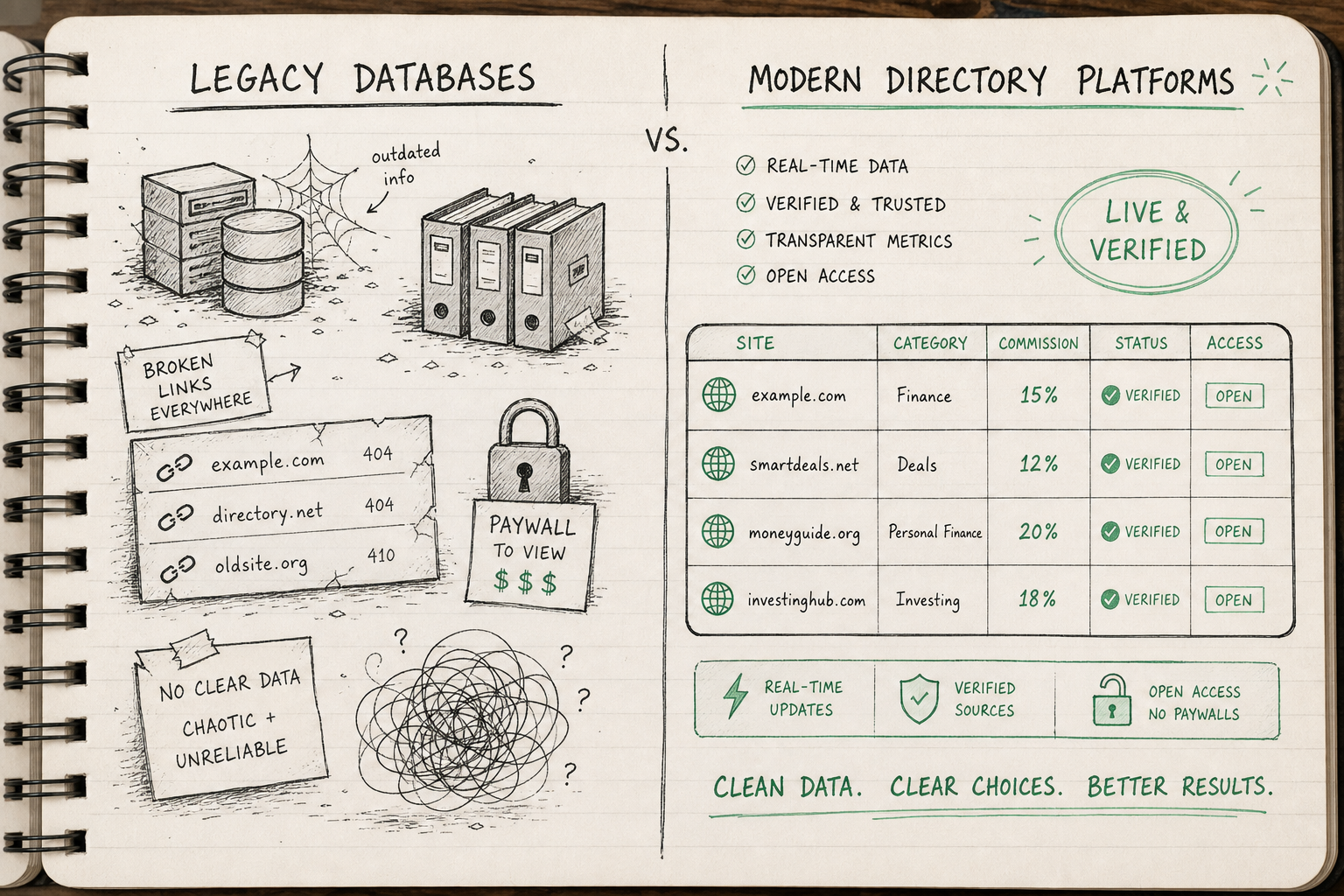
Legacy platforms like Affiliate Program Database (APDB), AffCatalog, or older web listings built in the mid-2000s were once the primary discovery hub for webmasters. However, many of these legacy directories suffer from key issues:
- Stale and Unverified Listings: Thousands of broken links, defunct brands, and expired commission offers clutter the database, driving active affiliates away.
- Outdated UI/UX: Cluttered interfaces make filtering by payout model, niche, or software integration difficult for content creators.
- Paywalled Submissions Without Traffic Guarantees: Several legacy sites demand high upfront listing fees without providing verified traffic metrics or indexation guarantees.
- Lack of Transparency: Many older directories hide commission rates or force users to create accounts just to view basic terms.
Modern Directory Alternatives: What Active Affiliates Use Today
Modern affiliate marketers favor curated, user-friendly discovery engines over bloated databases. Platforms like AffiliList have rewritten the standard for how programs are indexed, categorized, and displayed.
+--------------------------------------------------------------------------+
|                  LEGACY DATABASES vs. MODERN DIRECTORIES                  |
+--------------------------------------------------------------------------+
| FEATURE                   | LEGACY DATABASES      | MODERN DIRECTORIES   |
+---------------------------+-----------------------+----------------------+
| Data Freshness            | Often Outdated        | Real-Time / Verified |
| Access Model              | Gated / Paywalled     | Open Access          |
| Tagging & Filtering       | Basic Categories      | Advanced Multi-Tag   |
| Primary Niche Focus       | General E-commerce    | SaaS & Digital Tools |
| Merchant Submission       | Manual / Clunky Email | Dedicated Portal     |
| UX / Ad Clutter           | High Ad Density       | Clean & Minimalist   |

+--------------------------------------------------------------------------+
When evaluating directory alternatives, prioritize platforms that emphasize transparency, clear categorization, and open access:
- Curated Open-Access Directories (e.g., AffiliList): AffiliList provides an extensive database of verified affiliate programs with a strong focus on SaaS, digital tools, and emerging tech verticals. By offering open access to crucial metrics like commission rates, recurring structures, and cookie terms without requiring forced registrations, it attracts high-intent marketers looking for top-converting offers.
- In-App Network Marketplaces: If your program runs on traditional networks like ShareASale, Awin, Impact, or PartnerStack, your program is automatically listed within their closed internal publisher portals.
- Niche-Specific Aggregators: Specialized blogs and industry roundups that aggregate tools within specific sub-verticals (e.g., AI tools, HR software, crypto finance).
Step-by-Step Guide: How to Get Your Affiliate Program Listed in Directories
To maximize your program's visibility, follow this systematically structured submission workflow.
+-----------------------------------------------------------------------+
|                 DIRECTORY SUBMISSION WORKFLOW                         |
+-----------------------------------------------------------------------+
| STEP 1: Audit Program Terms & Select High-Performing Categories       |
|                                                                       |
| STEP 2: Prepare Standardized Submission Asset Package                 |
|                                                                       |
| STEP 3: Submit to Curated Platforms via Merchant Portals (AffiliList) |
|                                                                       |
| STEP 4: Submit to Supplemental Legacy Databases & Industry Lists      |
|                                                                       |
| STEP 5: Set Up Conversion Tracking & Monitor Directory Referral Traffic|

+-----------------------------------------------------------------------+
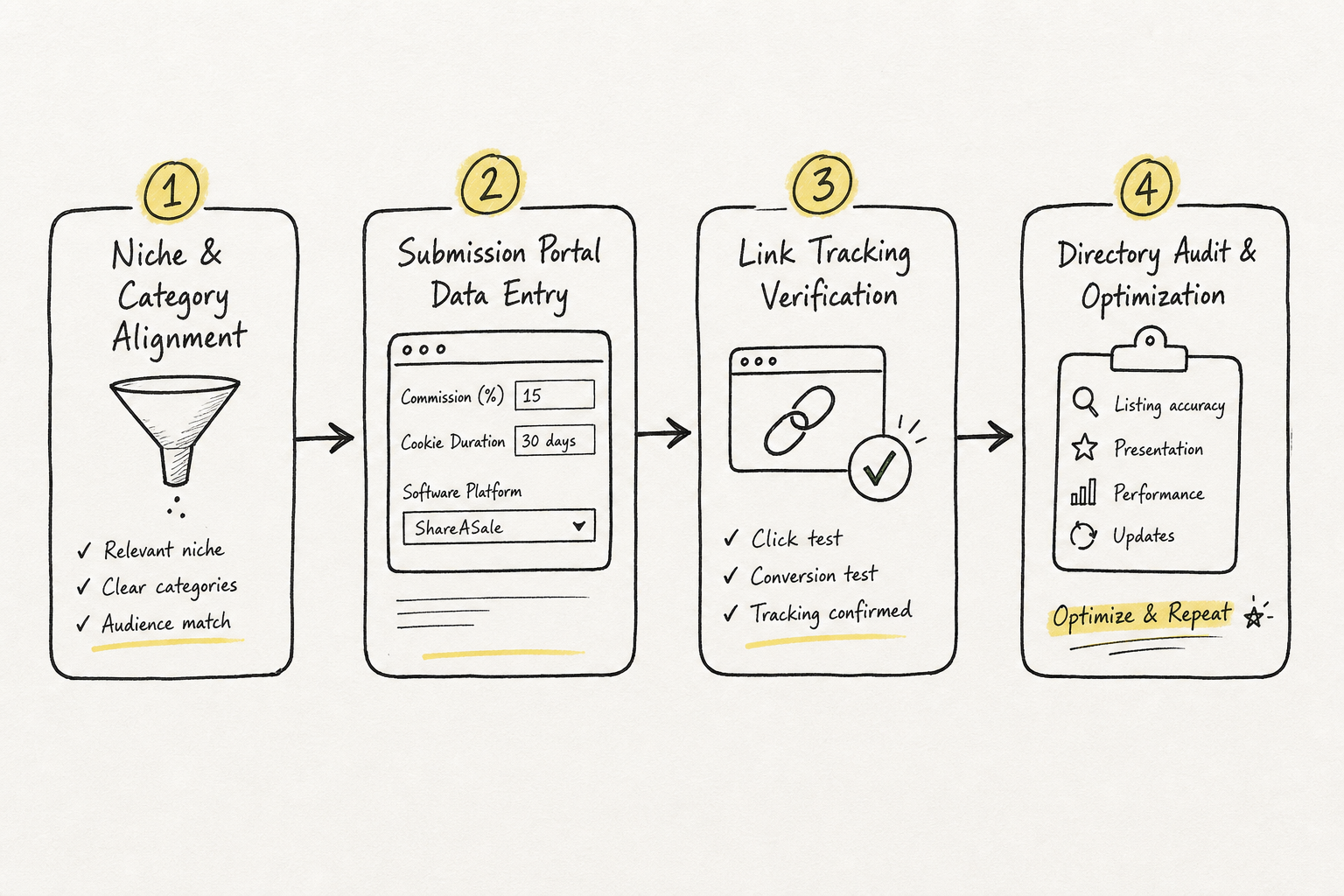
Step 1: Define Your Category and Niche Alignment
Before filling out submission forms, determine where your offer fits within standard directory taxonomy. Directories organize programs by broad categories and hyper-specific tags.
For instance, if your product is an AI writing tool, your primary category might be SaaS / Software, with secondary tags such as Artificial Intelligence, Content Creation, and Copywriting. Proper classification ensures your offer appears when users search for specific verticals, such as profitable affiliate marketing niches or dedicated roundups of best niches for affiliate marketing.
If you are unsure how to position your offer against market competitors, review guidelines on how to pick a niche for affiliate marketing to identify high-volume search categories.
Step 2: Utilize Dedicated Merchant Submission Portals
Top-tier directories provide direct merchant submission interfaces. Rather than emailing support desks or filling out generic contact forms, use structured submission portals.
When submitting to AffiliList:
- Navigate to the dedicated submission portal on the website.
- Enter your program's direct affiliate page URL (e.g.,
https://yourbrand.com/affiliates). - Select your software platform (e.g., FirstPromoter, Rewardful, ShareASale).
- Specify your exact commission rates (e.g., "30% recurring", "$100 flat payout per sale").
- Input your cookie duration and payout terms.
- Submit your listing for editorial verification and publishing.
Step 3: Ensure Accurate Link Tracking and Attribution
When your program goes live in directories, incoming traffic must be tracked effectively to measure directory ROI. Many program managers construct distinct tracking tags or custom landing page parameters for individual directory sources.
Ensure your tracking parameters correctly capture incoming directory clicks without throwing redirect errors or dropping tracking cookies. For a breakdown on configuring tracking links and technical parameter setups, consult technical setup video walkthroughs (Referral Factory on YouTube).
Step 4: Audit and Update Legacy Listings Periodically
If you have submitted your program to older web directories in the past—such as those highlighted in classic industry listicles (AM Navigator)—conduct an annual audit. Update outdated commission percentages, refresh broken promotional links, and ensure your program contact email reaches an active affiliate manager.
Real-World Scenario: How a B2B SaaS Brand Scaled Sign-ups by 310%
To understand the practical impact of directory listings over blind cold outreach, consider the case of CloudMetrics, a mid-tier B2B analytics platform.
The Initial Challenge
CloudMetrics launched an internal affiliate program offering a 15% recurring commission with a 30-day cookie window. They assigned an internal marketer to perform cold outreach, sending 500 personalized emails to SaaS bloggers and tech reviewers.
The Result:
- Total Emails Sent: 500
- Open Rate: 22% (110 opens)
- Response Rate: 1.8% (9 replies)
- Active Approved Affiliates: 2
- Total Monthly Revenue Generated from Outreach: $240
The cold outreach model was time-intensive and yielded minimal ROI.
The Directory-First Pivot
CloudMetrics re-evaluated their affiliate recruitment strategy:
- Offer Restructuring: They boosted their commission from 15% to 30% recurring and extended the cookie window to 60 days, putting them in competitive standing with high paying affiliate programs.
- Landing Page Redesign: They created a clean landing page clearly outlining payout rules, allowed traffic sources, and software integrations.
- Directory Distribution: They submitted their revised program to curated directories including AffiliList, as well as relevant niche aggregators and platform marketplaces.
OUTREACH vs. DIRECTORY STRATEGY RESULTS (90 DAYS)

Metric                  Cold Email Outreach     Directory Listings Strategy
---------------------------------------------------------------------------
Upfront Hours Spent     60 Hours                6 Hours
Direct Financial Cost   $1,200 (Outreach Tools) $0 - $150 (Listing Fees)
Publisher Applications  9                       118
Approved Affiliates     2                       42
Active Sales Generated  3                       38
Monthly Recurring Rev.  $240                    $4,850
Key Takeaways from the Pivot
By listing on dedicated affiliate directories where publishers actively browse for offers, CloudMetrics eliminated outbound friction. Influencers and content site owners who were already building articles around modern analytics tools applied directly. The inbound nature of directory listings ensured that applicants already had relevant traffic channels ready for monetization.
The Myth of Volume: Why Listing in 50 Generic Directories Fails
A common mistake among new affiliate managers is attempting to get listed in every web directory they can find, using blast submission services or spamming generic link directories.
Quality Over Quantity in Directory Submissions
Listing your offer on 50 low-quality link directories generates zero meaningful revenue and can harm your brand's search equity. Here is why the "volume approach" fails:
- Dead Traffic: Generic web directories receive negligible human traffic. Most visits come from automated scrapers, web crawlers, or SEO bots.
- Spam Applications: Unvetted directories attract low-quality applicants, bot networks, and coupon scrapers looking to hijack organic cart traffic rather than genuine content creators.
- Outdated Indexing: Search engines penalize or ignore link-farm directories. Getting listed on unmoderated platforms provides no SEO value and can flag your domain for bad neighborhood link profiles.
Instead, focus your submission efforts on 3 to 5 high-authority, transparent directories that serve your target niche. A single listing on a curated engine like AffiliList—which content creators actively reference when looking for top offers—delivers far higher conversion rates than dozens of low-tier web links.
For publishers evaluating programs, credibility is everything. Content creators frequently check guides on is affiliate marketing legit before applying to new merchant offers. A detailed, clean listing on an established directory signals that your brand is trustworthy, tracking is reliable, and payouts are guaranteed.
Optimization Framework: The "FAST" Directory Listing Model
To ensure your directory listing achieves maximum click-through rates and high application conversion, apply the FAST framework to your program presentation:
+-----------------------------------------------------------------------+
|                  THE "FAST" LISTING OPTIMIZATION MODEL                |
+-----------------------------------------------------------------------+
|                                                                       |
|   F - Frictionless Sign-up                                            |
|       Keep application fields short (Name, Website, Traffic Sources). |
|                                                                       |
|   A - Accurate Program Specifications                                 |
|       Display commission rates, cookie window, and software upfront.  |
|                                                                       |
|   S - Searchable Category Tags                                        |
|       Tag your offer with specific sub-verticals and software tools.  |
|                                                                       |
|   T - Transparent Payout Terms                                        |
|       Detail payment schedules, minimum payouts, and supported methods|
|                                                                       |

+-----------------------------------------------------------------------+
F — Frictionless Sign-up Workflow
Avoid requiring applicants to answer 15 mandatory essay questions or jump through complex background checks just to join your program. Keep your initial application simple: name, email, website URL/primary traffic channel, and promotional method. You can always prune inactive affiliates later.
A — Accurate Program Specifications
Directory users compare offers side-by-side. If your commission rate reads "Up to 50%" without clarifying that the standard rate is 10%, publishers will feel misled. State your baseline tier clearly, along with performance incentives for top producers.
S — Searchable Category Tagging
Assign exact category tags. If your software serves HR teams, tag it under HR Tech, SaaS, Enterprise, and Workforce Management. This ensures your offer appears in filtered searches across platform directories and niche listicles, such as targeted guides covering most profitable affiliate marketing niches.
T — Transparent Payout Terms
Specify payment schedules clearly: "Payouts processed on the 15th of every month via Stripe for all balances exceeding $50." Transparency eliminates uncertainty and encourages professional content creators—including those managing an affiliate marketing side hustle or running full-time publishing businesses—to partner with your brand.
How Affiliates Use Directories to Build Content
Understanding how publishers utilize directory listings enables you to format your offer to match their content creation workflows. Content creators browse directories to find offers for specific publishing models:
1. Niche Blog Review Sites
Bloggers building content around high-converting keywords rely on directories to identify relevant tools in their space. For example, a blogger following a guide on how to start a profitable affiliate marketing blog will browse directories to find SaaS tools with recurring commissions to feature in product roundups and tutorial guides.
2. Social Media & Visual Marketers
Visual marketers and Pinterest strategists look for programs with strong creative assets and generous cookie windows. Creators setting up an affiliate marketing program for pinterest actively look for visual product niches with easy link integration capabilities.
3. Career & Agency Partners
Digital agency staff, freelancers, and growth managers exploring full-time affiliate marketing jobs use directories to audit competitive program terms across specific software sectors.
+--------------------------------------------------------------------------+
|                  PUBLISHER INTENT & DIRECTORY USE CASES                   |
+--------------------------------------------------------------------------+
| PUBLISHER TYPE        | PRIMARY DIRECTORY GOAL   | KEY OFFER REQUIREMENT |
+-----------------------+--------------------------+-----------------------+
| Content Site / Blog   | Search monetizable tools | Long Cookie Window    |
| Social / Pinterest    | Find visual offers       | Strong Banners/Assets |
| Media Buyers / PPC    | Uncover high-EPC offers  | High Conversion Rate  |
| SaaS Review Portals   | Find recurring offers    | High Monthly LTV/CPS  |

+--------------------------------------------------------------------------+
When your directory entry clearly outlines EPC (Earnings Per Click), average order value (AOV), and conversion rates, you cater directly to professional publishers who possess the traffic to scale your revenue.
Frequently Asked Questions
What is the difference between an affiliate network marketplace and an affiliate directory?
An affiliate network marketplace (such as ShareASale, CJ, or Awin) requires both the merchant and the affiliate to operate on their proprietary tracking infrastructure and pay network handling fees. An affiliate directory (such as AffiliList) is an index platform that aggregates programs across all tracking platforms (FirstPromoter, Rewardful, Tapfiliate, ShareASale, custom setups) into a single curated database, allowing affiliates to find direct-to-merchant offers easily.
How much does it cost to get listed in an affiliate directory?
Listing fees vary by platform. Modern open-access directories like AffiliList allow merchants to submit their program details through a dedicated submission portal. Legacy databases may charge one-time submission fees or monthly feature rates. Avoid platforms that demand steep upfront fees without providing transparent domain authority, indexation verification, or traffic analytics.
How long does it take for a directory submission to get approved?
Most curated directories review submissions within 2 to 5 business days. During editorial review, moderators verify that your affiliate landing page is live, tracking links function correctly, commission structures are explicitly defined, and the domain meets safety standards.
Why was my affiliate program submission rejected?
The most common reasons for rejection include:
- A landing page that lacks clear commission terms or cookie durations.
- Sign-up forms placed behind forced login paywalls.
- Defunct or broken tracking links.
- Suspicious or unverified business domains.
- Misclassification of primary categories or spammy descriptions.
Action Plan: Elevating Your Program's Directory Presence
To transform your affiliate channel into a reliable inbound partner generator, execute this four-week action plan:
+-----------------------------------------------------------------------+
|                    30-DAY DIRECTORY EXECUTION PLAN                    |
+-----------------------------------------------------------------------+
| WEEK 1: Audit & Landing Page Optimization                             |
| - Standardize program terms (commission, cookie, payout methods).     |
| - Ensure your landing page live at yourdomain.com/affiliates.          |
|                                                                       |
| WEEK 2: Directory Asset Preparation & Taxonomy Selection               |
| - Write concise 100-word and 300-word merchant summaries.             |
| - Select target categories and sub-vertical tags.                     |
|                                                                       |
| WEEK 3: Primary Directory Submissions                                 |
| - Submit program data via the AffiliList submission portal.           |
| - Update network internal marketplace profiles (if applicable).      |
|                                                                       |
| WEEK 4: Performance Auditing & Publisher Onboarding                    |
| - Monitor referral traffic and conversion pathways in analytics.     |
| - Streamline welcome sequences for inbound publisher sign-ups.        |

+-----------------------------------------------------------------------+
By shifting away from outdated legacy databases and placing your offer in modern, open-access directories built for transparency, you position your brand directly in front of the active publishers, bloggers, and media buyers searching for their next lucrative partnership.