
Best Get Your Affiliate Program Listed in Directories Tools Beyond Affiliate Program
Discover top directories and tools to list your affiliate program. Scale publisher recruitment with curated databases, marketplaces, and automated workflows.
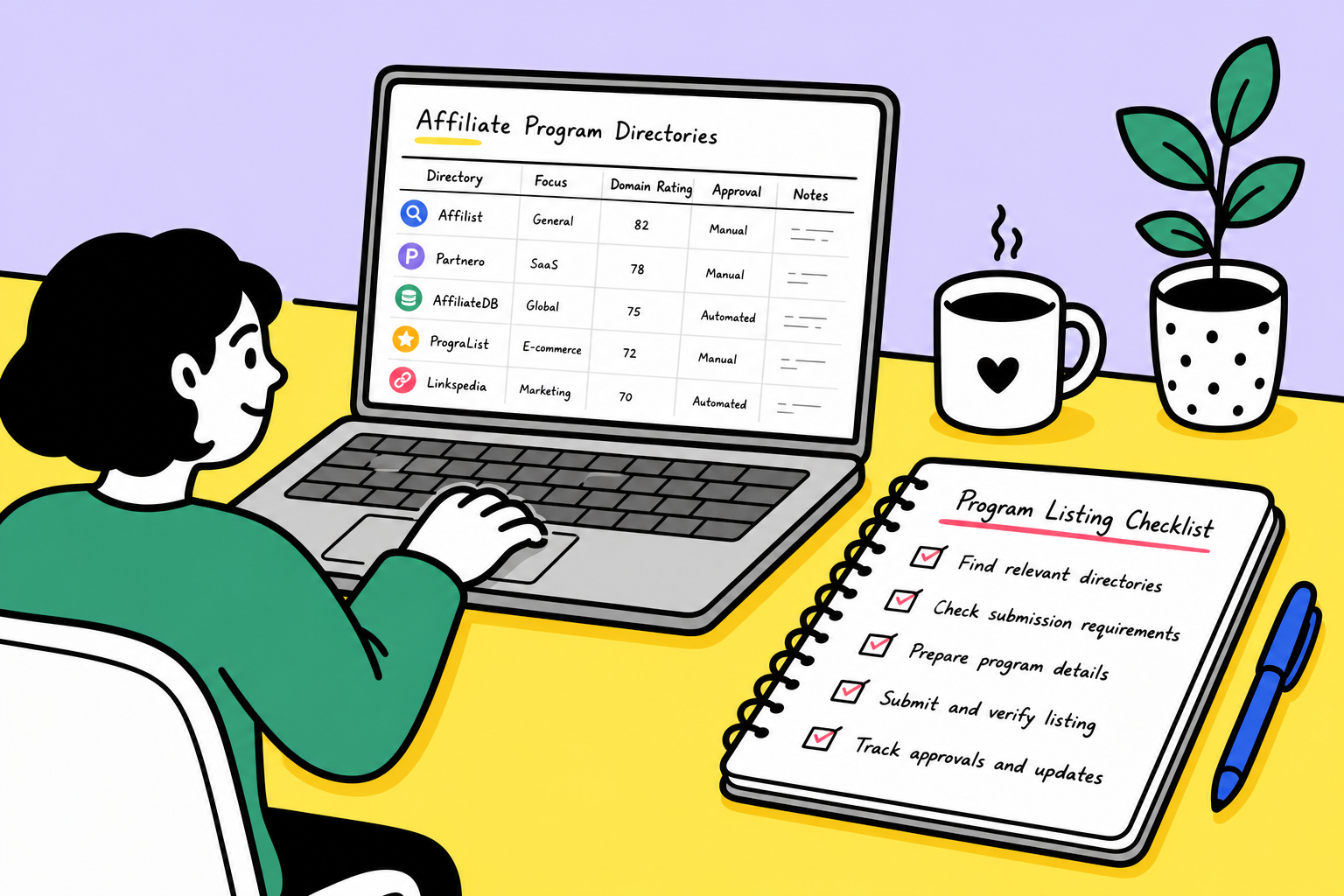
Setting up tracking software for a new affiliate program is rarely the hard part. Whether you configure Rewardful, FirstPromoter, Impact, or ShareASale, launching the backend takes only a few hours. The actual bottleneck begins the moment the dashboard goes live: finding active, high-converting publishers who want to promote your offer.
Many merchant managers begin by submitting their listing to legacy sites like Affiliate Program Database (APDB). While legacy indexes provided value years ago, many have devolved into abandoned link farms, clunky databases hidden behind registration walls, or ad-cluttered pages that modern creators actively ignore. High-performing publishers, content site owners, and media buyers looking for new partnerships do not browse outdated link lists. They search modern, curated databases that display verified commission structures, clear cookie windows, and transparent payout terms without forcing them through tedious sign-up forms.
If you rely strictly on legacy tools or passive directory submissions, your program risks remaining invisible. To scale partner acquisition, you need a modern distribution workflow. This guide breaks down the best tools, directories, and syndication platforms to get your affiliate program listed, evaluated, and promoted by top-tier publishers.
1. The Cold Start Problem for New Affiliate Programs
Launching an affiliate program without an established publisher network leads directly to the cold start problem. Your tracking link works, your promotional assets are uploaded, but application queues stay empty.
Most program managers attempt to solve this by sending cold emails on LinkedIn or pitching high-authority creators directly. Cold outreach can work, but it suffers from low reply rates because established affiliates receive dozens of unvetted pitches daily. Top creators prefer discovering programs through reputable aggregators where they can quickly verify commission percentages, payment frequencies, and tracking stability before spending time testing product angles.
+-----------------------------------------------------------------------+
|                 The Affiliate Cold Start Bottleneck                  |
+-----------------------------------------------------------------------+
|  [ New Program Launch ] --> Zero Initial Discovery                    |
|            |                                                          |
|            +--> Cold Outreach (Low Conversion, High Effort)           |
|            |                                                          |
|            +--> Legacy Directories (Outdated Data, Low Quality Traffic)|
|            |                                                          |
|            +--> Curated Directory Syndication (High Intent, Fast Scale)|

+-----------------------------------------------------------------------+
When an affiliate searches for new monetization opportunities, they look for specific data points:
- Commission Rates and Types: Whether the offer pays a recurring 30% monthly fee or a flat $500 bounty per customer.
- Cookie Duration: A 90-day cookie window signals confidence in product-market fit, whereas a 7-day window repels content creators with longer purchase funnels.
- Payout Terms and Thresholds: Affiliates want to know if payouts occur net-15 or net-30, and whether payments are handled via Stripe, PayPal, or Wise.
- Verified Program Metadata: Content creators who run an affiliate marketing side hustle or manage large niche review blogs avoid programs that obscure tracking terms behind mandatory sign-up walls.
Directories solve the discovery gap by putting your metadata directly in front of marketers who are actively comparing offers in your industry.
2. Preparing Your Program Page for Directory Submission
Before submitting your offer to any directory or distribution software, your public-facing affiliate landing page must be complete. Directory editors review your landing page to confirm that your business is legitimate and that your terms are clear before approving your listing.
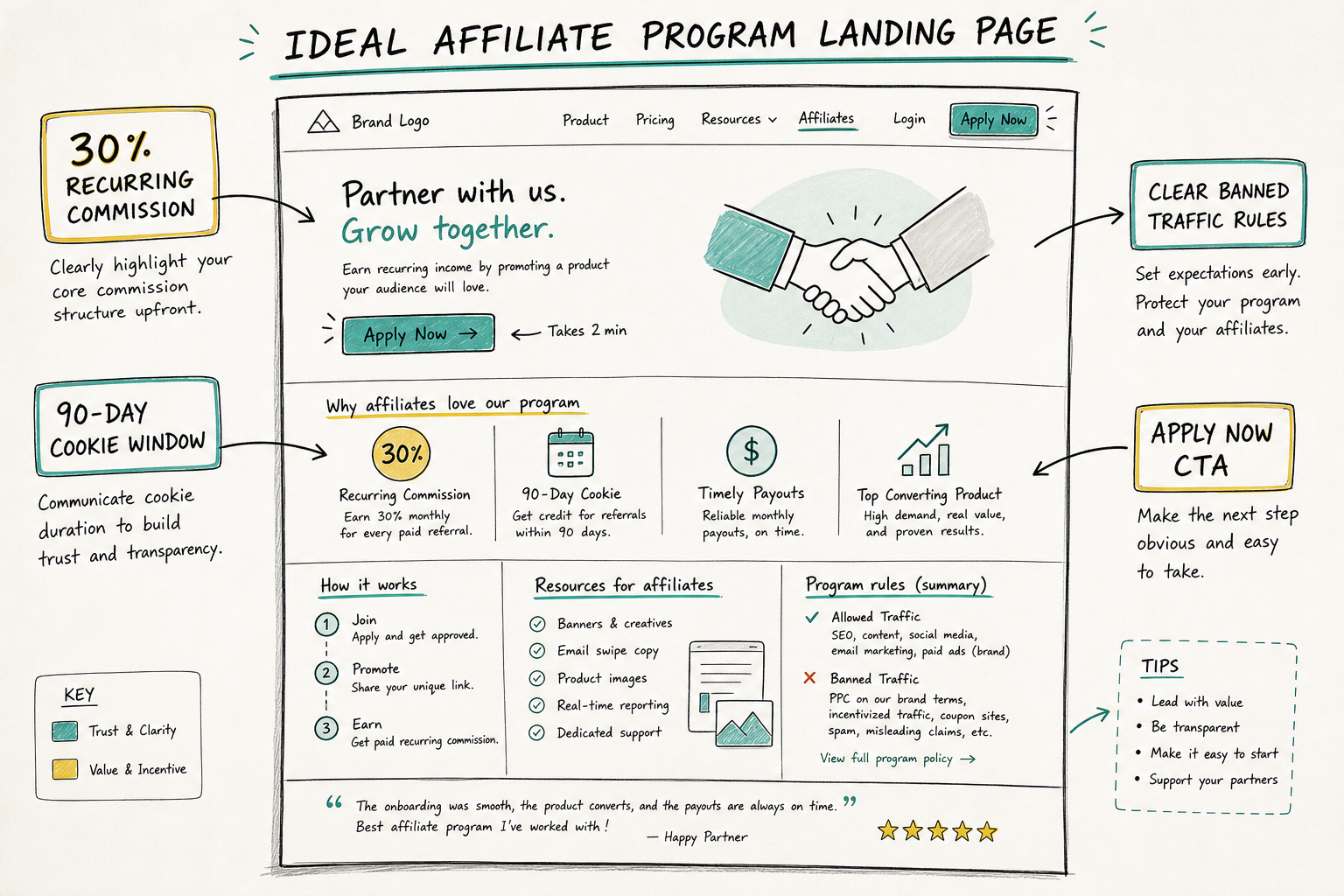
Anatomy of a High-Converting Affiliate Landing Page
A complete partner landing page functions like a B2B sales page where your affiliate program is the product. It should include six core elements:
- Headline Value Proposition: State clearly what your software or product does and who your target customer is.
- Transparent Commission Breakdown: Display exact tiers. For example, specify whether you pay a 25% recurring commission for SaaS or a $100 bounty for e-commerce sales.
- Cookie Window and Attribution Model: Clarify whether tracking uses first-touch or last-touch attribution and state the cookie lifespan (30, 60, or 90 days).
- Target Audience and Conversion Assets: Describe who converts best on your product and list the assets you supply, such as demo videos, banner ads, email swipes, and direct landing pages.
- Program Rules and Restricted Channels: Explicitly state your policy on brand-name bidding, pay-per-click (PPC) arbitrage, incentive traffic, and social media posting.
- Direct Sign-up Call to Action: Provide a fast, single-click link to your application form hosted on your affiliate tracking platform.
| Landing Page Element | What Directory Editors Look For | What Publishers Look For | Common Failure Point |
|---|---|---|---|
| Commission Terms | Explicit numbers (e.g., 30% recurring) | Clear earnings potential & recurring models | Vague statements like "Industry leading payouts" |
| Cookie Lifespan | Stated number of days | Long window (30-90 days) | Omission of attribution duration |
| Software Platform | Recognizable tracking backend | Reliable attribution software | Custom unverified self-hosted scripts |
| Target Audience | Defined vertical or category | Clear customer persona alignment | Generic "Great for everyone" descriptions |
| Payout Schedule | Minimum threshold & payment options | Predictable payout dates (Net-15/30) | Hidden high payout minimums ($500+) |
If your landing page lacks clear terms, directory editors will reject your application, or publishers will drop your offer during their initial evaluation. Many creators who look for high paying affiliate programs skip offers that do not disclose exact commission percentages on their public landing pages.
3. Best Tools and Directories to List Your Affiliate Program
To build high-volume partner discovery, you must go beyond basic legacy lists. Modern tools and platforms fall into three primary categories: curated transparent directories, native network marketplaces, and specialized niche aggregators.
+-----------------------------------------------------------------------+
|                    Affiliate Directory Ecosystem                      |
+-----------------------------------------------------------------------+
|  [ Curated Open Directories ]  --> AffiliList, AffCatalog             |
|  [ Native Marketplaces ]       --> Impact, ShareASale, Rewardful Hub  |
|  [ Niche & CMS Aggregators ]   --> AM Navigator, WordPress Outlets    |

+-----------------------------------------------------------------------+
Curated Open Directories
Curated directories focus on transparent metadata and open browsing. They do not force publishers to create an account or sign an agreement just to view baseline terms.
AffiliList
AffiliList serves as a modern, streamlined hub built specifically for SaaS, digital tools, and emerging tech offers. With a database of over 10,000 verified affiliate programs, AffiliList eliminates clutter by providing transparent, un-gated access to commission percentages, cookie durations, and tracking software details.
For merchants, AffiliList provides a direct submission portal designed to index offers quickly into categorized verticals. Because the platform emphasizes clean interface navigation and rich tag filtering, SaaS founders and program managers get listed in front of active creators, review bloggers, and niche site owners who rely on clean data over cluttered link directories.
Key submission benefits:
- Structured taxonomy that categorizes your software across specific niches like B2B, AI tools, marketing, HR software, and finance.
- Open access data indexing that lets search engines and publishers crawl your program terms instantly.
- Verified badges and submission workflows that signal legitimacy to experienced media buyers.
AffCatalog
AffCatalog functions as a dedicated directory bridging the gap between digital merchants and specialized affiliate marketing agencies. It provides organized category listings for B2B tools, e-commerce brands, and digital courses.
Listing on AffCatalog helps get your offer indexed by agency managers who run portfolio publisher sites. Submissions require manual verification of your program landing page, ensuring that only active, legitimate software tools appear in their search results.
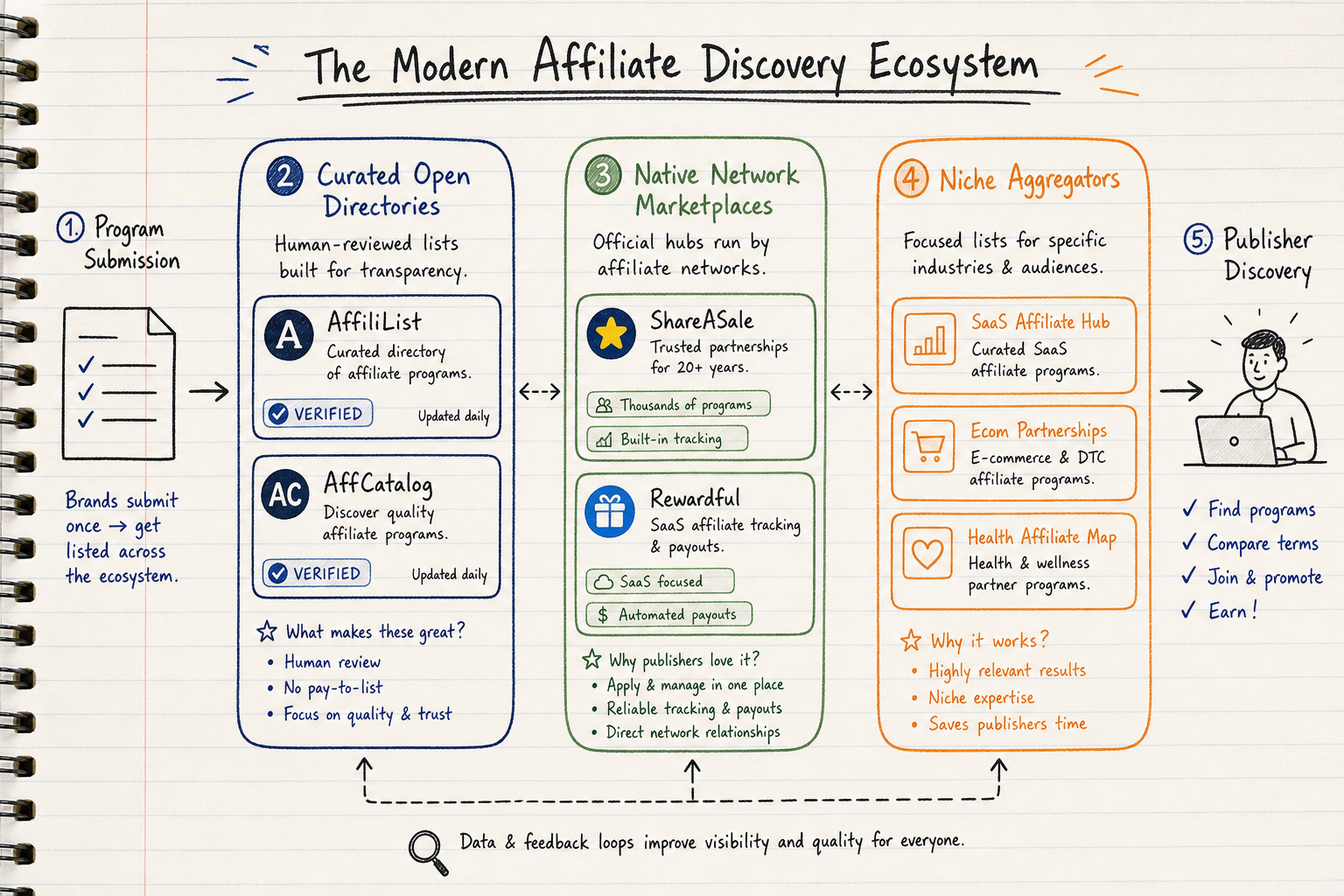
Native Network Marketplaces and Software Ecosystems
If you run your partner program through major affiliate software platforms or affiliate networks, you have access to internal marketplace tools.
ShareASale and Awin Merchant Index
When running your program on ShareASale or Awin, your program is automatically eligible for inclusion in their merchant index. However, simply existing on the network is not enough. To stand out:
- Fill out every metadata field in the merchant portal, including target demographics, average basket size, and conversion rate.
- Join featured category promotions during seasonal recruitment cycles.
- Provide auto-approval rules for creators with proven performance metrics.
For merchants using WordPress or membership platforms, implementing proper tracking plugins ensures smooth data synchronization across affiliate hubs brilliantdirectories.com.
Impact and Partnerize Discovery Hubs
Impact features a discovery engine where brands can list their program details, commission structures, and brand guidelines. Enterprise publishers use Impact's discovery engine to filter programs by regional availability, mobile tracking capability, and average earnings per click (EPC).
SaaS Platform Marketplaces: Rewardful and FirstPromoter
If your SaaS runs on Stripe using Rewardful or FirstPromoter, leverage their native public directory integrations.
- Rewardful Directory: Automatically pulls your public program details, commission rates, and Stripe-verified data into their partner database.
- FirstPromoter Marketplace: Allows B2B software vendors to showcase their recurring commissions directly to registered affiliates who manage software review channels.
Specialized Niche Aggregators and WordPress Integrations
For specialized niches, submission to targeted lists yields higher conversion rates than broad general directories.
AM Navigator Niche Lists
AM Navigator maintains curated, category-specific affiliate directories spanning green products, SaaS, B2B software, and finance tools amnavigator.com. Submitting your offer to vertical-specific indexes ensures your program reaches publishers who write exclusively about your niche.
Easy Affiliate Integration Tools
If you run an affiliate program on WordPress using tools like Easy Affiliate, distributing your program through dedicated plugin marketplaces and content hubs helps recruit site owners who prefer native WordPress integrations easyaffiliate.com.
When configuring affiliate tracking across self-hosted or SaaS stacks, verifying link redirection and parameter passing prevents tracking drops youtube.com.
4. Step-by-Step Guide: Getting Your Program Listed
To ensure fast approvals and maximum conversion, approach directory submissions with a standardized distribution workflow.
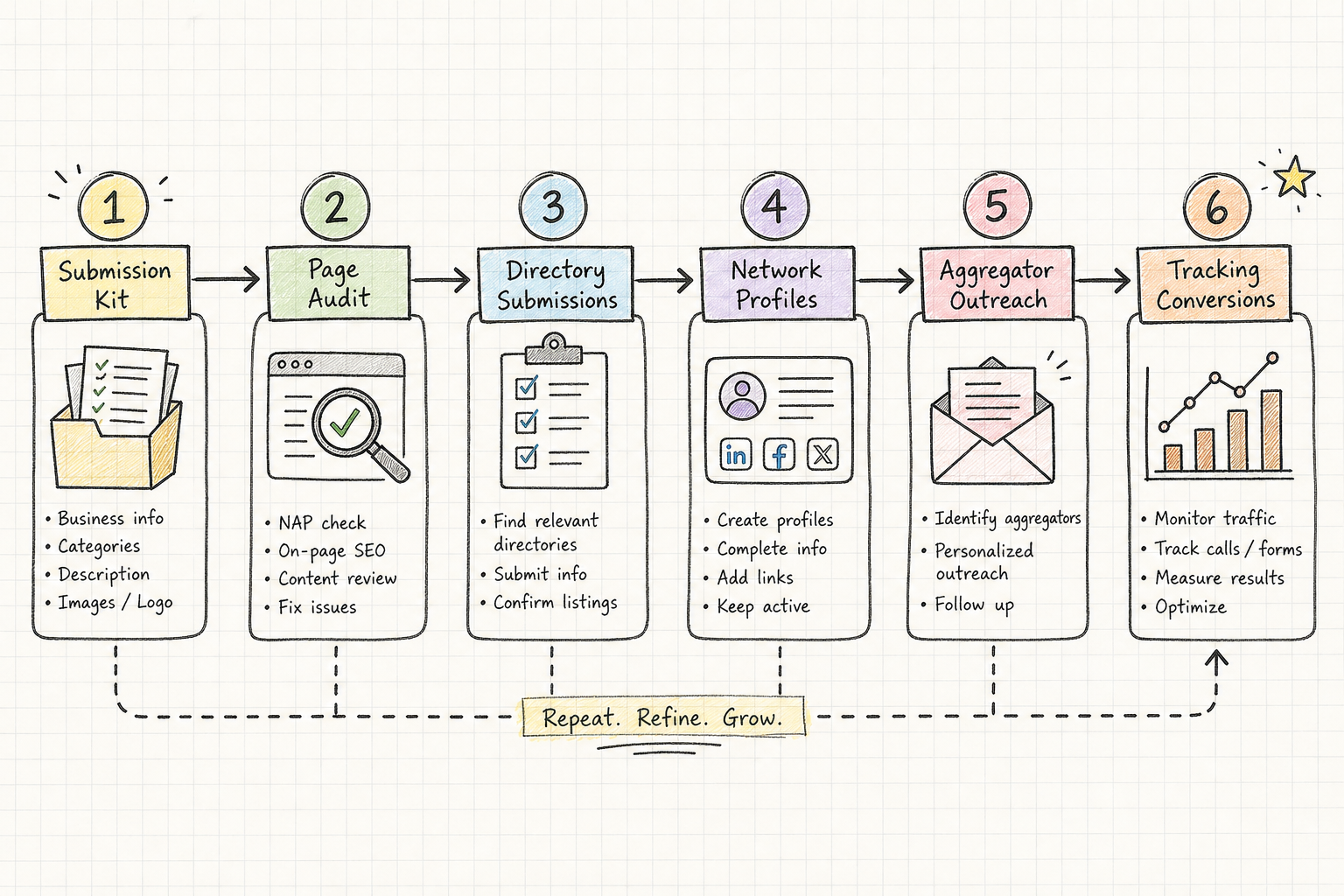
+-----------------------------------------------------------------------+
|                  Directory Submission Execution Flow                  |
+-----------------------------------------------------------------------+
| Step 1: Build Standard Submission Kit (Copy, Banners, Metrics)        |
| Step 2: Audit & Optimize Your Public Partner Landing Page             |
| Step 3: Submit to Curated Platforms (AffiliList Submission Portal)    |
| Step 4: Optimize Internal Network Profiles (ShareASale, Impact)       |
| Step 5: Direct Outreach to Vertical Aggregators & Review Sites        |
| Step 6: Monitor Application Queues & Track Referral Conversions        |

+-----------------------------------------------------------------------+
Step 1: Assemble Your Directory Submission Kit
Create a standardized text file containing all required program assets. Having this ready speeds up manual directory forms and prevents errors across listings.
Your submission kit should include:
- Program Name: Official product name.
- Short Pitch (150 characters): A concise value proposition for potential partners.
- Full Program Description (300–500 words): Details on product features, target audience, conversion rates, and promotional assets provided.
- Category Tags: Primary vertical (e.g., SaaS, Social Media Marketing, HR Software, Crypto) and secondary sub-niches.
- Commission Type & Rate: Exact payout structure (e.g., 30% recurring monthly, $150 flat bounty).
- Cookie Lifespan: Exact duration in days.
- Tracking Platform: Name of tracking software (e.g., FirstPromoter, Rewardful, Impact, ShareASale).
- Direct Application URL: The direct registration link for affiliates.
Step 2: Audit Your Landing Page Metadata
Run a pre-submission check on your partner landing page:
- Ensure open registration links work without breaking or requiring hidden invite codes.
- Confirm that your terms of service explicitly define allowed traffic sources.
- Test page load speed on mobile devices, as many publishers evaluate offers on smartphones before applying on desktop.
Step 3: Submit to Curated Platforms
Navigate to dedicated submission portals like AffiliList. Fill out every field in the submission workflow:
- Select precise tags that reflect your software vertical.
- Detail special promotions or high-converting entry points (e.g., free trial conversions vs. direct purchase bounties).
- Submit clean, high-resolution logos on transparent or white backgrounds for directory thumbnail views.
Step 4: Configure Internal Network Profiles
If your program runs on networks like ShareASale or Impact, upload promotional banners in standard sizes (300x250, 728x90, 160x600, and 1080x1080 for social stories). Provide ready-to-use text swipes and email templates so publishers can launch campaigns immediately upon approval.
Step 5: Conduct Niche Blogger and Aggregator Outreach
Once indexed on major directories, contact creators who publish roundups like "Best Software Tools for Business" or maintain an affiliate marketing blog. Direct them to your freshly verified directory page or public partner portal to demonstrate that your program is active and reliable.
5. Channel Comparison: Evaluating Listing Tools and Platforms
Selecting the right submission channels depends on your budget, product type, and recruitment goals. The table below compares channel formats across critical operational metrics:
| Listing Tool / Channel | Primary Audience | Effort Level | Approval Speed | Publisher Intent | Best For |
|---|---|---|---|---|---|
| Curated Directories (AffiliList) | SaaS, Content Creators, Niche Publishers | Low | Fast (24–48 hrs) | Very High | SaaS, Digital Tools, Recurring B2B Offers |
| Network Hubs (ShareASale / Impact) | Media Buyers, Large Portfolios, Coupon Sites | Medium to High | Moderate (3–7 days) | Moderate to High | E-Commerce, Consumer Products, Major Brands |
| SaaS Ecosystems (Rewardful Hub) | Tech Founders, Bootstrapped SaaS Marketers | Low (Automated) | Instant / Fast | High | Stripe-based B2B & B2C Software Platforms |
| Niche Aggregator Blogs | Specialized Reviewers, Authority Sites | High (Manual Outreach) | Slow (1–2 weeks) | Very High | Micro-Niche Products, High-Ticket Programs |
| Legacy Link Databases | Unvetted Web Traffic, Casual Spammers | Low | Instant | Low | General Traffic (Not recommended for SaaS) |
Focus your initial distribution on curated open directories and native tracking software hubs. These platforms deliver higher publisher intent and require lower maintenance than manual outreach campaigns or unvetted legacy link dumps.
6. Advanced Strategies to Drive Continuous Directory Traffic
Getting listed in an affiliate directory is not a one-time event. To extract ongoing value from your directory listings, implement these three optimization workflows.
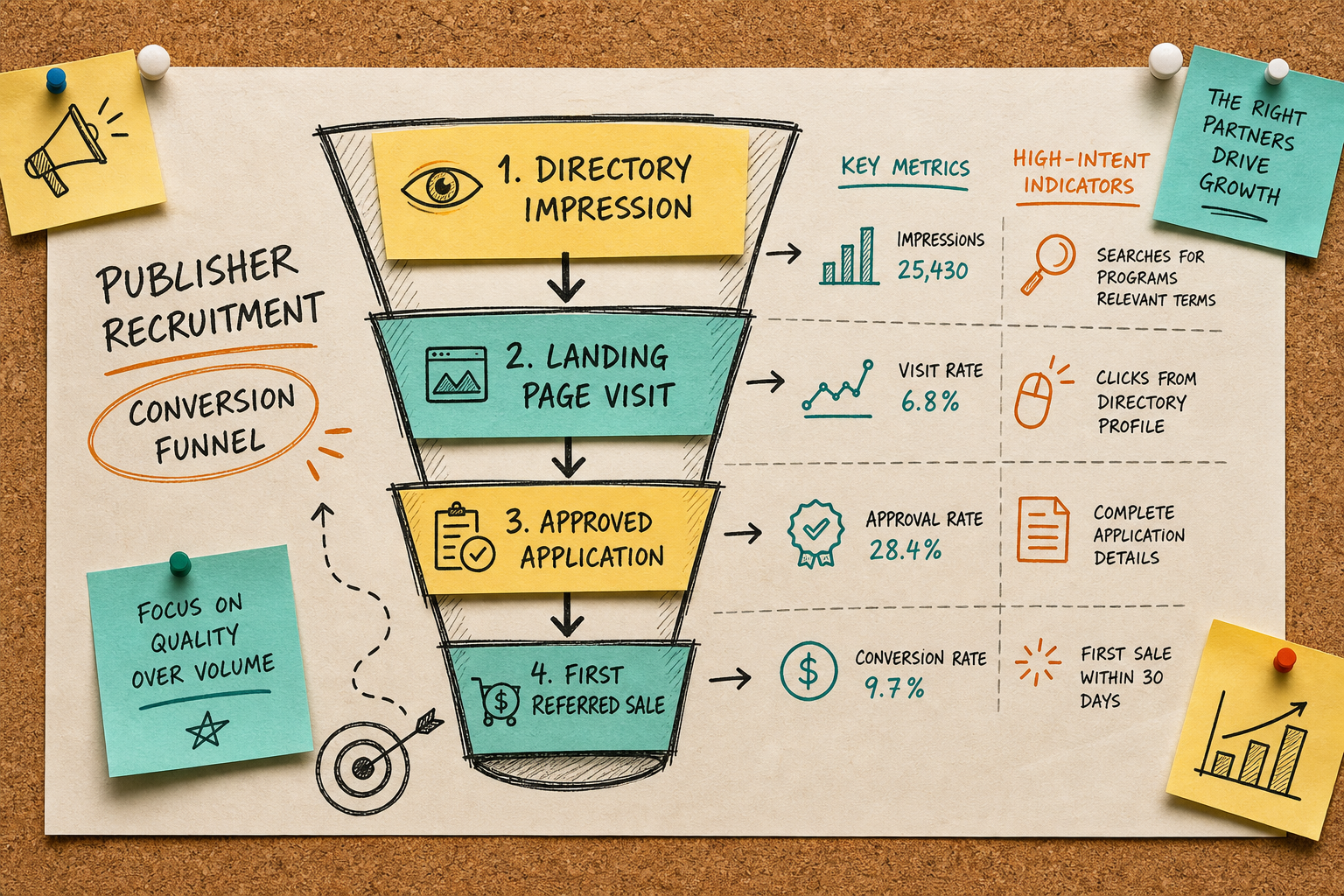
+-----------------------------------------------------------------------+
|                   Publisher Recruitment Funnel                        |
+-----------------------------------------------------------------------+
| [ Directory Listing Impression ]                                      |
|        |                                                              |
|        v                                                              |
| [ Program Landing Page Click ] --> Transparent Terms & Social Proof  |
|        |                                                              |
|        v                                                              |
| [ Affiliate Application Submitted ] --> Automated Welcome Sequence    |
|        |                                                              |
|        v                                                              |
| [ Promotional Link Created ] --> Onboarding Assets & Banner Downloads  |
|        |                                                              |
|        v                                                              |
| [ First Referred Conversion ] --> Tiered Commission Incentives        |

+-----------------------------------------------------------------------+
1. Optimize for Search Discovery
When publishers look for new offers, they often search Google or Bing using specific long-tail terms:
- "Best SaaS affiliate programs for 2026"
- "High recurring B2B affiliate offers"
- "[Competitor Name] affiliate program alternative"
Directories like AffiliList rank for these exact search terms because they consolidate verified data across hundreds of niches. By maintaining detailed, tag-rich descriptions in directory portals, your offer gains passive exposure whenever creators research competitive alternatives or explore best niches for affiliate marketing.
2. Implement Automated Partner Onboarding
Directory listings drive steady referral traffic to your registration page, but bad onboarding causes high drop-off rates. Once an affiliate signs up through a directory link, trigger an automated welcome email sequence containing:
- Their unique affiliate link.
- Direct links to your top 3 highest-converting blog posts or landing pages.
- Access to high-res logos, product screenshots, and promotional swipe copy.
- A 15-minute product overview video demonstrating target customer pain points.
- Guidelines on how creators can build campaigns on channels like Pinterest or review blogs. Learn more about platform-specific tactics in our guide on setting up affiliate marketing on Pinterest.
3. Leverage Tiered Incentive Bonuses
Incentivize publishers browsing directory listings by offering limited-time signup bonuses:
- First-Sale Cash Bonus: Offer a $50 extra bounty on their first conversion within 30 days of joining.
- Performance Tiers: Increase recurring commissions from 20% to 30% once an affiliate generates 10 active referrals.
- Custom Discount Codes: Provide unique vanity coupon codes for creators who feature your software on YouTube channels or social media platforms.
7. Operational Case Study: Scaling CloudDesk SaaS Partner Recruitment
To understand how targeted directory syndication operates in practice, consider the scenario of CloudDesk, a B2B project management SaaS that launched its partner program with zero initial affiliates.
+-----------------------------------------------------------------------+
|               CloudDesk SaaS Directory Launch Timeline                |
+-----------------------------------------------------------------------+
| Day 1–7   : Optimized Affiliate Landing Page & Created Media Kit      |
| Day 8–14  : Submitted to AffiliList & FirstPromoter Marketplace       |
| Day 15–30 : Indexed across 3 Niche B2B Directories                    |
| Day 31–60 : Onboarded 42 New Creators; Triggered First-Sale Bonuses   |
| Day 61–90 : Scaled to 150 Active Affiliates Generating $18k Monthly   |

+-----------------------------------------------------------------------+
The Challenge
CloudDesk configured tracking via FirstPromoter offering a 25% recurring monthly commission. Despite emailing 50 SaaS bloggers directly, they received only two affiliate applications over three weeks. Their cold outreach strategy was consuming time with minimal return.
The Directory Execution Strategy
CloudDesk shifted focus away from cold outreach toward directory syndication:
- Landing Page Overhaul: They updated their public affiliate page to clearly display their 25% recurring commission structure, a 60-day cookie window, and Stripe-backed monthly payouts.
- Directory Submissions: They submitted their offer to AffiliList using targeted tags (B2B SaaS, Project Management, Remote Work, Productivity). They also listed on FirstPromoter’s public marketplace and two specialized technology portals.
- Automated Onboarding Sequence: They connected FirstPromoter to an email automation flow that instantly delivered swipe copy, media kits, and product demo access upon applicant approval.
The Results (90 Days Post-Submission)
- Directory Impressions: Over 3,400 target publisher views across directory pages.
- New Partner Applications: 185 publisher applications received.
- Approved Active Affiliates: 150 vetted creators added to the program.
- Revenue Impact: Monthly recurring revenue (MRR) generated through affiliate links grew from $0 to $18,200 within 90 days.
By replacing manual cold outreach with structured directory syndication, CloudDesk built a predictable partner acquisition channel that continues to recruit creators passively.
8. Common Pitfalls and Myths in Directory Submissions
Submitting your program to directories can transform partner acquisition, but making strategic errors will ruin your results. Avoid these common traps:
Myth 1: "Submitting to 100 Outdated Link Directories Guarantees Success"
Quantity does not equal quality. Submitting your offer to automated link farms or abandoned directories yields low-grade traffic, spam applications, and potential search engine penalties. Modern creators use curated, transparent databases like AffiliList that verify data. Focus on top-tier directories that serve real publishers in your vertical.
Myth 2: "Affiliate Directories Are Only for Low-Quality Programs"
Some founders believe directories attract only low-intent coupon sites or questionable offers. In reality, modern SaaS platforms and enterprise software companies rely on open directory indexing to reach professional site owners. Affiliates actively cross-shop offers to find reliable partners; directory transparency builds instant trust. Learn more about evaluating program quality in our analysis on whether affiliate marketing is legitimate.
Myth 3: "Directory Listings Are Set-and-Forget Assets"
Program details change over time. If you update your commission rates, shift tracking platforms, or modify cookie lifespans, you must update your directory listings immediately. Broken links or outdated commission figures lead to rejected applications and damaged brand reputation.
Failure Modes to Avoid
- Unclear Rules on Paid Search: If you prohibit bidding on your brand name in Google Ads, state this clearly in your directory bio to prevent ad cannibalization.
- High Minimum Payout Thresholds: Setting a $500 minimum payout deters smaller niche creators. Keep payout thresholds low ($25–$50) to encourage early promotional pushes.
- Unresponsive Approval Queues: Letting affiliate applications sit unreviewed for weeks causes creators to move on to competing offers. Set up auto-approval triggers or review queues daily.
9. Frequently Asked Questions
How long does it take for directory submissions to get approved?
Approval timelines vary by platform. Curated directories like AffiliList process submissions within 24 to 48 hours following manual review of your partner landing page. Larger networks like ShareASale or Impact may take 3 to 7 business days to audit brand profiles and payment settings.
Should you pay for premium directory listings?
If a directory possesses high search authority and targeted publisher traffic in your niche, paying a one-time listing or feature fee can yield immediate returns by placing your offer at the top of relevant category pages. Avoid ongoing subscription fees on platforms that cannot demonstrate active traffic or publisher engagement metrics.
What tracking software works best for directory syndication?
For B2B and SaaS offers, platforms like FirstPromoter, Rewardful, and PartnerStack work exceptionally well because directory-browsing creators recognize their reliable dashboard metrics. For e-commerce brands, ShareASale, Awin, Impact, and CJ Affiliate provide robust enterprise tracking capabilities.
How do I maintain directory accuracy when changing commission terms?
Keep an internal spreadsheet tracking every directory, marketplace, and blog where your program is listed. When updating terms, systematically log into each submission portal to update your copy, graphics, and tracking parameters.
Can I list my program if it is in beta or soft-launch mode?
Yes. Mention in your program pitch that you are in open beta or offering exclusive introductory commission rates (e.g., a temporary 40% recurring payout for initial launch partners). Exclusive launch terms attract experienced creators seeking fresh offers with minimal competition.
Building a Sustainable Partner Acquisition Pipeline
Getting your affiliate program listed in modern directories transforms partner recruitment from a high-friction outreach process into a predictable, inbound acquisition funnel. Relying on legacy databases or cold pitching leads to slow growth, while listing on structured, transparent databases ensures high-intent publishers find your offer when searching for new partnerships.
To build momentum for your affiliate program:
- Audit your public partner page to ensure transparent commission terms, explicit cookie durations, and low-friction application forms.
- Assemble a standardized directory submission kit with professional copy, clean assets, and defined target tags.
- Submit your offer to curated directories like AffiliList to place your brand in front of active creators, SaaS reviewers, and digital marketers.
- Optimize your onboarding flows to turn new directory applications into active, revenue-generating promotion partners.
Ready to list your offer in front of active publishers? Submit your program details through the AffiliList submission portal to join over 10,000 verified software and digital offers today.