
Affiliate Program Finder for SAAS Lists Evaluation Checklist
Find the best SaaS affiliate directories. Evaluate transparency, recurring commissions, cookie durations, and direct links to maximize your affiliate revenue.
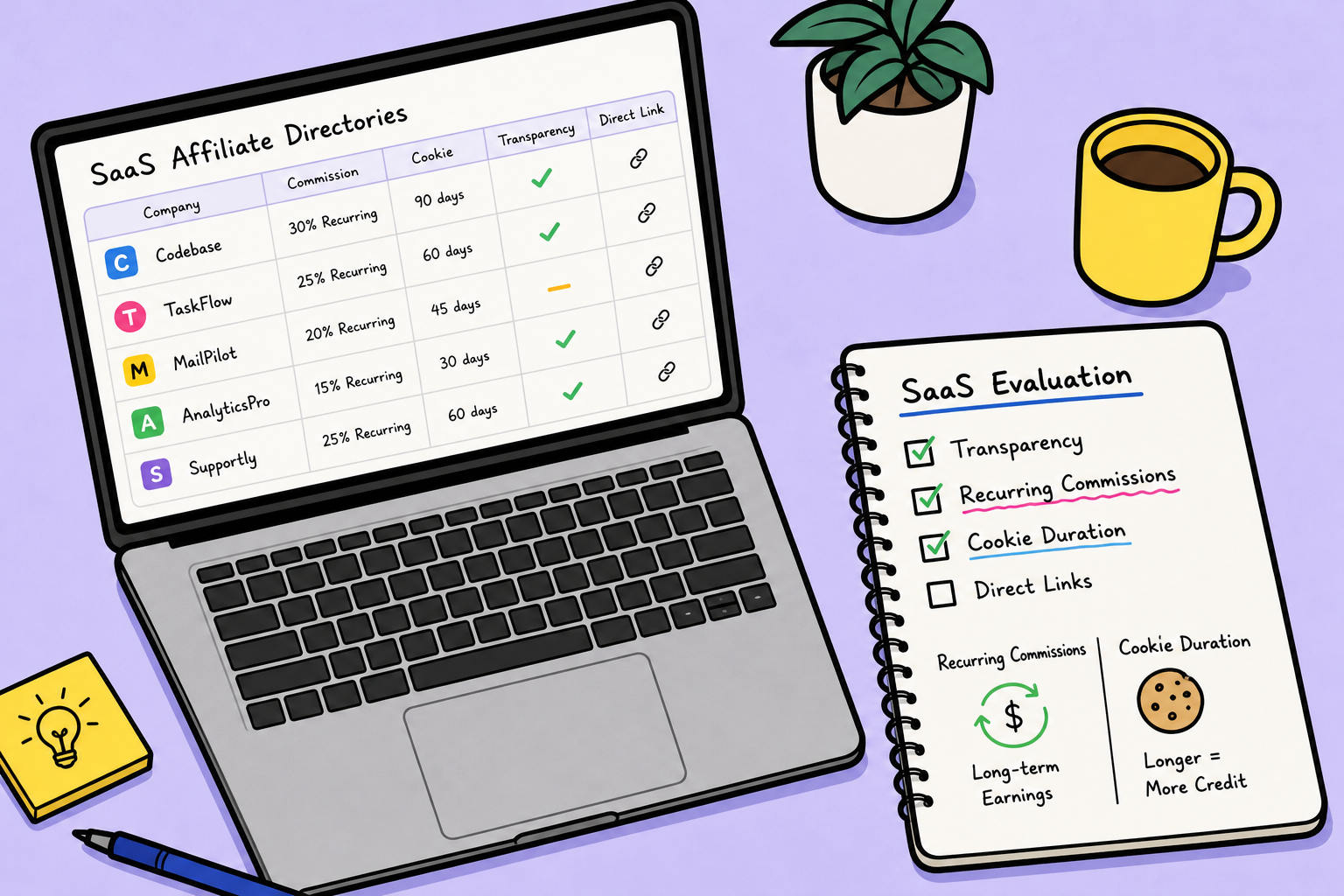
- The Unique Mechanics of SaaS Affiliate Discovery
- The Affiliate Program Finder Evaluation Checklist
- Analyzing the Types of SaaS Affiliate Discovery Platforms
- The Financial Impact of Cookie Duration in B2B SaaS
- Red Flags: When to Abandon a Discovery Tool
- Integrating a SaaS Finder into Your Content Workflow
- Frequently Asked Questions
Finding the right SaaS affiliate program often feels like navigating a maze blindfolded. You identify a piece of software that perfectly fits your audience's needs, but locating the actual partnership terms requires digging through website footers, filling out mandatory network applications, and waiting days for approval—all just to find out the commission structure is an uninspiring 5% one-time payout.
For affiliate marketers, bloggers, and niche site owners heavily invested in the software-as-a-service space, generic affiliate directories simply do not cut it. Retail-focused networks optimize for high volume and low ticket sizes, burying the high-lifetime-value (LTV), recurring revenue opportunities that make B2B content profitable. When searching for sites like affiliate program finder for saas lists, you need a systematic way to evaluate the directories and marketplaces themselves before you trust them to guide your monetization strategy.
This checklist provides a citable framework for evaluating SaaS affiliate directories, aggregators, and networks. By running your discovery platforms through this evaluation, you can bypass gatekept data, avoid outdated links, and zero in on the recurring revenue opportunities that actually convert.
The Unique Mechanics of SaaS Affiliate Discovery
To understand why generic directories fail software marketers, you have to look at the mechanics of SaaS conversions. Promoting a physical product usually involves a short buyer journey: see product, click link, buy within 24 hours. SaaS, particularly B2B software, involves free trials, stakeholder approvals, and longer sales cycles.
Consequently, the data points you need from a directory are highly specific. A standard retail directory might only show "10% commission." A competent SaaS directory needs to tell you if that 10% is recurring monthly or a one-time CPA (Cost Per Action). It needs to clarify if the cookie duration is 30 days or 120 days, which is entirely necessary when a company offers a 14-day free trial that delays the actual billing event.
When evaluating an affiliate program finder, you are not just looking for a list of links. You are looking for a highly structured database that understands the nuances of software monetization.
The Affiliate Program Finder Evaluation Checklist
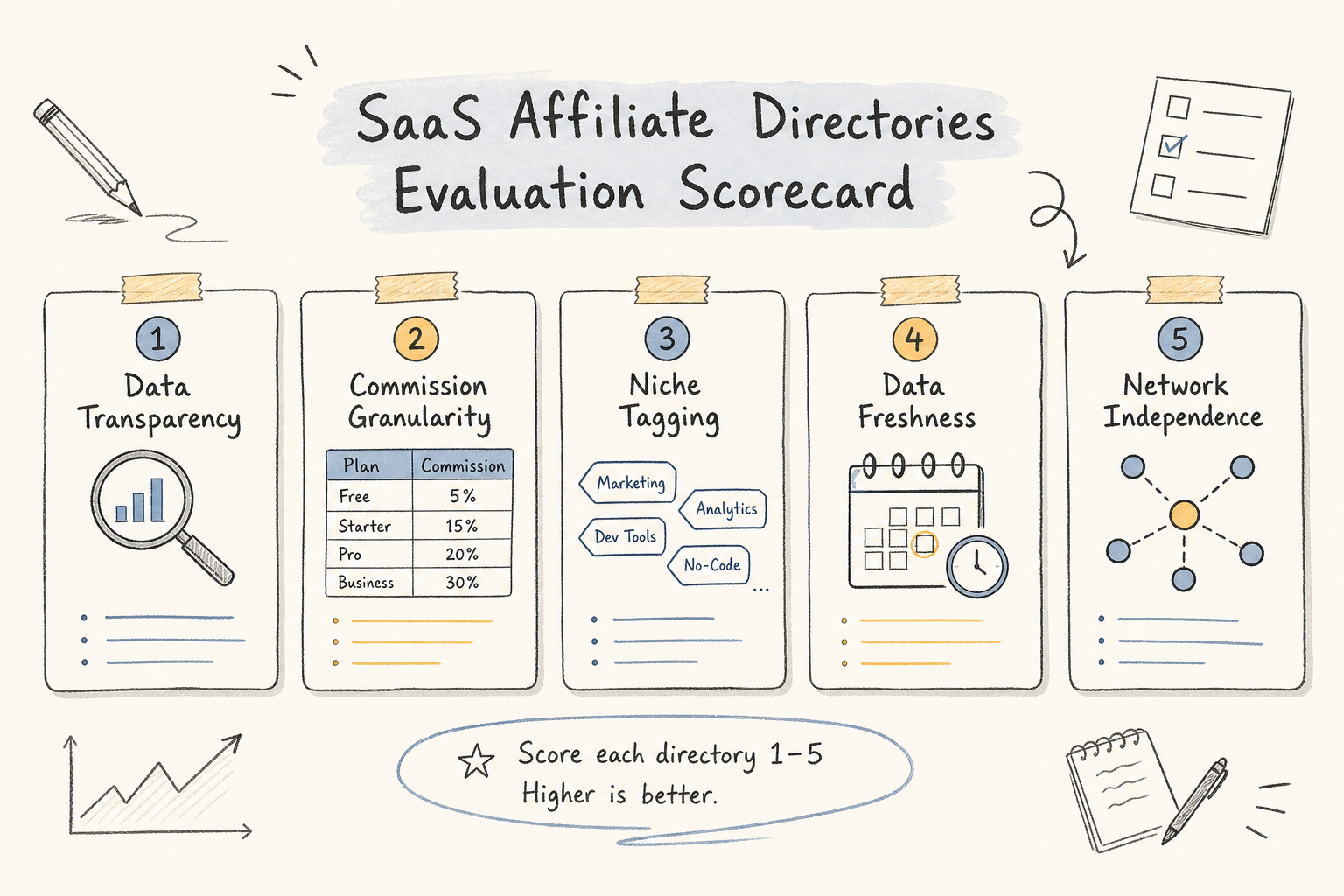
Before investing hours browsing a directory or applying to a network, run the platform through these five criteria. A high-quality discovery tool should act as an accelerator for your business, not a bottleneck.
1. Data Transparency and Gatekeeping
The single biggest friction point in affiliate marketing is data gatekeeping. Many legacy networks force you to create an account, verify your website, and sometimes even pass an initial traffic threshold before they allow you to see the exact commission terms of their advertisers.
What to look for:
- Open Access: Can you see the payout terms, cookie duration, and payment methods without handing over an email address? Platforms like AffiliList champion this approach, offering a clutter-free interface where essential program details are openly accessible.
- Sign-up Walls: Does the platform function as a closed ecosystem (like a traditional CPA network) or a discovery engine?
- Merchant Requirements: Does the directory show you the merchant's specific requirements (e.g., minimum traffic, specific geographical restrictions) before you apply?
Transparent directories respect your time. They allow you to rapidly compare a dozen project management tools or CRM platforms, map out their potential yield, and decide which ones warrant a formal application. If a platform hides basic terms behind a login screen, it is optimizing for user acquisition, not marketer success. If you are weighing different types of open directories, our Affiliate Watch Vs Affililist for SAAS Programs Source Guide provides a deeper dive into how transparency impacts workflow speed.
2. Granularity of Commission Structures
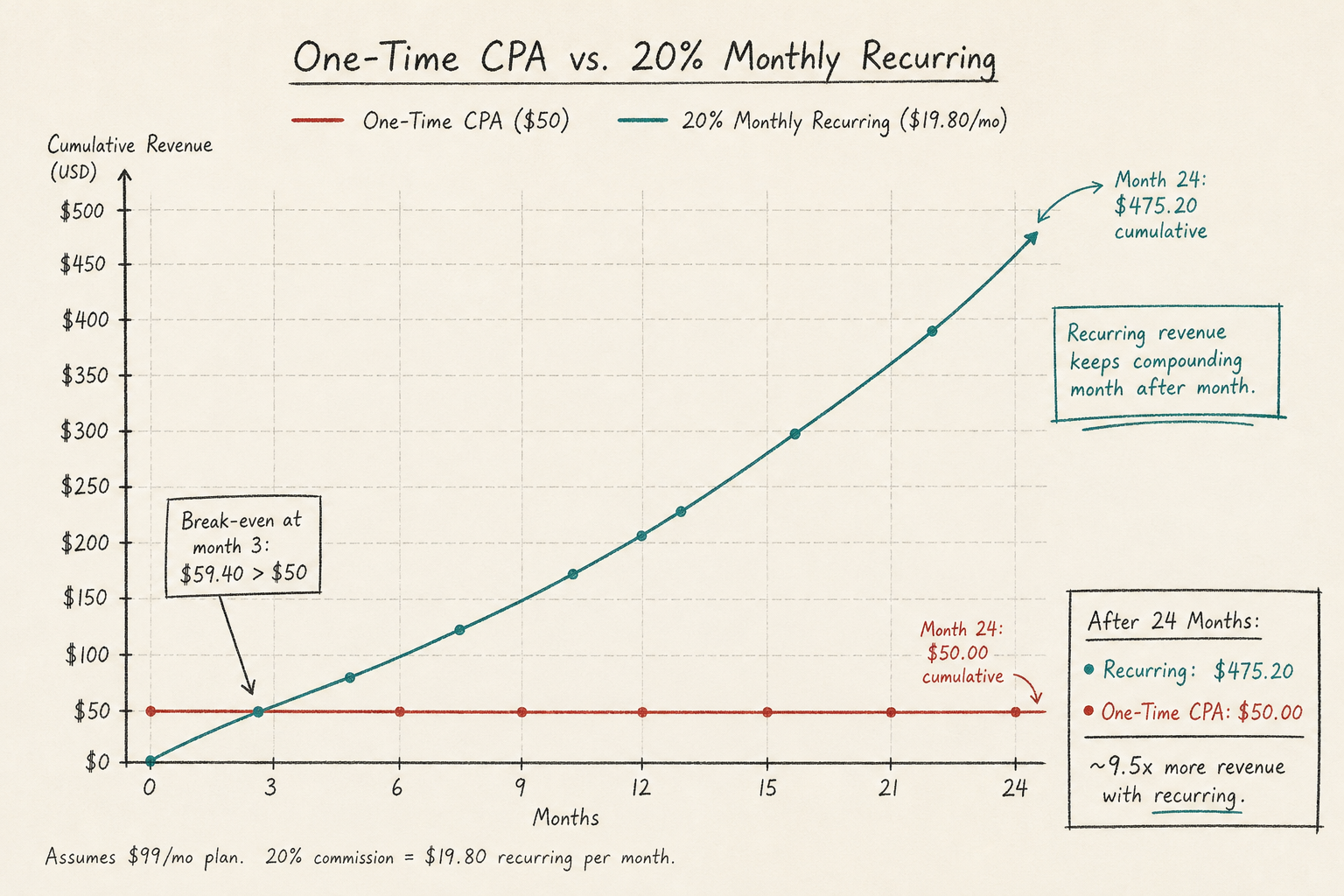
In the software niche, not all commissions are created equal. A $50 upfront payout might look appealing initially, but a 20% recurring commission on a $99/month product will vastly outperform it over an average customer lifespan of 24 months.
What to look for:
- Recurring vs. CPA Differentiation: The platform must clearly tag or filter programs by payout type.
- Tiered Commission Visibility: Many SaaS tools offer performance tiers (e.g., 20% for 1-10 sales, 30% for 11+ sales). A good finder will note this nuance rather than just listing a blanket "Up to 30%."
- Lead vs. Sale Bounties: Enterprise SaaS often pays a bounty just for a qualified lead or a booked demo, since the final sale is handled by an internal sales team. Directories must specify what triggers the payout.
When a directory lumps everything under a generic "payout rate" column, it fails the marketer. You need advanced filtering options specifically tuned to commission rates and structures to make accurate revenue projections for your content.
3. Niche Tagging and Category Architecture
"Software" is not a niche; it is a delivery mechanism. The audience looking for automated HR software is entirely different from the audience looking for YouTube marketing tools or cryptocurrency portfolio trackers.
What to look for:
- Micro-Categories: Does the directory allow you to drill down beyond "Business Software"? You should be able to filter by "Email Marketing," "SEO Tools," or "Helpdesk Software."
- Cross-Tagging: High-quality databases use extensive tagging systems. A tool like Jasper AI should be discoverable under "Artificial Intelligence," "Copywriting," and "Marketing SaaS."
- Platform Ecosystems: Can you filter by the ecosystem the tool serves (e.g., Shopify Apps, Salesforce integrations, WordPress plugins)?
A massive database of 10,000+ programs is useless without an intuitive taxonomy. The architecture of the site should mirror the way content creators actually plan their content clusters.
4. Database Freshness and Verification
The digital economy evolves rapidly. SaaS startups launch, pivot, get acquired, or shut down their affiliate programs entirely. A directory bloated with dead links, expired offers, and 404 pages is a massive liability.
What to look for:
- Submission Portals: Directories that feature a dedicated submission portal for merchants tend to have fresher data, as brands actively manage their own listings.
- Verification Badges or Dates: Does the site indicate when a listing was last updated or verified?
- Dead Link Pruning: A high-quality directory actively removes or flags programs that have been suspended or migrated to private networks.
Relying on outdated lists leads to broken links in your published content, which harms your site's user experience and conversion rates. It is far better to use a tightly curated, updated list than a massive but neglected database. For creators heavily reliant on accurate data, comparing the backend mechanics of these tools is a worthwhile exercise. You can see an example of this in our Affililist Vs Apdb Io Features Comparison Source Guide.
5. Platform Independence vs. Network Hosting
It is critical to distinguish between a directory and an affiliate network. A network actually hosts the tracking software, manages the payouts, and handles the tax forms. A directory acts as a search engine that points you to wherever the program is hosted—whether that is a network, an in-house tracking tool, or a referral platform.
What to look for:
- Network Agnosticism: Does the site show you programs regardless of where they are hosted? Independent directories will link you to programs on Impact, PartnerStack, Rewardful, and custom-built in-house solutions equally.
- Direct Application Links: The best finders give you a direct link to the program's landing page, allowing you to bypass unnecessary middleman layers.
Networks inherently prioritize their own customers (the merchants paying them hosting fees). Independent directories prioritize the affiliate marketer by providing an unfiltered view of the entire landscape.
Analyzing the Types of SaaS Affiliate Discovery Platforms
When researching sites like affiliate program finder for saas lists, you will encounter several distinct models of discovery platforms. Understanding the architecture of these sites helps you deploy them effectively in your workflow.
Dedicated SaaS Affiliate Lists and Directories
These platforms function as massive, searchable databases built explicitly for software tracking. They are not networks; they are aggregators.
Examples from the Ecosystem:
- SaaSAffiliate.com: A heavily structured directory that allows granular filtering by category (CRM, AI, Email) and specifically filters by payment type (recurring monthly vs. upfront).
- AffiliatePrograms.com: While covering multiple niches, this site maintains a highly active section dedicated to B2B and SaaS tools, frequently ranking programs by payout rates and cookie life.
The Verdict: Dedicated directories are excellent for initial discovery. Because they are not tied to a single tracking network, they provide a panoramic view of the market. However, their utility lives and dies by their updating frequency. If a directory does not actively purge dead links, it quickly becomes frustrating to use.
B2B and SaaS Networks with Built-In Marketplaces
If you prefer to skip the discovery phase and manage dozens of programs from a single centralized dashboard, SaaS-specific networks are the logical next step.
Example from the Ecosystem:
- PartnerStack: Often considered the gold standard for B2B SaaS affiliate marketing, PartnerStack differs significantly from retail-heavy networks like CJ Affiliate or ShareASale. It is built specifically to handle the complexities of software sales, including recurring payments, custom lead bounties, and tiered rewards.
The Verdict: Network marketplaces are incredibly efficient for management, but they are limited by their own client roster. You will only find programs that pay for PartnerStack's enterprise software. If a compelling new SaaS tool uses FirstPromoter or Rewardful to run its program, you will not find it in the PartnerStack marketplace. Therefore, relying solely on network marketplaces leaves major blind spots in your discovery process.
Software Discovery Sites with Affiliate Tags
Sometimes the best way to find software to promote is to look at platforms designed for software buyers, not marketers.
Example from the Ecosystem:
- SaaSHub: Primarily a platform for finding software alternatives, SaaSHub includes a tagging system that indicates whether a listed software has an active referral or affiliate program.
The Verdict: This is a fantastic "backdoor" method for affiliate discovery. If you are writing a post on "Alternatives to Mailchimp," you can use a site like SaaSHub to find direct competitors, and immediately see which of those competitors offer commissions. It requires more manual verification than a dedicated affiliate directory, but it often uncovers hidden gems before they hit mainstream marketer radars.
Curated Independent Hubs
Curated hubs combine the vast scope of dedicated directories with a rigorous focus on user experience and data verification. They strip away the clutter associated with legacy forums and directories.
Example from the Ecosystem:
- AffiliList: Functioning as a streamlined directory, AffiliList houses over 10,000 curated programs with a strong emphasis on digital tools and SaaS. By offering open access without mandatory sign-ups, advanced filtering for commission rates, and an extensive tagging system, it serves as a central intelligence hub for niche site owners.
The Verdict: Curated hubs offer the best balance of scale and efficiency. Because they are network-agnostic, they pull in offers from across the digital economy. Because they focus on a clean, ad-light interface, they allow marketers to compare data rapidly. For creators weighing their options between different aggregation models, evaluating these hubs against traditional creator tools is necessary. Our Affililist Vs Taprefer Which Is Better for Creators Source Guide explores this specific dynamic.
The Financial Impact of Cookie Duration in B2B SaaS
One critical factor often overlooked in generic directories—but heavily emphasized in quality SaaS finders—is the cookie duration. In consumer retail, a 24-hour cookie (like Amazon Associates) is standard and generally acceptable, as purchases are highly impulsive.
In B2B SaaS, a 24-hour cookie is entirely useless.
Consider a scenario where a mid-level manager reads your review of a new CRM platform. They click your affiliate link, land on the merchant's site, and sign up for a 14-day free trial. They spend the next week testing the software, present it to their director on day 10, and secure budget approval on day 18. The actual conversion (the payment of the first subscription invoice) happens on day 21.
If the affiliate program only offers a 15-day cookie, you lose the commission entirely, despite driving the initial acquisition. A robust affiliate program finder allows you to filter specifically for extended cookie lifespans (60, 90, or 120 days). Bypassing programs with sub-30-day cookies is one of the fastest ways to increase your effective ROI on B2B content, and you can only do that if your discovery platform surfaces that data transparently.
| Platform Type | Primary Advantage | Data Access | Best Use Case |
|---|---|---|---|
| Curated Hubs (e.g., AffiliList) | High volume, fast filtering, transparent terms. | Open (No login required) | Rapid comparison across multiple niches. |
| B2B Networks (e.g., PartnerStack) | Centralized management and combined payouts. | Gated (Requires approval) | Managing an established portfolio of high-ticket SaaS. |
| SaaS Discovery (e.g., SaaSHub) | Finding obscure software alternatives. | Open | Identifying competitors for "vs" review articles. |
| Legacy Directories | Historical data. | Mixed | Finding older, established legacy software tools. |
Red Flags: When to Abandon a Discovery Tool
Not all directories are built to serve the marketer. Some exist purely to farm SEO traffic or harvest emails. When evaluating a new site claiming to list the best SaaS programs, watch for these failure modes:
- The "Top 10" Bias: If a directory heavily promotes the same ten web hosting and email marketing platforms on every single page, it is likely prioritizing programs that pay them high bounties to feature their listings, rather than providing an objective database.
- Mandatory Account Creation for Basic Data: If a site requires an email address simply to view the commission percentage of a publicly available SaaS program, they are prioritizing lead generation over user utility.
- Vague Payout Ranges: Listings that state "Up to $500 per sale" without explaining the tiers or conditions are functionally useless for financial planning. A rigorous directory demands clarity from its merchants or manually researches the exact terms before publishing the listing.
- No Direct Links: If a directory wraps every single application link in an affiliate redirect to grab a sub-affiliate commission from the network without disclosing it, it compromises the integrity of the platform.
If you are expanding your research into broader partner program databases beyond just SaaS, you will encounter similar structural issues. Applying this same checklist is highly recommended; our piece on Other Directories Like Affiverse for Partner Programs Evaluation Checklist expands on how to vet platforms that span multiple industries.

Integrating a SaaS Finder into Your Content Workflow
A high-quality directory is a strategic asset, not just a search tool. The most successful niche site owners use these platforms proactively rather than retroactively.
Instead of writing an article and then searching for an affiliate link to insert, they reverse-engineer their content calendar based on the data they find.
The Proactive Workflow:
- Identify High-Yield Categories: Use the directory to filter for specific niches (e.g., "Cryptocurrency Tax Software") that offer recurring commissions above 30%.
- Analyze the Competitors: Look at the top 5 tools in that specific micro-category within the directory.
- Verify Terms: Check the cookie duration and payout thresholds to ensure they align with the typical sales cycle of that specific software type.
- Build the Cluster: Create a content cluster targeting "Best Crypto Tax Software," followed by individual review articles and comparison posts (e.g., "Tool A vs Tool B").
By starting with a verified, transparent database, you guarantee that every piece of content you produce is backed by a viable, lucrative monetization engine. You eliminate the risk of spending a week writing about a tool only to discover they discontinued their partner program six months ago.
Frequently Asked Questions
Are dedicated SaaS affiliate networks better than general directories?
They serve different purposes. A dedicated SaaS network (like PartnerStack) is exceptional for managing payouts and tracking links for programs hosted within their ecosystem. However, a general, well-curated directory (like AffiliList) provides a much wider view of the market, showing you programs across all networks, independent tracking setups, and in-house systems. For pure discovery, an independent directory is superior.
How do you verify if a SaaS affiliate program is still active?
The best defense against dead programs is using a directory with a dedicated merchant portal and active pruning processes. Additionally, always check the direct link provided by the directory. If the landing page redirects to the company's homepage rather than a dedicated partner page, the program is likely paused or discontinued.
What is the standard commission rate for SaaS affiliate programs?
While it varies by industry, standard B2B SaaS programs typically offer either a 20% to 30% recurring monthly commission for the lifetime of the customer (or the first 12-24 months), or a flat CPA bounty ranging from $50 to $200 per qualified sale. Enterprise software with lengthy sales cycles may also offer smaller bounties simply for generating a qualified lead or a booked demo.
Evaluating sites like affiliate program finder for saas lists does not have to be a guessing game. By prioritizing platforms that offer open data access, granular search filters, and rigorous category architecture, you protect your most valuable asset as a creator: your time. Stop wrestling with outdated lists and gatekept networks, and move your discovery process to platforms designed for the modern digital economy.