
9 Best Affiliate Programs for Travel Bloggers in 2026
Discover the 9 best affiliate programs for travel bloggers in 2026. Learn commission structures, placement strategies, and how to maximize your travel income.
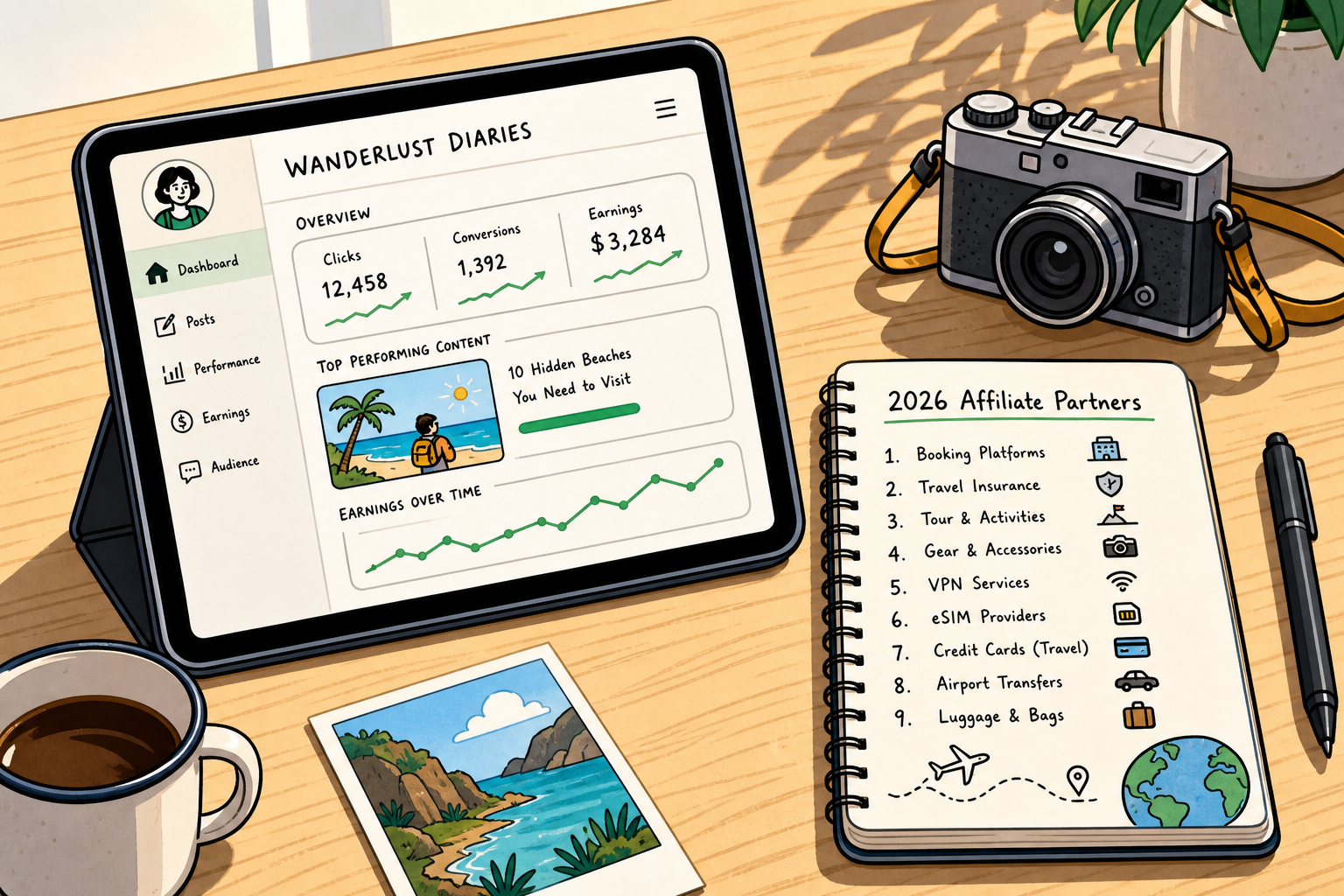
Many travel bloggers hit 50,000 monthly pageviews only to realize their display ad revenue barely covers their web hosting, while their affiliate income sits stubbornly at zero.
The travel industry is back to peak capacity, and travelers are spending heavily on experiences, luxury stays, and extended trips. Yet, standard monetization tactics from five years ago—slapping a massive "Book Now" banner on a sidebar or linking to a generic homepage—no longer convert. Readers have developed total banner blindness. They do not want to be sold to; they want your exact itinerary, the exact hotel room you booked, and the precise tour you took.
To build a highly profitable affiliate marketing blog, you need to integrate targeted, high-converting partner links seamlessly into your content. This guide breaks down the most lucrative travel affiliate programs on the market, the exact commission structures behind them, and the placement strategies that actually drive bookings.
The Economics of Travel Commissions: Busting the 50% Myth
Before choosing your partners, you have to understand how the money flows in the travel sector. Travel affiliate marketing relies heavily on high Average Order Value (AOV). While a single software subscription might cost $20, a two-week honeymoon in the Maldives can easily exceed $8,000.
However, the commission percentages in travel are notoriously low compared to digital products. You will rarely see a straight 30% or 40% cut of the total cart value. This leads to the biggest misunderstanding among new travel bloggers: The Revenue Share vs. Total Booking Myth.
When an Online Travel Agency (OTA) advertises a "50% commission," they are almost never offering you half the price of the hotel room. They are offering you 50% of their commission.
Here is how the math actually works on a typical booking:
- Total Booking Price: $1,000 (A four-night hotel stay).
- The OTA's Cut: The platform (like Booking.com or Agoda) takes a commission from the hotel for facilitating the sale. This is typically around 15%. ($150)
- Your Affiliate Cut: The OTA offers you a 25% revenue share of their cut.
- Your Payout: 25% of $150 = $37.50.
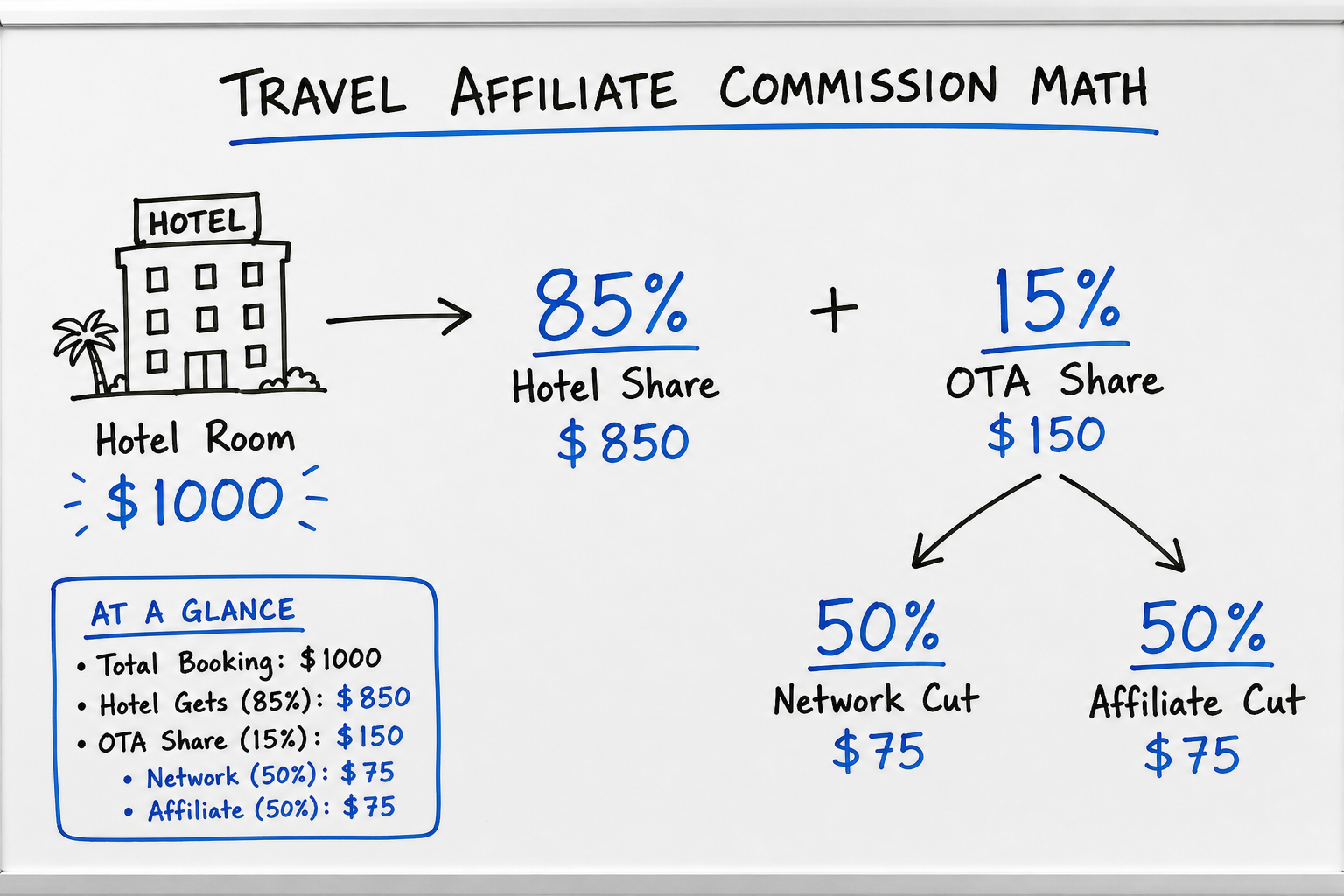 While $37.50 represents only 3.75% of the total booking, the high volume and high AOV of travel content make this an incredibly lucrative model. A single "Two Weeks in Japan" itinerary post that ranks well can drive dozens of these bookings a month. If you target luxury properties or complex tours, payouts can spike into the hundreds per transaction, placing travel firmly among the high paying affiliate programs available to content creators.
9 Best Affiliate Programs for Travel Bloggers
Choosing the right network depends on your specific audience, regional focus, and content type. Below is a curated list of the top nine affiliate programs that offer reliable tracking, solid conversions, and competitive payouts.
1. Travelpayouts
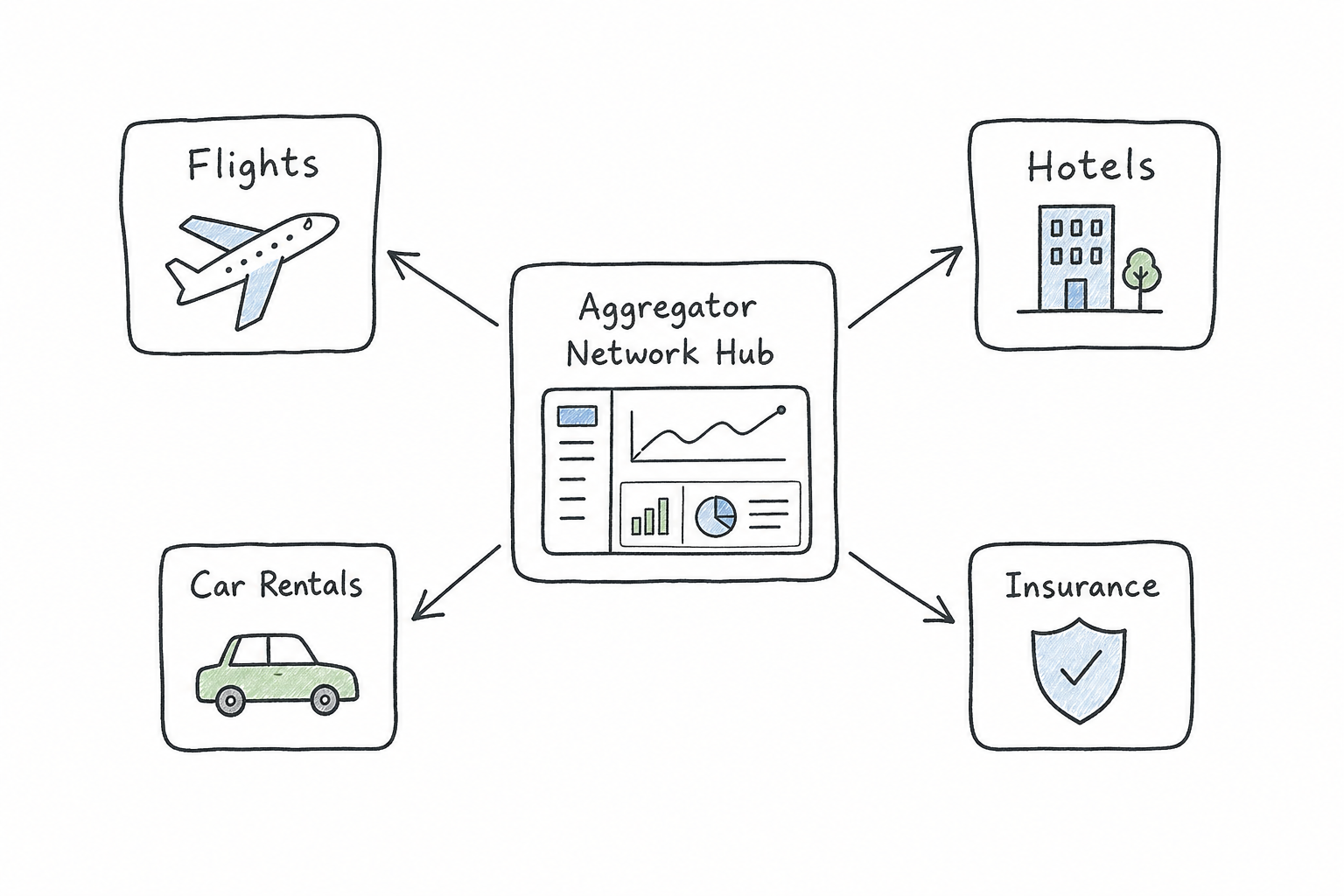
Travelpayouts is not a single merchant; it is the ultimate travel affiliate aggregator. Instead of managing separate logins, tax forms, and payout thresholds for rental cars, flights, and hotels, Travelpayouts centralizes everything into one dashboard.
- Category: Aggregator (Flights, Hotels, Cars, Insurance, Tours)
- Commission Rate: Varies wildly by brand (e.g., up to 7% on hotels, 1-2% on flights).
- Cookie Duration: Typically 30 days, though it varies by specific brand.
- Payout Threshold: $50 via PayPal, WebMoney, or Bank Transfer.
Promotion Playbook: Use Travelpayouts if you want simplicity. They offer exceptional widgets—like flight maps and dynamic pricing tables—that you can embed directly into your posts. If you write broad destination guides that require users to book flights, hotels, and airport transfers, you can manage all three tracking links through this single platform.
2. Booking.com Affiliate Partner Program
Booking.com remains the juggernaut of hotel affiliations. Their biggest advantage is brand trust and conversion rate optimization (CRO). When you send a reader to Booking.com, the platform utilizes urgency triggers (e.g., "Only 1 room left at this price!") to convert that traffic into a sale.
- Category: Accommodations
- Commission Rate: Tiered revenue share. You start at 25% of their commission and can scale up to 40% based on volume. (Effectively ~3% to 6% of the booking value).
- Cookie Duration: Session-based. (The user must book before closing the browser).
- Payout Threshold: €100.
Promotion Playbook: Because of the session-based cookie, you cannot rely on "Top 10 Hotels" posts where people are just browsing months in advance. You need to target bottom-of-funnel keywords. Build posts around "Where to stay in Paris near the Eiffel Tower" and deep link directly to specific hotel property pages. Do not send traffic to the Booking.com homepage; the friction is too high.
3. Viator
Owned by TripAdvisor, Viator is the largest online marketplace for tours, activities, and attractions. From skip-the-line Colosseum tickets to private helicopter tours over the Grand Canyon, their inventory is unmatched.
- Category: Tours and Experiences
- Commission Rate: 8% of the total booking value (standard).
- Cookie Duration: 30 days.
- Payout Threshold: $50.
Promotion Playbook: Viator shines in itinerary content. If you outline a "3-Day Rome Itinerary," embed Viator links for the Vatican tour on Day 1, the pasta-making class on Day 2, and the Pompeii day trip on Day 3. Because the cookie lasts 30 days, even if the reader clicks your pasta-making class link today and books a completely different boat tour next week, you still get paid.
4. GetYourGuide
GetYourGuide is Viator’s primary competitor, known for exceptional user experience and deep market penetration in Europe. Many bloggers prefer GetYourGuide's native widgets, which display star ratings and pricing dynamically within blog posts.
- Category: Tours and Experiences
- Commission Rate: Base 8%, but highly negotiable for top performers (up to 10-12%).
- Cookie Duration: 31 days.
- Payout Threshold: $50.
Promotion Playbook: Use GetYourGuide's "Availability Widget" directly below your descriptions of activities. For example, after describing the Louvre, place a widget showing real-time ticket availability for the next day. This minimizes the steps a reader must take to see if an activity fits their schedule.
5. Discover Cars
Rental cars are a massive revenue driver for regional or road-trip-focused bloggers. Discover Cars operates as an aggregator, comparing local and international rental companies, and they offer one of the most generous revenue splits in the industry.
- Category: Car Rentals
- Commission Rate: 70% of their commission from car rentals, plus 30% of full coverage revenue.
- Cookie Duration: 365 days.
- Payout Threshold: $20.
Promotion Playbook: Create dedicated "How to Rent a Car in [Country]" guides. Address local driving laws, insurance requirements, and toll roads. Naturally integrate Discover Cars as the solution for comparing rates. The staggering 365-day cookie means you can capture revenue from readers who are just beginning to plan a trip a year in advance.
6. SafetyWing
Every traveler needs insurance, but digital nomads and long-term backpackers have specific needs. SafetyWing offers a subscription-based travel medical insurance product that bills every 28 days, providing you with recurring commissions.
- Category: Travel Insurance
- Commission Rate: 10% on the initial purchase and all recurring renewals up to 364 days.
- Cookie Duration: 364 days.
- Payout Threshold: $10.
Promotion Playbook: SafetyWing converts best when discussed transparently in "Cost of Travel" or "Digital Nomad Setup" guides. Highlight the flexibility of being able to start and stop the insurance while already abroad—a feature traditional insurers lack.
7. Agoda
If your blog focuses on Southeast Asia, Japan, Korea, or the broader APAC region, Agoda is non-negotiable. They consistently secure better local rates and have deeper inventory in Asia than Booking.com or Expedia.
- Category: Accommodations
- Commission Rate: Up to 7% of the total booking value (scales with volume).
- Cookie Duration: Session-based.
- Payout Threshold: $200.
Promotion Playbook: Agoda's payout threshold is relatively high ($200), so it is best suited for bloggers with established traffic. Capitalize on their deep discounts in Asia by writing comparison posts, such as "The Best Beachfront Villas in Bali Under $100."
8. Skyscanner
Flights are notoriously difficult to monetize because airlines operate on razor-thin margins. However, flights are the entry point to every international trip. Skyscanner allows you to monetize flight searches effectively.
- Category: Flight Aggregator
- Commission Rate: 20% to 50% revenue share of Skyscanner's commission.
- Cookie Duration: 30 days.
- Payout Threshold: $50 (via CJ Affiliate or TradeDoubler).
Promotion Playbook: Do not expect to get rich off flight commissions alone. Use Skyscanner widgets as a value-add for your readers. Once they book a flight, the 30-day cookie ensures you receive a small cut, but more importantly, booking a flight triggers the psychological commitment to start booking hotels and tours—which is where your real money is made.
9. Amazon Associates
While not a traditional travel network, Amazon is indispensable for travel bloggers. Readers need backpacks, camera gear, packing cubes, and portable chargers before they leave.
- Category: Travel Gear and Physical Products
- Commission Rate: 1% to 4% (depending on the product category).
- Cookie Duration: 24 hours.
- Payout Threshold: $10.
Promotion Playbook: Amazon's 24-hour cookie is brutal, but their conversion rate is unmatched. Create highly specific "Packing List" posts (e.g., "What to Pack for an Icelandic Winter"). The strategy here is volume. If a reader clicks your link for a $15 travel adapter and ends up buying a $2,000 laptop in the same session, you earn a commission on the entire cart.
Matching Search Intent to Affiliate Offers
To build a highly profitable affiliate marketing side hustle, you must align the product you are promoting with the user's search intent.
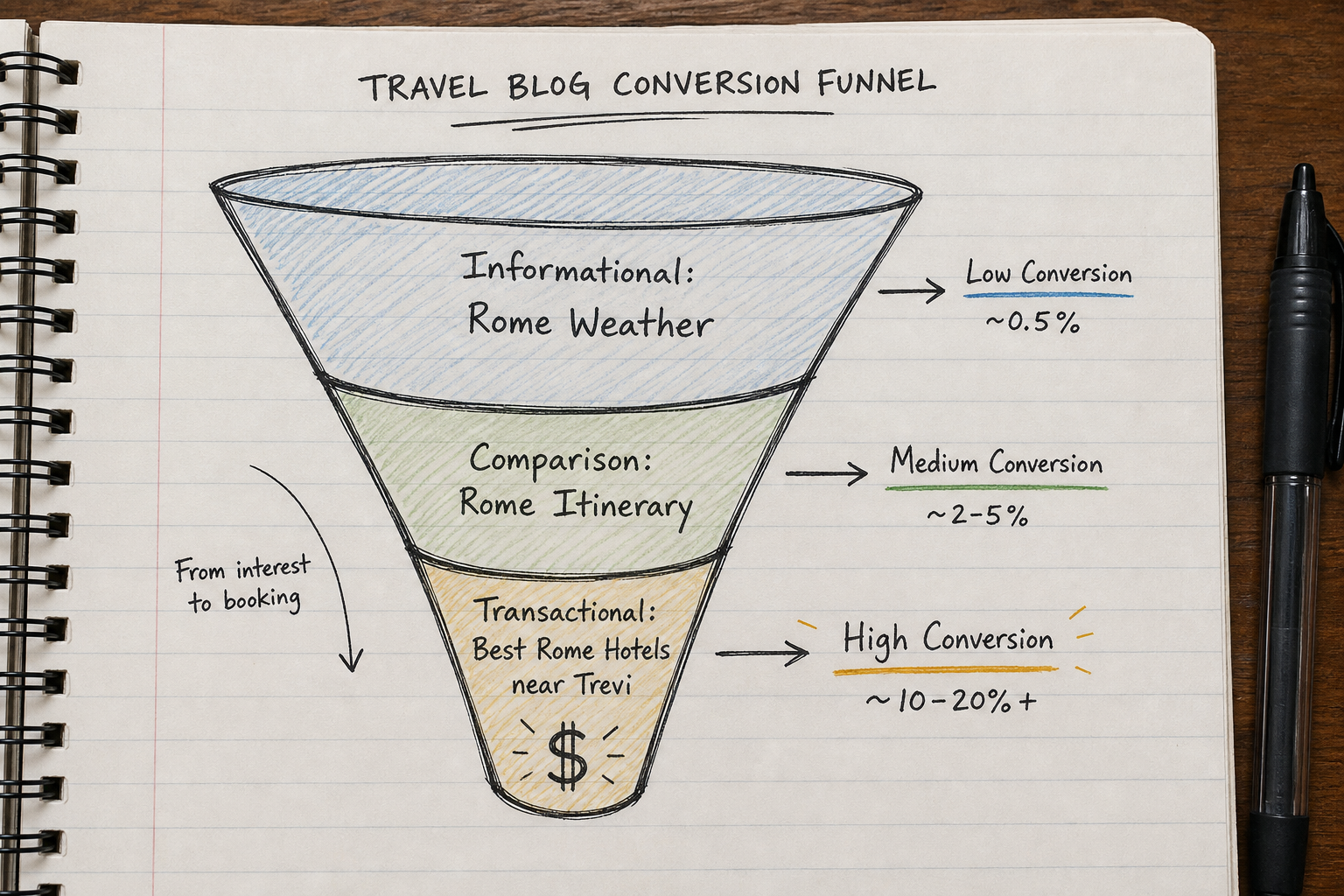
Consider the keyword funnel:
- Top of Funnel (Informational): "What is the weather like in Rome in October?"
- User Intent: Researching. They are not ready to book a hotel yet.
- Monetization: Display ads. Perhaps an email opt-in for a free Rome packing list (which contains Amazon affiliate links).
- Middle of Funnel (Investigational): "3 Days in Rome Itinerary."
- User Intent: Planning. They know they are going, now they are building the schedule.
- Monetization: Tour links (Viator, GetYourGuide) integrated into the daily schedule. Train ticket links (Omio or Rail Europe).
- Bottom of Funnel (Transactional): "Best boutique hotels in Rome near the Pantheon."
- User Intent: Buying. Credit card is in hand.
- Monetization: Deep links to specific properties on Booking.com or Agoda.
 Too many bloggers waste their best transactional keywords by offering vague advice. If someone is searching for "best boutique hotels," do not send them to the Expedia homepage. Give them your top three choices, explain exactly why they should book them, and provide direct links to the room booking page.
Placement Strategies: Moving Beyond Banners
If your affiliate links are not converting, your placement is likely the culprit. Readers have been conditioned to ignore sidebars and floating banner ads.
Deep Linking is Non-Negotiable
A deep link is a hyperlink that bypasses a website's homepage and takes the user directly to a specific product or page. If you are recommending the Hilton Tokyo, your affiliate link must land exactly on the Hilton Tokyo booking page with dates pre-selected if possible. Forcing a reader to search for the hotel again on the OTA's site introduces friction, and friction kills conversions.
The "Button vs. Text Link" Rule
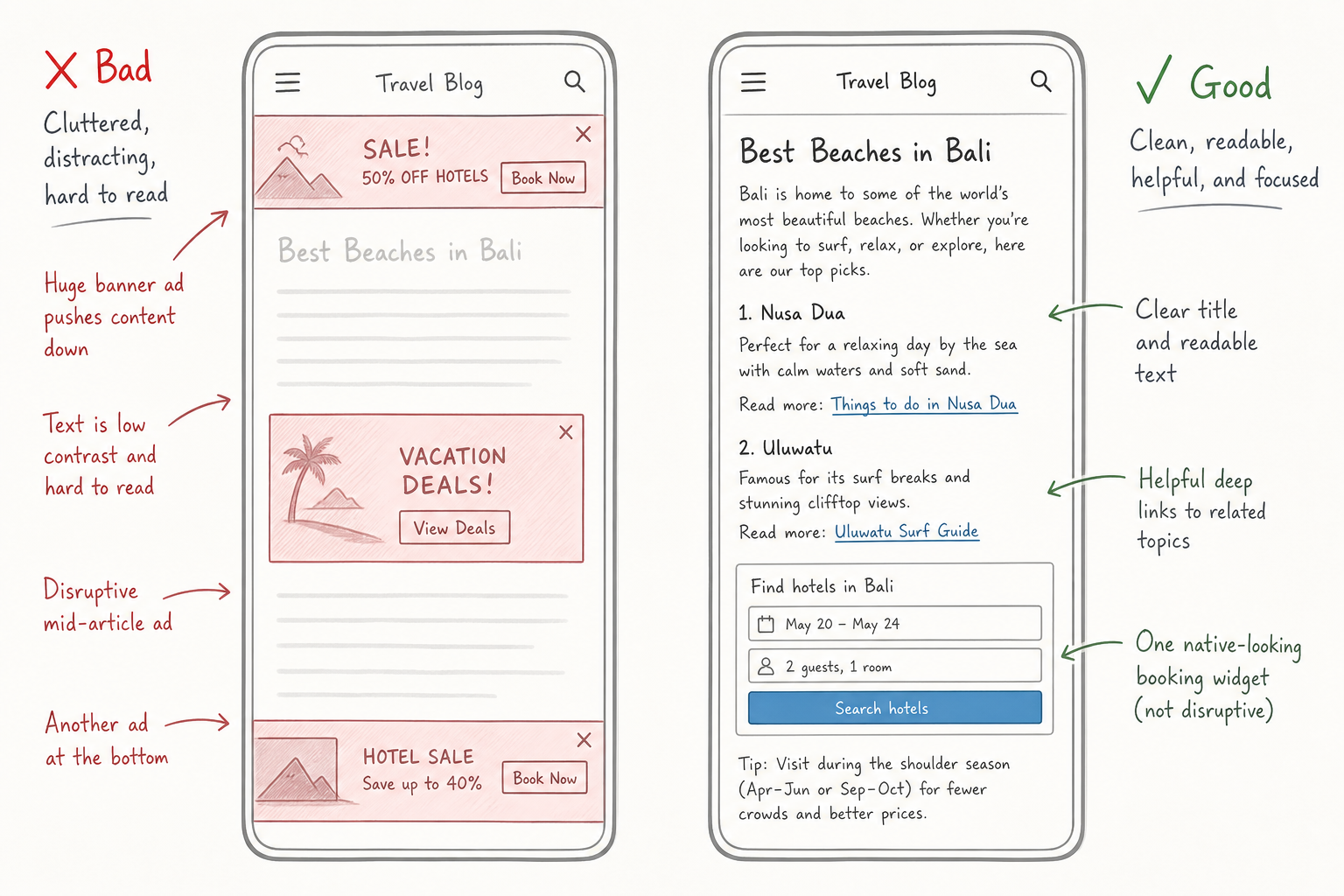
While buttons draw the eye, native in-text links often convert higher because they feel editorial rather than promotional.
Case Scenario: Sarah, a travel blogger focusing on Southeast Asia, was struggling to monetize a post generating 10,000 monthly visits about "Backpacking Thailand." She had three large Agoda banner ads on the page. She removed the banners and replaced them with underlined, bold text links reading: "I stayed at the [Hostel Name], which is the only place in Chiang Mai with a rooftop pool for under $15 a night." Her click-through rate jumped 400% overnight, and her revenue 10x'd. Readers trust editorial recommendations; they ignore advertisements.
Managing Choice Paralysis
Do not give your readers ten hotel options for one neighborhood. Give them three:
- The Budget Pick (For cost-conscious travelers).
- The Value Pick (Where you actually stayed, blending comfort and price).
- The Luxury Pick (For honeymooners or splurgers).
Clear categorization helps the user make a decision quickly. When users are overwhelmed by choice, they close the tab and book nothing.
Finding Your Specific Corner of the Market
The travel industry is broad. Trying to be a general "travel blogger" in 2026 is a difficult path. You need to niche down. If you need a framework for this, review how to pick a niche for affiliate marketing.
You might focus entirely on accessible travel (wheelchair-friendly itineraries), scuba diving destinations, or luxury train travel. By tightening your focus, you become an absolute authority. When an authority recommends a specific $4,000 dive resort, the audience listens and books. This mirrors the success seen in other sectors, such as the best niches for affiliate marketing within SaaS, where extreme specialization yields the highest returns.
To discover exactly which niches are currently surging in profitability, you can analyze data across the profitable affiliate marketing niches to see how travel sub-niches stack up against tech or finance.
Expanding Your Traffic: Alternative Channels
Relying solely on Google SEO is risky. Diversifying your traffic sources is the fastest way to stabilize your affiliate income.
Pinterest functions as a visual search engine and is wildly popular for travel planning. Users create boards for "Dream Italy Vacation" or "Cabin Getaways" months before they actually book. By pinning aesthetic photos of specific hotels or packing lists that link directly to your affiliate-optimized blog posts, you capture users early in the planning phase. If you are unfamiliar with this ecosystem, reading up on an affiliate marketing program for pinterest can help you set up an automated pinning strategy.
Scaling to a Full-Time Income
Once you begin earning consistent commissions, travel affiliate marketing transforms from a hobby into a verifiable business. You will start tracking your Earnings Per Click (EPC) and analyzing which posts drive the highest Return on Investment (ROI).
If you treat your blog as a digital asset, the skills you learn—SEO, copywriting, conversion rate optimization, and data analytics—are highly transferable. Many successful travel bloggers eventually leverage these skills to land high-paying affiliate marketing jobs as affiliate managers for the very travel brands they used to promote.
Frequently Asked Questions (FAQ)
Do I need massive traffic to get accepted into these programs? No. Aggregators like Travelpayouts and networks like Amazon Associates have very low barriers to entry. Booking.com and Agoda also auto-approve most active websites. However, premium, private programs (like high-end luxury safari operators) may require you to demonstrate a minimum number of monthly visitors.
What is the highest paying travel affiliate program? The highest percentages come from digital products (like travel insurance through SafetyWing or eSIM providers like Airalo, which offer up to 15-20%). The highest dollar amounts come from luxury bookings, bespoke tour operators, and high-end car rentals. If you cater to luxury travelers, you are effectively tapping into the most profitable affiliate marketing niches.
Is travel affiliate marketing still legit in 2026? Yes. People will always travel, and they will always need advice on where to go and what to pack. As long as you provide genuine, experience-based recommendations rather than AI-generated generic lists, you can build trust and drive conversions. If you are wary of scam networks, read up on is affiliate marketing legit to learn how to vet offers properly.
Building a profitable travel blog takes time. The key is to start integrating the right affiliate partners into your content today. Choose two or three platforms that align with your current audience, optimize your top 10 most visited posts with contextual deep links, and watch how your existing traffic begins to generate real revenue.