
Affililist Vs Findaffiliates for Discovering Partner Programs Source Guide
Compare AffiliList vs FindAffiliates. Learn whether creator discovery engines or merchant recruitment tools are best for finding high-paying SaaS partner programs.

- The Core Difference: Which Side of the Table Are You On?
- AffiliList: The Creator’s Engine for High-Ticket Discovery
- "Find Affiliates" Marketplaces: The Merchant’s Sourcing Ground
- The Friction of Gated Data in Affiliate Discovery
- Why SaaS and Digital Products Dominate Modern Affiliate Marketing
- Evaluating a Partner Program: Beyond the Commission Rate
- Niche Discoverability: AI, Fintech, and Beyond
- Feature Comparison: Creator Discovery vs. Merchant Recruitment
- Frequently Asked Questions About Affiliate Discovery
- Strategic Takeaways for Affiliate Marketers
If you spend enough time trying to monetize digital traffic, you eventually run into a frustrating bottleneck: the gap between knowing you want to promote a product and actually finding a partner program worth your time.
Search for high-paying affiliate programs, and you will usually hit a wall of outdated listicles, broken links, or legacy networks that require you to fill out a five-page application just to see the commission structure. When evaluating tools to fix this problem, two distinct categories emerge, often summarized in the debate of AffiliList vs. tools designed to "find affiliates."
While they sound similar, they serve completely opposite sides of the exact same coin.
The primary difference lies in your starting point. AffiliList is a modern, curated discovery engine built specifically for creators, bloggers, and affiliates looking for high-paying software and digital products to promote. Conversely, platforms, agencies, and marketplaces built around the concept of "finding affiliates" (like FindAffiliates, Affiliatly’s marketplace, or merchant-focused recruitment networks) are designed for brands and merchants who need to recruit influencers to sell their products.
Understanding which side of the table you sit on dictates exactly which tool you should use. Here is a deep dive into the mechanics of affiliate discovery, how these platforms stack up, and how to source the most lucrative partner programs in the modern digital economy.
The Core Difference: Which Side of the Table Are You On?
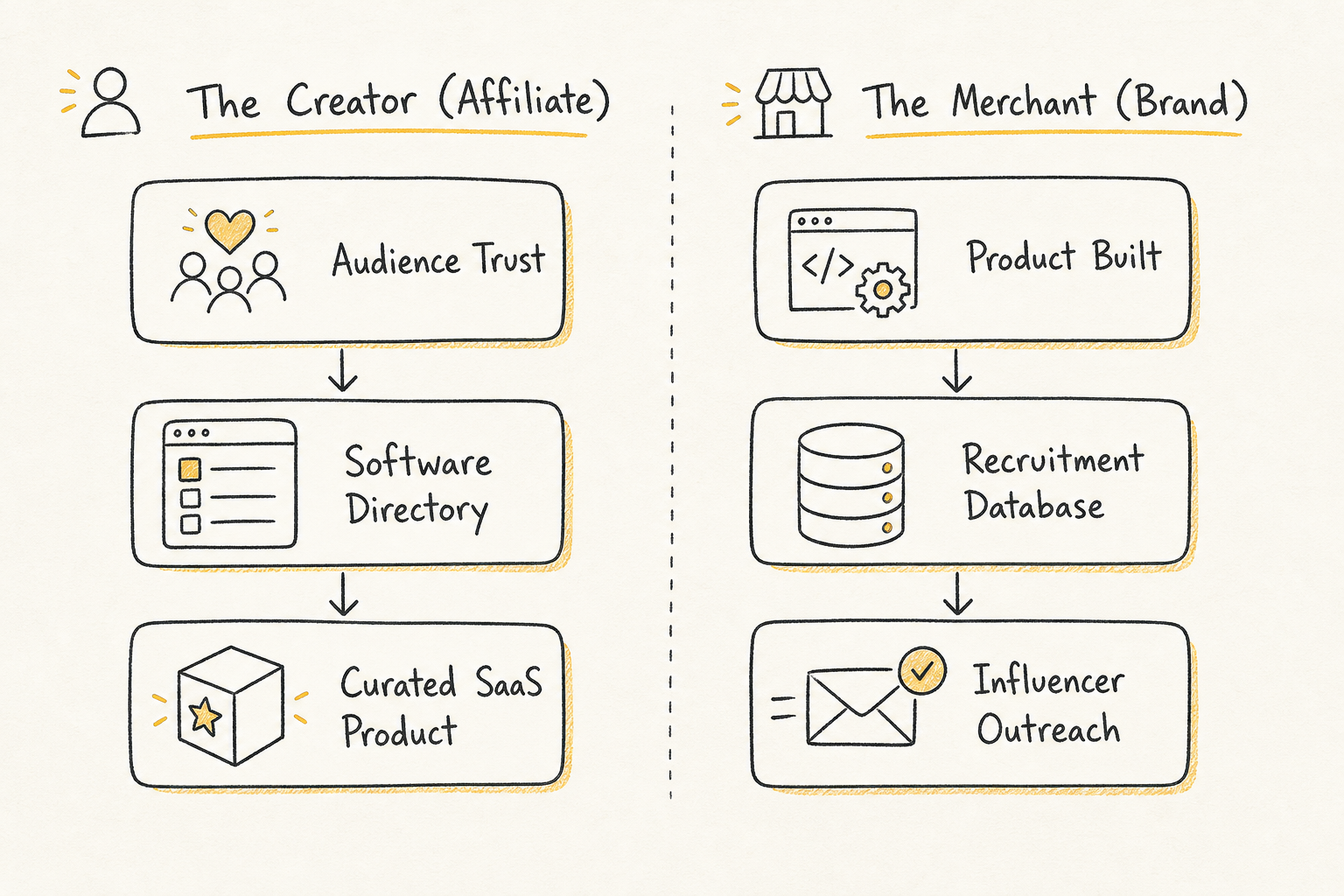
The affiliate ecosystem requires two participants to function: the publisher with the audience, and the merchant with the product. The friction in the industry comes from the fact that both sides are desperately searching for each other, but they use entirely different metrics and tools to do so.
The Creator’s Mandate
As a creator, your primary asset is trust. When you recommend a software tool to your email list or blog readers, you are putting your reputation on the line. You need to know that the product converts, that the tracking is reliable, and that the payout justifies the real estate on your site. You do not want to wade through thousands of dead dropshipping offers; you want curated, high-converting digital products. Your search is product-led.
The Merchant’s Mandate
As a SaaS founder or e-commerce merchant, your primary asset is the product. When you launch a partner program, the "build it and they will come" methodology fails 99% of the time. You need to actively recruit high-quality publishers who rank for your target keywords or hold influence over your ideal customer profile (ICP). Your search is distribution-led.
This fundamental divide is why comparing AffiliList to merchant-focused recruitment tools requires looking at the specific features built for each user base.
AffiliList: The Creator’s Engine for High-Ticket Discovery
AffiliList operates like a streamlined search engine for the modern affiliate marketer. It strips away the friction of legacy affiliate networks and replaces it with an open-access directory of over 10,000 vetted programs.
If you are a niche site owner, a YouTuber reviewing tech tools, or a B2B newsletter operator, your workflow relies on fast access to data. Historically, discovering a software’s affiliate terms meant signing up for a network like Impact or ShareASale, waiting days for approval, and then digging through a clunky interface just to realize the brand only pays a 5% flat fee.
AffiliList circumvents this by offering ungated access to program details. You can view commission percentages, payout types (recurring vs. one-time), and cookie durations without jumping through hoops. If you want to understand how this modern discovery approach compares to legacy tracking networks, our guide on AffiliList vs ShareASale: high-ticket SaaS program discovery breaks down the differences in user experience.
Advanced Filtering for the Modern Affiliate
The real power of a publisher-focused directory lies in its taxonomy. AffiliList utilizes an extensive tagging system that allows you to narrow down opportunities based on highly specific criteria:
- Commission Structure: Filter by recurring monthly payouts versus flat high-ticket bounties.
- Niche Categories: Drill down into rapidly growing sectors like AI tools, HR software, crypto, and productivity bots.
- Cookie Duration: Prioritize programs that offer 90-day or 365-day attribution windows over those offering a meager 24-hour window.
This level of granularity is crucial. If you are building a tech resource site, you can actively hunt down software with long-term earning potential, completely bypassing the low-ticket physical goods that clutter other directories.
"Find Affiliates" Marketplaces: The Merchant’s Sourcing Ground
On the flip side, tools and platforms categorized under "find affiliates"—whether that is a dedicated software like FindAffiliates, discovery modules within Post Affiliate Pro, or merchant-facing recruitment databases—serve the brand.
When a SaaS company launches an affiliate program, their immediate hurdle is activation. They need marketers to generate clicks. "Find affiliates" platforms act as recruitment databases where merchants can filter through profiles of bloggers, influencers, and media buyers.
The Recruitment Workflow
Merchants use these platforms to:
- Identify Target Publishers: Search for content creators who already rank for "best [industry] software" or have large, relevant email lists.
- Conduct Outreach: Manage the cold-email process to invite these creators to their specific partner program.
- Offer Custom Deals: Negotiate private commission rates or hybrid flat-fee plus performance deals to secure placements on high-traffic review pages.
While these tools are invaluable for a brand's partner manager, they offer zero utility to a creator looking for something to promote. If you are an affiliate marketer, signing up for a merchant recruitment tool will only result in a flooded inbox full of low-quality pitches from desperate brands.
The Friction of Gated Data in Affiliate Discovery
One of the least discussed but most impactful aspects of discovering partner programs is data friction.
In traditional affiliate marketing, information is asymmetrical. Networks often hide the true conversion rates, earnings per click (EPC), and exact commission terms behind login screens. They do this to force affiliates to join their ecosystem.
This model is fundamentally broken for modern content creators who need to make rapid editorial decisions. If you are writing a "Best CRM Software" guide and want to feature five tools, you do not have the time to apply to five different networks just to see if the tools have a viable affiliate program.
Open directories like AffiliList solve this by pulling the critical data to the forefront. By democratizing access to commission rates, marketers can compare opportunities side-by-side before committing to a promotional strategy.
Scenario: The Importance of Upfront Metrics
Consider a scenario where you run a digital marketing blog. You want to monetize an article about email marketing tools.
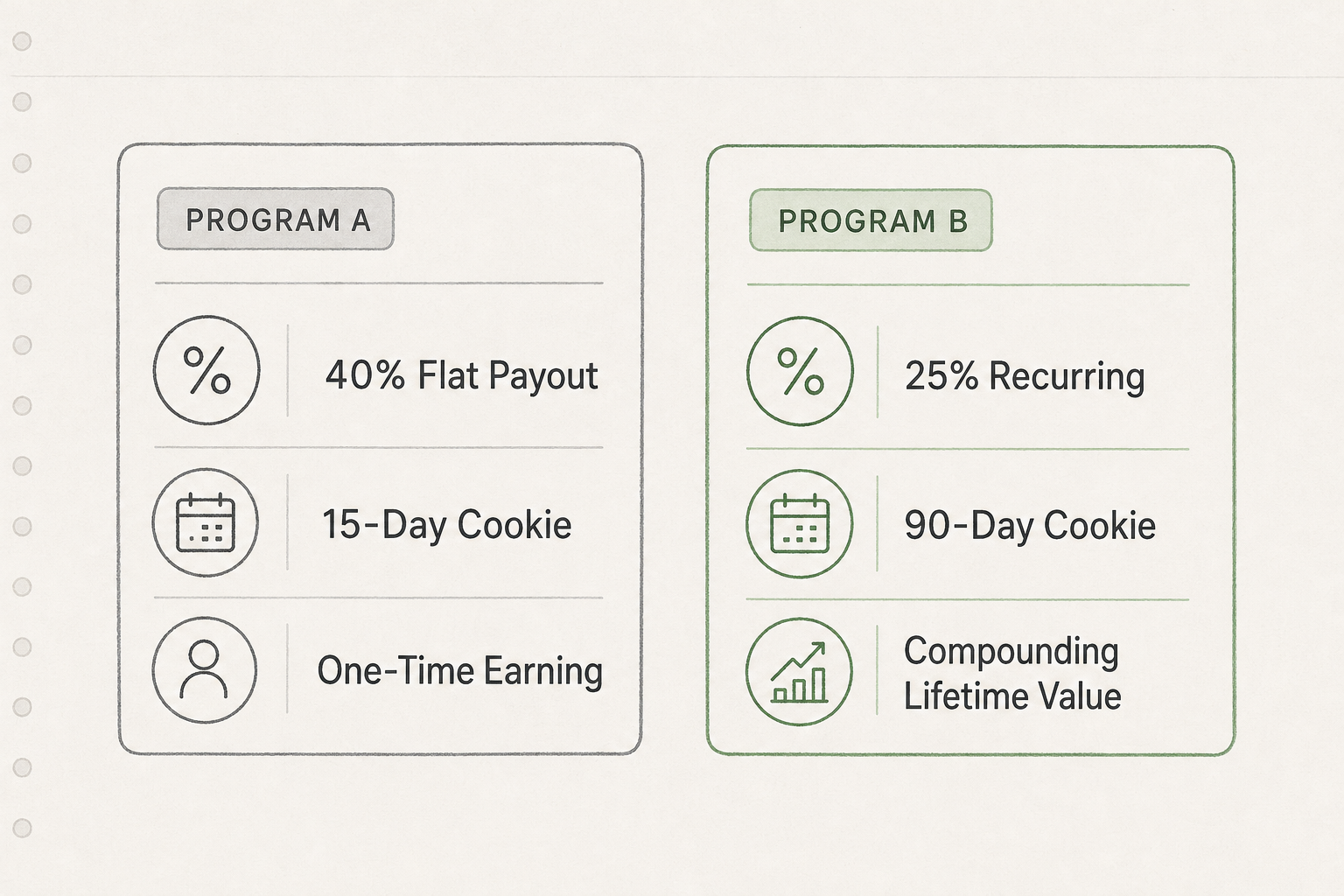
You find Program A, which offers a 40% commission. On the surface, it looks fantastic. However, because you found it on a transparent directory, you can also see that it only offers a 15-day cookie and the 40% is a one-time flat fee.
Right next to it, you find Program B. It offers a 25% commission. But the data reveals it is a recurring monthly commission with a 90-day cookie window.
Without upfront data, you might have spent hours applying for and integrating Program A, only to realize months later that Program B would have yielded a significantly higher lifetime value (LTV) for your business. For a deeper look at what standard payouts look like in the software space, review the current SaaS affiliate commission rates and cookie duration benchmarks 2026.
Why SaaS and Digital Products Dominate Modern Affiliate Marketing
When comparing discovery tools, it is impossible to ignore the shift toward SaaS and digital subscriptions. AffiliList heavily indexes toward software, and for good reason: the economics of physical product affiliates simply cannot compete with digital goods.
Physical products (like those found on Amazon Associates) typically offer margins between 1% and 5%. The logistics of manufacturing, shipping, and warehousing eat into the profit, leaving very little to pass on to the referring affiliate. Furthermore, these are almost universally one-time payouts.
SaaS products, however, have near-zero marginal costs of replication. Delivering an extra software license costs the merchant virtually nothing. Because of this, software companies can afford to aggressively acquire customers by paying affiliates 20%, 30%, or even 50% of the revenue.
The Power of Recurring Revenue
The true holy grail for a niche site owner or content creator is the recurring commission model. Instead of earning a single bounty when someone signs up, you earn a percentage of that customer's subscription fee every single month for as long as they remain a paying user.
This creates a compounding revenue stream. If you refer 10 new users a month to a $100/month software tool that pays a 30% recurring commission, your baseline income grows month over month, even if your traffic stays flat.
Discovering these specific types of programs requires specialized tools. If you are trying to transition your monetization strategy toward compounding income, exploring verified commission rates for 100+ recurring affiliate programs is a necessary first step. Additionally, you can review our curation of the best high-paying recurring affiliate programs for SaaS marketers to see exactly which tools are offering long-term payouts.
Evaluating a Partner Program: Beyond the Commission Rate
Whether you use AffiliList to source programs or rely on inbound pitches from merchants using "find affiliates" software, you must rigorously evaluate the partners you choose to promote. A high commission rate on a terrible product will ultimately damage your brand and yield zero conversions.
When evaluating a SaaS partner, look closely at these three pillars:
1. Product Viability and Brand Equity
Does the software actually solve a problem? If a merchant pitches you via a recruitment platform but their tool has terrible reviews and a clunky interface, do not promote it. Your audience trusts your curation. Promoting sub-par tools for a quick payout is a guaranteed way to destroy your conversion rates long-term.
To systemize how you vet potential software partners, run them through a structured Trustworthy SAAS Partners Evaluation Checklist before you ever place a tracking link on your site.
2. Attribution Models and Cookie Life
How does the merchant track the sale? In the B2B SaaS space, the sales cycle can take weeks or months. A user might click your affiliate link today, sign up for a free trial, use the tool for 14 days, and then finally upgrade to a paid plan on day 30.
If the affiliate program only offers a 15-day cookie, you lose the commission. You need to look for programs with minimum 30-day cookies, with 60-to-90 days being the gold standard in software.
3. Payout Thresholds and Terms
Read the fine print. Some in-house affiliate programs require you to hit a $500 minimum threshold before they issue a payout. Others might hold funds for 60 days to account for potential customer refunds. Transparent directories allow you to screen for these potential red flags before you invest your time into a content strategy.
Niche Discoverability: AI, Fintech, and Beyond
Generalist discovery platforms often struggle to categorize the rapid explosion of micro-niches in the digital economy. If you rely on broad affiliate networks, you are usually limited to massive, generalized categories like "Business" or "Technology."
The modern affiliate requires sharper tools.
The Artificial Intelligence Boom
The explosion of generative AI tools has created a massive new frontier for affiliate marketers. New AI writing assistants, image generators, and video editing tools are launching daily, and almost all of them offer lucrative partner programs to drive initial adoption.
However, finding legitimate AI tools among the noise of fly-by-night wrappers is difficult. Standard discovery networks lag behind these rapid market shifts. Utilizing a platform that actively tracks emerging tech allows you to be first-to-market with reviews. If you are specifically hunting for these opportunities, look at the Affiliate.watch Alternatives for Where to Search for Active AI Affiliate Programs and the Best Where to Search for Active AI Affiliate Programs Tools Beyond Affiliate.watch.
High-Value B2B Niches: Fintech and HR
Similarly, highly regulated or complex B2B niches like Fintech and HR software offer some of the highest payouts in the industry—sometimes reaching hundreds of dollars per lead or thousands per enterprise sale.
These programs are rarely found on lower-tier networks. They require specialized searches to uncover the brands willing to pay top dollar for qualified B2B traffic. For a breakdown of how to source these specific financial offers, you can explore the Best Websites With Lists of Fintech Affiliate Programs Tools Beyond Shareasale.
Feature Comparison: Creator Discovery vs. Merchant Recruitment
To summarize the operational differences between tools like AffiliList and merchant-facing "find affiliates" platforms, we can look at a direct functional breakdown.
| Feature | AffiliList (For Creators) | "Find Affiliates" Tools (For Merchants) |
|---|---|---|
| Primary Goal | Find profitable products to promote | Find influencers to drive traffic |
| Target User | Affiliate marketers, bloggers, YouTubers | SaaS founders, Partner Managers, Brands |
| Data Visibility | Open access to commission rates, cookie duration | Focused on creator traffic stats, domain authority |
| Monetization Focus | High-ticket, recurring SaaS commissions | Driving cost-effective customer acquisition |
| Workflow | Search -> Compare -> Apply to Merchant | Search -> Pitch -> Negotiate with Creator |
As the table illustrates, attempting to use a merchant recruitment tool to find products to promote is a waste of time. You need a platform designed around your specific workflow. If you are looking for more options on how to source vetted programs, our guide on Best Find Vetted Affiliate Programs Online Tools Beyond Shareasale and general Shareasale Alternatives for Find Vetted Affiliate Programs Online can provide additional avenues for discovery.
Frequently Asked Questions About Affiliate Discovery
Can merchants use AffiliList?
Yes, but in a very specific way. While AffiliList is built for creators to discover programs, merchants utilize it by submitting their own partner programs to the directory. By listing their SaaS or digital product on AffiliList, merchants gain inbound visibility from high-quality affiliates who are actively looking for new tools to promote. It acts as an inbound recruitment engine for the brand, rather than an outbound cold-pitching tool.
Do I need to pay to access these directories?
Most high-quality discovery engines for affiliates, including AffiliList, offer free access to their core database. The monetization of these directories usually comes from merchants paying for premium placements, sponsored listings, or expedited reviews of their program submissions. This keeps the barrier to entry non-existent for the content creators who need the data the most.
Are these platforms replacements for tracking networks like Impact or PartnerStack?
No. This is a common misconception. AffiliList is a discovery engine. It helps you find the program, compare the commission rates, and make a strategic decision. Once you decide to promote a specific SaaS tool, you will still click through and register for their actual affiliate program, which is often hosted on tracking infrastructure like Impact, PartnerStack, Rewardful, or an in-house proprietary system. Discovery tools sit at the very top of your workflow funnel, replacing Google searches and outdated listicles, not the tracking links themselves.
Strategic Takeaways for Affiliate Marketers
The landscape of affiliate marketing has matured. The days of throwing generic Amazon links onto a poorly designed blog and hoping for conversions are over. Today’s successful affiliates operate like media companies. They are highly selective about who they partner with, they demand transparency in commission structures, and they heavily bias toward software and digital tools that offer recurring revenue.
When deciding between AffiliList and any tool billed under "find affiliates," simply look at your core objective.
If you are a brand trying to build an army of salespeople, you need a recruitment platform. But if you are a creator, publisher, or niche site owner looking to monetize your audience with the highest converting, most lucrative SaaS offers available, you need a dedicated discovery directory.
By utilizing open-data platforms to filter by recurring payouts, extended cookie durations, and specific tech niches, you can bypass the friction of legacy networks and build a highly profitable partnership portfolio faster and more efficiently than ever before.