
Findaffiliates for High Paying Software Source Page for Affiliate Marketers, Content
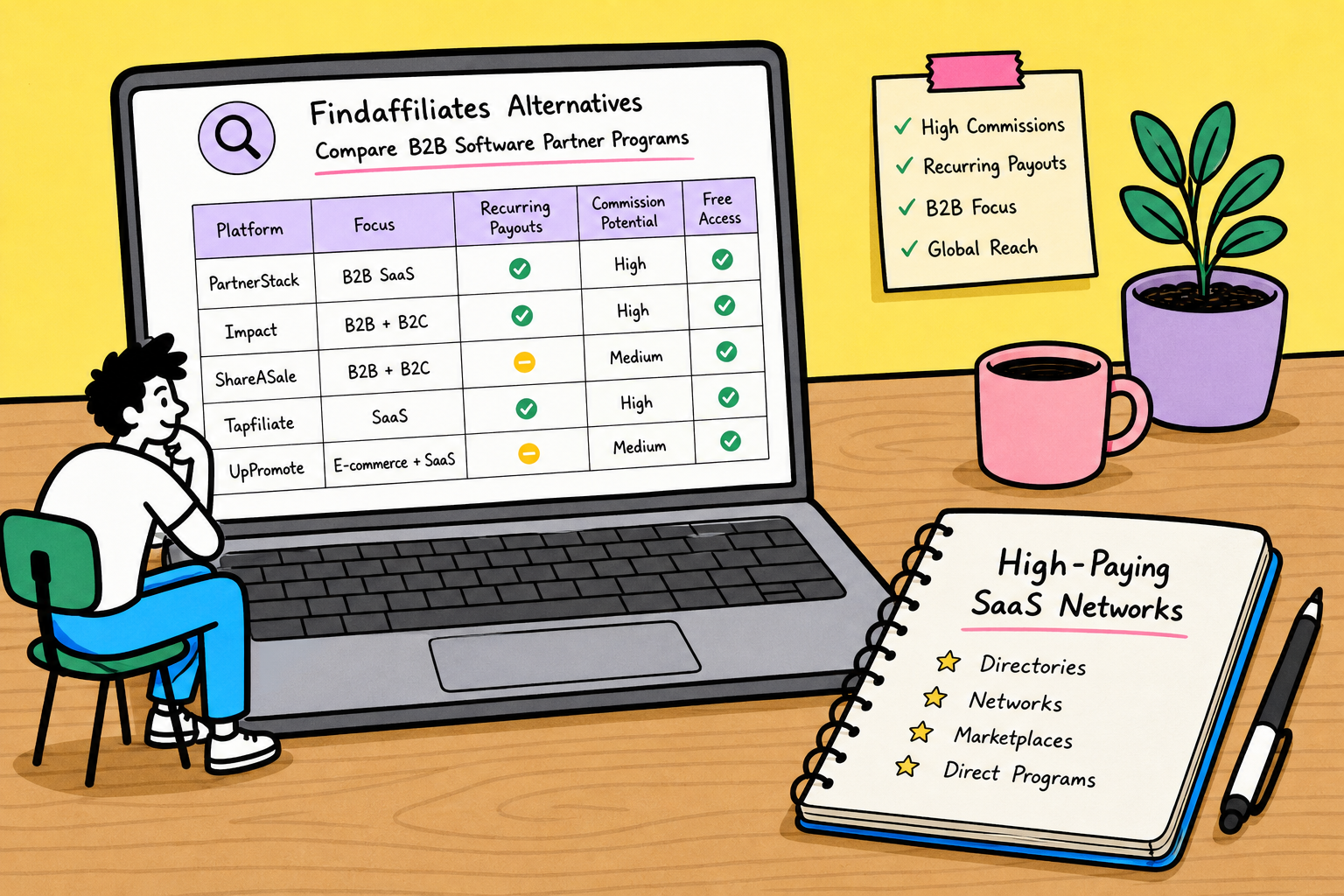
Discover the top alternatives to Findaffiliates for sourcing high-paying SaaS and B2B affiliate programs. Compare directories, recurring payouts, and networks.
- The Problem with Legacy Affiliate Sourcing
- Top Alternatives for Sourcing High-Paying Software Programs
- The Financial Mechanics of Software Affiliate Programs
- Structuring Content for High-Ticket Software Conversions
- Common Pitfalls and Failure Modes in SaaS Sourcing
- Overcoming Tracking and Technical Challenges
- Scenario: Evolving from Low-Tier Retail to High-Ticket SaaS
- Frequently Asked Questions About Sourcing Software Programs
- Building a Sustainable Software Affiliate Portfolio
Sourcing high-ticket software affiliate programs is often an exercise in frustration. You spend hours sifting through fragmented directories, filling out tedious network applications, and waiting days for approval, only to discover the commission structure is entirely different from what was advertised. Legacy directories have historically served as the starting point for this research, but they frequently suffer from stale data, broken links, and a lack of focus on the modern SaaS ecosystem.
For content creators, niche site owners, and affiliate marketers focused on B2B software, digital tools, and enterprise SaaS, relying on generalized platforms often leads to missed opportunities. The most lucrative software partnerships—those offering 30% to 50% recurring commissions or four-figure flat payouts—are rarely broadcasted on basic directories. They live in specialized hubs, enterprise partner networks, and curated databases that prioritize transparency.
If you are looking for modern alternatives to FindAffiliates to source high-paying software and SaaS affiliate programs, the landscape has fractured into highly specialized distinct paths. Navigating this ecosystem requires moving away from static lists and embracing platforms designed specifically for the complexities of software partnerships.
The Problem with Legacy Affiliate Sourcing
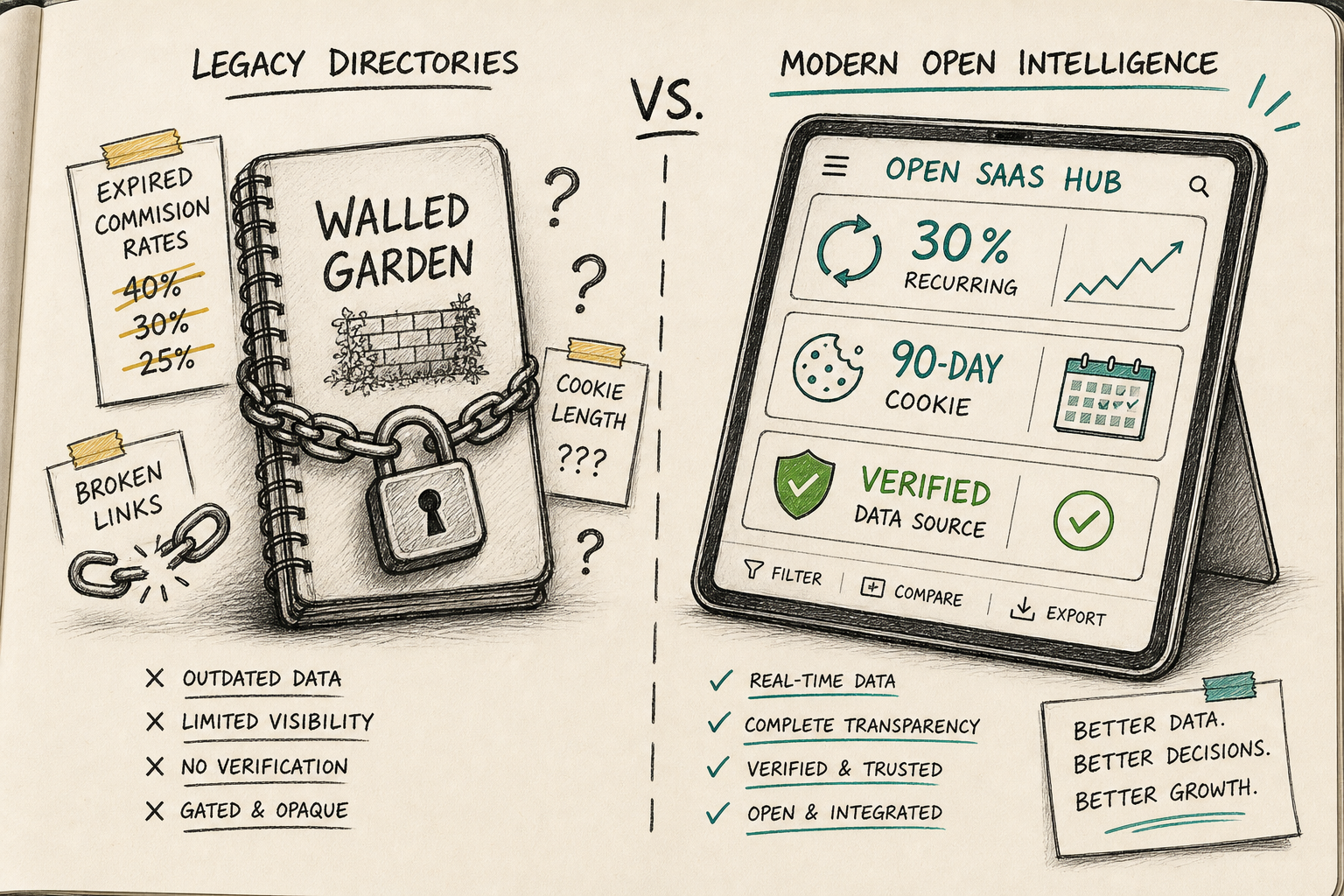
Many traditional affiliate directories operate on a submission-and-forget model. A software merchant submits their program in 2021, changes their commission structure in 2023, and abandons their tracking network in 2024. Yet, the directory continues to list the program as active, complete with outdated payout terms.
This creates significant friction for creators. When you plan a multi-week content strategy around a specific software tool—drafting comparison posts, recording YouTube tutorials, and building email sequences—you are investing heavy upfront capital and time. Finding out post-publication that the affiliate program is paused, or that it requires a minimum of 100 active customers before payouts begin, destroys the ROI of that content.
Furthermore, many traditional networks operate behind walled gardens. You cannot see a program’s earnings per click (EPC), cookie duration, or exact commission tiers until you create an account, verify your website, and wait for network approval. This lack of upfront transparency forces marketers to waste time applying to networks just to evaluate whether a program is worth their time.
Top Alternatives for Sourcing High-Paying Software Programs
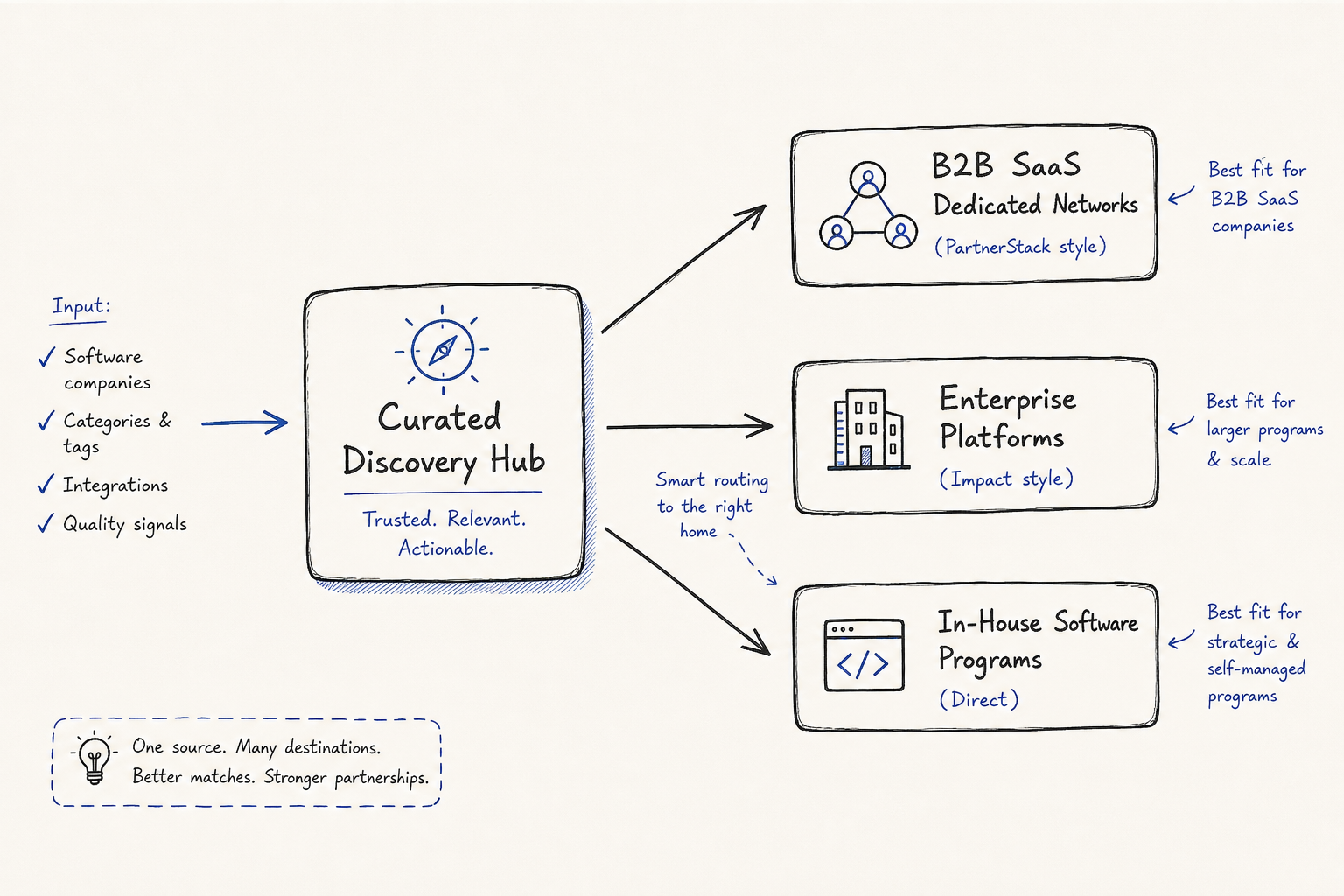
The best alternatives to legacy directories fall into two primary categories: curated intelligence databases that map the ecosystem, and the actual specialized networks where the software companies host their programs.
1. AffiliList: The Curated Intelligence Hub
When evaluating directories for SaaS and digital products, transparency and data accuracy are paramount. AffiliList has emerged as a primary alternative by focusing entirely on streamlining the discovery process. Rather than acting as a middleman network that takes a cut, AffiliList functions as a comprehensive, open directory of over 10,000 vetted affiliate programs.
The core advantage here is open access. Unlike closed networks, you do not need to submit to a rigorous approval process just to view a program's terms. You can immediately see commission percentages, payout types (recurring vs. one-time), and cookie lifespans. This allows you to rapidly filter through high-ticket SaaS programs across specific niches—from HR software and cybersecurity tools to YouTube marketing utilities and crypto platforms.
For creators who want to bypass the clutter of physical products and low-margin retail offers, this specialized focus is highly efficient. The platform's tagging system and advanced filtering for commission rates allow you to isolate programs that match your exact baseline requirements for profitability. Marketers frequently utilize the Affiliate Watch Vs Affililist for SAAS Programs Source Guide to understand how curated, high-fidelity data outperforms automated scraping tools in the SaaS vertical.
2. PartnerStack: The B2B SaaS Specialist
If you are looking for the actual network where high-paying software companies host their infrastructure, PartnerStack is the dominant player. Purpose-built exclusively for B2B SaaS, it is the engine behind the affiliate programs for companies like Monday.com, Webflow, Notion, and Asana.
PartnerStack stands out because it understands the software sales cycle. Software often involves free trials, demo requests, and multi-month enterprise closing windows. PartnerStack’s tracking is built to attribute these long-tail conversions accurately. Their built-in marketplace allows you to browse hundreds of software programs, apply directly, and manage all your recurring revenue streams from a single dashboard.
The downside is that PartnerStack is highly competitive. SaaS companies using PartnerStack often require you to prove your traffic sources and demonstrate exactly how you plan to promote their tools before they approve your application.
3. Impact.com: The Enterprise Tech Heavyweight
Impact.com (formerly Impact Radius) is arguably the largest partnership management platform globally, and it has captured a massive share of the enterprise software market. Major technology companies like HubSpot, Canva, Shopify, and HostGator manage their highly lucrative partner programs through Impact.
Impact provides incredibly robust tracking, allowing for cross-device attribution and customized promo code tracking (meaning you can get paid even if the user never clicks your link, as long as they use your exclusive discount code). It is excellent for filtering high-payout B2B tech. However, similar to PartnerStack, it is a hosting network rather than a pure discovery directory. The application process for individual brands within Impact can be stringent, and the sheer volume of non-software brands on the platform can make discovery slightly more cumbersome than using a dedicated SaaS directory.
4. CJ Affiliate and ShareASale: The Legacy Aggregators
While CJ Affiliate (formerly Commission Junction) and ShareASale host thousands of physical products, both have massive, established "Services" and "Software/High-Tech" categories.
ShareASale is particularly strong for mid-market specialized software, WordPress plugins, SEO tools, and hosting companies. It is slightly easier to get approved on ShareASale than on Impact, making it a reliable stepping stone. CJ Affiliate tends to host legacy tech giants and massive IT infrastructure companies. The tracking is reliable, but the interfaces on both platforms feel dated, and finding the true high-ticket SaaS gems requires significant digging through low-tier offers.
To speed up this process, many marketers cross-reference data. They use open directories to find the highest-paying programs instantly, and then click through to networks like ShareASale or CJ only when they are ready to apply. This workflow is often detailed in resources like the Affililist Vs Apdb Io Features Comparison Source Page for Affiliate Marketers, Conten, which highlights how database filtering saves hours of manual network searching.
The Financial Mechanics of Software Affiliate Programs
Software programs pay differently than retail e-commerce. Because the marginal cost of reproducing a software product is near zero, SaaS companies have incredibly high gross margins. This allows them to offer commissions that would bankrupt a physical product retailer. Understanding the nuances of these payout structures is critical for accurately evaluating an alternative to your current sourcing method.
The Recurring vs. Flat CPA Debate
The defining feature of SaaS affiliate marketing is the recurring commission. When sourcing programs, you will generally encounter three financial models:
- Lifetime Recurring Revenue (RevShare): You earn a percentage (typically 15% to 40%) of the customer's subscription fee every month for as long as they remain a paying customer.
- Capped Recurring Revenue: You earn a percentage of the subscription fee, but it is capped at a specific timeframe (e.g., 20% monthly for the first 12 months only).
- Flat Cost Per Acquisition (CPA): You receive a single, large upfront payment when a user converts to a paid plan. This can range from $50 for a basic productivity tool to $2,000+ for enterprise software.
A common mistake is assuming that a high recurring percentage is always superior to a flat CPA. This is a myth.
Consider a small utility SaaS that costs $10 per month and offers a 30% recurring commission ($3/month). If the average customer churns after six months, your Customer Lifetime Value (LTV) commission is only $18. Alternatively, a similar tool might offer a flat $50 CPA upon the first paid month. In this scenario, the flat CPA is vastly superior.
Conversely, a $200/month CRM offering 20% recurring ($40/month) with an average customer retention of 36 months yields a lifetime commission of $1,440. Here, recurring revenue builds an unshakeable passive income foundation. When using directories to source software, you must evaluate the product's likely churn rate against the payout model.
The Impact of Cookie Duration and Attribution
High-ticket software is rarely purchased on a whim. A B2B buyer looking for HR management software will likely research multiple options, read comparative reviews, sign up for a free trial, consult with their team, and perhaps wait for the next fiscal quarter to pull the trigger.
Because of this protracted sales cycle, cookie duration is disproportionately important in the software niche. A 24-hour or 7-day cookie—common in retail networks—is entirely useless for high-ticket SaaS. When evaluating programs on modern directories, you should specifically filter for cookie durations of 60, 90, or ideally 120+ days.
Furthermore, you need to understand the attribution model. Does the program operate on "First Click" or "Last Click"?
- Last Click (Most Common): The affiliate whose link was clicked immediately before the purchase (or trial signup) gets the commission.
- First Click (Rare but Lucrative): The affiliate who first introduced the customer to the software gets the commission, even if the customer later clicked another affiliate's link or a retargeting ad before buying.
When consulting resources like the Other Directories Like Affiverse for Partner Programs Evaluation Checklist, these technical metrics are consistently highlighted as the true indicators of a program's profitability.
Structuring Content for High-Ticket Software Conversions
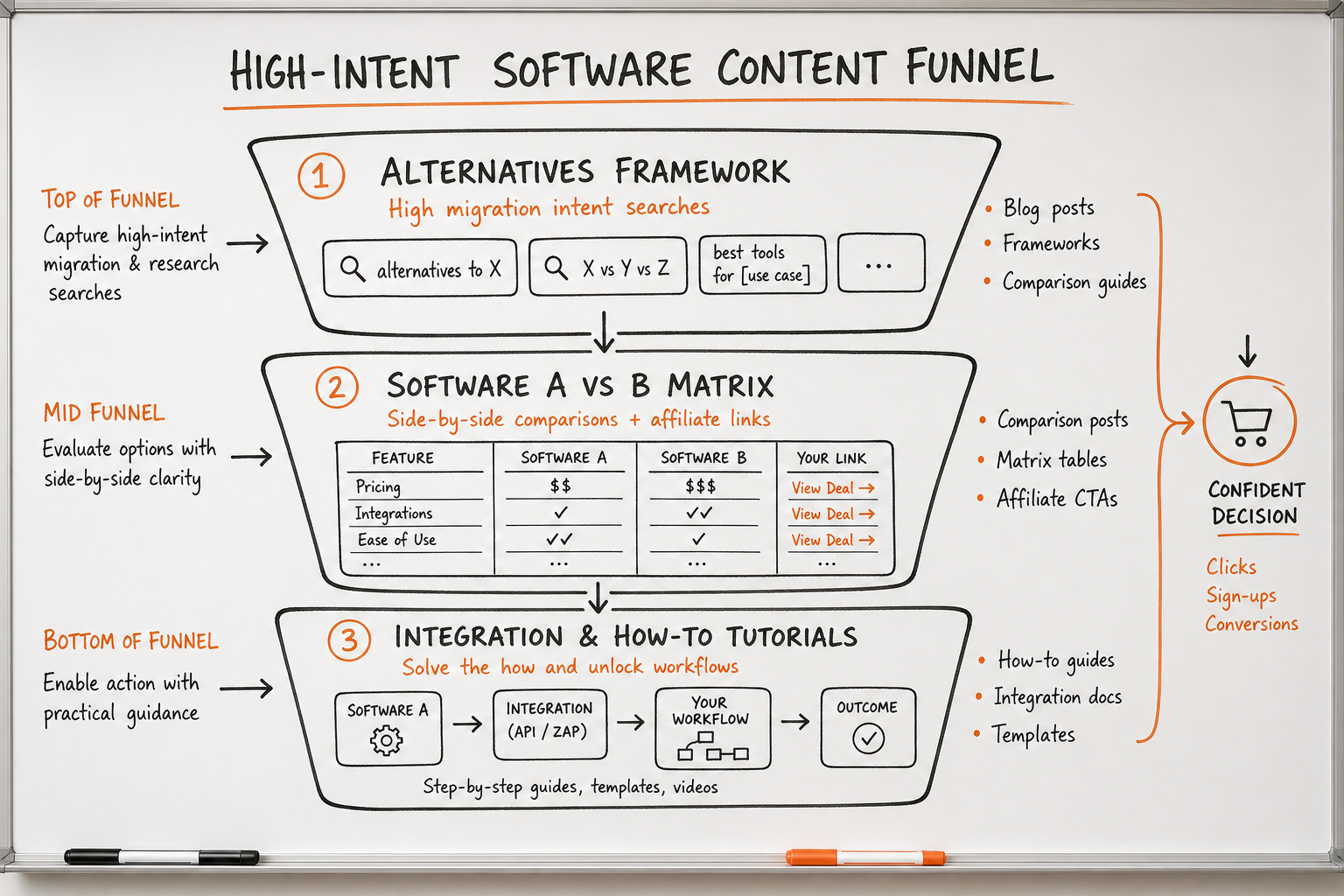
Finding a high-paying alternative directory and securing your affiliate links is only the first step. Software requires a specific content architecture to convert at a high rate. Broad, top-of-funnel content (e.g., "What is a CRM?") rarely drives high-ticket conversions. Instead, your strategy should focus on high-intent, bottom-of-funnel queries.
The "Alternatives To" Framework
When a user searches for "alternatives to [Software X]", they have already identified their problem, tested a solution, found it lacking (due to price, features, or support), and are actively looking to migrate. This is the highest-converting traffic in software affiliate marketing.
To execute this, use a directory to map out an entire software category. If you are targeting email marketing, find five tools that offer high commissions. Create dedicated pages for "Mailchimp Alternatives," "ActiveCampaign Alternatives," and "ConvertKit Alternatives." Position the highest-paying, most reliable tool as the top recommendation across these pages, clearly articulating why it solves the pain points of the incumbent software.
The "Vs" Comparison Matrix
Direct comparison posts (e.g., "Software A vs Software B") capture users at the exact moment of decision. They have narrowed their choices down to two tools and need a final push.
The secret to monetizing "Vs" posts is applying to both affiliate programs. You want to remain objective and guide the user to the tool that actually fits their needs, ensuring you earn a commission regardless of their final choice. Using a transparent database helps you quickly identify if both tools in a comparison offer a program, saving you the hassle of comparing a high-paying tool against one that offers zero affiliate incentives. For deeper insights into structuring comparative content, marketers often reference the Affililist Vs Taprefer Which Is Better for Creators Source Guide.
Integration and "How-To" Tutorials
Software is inherently complex. Users frequently search for integration guides, such as "How to connect [Software X] to [Software Y]" or "How to automate [Task] using [Software Z]."
By creating highly specific, screen-recorded tutorials that solve a technical problem, you build immense trust. Within that tutorial, you embed your affiliate links for the software being demonstrated. Because the user needs the specific tool to execute your tutorial, the conversion rates are exceptionally high. This method works particularly well on YouTube and in detailed, step-by-step blog posts.
Common Pitfalls and Failure Modes in SaaS Sourcing
Even experienced marketers make critical errors when transitioning from physical products to high-paying software. Navigating alternatives requires avoiding these common failure modes.
Ignoring the "Free Trial" Trap
Many software companies boast a massive CPA, but bury a critical caveat in their terms and conditions: you only get paid if the user converts from a free trial to a paid plan, and stays for at least 60 days. If the software has a terrible user interface or lacks customer support, users will churn before the 60-day mark. You could drive thousands of free trial signups and earn exactly zero dollars.
Before heavily promoting a new SaaS tool, you must test the software yourself. If the onboarding is clunky or the tool fails to deliver on its promises, it does not matter how high the commission is—it will not convert, and your audience will lose trust in your recommendations.
Applying with Bare-Bones Niche Sites
Premium SaaS partner programs on networks like PartnerStack or Impact are actively managed by dedicated Affiliate Managers. These managers manually review applications. If you apply with a generic, thin-content website that looks like it was generated in ten minutes, you will be rejected.
Software companies want to partner with authoritative voices, industry experts, and established media brands. Before applying for high-ticket programs, ensure your site has a clear brand identity, an "About" page detailing your expertise, and at least 15-20 high-quality, long-form articles related to their specific industry. If you are rejected, do not hesitate to reply to the rejection email asking for feedback or explaining your specific promotional strategy. Often, articulating a clear, professional plan can overturn a rejection.
Misunderstanding Payout Thresholds and Terms
Enterprise software often comes with enterprise accounting complexities. It is common for high-ticket programs to have high payout thresholds (e.g., you must earn $500 before they issue a payment) or delayed payment terms like Net-60 or Net-90. This means if you earn a $1,000 commission in January, you might not receive the cash in your bank account until April.
When you are scaling paid ads or investing heavily in content creation, these delayed cash flow cycles can cause severe liquidity issues. Always check the exact payment terms within the directory or network before committing a significant budget to a campaign.
Overcoming Tracking and Technical Challenges
As you move into higher-paying software tiers, the technical requirements for tracking and optimization increase. Basic affiliate links are often insufficient for serious scale.
Sub-IDs and Campaign Tracking
When you are promoting a single software tool across YouTube, a blog post, a newsletter, and a Twitter thread, you need to know exactly which channel is driving the conversions. High-quality networks allow you to append "Sub-IDs" to your affiliate links.
A Sub-ID is a small piece of text added to the end of the URL (e.g., ?subid=youtube_desc or &aff_sub=newsletter_jan). This data is passed back to the affiliate dashboard, allowing you to see that while your blog drove 100 clicks and 1 sale, your newsletter drove 20 clicks but 5 sales. This intelligence is critical for focusing your effort on the highest-yielding channels.
Dealing with Ad Blockers and ITP
Apple’s Intelligent Tracking Prevention (ITP) and the rise of ad blockers have severely impacted traditional affiliate cookies. If a user clicks your link, but their browser aggressively purges third-party cookies after 24 hours, you will lose the commission if they buy on day three.
Leading SaaS programs combat this by offering Server-to-Server (S2S) tracking or API integrations, which do not rely on browser cookies. Alternatively, many offer exclusive promo codes. If a user enters your code at checkout, the affiliate platform credits you with the sale regardless of whether a cookie was present. When sourcing programs on modern platforms, identifying those that offer code-based tracking provides a massive competitive advantage.
| Tracking Method | Reliability Against Ad Blockers | Implementation Complexity | Best Use Case |
|---|---|---|---|
| Standard Affiliate Link (Cookie) | Low to Medium | Very Low | General blog content, early-stage testing. |
| Custom Promo Code | High | Low | Podcasts, YouTube, Social Media, Newsletters. |
| Server-to-Server (S2S) / API | Very High | High | Advanced media buyers, high-volume arbitrage. |
Scenario: Evolving from Low-Tier Retail to High-Ticket SaaS
Consider the trajectory of a typical marketing blog. In its first year, the creator might monetize primarily through Amazon Associates, recommending physical podcasting microphones or ring lights. They drive 10,000 visitors a month, generating 500 clicks and 25 sales at an average commission of $3. Their monthly revenue sits at a meager $75.
In year two, they pivot. Using a curated database, they identify three high-paying software programs: an email marketing platform (30% recurring), an SEO tool (40% recurring), and a webinar hosting software ($100 flat CPA).
Instead of broad hardware reviews, they write deep-dive tutorials on how to build a marketing funnel using these specific tools. They now drive only 5,000 visitors a month (lower volume, but higher intent). They generate 100 clicks and 10 software trials. Five of those trials convert to paid customers.
- Two users buy the webinar software ($200 upfront).
- Two users subscribe to the $100/mo SEO tool (earning $80/mo recurring).
- One user signs up for the $50/mo email platform (earning $15/mo recurring).
In month one of the pivot, they earn $295. By month six, assuming the recurring users stay and they add the same number of new users each month, their baseline passive income from the recurring tools has grown to $570/month, plus the reliable upfront CPA cash. This scenario illustrates why sourcing the right software is the highest-leverage activity in affiliate marketing.
Frequently Asked Questions About Sourcing Software Programs
Do I need a massive audience to get approved for premium SaaS programs?
No. Software companies prioritize relevance and conversion intent over sheer volume. A highly technical blog getting 1,000 targeted visitors a month is vastly more valuable to a B2B SaaS company than an entertainment channel with 100,000 subscribers. If your content proves you understand the industry and can educate users on how to utilize complex tools, you will secure approvals.
Are all software affiliate programs managed through third-party networks?
While networks like PartnerStack and Impact are dominant, many SaaS companies run direct, in-house affiliate programs using specialized tracking software like Rewardful or FirstPromoter. These in-house programs are notoriously difficult to find through standard Google searches, which is why curated directories that aggregate both network-hosted and in-house programs are essential for comprehensive research.
How often do SaaS platforms change their commission structures?
More frequently than you might expect. When a SaaS startup is heavily funded and focused on rapid user acquisition, they often offer incredibly lucrative, loss-leading commissions (e.g., 50% recurring or $200 CPA on a $20 product). Once they reach market saturation or face pressure to achieve profitability, they frequently slash these rates or cap the recurring payouts to 12 months. This reality makes it imperative to have a reliable, frequently updated sourcing platform to monitor changes and pivot to new alternatives when a legacy partner cuts their rates.
Building a Sustainable Software Affiliate Portfolio
Sourcing high-paying software requires a systematic approach. Relying on outdated directories or randomly searching for "best [niche] affiliate programs" on Google yields fragmented, unreliable data. The industry has matured, and the tools required to navigate it have evolved.
To build a profitable portfolio, you must layer your approach. Use a transparent, open-access directory like AffiliList to conduct your initial intelligence gathering, rapidly filtering thousands of programs by commission type, niche, and cookie duration without hitting registration walls. Once you have identified the highest-leverage targets, move confidently to the specific hosting networks—whether that is PartnerStack for B2B SaaS, Impact for enterprise tech, or an independent in-house portal—armed with the data necessary to secure approval and structure high-converting content.