
Amazon Ads Partner Network: 5 Ways to Scale in 2026
Discover how affiliate marketers and digital entrepreneurs can leverage the Amazon Ads Partner Network in 2026 to find high-paying B2B SaaS affiliate programs.
Most affiliate marketers obsess over the Amazon Associates program, grinding out content for 1% to 4% commissions on consumer goods. Meanwhile, they completely ignore the B2B side of the ecosystem where the real money changes hands: the Amazon Ads Partner Network.
If you run a niche site, a B2B marketing blog, or an agency, viewing Amazon strictly as a consumer marketplace is a massive blind spot. Brands are pouring billions into Amazon advertising, and they are desperately searching for software and agencies to manage that spend.
Amazon created a dedicated hub to organize this ecosystem. For the savvy affiliate marketer or digital entrepreneur, this network is not just a directory of service providers. It is a highly vetted prospecting list for high-ticket B2B SaaS affiliate programs, a pathway to agency lead generation, and a blueprint for scaling your own service business.
Here is exactly what the Amazon Ads Partner Network is, how it operates in 2026, and five concrete ways you can leverage it to scale your affiliate income or service business.
What is the Amazon Ads Partner Network?
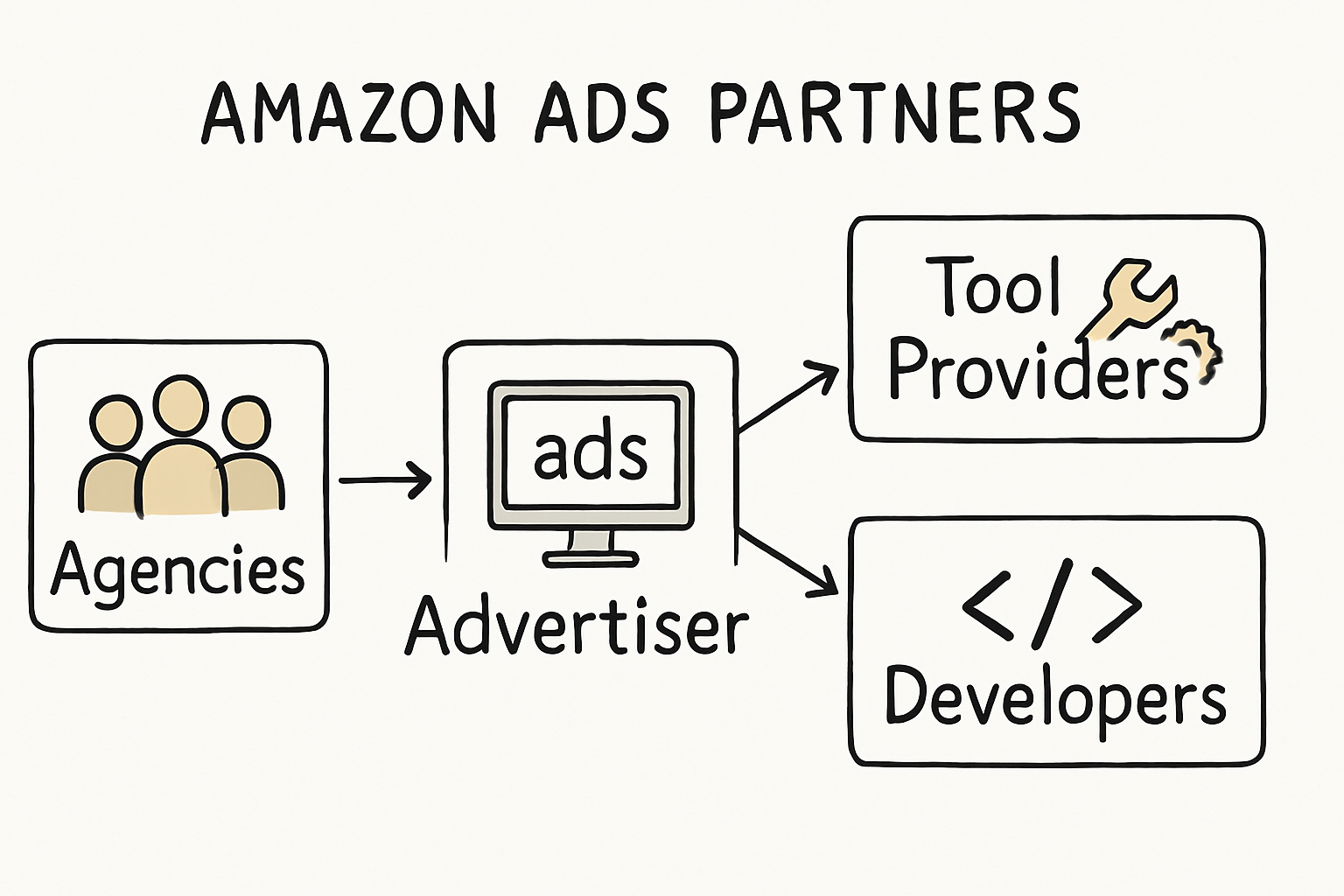
The Amazon Ads Partner Network is a global community of agencies, tool providers, and developers that help advertisers achieve their business goals using Amazon Ads products.
Instead of forcing brands to navigate the complex world of Amazon DSP (Demand-Side Platform), Sponsored Display, and Amazon Marketing Cloud alone, Amazon built a directory where brands can find vetted experts.
For participants, the network provides a centralized hub to access educational resources, API documentation, beta product releases, and a public listing in the Amazon partner directory.
The Three Types of Partners
When you explore the network, you will find three distinct categories of partners:
- Agencies (Media and Creative): These are service businesses managing ad spend on behalf of brands. They handle strategy, bid management, and creative asset production. Some operate as independent consultants, while others are massive holding companies.
- Tool Providers (Technology Partners): These are SaaS companies that have built proprietary software using the Amazon Ads API. They offer solutions for campaign automation, keyword bidding algorithms, and cross-channel analytics.
- Developers: Technical teams focused on building custom integrations and bespoke reporting dashboards using Amazon's cloud infrastructure.
Why Affiliate Marketers Should Care About This Network
At first glance, a directory of Amazon PPC agencies might not seem relevant to a content creator. But if you strip away the corporate branding, the Amazon Ads Partner Network is actually the ultimate cheat sheet for B2B affiliate marketers.
If you are targeting profitable affiliate marketing niches, B2B e-commerce software is near the top of the list. Sellers are willing to pay a premium for tools that give them a competitive edge in ad placement.
Because Amazon rigidly vets the companies allowed into its partner network, you can use the public directory to bypass unreliable software and immediately identify the most reputable SaaS tools in the e-commerce space. Many of these tool providers offer lucrative, recurring affiliate programs. By promoting them, you tap into the enterprise budgets of Amazon sellers rather than the wallets of everyday consumers.
5 Ways to Scale Using the Amazon Ads Partner Network in 2026
Transitioning from B2C product reviews to B2B software recommendations requires a strategic shift. Here are five practical ways to use the network to scale your revenue this year.
1. Mine the Partner Directory for High-Paying SaaS Offers
The most direct way to leverage the network is as a prospecting tool for your affiliate portfolio. The technology partners listed in the directory are prime candidates for promotion on your blog, YouTube channel, or email list.
Rather than searching Google for "best Amazon PPC tools" and relying on outdated lists, go straight to the source.
The Prospecting Workflow:
- Navigate to the Amazon Ads Partner directory.
- Filter the directory by "Tool provider" and select specific services like "Campaign management" or "Reporting and analytics."
- Cross-reference this list of vetted companies by searching for "[Company Name] affiliate program" or "[Company Name] partner program" on Google, or by running the brand names through the AffiliList database.
- Evaluate their commission structures.
Because these are enterprise-grade tools, they often fall into the category of high paying affiliate programs. It is common to find SaaS companies in this space offering 15% to 30% recurring commissions on monthly software subscriptions that cost anywhere from $100 to $1,000+ per month.
Decision Matrix: Evaluating Amazon Ads Tech Partners for Promotion
| Criteria | Ideal Scenario | Warning Sign (Pass) |
|---|---|---|
| Commission Type | Recurring monthly (for the lifetime of the account) | One-time flat fee under $50 |
| Partner Status | Advanced Partner (proven retention and scale) | Unverified or recently launched with no reviews |
| Cookie Duration | 60 to 90 days (B2B sales cycles take time) | 24 hours to 7 days |
| Sales Team | The software company has a dedicated outbound sales team to close the leads you send | Purely self-serve checkout with high cart abandonment |
| Affiliate Support | Dedicated affiliate manager, custom landing pages, co-branded webinars | A generic network link with zero marketing assets |
2. Monetize B2B E-commerce Leads via Agency Partnerships
If you run a blog that teaches people how to sell on Amazon, or you rank for terms related to Amazon FBA, a significant portion of your audience will eventually hit a growth ceiling. They will realize they lack the expertise to manage a complex advertising budget.
While you can promote SaaS tools to them, a segment of your audience simply wants to outsource the work entirely. This is where you can partner with the Agencies found in the directory.
Many Amazon Ads agencies run quiet, unadvertised referral programs. They are desperate for qualified leads (brands with $10k+ monthly ad budgets). If you reach out to agencies listed in the partner network and negotiate a referral agreement, you can often secure a bounty for every signed client, or a percentage of the agency's management fee for the first year.
This is a highly effective affiliate marketing side hustle for those with high-traffic e-commerce business blogs. You act as the matchmaker between the struggling seller and the certified agency.
3. Evolve Your Affiliate Business into a Certified Agency
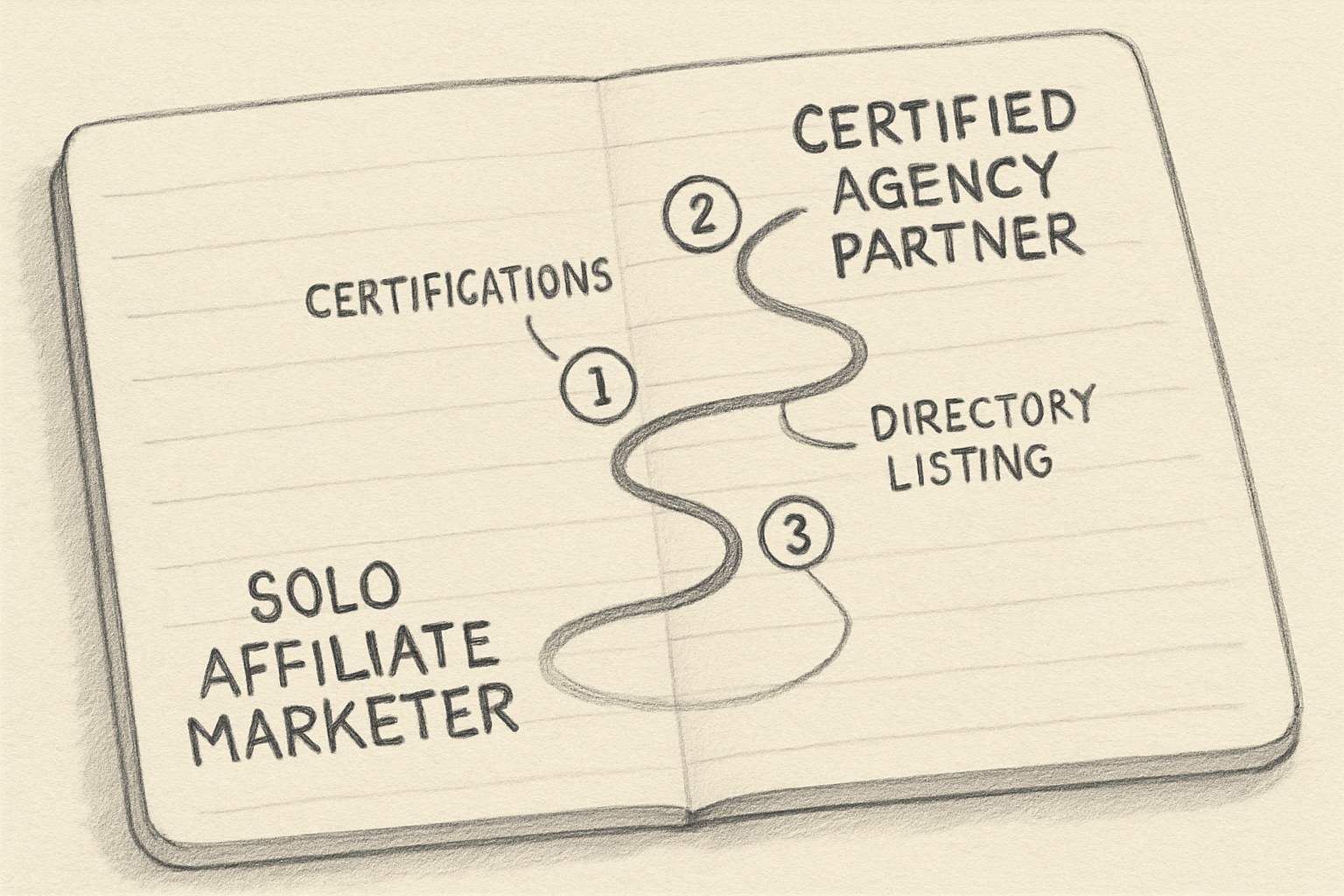
For affiliates who have spent years running paid traffic to their own offers, the natural next step is often offering those skills as a service. If you know how to run profitable campaigns, you have the foundational skills to become an Amazon Ads partner yourself.
Transitioning from a solitary affiliate to a service provider opens up entirely new revenue streams. The demand for competent media buyers is staggering, making it one of the most lucrative affiliate marketing jobs you can pivot into.
By registering for the network, you gain access to the Partner Network portal. Here, you can manage your clients' advertising accounts from a single dashboard, access developer resources, and eventually earn a listing in the public directory to generate inbound leads.
Steps to Transition:
- Sign in to your advertising account and register for the Partner Network.
- Migrate your existing brand connections or affiliate ad accounts into the manager account structure.
- Utilize the Amazon Ads learning console to train your virtual assistants or team members on standard operating procedures (SOPs).
4. Build E-E-A-T with Amazon Ads Certifications
If you want to start a profitable affiliate marketing blog in the e-commerce or digital marketing niche, you face a major hurdle: Experience, Expertise, Authoritativeness, and Trustworthiness (E-E-A-T). Google wants to know why you are qualified to recommend PPC software or ad strategies.
The Amazon Ads Partner Network offers a straightforward solution: Certifications.
Through the learning console, you can study for and pass rigorous exams covering Retail, Sponsored Ads, and the Amazon DSP. Earning these certifications gives you official badges that you can display in your author bio, on your "About" page, and on your LinkedIn profile.
This accomplishes two things:
- It signals to search engines and readers that you possess verified expertise in the subject matter.
- It drastically increases your conversion rates when recommending high-ticket best niches for affiliate marketing software, because buyers trust recommendations that come from certified practitioners.
5. Leverage Advanced Tools to Scale Hybrid FBA/Affiliate Sites
The most advanced digital entrepreneurs in 2026 are blurring the lines between affiliate content and owned e-commerce. They build content sites that monetize via affiliate links, but they also launch their own white-label products on Amazon to capture the higher margins of physical goods.
To scale this hybrid model, you need automation. The tool providers in the Amazon Ads Partner Network offer solutions that integrate directly with the Amazon Selling Partner API.
By utilizing these tools, you can automate your inventory sync, adjust PPC bids based on your real-time profit margins, and attribute sales back to your off-Amazon content. Using robust, API-integrated software is how you confidently answer the question is affiliate marketing legit—by treating it as a deeply integrated, data-driven enterprise rather than a hobby.
How to Distinguish a Good Partner from a Great One
Whether you are looking for an agency to refer your audience to, or a software tool to promote, you need to understand how Amazon categorizes its partners. Promoting a subpar tool hurts your reputation and kills your conversion rates.
Amazon categorizes its partners into different tiers based on their performance, expertise, and growth. Understanding this hierarchy is crucial for choosing who to work with.
The Difference Between Verified and Advanced Partner Status
When browsing the directory, you will notice partners hold different statuses. These are not just decorative badges; they represent hard data that Amazon tracks regarding the partner's client retention and ad spend management.
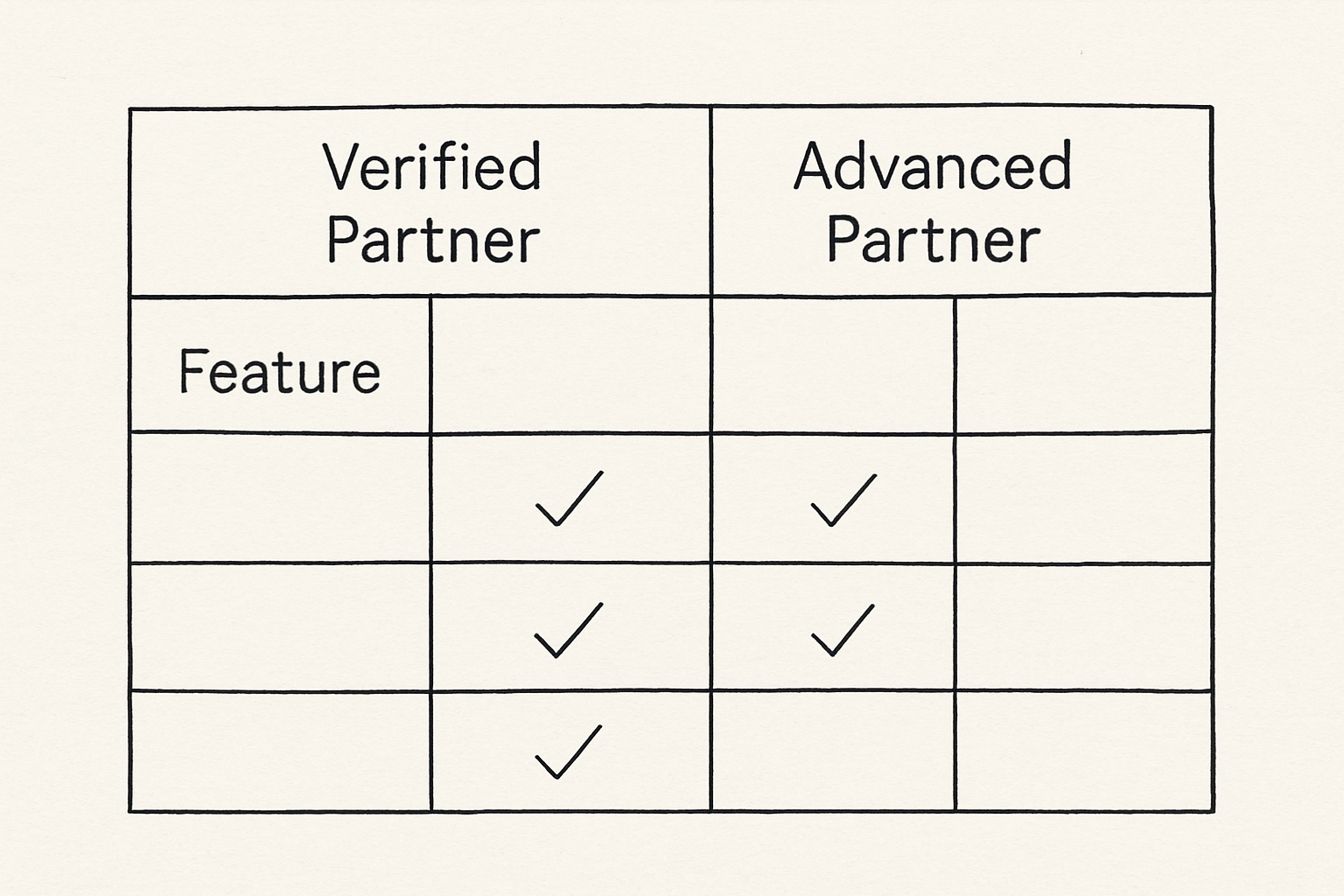
According to Amazon's documentation regarding verified and advanced partner status, here is how the tiers break down:
| Feature | Verified Partner | Advanced Partner |
|---|---|---|
| Baseline Requirement | Registered in the network, active manager account. | High growth, deep expertise, large scale. |
| Ad Spend Managed | Low to moderate. | Significant volume (Amazon keeps exact thresholds private). |
| Client Retention | Standard. | Proven high client retention and product adoption. |
| Amazon Collaboration | Access to standard tools and directory listing. | Priority access to betas, dedicated account management from Amazon. |
| Best Use Case for Affiliates | Good for niche, specialized tools. | The safest, most lucrative tools/agencies to promote to your audience. |
If you are picking a software to promote to your email list, prioritizing "Advanced Partners" dramatically reduces your risk. These companies have already proven to Amazon that their product works and that their customers don't churn. Low churn equals stable, recurring affiliate commissions for you.
Navigating the Partner Directory: A Step-by-Step Guide
If you are ready to start finding tools to promote or agencies to partner with, the directory is your starting point. Here is how to navigate it effectively to extract the best affiliate opportunities.
Step 1: Define Your Target Audience's Pain Point
Before you search, you must know what your audience is struggling with. Are they complaining about wasted ad spend? Inventory management? Creative burnout?
If you run a blog about visual marketing, you might have already written a guide on setting up an affiliate marketing program for pinterest. That same audience might be selling products on Amazon and struggling with creative assets. Therefore, you should look for "Creative Services" partners in the Amazon directory to promote.
Step 2: Access the Directory and Apply Filters
Go to the public directory and use the filtering system on the left side.
- Partner Type: Select "Tool provider" (for SaaS affiliate programs) or "Agency" (for referral bounties).
- Products: Filter by the specific Amazon Ads products your audience uses (e.g., Sponsored Brands, Amazon DSP).
- Pricing Model: If you are looking for software, filter by "SaaS" or "Self-service."
Step 3: Analyze the Partner Profile
Click into a partner's profile. Look for:
- Case Studies: Do they have published data showing their effectiveness? You can use these metrics in your own affiliate review articles.
- Supported Marketplaces: Ensure they operate in the countries where your audience lives (e.g., NA, EU, APAC).
- Partner Awards: Amazon occasionally highlights partners with specific awards for innovation or growth. These award-winners make fantastic subjects for "Top 10" software roundups.
Step 4: Locate the Affiliate Program
Amazon's directory will link to the partner's website, but it rarely links directly to their affiliate program. You must navigate to the partner's site and check their footer for links like "Partners," "Affiliates," or "Referral Program." If they don't have a public program, reach out via their contact form and pitch a custom referral agreement. Many B2B companies are happy to set up a private tracked link for a high-quality content creator.
The Failure Modes: What Goes Wrong for Affiliates
Attempting to bridge the gap between affiliate marketing and enterprise Amazon tools is highly profitable, but it is not without friction. Here are the common failure modes to avoid.
1. Ignoring the Minimum Spend Requirements Many of the Advanced Partner agencies and elite SaaS tools require users to have a minimum monthly ad spend (often $5,000 to $10,000/month). If your blog traffic consists mostly of beginners who are just learning how to pick a niche for affiliate marketing or launching their very first Amazon product, promoting an enterprise tool will result in zero conversions. You must match the complexity of the tool to the maturity of your audience.
2. Failing to Explain the "Why" B2B software is not an impulse buy. You cannot simply drop a link to a $300/month PPC automation tool in a generic blog post and expect sales. You must write deep, tactical content. Show screenshots of the software, explain the exact bidding algorithm it uses, and calculate the ROI a seller would get by saving 10 hours a week on manual adjustments.
3. Promoting Conflicting Services Do not promote a fully managed agency right next to a DIY self-serve software tool without clarifying the difference. Your audience will suffer from decision fatigue. Create distinct funnels: one for sellers who want to DIY (pitch the SaaS tools), and one for sellers who want to outsource (pitch the agency referral links).
How to Register for the Partner Network
If you have decided to transition your skills and offer services directly, joining the network is a straightforward process.
- Ensure you have an active Amazon Ads account.
- Navigate to the Partner Network registration page.
- Follow the prompts to link your standard advertising account to a new Partner Network manager account.
- Complete your company profile. Be detailed about your expertise, supported regions, and the exact services you provide. This information is eventually used to populate your directory listing once you qualify.
- Start connecting your clients' accounts and utilizing the learning console to train your staff.
To stay updated on the latest beta features, API changes, and partner success stories, it is highly recommended to follow the official Amazon Ads Partners on LinkedIn.
Frequently Asked Questions
Does it cost money to join the Amazon Ads Partner Network? No, joining the network and accessing the learning console is completely free. However, achieving and maintaining public directory listings or advanced tiers requires meeting specific performance and ad spend thresholds managed through your account.
Who is eligible to join the network? Agencies, tool providers, and developers who manage or build tools for Amazon advertising accounts on behalf of other brands are eligible. If you are a solo affiliate marketer managing only your own proprietary sites, the network's backend tools won't be necessary, but the public directory remains a goldmine for research.
How can I learn how brands view Amazon partners? To better understand what your audience is looking for when hiring an agency, read Amazon's guide on how to get advertising support from our Amazon Ads partners. This document outlines the exact expectations Amazon sets for advertisers when they hire a partner, which you can reverse-engineer to improve your affiliate marketing messaging.
Moving Beyond the Basics in 2026
The most profitable affiliate marketers are those who look where others aren't. While thousands of beginners are fighting over the same consumer product reviews, a massive ecosystem of B2B e-commerce software is sitting largely untouched in the Amazon Ads Partner directory.
Whether you use the network to hunt down high-paying SaaS affiliate programs, generate referral bounties from top-tier agencies, or build verifiable authority through certifications, stepping into the B2B side of Amazon is one of the most reliable ways to scale your digital business this year.
Looking for more curated, high-converting programs? Browse the AffiliList database to find the best SaaS and digital tool affiliate programs available today.