
Beauty Product Affiliate Marketing: 7 Tips for Higher Sales
Discover 7 proven strategies for beauty product affiliate marketing. Learn how to leverage networks, high-ticket tools, and micro-niches to increase your EPC.
- Why the Beauty Niche is an Affiliate Goldmine
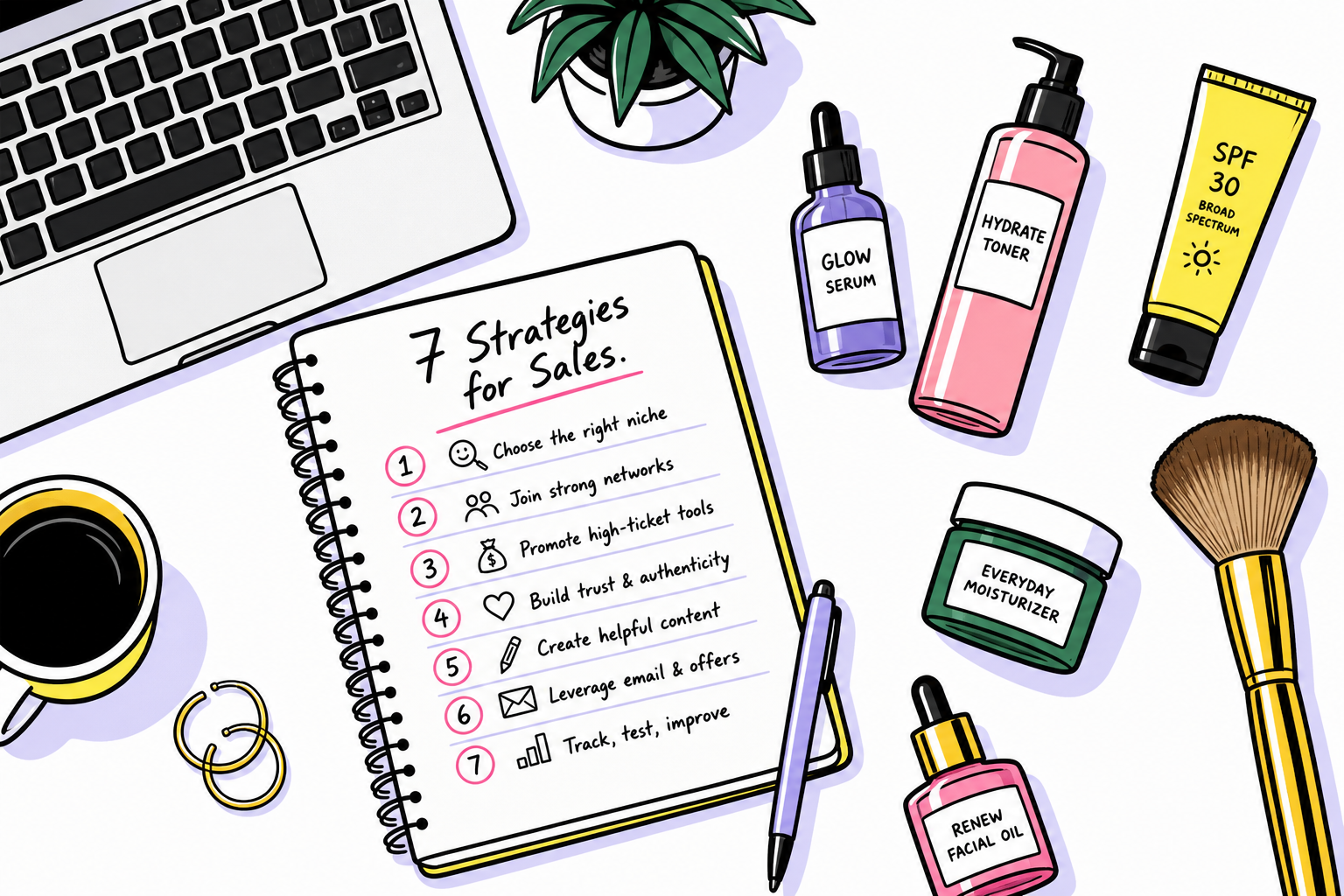
- 7 Tips for Higher Sales in Beauty Product Affiliate Marketing
- 1. Carve Out a Highly Specific Micro-Niche
- 2. Master the "Review + Tutorial" Content Format
- 3. Strategically Mix Mega-Retailers with Boutique Brands
- 4. Leverage Sub-Affiliate Networks for Ease of Monetization
- 5. Promote High-Ticket Tools and Subscription Replenishments
- 6. Use Quizzes to Drive Email Sign-Ups and Conversions
- 7. Capitalize on Retailer Sales and Seasonal Gifting
- Navigating Commissions: What to Expect in Beauty
- How to Get Accepted into Premium Beauty Programs
- Summary Checklists & Next Steps
The beauty industry operates on a fundamentally different purchasing logic than software, finance, or electronics. When someone buys a laptop through an affiliate link, they likely won't buy another one for three years. But when a reader buys a vitamin C serum based on your recommendation and loves the results, they will replenish that exact same product every three months—often clicking through your link again to do so.
This high replenishment rate, combined with strong emotional purchasing triggers, makes beauty one of the most profitable affiliate marketing niches to target.
However, it is also fiercely competitive. Slapping a few generic affiliate links on a listicle of "Top 10 Moisturizers" is no longer enough to generate meaningful revenue. To succeed as a beauty affiliate in 2026, you need to build intense trust, showcase products authentically, and strategically navigate a web of retailer networks, direct brand programs, and creator platforms.
Here are seven advanced tips to elevate your beauty product affiliate marketing strategy, increase your earnings per click (EPC), and build a sustainable revenue stream.
Why the Beauty Niche is an Affiliate Goldmine
Before diving into the tactics, it helps to understand the underlying economics of beauty affiliate marketing. The average order value (AOV) for a premium skincare routine easily exceeds $150. While standard beauty commission rates hover around 4% to 10%, the conversion rates are exceptionally high compared to other verticals.
Consumers actively seek out reviews, swatches, and tutorials before making a purchase. If you can intercept them during this high-intent research phase with a well-structured review, your conversion rate can comfortably sit between 5% and 12%.
Furthermore, the beauty industry is constantly innovating. There is a perpetual cycle of new product launches, trending ingredients (like exosomes or advanced peptides), and seasonal collections. This gives content creators an endless well of topics to cover, ensuring your content calendar never runs dry. If you are building an affiliate marketing side hustle, beauty offers a clear path to your first $1,000 a month purely through search volume and high purchase intent.
7 Tips for Higher Sales in Beauty Product Affiliate Marketing
1. Carve Out a Highly Specific Micro-Niche
The fastest way to fail in beauty affiliate marketing is trying to be the next Allure or Vogue. Broad beauty sites struggle to rank in search engines and fail to build a loyal, trusting audience.
Instead, pick a niche for affiliate marketing that is hyper-focused. When you solve a specific problem for a specific demographic, your conversion rates skyrocket because your recommendations carry more weight.
Examples of high-converting micro-niches:
- Fungal Acne-Safe Skincare: An audience desperate for ingredient-checked product recommendations.
- Curly Hair Methods (CGM): Highly routine-based, requiring multiple products (clarifying shampoo, co-wash, leave-in, gel) which leads to massive basket sizes.
- Cruelty-Free & Vegan Beauty for Over 40s: Combining an ethical stance with a specific demographic's anti-aging needs.
- High-Tech Skincare Devices: Focusing exclusively on LED masks, microcurrent devices, and lasers.
When your entire site or channel is dedicated to a specific issue, users don't just buy one product you recommend—they buy your entire suggested routine.
2. Master the "Review + Tutorial" Content Format
In beauty, showing is always more powerful than telling. A written review detailing a foundation's wear time is helpful, but a side-by-side photo showing the skin at 8 AM versus 8 PM is what actually drives the sale.
Combine your product reviews with practical tutorials. If you are reviewing an eyeshadow palette, include a step-by-step guide on how to create a daytime look and an evening look using that exact palette.
Anatomy of a High-Converting Beauty Review:
- The Hook: What specific problem does this product claim to solve? (e.g., "Does this conceal dark circles without creasing into fine lines?")
- Raw Visuals: Unedited photos of the texture, the packaging, and swatches on the skin in natural lighting. Never use brand-supplied stock photos.
- The Application: A step-by-step text or video breakdown of how you apply it. What tools do you use? Does it pill over sunscreen?
- The Wear Test: Time-stamped updates or photos showing how the product held up after 4, 8, and 12 hours.
- Pros and Cons Matrix: A clear, brutally honest bulleted list.
- Alternative Recommendations: If the product is too expensive or not suitable for oily skin, link to alternative products (which are also affiliate links).
Visual platforms are critical here. You should absolutely be setting up affiliate marketing on Pinterest to drive high-intent traffic to these detailed review posts. Pinners actively use the platform to plan purchases and find visual inspiration.
3. Strategically Mix Mega-Retailers with Boutique Brands
One of the most important decisions you'll make is choosing where to send your traffic.
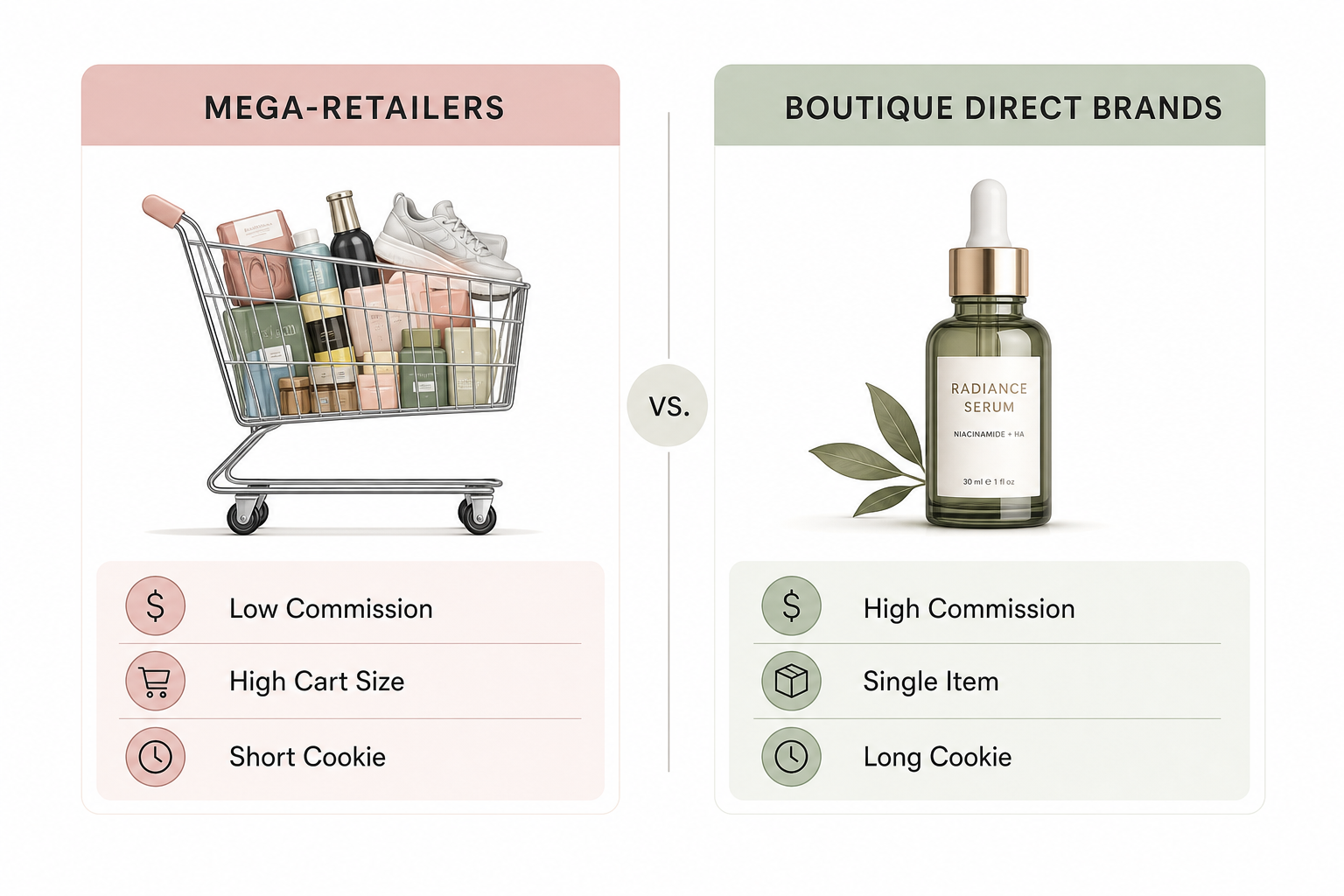
Mega-retailers like the Sephora affiliate program and Ulta Beauty affiliate program are the lifeblood of most beauty publishers. The primary advantage of linking to these massive retailers is the halo effect (also known as a universal cookie). If you send a reader to Sephora to buy a $20 lip gloss, and they end up buying a $400 Dyson hair dryer while browsing the site, you earn a commission on the entire cart.
However, mega-retailers usually offer lower baseline commissions (typically 2% to 5%).
To maximize your revenue, balance these lower-commission, high-conversion links with direct-to-brand boutique programs. Direct brand programs often offer much higher commissions—sometimes 15% to 20%—and longer cookie durations. For example, promoting clean beauty through the ILIA Beauty Affiliate Program or luxury, hard-to-find European skincare through Niche Beauty can yield significantly higher payouts per transaction.
The Strategy: Use Sephora and Ulta links for broad round-up posts (e.g., "Best Sunscreens at Sephora"), but use direct brand links for deep-dive, single-product reviews where you've already convinced the reader to buy that exact item.
4. Leverage Sub-Affiliate Networks for Ease of Monetization
Managing dozens of individual affiliate logins, tracking different payout thresholds, and generating deep links manually is exhausting. For beauty content creators, sub-affiliate networks are essential tools that consolidate hundreds of brand programs into one dashboard.
According to industry data on the best beauty affiliate programs, networks like Skimlinks automatically convert standard product links into affiliate links across your site. This is perfect for editorial publishers and bloggers who want a hands-off monetization approach.
Another major player in the creator space is Mavely. When looking at affiliate programs for beauty, platforms like Mavely provide creators with easy link-generation tools, analytics, and access to hundreds of top-tier beauty brands without needing individual approval for each one.
| Feature | Mega-Retailers (Ulta/Sephora) | Direct Brand Programs | Sub-Affiliate Networks (Skimlinks/Mavely) |
|---|---|---|---|
| Commission Rate | Low (2-5%) | High (10-20%) | Medium (Split with network) |
| Cookie Duration | Short (1-7 days) | Long (30-90 days) | Varies by merchant |
| Approval Process | Strict / Traffic minimums | Moderate | Easy / Immediate access to many brands |
| Best Used For | Multi-brand shopping hauls | Deep-dive product reviews | Broad site monetization & saving time |
5. Promote High-Ticket Tools and Subscription Replenishments
While makeup and basic skincare are great for volume, true revenue growth comes from promoting higher-priced items and recurring revenue streams. If you are hunting for high paying affiliate programs, look at the beauty tech sector.
High-Ticket Beauty Tools:
- Laser hair removal devices (e.g., Braun, Tria)
- LED light therapy masks (e.g., Omnilux, Dr. Dennis Gross)
- Microcurrent devices (e.g., NuFace, ZIIP)
- Premium hair styling tools (e.g., Dyson Airwrap, Shark FlexStyle)
A single sale of a $400 LED mask at an 8% commission yields a $32 payout. You would need to sell sixteen $10 mascaras at a 20% commission to make the same amount. Dedicate dedicated long-form content to reviewing these investments. Buyers of high-ticket beauty tools do extensive research, meaning long-tail SEO keywords like "Omnilux vs. Dr. Dennis Gross LED mask comparison" have incredibly high commercial intent.
Subscription and Replenishment: Look for brands that offer "Subscribe & Save" options and pay affiliates out on the recurring revenue (or offer a hefty bounty for driving a new subscription). Custom skincare formulations (like Curology or Agency) and hair care subscriptions (like Prose) are excellent targets.
6. Use Quizzes to Drive Email Sign-Ups and Conversions
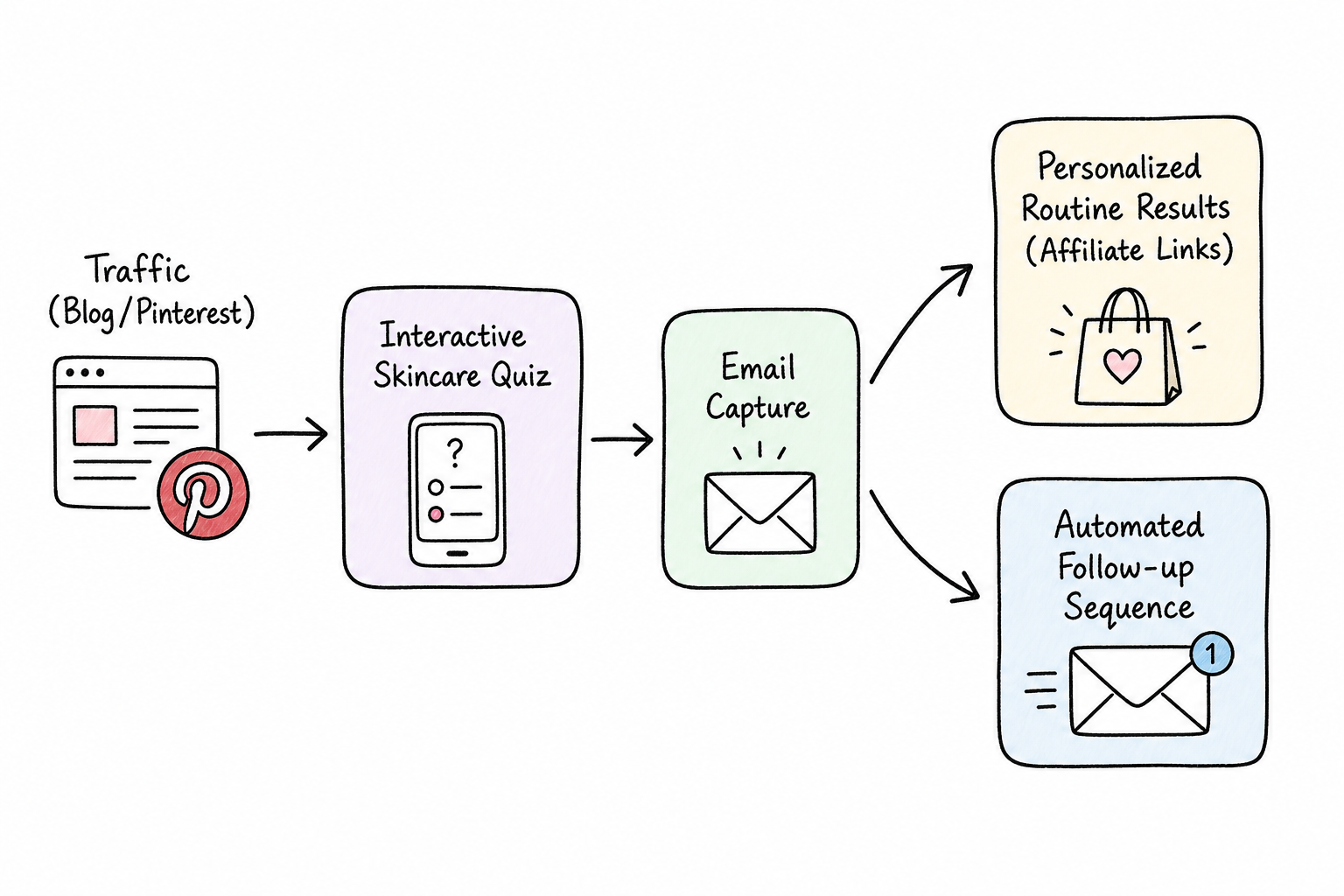
One of the most underutilized strategies in beauty affiliate marketing is the interactive quiz. Instead of just writing a post about the "Best Foundations for Dry Skin," embed a "Find Your Perfect Foundation Match" quiz on your site.
Tools like Typeform or Interact allow you to ask users 4-5 quick questions about their skin type, concerns, and preferred finish. At the end of the quiz, require an email address to see the results.
The results page should provide a personalized routine using your affiliate links.
Why this works:
- Personalization: The user feels the recommendation is tailored specifically to them, drastically increasing the likelihood they will click and buy.
- Email Capture: You now own the audience. You can set up an automated email sequence that follows up a week later asking, "Did you grab your foundation yet? Here’s a tutorial on how to apply it."
- Data Collection: You learn exactly what your audience struggles with, which dictates your future content calendar.
7. Capitalize on Retailer Sales and Seasonal Gifting
The beauty calendar is highly predictable. If you organize your content strategy around major sales events and gifting seasons, you can double or triple your normal monthly revenue during these peaks.
Key Beauty Affiliate Calendar Events:
- Spring/Fall: Sephora VIB Sales, Ulta 21 Days of Beauty.
- May: Mother's Day (focus on luxury skincare sets, perfumes, and bath/body items).
- Summer: Sunscreen roundups, travel-size minis, self-tanning tutorials.
- November/December: Black Friday/Cyber Monday (BFCM), holiday value sets, advent calendars, and "gifts for her/him" guides.
Holiday value sets are a massive driver of affiliate revenue. Brands package $150 worth of product into a $75 box. These sell out incredibly fast. If you can get early access to these sets, photograph them, and publish your review the day they launch, you will capture a wave of FOMO-driven purchasing.
Navigating Commissions: What to Expect in Beauty
If you are evaluating profitable affiliate marketing niches, you need to set realistic expectations for beauty payouts.
- Cookie Windows: The beauty industry standard is historically a 7-day to 30-day cookie. However, mega-retailers have been shrinking this. Amazon Associates offers a 24-hour cookie, while others might offer 3 to 7 days. Always check the cookie duration before heavily promoting a link. A 15% commission on a 24-hour cookie will often earn you less money over a year than an 8% commission on a 30-day cookie, because users often take days to think about a purchase.
- Promo Code Leakage: Be wary of coupon sites. If you drive a customer to a checkout page, but they leave to search for a "brandname coupon code" and click a link on a coupon site like RetailMeNot, that site will overwrite your affiliate cookie and steal the commission. To combat this, negotiate exclusive promo codes with your brand partners to keep the user on your site, or clearly state "No promo codes currently available" in your review.
How to Get Accepted into Premium Beauty Programs
Many of the best beauty programs manually review applications. If your site looks spammy, has no clear niche, or lacks a privacy policy, you will be rejected.
To ensure approval:
- Publish 15-20 High-Quality Posts First: Do not apply to programs with an empty site. Have a solid foundation of long-form, helpful content already live.
- Ensure Brand Alignment: If you are applying to a clean beauty brand, make sure your existing content talks about clean, non-toxic ingredients.
- Use Professional Design: Your site needs to look trustworthy. A clean theme, readable typography, and high-quality imagery go a long way.
- Show Your Traffic Channels: If you have a strong Pinterest following or a growing email list, mention it in your application. Brands want to know how you plan to promote them.
Summary Checklists & Next Steps
Success in beauty product affiliate marketing requires a blend of editorial integrity, visual storytelling, and strategic link placement.
Your 30-Day Action Plan:
- Define your specific beauty micro-niche (e.g., "skincare for rosacea" rather than just "skincare").
- Sign up for a sub-affiliate network like Skimlinks or Mavely to easily access hundreds of brands.
- Identify 3 high-ticket beauty tools or devices relevant to your audience and write comprehensive, 2,000+ word reviews for each.
- Swap out stock brand images for your own original, well-lit photography or user-generated content.
- Map out the upcoming seasonal beauty sales (e.g., Mother's Day or Holiday sets) and prepare your content briefs one month in advance.
By treating your beauty site less like a billboard for ads and more like a trusted digital aesthetician, you will build the audience loyalty required to generate consistent, high-volume affiliate sales month after month.