
Best Affiliate Marketing Programs for Beginners (2026)
Discover the 12 best affiliate marketing programs for beginners in 2026. Learn how to find high-paying SaaS networks, avoid low-cookie traps, and start earning.
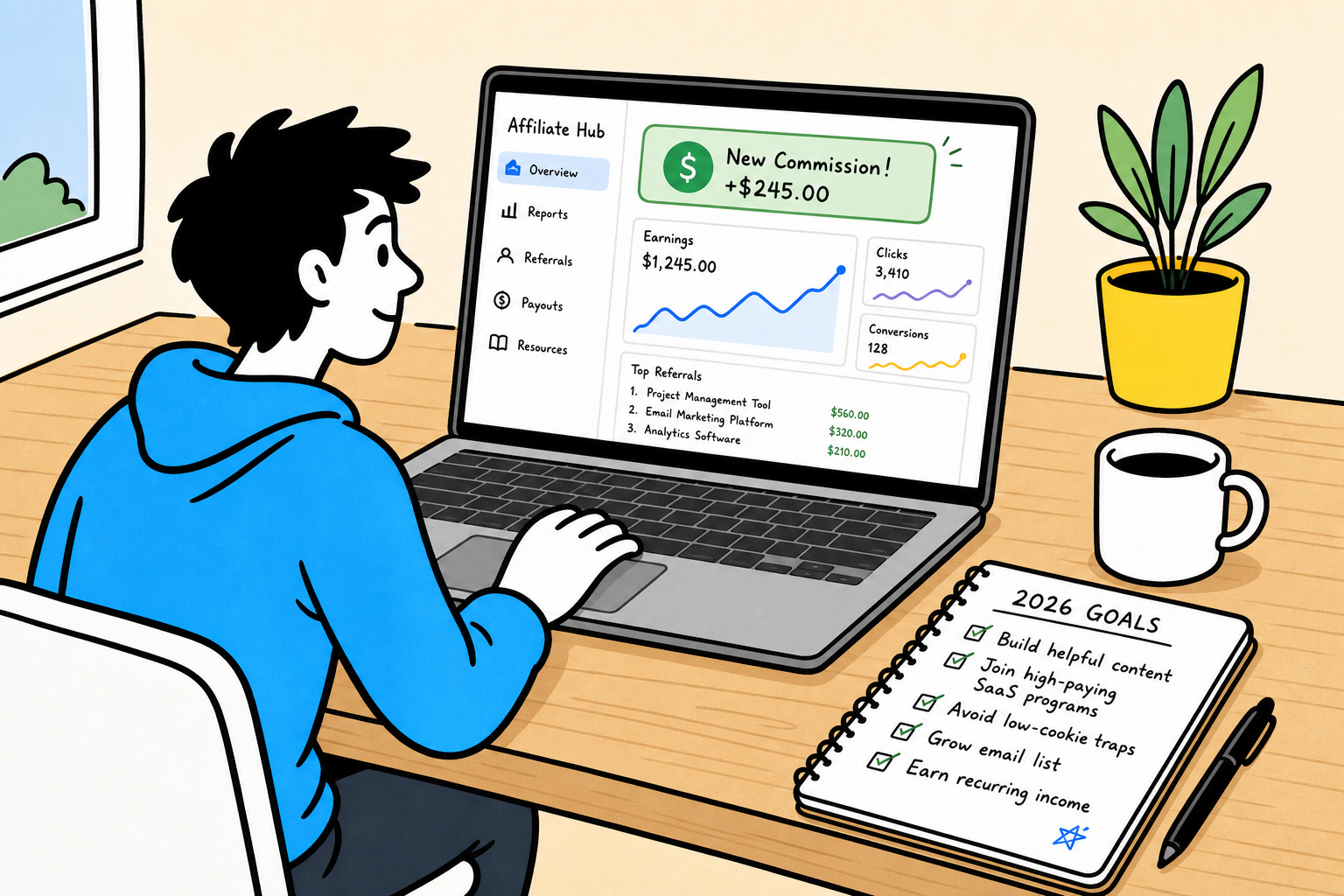
Most beginners start their affiliate marketing journey by throwing Amazon links into a blog post, realizing they need 10,000 clicks to make $40, and quietly abandoning the project three months later.
The reality of the modern digital economy is that your first affiliate program dictates your early momentum. Finding programs with 30-day (or longer) cookie windows, straightforward approval processes, and high-converting landing pages is the difference between a profitable side project and wasted effort.
Whether you are building a niche site, launching a newsletter, or testing social media traffic, you need reliable data and transparent commission structures. This guide breaks down the absolute best affiliate marketing programs for beginners in 2026, focusing heavily on SaaS, digital tools, and reputable networks that actually pay out on time.
What Makes an Affiliate Program "Beginner-Friendly"?
Before looking at specific platforms, you need a framework for evaluating them. Dozens of programs boast "up to 50% commissions," but hide predatory terms deep in their affiliate agreements.
When evaluating an offer on a directory like AffiliList, look for these four specific criteria:
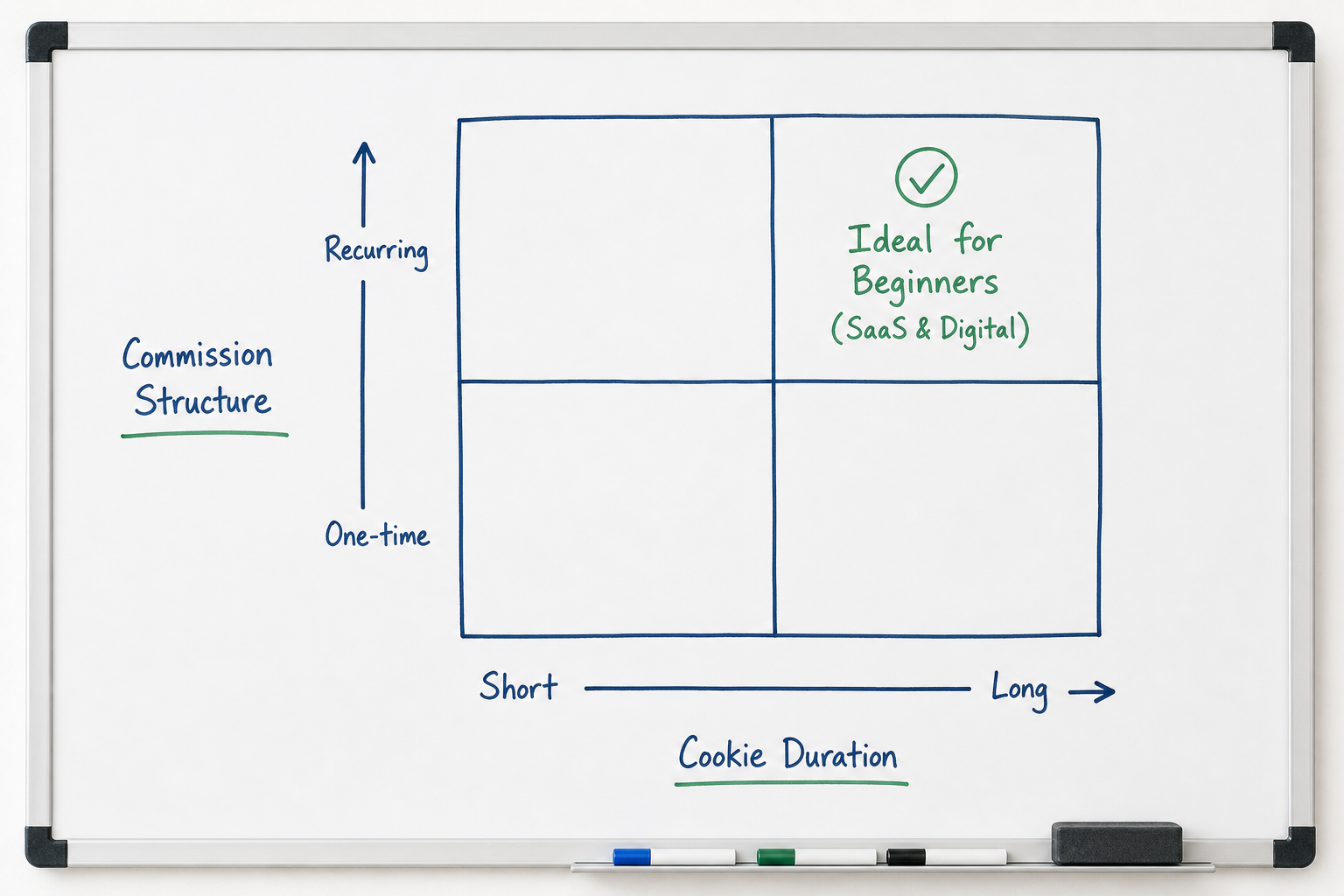
1. Generous Cookie Duration
A "cookie" tracks a user after they click your link. If a program has a 24-hour cookie (like Amazon), you only get paid if the user buys within that specific window. Beginner-friendly programs offer a minimum of 30 days. High-ticket B2B software often offers 90 to 120-day cookies. The longer the cookie, the higher your chances of earning a commission from a delayed purchase.
2. Low Minimum Payout Thresholds
Many beginners get trapped in programs with a $100 or $500 minimum payout threshold. If you only make a few $5 commissions a month, your money sits locked in their ecosystem for a year. Look for programs with $10 to $50 minimum payouts so you can experience that critical first win quickly.
3. Auto-Approval or Lenient Manual Review
Premium programs (like premium financial or crypto networks) often require applicants to prove they have 50,000 monthly site visitors. Beginners need platforms that base approvals on the quality and relevance of your traffic source, not just raw volume. Networks with instant approval or basic manual reviews are ideal.
4. High Conversion Rates (EPC)
Commission percentage doesn't matter if the merchant's website looks like it was built in 2005. You want to send traffic to well-designed, optimized landing pages. Look at the network's EPC (Earnings Per Click) data. If the EPC is $0.02, the product doesn't convert, regardless of the 80% commission rate.
The Top Affiliate Networks for Beginners
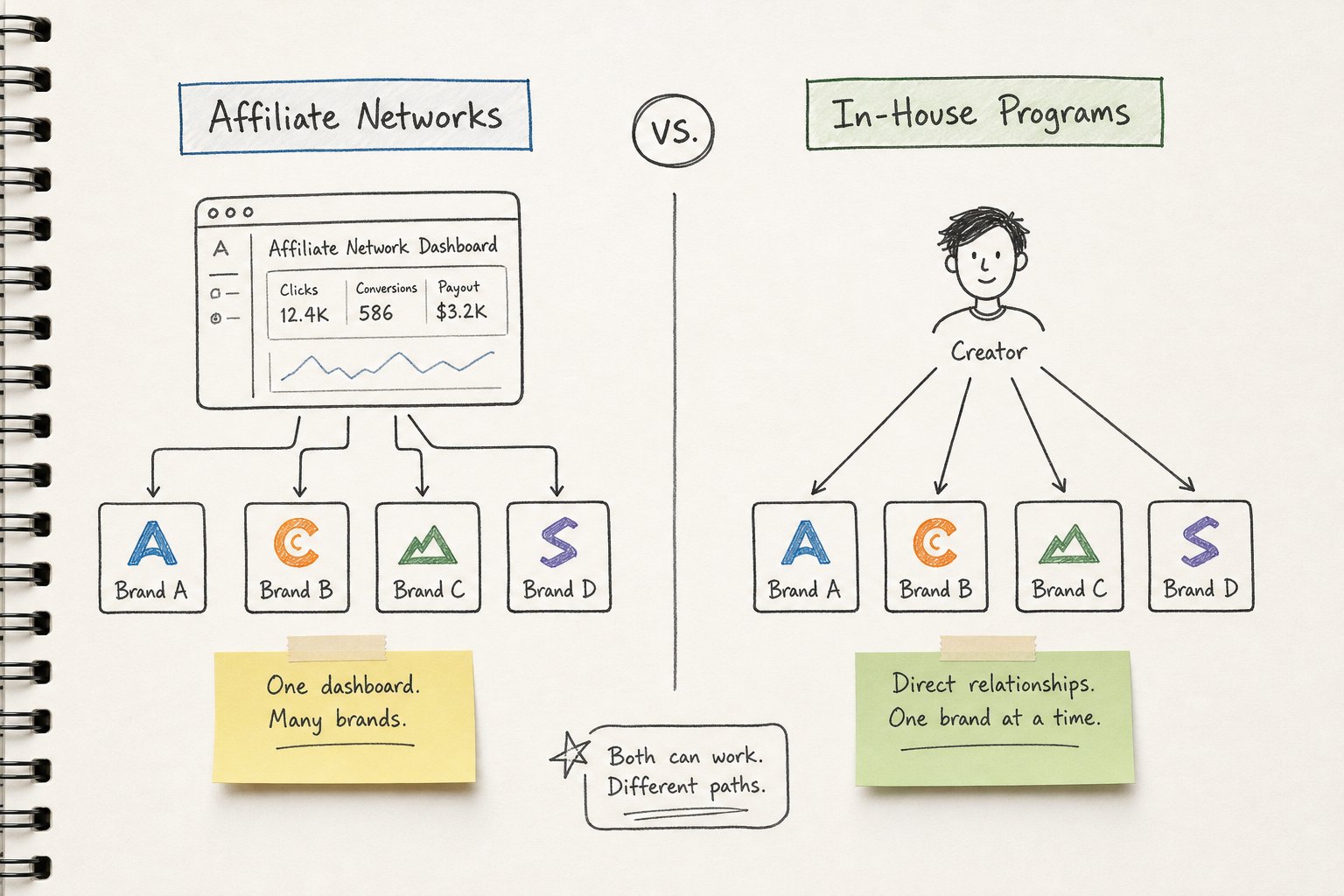
Affiliate programs generally fall into two categories: standalone in-house programs (managed directly by a brand) and affiliate networks (aggregators that host thousands of brands under one roof). For beginners, networks are the best starting point because you can manage multiple partnerships from a single dashboard.
1. ShareASale
ShareASale remains one of the most accessible networks for new content creators. Acquired by Awin, it hosts over 25,000 merchants ranging from physical e-commerce brands to digital marketing tools.
- Commission Type: Varies by merchant (CPA, CPL, RevShare).
- Cookie Duration: Varies by merchant (typically 30-90 days).
- Minimum Payout: $50.
- Why it's great for beginners: The interface is slightly dated, but it is incredibly functional. ShareASale provides transparent EPC metrics, making it easy to see which merchants actually convert. Their approval process for new websites is standard and highly forgiving if you have a clean, functional site with foundational content.
- The Catch: Because there are so many merchants, there is a lot of low-quality fluff to sift through. You have to evaluate individual brands carefully.
2. Impact (Formerly Impact Radius)
Impact is the modern standard for partnership management. Many top-tier SaaS companies, digital services, and direct-to-consumer brands have migrated here from older legacy networks.
- Commission Type: Varies heavily, strong focus on recurring SaaS commissions.
- Cookie Duration: Typically 30 days, up to 120 days for software.
- Minimum Payout: $10 (highly favorable for beginners).
- Why it's great for beginners: Impact's user interface is exceptional. Creating customized tracking links takes seconds, and they offer a robust marketplace where you can proactively pitch brands. They also facilitate direct communication with affiliate managers.
- The Catch: Individual brands on Impact frequently decline beginners if their niche doesn't align perfectly. You need a targeted strategy.
3. PartnerStack
If your goal is to promote SaaS and digital tools, PartnerStack is non-negotiable. This network is built exclusively for software partnerships, catering specifically to B2B and B2C SaaS products.
- Commission Type: Mostly percentage-based recurring (20%-30% monthly).
- Cookie Duration: Often 90 days.
- Minimum Payout: $25.
- Why it's great for beginners: SaaS is one of the best niches for affiliate marketing because of recurring commissions. If you refer a user to a CRM tool, you get paid every month they remain a customer. PartnerStack makes finding these software companies incredibly straightforward.
- The Catch: B2B software is harder to promote to a general audience. You need specific, problem-solving content (like "best HR software for small business") rather than broad lifestyle traffic.
4. CJ Affiliate (Formerly Commission Junction)
CJ Affiliate is one of the oldest and largest networks, representing massive global brands like Barnes & Noble, Overstock, and major travel aggregators.
- Commission Type: CPA (Cost Per Action).
- Cookie Duration: Varies, but brand-dependent.
- Minimum Payout: $50 (Direct Deposit).
- Why it's great for beginners: If you are building a site in a highly mainstream niche (travel, home goods, large retail), CJ has the brand recognition that builds immediate trust with your audience.
- The Catch: CJ is notorious for deactivating accounts if you don't generate a commission within your first six months. Do not apply until your affiliate marketing blog has active daily traffic.
Best Standalone SaaS & Digital Affiliate Programs
While networks are convenient, many of the best opportunities are managed in-house by the brands themselves. Software companies offer some of the highest margins in the industry, making them ideal for creators wanting to build an affiliate marketing side hustle.
5. GetResponse
Email marketing software is a highly lucrative space because every digital business needs it, and the churn rate is notoriously low.
- Commission Rate: Choice between $100 upfront bounty OR 33% lifetime recurring.
- Cookie Duration: 120 days.
- Why it's great for beginners: They give you a choice. Beginners who need immediate cash flow to pay for hosting can take the $100 bounty. Those playing the long game can choose the 33% recurring model. Their tracking system is robust, and the 120-day cookie provides a massive safety net. (This flexibility is frequently cited in expert discussions on beginner programs).
6. Canva Pro
Canva is the default design tool for the creator economy. With over 100 million users, it is a product that practically sells itself.
- Commission Rate: Up to $36 for every new Canva Pro subscriber.
- Cookie Duration: 30 days.
- Why it's great for beginners: You don't have to explain what Canva is. The barrier to entry for the consumer is incredibly low, and you can weave Canva links into almost any business, marketing, or design tutorial seamlessly.
7. Systeme.io
Systeme.io is an all-in-one marketing platform (funnels, email, course hosting) that directly competes with expensive tools like ClickFunnels, but offers a very generous free tier.
- Commission Rate: 60% lifetime recurring.
- Cookie Duration: 180 days (half a year!).
- Why it's great for beginners: Promoting a tool with a functional free tier is the easiest way to generate conversions. When your referrals eventually upgrade to a paid plan months down the line, the 180-day cookie ensures you still get that massive 60% recurring cut.
8. Elementor
If you teach people how to build websites, Elementor (a drag-and-drop WordPress builder) is a staple recommendation.
- Commission Rate: 50% per new sale.
- Cookie Duration: 45 days.
- Why it's great for beginners: Website building tutorials are a massive traffic driver on YouTube and blogs. Elementor's pricing is straightforward, and a 50% cut on software is highly competitive.
Physical Products and E-Commerce
While AffiliList advocates heavily for SaaS and digital tools due to their superior margins, physical product programs still have a place, especially if your niche relies on physical gear.
9. Amazon Associates
No beginner guide is complete without mentioning Amazon. It is the largest, most trusted e-commerce site on earth.
- Commission Rate: 1% to 20% (mostly hovering around 3-4%).
- Cookie Duration: 24 hours.
- Why it's great for beginners: Incredible conversion rates. If you send someone to Amazon for a $10 book, and they end up buying a $2,000 television during that 24-hour window, you get a commission on the television (universal cookie).
- The Catch: The 24-hour cookie is brutal. Furthermore, Amazon regularly slashes commission rates with little warning. Relying solely on Amazon is a risky long-term strategy.
10. Target Partners
An alternative to Amazon with slightly better terms for specific categories like home, baby, and apparel.
- Commission Rate: Up to 8%.
- Cookie Duration: 7 days.
- Why it's great for beginners: The 7-day cookie is significantly better than Amazon's 24 hours, and Target has immense brand trust in the US market.
High-Ticket Affiliate Programs for Beginners
Is it better to make 100 sales at $5, or 1 sale at $500? This is the classic high-ticket vs. low-ticket debate. Beginners often assume high-ticket is too hard, but the sales effort required for a $50 product is often identical to a $500 product if the audience targeting is right.
11. WP Engine
Premium WordPress hosting aimed at developers, agencies, and serious businesses.
- Commission Rate: $200 minimum per signup, or 100% of the first month's payment (whichever is higher).
- Cookie Duration: 180 days.
- Why it's great for beginners: You only need one conversion a month to make a meaningful impact. If you write high-quality, technical content targeting small businesses, WP Engine is one of the most accessible high paying affiliate programs available.
12. Semrush
An industry-leading SEO and digital marketing tool suite.
- Commission Rate: $200 per new subscription, $10 per new trial.
- Cookie Duration: 120 days.
- Why it's great for beginners: You get paid just for someone signing up for a free trial ($10). This drastically lowers the friction of earning your first few commissions.
How to Choose the Right Affiliate Program
Selecting a program is entirely dependent on your niche and traffic strategy. A common beginner failure mode is applying to everything and slapping random banners on a website.
To avoid this, follow a strategic alignment approach:
- Define Audience Pain Points: What specific problem is your audience trying to solve right now?
- Identify the Solution Category: Do they need a physical tool, a software subscription, or an educational course?
- Cross-Reference Directories: Use a directory like AffiliList to filter software tools by your specific niche (e.g., "HR Software" or "YouTube Marketing").
- Verify the Payout Terms: Check the commission structure before applying.
If you haven't decided on a core topic yet, reading up on how to pick a niche for affiliate marketing is your mandatory first step. Selecting from the most profitable affiliate marketing niches will naturally guide you toward the right SaaS programs.
Step-by-Step: How to Start Promoting Your First Offer
Having an approved affiliate account is useless without a strategy to drive intent-based traffic. Here is the exact blueprint for taking your new affiliate link and turning it into revenue.
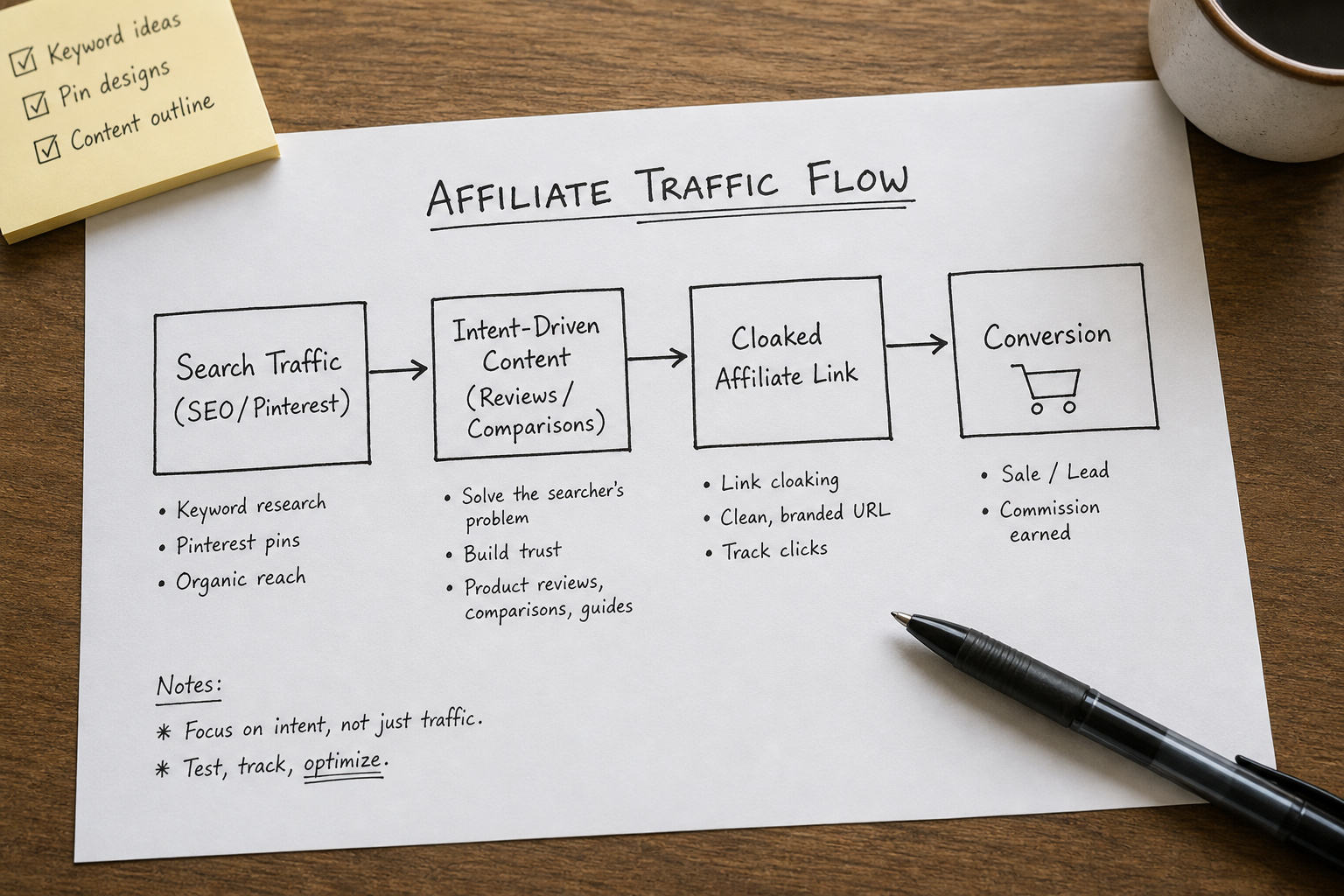
Step 1: Build a Search-Driven Traffic Engine
Interruptive marketing (like posting links on your personal Facebook feed) burns out quickly. You need search-driven traffic where users are actively looking for solutions.
- Blogging/SEO: Still the highest-converting medium. When someone searches "Systeme.io vs Clickfunnels," they have their credit card ready.
- Pinterest: A highly visual search engine. Perfect for niches like personal finance, design, and education. If you are exploring this, setting up an affiliate marketing program for pinterest requires specific pin-design strategies.
- YouTube: Video tutorials showing a software's dashboard provide incredible trust and click-through rates.
Step 2: Create Intent-Driven Content Formats
Do not write generic articles. Focus on "bottom of the funnel" content formats that naturally lead to a software purchase:
- "X vs Y" Comparisons: (e.g., GetResponse vs Mailchimp: Which is Better in 2026?)
- "Best [Category] for [Audience]" Lists: (e.g., 7 Best CRM Tools for Freelance Photographers)
- Over-the-Shoulder Tutorials: (e.g., How to Build a Landing Page in Elementor)
- Deep-Dive Reviews: (e.g., My Honest WP Engine Review After 2 Years)
These formats capture people who already know they need a tool and are just looking for validation before buying.
Step 3: Cloak and Manage Your Links
Raw affiliate links look terrifying (e.g., brand.com/?aff_id=987654321&campaign=xyz). Users are hesitant to click them.
Use a link management plugin like ThirstyAffiliates or Pretty Links to "cloak" them into something readable, like yourdomain.com/go/getresponse. This also allows you to update the link in one central dashboard if the merchant ever changes their tracking platform.
Step 4: Follow FTC Compliance
Beginners frequently ignore the legal side of affiliate marketing until they get banned from a network. The Federal Trade Commission (FTC) requires clear, conspicuous disclosure whenever a link might result in financial compensation.
Place a disclosure at the very top of your content, before any affiliate links appear. A simple statement like, "This post contains affiliate links. If you purchase through them, I may earn a small commission at no extra cost to you" is usually sufficient.
Common Affiliate Marketing Mistakes to Avoid
Even with the best programs, beginners stumble into predictable traps. Avoid these three common errors:
Applying Before You Have Traffic Affiliate managers at premium networks (like Impact and PartnerStack) will manually review your site. If it has three placeholder blog posts and zero traffic, you will be rejected. Build 10-15 solid pieces of content and establish a tiny baseline of traffic before applying to premium programs.
Chasing Only the Highest Percentage A program offering 90% commissions on a $10 eBook makes you $9. A program offering 20% on a $150/month SaaS subscription makes you $30 every single month. Don't be blinded by percentage points; look at the actual dollar value and recurring potential.
Hiding the Reality of the Product Readers can spot a fake, overly-glowing review instantly. The highest-converting reviews highlight the product's actual flaws. Saying, "Elementor is great, but their customer support is notoriously slow during weekends," builds massive trust. When users trust your assessment, they use your links. (For more on recognizing legitimate tactics vs spam, check out is affiliate marketing legit).
Frequently Asked Questions (FAQs)
How fast can a beginner make money with affiliate marketing?
If you rely purely on organic SEO for a brand new blog, expect it to take 6 to 9 months to see consistent commissions due to Google's ranking delays. If you leverage existing audiences (like an established email list or high-velocity Pinterest boards), you can generate sales within weeks. It is a compounding business model, not a get-rich-quick scheme.
Do I need a website to be an affiliate marketer?
Strictly speaking, no. Many successful affiliates operate entirely on YouTube, social media, or through email newsletters. However, owning a website gives you a central hub that you control entirely, protecting you from sudden social media algorithm changes.
Can affiliate marketing become a full-time career?
Absolutely. Many creators scale their sites to replace their full-time income, and companies actively hire in-house affiliate managers. The skills you learn—SEO, conversion rate optimization, and copywriting—translate directly into lucrative affiliate marketing jobs in the broader tech industry.
Getting started with affiliate marketing is ultimately an exercise in selection and persistence. By avoiding low-quality networks, focusing on high-converting SaaS and digital tools, and aligning your content with specific profitable affiliate marketing niches, you set the foundation for a sustainable, passive income stream. Choose one traffic source, pick two solid programs from the list above, and start creating intent-driven content today.