
11 Best Affiliate Programs to Join in 2026 (Verified)
Discover the 11 best affiliate programs for 2026. Compare high-paying SaaS, major affiliate networks, commission rates, and cookie durations to maximize your revenue.
- Difference Between Affiliate Programs And Affiliate Networks
- What You Should Look For In A Top Affiliate Program
- 11 Best Affiliate Marketing Programs For 2026
- How To Create Content For Affiliate Marketing
- How To Start Affiliate Marketing With No Audience…And Actually Make Money!
- Wrapping It Up: Launching Your 2026 Strategy
The barrier to entry in affiliate marketing is practically zero. This is exactly why the failure rate is so high. Thousands of new publishers grab the first Amazon product link they see, paste it into a low-effort blog post, and wonder why their dashboard shows a meager $0.43 after three months of work.
Finding a profitable partnership isn't about joining the program with the most recognizable name. It is about aligning your audience's intent with a product that converts, tracked by software that reliably attributes the sale to you, paying out a commission that justifies your customer acquisition cost.
At AffiliList, we monitor over 10,000 affiliate programs, prioritizing SaaS and digital tools where the margins are thickest. We have analyzed the data to bypass the outdated directories and zero in on what actually works this year.
Whether you are scaling a media property or building an affiliate marketing side hustle, this guide breaks down the 11 best affiliate programs for 2026, how to evaluate their actual worth, and exactly what it takes to drive conversions.
Difference Between Affiliate Programs And Affiliate Networks
Before diving into the specific platforms, you need to understand the structural difference between an affiliate network and an in-house affiliate program. Mixing these up is a common friction point for beginners trying to manage their payment schedules and tracking links.
Affiliate Networks act as intermediaries. They are massive marketplaces (like ShareASale or CJ Affiliate) that host thousands of different merchants under one roof.
- Pros: You sign up once. You get access to a centralized dashboard, combined payout thresholds (commissions from Merchant A and Merchant B pool together to help you reach your minimum payout faster), and uniform reporting.
- Cons: Networks take a cut of the merchant's revenue, which can sometimes result in slightly lower commission caps for the affiliate. Communication is also filtered; you are often dealing with network representatives rather than the brand's internal marketing team.
In-House Affiliate Programs are managed directly by the brand (like Shopify or Semrush), often using backend tracking software like PartnerStack or Impact.
- Pros: Direct access to the brand's affiliate manager, higher commission ceilings, and more flexibility to negotiate custom rates or exclusive coupon codes once you prove your traffic quality.
- Cons: You have to manage separate logins, separate tax forms, and individual payment thresholds for every single brand you partner with.
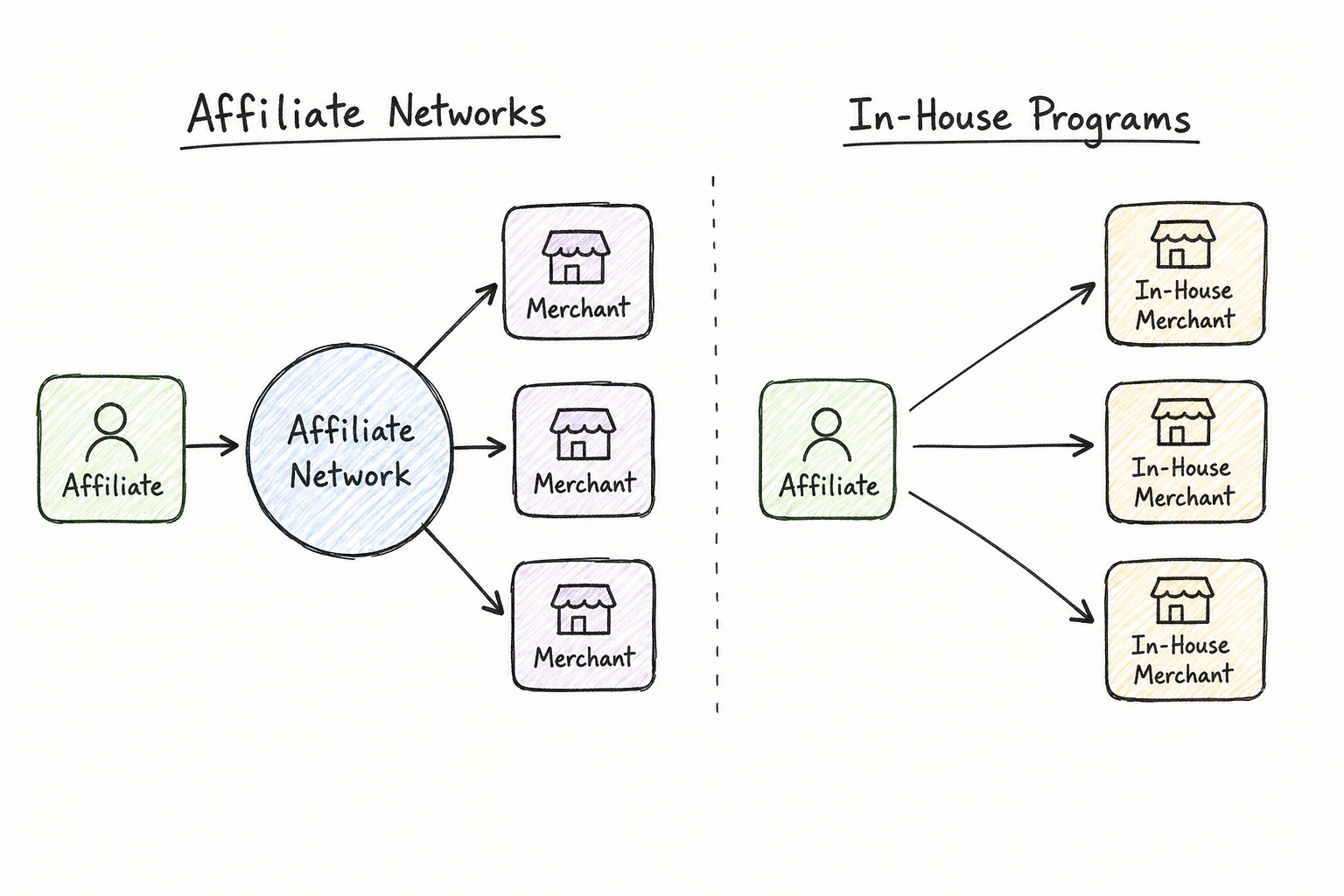 If you want to focus heavily on digital products and SaaS—which consistently rank among the best niches for affiliate marketing—you will likely end up managing a hybrid portfolio of both network accounts and direct in-house partnerships.
What You Should Look For In A Top Affiliate Program
Not all 30% commission rates are created equal. A 30% cut of a product that nobody buys yields zero dollars. When vetting an offer, stop looking purely at the payout percentage and start evaluating the underlying metrics that dictate your actual earnings.
1. Cookie Duration
When a user clicks your affiliate link, a small file (a cookie) is stored in their browser. This tracks the referral. If the cookie duration is 24 hours, the user must buy within that window for you to get credited. If the cookie duration is 90 days, you earn the commission even if they leave and return to the site a month later to purchase.
Always prioritize longer cookie durations, especially for high-ticket items. Software subscriptions usually require a longer consideration period than a $15 phone case. Anything under 30 days for a B2B product is a red flag.
2. Earnings Per Click (EPC)
EPC is the most critical metric in affiliate marketing. It tells you the average amount of money an affiliate earns every time someone clicks their link.
If Program A pays a $100 commission but has an abysmal conversion rate, its EPC might be $0.10. If Program B pays a $20 commission but converts brilliantly, its EPC might be $1.50. You want to send your traffic to Program B. As noted by The Double Think, digging into historical performance metrics like EPC separates the hobbyists from the professionals.
3. Commission Structures and Payments
Look closely at how you get paid.
- CPA (Cost Per Action): A flat fee paid when a user signs up or buys (e.g., $150 per new paid account).
- Recurring (Revenue Share): A percentage of the customer's subscription fee, paid out every month for as long as they remain a customer. Recurring commissions are the holy grail for building a stable, sellable asset.
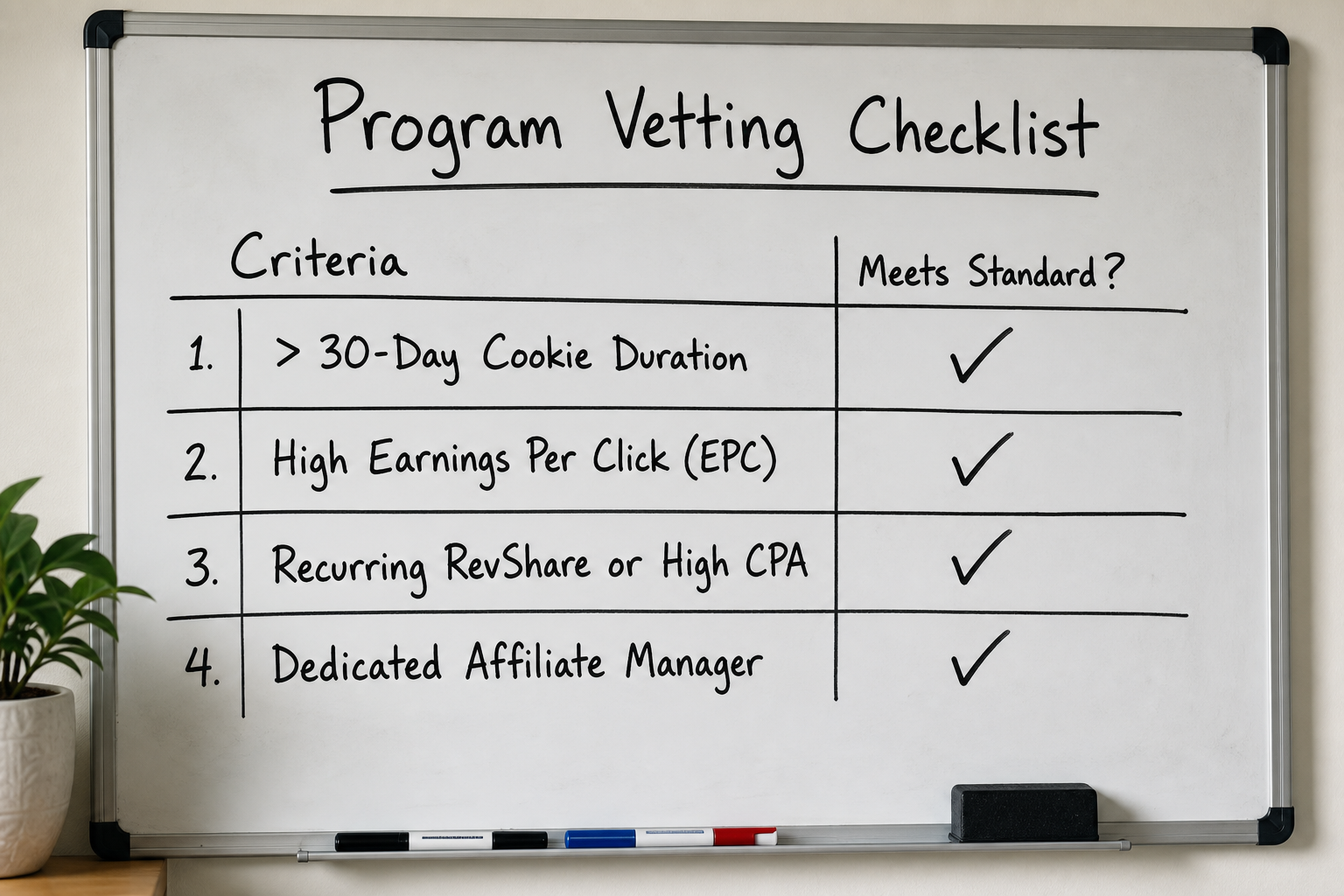
4. Affiliate Manager Support
An absent affiliate manager can kill a campaign. You need someone who can authorize custom landing pages, supply high-resolution brand assets, provide early notice on promotional sales, and bump your commission rate when your volume justifies it.
11 Best Affiliate Marketing Programs For 2026
This curated list represents a mix of foundational networks necessary for broad monetization and highly lucrative, direct SaaS programs that offer unparalleled payouts.
#1. ShareASale
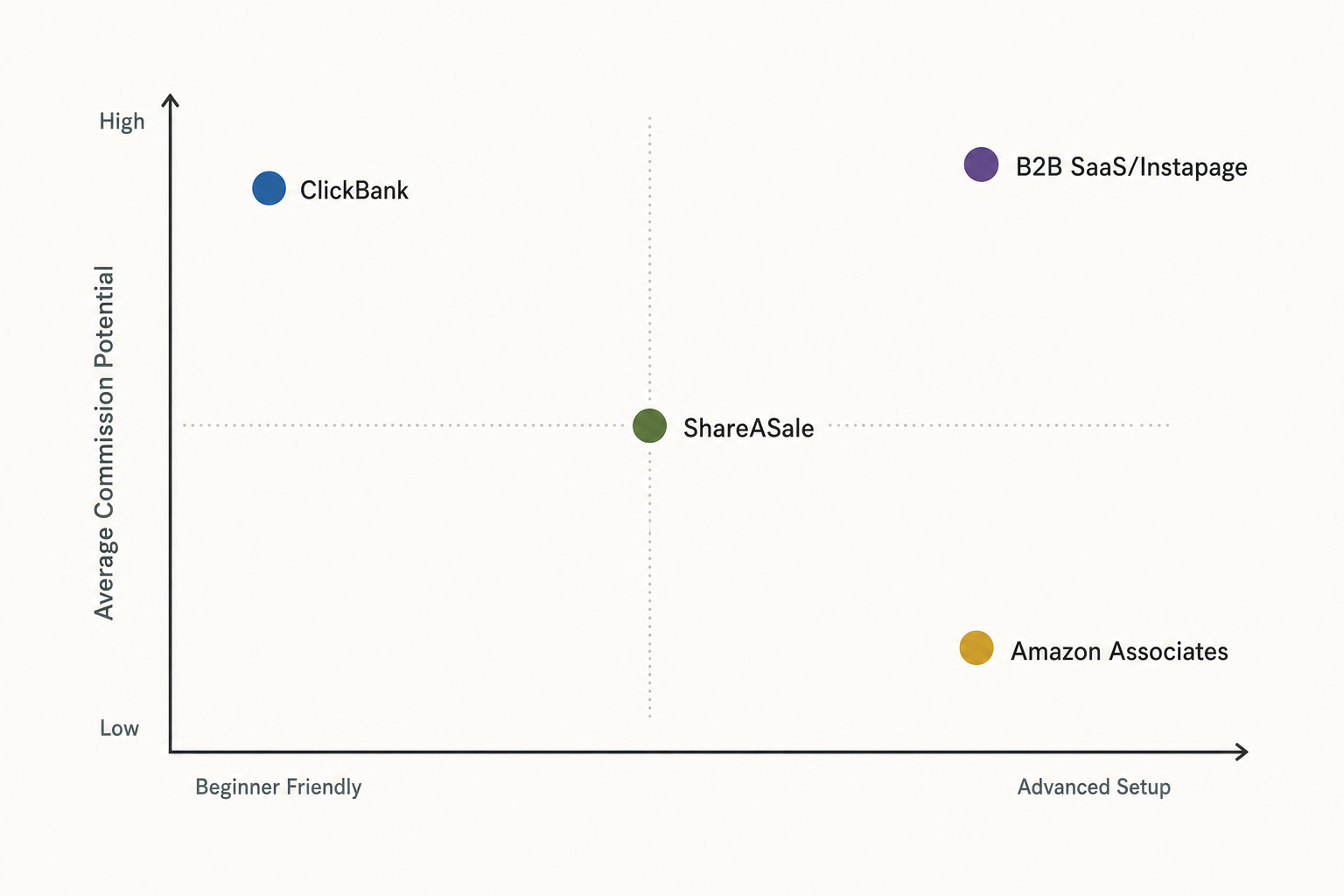
ShareASale remains one of the most accessible and reliable affiliate networks on the market. Acquired by Awin, it houses over 25,000 merchants ranging from physical consumer goods to niche digital software.
- Commission Type: Varies wildly by merchant (CPA, RevShare, Lead generation).
- Cookie Duration: Varies by merchant (typically 30-90 days).
- Minimum Payout: $50
- The Verdict: If you are learning how to start a profitable affiliate marketing blog, ShareASale is your mandatory first stop. Their interface is admittedly dated, but their search and filtering tools make it incredibly easy to identify high-EPC merchants. They also have an exceptionally low barrier to entry for new websites.
#2. CJ Affiliate
Formerly Commission Junction, CJ Affiliate caters to enterprise-level brands. If you want to promote household names like Barnes & Noble, Overstock, or major travel brands, you need a CJ account.
- Commission Type: Varies by merchant.
- Cookie Duration: Varies by merchant.
- Minimum Payout: $50 (Direct Deposit)
- The Verdict: CJ is notoriously strict. Merchants routinely purge affiliates who don't drive sales within their first 6-12 months. Do not apply for individual programs within CJ until you have steady, targeted traffic.
#3. Amazon Associates
Amazon is the elephant in the room. They possess the highest conversion rate on the internet because consumers already trust them and likely have an active Prime account.
- Commission Type: 1% to 20% depending on the product category.
- Cookie Duration: 24 hours.
- Minimum Payout: $10
- The Verdict: Let's bust a common myth: Amazon Associates is not a great long-term strategy for niche site owners in 2026. The 24-hour cookie duration is punishing, and commission cuts in recent years have decimated traditional review sites. However, it remains a brilliant supplementary program for monetizing long-tail, low-intent traffic where you just want to capture impulse buys.
#4. ClickBank
ClickBank is a massive marketplace for digital products, ranging from fitness PDFs and dating guides to specialized trading algorithms.
- Commission Type: CPA and RevShare (often astronomically high, up to 75-90%).
- Cookie Duration: 60 days.
- Minimum Payout: $10
- The Verdict: ClickBank offers some of the highest margins available outside of enterprise SaaS. The tradeoff? The quality control is hit-or-miss. You must rigorously vet the products you choose to promote here. Promoting low-quality offers will burn your audience's trust irreversibly.
#5. Awin
With over 25,000 advertisers, Awin is a powerhouse, particularly if your audience includes European demographics. They manage the affiliate programs for massive financial, retail, and telecommunications companies.
- Commission Type: Varies by merchant.
- Cookie Duration: Varies by merchant.
- Minimum Payout: $20
- The Verdict: Awin requires a $5 compliance fee to join (which is refunded with your first payout). This small hurdle keeps out bot traffic and ensures you are working within a high-quality ecosystem.
#6. eBay Partner Network
eBay's affiliate program allows you to earn a percentage of eBay's revenue on transactions you drive.
- Commission Type: 1% to 4% (You earn a percentage of eBay's fee, not the total item price).
- Cookie Duration: 24 hours.
- Minimum Payout: $10
- The Verdict: Similar to Amazon, the low payout and short cookie window mean you need immense volume. It shines in highly specific collector niches (antiques, vintage car parts, trading cards) where buyers are actively hunting for rare items they can only find on auction.
#7. FlexOffers
FlexOffers is an aggregate network boasting over 12,000 affiliate programs. They essentially act as a sub-affiliate network; they sign up for the master program and allow you to generate links through their platform.
- Commission Type: Varies by merchant.
- Cookie Duration: Varies by merchant.
- Minimum Payout: $25
- The Verdict: If you are rejected by a strict in-house program or a CJ merchant, you can often gain access to that exact same merchant through FlexOffers. They take a tiny sliver of the commission for providing this access, but the convenience of having everything in one dashboard is often worth the trade.
#8. Shopify
The e-commerce giant runs an incredibly robust in-house affiliate program targeting educators, content creators, and B2B software reviewers, as highlighted by Shopify's own partnership documentation.
- Commission Type: High-ticket CPA (bounty) for full-priced plan signups.
- Cookie Duration: 30 days.
- Minimum Payout: $10
- The Verdict: Promoting Shopify is highly competitive, but the payouts justify the effort. If you are creating content around starting a business, dropshipping, or retail logistics, Shopify offers a seamless conversion path. This is a staple for those targeting profitable affiliate marketing niches in the B2B space.
#9. Instapage
Instapage is an enterprise-grade landing page builder. B2B software programs are where affiliates transition from side hustles to full-time businesses, primarily because of the recurring revenue model.
- Commission Type: 50% revenue share for the first year, then 30% lifetime recurring.
- Cookie Duration: 120 days.
- Minimum Payout: $50
- The Verdict: The 120-day cookie is exceptionally generous. Because Instapage is a premium tool (costing hundreds of dollars per month), securing just a handful of conversions can result in substantial, reliable monthly income.
#10. Unbounce
Another titan in the landing page and conversion optimization space. Unbounce's affiliate program is frequently cited as one of the best-managed in the SaaS industry.
- Commission Type: 20% lifetime recurring commission.
- Cookie Duration: 90 days.
- Minimum Payout: $50
- The Verdict: While the initial percentage is lower than Instapage's first-year offer, a flat 20% lifetime recurring model is incredibly attractive. Unbounce also provides affiliates with a custom dashboard and dedicated partner managers to help you optimize your content.
#11. Reclaim.ai
Productivity and calendar management software has exploded, and Reclaim.ai offers one of the most attractive programs in the category. Their structure is highly regarded, frequently featured on roundups like Reclaim's own top program lists.
- Commission Type: 25% recurring commission for up to one year per customer.
- Cookie Duration: 90 days.
- Minimum Payout: $50
- The Verdict: Productivity tools have lower price points than enterprise landing page software, but they boast massive volume and broad appeal. Almost any audience—from freelance designers to corporate managers—can benefit from calendar optimization, making this an easy contextual pitch in your content.
How To Create Content For Affiliate Marketing
You have your links. Now what? Slapping a banner ad in your sidebar is a tactic from 2014. In 2026, content creation requires deep alignment with user intent.
Focus on Commercial Investigation Intent
Users searching for "What is email marketing?" are looking for free information. They are not ready to buy. Users searching for "ConvertKit vs ActiveCampaign for bloggers" have their credit cards on the desk. They are just looking for a final push.
Structure your content around three core formats:
- Direct Comparisons: (e.g., Tool A vs Tool B). These capture high-intent bottom-of-funnel traffic.
- Comprehensive Reviews: Deep dives into a single product. Do not just list the features. Detail your personal experience, show backend screenshots, explain exactly where the product fails, and identify who should absolutely not buy it. Honesty increases conversion rates.
- Process Tutorials: (e.g., "How to set up automated client intake"). Teach the reader a valuable skill, but require a specific tool (your affiliate product) to execute the process efficiently.
If you prefer visual platforms, you can also leverage image-first strategies. Read our guide on setting up affiliate marketing on Pinterest to capture highly visual buyer demographics without relying entirely on Google traffic.
How To Start Affiliate Marketing With No Audience…And Actually Make Money!
If you are starting from zero today, staring at a blank screen, the path forward is intimidating but entirely systematic.
1. Niche Down Aggressively
You cannot compete on "best laptops." You can, however, compete on "best rugged laptops for geological field work." The riches are in the micro-niches. Before you register a domain, follow our framework on how to pick a niche for affiliate marketing in 5 steps to ensure you aren't walking into a saturated battlefield.
2. Build The Asset (Your Website)
Social media audiences are rented. A website is owned property. Platforms like Instagram or TikTok can ban your account overnight, instantly destroying your income stream. Use social platforms as top-of-funnel traffic drivers, but always push that traffic back to an SEO-optimized blog or an email newsletter that you control entirely.
3. Vet Your Offers Relentlessly
Many beginners ask, "Is affiliate marketing legit?" It is, but only if you avoid the scammers. If an in-house program hides its cookie duration, refuses to provide a clear CPA schedule, or demands a "setup fee" from you—walk away. Use verified directories like AffiliList to bypass the noise and instantly access transparent program data.
4. Optimize for the Click
Your job as an affiliate isn't to sell the product. The merchant's landing page is designed to sell the product. Your job is to sell the click. Pre-frame the user, agitate their problem, present the software as the logical solution, and get them to click the link with a high degree of buying intent.
Wrapping It Up: Launching Your 2026 Strategy
The landscape of affiliate partnerships has matured. The days of throwing generic links at a wall and seeing what sticks are long gone. To generate meaningful revenue, you must approach this as a performance marketing business.
Choose networks like ShareASale and Awin to build a foundational baseline, but aggressively hunt down high paying affiliate programs in the SaaS sector to scale your income. Look past the advertised commission rate—demand high EPCs, generous cookie windows, and recurring revenue models.
By treating your content as a genuine resource and aligning with verified, high-quality merchants, you shift from chasing one-off pennies to building a sustainable digital asset.