
Best Affiliate Programs in Any Niche: How to Find Them
Stop relying on outdated lists. Learn the exact framework for finding, evaluating, and selecting the most profitable affiliate programs in any niche.

Most affiliate marketers hit a familiar wall right after deciding what topic to build their site around. You pick a profitable angle, set up your platform, and start Googling "best affiliate programs in [x] niche."
What do you find? A graveyard of outdated blog posts from 2019, dead links, and programs that slashed their commission rates three years ago. Worse, when you finally find a network that looks promising, you have to spend 45 minutes applying just to see their base commission structure.
Finding high-converting affiliate programs shouldn't require guesswork or blindly applying to dozens of networks. The most successful publishers treat partnership selection as a data-driven process, relying on verified directories and strict evaluation criteria to weed out low-performing offers.
Whether you are hunting for B2B software tools or premium health supplements, this guide breaks down the exact framework for sourcing, evaluating, and selecting the most lucrative affiliate partnerships in any market.
Why Most "Best Affiliate Programs" Lists Fail You
The traditional way of finding affiliate programs is broken. If you rely solely on generic listicles, you run into three systemic problems:
- Stale Data: Commission rates, cookie durations, and active program statuses change constantly. A listicle published a year ago is likely already inaccurate.
- Hidden Terms: Many legacy affiliate networks hide vital details behind approval walls. You don't know the EPC (Earnings Per Click), the conversion rate, or even the exact commission percentage until you've handed over all your traffic data and waited days for an account manager to approve you.
- The Echo Chamber Effect: Most bloggers simply copy each other's lists to rank for search terms. This pushes thousands of affiliates toward the exact same saturated programs, while lesser-known, high-converting gems go entirely unnoticed.
To build a sustainable income, you need to step outside the echo chamber and evaluate programs based on hard metrics, not just popularity. If you're wondering is affiliate marketing legit when so much data seems hidden, the answer is yes—but only if you know how to bypass the gatekeepers.
The 5-Step Framework to Evaluate an Affiliate Program
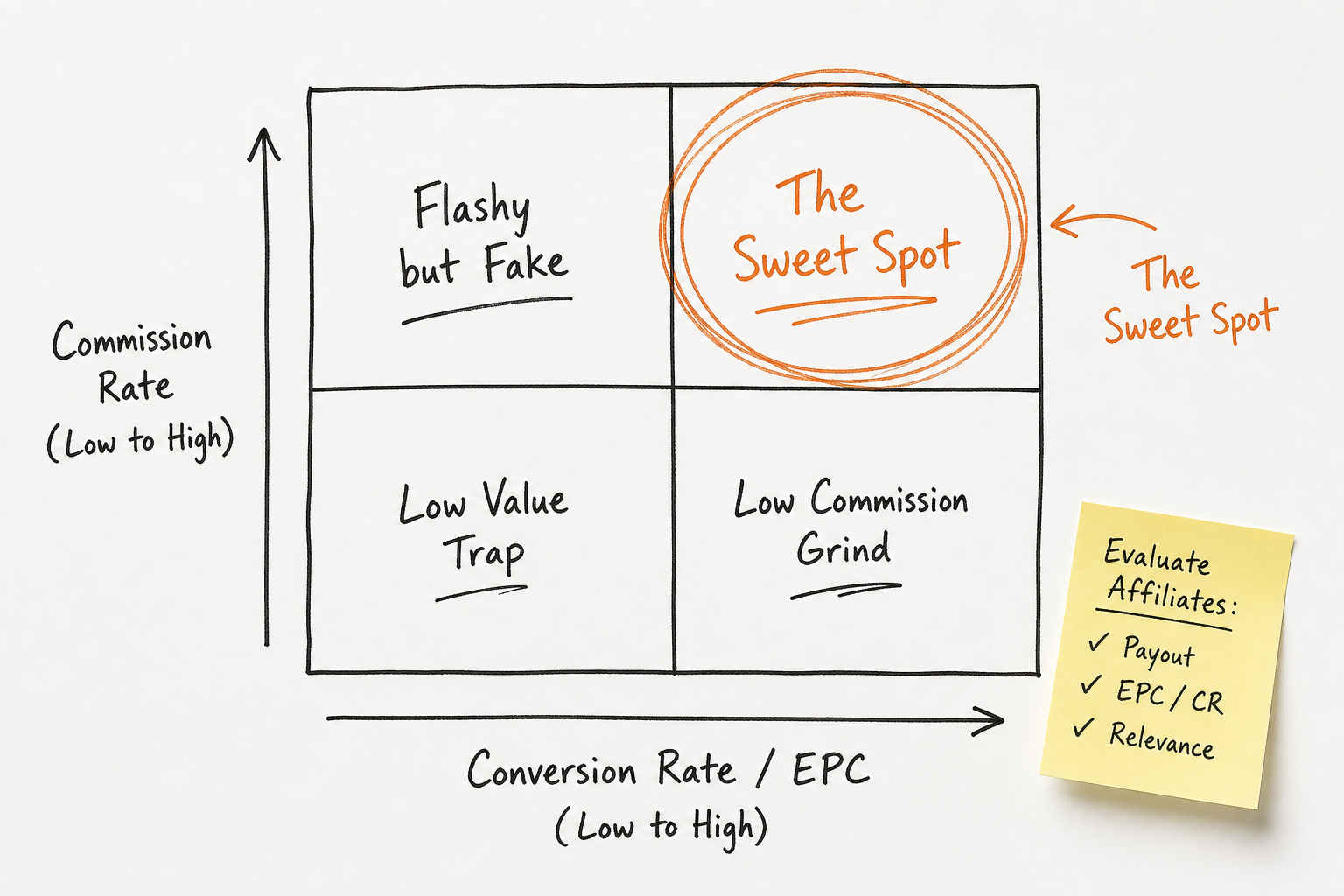
Before you paste a single tracking link into your content, you need to run the offer through a strict evaluation framework. A high commission percentage on a product that doesn't convert is worthless. Here is how to measure the true potential of an affiliate program.
1. Cookie Duration vs. Buying Cycle
A cookie duration determines how long after a user clicks your link you can still earn a commission if they buy. Standard cookies range from 24 hours (like Amazon) to 90 days or even lifetime.
However, cookie duration must be measured against the product's buying cycle.
- A 7-day cookie is fine for a $20 impulse purchase like a phone case.
- A 7-day cookie is a disaster for a $2,000 enterprise SaaS tool where the buyer needs to consult their team, attend a demo, and get budget approval.
Always ensure the cookie window is comfortably longer than the average time it takes a prospect to make a purchasing decision in that specific niche.
2. The EPC Reality Check
EPC (Earnings Per Click) is the most critical metric in affiliate marketing, yet beginners frequently ignore it in favor of the headline commission rate. EPC tells you exactly how much money you can expect to make for every 100 clicks you send to an offer, on average.
Let's do the math:
- Program A offers a 50% commission on a $100 product ($50 payout). But the landing page is terrible, converting at 0.5%. If you send 100 clicks, you make 0.5 sales. Your EPC is $0.25.
- Program B offers a 20% commission on a $100 product ($20 payout). The landing page is highly optimized and converts at 5%. If you send 100 clicks, you make 5 sales. Your EPC is $1.00.
Program B pays less per sale but is four times more profitable. Always prioritize EPC and conversion rates over flashy commission percentages.
3. Low Ticket vs. High Ticket Affiliate Offers
Your niche dictates your pricing strategy. When comparing low ticket vs. high ticket affiliate offers, you are trading volume for margin.
Low-ticket items (under $50) convert easily with minimal friction, making them great for broad consumer niches like budget travel or home DIY. High-ticket programs ($500+ payouts) require significant trust-building, deeper content, and often email funnels to close the sale.
If you want to scale faster with less traffic, focusing on high paying affiliate programs in B2B software, wealth management, or premium coaching is generally the more efficient route.
4. Recurring vs. One-Time Commissions
Particularly common in the SaaS (Software as a Service) and membership niches, recurring commissions pay you a percentage of the customer's subscription fee for as long as they remain a paying user.
A one-time $150 CPA (Cost Per Acquisition) might look better on day one than a 30% recurring commission on a $50/month software ($15/month). But if the average customer retention is 24 months, that recurring model pays out $360 over the lifetime of the customer. Compounding recurring revenue is the secret to stabilizing an affiliate marketing side hustle and turning it into a predictable business.
5. Tracking Infrastructure and Attribution
If a merchant's tracking software is broken, you are working for free. When evaluating a program, look at the technology powering it. Programs running on reputable tracking platforms (like Impact, PartnerStack, or dedicated tools) are generally reliable.
Beware of in-house programs built on messy, custom-coded backends with no transparency. You should be able to log in and see your raw clicks, conversions, and payouts updated in near real-time.
How to Actually Find These Programs
Now that you know what a good program looks like, where do you find them without spending hours on Google?
Leverage Dedicated Affiliate Directories
The most efficient way to source programs is to use a modern, curated database. This is exactly why AffiliList exists. Instead of dealing with the friction of traditional networks, marketers use AffiliList as a central hub to filter through over 10,000 verified affiliate programs.
Because AffiliList focuses on open access, you can immediately view essential details—commission rates, cookie durations, and payout types—without signing up for an account first. The platform's tagging and advanced filtering options allow you to narrow down by highly specific niches, from HR software to crypto, instantly revealing the market rate for commissions in your chosen category.
Reverse-Engineer Competitor Monetization
If you want to know what programs convert well in your niche, look at what the biggest players are aggressively promoting. Successful sites do not waste premium real estate (header banners, top-of-list placements, sidebar widgets) on offers that don't pay out.
- Find the top three affiliate sites in your niche.
- Run them through an SEO tool (like Ahrefs or Semrush) and look at their outgoing links.
- Filter by common affiliate network footprints (
go.,recommends.,impact.com,cj.com). - Note which products they link to most frequently.
Use Advanced Search Operators
If you are searching for an in-house program for a specific product you already use and love, bypass the generic Google search and use advanced operators.
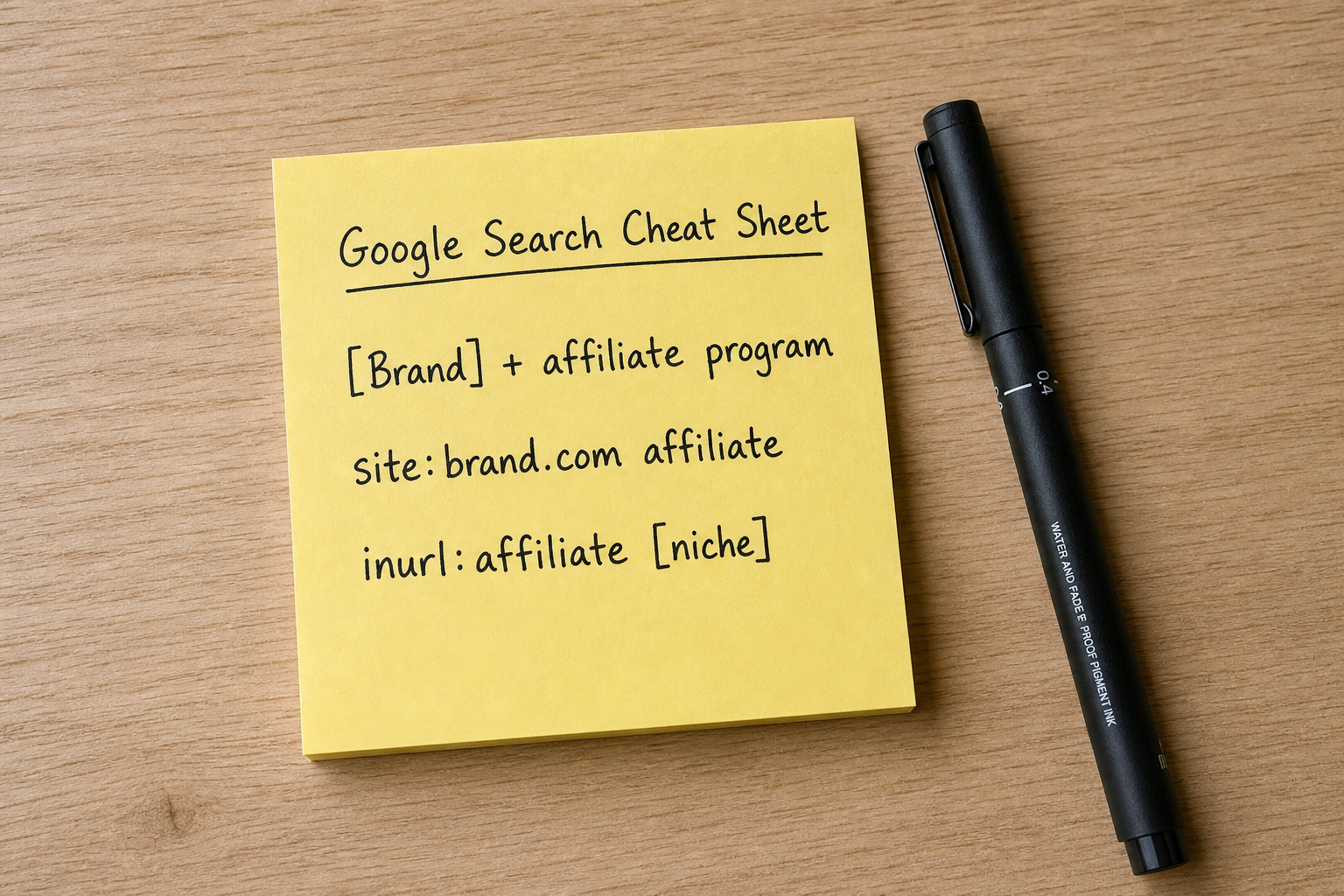 Try pasting these into Google:
[Product Name] + "affiliate program"[Product Name] + "partner program"[Competitor Product] + "affiliates"site:[BrandWebsite.com] "affiliate"
Breakdown of the Most Profitable Affiliate Niches in 2026
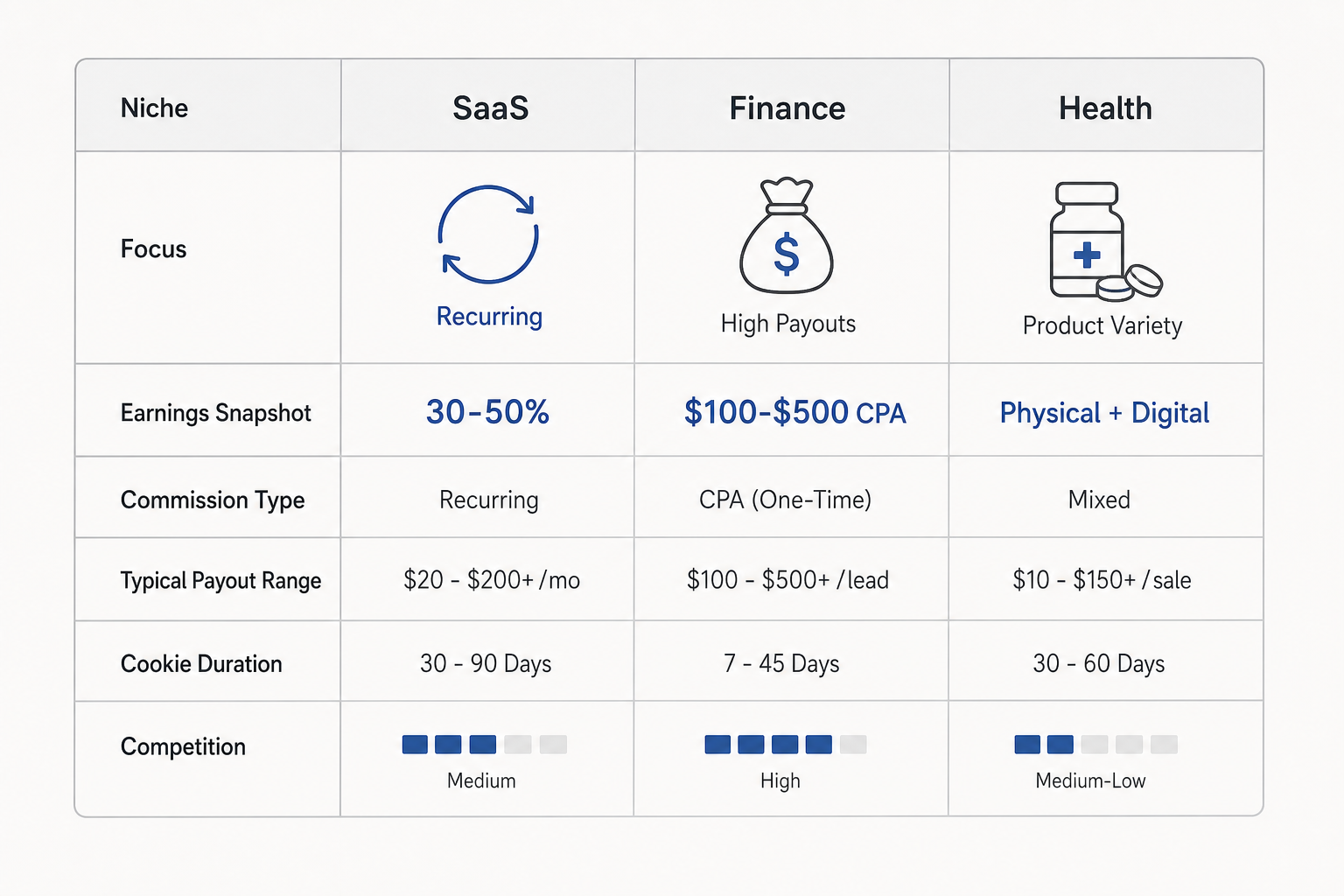
While you can make money in almost any category, certain verticals consistently offer higher payouts and better conversion rates due to high customer lifetime value (LTV).
1. Technology and Software (The SaaS Niche)
The SaaS niche remains the gold standard for affiliate marketers. Because software products have virtually zero marginal cost of reproduction, SaaS companies can afford to pay massive commissions—often 30% to 50% recurring.
Sub-niches like AI writing tools, email marketing software, web hosting, and CRM platforms are incredibly lucrative. The key to success here is writing detailed, tutorial-style content. For a deeper dive into software verticals, check out our guide on the 11 best niches for affiliate marketing (SaaS & digital).
2. Personal Finance and Investment
The finance niche boasts some of the highest CPAs in the industry. Credit card companies, trading platforms, and wealth management apps will happily pay $100 to $500+ for a qualified lead because a single new customer can generate thousands of dollars in interest or fees over a decade.
Warning: The finance niche operates under strict YMYL (Your Money or Your Life) SEO guidelines. To rank a profitable affiliate marketing blog in this space, you need pristine topical authority and demonstrable expertise.
3. Health, Wellness, and Fitness
According to recent industry analysis by Trackier on the top 10 affiliate niches, the health and wellness sector continues to see massive year-over-year growth.
This niche thrives on both high-ticket digital products (like specialized fitness coaching or nutritional plans) and physical consumables (supplements, meal prep delivery). Consumables are particularly attractive because buyers must reorder them monthly, opening the door for recurring revenue on physical goods.
4. B2B Services and E-commerce Tools
As more people launch digital businesses, the tools required to run them are in high demand. Programs for dropshipping platforms, payment gateways, and inventory management software offer substantial payouts. Because these are business expenses, buyers are less price-sensitive and more focused on ROI, making it easier to convert high-ticket offers if you can prove the tool saves them time or makes them money.
Red Flags: How to Spot a Toxic Affiliate Program
Not all programs are worth your traffic. Walk away from any partnership if you spot these warning signs:
- Leaky Sales Funnels: Click your own affiliate link and navigate the merchant's landing page. Are there massive pop-ups offering a "10% discount if you enter your email" that then attribute the sale to the merchant's email list instead of your cookie? That is a leaky funnel designed to steal your commissions.
- No Dedicated Affiliate Manager: If a program doesn't have a real human you can email when tracking breaks or a payout is missed, they don't value their affiliates.
- Draconian PPC Rules: While most programs forbid bidding on their exact brand name (e.g., bidding on "Mailchimp" if you are a Mailchimp affiliate), some bury clauses in their terms that forbid you from bidding on any related keywords. Read the fine print.
- Excessive Payout Thresholds: If a program pays a $10 commission but has a $500 minimum payout threshold, they are banking on you giving up before they ever have to cut a check.
Case Study Scenario: Choosing the Right Program
Imagine you run a niche site focused on helping creators build YouTube channels. You find two keyword research tools to promote.
Tool A: Pays a flat $150 CPA. It has a 7-day cookie. The landing page is cluttered, and they require a credit card upfront for a free trial.
Tool B: Pays 30% recurring on a $40/month plan ($12/month). It has a 60-day cookie. The landing page is sleek, offers a seamless Google sign-in for the free trial, and has an average user retention of 18 months.
Amateur affiliates will instantly grab Tool A for the $150 hit.
Experienced practitioners will calculate that Tool B yields $216 over the customer's lifetime. Combined with the higher conversion rate of a friction-free signup and the 60-day cookie that catches delayed buyers, Tool B will generate significantly more revenue over a 12-month period.
Where to Go From Here
Finding the best affiliate programs in any niche isn't about blind luck; it's about knowing where to look and what metrics to measure. By avoiding outdated listicles, prioritizing EPC and cookie duration, and leveraging modern databases like AffiliList, you can drastically reduce the time it takes to monetize your traffic.
Before you write your next piece of content, map out exactly which programs you intend to promote. If you're still exploring which market to enter, review our breakdown of the 9 profitable affiliate marketing niches to start in 2026 to align your strategy with high-yielding industries.
FAQs
What is the highest-paying affiliate niche?
Typically, B2B software (SaaS), wealth management, and enterprise technology offer the highest individual payouts. It is not uncommon to see $500 to $1,000 CPAs for enterprise software leads or trading platforms.
How do I pick a niche for my affiliate business?
Don't just chase the highest commissions. The best niche sits at the intersection of high market demand, lucrative affiliate programs, and your own personal expertise or interest. For a step-by-step framework, read our guide on how to pick a niche for affiliate marketing.
Are affiliate networks better than in-house programs?
Networks (like CJ Affiliate or Impact) offer the convenience of managing multiple partnerships under one dashboard with unified payouts. In-house programs (managed directly by the brand) often offer slightly higher commission rates because the brand doesn't have to pay a network fee. A mature affiliate business will usually utilize a mix of both.