
Best Databases Similar to Apdb for Affiliate Marketing Tools Beyond Affiliate Program
Discover top databases similar to APDB to find high-paying SaaS and CPA affiliate offers. Compare platforms like AffiliList, OfferVault, and PartnerStack.
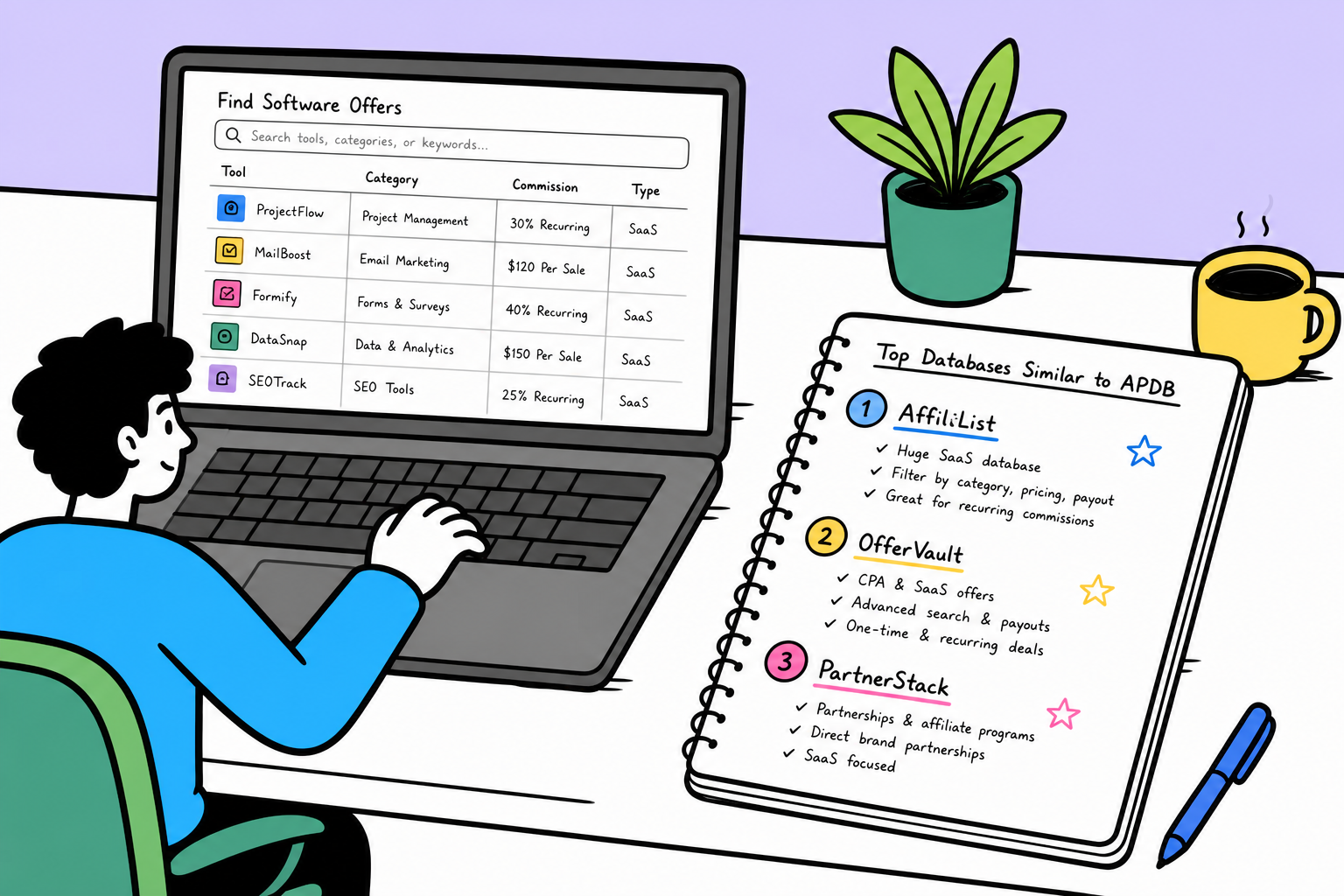
Finding profitable affiliate offers used to mean opening thirty browser tabs, creating accounts on five separate networks, and manually digging through outdated spreadsheets just to find out a software brand pays 15% recurring or 40% one-off. For years, platforms like APDB (Affiliate Program Database) gave publishers a shortcut by organizing program details into a searchable catalog.
However, affiliate marketing has evolved dramatically. The explosion of SaaS platforms, direct brand partnerships, and niche networks has made legacy directories feel incomplete or slow to update. Marketers today need real-time commission filtering, open access to program terms without forced sign-ups, verified cookie tracking windows, and direct merchant submission channels.
If you are looking for databases similar to APDB to discover high-converting offers, track network payouts, or source B2B SaaS partnerships, this guide breaks down the strongest alternatives available. We evaluate each database by indexing depth, verification quality, transparency, and practical usability for content creators, media buyers, and niche site builders.
Why You Need Dedicated Affiliate Databases Beyond Traditional Networks
Traditional affiliate networks like ShareASale, CJ Affiliate, and Impact act as gatekeepers. They hide crucial merchant metrics behind login screens, force you to submit your site for approval before viewing payout structures, and isolate program discovery to their internal ecosystem. If a software company manages its affiliate program independently on FirstPromoter or Rewardful, traditional networks will never list it.
Open affiliate databases solve this fragmentation by indexing programs across all environments: self-hosted brand partner portals, specialized SaaS platforms, sub-affiliate aggregators, and major performance networks.
+-----------------------------------------------------------------------+
|                       TRADITIONAL NETWORKS                            |
|  - Walled gardens requiring login to view program terms               |
|  - Limited to internal network merchants                              |
|  - Inconsistent approval friction before showing commission data      |

+-----------------------------------------------------------------------+
                                   vs
+-----------------------------------------------------------------------+
|                    OPEN AFFILIATE DATABASES                           |
|  - Publicly accessible commission rates, cookies, and payout models   |
|  - Cross-network and direct self-hosted program indexing              |
|  - Instant filtering by niche, recurring revenue, and commission type |

+-----------------------------------------------------------------------+
Using an open database gives you three strategic advantages:
- Uncovered Direct Partnerships: Many of the highest-paying software brands run in-house affiliate portals that offer higher commissions because they avoid network platform fees.
- Speed to Market: Instead of spending days waiting for network application approvals, you can compare baseline terms across multiple competitors in seconds before applying.
- Pipelining and Offer Verification: You can spot payout discrepancies between networks for the exact same offer, ensuring you sign up through the channel that yields the highest earnings per click (EPC).
When building a long-term revenue channel, verifying offer authenticity and payout stability is critical. Checking programs across independent directories is a key step when evaluating whether an offer is legitimate through guides like is affiliate marketing legit before investing your site's SEO equity.
Key Criteria for Evaluating Affiliate Program Databases
Not every affiliate program database offers equal quality. Some platforms rely on automated web scraping that leaves thousands of dead, broken, or discontinued links active in their search results. Others force users through paywalls or ad-cluttered interfaces.
When comparing APDB alternatives, evaluate platforms across five core operational criteria:
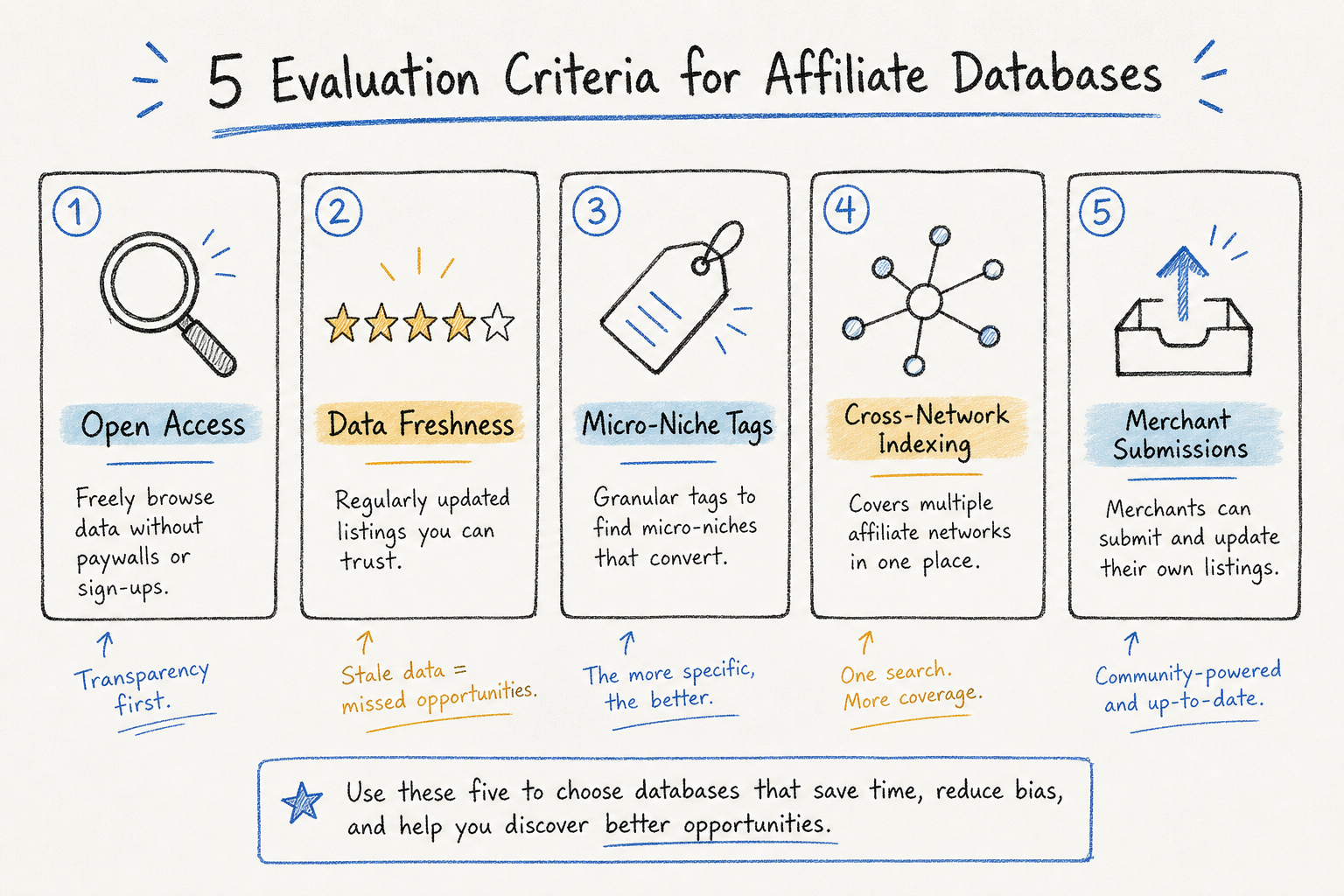
- Open Access & Frictionless Discovery: Does the directory require account creation or personal data collection just to browse commission percentages and cookie terms? The best tools offer instant, public visibility.
- Verification and Data Freshness: How frequently are commission tiers, minimum payout thresholds, and tracking lifespans verified against live merchant landing pages?
- Niche Granularity and Tagging: Can you filter by micro-categories such as YouTube creator tools, HR software, or crypto trading apps, rather than broad, generic buckets like "Technology"?
- Cross-Network Indexing: Does the platform track direct brand programs alongside traditional networks like CJ, ShareASale, PartnerStack, and Impact?
- Merchant Submission Portals: Is there an active verification pipeline allowing SaaS founders and brand managers to directly update their terms or submit new offers?
The Best Databases Similar to APDB for Affiliate Marketers
Below is a curated evaluation of the top database platforms and affiliate aggregators that match or exceed the functionality of APDB.
1. AffiliList
AffiliList is built specifically to address the pain points of cluttered, outdated affiliate directories. Designed with a strong focus on SaaS and digital tools, AffiliList hosts a curated database of over 10,000 verified affiliate programs.
Unlike traditional platforms that hide program terms behind registration gates, AffiliList provides complete, open access to essential program metrics. Marketers can instantly inspect commission percentages, payout models (recurring vs. one-time CPA), cookie durations, and underlying technology stacks without signing up for an account.
Primary Strengths
- SaaS and Digital Product Focus: Unmatched depth in B2B software, creator tools, productivity apps, AI tools, and digital services.
- Advanced Tagging & Filtering System: Filter programs by specific commission ranges, recurring payment structures, or target audience tags across hundreds of sub-niches.
- Clutter-Free Interface: Emphasizes verified data and clean user experience over ad banners and popups.
- Direct Merchant Submissions: Features an open merchant submission portal that ensures emerging software programs are indexed rapidly.
Best Used For
Niche site owners, bloggers, and digital entrepreneurs who want to find verified, high-converting digital and software offers without login walls or outdated listing data.
2. OfferVault
OfferVault is one of the longest-standing and most recognized aggregators in the performance marketing and CPA (Cost-Per-Action) space. While APDB leans heavily toward direct programs and general directory listings, OfferVault operates as a real-time search engine for performance offers across hundreds of affiliate networks.
Primary Strengths
- Massive CPA Database: Indexes tens of thousands of active offers across lead generation, financial services, sweepstakes, pay-per-call, and mobile apps.
- Payout Comparison: Allows marketers to search for a specific brand or offer and compare payout rates across competing networks simultaneously.
- Network Tracking: Includes user feedback and network reputation profiles alongside individual offer listings.
Best Used For
Media buyers, PPC marketers, and performance affiliates looking for high-payout CPA, CPL, and lead-generation offers across multi-network environments.
3. Affpaying
Affpaying functions as both an affiliate database and a community review platform. It specializes in indexing CPA networks, affiliate networks, and ad networks, providing detailed profiles on payout frequencies, minimum cashout limits, and payment methods (PayPal, wire transfer, crypto).
Primary Strengths
- Community Reviews & Payment Proof: Users regularly post reviews, rating networks on manager responsiveness, payment reliability, and link tracking accuracy.
- Filter by Payment Method: Helps international marketers filter networks based on accepted payout methods like Payoneer, WebMoney, or Bitcoin.
- Network Transparency: Quickly highlights networks with red flags or reported payout delays.
Best Used For
Affiliate marketers evaluating the trustworthiness of lesser-known performance networks before sending traffic.
4. oDigger
oDigger operates similarly to OfferVault as an offer search engine, indexing active campaigns across performance networks. It focuses on clean query results and direct campaign tracking, helping publishers quickly find where specific physical products, financial offers, or lead forms are currently active.
Primary Strengths
- Multi-Network Aggregation: Pulls campaign listings directly from network feeds to maintain accurate payout data.
- Simple Interface: Clean, search-focused layout built for fast queries without unnecessary navigational layers.
- Landing Page Previews: Often includes direct previews of target offer landing pages so marketers can review conversion design before applying.
Best Used For
Performance marketers searching for specific campaign verticals or checking if a single offer is paying higher rates elsewhere.
5. PartnerStack Directory
While PartnerStack is primarily an affiliate management platform for B2B SaaS companies, its native public directory functions as a powerful database for software affiliate programs. Because it hosts the technology stack for hundreds of top-tier software companies, its directory offers direct access to enterprise-grade B2B SaaS offers.
Primary Strengths
- 100% Native SaaS Inventory: Direct access to official programs for popular tools like Asana, Monday.com, Gorgias, and Unbounce.
- Standardized Reporting: Consistent reporting structures, reliable cookie tracking, and automated monthly payouts across all joined programs.
- Tiered Rewards: Clear visibility into performance tiers, partner bonuses, and custom agency structures.
Best Used For
B2B content creators, agency owners, and software review bloggers focused strictly on recurring SaaS commissions.
6. Sub-Affiliate Data Networks (Skimlinks & Sovrn Commerce)
Sub-affiliate networks function differently from standard searchable web directories. Instead of manually applying to hundreds of individual programs, services like Skimlinks and Sovrn Commerce maintain internal databases of over 50,000 merchants. They automatically convert standard outgoing product links into affiliate links while providing searchable merchant catalogs inside their user dashboards.
Primary Strengths
- Automated Monetization: Converts unmonetized merchant links across your site into affiliate links instantly.
- Consolidated Payouts: Combine earnings from hundreds of individual brands into a single monthly payout.
- Global Brand Access: Deep coverage of major e-commerce retailers, news publications, and retail software tools.
Best Used For
High-traffic editorial sites, news blogs, and large content publishers that want to monetize thousands of existing outbound links without managing individual program applications.
Detailed Comparison: Top APDB Alternatives at a Glance
| Database / Directory | Primary Focus Area | Sign-Up Required to View Data? | Main Strengths | Payout Models Tracked | Best Audience |
|---|---|---|---|---|---|
| AffiliList | SaaS, Digital Tools & Web Apps | No (Open Access) | 10,000+ curated programs, zero clutter, high data accuracy, direct merchant submission portal | Recurring %, One-Time CPA, Revenue Share | Bloggers, Niche Site Owners, Digital Marketers |
| OfferVault | CPA, CPL, Performance Offers | No (Open Access) | Massive index of network CPA campaigns, payout comparison engine | CPA, CPL, Pay-Per-Call, CPS | Media Buyers, Paid Search Marketers |
| Affpaying | Network Reviews & Trust Index | No (Open Access) | Community proof of payment, network ratings, payment method filters | CPA, CPL, RevShare | Performance Marketers, International Affiliates |
| oDigger | Performance Campaign Aggregation | No (Open Access) | Fast campaign searching, target page previews | CPA, CPL, Lead Gen | Search & Social Media Buyers |
| PartnerStack | B2B SaaS Ecosystems | Yes (Free Account) | Direct official software partnerships, standardized automated payouts | Recurring RevShare, Fixed CPA | B2B Bloggers, Agencies, Software Reviewers |
| Skimlinks | E-commerce & Editorial Content | Yes (Approval Required) | Automated link wrapping, massive retail directory | Variable CPS, CPC | High-Traffic News & Editorial Publishers |
How to Use Program Databases to Find Winning Offers in Your Niche
Finding a database is only the first step. To consistently monetize traffic effectively, you need a structured workflow for vetting and selecting offers. Whether you are building an affiliate marketing blog or testing new monetizable angles, follow this four-step selection process:
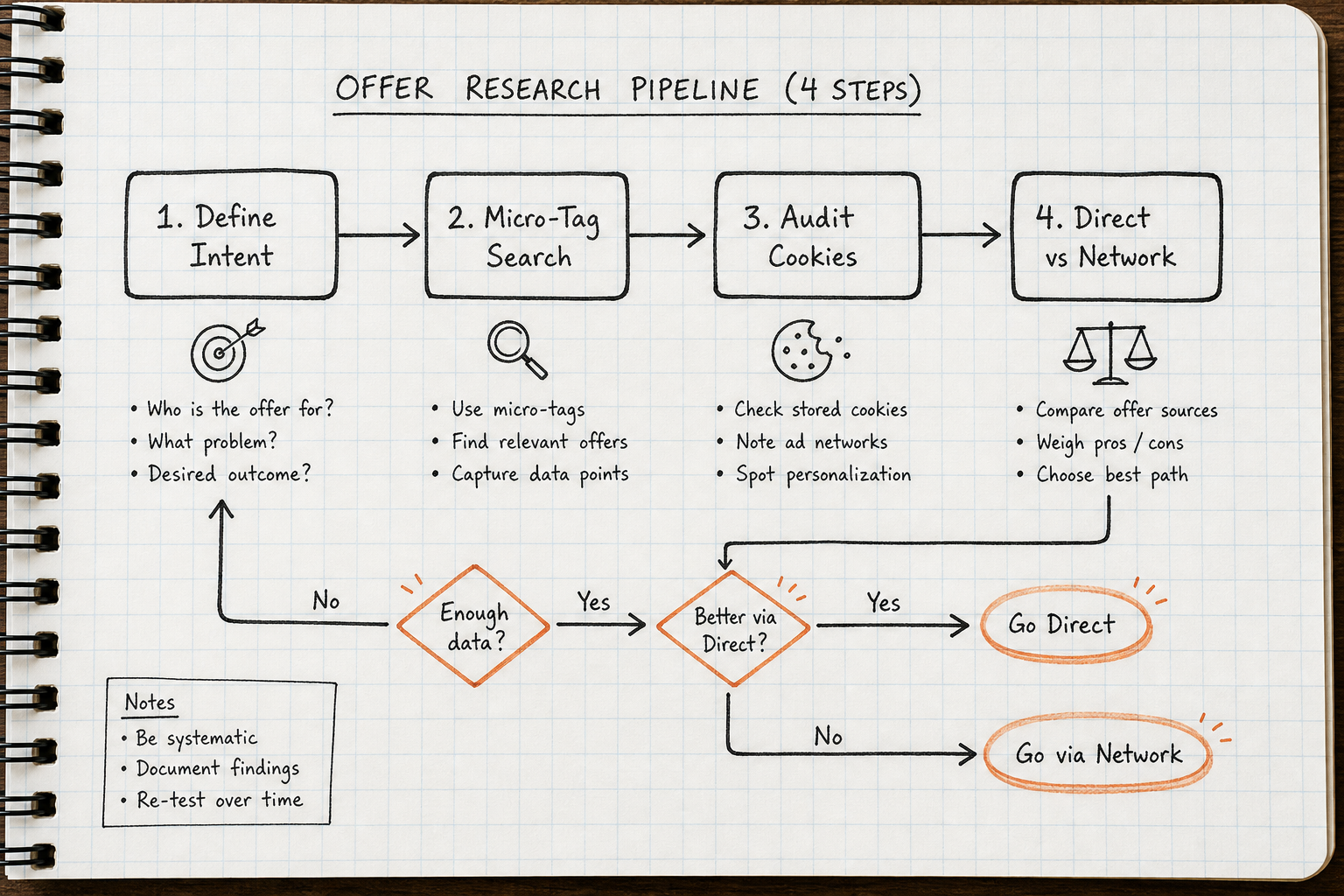
+-------------------------------------------------------------------------------+
| Step 1: Define Intent & Payout Model                                         |
| - Determine if traffic suits high upfront CPA or steady recurring RevShare.   |

+-------------------------------------------------------------------------------+
                                       │
                                       ▼
+-------------------------------------------------------------------------------+
| Step 2: Query Open Directories Using Micro-Tags                               |
| - Filter by specific sub-niches (e.g., "Podcast Hosting", "CRM", "SEO").     |

+-------------------------------------------------------------------------------+
                                       │
                                       ▼
+-------------------------------------------------------------------------------+
| Step 3: Audit Program Metrics & Cookie Windows                                |
| - Verify lifetime value, payout frequency, refund periods, and cookie length.|

+-------------------------------------------------------------------------------+
                                       │
                                       ▼
+-------------------------------------------------------------------------------+
| Step 4: Compare Direct vs Network Application Routes                          |
| - Check if self-hosted brand portal offers higher rates than third-party networks.|

+-------------------------------------------------------------------------------+
Step 1: Define Your Traffic's Monetization Intent
Before browsing database entries, clarify how your audience makes purchasing decisions.
- High-Intent Commercial Searches: Readers searching for product reviews, comparisons, or pricing tables convert exceptionally well on SaaS tools offering 20% to 40% recurring monthly commissions. Look for high-value offers listed in roundups of high paying affiliate programs.
- Low-Intent / Top-of-Funnel Traffic: Educational traffic or social channels often convert better on low-friction CPA actions (free trial signups, email submissions, or free downloads) found on platforms like OfferVault.
Step 2: Use Micro-Tags Rather Than Broad Category Filters
Generic queries like "Marketing" will return thousands of competing programs, making analysis overwhelming. Instead, use specific tags inside directories like AffiliList.
For instance, if your site focuses on video creation, search specifically for "YouTube SEO," "Video Editing SaaS," or "AI Voiceover." Micro-niche tools frequently offer higher conversion rates and lower affiliate competition than market-dominating brands.
Step 3: Audit Cookie Duration and Attribution Terms
A high commission percentage is meaningless if the cookie window is too short for your audience's buying cycle.
- B2B SaaS Products: Look for a minimum cookie window of 60 to 90 days. Enterprise and mid-market decision-makers rarely buy on day one.
- Consumer Apps & Micro-SaaS: A 30-day cookie is standard, but check whether attribution is strictly "last-click" or if the vendor honors first-click referrals.
Step 4: Compare Direct Brand Options Against Third-Party Networks
When you find a promising software tool in a database, check whether the merchant operates through multiple channels. A brand might offer a 20% flat commission on a large network like ShareASale, but run a direct partner program on FirstPromoter that pays 30% recurring to reward direct affiliates.
Matching Databases to Your Niche and Business Model
Choosing the right affiliate program database depends largely on your core business model and content strategy. Different niches benefit from different directory structures:
+-----------------------------------------------------------------------+
|                        BUSINESS MODEL MATCHING                        |
|                                                                       |
|  [B2B & SaaS Blogs]    ──► AffiliList / PartnerStack Directory        |
|                            Focus: Recurring RevShare, Open Terms      |
|                                                                       |
|  [Paid Traffic / Ads]  ──► OfferVault / oDigger                       |
|                            Focus: CPA Payouts, Offer Comparison       |
|                                                                       |
|  [Editorial & News]    ──► Skimlinks / Sovrn                          |
|                            Focus: Automated Linking, E-commerce       |

+-----------------------------------------------------------------------+
B2B Software and Tech Review Sites
If you write about cloud hosting, productivity software, CRM platforms, or AI tools, your revenue relies on recurring subscriptions. Open databases like AffiliList are tailor-made for this model because they index direct B2B SaaS partnerships that rarely appear on legacy CPA networks. Aligning your directory searches with structured content plans across profitable affiliate marketing niches helps ensure long-term earning potential.
Media Buyers and Performance Marketers
If you drive traffic through paid search, Facebook ads, or native push notifications, your main priority is rapid cash flow and conversion optimization. Databases like OfferVault and oDigger give you real-time visibility into cost-per-lead (CPL) and cost-per-acquisition (CPA) offers, allowing you to calculate ad spend return instantly.
E-Commerce and Digital Lifestyle Bloggers
For sites covering physical goods, fashion, travel, or general lifestyle products, native network directories like CJ Affiliate and ShareASale—supplemented by automated tools like Skimlinks—provide the broad physical catalog depth required.
If you are currently researching market opportunities or deciding where to build your next site, consult our tactical guides on how to pick a niche for affiliate marketing and exploring the best niches for affiliate marketing.
Practical Case Example: Streamlining Research for an AI Productivity Site
Consider the experience of an affiliate content creator launching a review site dedicated to AI productivity tools.
The Traditional Research Approach
Without an open database, the site owner manually searched Google for individual software brands, clicked into footer links, navigated broken signup forms, and recorded program terms in a spreadsheet.
- Time spent: 14 hours across 40 brand sites.
- Results: Found 18 active programs, but 12 required full network account approval before displaying commission tiers. Payout metrics were inconsistent, and cookie windows were often unlisted.
The Open Database Approach
By using a dedicated open database like AffiliList, the creator filtered specifically by tags for "AI Writer," "Workflow Automation," and "Productivity Software," setting a filter threshold for minimum 20% recurring commissions.
- Time spent: 35 minutes.
- Results: Discovered 32 verified SaaS programs, complete with verified cookie lifespans, exact payout schedules, and direct links to official partner application portals.
MANUAL METHOD:
[14 Hours Research] ──► Fragmented Data ──► Missing Terms ──► Slow Approval

DATABASE METHOD:
[35 Minutes Filtering] ──► 32 Verified SaaS Offers ──► Instant Terms Comparison
By switching to a modern directory, the creator reduced manual research time by over 90% while surfacing higher-yielding recurring revenue agreements.
Common Myths and Mistakes When Using Affiliate Databases
Even experienced publishers fall into common traps when using program search tools. Avoid these three missteps:
Myth 1: The Highest Listed Commission Rate Yields the Highest Revenue
A program advertising a 70% one-time payout on a $20 product earns you $14. A SaaS tool paying a 30% recurring commission on a $100/month software product earns you $30 every single month for the customer's lifespan. Focus on lifetime customer value (LTV) and monthly recurring revenue (MRR) yield rather than headline percentages. This distinction is paramount when analyzing revenue potential across the most profitable affiliate marketing niches.
Myth 2: You Must Join an Affiliate Network Before Browsing
Many creators assume they must create accounts on Impact, ShareASale, CJ, and PartnerStack before seeing what offers exist. Open databases like AffiliList demonstrate that program terms, commission structures, and cookie lifespans can be evaluated completely open-access before creating any account.
Myth 3: Database Listings Are Always Static
Software vendors frequently update their commission rates, transition between networks, or change affiliate managers. Always use databases that feature active verification processes or direct merchant submission portals to ensure you aren't applying to abandoned programs.
Leveraging Program Databases for Social and Visual Channels
Affiliate marketing isn't restricted to traditional long-form blogs. Creators monetizing through visual discovery platforms, short-form video, or social media require specific program structures found in specialized database searches.
For instance, when setting up affiliate marketing on pinterest, user intent is heavily visual and discovery-focused. Pinners respond best to low-friction landing pages, instant signups, or direct discount codes.
Using an open database allows visual creators to quickly isolate offers that provide direct deep-linking capabilities, clean mobile landing pages, and coupon attribution features before creating promotional pins.
For entrepreneurs running an affiliate marketing side hustle, leveraging organized databases minimizes administrative overhead, letting you spend more time creating content and driving traffic rather than managing spreadsheets.
Future Trends in Affiliate Marketing Databases
As affiliate marketing scales into a multi-billion dollar global industry, program databases are shifting from static list directories into dynamic intelligence platforms.
+-----------------------------------------------------------------------+
|                    EVOLUTION OF AFFILIATE DATABASES                   |
|                                                                       |
|  PAST: Static text lists, unverified scraper updates, paywalls        |
|                                  │                                    |
|                                  ▼                                    |
|  PRESENT: Real-time filtering, open access, SaaS tag curation         |
|                                  │                                    |
|                                  ▼                                    |
|  FUTURE: Automated EPC tracking, direct API payouts, merchant audits |

+-----------------------------------------------------------------------+
- Direct API Synchronization: Directories are increasingly integrating directly with affiliate tracking infrastructure (like Rewardful, PartnerStack, and FirstPromoter) to sync real-time commission tier updates automatically.
- First-Party Data Transparency: Modern databases are beginning to display verified average conversion rates, earnings-per-click (EPC) estimates, and vendor payout speeds alongside baseline commission percentages.
- Rise of Specialized In-House Networks: More SaaS brands are leaving traditional fee-heavy affiliate networks to host self-managed programs. Open databases are becoming the primary discovery discovery engines for these independent partner programs.
For digital marketers exploring broader career opportunities or full-time strategic roles in partner management, understanding these platform trends is a major asset when looking at affiliate marketing jobs.
Frequently Asked Questions About APDB Alternatives
What is the main difference between an affiliate database and an affiliate network?
An affiliate network (like CJ, ShareASale, or Impact) hosts the tracking software, processes payout transfers, and manages legal agreements between merchants and affiliates. An affiliate database (like AffiliList or APDB) is an open directory and research tool that indexes, categorizes, and compares programs across multiple networks and direct self-hosted platforms.
Are open affiliate databases free to use for marketers?
Yes. Leading directories like AffiliList, OfferVault, and Affpaying allow publishers to search, filter, and compare program commission rates, cookie terms, and niches completely free without hidden paywalls or forced account registrations.
How do affiliate databases keep program commission rates updated?
Top-tier databases combine automated API updates from affiliate networks with direct merchant submission portals and human curation. This multi-layered verification ensures broken program links and obsolete commission figures are continually purged.
Can SaaS merchants list their own affiliate programs on these databases?
Yes. Platforms like AffiliList offer dedicated merchant submission portals where software founders, partner managers, and program directors can list their programs, submit accurate commission structures, and reach thousands of active publishers directly.
Selecting the Right Research Tool for Your Affiliate Strategy
Searching for the right affiliate program should not require hours of manual site scraping or navigating restrictive network logins. While APDB established the benchmark for program discovery, modern tools have elevated data clarity, category filtering, and program verification.
If your content strategy focuses on recurring B2B software, creator platforms, and digital tools, an open, curated directory like AffiliList provides the cleanest path to verified offers without registration friction. If your strategy centers on paid CPA campaigns or network performance offers, platforms like OfferVault and oDigger remain valuable components of your research toolkit.
By matching the right database to your specific traffic model, you save dozens of research hours, secure higher commission rates, and build a predictable, scalable affiliate revenue engine.