
Best Vetted Tech Affiliate Listings for Social Media Influencers Tools Beyond Shareas
Discover vetted tech affiliate listings for social media influencers. Compare SaaS partner directories, recurring commission models, and modern tracking tools.
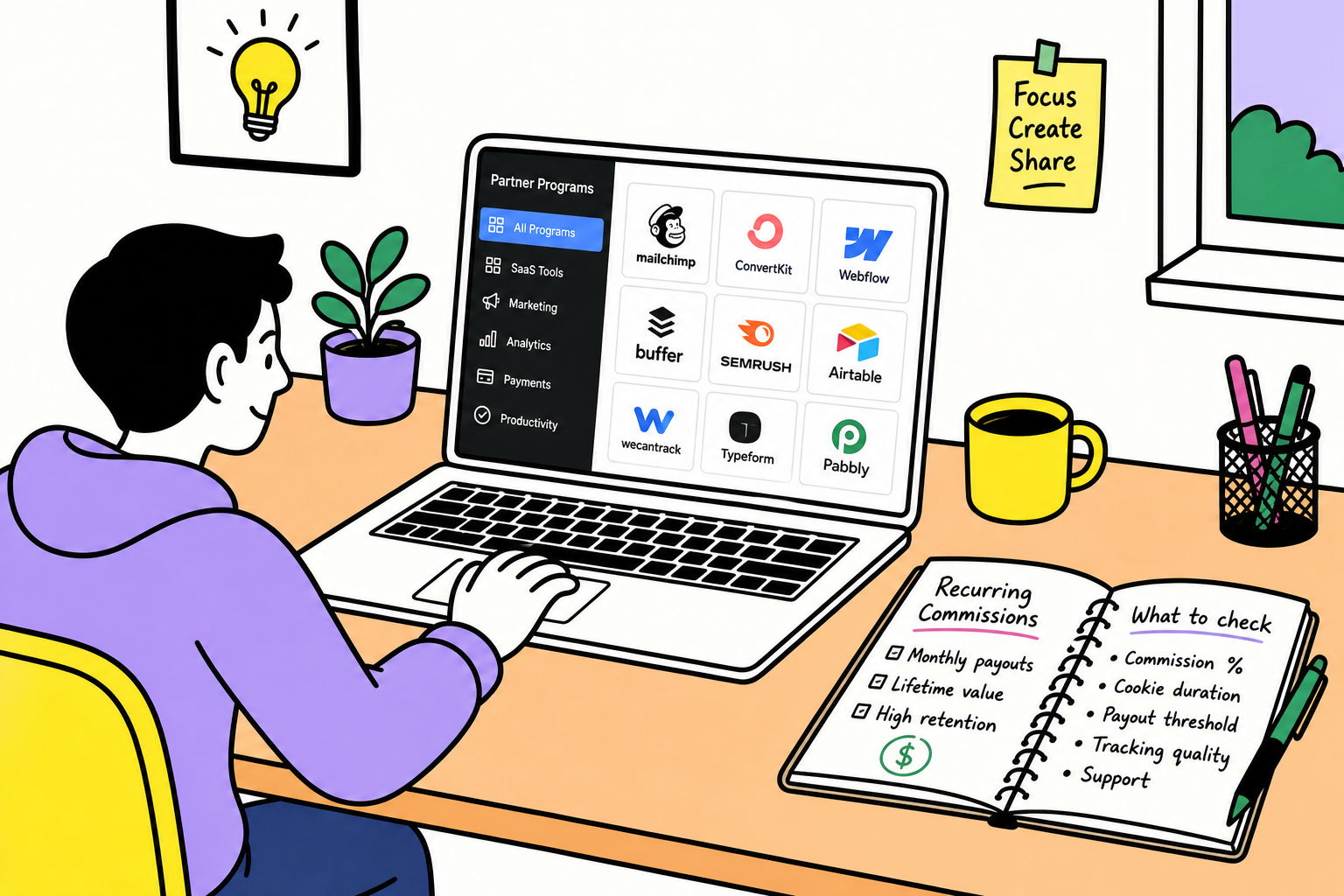
Tech content creators on YouTube, LinkedIn, X, TikTok, and Instagram face a frustrating bottleneck. You build a loyal, tech-literate audience that trusts your software recommendations, developer stack teardowns, and productivity setups. When you attempt to monetize that influence through traditional affiliate networks, you encounter outdated directories, broken tracking scripts, low-paying one-off physical hardware commissions, and walled gardens that hide payout terms behind multi-week approval queues.
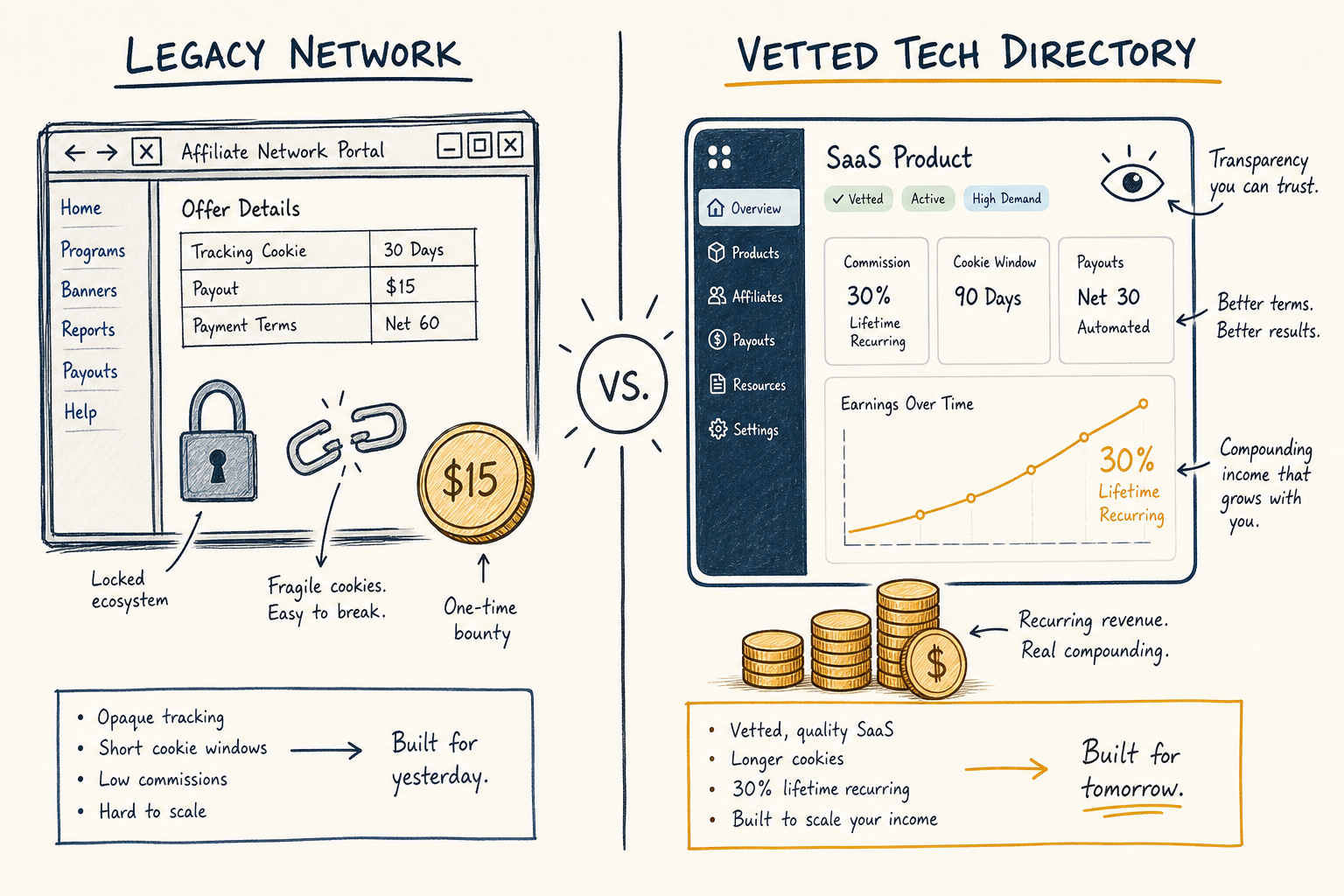
Legacy affiliate networks like ShareASale were built during the era of desktop coupon blogs and traditional banner ads. They frequently lack the agility, transparent reporting, and recurring revenue structures that modern software, developer tools, and AI platform recommendations demand. A creator who spends three days recording a detailed workflow video on an AI video editor or a cloud database manager does not want a 3% one-time bounty managed through a clunky 2008 dashboard.
Finding vetted tech affiliate listings requires looking beyond traditional legacy networks. Modern influencers need open-access directories, creator-first partner networks, and direct SaaS partner hubs that offer clear payout terms, reliable tracking, and multi-tier recurring commissions.
Evaluating the best platforms for vetted tech affiliate listings, comparing legacy systems with modern SaaS directories, and implementing a multi-channel monetization stack protect creator authority while generating steady recurring revenue.
Why Legacy Networks Fail Modern Tech Content Creators
The mechanics of recommending technology changed radically over the past five years. Tech audiences no longer buy products based on generic banner ads or static text links on coupon sites. They buy because a creator demonstrated a live workflow, solved an automation problem on video, or shared a line-by-line breakdown of a software stack.
Legacy networks like ShareASale, CJ Affiliate, or Rakuten Advertising were designed primarily for physical retail and high-volume merchant catalogs. Applying those operational frameworks to tech, software-as-a-service (SaaS), and developer infrastructure creates severe friction for influencers.
+-----------------------------------------------------------------------------------+
|                        LEGACY NETWORK vs MODERN TECH DIRECTORY                    |
+-----------------------------------------------------------------------------------+
| FEATURE               | LEGACY NETWORKS (e.g. ShareASale) | VETTED TECH DIRECTORIES   |
+-----------------------+-----------------------------------+-----------------------+
| Access to Terms       | Gated behind forced sign-ups      | Open access upfront   |
| Primary Offer Type    | One-time e-commerce bounties      | Recurring SaaS / LTV  |
| Tracking & Deep Links | Manual link generators, fragile   | Custom params, API    |
| Payout Schedules      | NET-30/NET-60 with high thresholds| NET-15, Stripe, Fast  |
| Social Media Policy   | Restrictive, web-blog-centric     | Social-first friendly |

+-----------------------+-----------------------------------+-----------------------+
The Sign-Up Friction Wall
Most legacy affiliate platforms force creators to register an account, supply full tax details, submit site verification meta tags, and wait days for account approval before they can even view a merchant's commission rates, cookie durations, or payout thresholds. If you want to compare three competing developer tools to see which one pays a fair recurring commission, you might waste two weeks applying to three separate program gates inside a legacy network.
Modern tech creators need instant visibility into program mechanics. You need to know whether a cloud provider offers a 20% lifetime recurring split or a $15 flat bounty before writing a script or recording a screen share.
Fragile Social Tracking Mechanics
Legacy networks were built around web browser cookies tied to blog domain referrals. When a social media influencer posts a link in a YouTube description, a X thread, or a Linktree landing page, native app browsers (like Instagram's in-app browser or TikTok's internal WebKit view) frequently strip referral parameters, drop cross-domain tracking cookies, or break session persistence.
Modern tech affiliate listings and creator-centric networks solve this by supporting clean deep-links, sub-ID channel attribution, subdomains, and promo-code attribution that attributes conversions across devices even when social browsers wipe standard cookies.
Misaligned Commission Models
Physical hardware and traditional e-commerce products operate on razor-thin profit margins, resulting in affiliate commissions ranging from 1% to 8%. Software and digital tools operate on gross margins exceeding 80%.
When legacy networks list software products alongside physical retail items, they often apply traditional one-time bounty structures. Recommending a $50/month SaaS tool through a legacy network might yield a single $15 payout. Recommending that same SaaS tool through a dedicated direct program or a modern SaaS affiliate hub can yield $15 every month for the entire lifetime of the customer account.
The 5 Core Vetting Criteria for Tech Affiliate Programs
Before placing an affiliate link in your video descriptions, newsletter, or bio link, you must vet the offer. Recommending a buggy tool, a predatory subscription billing model, or a company with a history of scrubbing affiliate sales damages the trust you built with your followers. Rebuilding audience trust takes years; losing it takes one bad software recommendation.
When auditing tech affiliate listings, evaluate programs using five non-negotiable criteria.
                           [1. COMMISSION MODEL]
                             Recurring vs. Bounty
                                      │
                                      ▼
                      [2. ATTRIBUTION & COOKIE HYGIENE]
                         Window Length & Deep Links
                                      │
                                      ▼
   [TECH INFLUENCER] ──────► [3. PAYOUT TERAM & CADENCE] ──────► [APPROVED PROGRAM]
  VERIFICATION FLOW          Thresholds & Payment Rails
                                      │
                                      ▼
                      [4. SOCIAL PERMISSIONS & DOMAINS]
                          Sub-IDs & Shortener Policy
                                      │
                                      ▼
                        [5. BRAND & RETENTION HEALTH]
                         Churn Rates & Partner Support
1. Commission Model & Lifetime Value (LTV)
Examine how the merchant structures compensation:
- Recurring Revenue Split: The gold standard for tech creators. Payouts range between 15% and 40% monthly for 12 to 24 months, or for the lifetime of the customer account.
- High-Ticket Flat Bounty: Ideal for enterprise software, cloud infrastructure migrations, or specialized developer tools where single conversions pay between $200 and $1,000 upfront.
- Hybrid Models: A combination of a modest upfront signup bounty plus a small monthly recurring split.
If a SaaS program offers a low flat fee without recurring options, verify whether customer lifetime value justifies your promotion space.
2. Cookie Windows & Attribution Hygiene
A standard 7-day cookie window is insufficient for complex B2B software decisions. Enterprise software, developer platforms, and premium productivity tools often involve consideration cycles lasting weeks.
Look for programs that offer at least a 30-day to 90-day cookie window. Ensure the program uses a fair attribution model (such as first-touch or persistent account registration tracking) so you receive credit if a user clicks your link on mobile and completes the purchase on desktop days later.
3. Payout Thresholds & Cadence
Review the payout terms carefully:
- Payment Gateways: Ensure the program supports global payout options like Stripe, PayPal, Wise, or direct ACH transfers.
- Minimum Payout Thresholds: Avoid programs requiring a $500 or $1,000 minimum balance before triggering a payout. Look for low thresholds between $25 and $100.
- Net Terms: NET-15 or NET-30 schedules are acceptable industry standards that accommodate customer refund windows. Avoid networks that hold funds for NET-60 or NET-90 days.
4. Deep-Linking & Social Media Policy
Read the merchant’s terms of service regarding social media distribution. Some rigid affiliate programs explicitly forbid posting affiliate links directly on social platforms, requiring traffic to pass through an owned website domain first.
Verify that the platform allows:
- Direct social media deep-linking in YouTube descriptions, link aggregators, and social posts.
- Custom parameters and sub-IDs so you can track whether conversions originated from a YouTube video, a X thread, or an email newsletter.
- URL shorteners like Bitly, Dub.co, or custom branded short links without flagging your account for link masking.
5. Product Quality, Churn Rate & Brand Reputation
A high commission percentage is meaningless if the product has a 50% monthly churn rate or poor customer support. High churn means your recurring commissions evaporate within two months, and your followers will hold you responsible for recommending faulty software.
Before promoting any tech offer, sign up for a trial, test the software in a real workflow, and search creator communities to verify if the company honors tracking and pays affiliates reliably. If you want to understand how to audit program credibility and avoid unverified schemes, read our breakdown on is affiliate marketing legit.
Top Vetted Tech Affiliate Platforms & Listings Beyond Legacy Networks
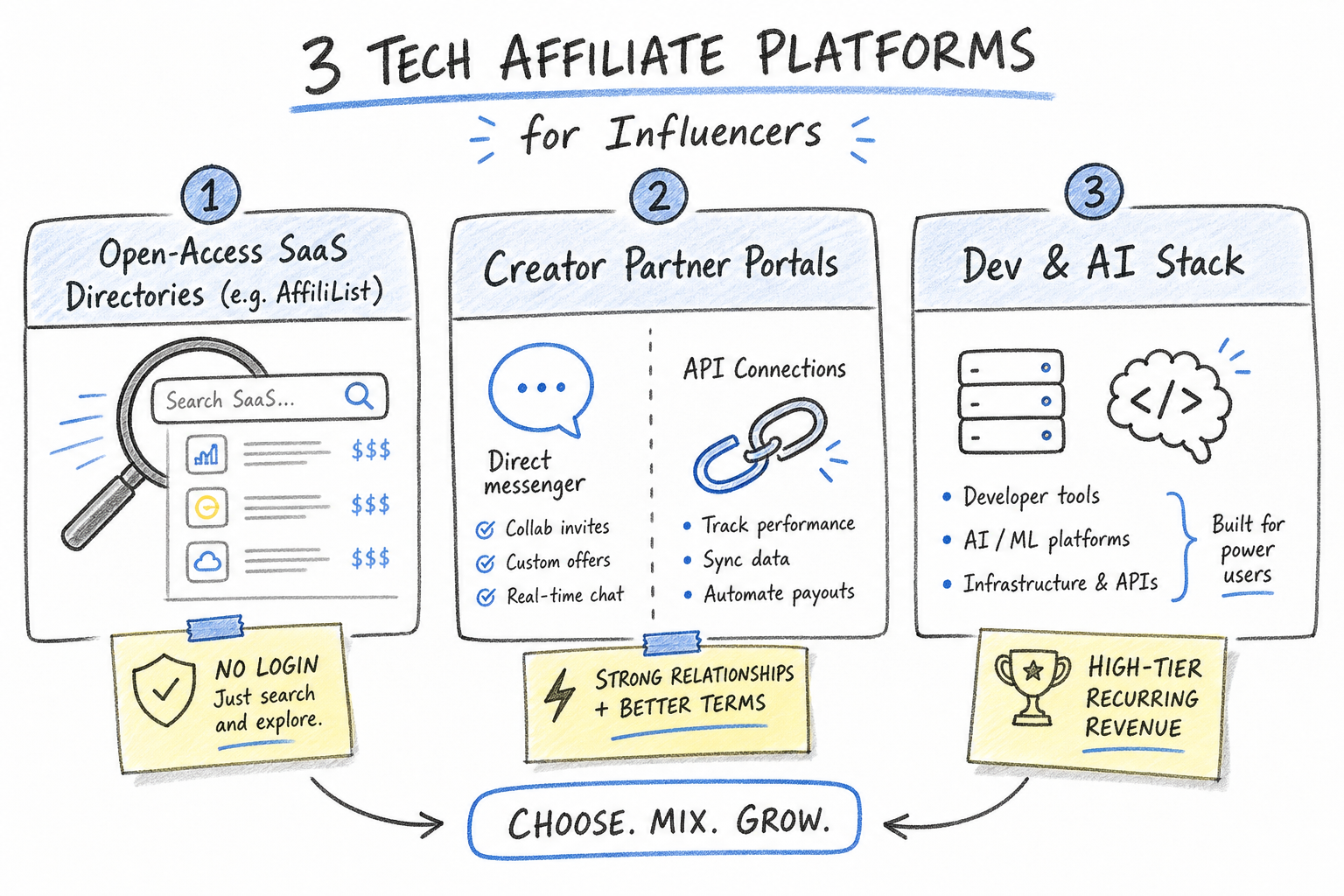
Finding verified, high-converting tech affiliate offers requires tapping into platforms built specifically for modern software, SaaS tools, and influencer partnerships. The top avenues are categorized by how they handle program access and relationship management.
Category A: Open-Access Vetted SaaS Directories
Open-access directories eliminate the traditional sign-up wall. They allow creators to browse thousands of verified software programs, inspect commission rates, compare cookie durations, and review payout methods before applying to individual brand partners.
- AffiliList: Designed specifically to eliminate the clutter of traditional networks, AffiliList provides an open, searchable database of over 10,000 curated affiliate programs with a major emphasis on SaaS, AI tools, developer software, and digital platforms. Creators can search programs by exact niche, filter by commission rates (such as recurring vs flat bounty), and view transparent program details without creating an account or navigating restrictive sign-up forms.
- Direct SaaS Partner Portals: Many fast-growing tech companies host their programs on dedicated partner infrastructure like FirstPromoter, PartnerStack, or Rewardful. These portals provide real-time dashboards and instant deep-linking tools tailored for software promotions.
Category B: Creator-Native & Influencer Networks
If your channel relies on direct brand sponsorships combined with performance commissions, creator-native platforms offer direct messaging tools and unified payout dashboards.
- Impact (Impact.com): While Impact hosts diverse retail brands, its software and technology marketplace contains top-tier B2B software vendors, domain registrars, and cloud services. Impact provides robust API integration, custom contracting terms, and mobile-friendly link management.
- Afluencer: Highly tailored for social media creators seeking direct brand relationships. According to Afluencer's creator network analysis, direct merchant-to-influencer messaging allows creators to negotiate custom commission rates and secure trial accounts for product walk-throughs.
- LTK & Creator Ecosystems: While traditionally focused on retail and lifestyle products, these networks increasingly feature consumer tech, smart home devices, and creator production hardware. As noted in Business Insider's breakdown of influencer monetization networks, platforms that simplify shoppable links for social bio pages help streamline hardware recommendations across Instagram and TikTok.
Category C: High-Converting Marketing & Developer Infrastructure Programs
Individual SaaS tools often run partner programs that pay significantly higher rates than standard affiliate networks.
+----------------------------------------------------------------------------------+
|                   HIGH-YIELD TECH AFFILIATE CATEGORIES (2026)                    |
+----------------------------------------------------------------------------------+
| CATEGORY          | TYPICAL COMMISSION       | AVERAGE LTV      | KEY ADVANTAGE  |
+-------------------+--------------------------+------------------+----------------+
| AI & Automation   | 20% - 40% Recurring      | $300 - $1,200    | High adoption  |
| Dev & Cloud Tools | $100 - $500 Flat or 20%  | $500 - $3,000+   | Low churn rate |
| Marketing SaaS    | 20% - 30% Recurring      | $400 - $1,500    | Standard stack |
| Creator Gear      | 3% - 10% One-time        | $50 - $200       | High volume    |

+----------------------------------------------------------------------------------+
- GetResponse: A top choice for creator and marketing automation tools. Detailed in GetResponse's influencer affiliate guide, their program offers a choice between a 33% monthly recurring commission or a $100 upfront bounty per sale, making it adaptable to different content strategies.
- Developer Infrastructure (DigitalOcean, Vultr, Supabase): Developer tools typically feature high retention rates. Developers rarely switch database or cloud hosting providers once their software is deployed, resulting in stable, long-term recurring payouts.
- AI Productivity Platforms (Jasper, Copy.ai, Descript): These tools deliver strong conversion rates when paired with workflow tutorials. Their rapid growth makes them lucrative options for creators who demonstrate live software solutions.
Category D: Hardware, Camera & Workstation Gear Programs
For creators producing desk setup tours, camera rig breakdowns, or hardware teardowns, physical product listings remain an important source of supplemental revenue.
- Amazon Influencer Program: Allows creators to build custom storefronts curated with their gear recommendations. As highlighted in Business Insider's top affiliate program review, the ability to direct viewers to a single storefront link simplifies video gear recommendations on YouTube and TikTok.
- B&H Photo Video & Adorama: Dedicated hardware programs offering higher commissions and longer cookie windows on professional audio, video, and computer hardware than general retail marketplaces.
High-Yield Tech Niches for Social Media Creators
Choosing the right sub-niche within tech determines your long-term earnings potential. Combining high conversion intent with long customer retention yields the highest lifetime value per conversion.
To explore specific software sub-niches, view our detailed guides on the 11 best niches for affiliate marketing (SaaS & digital) and 9 profitable affiliate marketing niches to start in 2026.
Developer Tools & Cloud Infrastructure
Software engineers and IT professionals rely heavily on trusted peer reviews when selecting developer tools. Commissions in this niche are backstop-supported by high retention rates.
- Primary Offers: Cloud hosting, API services, headless CMS platforms, code assistance tools, database managers.
- Commission Structure: $100+ flat bounties or 20% lifetime recurring payouts.
- Best Platforms: YouTube long-form coding tutorials, X technical threads, GitHub documentation, LinkedIn engineering posts.
AI Platforms & Workflow Automation
Artificial intelligence and automation tools represent one of the fastest-growing categories in software affiliate marketing. Creators who build practical tutorials showing how to automate tasks attract audience members ready to adopt new tools.
- Primary Offers: AI video editors, automated transcription tools, generative design software, prompt engineering tools, workflow connectors (like Make or Zapier).
- Commission Structure: 20% to 40% recurring monthly payouts for 12 to 24 months.
- Best Platforms: YouTube short-form and long-form workflow demos, TikTok quick-tips, Instagram Reels, LinkedIn automation guides.
B2B Marketing & Sales Software
Small businesses, agencies, and freelancers are constantly upgrading their software infrastructure.
- Primary Offers: Email marketing automation, CRM platforms, SEO software, funnel builders, client portals.
- Commission Structure: 20% to 30% recurring monthly payouts, often generating $30 to $150 per user each month.
- Best Platforms: LinkedIn pulse articles, YouTube software comparisons, long-form blog posts, X deep-dives.
For advice on evaluating market size and competition across these categories, refer to our framework on how to pick a niche for affiliate marketing and our list of the 7 most profitable affiliate marketing niches to target.
Practical Case Scenario: Scaling a Tech Channel to $4,200/Month Recurring Revenue
To see how vetted tech listings perform in practice, consider this actual deployment scenario from an independent tech creator.
+------------------------------------------------------------------------------------+
|                    CASE SCENARIO: HARDWARE BOUNTIES vs SAAS STACK                   |
+------------------------------------------------------------------------------------+
| METRIC                | MONTHS 1-6 (Hardware Focus) | MONTHS 7-12 (Vetted SaaS Stack)|
+-----------------------+-----------------------------+------------------------------+
| Primary Content       | Desk Setups & Monitor Reviews| Software Workflows & SaaS    |
| Primary Offer Type    | 3% - 4% Retail Hardware     | 30% Recurring SaaS Programs  |
| Monthly Clicks        | 12,000                      | 8,500                        |
| Conversion Rate       | 2.1%                        | 3.4%                         |
| Average Order Value   | $150                        | $45/mo recurring subscription|
| Monthly Revenue       | $756/mo (One-time)          | $4,200/mo (Compounding)      |

+------------------------------------------------------------------------------------+
The Initial Setup & Bottleneck
A tech reviewer with 28,000 YouTube subscribers and 12,000 LinkedIn followers initially focused on physical desk gear: mechanical keyboards, ultrawide monitors, and USB hubs. Links were routed through standard retail affiliate networks.
Despite generating over 12,000 link clicks per month, monthly affiliate income plateaued at $750. Every month started at zero revenue because retail hardware payouts are one-time transactions with short cookie windows.
The Strategy Shift
The creator shifted strategy toward software tools used directly in their content production and business workflow:
- Replaced Retail Links: Replaced static hardware links with software tools used to manage their channel (video transcription tools, cloud backup services, email automation platforms, and project management software).
- Sourced Vetted SaaS Offers: Used open-access directories to locate verified partner programs on FirstPromoter and PartnerStack that offered 30% lifetime recurring commissions.
- Published Solution-Focused Videos: Instead of basic software reviews, the creator produced step-by-step videos showing how to solve specific problems using the tools.
- Optimized Link Tracking: Applied clean sub-IDs across channel descriptions, Linktree pages, and pinned video comments.
The Financial Outcome
Within six months of promoting recurring SaaS offers, the creator built a base of 310 active software referrals. At an average software subscription price of $45 per month, a 30% recurring split generated over $4,200 per month in stable recurring revenue.
Because recurring software subscriptions persist over time, revenue continued compounding each month rather than resetting to zero. Creators interested in building similar revenue streams can review our guide on turning an affiliate marketing side hustle into a consistent monthly business.
Mapping Tech Affiliate Offers to Social Media Platforms
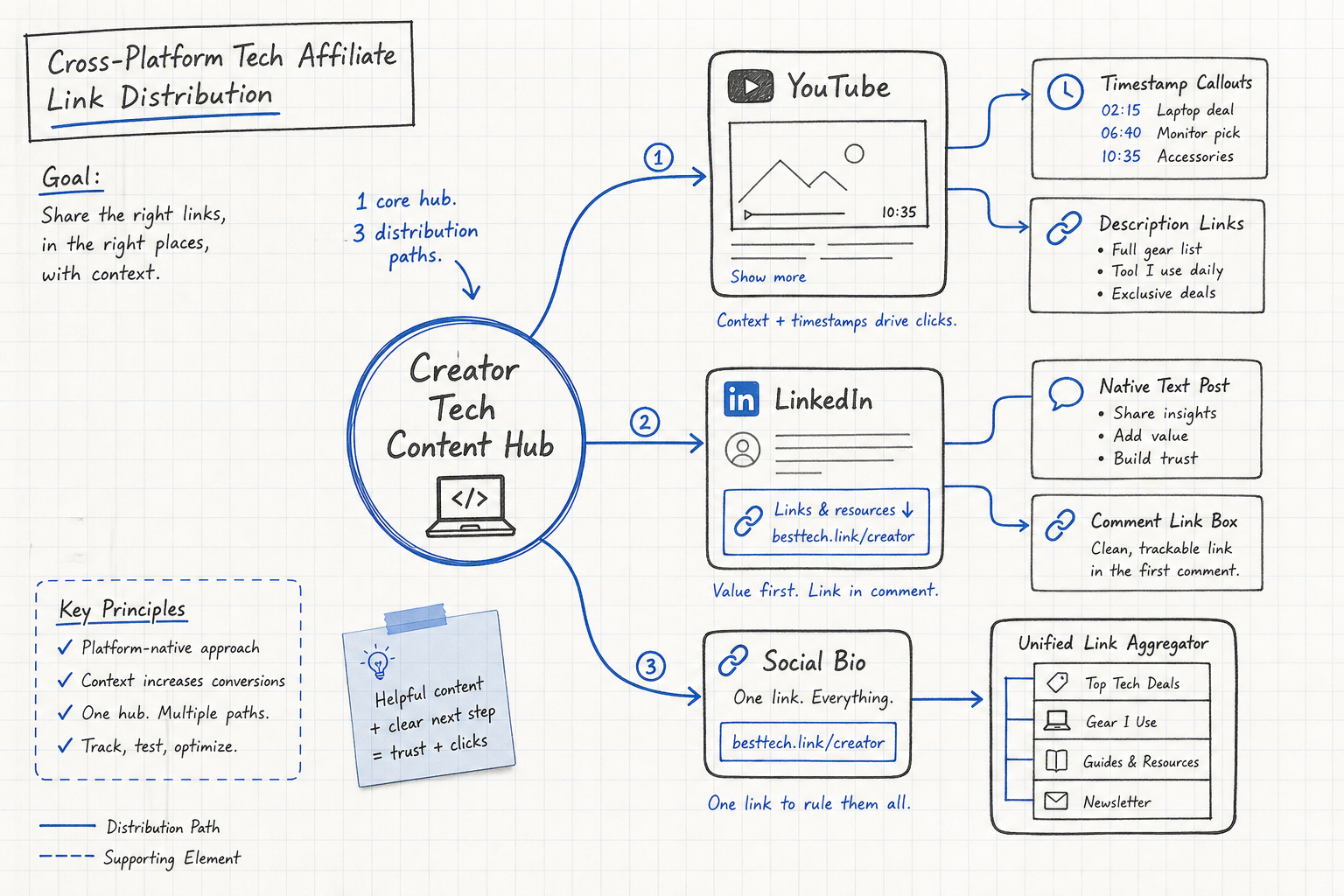
Different social media channels require tailored strategies for sharing affiliate links. A link format that converts well on a personal blog can fail on short-form video platforms if shared without considering platform dynamics.
YouTube: Deep-Linking & Description Hygiene
YouTube remains a premier driver of tech affiliate revenue because viewers actively search for software tutorials, product comparisons, and workflow walk-throughs.
+-----------------------------------------------------------------------------------+
|                     YOUTUBE DESCRIPTION & DEEP-LINK LAYOUT                        |
+-----------------------------------------------------------------------------------+
|                                                                                   |
|  [VIDEO TITLE]: How I Automate My Developer Workflow in 2026                      |
|                                                                                   |
|  0:00 - Intro & Architecture Setup                                                |
|  2:15 - Building the Database (Supabase)                                          |
|  5:40 - Automating API Calls (Make) ──────────────────┐                           |
|  9:10 - Deployment & Hosting (DigitalOcean)           │                           |
|                                                       │                           |
|  SOFTWARE & TOOLS FEATURED IN THIS VIDEO:             │                           |

|  ⚡ Try Make (Automation) ────────────────────────────┴─► https://yourbrand.co/make
|  ⚡ Supabase Database ──────────────────────────────────► https://yourbrand.co/supa
|  ⚡ DigitalOcean ($200 Credit) ─────────────────────────► https://yourbrand.co/do
|                                                                                   |
|  *Disclosure: Links above include affiliate tracking supporting this channel.     |

+-----------------------------------------------------------------------------------+
To maximize conversions on YouTube:
- Timestamp Link Mapping: Place relevant software affiliate links directly next to specific video timestamps in the description box.
- Pinned Comment Strategy: Pin a top comment containing direct links to the primary tools featured in the video.
- Custom Short Domains: Use clean redirects (e.g.,
yourbrand.co/toolname) rather than long, ugly affiliate links. - In-Video Callouts: Add a clear verbal and visual callout when introducing a software tool (e.g., "You can grab a 14-day free trial using the link in the top line of the description").
LinkedIn: Case Studies & Professional Context
LinkedIn is an exceptional platform for high-ticket B2B SaaS and productivity tools. Professional users visit LinkedIn to improve work efficiency and discover software solutions.
- Avoid Direct Link Drops in Posts: Algorithm updates often penalize posts containing external links in the main text body. Write a comprehensive breakdown, case study, or tool teardown, then place your tracking link in the first comment or inside a featured profile link.
- Native Visuals: Include real screenshots of software dashboards, workflow diagrams, or data results rather than stock images.
TikTok & Instagram: Bio-Link Optimization & Short Demos
Short-form video requires rapid problem-and-solution messaging.
- Micro-Demos: Focus on a single software feature that saves time or solves an annoying problem within 30 seconds.
- Centralized Bio Links: Route traffic through a clean, fast-loading bio link tool (like Linktree, Dub.co, or a custom site page) containing organized categories for software tools, equipment, and discount codes.
Pinterest: Visual Tech Setups & Digital Infographics
Pinterest is an underrated traffic source for desk setups, workspace aesthetics, and visual software workflow guides. To set up an automated Pinterest traffic engine, read our guide on setting up affiliate marketing on Pinterest.
Red Flags & Common Traps in Tech Affiliate Programs
Not every tech affiliate listing is worth your time. Software startups frequently launch rushed affiliate programs that stall due to technical issues, poor tracking, or unsustainable business models. Watch for these five warning signs before promoting a software offer:
+-----------------------------------------------------------------------------------+
|                        5 RED FLAGS IN TECH AFFILIATE LISTINGS                     |
+-----------------------------------------------------------------------------------+
| RED FLAG                   | THE RISK TO CREATORS                                 |
+----------------------------+------------------------------------------------------+
| 1. Hidden Payout Terms     | Unstated minimums or clawback clauses                |
| 2. Proprietary In-House    | High risk of untracked sales and lost attribution    |
|    Tracking Scripts        |                                                      |
| 3. Unannounced Comm. Drops | Payout rates slashed without warning                 |
| 4. High Monthly Churn      | Referrals cancel quickly; recurring revenue collapses|
| 5. Unresponsive Managers   | Support tickets ignored when tracking issues arise   |

+-----------------------------------------------------------------------------------+
1. Proprietary In-House Tracking Scripts
Be cautious when promoting early-stage software companies that use unverified, home-grown attribution scripts. If a platform does not use established attribution infrastructure (like FirstPromoter, PartnerStack, Rewardful, or Impact), referral tracking often breaks during billing updates or app redesigns.
2. Retroactive Commission Reduction
Some opportunistic companies launch partner programs with high commission splits (e.g., 40% recurring) to attract creator promotions. Once they acquire market share, they retroactively slash commission rates for existing referrals to 10% or eliminate recurring splits entirely.
Protect yourself by working with established companies or checking program reviews in creator directories before investing time in long-form video reviews.
3. Aggressive Affiliate Scrubbing & Payment Delays
If a software merchant frequently delays payouts beyond NET-30 terms, claims high numbers of fraudulent conversions without providing logs, or refuses to answer basic partner support inquiries, remove their tracking links immediately.
Step-by-Step Blueprint for Building a Recurring Tech Affiliate Stack
Building a scalable, high-yielding affiliate strategy requires systematic execution. Follow this five-step blueprint to transition away from low-paying legacy network offers toward a vetted software portfolio.
  [STEP 1: AUDIT YOUR TOOLSTACK] ──► Select tools you use daily
                 │
                 ▼
  [STEP 2: SOURCE VETTED TERMS]  ──► Search open directories (e.g. AffiliList)
                 │
                 ▼
  [STEP 3: TEST TRACKING LINKS]  ──► Verify deep-links, sub-IDs & custom domains
                 │
                 ▼
  [STEP 4: INTEGRATE WORKFLOWS]  ──► Embed links into videos, threads & bio pages
                 │
                 ▼
  [STEP 5: AUDIT & OPTIMIZE]    ──► Track LTV, retention & replace low-converting tools
Step 1: Audit Your Personal Tech Stack
List every software tool, cloud platform, AI application, and browser extension you personally use to run your content creation business, write code, or manage projects. Authenticity drives conversion rates; recommending tools you actually use creates natural, compelling content.
Step 2: Source Vetted Program Terms
Use transparent affiliate databases like AffiliList to review program terms for the software tools on your list. Verify:
- Is the payout structured as a recurring commission or a single bounty?
- What is the cookie duration window?
- Are there restrictions on social media link placement?
If you prefer building a dedicated website to anchor your recommendations alongside your social channels, read our step-by-step guide on how to start a profitable affiliate marketing blog.
Step 3: Test and Clean Your Tracking URLs
Once approved for a program:
- Generate custom sub-IDs for each platform (e.g.,
?subid=youtube_descriptionvs?subid=linkedin_post). - Route tracking URLs through branded domain redirects to keep links clean and professional.
- Perform a test click using an incognito browser window to verify the referral tag persists correctly through the landing page.
Step 4: Integrate Software Naturally into Content
Rather than creating aggressive sales pitches, incorporate software tools into practical workflow tutorials, comparison breakdowns, and problem-solving guides.
- Low Conversion Approach: "Sign up for this CRM using my affiliate link below!"
- High Conversion Approach: "Here is the exact automated sequence I use to follow up with potential clients, including the exact workflow file you can copy in two clicks."
Step 5: Track Performance Metrics and Optimize
Set aside time each month to audit your partner dashboard metrics:
- Click-Through Rate (CTR): How effectively your content drives traffic to the offer.
- Conversion Rate (CR): The percentage of clicks that complete a trial or purchase.
- Customer Churn Rate: How long referred users remain active paying customers.
Replace low-converting or high-churn software tools with higher-quality alternatives from your database research. For creators evaluating career paths in partner management or corporate affiliate strategy, check out our guide on affiliate marketing jobs. To compare top-tier offers, explore our guide on 11 high paying affiliate programs for $500+ commissions.
Frequently Asked Questions
What are the best alternatives to ShareASale for tech and SaaS content creators?
Top alternatives for tech creators include open-access program directories like AffiliList, modern creator networks like Impact, and specialized partner portals like PartnerStack and FirstPromoter. These platforms offer greater transparency, higher recurring commission splits, and modern tracking tools designed specifically for software and digital platforms.
Why are recurring commissions better than flat bounties for social media influencers?
Recurring commissions build compounding monthly revenue. A flat bounty pays you once upon sign-up, forcing you to constantly generate new traffic to maintain your income. A recurring commission model pays you every month the user remains subscribed, creating predictable monthly income that continues growing over time.
Can social media influencers put affiliate links directly in their posts and video descriptions?
Yes, provided the brand’s terms of service allow direct social linking and you comply with regulatory disclosure guidelines (such as FTC disclosure rules in the US). Always include clear disclaimers (e.g., "Includes affiliate links that support this channel") near your tracking links.
How do I prevent social media mobile browsers from stripping my affiliate cookies?
Use custom domain redirects, clean deep-links, or promo code attribution models. Providing your audience with a custom discount code at checkout ensures you receive attribution credit even if an in-app social browser clears session tracking cookies during navigation.
Building a Sustainable Tech Affiliate Engine
Relying on outdated legacy affiliate networks with opaque approval processes, rigid interfaces, and low flat bounties limits your channel's earning potential. Modern tech influencers need monetization models that match the quality of their content and the trust of their audience.
By focusing on vetted software tools, using transparent open-access directories like AffiliList, and prioritizing recurring SaaS partner programs, you build a resilient recurring revenue engine. Focus on solving real problems for your followers, recommending tools you trust, and optimizing your tracking stack across every social channel you operate.