
9 Best Blog Affiliate Programs for Content Creators
Discover the 9 best blog affiliate programs for content creators in 2026. Learn how to choose the right platforms, boost conversions, and maximize commissions.

Most content creators start monetizing their blogs the exact same way: they throw a few Amazon Associates links into a product review, slap a Google AdSense banner in the sidebar, and wait for the revenue to roll in. Six months later, they log into their dashboard to find they’ve earned a grand total of $14.32.
The problem isn’t your traffic. The problem is your monetization stack.
Professional bloggers and niche site operators don’t rely on default, low-tier programs. They aggressively seek out high-converting, high-paying partnerships that match their audience’s exact intent. Whether you are running a B2B SaaS review site or a consumer lifestyle blog, your earnings are directly tied to the quality of the affiliate programs you promote.
But navigating the affiliate landscape is notoriously frustrating. Finding reliable payouts, deciphering cookie durations, and avoiding scammy networks can feel like a full-time job. In this guide, we are breaking down the 9 best blog affiliate programs for content creators, what makes them worth your time, and the tactical playbook for integrating them into your content without burning reader trust.
Program vs. Platform vs. Directory: Understanding the Ecosystem
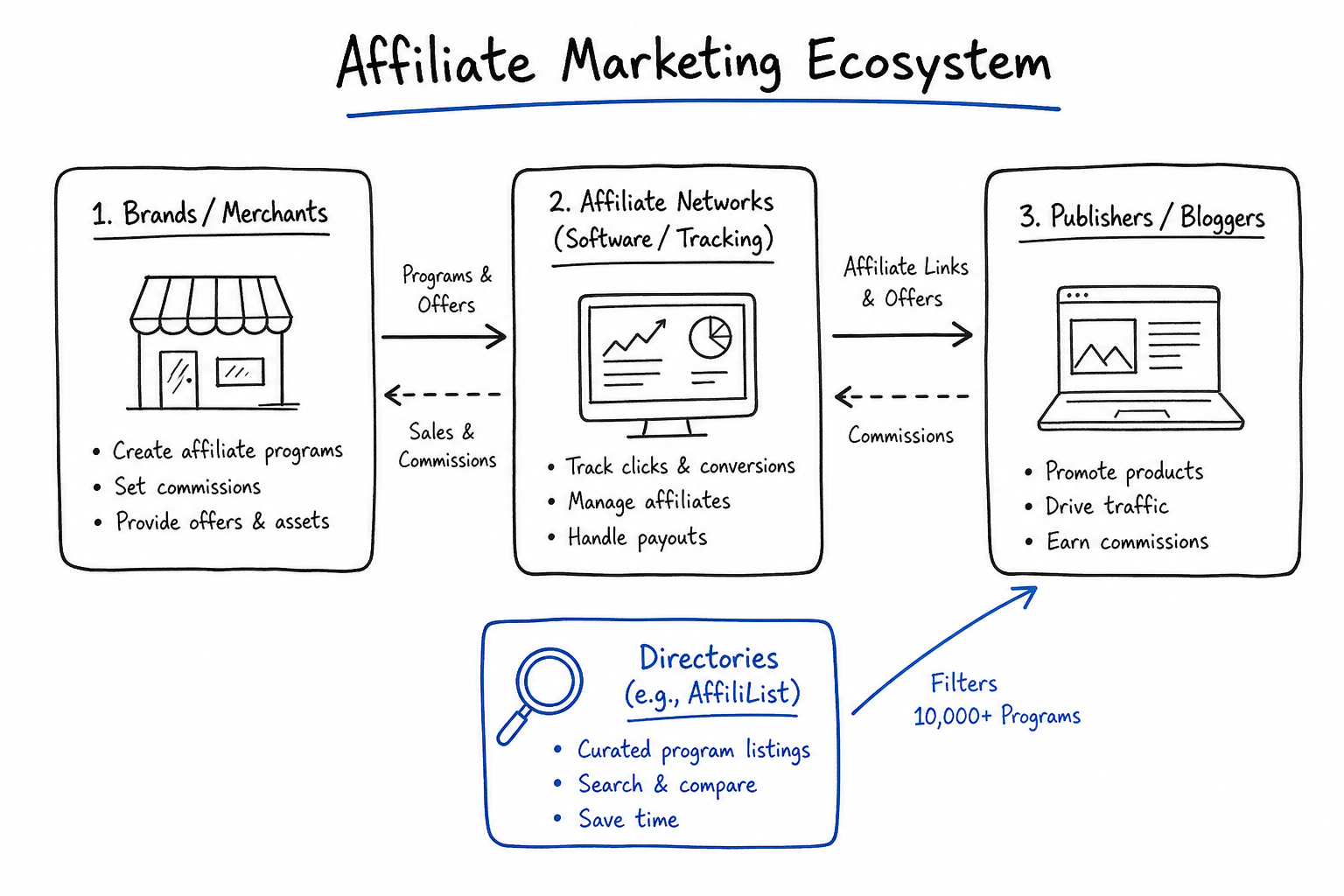
Before diving into specific recommendations, you need to understand how the affiliate industry is structured. Many beginners confuse affiliate networks with affiliate programs.
- Affiliate Networks (Platforms): These are third-party software platforms (like Impact, ShareASale, or CJ Affiliate) that host thousands of individual brand programs. They handle the tracking links, the cookie management, the tax forms, and the payouts. You join the network first, then apply to individual merchants within it.
- Independent Affiliate Programs: These are programs run directly by a brand using white-label software (like Rewardful or PartnerStack). You apply directly through the brand’s website. Payouts are often handled via Stripe or PayPal.
- Affiliate Directories: Because finding individual programs across dozens of isolated networks is exhausting, professional marketers use directories. AffiliList serves as this central hub. Instead of creating accounts on five different networks just to see if a merchant offers a good rate, AffiliList provides a clutter-free, filtered database of over 10,000 verified affiliate programs—with a heavy focus on SaaS and digital tools—allowing you to see commission structures upfront.
 When evaluating any of these options, the math always comes down to two metrics: Commission Rate and Cookie Duration.
A $100 commission doesn't matter if the conversion rate is 0.1% and the tracking cookie expires in 24 hours. Conversely, a 10% commission on a $30/month SaaS product with a 90-day cookie and recurring lifetime payouts can easily build a $5,000/month income stream over a year.
Let’s look at the platforms and networks that actually deliver.
The 9 Best Blog Affiliate Programs for Content Creators
This list skips the outdated, clunky platforms that haven't updated their UI since 2010. We've focused on networks and platforms that offer reliable tracking, quality merchants, and creator-friendly payout thresholds.
1. Impact (Best Overall Affiliate Network)
Impact (formerly Impact Radius) has aggressively taken over the affiliate space in recent years by poaching top-tier brands from legacy networks. If you are a modern blogger, particularly in the tech, finance, or direct-to-consumer (DTC) space, you will inevitably need an Impact account.
The Vibe: Impact feels like modern software. The dashboard is intuitive, generating custom deep links takes two seconds, and their reporting is granular. They also allow for flexible contracting, meaning you can negotiate direct flat-fee sponsorships alongside performance-based affiliate commissions within the same dashboard.
Best For: Tech bloggers, finance creators, and premium lifestyle publishers.
Key Details:
- Commission Types: CPA, RevShare, Flat Fee, Hybrid.
- Cookie Duration: Varies heavily by merchant (typically 30 to 90 days).
- Payout Threshold: $10 (one of the lowest in the industry).
- Top Brands: Canva, AppSumo, HostGator, Adidas, Airbnb.
The Tradeoff: Because Impact hosts premium brands, merchant approval can be strict. Brands frequently auto-reject blogs that lack established traffic or a clear niche focus.
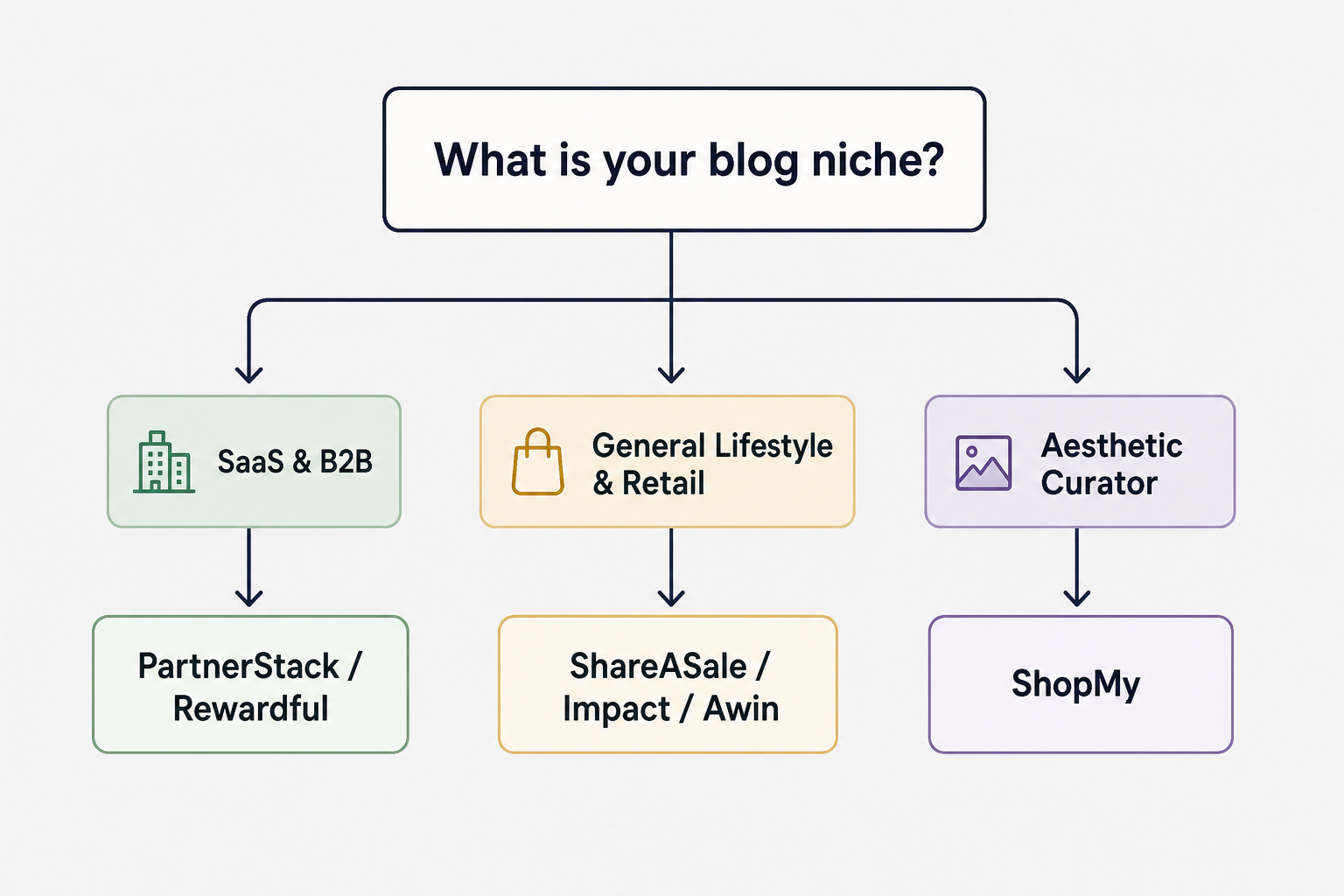
2. PartnerStack (Best for SaaS & Digital Tools)
If your goal is to build a profitable affiliate marketing blog that generates monthly recurring revenue (MRR), PartnerStack is your holy grail. It is purpose-built for B2B software and digital tools.
The Vibe: PartnerStack is tailored for software evangelists. Unlike retail networks where you earn a one-time 5% cut on a t-shirt, PartnerStack merchants frequently offer 20% to 30% recurring commissions for the lifetime of the customer.
Best For: B2B creators, marketing agencies, productivity bloggers, and niche SaaS reviewers.
Key Details:
- Commission Types: Mostly recurring RevShare (SaaS standard).
- Cookie Duration: Usually 90 days.
- Payout Threshold: $25 (Paid via Stripe or PayPal).
- Top Brands: Notion, Webflow, Evernote, Moosend, Monday.com.
The Tradeoff: SaaS conversion cycles are long. You might drive a click today, but the user might spend 14 days on a free trial before converting to a paid plan. You need patience to see PartnerStack revenue mature.
3. ShareASale (Best for Beginners & Niche Sites)
Acquired by Awin in 2017, ShareASale remains a massive, reliable workhorse for affiliate marketers. It doesn't have the prettiest interface, but it has one of the largest directories of small-to-medium merchants on the internet.
The Vibe: ShareASale is incredibly accessible. If you are struggling to figure out how to pick a niche for affiliate marketing in 5 steps, browsing ShareASale's merchant categories will give you a masterclass in what’s profitable. From specialized gardening tools to niche HR software, it's all here.
Best For: Beginners, physical product reviewers, and highly specialized niche sites.
Key Details:
- Commission Types: CPA, Lead Gen, Sale.
- Cookie Duration: Merchant dependent (often 30-60 days).
- Payout Threshold: $50.
- Top Brands: WP Engine, MasterClass, Reebok, and thousands of indie retailers.
The Tradeoff: The platform’s UI is notoriously dated, and because they accept so many merchants, you have to sift through low-quality programs to find the gems. (This is where using a curation tool like AffiliList saves hours of research).
4. Skimlinks (Best for Automated Monetization)
If you run a massive editorial site, a news blog, or a community forum, manually generating affiliate links for every single product mention is impossible. Skimlinks solves this by automating the process.
The Vibe: You install a snippet of Javascript on your blog. Whenever you link to a normal URL (e.g., target.com/product), Skimlinks intercepts the click and instantly routes it through their affiliate network. If a sale occurs, you get paid.
Best For: Publishers with massive archives of content, user-generated content (UGC) platforms, and lifestyle bloggers who mention hundreds of brands a month.
Key Details:
- Commission Types: CPA.
- Cookie Duration: Dependent on the end-merchant.
- Payout Threshold: $65.
- Top Brands: Over 60,000 merchants including Target, Walmart, and Sephora.
The Tradeoff: Skimlinks takes a 25% cut of your commissions in exchange for the convenience. If you are a high-volume publisher, that 25% represents a massive chunk of lost revenue compared to holding direct merchant relationships.
5. Rewardful (Best for Independent SaaS & Indie Hackers)
Rewardful isn’t a traditional network; it’s software that SaaS companies plug into their Stripe accounts to run affiliate programs. As a result, you will encounter Rewardful setups constantly if you promote digital tools.
The Vibe: Extremely clean and developer-friendly. Because it integrates directly with Stripe, tracking is incredibly accurate, and refund/churn clawbacks are handled automatically.
Best For: Tech writers, startup advisors, and creators in the best niches for affiliate marketing (SaaS & digital).
Key Details:
- Commission Types: Recurring SaaS commissions.
- Cookie Duration: Usually 30-60 days.
- Payout Threshold: Set by the individual SaaS brand.
- Top Brands: Podia, Transistor, Jasper, and hundreds of independent SaaS apps.
The Tradeoff: There is no central "Rewardful Marketplace" to browse. You have to find individual SaaS tools that use Rewardful and apply to them one by one.
6. CJ Affiliate (Best for Premium & Enterprise Brands)
CJ Affiliate (formerly Commission Junction) is one of the oldest and most respected networks. They cater almost exclusively to massive, global brands.
The Vibe: Corporate and professional. CJ offers incredible data granularity, including real-time transaction monitoring and deep-link automation. However, they are ruthless about performance.
Best For: Established bloggers with consistent, high-volume traffic in travel, finance, and enterprise software.
Key Details:
- Commission Types: CPA, Lead Gen.
- Cookie Duration: Merchant dependent.
- Payout Threshold: $50 (Direct Deposit).
- Top Brands: Barnes & Noble, IHG Hotels, TurboTax, Overstock.
The Tradeoff: If your account fails to generate a commission within a 6-month window, CJ will deactivate your publisher account. It is not friendly for beginners who are still building their audience.
7. Awin (Best for Global Audiences)
Awin is an absolute powerhouse in Europe and the UK, though it has a massive footprint globally. If your blog analytics show a strong international readership, Awin is indispensable.
The Vibe: Robust and slightly utilitarian. Awin provides excellent tools, including a Chrome extension that lets you generate affiliate links while browsing a merchant's website.
Best For: Fashion, finance, and travel bloggers with European or diverse global traffic.
Key Details:
- Commission Types: CPA.
- Cookie Duration: Merchant dependent.
- Payout Threshold: $20.
- Top Brands: Etsy, AliExpress, HP, Under Armour.
The Tradeoff: Awin requires a $5 screening fee when you apply to be a publisher. The fee is refunded to your account once you are approved, but it serves as a barrier to deter spam accounts.
8. Amazon Associates (Best for Physical Goods & High Conversion)
No list is complete without Amazon Associates. Despite multiple commission rate cuts over the years, it remains a staple for one simple reason: unmatched conversion rates.
The Vibe: Utilitarian and strict. Amazon converts better than almost any other site on the internet because users already have their credit cards on file and trust the shipping logistics.
Best For: Consumer tech reviewers, lifestyle bloggers, hobbyist sites, and any niche reliant on physical products.
Key Details:
- Commission Types: Flat percentage based on product category (1% to 10%).
- Cookie Duration: 24 hours.
- Payout Threshold: $10.
- Top Brands: Anything sold on Amazon.
The Tradeoff: The 24-hour cookie is brutal. Furthermore, commission rates in major categories like electronics sit at a dismal 1% to 3%. However, you benefit from the "Halo Effect"—if a user clicks your link for a $10 book but ends up buying a $1,500 television within 24 hours, you get the commission for the television.
9. ShopMy (Best for Lifestyle & Curated Gear)
For years, rewardStyle (LTK) dominated the lifestyle and fashion blogging space. Recently, ShopMy has emerged as a much cleaner, more creator-friendly alternative that works exceptionally well for standalone blogs.
The Vibe: Highly aesthetic. ShopMy allows creators to build beautiful digital "shelves" of their favorite products and easily embed them into blog posts or link them on social media.
Best For: Beauty, fashion, home decor, and aesthetic lifestyle creators.
Key Details:
- Commission Types: CPA.
- Cookie Duration: Varies by merchant.
- Payout Threshold: No minimum threshold for bank transfers.
- Top Brands: Sephora, Ulta, Nordstrom, Revolve.
The Tradeoff: ShopMy is heavily geared toward physical consumer goods and visual aesthetics. It has zero utility if you are in the B2B, finance, or software niches.
The Affiliate Monetization Workflow Checklist
Once you’ve selected your networks, the real work begins. Top-tier publishers don’t just drop links and pray; they follow a strict monetization workflow. In a deep-dive by online business strategist Online Media Masters, the focus is entirely on intent matching rather than volume.
If you want to turn a side hustle into $1k/mo, follow this deployment checklist:
Step 1: Target "Investigational" Keyword Intent
Readers searching for "What is email marketing?" are looking for a definition. They are top-of-funnel and highly unlikely to buy software today. Readers searching for "ConvertKit vs ActiveCampaign" have their wallets out.
Focus your affiliate efforts on middle-to-bottom of funnel content:
- Comparison Posts: "Tool A vs Tool B"
- Review Posts: "Tool A Review (2026): Is it worth it?"
- Alternative Posts: "7 Best Alternatives to Tool A"
- Use-Case Tutorials: "How to automate your accounting using [Affiliate Tool]"
Step 2: Implement Contextual Links Over Banners
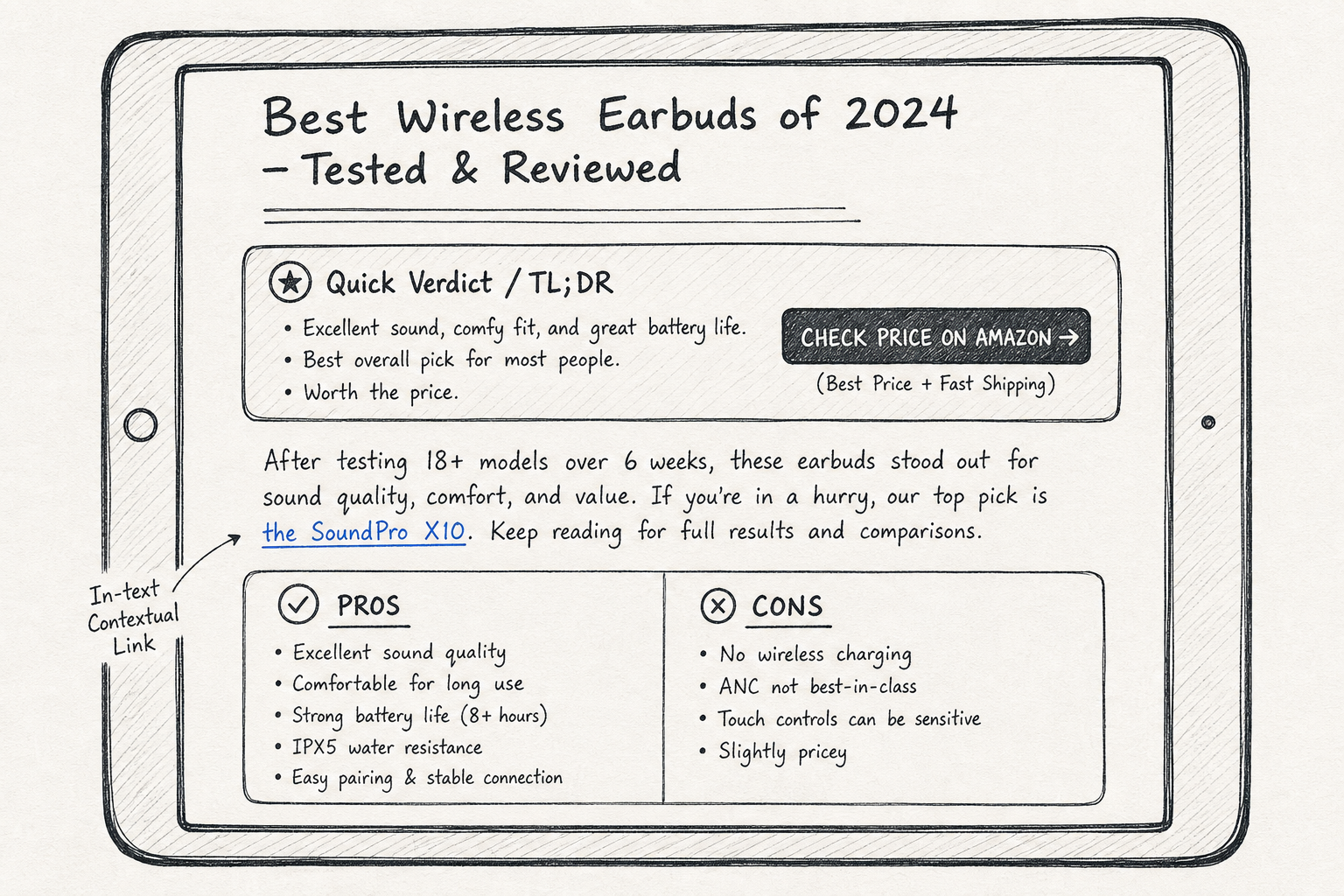
Banner blindness is real. Readers instinctively ignore the sidebar and header images. Your highest converting links will always be in-text hyperlinks placed naturally within the context of a sentence.
Mistake: "Click here to buy HubSpot." Correct: "If you are struggling with pipeline visibility, we recommend moving your team to a unified CRM like HubSpot, which natively tracks lead scoring."
Step 3: Utilize Quick Verdict Boxes
The harsh reality is that 70% of your readers will never read past the second heading. They are skimming for a fast answer.
Place a "Quick Verdict" or "TL;DR" box immediately after your introduction. Include your top affiliate pick, a two-sentence justification, and a clear call-to-action button. According to data from agencies like BentoNow, bringing the conversion event higher up the page drastically improves click-through rates.
The Truth About "High Paying" vs "High Converting"
When new marketers look for high paying affiliate programs, they often make a critical mathematical error. They chase $500 flat-rate commissions for enterprise software that takes 6 months and a dedicated sales team to close.
As a blogger, your superpower is low-friction, self-serve conversions.
Would you rather promote a $2,000 course that pays a 50% commission ($1,000 payout) but converts at 0.05%, or a $30/month SaaS tool that pays 30% recurring ($9/month) but converts at 4%?
If you send 1,000 clicks:
- High-Ticket Offer: 1,000 clicks * 0.05% = 0.5 sales. (You earn $0).
- SaaS Offer: 1,000 clicks * 4% = 40 sales. You earn $360 this month, and if they stay subscribed for a year, those same clicks are worth $4,320.
This is why directories like AffiliList heavily prioritize SaaS and digital tools. The friction to convert on a 14-day free trial is incredibly low, and the lifetime value (LTV) of the referral provides stable, compounding income.
Staying Compliant and Protecting Reader Trust
Trust is your only moat as a content creator. The moment readers feel you are pushing inferior products just for a commission, they will bounce.
Operating a legitimate affiliate blog requires strict adherence to legal and ethical guidelines. (If you're wondering is affiliate marketing legit?, the answer is yes—but only when run transparently).
- Always use FTC Disclosures: You must clearly state your affiliate relationships before the first affiliate link appears. A simple "This post contains affiliate links, meaning we may earn a commission if you purchase through them" at the top of the article is sufficient.
- Tag Links Correctly: Google requires all affiliate links to use the
rel="sponsored"orrel="nofollow"HTML tag. Passing organic link juice through paid affiliate links can result in a manual penalty for your blog. - Only Promote What You've Verified: As Brock McGoff notes in his lifestyle monetization reviews, readers can easily spot a fake review. If you haven't used the tool or physically held the product, don't write a definitive review on it. Synthesize real user experiences instead.
FAQ: Blog Affiliate Programs
How much traffic do I need to apply to affiliate networks? It varies. Platforms like ShareASale and Amazon Associates will approve brand new blogs with zero traffic (though Amazon requires you to make 3 sales within 180 days to keep the account). Premium networks like Impact or direct B2B programs often look for at least 1,000 to 5,000 monthly organic visitors to prove you are a legitimate publisher.
Can I use affiliate links on social media instead of a blog? Yes. Many programs allow social media distribution. If your primary platform is visual, check out our guide on setting up an affiliate marketing program for Pinterest. However, owning your own blog protects you from sudden algorithm changes that can wipe out a social media following overnight.
Are there careers built entirely around affiliate management? Absolutely. As you scale, you'll realize that managing these networks is a massive operational task. Brands actively hire affiliate managers to recruit bloggers. If you want to see the other side of the industry, check out 9 affiliate marketing jobs for 2026.
What are the most profitable niches right now? The wealth, health, and software spaces consistently offer the highest payouts. For a deeper breakdown of specific industries, review the 7 most profitable affiliate marketing niches to target this year.
Final Thoughts on Scaling Your Partnerships
Transitioning from a hobbyist blogger to a professional affiliate marketer requires treating your content like a conversion engine.
Stop relying entirely on 1% Amazon payouts or hoping a random banner ad pays your hosting bill. By integrating top-tier platforms like Impact, PartnerStack, or Rewardful, you align your content with high-value digital products that actually reward you for the traffic you generate.
The next step is to audit your current top-performing blog posts. Identify the tools, services, or products you are already mentioning naturally. Then, skip the fragmented Google searches and use a comprehensive directory like AffiliList to instantly look up those brands, verify their commission rates, and find the most lucrative program to join. Replace your standard links with tracked affiliate URLs, and let the compounding math work in your favor.