
Book Affiliate Marketing: 5 Tips to Double Commissions
Struggling with low book commission rates? Discover 5 actionable tips to double your book affiliate marketing earnings through deep linking and program layering.

Selling books through affiliate links feels like a numbers game. With standard commissions hovering between 3% and 5% per physical copy, earning a substantial income requires either massive traffic or a fundamental shift in strategy. Many beginners quit early, wondering if book affiliate programs are worth the effort. The reality is that the difference between generating enough for a monthly coffee and building a five-figure revenue stream comes down to tracking, deep linking, and strategic program layering.
Most affiliates make the mistake of defaulting to a single giant e-commerce retailer. They paste generic links, ignore mobile user experience, and leave money on the table when their audience buys an audiobook or a premium hardcover instead of a paperback.
To double your commissions, you have to transition from a casual link-dropper to a strategic partner. This means addressing the specific needs of your audience segment—whether you are an author monetizing a backlist, an influencer building a BookTok brand, or a niche publisher reviewing literature.
Here are five practitioner-tested tips to optimize your book affiliate marketing strategy and maximize your earnings.
Tip 1: Diversify Your Affiliate Stack (The Layering Method)
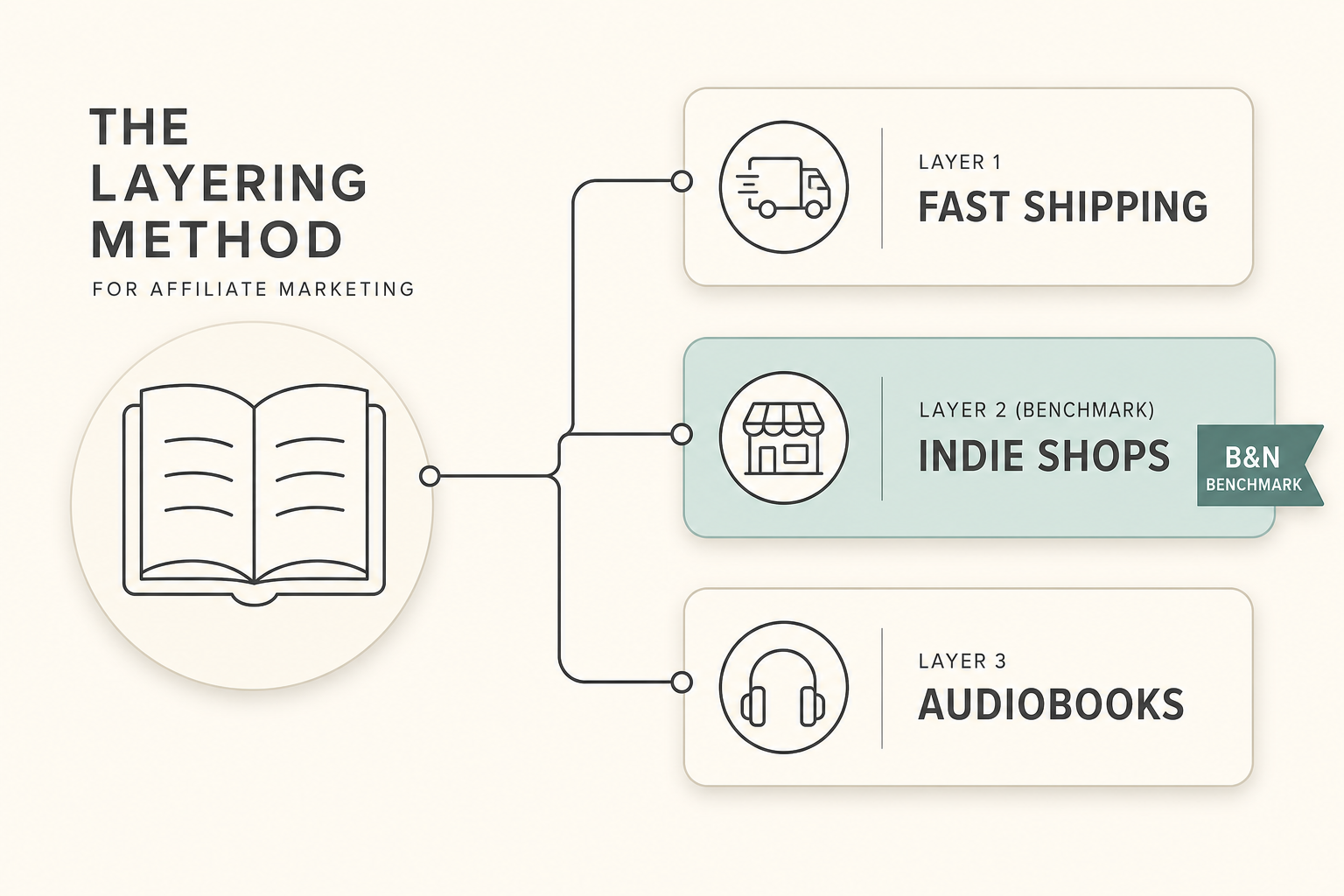
Relying on a single affiliate program is a critical failure mode in book marketing. Different readers have drastically different purchasing behaviors. Some want the absolute lowest price with two-day shipping, some want to support independent bookstores, and others only consume audiobooks during their commute.
By "layering" your affiliate stack, you provide multiple purchasing options for a single title, drastically increasing your conversion rate.
The B&N Benchmark
When building your stack, the Barnes & Noble Affiliate Program serves as a benchmark for transparency and brand trust. Managed through CJ Affiliate, B&N offers a compelling alternative to standard retailers. They provide solid cookie durations, reliable tracking data, and an interface that seasoned marketers trust. Using B&N as your baseline physical book option helps capture buyers who prefer established, recognizable bookstore brands over generic online marketplaces.
The Ethical Alternative
For audiences sensitive to corporate consolidation, Bookshop.org is a powerful addition. Bookshop.org rewards affiliates with a flat 10% commission while financially supporting local, independent bookstores. If your audience is composed of literary fiction readers or indie-publishing advocates, leading with a Bookshop link often results in higher conversion rates despite the lack of free next-day delivery.
The Used and Audiobook Angles
Never assume a reader wants a brand-new physical copy. Include options for discounted used books and digital audio.
Consider this layering strategy for your site's book reviews:
- Primary Link: Barnes & Noble (for standard physical copies and brand trust)
- Alternative 1: Bookshop.org (for indie supporters and a higher 10% commission)
- Alternative 2: Audible or Libro.fm (for audiobook listeners)
- Alternative 3: ThriftBooks or Better World Books (for budget-conscious students or bulk buyers)
Rather than cluttering your text with raw links, build a compact, visually appealing "Where to Buy" comparison box at the end of your reviews.
Tip 2: Master Mobile Tracking and Deep Linking
If you are promoting books on social media, the vast majority of your audience is browsing on mobile devices. This introduces a massive technical hurdle: the in-app browser trap.
When a user clicks an affiliate link inside an app like Instagram, TikTok, or YouTube, it typically opens in an integrated, web-view browser rather than the native shopping app (like the Amazon or Nook app). The user is rarely logged into their retail account in this web-view. Faced with a friction-heavy login screen, they abandon the cart, open the retailer app natively, search for the book manually, and buy it.
When this happens, your tracking cookie breaks. You drove the sale, but you lose the commission.
Implementing Deep Links
To solve this, you must use deep linking tools. Deep links detect the user's device and automatically force the native application to open on their phone, passing your affiliate tracking data along with it.
- For Influencers: Tools like URLgenius or Geniuslink allow you to convert standard affiliate links into deep links. When a user taps the link on mobile, it launches the retailer's app directly to the product page.
- Data Attribution: Deep linking dramatically improves attribution. By bypassing the mobile web browser, your conversion data becomes far more accurate, allowing you to see exactly which social media posts are driving actual revenue.
Do not launch another social media campaign until you have tested your links on an incognito mobile device to ensure they route correctly without demanding a fresh login.
Tip 3: Target the "Fiction Binge" Niche
While non-fiction books (like business or self-help) often command higher price points, the real volume in book affiliate marketing lies in the fiction niche.
Fiction readers—particularly in categories like romance, sci-fi, fantasy, and LitRPG—are high-volume consumers. A dedicated fantasy reader might finish three to five books a week. When they finish book one of a gripping series, they immediately search for book two.
The Box Set Strategy
Selling a single $9.99 paperback yields a negligible commission. To increase your Average Order Value (AOV), target your audience with box sets and series bundles.
- Promote the Series, Not the Book: Instead of reviewing book three of a popular sci-fi series, review the entire series and link to the premium hardcover box set.
- Pre-orders: Fiction readers are highly motivated by exclusive pre-order bonuses. Tracking upcoming releases from popular authors and pushing pre-order affiliate links can generate a massive spike in commissions before a book even hits the shelves.
- Target Sub-Genres: Do not try to be a generic "book blogger." Niche down into specific, hungry sub-genres. A site dedicated entirely to "Spicy Dark Romance" or "Hard Sci-Fi Space Operas" will build a returning audience that trusts your specific recommendations and uses your links repeatedly.
Tip 4: Build Segment-Specific Funnels
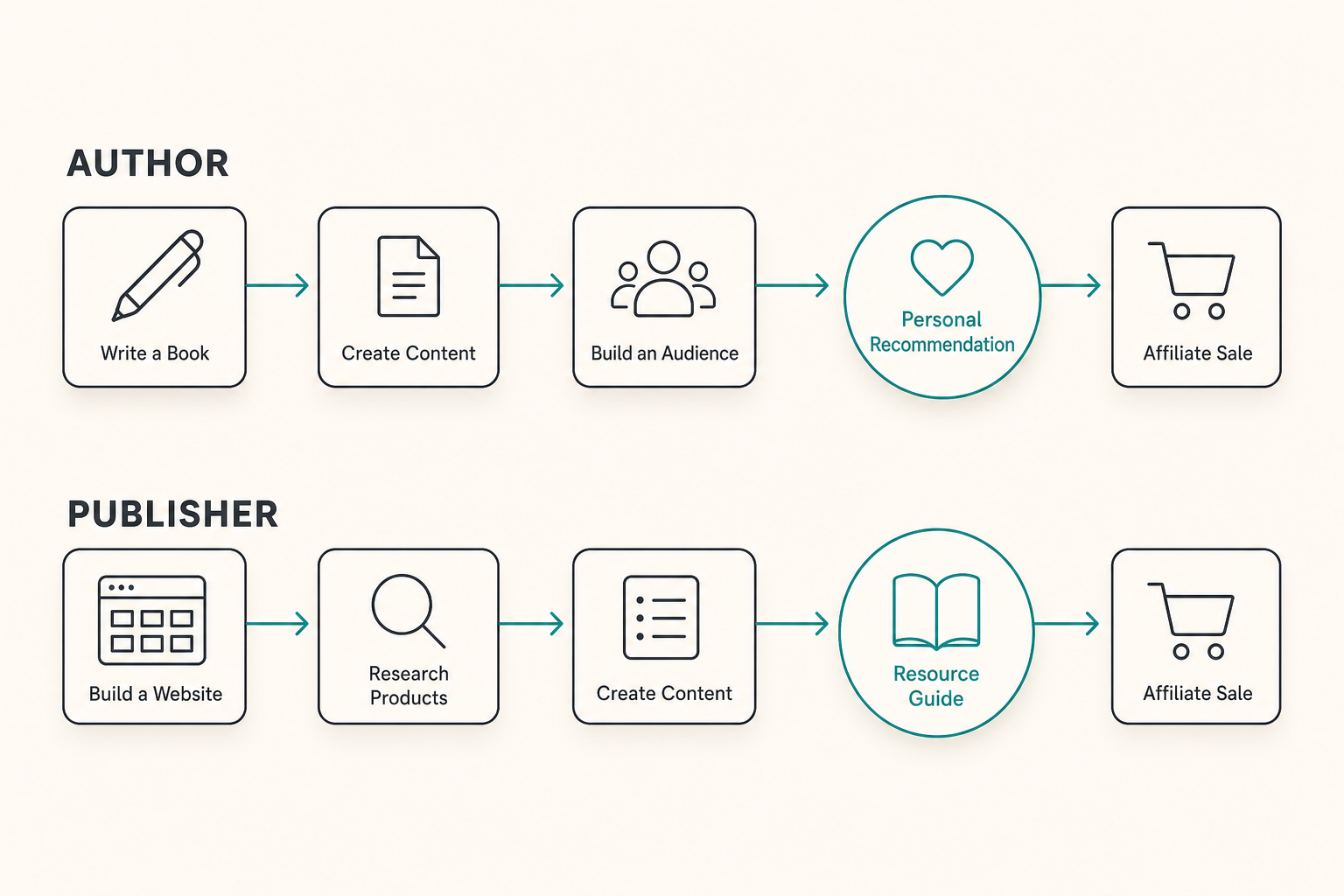
Your strategy must align with your specific segment. The way an author uses affiliate links is entirely different from how a niche site publisher does.
For Authors (Monetizing the Backlist)
Authors should always use affiliate links when directing fans to buy their own books. If a publisher is taking the lion's share of your royalties, you can claw back an additional 4% to 10% simply by routing your social media followers through your own affiliate links. Furthermore, authors can create a "Recommended Reading" page on their website, curating a list of similar titles in their genre, creating an entirely passive income stream.
For Influencers (BookTok and Bookstagram)
Influencers live and die by the "link in bio." Because you cannot put clickable links in individual Instagram posts or TikToks (without specific ad spend), your bio link must act as a seamless storefront. Avoid sending users to a cluttered, generic link tree. Instead, build a dedicated mobile-optimized landing page on your own domain. Categorize your recommendations clearly: "Books I Mentioned This Week," "Favorite Sci-Fi Reads," and "Current Deals."
For Niche Publishers and Review Sites
Publishers should focus heavily on high-intent search engine optimization (SEO). Instead of writing a generic review of a popular book (which will be buried by massive publications), target long-tail, comparative keywords.
Examples of high-intent search queries:
- "Books like [Popular Book] but with [Specific Trope]"
- "Best sci-fi books about time travel 2026"
- "Is the premium illustrated edition of [Book] worth it?"
Readers searching for these terms already have their credit cards out; they just need a final push and a convenient link.
Tip 5: Leverage Performance Data for Offer Optimization
Treat your book affiliate marketing like a software-as-a-service (SaaS) campaign. Professional marketers don't just drop links; they analyze performance data to optimize their offers continually.
If your dashboard shows 1,000 clicks but only 5 sales, you have an intent mismatch or a broken mobile experience. If you have a high conversion rate but low overall earnings, your AOV is too low, and you need to pivot to higher-priced items like hardcovers, limited editions, or coffee table books.
Centralizing Your Data
Managing data across CJ Affiliate, Impact, and direct retail programs can become chaotic. Utilizing dedicated tracking software helps consolidate this information. As highlighted in a breakdown of best book affiliate programs to maximize earnings, using tools like Strackr allows you to pull APIs from multiple networks into a single dashboard.
When looking for new programs to promote, avoid the trap of signing up blindly. Directories like AffiliList provide a streamlined way to discover high-converting offers across categories. By presenting commission structures, payout terms, and program specifics without requiring tedious sign-ups, you can quickly evaluate if a new niche retailer is worth integrating into your stack.
Top Book Affiliate Programs to Maximize Earnings
To effectively layer your strategy, you need to know the specifics of the top programs available. Here is a brief comparison matrix of the most reliable options.
| Program | Average Commission | Cookie Duration | Best For... |
|---|---|---|---|
| Bookshop.org | 10% | 48 Hours | Indie supporters, literary fiction, high payout percentages. |
| Barnes & Noble | 2% - 4% | 24 Hours | Mainstream appeal, brand trust, wide physical availability. |
| Books-A-Million | 5% | 30 Days | Long cookie duration, bargain hunters, specific regional loyalty. |
| Better World Books | 5% - 8% | 45 Days | Used books, academic texts, eco-conscious readers. |
Note on Books-A-Million: The Books-A-Million affiliate program is often overlooked, but its generous 30-day cookie duration provides a distinct advantage over the typical 24-hour windows offered by larger retailers, capturing sales from readers who take their time to decide.
Frequently Asked Questions (FAQ)
How long is the cookie duration for most book affiliate programs?
The industry standard is notoriously short. Major retailers often offer a 24-hour cookie, meaning the user must make a purchase within a day of clicking your link. However, alternative programs like Books-A-Million (30 days) and Better World Books (45 days) offer much longer windows. This is why program layering is crucial.
Can I use book affiliate links directly on social media instead of a blog?
Yes, but with caveats. You must check the specific terms of service for each program. Amazon, for example, requires you to register the exact social media handle where you will post links, and the account must be public. Furthermore, as discussed, direct social links suffer from mobile browser attribution loss unless you use deep linking tools.
What are the requirements to join as an Influencer vs. Web Publisher?
Most networks treat both similarly during the application process, but they vet the traffic source differently. Influencers need a demonstrable, engaged following (usually verified by follower count and engagement rate), while web publishers need an established website with original content and organic search traffic. Blank or newly created sites are routinely rejected by strict managers like CJ Affiliate.
Next Steps: Stop Leaving Money on the Table
It is entirely possible to make a lucrative income promoting books, including leveraging Amazon affiliate books, provided you stop treating it as a casual hobby.
Start by auditing your top ten highest-trafficked posts or videos today. Replace single-retailer links with a multi-option "Where to Buy" section. Run your mobile links through a deep-link generator, and pivot your next piece of content toward a high-AOV box set or premium edition. By treating your book recommendations with the rigor of a professional affiliate stack, you will naturally double your commissions without needing to double your audience.