
5 High-Yield Cost Per Click Affiliate Programs for 2026
Discover the 5 highest-yield cost per click (CPC) affiliate programs for 2026. Learn how to optimize traffic, avoid click fraud, and maximize your baseline RPM.
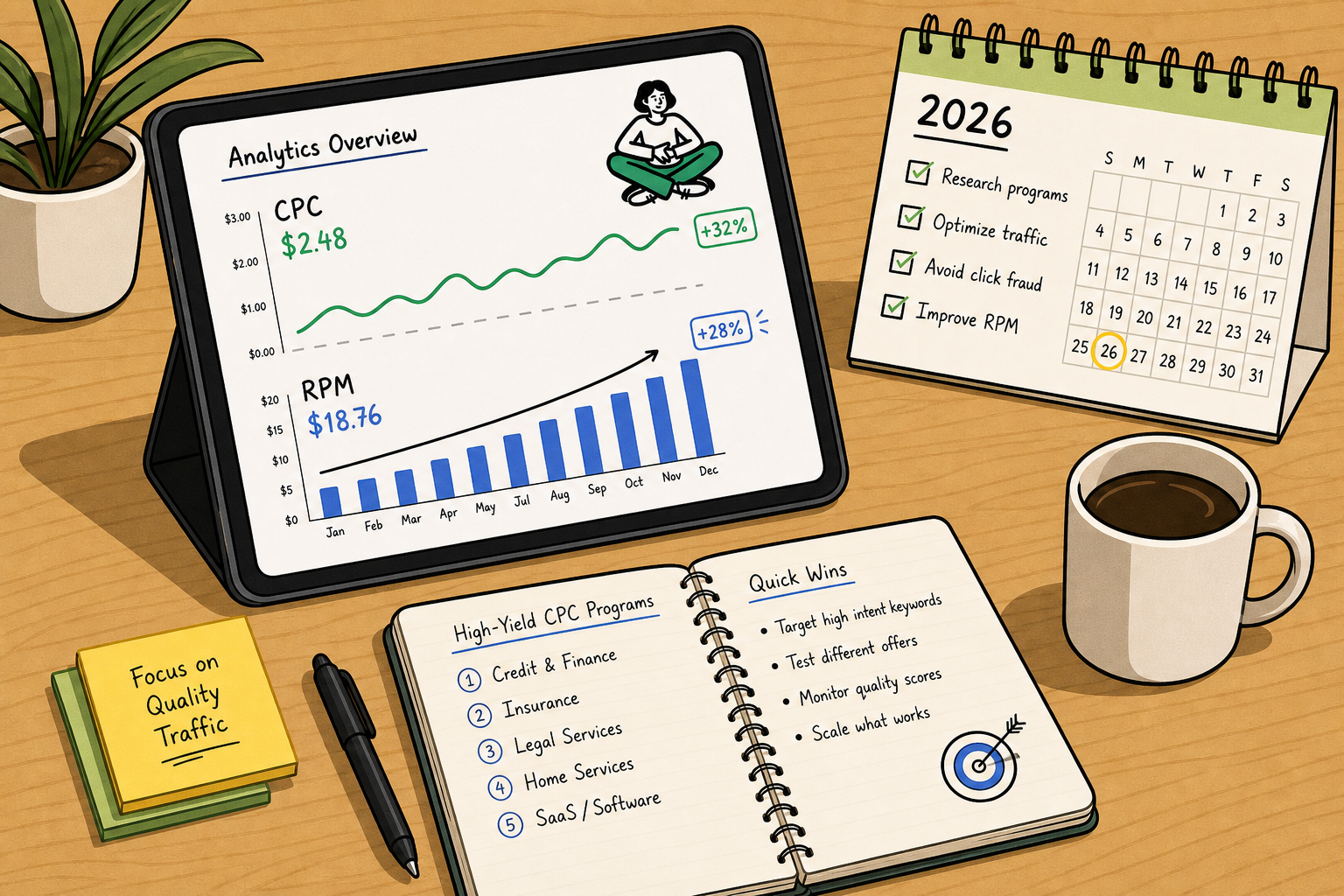
You pour hours into keyword research, write a highly targeted article, and finally get a visitor to click your affiliate link. They land on the merchant’s site, browse around for ten minutes, add an item to their cart, and then abandon it because their dog barked at the mail carrier.
Under a traditional Cost Per Action (CPA) or Revenue Share model, you earn exactly zero dollars for that interaction.
This exact scenario is driving many niche site operators and media buyers to re-evaluate their monetization strategies. When conversion rates drop due to economic tightening or complex checkout flows, relying solely on end-user purchases becomes fragile. The alternative is getting paid for the introduction itself. By leveraging Cost Per Click (CPC) models, you transfer the burden of the final sale back to the merchant. If you deliver a legitimate, intent-driven click, you get paid.
Navigating the CPC ecosystem requires a different playbook than traditional affiliate marketing. The payouts per interaction are much smaller, meaning volume, click-through rate (CTR) optimization, and strict traffic quality control are your primary levers.
This guide breaks down the mechanics of the CPC model, outlines the five highest-yielding cost per click affiliate programs currently dominating the market, and details the exact operational frameworks required to scale them profitably in 2026.
The Mechanics of Cost Per Click (CPC) Affiliate Marketing
In a standard performance marketing arrangement, commissions are triggered by a distinct conversion event—a software subscription, an e-commerce purchase, or a verified lead form submission. The CPC model eliminates that backend dependency. The merchant or ad network agrees to pay a fixed or dynamic rate simply for sending a unique user to their landing page.
Merchants utilize this model to aggressively build top-of-funnel awareness or feed their own highly optimized retargeting pixels. They accept the risk that not every click will convert, blending the cost across their overall customer acquisition metrics.
For publishers, the appeal is mathematical predictability. If your site generates 10,000 visitors a month, and you optimize your placements to achieve a 5% CTR on a CPC link paying $0.50, your revenue floor is easily calculated. You no longer have to worry if the merchant’s landing page is running a broken A/B test or if their payment gateway goes down.
However, CPC networks enforce ruthless quality standards. Because they pay upfront for traffic, they deploy aggressive fraud detection algorithms to identify bot traffic, click farms, and accidental clicks. Sending low-quality traffic will result in immediate account termination.
If you are wondering is affiliate marketing legit when dealing with CPC networks, the answer is yes, provided you strictly adhere to their traffic guidelines and focus on genuine user intent.
CPC vs. CPA: Aligning the Model with Your Traffic
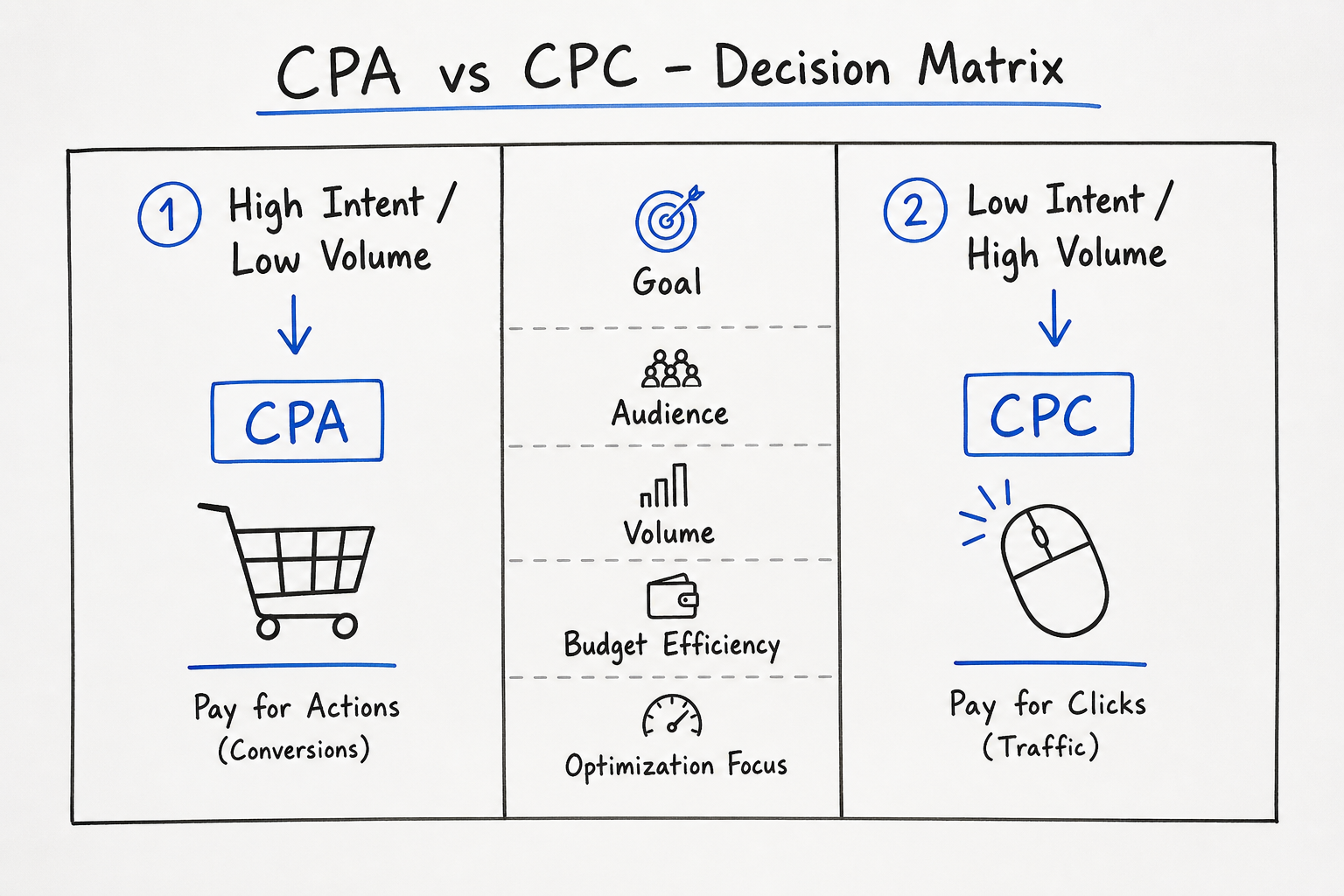
Choosing between Cost Per Click and Cost Per Action is rarely a binary decision. Most sophisticated publishers utilize a hybrid approach, reserving CPC for broad, top-of-funnel content and deploying CPA for high-intent "buyer" keywords.
To make an informed decision on where to route your traffic, you have to understand the fundamental trade-offs between the two models.
The Case for Cost Per Click (CPC)
CPC thrives in high-volume, low-to-medium intent environments. If you operate an entertainment blog, a general news aggregator, or a broad lifestyle site, visitors are typically in a discovery mindset. They are casually browsing, not actively seeking a solution to purchase.
Advantages of CPC:
- Immediate Monetization: You earn revenue immediately upon the click, regardless of the user's subsequent actions.
- Lower Friction: Users do not need to pull out a credit card or fill out a 10-field form for you to get paid.
- Predictable Revenue Scaling: Traffic increases correlate directly with revenue increases, assuming CTR remains stable.
Disadvantages of CPC:
- Micro-Earnings: Individual clicks pay cents or single dollars, requiring massive traffic volume to generate substantial income.
- Strict Quality Control: Networks actively monitor conversion rates on the backend. If your clicks never lead to merchant sales, your CPC rate will be downgraded, or you will be removed from the program.
The Case for Cost Per Action (CPA)
CPA dominates when traffic is highly targeted and users are nearing a purchasing decision. If you rank for "best CRM software for real estate agents," sending that highly valuable traffic to a $1 CPC link is a massive misallocation of resources.
Advantages of CPA:
- High Payouts: You can easily find 11 high paying affiliate programs for $500+ commissions that dwarf any CPC earnings from a single visitor.
- Lower Volume Requirements: A site with only 1,000 highly targeted visitors a month can generate full-time income if the CPA offers are lucrative.
- Long-Term Cookie Tracking: Many CPA programs offer 30-to-90-day cookie durations, allowing you to earn commissions even if the user delays their purchase.
Disadvantages of CPA:
- High Friction: The user must complete a complex action (a purchase or detailed sign-up).
- Unpredictable Variations: Seasonal buying trends, merchant website redesigns, and economic downturns can suddenly destroy your conversion rates.
The 5 Best Cost Per Click Affiliate Programs for 2026
The landscape of pay per click networks is divided into two distinct categories: native/display ad networks that function as CPC partners for publishers, and direct affiliate networks that offer pure CPC payout models.
When evaluating these platforms, you must look beyond the advertised maximum click rate. Effective yield is determined by fill rate (how often an ad or link is available for your user), contextual relevance, and the stringency of their tracking platforms.
Here are five high-yield CPC programs that offer verified payouts and reliable tracking infrastructure.
1. Skyscanner Affiliate Network (Travel Niche)
The travel sector operates one of the most robust CPC ecosystems in the world. Consumers rarely book a flight on their first search; they compare prices across multiple aggregators.
Skyscanner capitalizes on this behavior by operating a highly efficient CPC affiliate program. When a user searches for a flight on your embedded Skyscanner widget or clicks a deep link and is redirected to an airline or online travel agency (OTA), you earn a commission for that exit click.
Why it works in 2026: Travel demand remains inelastic, but consumer price sensitivity is high. Users will readily click outbound links to check alternative pricing, driving up your CTR.
- Ideal Traffic: Travel bloggers, digital nomad guides, localized itinerary sites.
- Payout Structure: Tiered CPC based on the destination airline/OTA and the geographic location of the user (Tier 1 traffic pays significantly more).
- Implementation: White-label search widgets, standard banners, and direct deep-linking APIs.
2. YieldKit (Automated In-Text Monetization)
For publishers who want a hands-off approach to CPC, YieldKit provides an automated solution that bridges the gap between traditional content and performance marketing. YieldKit’s script scans your content for brand names, product mentions, and relevant keywords, automatically converting them into affiliate links.
While they offer traditional CPA payouts, YieldKit heavily features CPC merchants looking for contextual traffic.
Why it works in 2026: Contextual link blindness is a real issue. Readers actively ignore traditional banner ads. By turning organic text into monetization vehicles, YieldKit captures high-intent clicks that feel natural to the reading experience.
- Ideal Traffic: Tech reviewers, fashion bloggers, lifestyle creators, and anyone heavily involved in best niches for affiliate marketing (SaaS & digital).
- Payout Structure: Hybrid CPC and CPA, heavily dependent on the advertiser's current budget allocation.
- Implementation: A single line of JavaScript added to your site header, which handles all link generation dynamically.
3. Ezoic (AI-Optimized Display CPC)
While often categorized purely as a display ad network, Ezoic functions as a massive CPC aggregator. It connects your site to thousands of advertising partners (including Google AdX) and uses machine learning to test ad placements, sizes, and colors on a per-user basis.
Ezoic is particularly notable because it completely removes the guesswork from CPC optimization. Instead of manually split-testing where to put a banner, their AI adjusts the layout based on whether the specific visitor is prone to clicking top-of-page banners or in-content links.
Why it works in 2026: Manual layout testing is obsolete. Ezoic's continuous optimization ensures you extract the maximum CPC value from every session without degrading the core user experience.
- Ideal Traffic: High-volume informational sites, news blogs, and broad profitable affiliate marketing niches where direct CPA offers are scarce.
- Payout Structure: Dynamic CPC and CPM, paid on a Net-30 basis.
- Implementation: DNS-level integration for maximum speed, or a standard WordPress plugin.
4. ClickDealer (Performance Marketing & Media Buying)
ClickDealer is a powerhouse in the performance marketing space, heavily favored by media buyers and arbitrageurs. While they are famous for their sweepstakes and CPA offers, they maintain a massive inventory of direct CPC campaigns, particularly in mobile-first verticals like app installs, utilities, and software.
They require an approval process that filters out novices, making them a premium partner for those who can prove their traffic quality.
Why it works in 2026: Mobile traffic continues to dominate consumer behavior. ClickDealer specializes in mobile-optimized CPC flows, ensuring that traffic from platforms like TikTok or native ad networks converts efficiently.
- Ideal Traffic: Media buyers, social media arbitrageurs, and owners of high-traffic mobile utilities.
- Payout Structure: Direct CPC, CPL, and CPA. Weekly payouts are available for high-volume partners.
- Implementation: Direct offer links, smart links (which auto-redirect based on user geography and device), and advanced API integrations.
5. Outbrain Amplify (Native Recommendation Networks)
You have seen Outbrain widgets at the bottom of major news sites, typically labeled "Sponsored Content" or "Recommended for You." While Outbrain is primarily an advertiser platform, their publisher side allows you to host these CPC widgets on your own site.
They serve highly engaging, sometimes click-baity, native ads that blend into your content's aesthetic. When your readers click these recommendations to read an external article, you earn a CPC payout.
Why it works in 2026: Native advertising circumvents traditional ad blockers more effectively than standard banners. The visual integration reduces "ad blindness," leading to significantly higher CTRs than traditional display formats.
- Ideal Traffic: News aggregators, viral content sites, and broad entertainment blogs.
- Payout Structure: Variable CPC based on the advertiser's bid for that specific audience segment.
- Implementation: JavaScript widget placed at the end of articles or within infinite scroll feeds.
Advanced Strategies: Maximizing Your CPC Yield
Signing up for a top-tier network is only the baseline. The delta between a publisher earning $500 a month and $5,000 a month on the exact same traffic volume comes down to rigorous placement optimization and traffic filtering.
1. Mastering Traffic Arbitrage
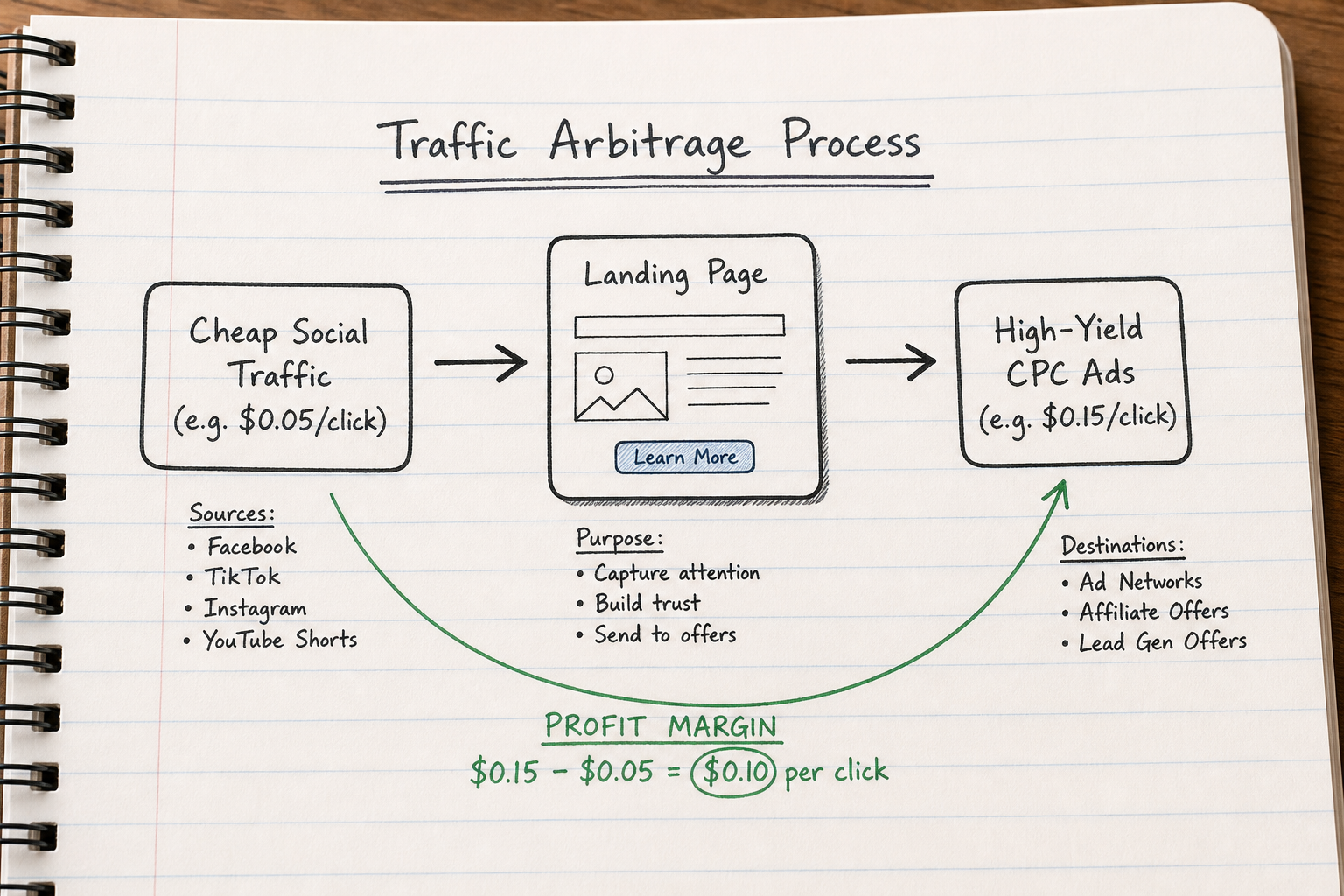
For advanced marketers, CPC isn't just a monetization method; it's an arbitrage vehicle. Arbitrage involves buying traffic at a very low cost (often from social networks or tier-2 search engines) and routing it to a page heavy with high-paying CPC links.
If you buy a click from Facebook for $0.05 and that user clicks two CPC ads on your site that pay $0.10 each, you have generated a profitable margin. This requires aggressive tracking software to ensure your metrics remain positive in real time. Platforms like Voluum provide advanced tracking for top pay per click programs, allowing media buyers to calculate their exact Return on Ad Spend (ROAS) down to the individual device and operating system.
2. Strategic Placement and Ad Density
The physical location of your CPC links dramatically dictates your click-through rate. However, overwhelming your reader with links will trigger ad fatigue and increase bounce rates.
Follow these placement rules for optimal yield:
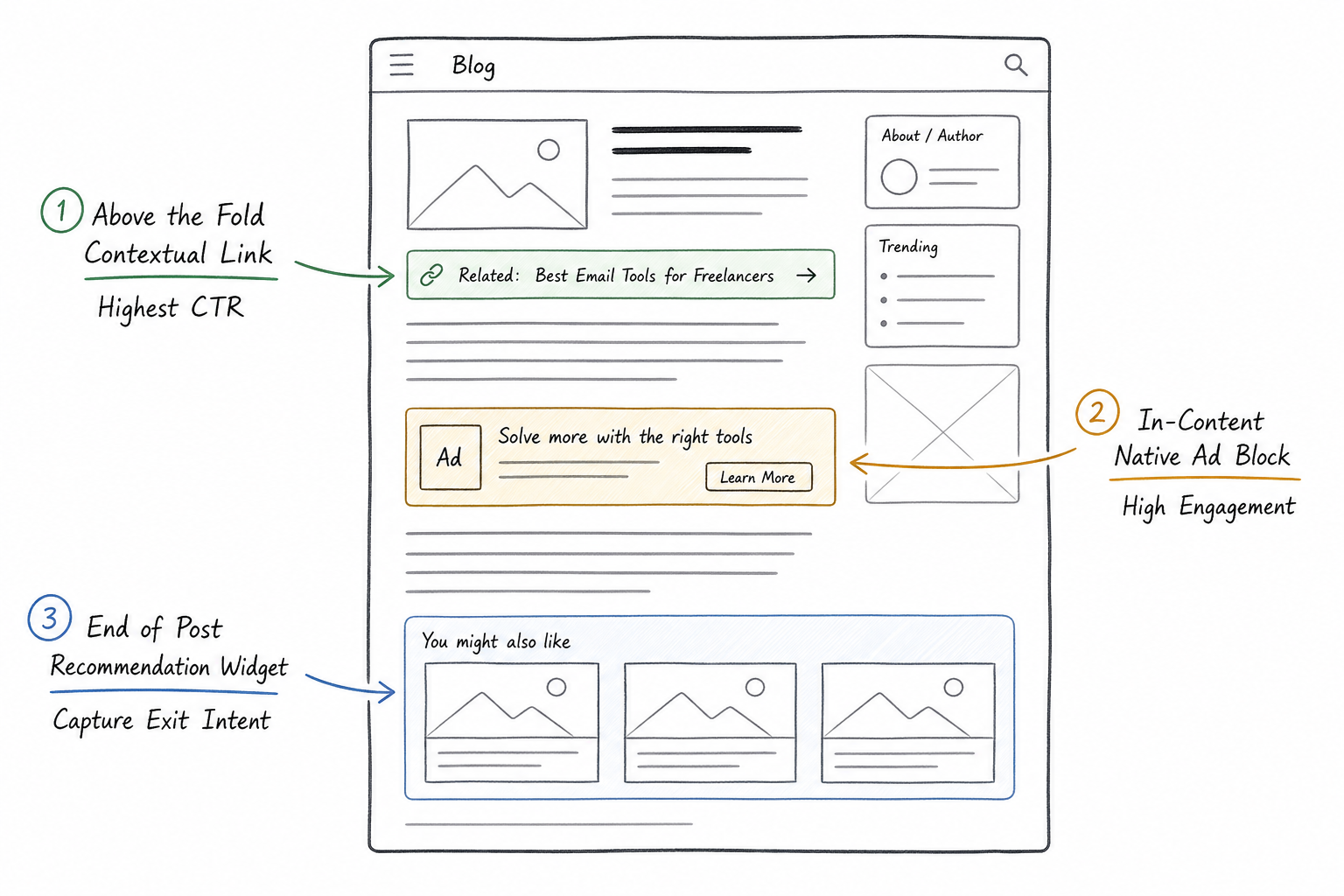
- Above the Fold: Place one high-performing native or contextual CPC link before the user has to scroll. This captures impatient users who want an immediate solution.
- End of Post (The "What's Next" placement): When a user finishes an article, they are looking for a new action. Placing a native recommendation widget (like Outbrain) exactly where the article text ends captures this transitionary intent.
- In-Content Contextual Anchors: Do not isolate affiliate links in standalone buttons. Embed them naturally within descriptive paragraphs.
3. Understanding Geographic Tiering
Not all clicks are valued equally by networks. Advertisers categorize traffic into distinct tiers based on the purchasing power of that region.
- Tier 1: United States, United Kingdom, Canada, Australia. Expect the highest CPC rates, often ranging from $0.20 to $2.00+ depending on the niche.
- Tier 2: Much of Western Europe, Japan, South Korea. Moderate CPC rates.
- Tier 3: India, parts of South America, and Africa. CPC rates often drop to fractions of a cent.
If your site receives predominantly Tier 3 traffic, pure CPC might not be viable. You may need to pivot toward broad CPA offers or explore a side hustle focused on higher-intent geographic targeting.
Navigating the Technical Side of CPC
To operate professionally in the CPC space, you must move beyond basic Google Analytics and understand the exact metrics networks use to evaluate your account.
The Relationship Between CTR, EPC, and RPM
Your dashboard will display several interconnected acronyms. Understanding how they influence each other is critical for diagnosing weak campaigns.
- Click-Through Rate (CTR): The percentage of visitors who click your affiliate link. If 1,000 people view a page and 50 click, your CTR is 5%.
- Earnings Per Click (EPC): This metric is more commonly associated with CPA (total earnings divided by total clicks), but in a CPC model, your EPC is simply the fixed or dynamic rate the network is paying you per interaction.
- Revenue Per Mille (RPM): The total revenue generated per 1,000 visitors to your site. This is the ultimate health metric for a CPC publisher.
If your CPC rate is locked, the only way to increase your RPM is to aggressively test page layouts to drive up your CTR.
Defending Against Click Fraud and Traffic Quality Bans
Affiliate networks are paranoid about click fraud. When advertisers pay for clicks, they expect humans with genuine intent. If a network detects anomalous behavior, they will withhold your payout and ban your account. There is rarely an appeals process.
Avoid these critical failure modes:
- Incentivized Clicking: Never ask your audience to "click the links to support the site." This violates the terms of service for virtually every network, including Google AdSense and other mainstream PPC affiliate programs.
- Accidental Clicks: Do not format your site so that users accidentally tap CPC links while trying to scroll on mobile devices. Networks track immediate "bounce-backs" (when a user clicks and hits the back button within one second). High bounce-back rates trigger manual account reviews.
- Bot Traffic: If you are buying cheap traffic from unverified sources to boost your numbers, you will inevitably import bot traffic. Use tracking software to filter and block suspicious IP ranges before they interact with your network links.
There are ongoing discussions across the industry regarding the strictness of these algorithms, with many publishers sharing mitigation strategies in community forums. You can find extensive historical documentation of these account defense strategies in affiliate marketing discussions on platforms like Reddit.
Choosing the Right Niche for CPC Monetization
Your choice of topic dictates the ceiling of your CPC earnings. Advertisers bid dynamically based on the lifetime value (LTV) of a customer in that specific sector.
If you build a site around "funny cat memes," the advertisers bidding on that traffic are likely selling cheap consumer goods or mobile games. The CPC will be exceptionally low.
Conversely, if you build a site around how to pick a niche for affiliate marketing focusing on B2B SaaS, enterprise software, or commercial insurance, advertisers are willing to pay a premium for every click, knowing a single conversion could be worth thousands of dollars.
High-Yield CPC Niches for 2026
- Financial Services: Credit cards, personal loans, and business banking.
- B2B Software: CRM platforms, HR software, and enterprise cybersecurity.
- Legal Services: Mass torts and personal injury resources.
- Education: Online degrees and specialized certification programs.
If you are currently evaluating the 7 most profitable affiliate marketing niches to target, always cross-reference the average CPC bids in Google Keyword Planner. High advertiser bids on Google Search directly translate to higher payout rates for publishers in third-party CPC networks.
Expanding Your Footprint: Beyond the Blog
While content sites are the traditional home for CPC links, modern affiliate marketers are leveraging alternative traffic sources to drive massive click volumes.
The Pinterest Arbitrage Model
Pinterest functions as a visual search engine, making it a highly effective top-of-funnel traffic driver. Because Pinterest users are in a discovery phase, they are highly prone to clicking through to external articles.
By setting up affiliate marketing on Pinterest, you can drive a steady stream of organic, visually-stimulated traffic to pages optimized specifically for CPC monetization. Create highly clickable pins (e.g., "10 Must-Have Travel Gadgets") and route that traffic to a landing page heavily monetized with YieldKit or Outbrain widgets.
Media Buying and Affiliate Careers
The technical skills required to profitably run CPC campaigns—split testing, data analysis, and media buying—are highly sought after by major brands. If you master the intricacies of tracking parameters and CTR optimization, you are not limited to being a solo publisher.
Many practitioners transition into lucrative in-house roles. There are currently numerous affiliate marketing jobs available for individuals who understand how to manage large-scale CPC budgets and optimize advertiser yield.
Frequently Asked Questions
How much can a beginner realistically make with CPC affiliate programs? Revenue is directly proportional to traffic volume and niche selection. A beginner site generating 5,000 visitors a month in a low-value niche might make $15 to $30 a month. The same traffic in a high-value finance niche could generate $100 to $250. CPC requires scale; it is a volume game.
Is it better to start with ClickBank or a CPC network? These serve different purposes. ClickBank relies heavily on traditional CPA and revenue share models, meaning you only get paid when a user actually buys a product. If your traffic has high buyer intent, ClickBank will yield significantly higher returns. If your traffic is broad and informational, a CPC network will provide more consistent, albeit lower, baseline revenue.
Do I need a custom website to get approved for premium CPC networks? Yes. While some networks allow direct linking from social media, premium platforms like top CPC affiliate networks require a fully developed, content-rich website with established traffic history, transparent privacy policies, and a professional layout.
The Final Word on CPC in 2026
Cost per click affiliate marketing is not a get-rich-quick mechanism. It is a highly analytical, volume-driven business model that rewards optimization, stringent tracking, and rapid iteration.
By selecting the right network for your specific traffic type, aggressively optimizing your placement density, and treating your traffic quality as your most valuable asset, you can build a highly predictable revenue stream that insulates your business from the volatility of traditional backend conversions. Focus on securing high-quality traffic, integrate one of the five networks outlined above, and begin testing your way to a higher baseline RPM.
To discover more high-converting platforms tailored to your audience, explore the verified directory at AffiliList and find the perfect program for your next campaign.