
Affiliate Program Database Alternatives for Databases Similar to Apdb for Affiliate M
Discover the top APDB alternatives for affiliate marketing. Compare SaaS directories, CPA aggregators, and sub-affiliate networks to boost EPCs.
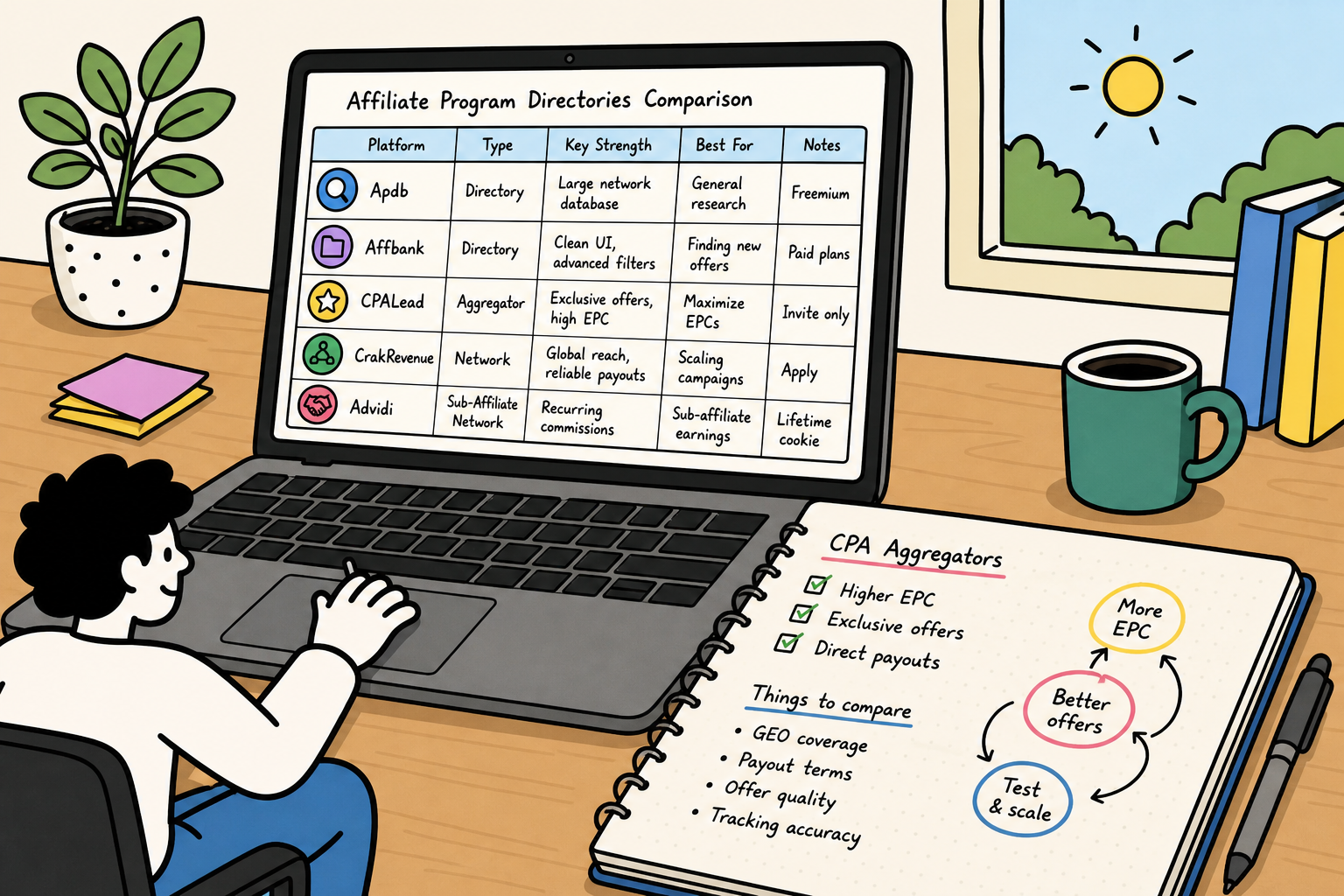
Finding high-converting affiliate offers manually is one of the most frustrating bottlenecks in publishing. Marketers frequently spend hours hopping between fragmented affiliate networks, clicking through dead merchant links, or attempting to decode obscure commission structures hidden behind gated application portals.
For years, platforms like APDB (Affiliate Program Database) served as a quick reference point for publishers looking to bypass manual search. However, as the affiliate ecosystem shifts toward recurring SaaS partnerships, direct brand programs, and specialized digital products, reliance on a single static directory often leaves marketers with outdated payout rates, expired promo links, or missed high-ticket opportunities.
Whether you are building an affiliate marketing side hustle or running a portfolio of content sites, having access to accurate, transparent, and regularly updated program databases directly dictates your earnings per click (EPC).
This guide evaluates the top databases similar to APDB, detailing how each directory operates, where their data originates, and how to choose the right aggregator for your specific monetization strategy.
What Makes an Effective Affiliate Program Database?
Not all affiliate directories provide equal value. A database is only as useful as its update frequency, search interface, and data accuracy. Before jumping into specific alternatives, evaluating what separates a modern research tool from a clutter-filled link farm establishes a baseline for comparison.
Traditional network portals require creators to sign up, wait for approval, and log into separate dashboards just to view commission rates and cookie durations. In contrast, a modern affiliate program database centralizes program specs across thousands of independent networks and in-house programs into a single searchable index.
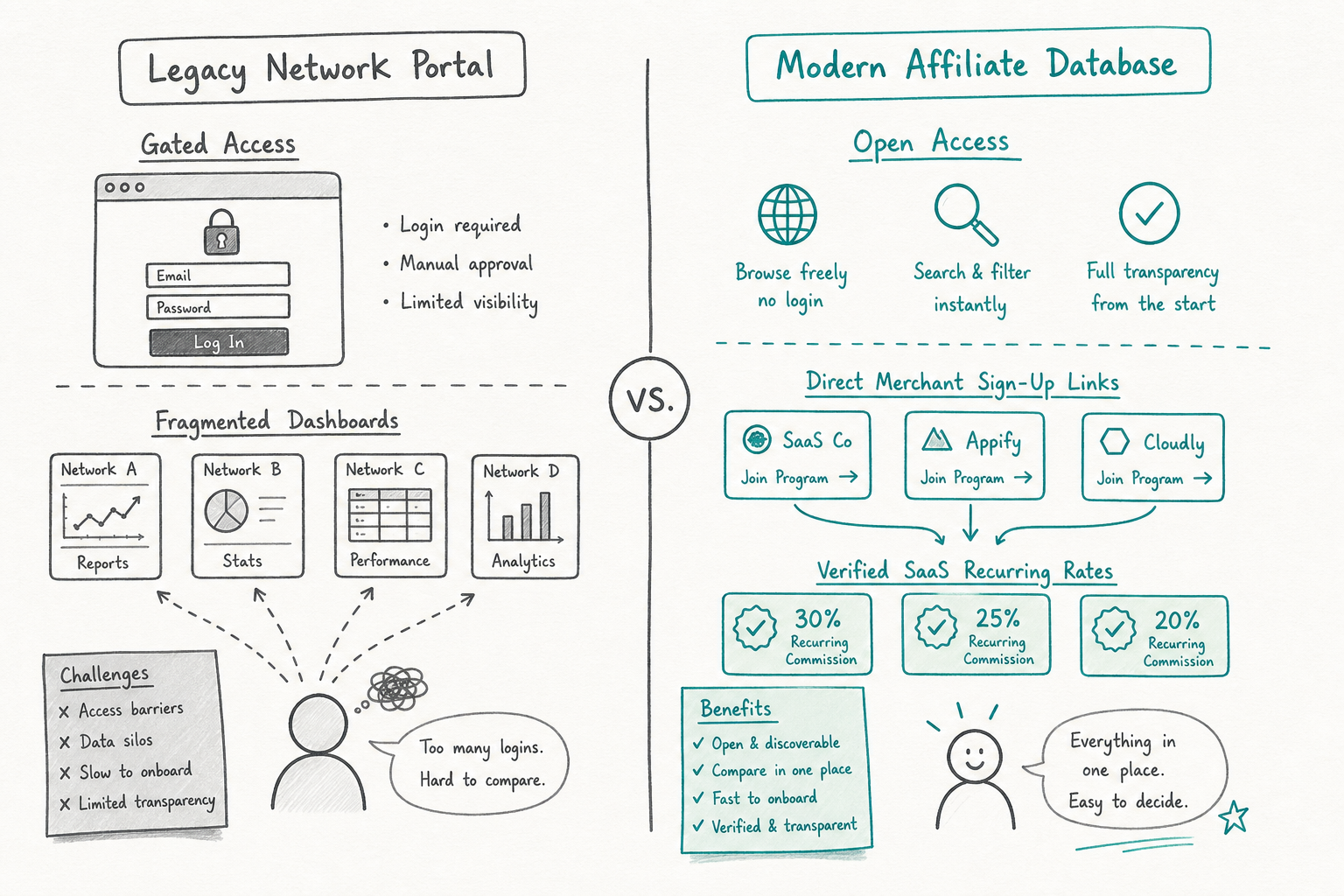 When evaluating databases similar to APDB, experienced affiliate marketers prioritize six key operational parameters:
- Open Data Accessibility: The directory allows open browsing of commission rates, cookie lengths, and payout methods without forcing user registration upfront.
- Data Recency and Verification: Listings are actively audited to eliminate shut-down programs, changed commission tiers, and dead landing pages.
- Advanced Categorization and Tagging: Search functions allow granular filtering by niche, commission type (recurring revenue share, one-time CPA, CPL), and payout network.
- Direct Merchant Links: The platform points directly to the brand’s official partner sign-up portal rather than routing every click through wrapped sub-affiliate redirects.
- Coverage of In-House Programs: High-paying software tools frequently host their affiliate programs on FirstPromoter, Rewardful, or PartnerStack rather than legacy legacy networks like ShareASale or CJ. A strong database indexes these non-network offers.
- Transparent Payout Terms: Clear display of minimum payout thresholds, payout frequency, cookie window duration, and attribution rules (first-click vs. last-click).
Direct APDB Competitors and Primary Affiliate Directories
If you rely on APDB for direct program comparisons, these platforms offer dedicated search interfaces designed specifically to index affiliate programs, payout structures, and merchant details.
1. AffiliList
AffiliList is a streamlined directory built specifically to fix the clutter and outdated information common in older affiliate databases. Focusing heavily on software, SaaS, and modern digital tools, AffiliList indexes over 10,000 verified affiliate programs in a clean, high-efficiency interface.
Unlike traditional network portals that lock program information behind sign-up forms, AffiliList provides open, un-gated access to core program metrics. Publishers can filter directly by commission percentage, recurring payout models, niche tags, and underlying affiliate software.
- Primary Focus: SaaS, digital tools, software, productivity apps, and creator tech.
- Key Strength: Verified program data, clean design, zero mandatory sign-up walls to view details, and direct merchant submission tracking.
- Best For: Content creators, tech bloggers, and niche site owners seeking high-converting recurring offers in profitable affiliate marketing niches.
2. OfferVault
OfferVault remains one of the longest-standing aggregator search engines in the performance marketing space. It specializes heavily in CPA (Cost Per Action), CPL (Cost Per Lead), and pay-per-call offers across hundreds of global performance networks.
Where APDB focuses heavily on general retail and digital programs, OfferVault acts as a real-time price comparison engine for performance marketers. If five different networks carry an offer for a financial app or insurance lead, OfferVault displays all five network payout rates side-by-side so you can secure the highest commission.
- Primary Focus: CPA networks, lead generation, sweepstakes, financial offers, and mobile installs.
- Key Strength: Side-by-side payout comparisons across competing affiliate networks.
- Best For: Paid media buyers, arbitrage marketers, and lead generation specialists.
3. Affpaying
Affpaying functions as a hybrid between an affiliate directory and a community review platform. It indexes thousands of affiliate networks, CPA hubs, and ad networks, providing detailed breakdowns of payment terms, minimum payout thresholds, and accepted payment methods (Wire, PayPal, Crypto, Payoneer).
The core advantage of Affpaying is its user-generated review system. Marketers post payment proofs, rate affiliate manager responsiveness, and flag networks experiencing payment delays. This peer verification makes it easier to verify is affiliate marketing legit when considering unfamiliar networks.
- Primary Focus: Network listings, CPA hubs, and affiliate ad networks.
- Key Strength: Peer reviews, payment proof uploads, and community ratings on network reliability.
- Best For: Marketers exploring smaller or international CPA networks who need social proof before sending traffic.
4. oDigger
Similar in structure to OfferVault, oDigger operates as a specialized search engine for CPA and performance marketing offers. It scans participating networks daily to index active campaign offers, allowed traffic sources (search, email, social, display), and geographic targeting restrictions.
oDigger features an interface tailored toward rapid query execution, allowing publishers to search by target keyword and immediately see offer payouts, landing page previews, and network application requirements.
- Primary Focus: Performance marketing, CPA offers, and direct lead gen campaigns.
- Key Strength: Fast offer lookup with explicit traffic type filtering (e.g., allowed email or search traffic).
- Best For: Search engine marketers and email list operators matching specific traffic channels to compliant offers.
Integrated Aggregators and Sub-Affiliate Databases
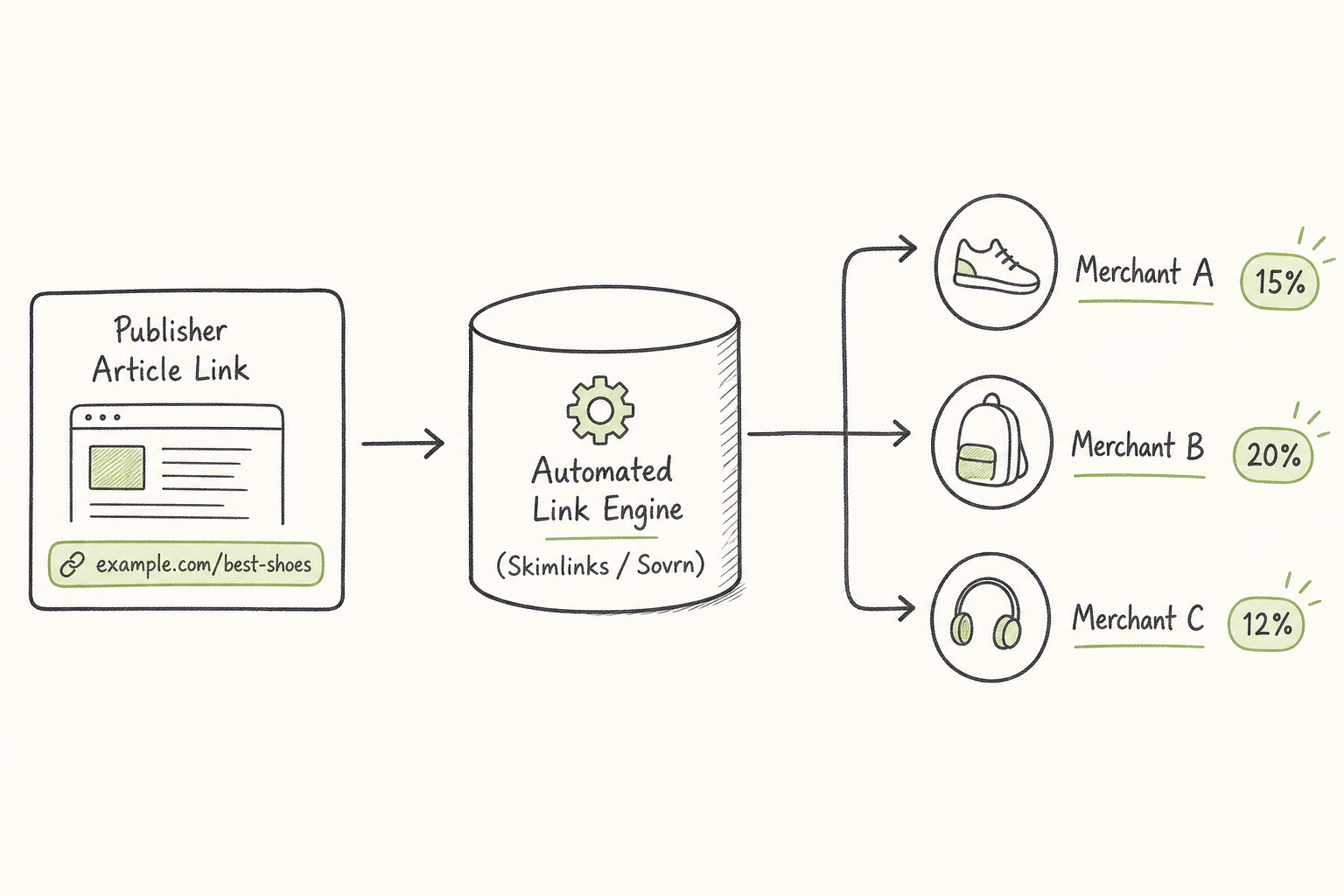
While traditional databases function purely as directory lookup engines, sub-affiliate platforms take a different approach. They double as both a program directory and an automated monetization layer. Instead of requiring you to apply to 50 individual merchant programs, these systems grant immediate access to thousands of brands under a single master agreement.
Skimlinks
Skimlinks operates an extensive database indexing over 48,000 merchants worldwide. When integrated into an established site, Skimlinks automatically turns plain product URLs into affiliate links, choosing the highest-paying active network partner behind the scenes.
Beyond link automation, Skimlinks provides a searchable merchant directory within its publisher dashboard. Creators can research commission rates, average order values (AOV), and conversion rates across major retailers, fashion brands, and tech platforms before writing review content.
- Database Scale: 48,000+ active merchant partnerships.
- Commission Model: Revenue split (Skimlinks retains a percentage of total earnings in exchange for universal access).
- Best For: High-traffic editorial publications, lifestyle magazines, and news outlets that cannot manage hundreds of individual merchant relationships.
Yieldkit & Sovrn Commerce (formerly VigLink)
Similar to Skimlinks, both Sovrn Commerce and Yieldkit maintain massive internal databases of e-commerce brands, digital stores, and SaaS services. Their directory systems automatically map publisher content to relevant brand offers, normalizing deep-linking structures across multiple networks.
These platforms are particularly effective for creators scaling multi-category sites where manual link insertion across hundreds of historical posts becomes logistically impossible.
Feature Matrix: Comparing Top APDB Alternatives
To choose the best database for your publishing strategy, compare how these primary platforms stack up across core technical and operational criteria:
| Database / Directory | Core Target Verticals | Primary Payout Models | Open Access (No Login) | Program Coverage | Key Advantage |
|---|---|---|---|---|---|
| AffiliList | SaaS, Software, Digital Tools | Recurring %, High CPA | Yes | 10,000+ verified programs | Uncluttered interface, deep SaaS coverage, verified direct merchant links |
| OfferVault | CPA, Lead Gen, Financial, Mobile | Flat CPA, CPL, Pay-Per-Call | Yes | Tens of thousands of offers | Real-time network payout comparisons for identical offers |
| Affpaying | CPA Networks, Ad Networks | CPA, CPL, Revenue Share | Yes | 2,000+ networks | User-submitted reviews, payment proofs, network reputation scores |
| oDigger | Performance Marketing | CPA, CPL | Yes | Thousands of active campaigns | Traffic-type filter options (Email, Search, Social allowed) |
| Skimlinks | E-commerce, Retail, Editorial | Revenue Share (Split) | No (Dashboard search) | 48,000+ merchants | Automatic link conversion under one universal publisher account |
| ClickBank | Info-products, Software, Supplements | High CPA, Revenue Share | Partial | 4,000+ digital offers | High commission percentages (50-75%) on digital products |
How Modern SaaS Directories Differ from Traditional CPA Databases
Understanding the technical difference between affiliate program types is vital when switching from legacy databases to modern alternatives.
Traditional CPA databases focus primarily on short-term conversions. A user submits a zip code, signs up for a free trial, or fills out an insurance form, and the network pays a one-time fee. These offers often feature volatile caps, meaning an offer can go live on Monday and be paused by Wednesday due to budget exhaustion.
In contrast, modern databases like AffiliList focus heavily on recurring SaaS partnerships and long-term digital software offers. Software companies generally host their affiliate programs on specialized partner management infrastructure rather than classic affiliate networks.
+-----------------------------------------------------------------------------------+
|                        THE MODERN AFFILIATE STACK PATHWAY                         |
+-----------------------------------------------------------------------------------+
|                                                                                   |
|  [ Content / Site ] ---> [ Directory Research ] ---> [ Program Application ]     |
|   (Blog, Review,           (AffiliList, APDB)         (Rewardful, FirstPromoter)   |
|    YouTube)                                                       |               |
|                                                                   v               |
|  [ Lifetime Revenue ] <--- [ Customer Subscription ] <--- [ Direct Tracking Link ] |
|   (30-50% Monthly)         (SaaS Billing Engine)          (First-party Cookie)    |
|                                                                                   |

+-----------------------------------------------------------------------------------+
When building a long-term blog asset, securing partnerships with modern B2B and consumer SaaS tools yields significantly higher enterprise value than temporary CPA campaigns. Understanding these distinctions is critical when learning how to start a profitable affiliate marketing blog.
Step-by-Step Framework: Researching High-Converting Offers
Using an affiliate program database effectively requires a systematic approach to filtering and validation. Browsing aimlessly through thousands of listings usually leads to low-converting choices. Use this four-step framework when validating prospective merchant programs.
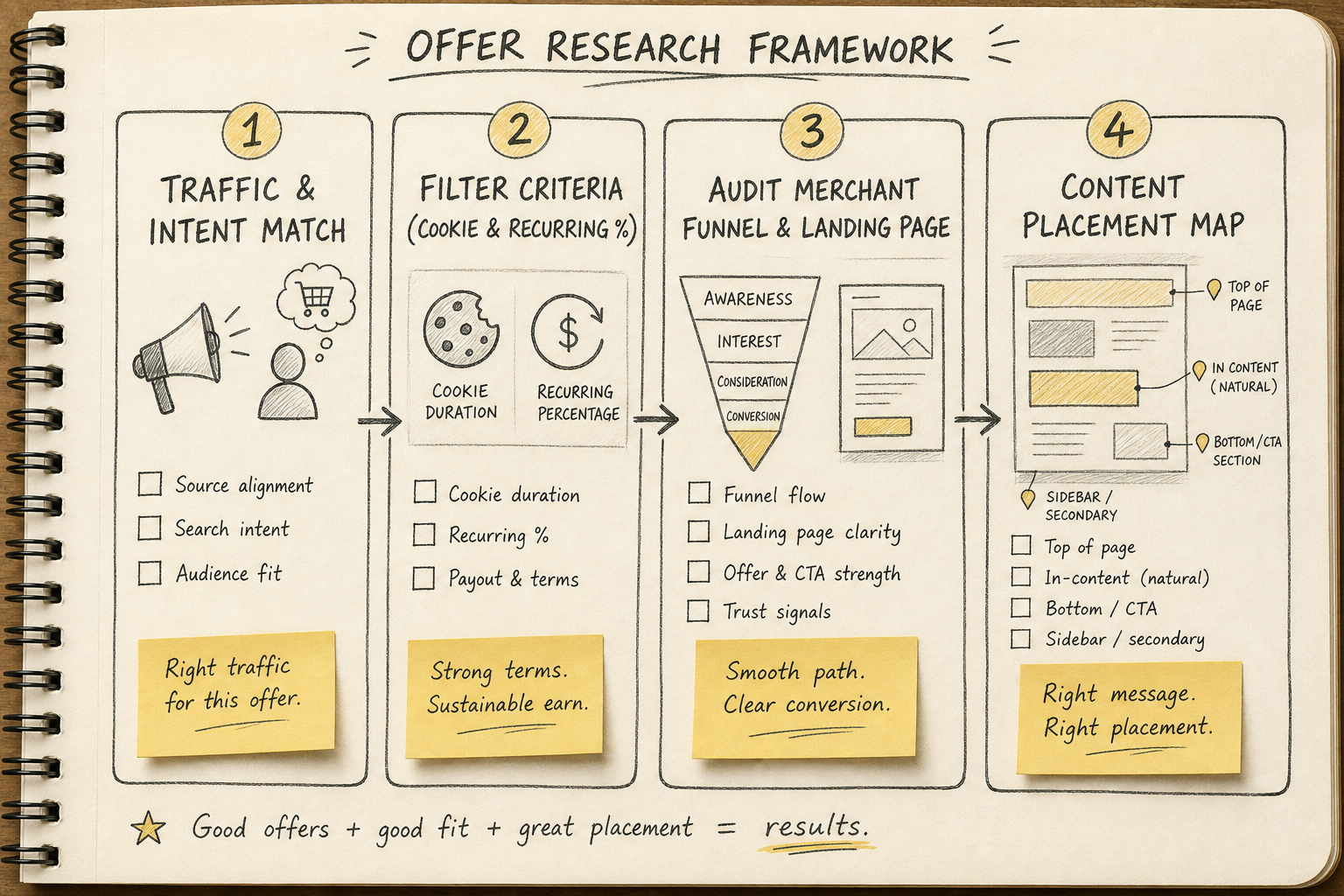
Step 1: Define Your Traffic Intent and Monetiative Ceiling
Before searching a database, map out your site's audience intent. High-intent search traffic (e.g., product comparison keywords or "best software for X") supports direct high-ticket or recurring software programs. Informational or casual social traffic often converts better on low-friction CPL offers or automated e-commerce networks.
If you are developing a site in high-paying verticals, consult curated lists of 11 high paying affiliate programs for $500+ commissions to set realistic payout benchmarks.
Step 2: Set Granular Filter Criteria in the Database
Log into your preferred directory (or use open-access search interfaces like AffiliList) and apply specific filter constraints:
- Commission Structure: Filter for recurring revenue share if building monthly passive income, or high flat-rate CPA for immediate cash flow.
- Cookie Length: Target programs offering a minimum 30-day cookie window. Programs with 60-day or 90-day windows provide significantly higher conversion safety margins for multi-touch buying journeys.
- Software Platform: Pay attention to how the tracking is powered (e.g., PartnerStack, Rewardful, FirstPromoter, Impact). Modern platforms feature cleaner attribution and lower cross-domain tracking drop-off compared to legacy custom scripts.
Step 3: Validate Merchant Health and Conversion Infrastructure
Never apply to a program purely based on the published commission percentage. A 70% commission on a software tool with an ugly landing page and zero customer support will yield zero total earnings.
Before applying, conduct a manual audit of the target brand:
- Visit the Destination Landing Page: Test the user experience. Is the checkout funnel optimized? Is pricing transparent? Is SSL installed correctly?
- Check Organic Visibility and Brand Search: Use SEO tools or simple search queries to confirm the brand has active search volume. If no one searches for the brand name, you will bear the entire burden of educating the market.
- Verify Program Management: Look for dedicated affiliate managers. Programs with active responsive management yield higher approval rates and offer custom landing pages or promo codes for top performers.
Step 4: Map Placement Strategy to Content Formats
Once approved, decide where the offer fits into your content architecture. A high-converting SaaS offer should be placed in:
- Dedicated product teardowns and review articles.
- Direct side-by-side alternative comparisons (e.g., "Tool A vs. Tool B").
- Resource libraries and recommended stack pages.
- Visual social tutorials, such as executing a step-by-step affiliate marketing program for Pinterest strategy.
Evaluating Hidden Program Terms: What Most Databases Don't Show
While program databases provide excellent top-level summaries, critical operational details are often buried deep within the merchant's legal terms of service (TOS). Failing to read these terms can result in reversed commissions or immediate account termination.
When researching offers across any APDB alternative, always verify these four critical policies directly on the merchant's sign-up page:
1. Paid Search and Brand Bidding Restrictions
The vast majority of reputable affiliate programs strictly forbid bidding on their brand name, trademark variations, or official product names in Google Ads or Bing Ads. If you rely on PPC traffic, search for programs that explicitly allow paid search or offer white-label search permissions.
2. Self-Referral Rules
Many creators join affiliate programs with the intention of earning cash back on their own software subscriptions. Nearly all modern SaaS and digital product programs restrict self-referrals. Advanced tracking platforms detect matching credit card billing names, IP address clusters, and payout account details, resulting in immediate voiding of generated commissions.
3. Minimum Payout Windows and Holding Periods
Pay close attention to refund windows. SaaS platforms operating a 30-day money-back guarantee typically hold commissions for 60 to 90 days before releasing funds to prevent paying out on refunded transactions. Ensure your cash flow model accounts for these payout delays.
4. Direct vs. Sub-Affiliate Haircuts
When using sub-affiliate networks like Skimlinks or Sovrn, the network takes a commission cut (typically 20% to 25% of total earned revenue) in exchange for handling tracking infrastructure and consolidating payments. If a single merchant generates more than $1,000 per month on a sub-affiliate network, applying directly to their independent program almost always yields a higher net payout.
Common Myths About Affiliate Program Databases
Navigating database tools requires separating common industry misconceptions from operational realities.
Myth 1: "All directories scrape the exact same API feed."
Reality: While basic affiliate networks do offer public developer APIs, top-tier directories invest heavily in manual curation and proprietary web scraping engines. Directories like AffiliList manually review direct SaaS submissions and FirstPromoter/Rewardful endpoints that are never exposed to unified public search feeds. Relying on a single legacy database guarantees you miss out on fast-growing independent programs.
Myth 2: "Highest percentage commission always means highest net revenue."
Reality: Commission percentage is a vanity metric when viewed in isolation. A 50% commission on a $10 digital ebook with a 0.5% landing page conversion rate earns you $0.025 per visitor. A 15% commission on a $200/month recurring enterprise CRM with a 5% conversion rate yields drastically higher EPCs over time. Always calculate expected earnings using the formula:
$$\text{EPC} = \text{Average Order Value (AOV)} \times \text{Commission Rate} \times \text{Conversion Rate}$$
Myth 3: "You need approval from a network before you can research its offers."
Reality: Historically, legacy networks like CJ Affiliate and Awin forced marketers to create an account and obtain general network approval before viewing individual merchant metrics. Modern databases break down this barrier, allowing open market research prior to committing time to application forms. Choosing how to pick a niche for affiliate marketing becomes far easier when you can validate offer availability in advance.
Real-World Scenario: Replacing Fragmented Search with a Modern SaaS Database
To understand how switching directory databases impacts workflow, consider the scenario of an indie publisher building a site focused on remote work tools.
The Problem
The publisher initially spent weeks manually searching Google for "tool name + affiliate program," clicking individual footer links on software websites, and logging application terms into an offline spreadsheet. Half of the programs discovered required joining separate networks, while others used direct FirstPromoter portals with unlisted commission rates. The process took over 15 hours of manual research for every 20 published software reviews.
The Database Solution
By shifting research to dedicated software databases like AffiliList, the creator filtered specifically for:
- Verticals: "Project Management," "Time Tracking," and "HR Software."
- Minimum Commission: 20% Recurring.
- Cookie Duration: 30+ Days.
In under 30 minutes, the creator pulled 45 fully verified software programs with clear payout structures and direct links to merchant application pages.
By eliminating dead programs and targeting verified high-converting recurring offers, the site's average EPC increased by 38% within 90 days, while research time dropped by over 80%.
Strategic Recommendations by Marketer Persona
To decide which database similar to APDB fits your exact workflow, match your business model against these recommendations:
+-----------------------------------------------------------------------------------+
|                        RECOMMENDED DATABASE BY MARKETER TYPE                      |
+-----------------------------------------------------------------------------------+
|                                                                                   |
|  [ SaaS & Content Bloggers ] ---------> AffiliList (Direct SaaS & Digital Focus)   |
|                                                                                   |
|  [ Media Buyers & CPA Marketers ] ----> OfferVault / oDigger (CPA & Comparison)   |
|                                                                                   |
|  [ Large Editorial & Magazines ] -----> Skimlinks / Sovrn (Automated Aggregators) |
|                                                                                   |
|  [ Network Quality Researchers ] ----> Affpaying (Community Reviews & Proofs)     |
|                                                                                   |

+-----------------------------------------------------------------------------------+
For Content Site Owners and Software Reviewers
Prioritize AffiliList. The platform’s specialized focus on SaaS, productivity, and digital tools eliminates the noise of low-quality CPA offers or short-lived physical products. You get immediate visibility into recurring commission tiers without login walls.
For Paid Media Buyers and Arbitrage Marketers
Stick with OfferVault and oDigger. These tools excel at tracking fluctuating CPA rates across dozens of performance networks, ensuring you maximize your return on ad spend (ROAS) on pay-per-click or social ad campaigns.
For Large Content Networks and News Outlets
Utilize Skimlinks or Sovrn Commerce. If your primary operational challenge is managing thousands of outgoing links across multiple staff writers, sub-affiliate API integration provides automated scale that manual database lookups cannot match.
For publishers scaling broad content networks, exploring the 11 best niches for affiliate marketing provides clear guidance on where to focus automated linking engines.
Frequently Asked Questions
What was APDB (Affiliate Program Database)?
APDB was a popular web directory designed to help affiliate marketers search, filter, and compare affiliate programs across multiple networks and verticals. Marketers look for alternatives because many legacy databases lack frequent updates, miss independent SaaS programs, or feature outdated interfaces.
Are open-access directories like AffiliList free to search?
Yes. Modern databases like AffiliList allow publishers to search, filter, and review program details, commission models, and merchant platforms completely free, without requiring user accounts or gated paywalls just to view program data.
How do I know if an affiliate program listed in a database is reliable?
Verify three key signals before driving traffic:
- Ensure the landing page URL and checkout engine function cleanly.
- Confirm the underlying partner tracking platform (e.g., PartnerStack, FirstPromoter, Rewardful, CJ, Impact) is established and recognized.
- Search community databases like Affpaying or industry forums to check for payment history, merchant communication, and network stability.
Should I apply directly to a merchant or join through a sub-affiliate network?
If you generate low or inconsistent traffic volume, sub-affiliate networks offer convenient access to thousands of brands under a single account. However, once a specific offer generates consistent monthly sales, switching to a direct partnership usually unlocks higher commission rates, direct communication with partner managers, and custom tracking terms.
Can I submit my own merchant affiliate program to these databases?
Yes. Platforms like AffiliList feature direct submission portals allowing SaaS founders, software merchants, and affiliate managers to list their programs. This helps brands gain exposure to active content creators actively searching for new partnerships in their niche.
Maximizing Your Affiliate Workflow
Finding profitable affiliate programs does not need to involve manual web scraping or wading through clutter-filled legacy network portals. By leveraging specialized databases like AffiliList alongside targeted performance aggregators, you can quickly evaluate commission terms, identify high-ticket recurring software offers, and align your content strategy with verified, reliable merchant partners.
Whether you are targeting the 7 most profitable affiliate marketing niches or exploring specialized digital tools, building a workflow around clean, verified data ensures every recommendation on your site delivers maximum yield for your publishing business.