
Digital Marketing vs Affiliate Marketing: Which is Better?
Discover the core differences between digital marketing and affiliate marketing. Compare pros, cons, risk factors, and find out which path fits your goals.
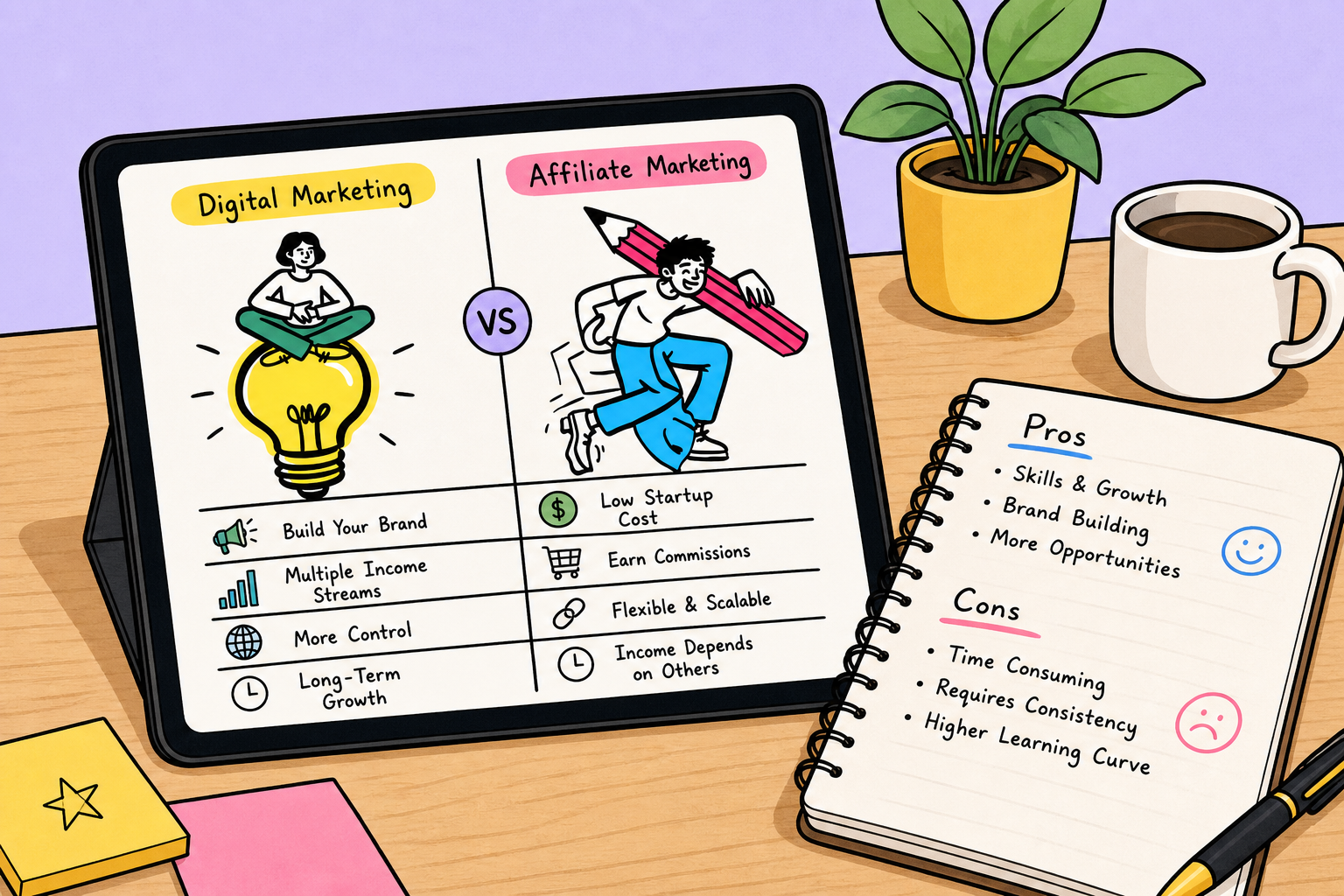
If you spend enough time in online business forums, you will inevitably see someone ask: "Should I learn digital marketing or affiliate marketing?"
It is a common question, but it relies on a fundamental misunderstanding. Asking whether digital marketing or affiliate marketing is better is like asking if it is better to learn how to use tools or how to build a house. One is the broad set of skills and channels used to reach an audience online; the other is a specific business model that relies on those exact skills to generate revenue.
Yet, the confusion persists. A quick glance at discussions across industry forums reveals that beginners frequently treat them as opposing career paths.
Whether you are looking to monetize a new blog, pivot your career, or launch a side hustle, understanding the distinction between these two concepts is non-negotiable. This guide will break down the definitions, weigh the pros and cons, and help you decide which path aligns with your financial goals, risk tolerance, and technical skills.
The Core Difference: Umbrella vs. Spoke
To clear up the confusion immediately: Affiliate marketing is a subset of digital marketing.
Digital marketing is the umbrella term for any promotional activity conducted via the internet. If you are using digital channels to reach consumers, you are doing digital marketing. This includes search engine optimization (SEO), pay-per-click advertising (PPC), email marketing, social media management, and content marketing.
Affiliate marketing is a specific monetization model where you earn a commission by promoting other people's (or companies') products. To successfully drive those product sales, you must use digital marketing tactics.
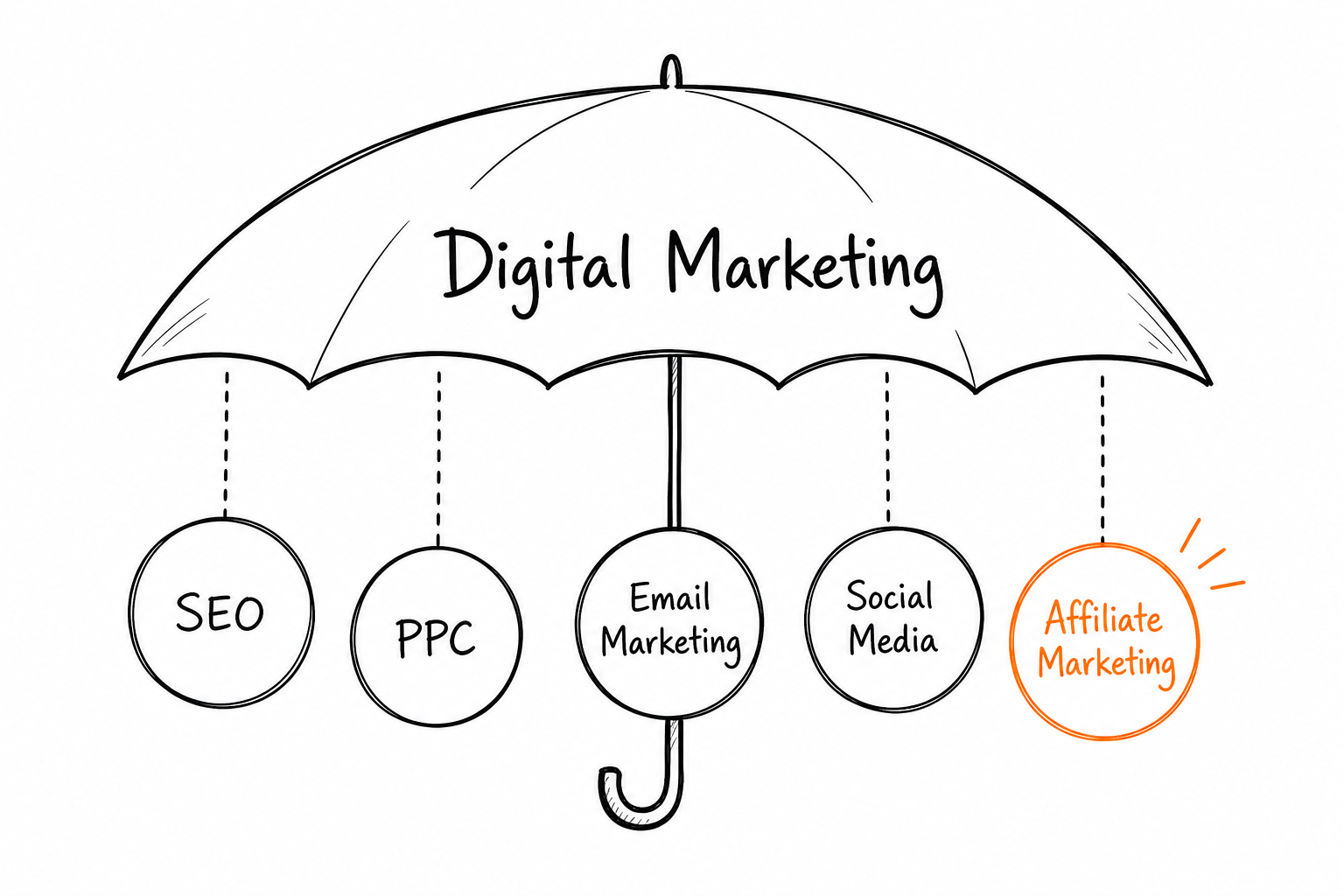 Think of digital marketing as the entire marketing department of a company. Affiliate marketing is just one specific revenue-generating strategy that sits inside that department.
What is Digital Marketing? (The Broad Ecosystem)
Digital marketing is the practice of leveraging online channels to build brand awareness, acquire leads, and drive sales. It is not a single action, but an ecosystem of interconnected disciplines. A digital marketer might work in-house for a brand, operate at an agency serving multiple clients, or act as a solo consultant.
In the traditional digital marketing model, the primary goal is to grow a business that you (or your employer) own. You are marketing your own products, your own services, or your own software.
The Core Channels of Digital Marketing
To understand the sheer scope of digital marketing, look at its primary pillars:
- Search Engine Optimization (SEO): Optimizing website content and technical structure to rank organically in search engines like Google.
- Content Marketing: Creating valuable written, audio, or video content to attract and retain a target audience.
- Pay-Per-Click (PPC) & Search Engine Marketing (SEM): Bidding on keywords to place advertisements at the top of search engine results or on social media platforms.
- Email Marketing: Building a database of subscribers and nurturing them through automated sequences and newsletters.
- Social Media Marketing: Managing organic presence and paid campaigns on platforms like LinkedIn, X, Instagram, and TikTok.
- Conversion Rate Optimization (CRO): Analyzing user behavior on a website and tweaking the design and copy to increase the percentage of visitors who take a desired action.
Pros and Cons of Digital Marketing
If we look at digital marketing from the perspective of owning the product or running an agency, here are the tradeoffs.
The Pros:
- Total Control: You control the product, the pricing, the customer data, and the entire sales funnel. If you want to offer a 50% discount for Black Friday, you can.
- Higher Profit Margins (Eventually): Once you cover the cost of goods sold or software development, you keep 100% of the profits. You are not splitting the revenue with a merchant.
- Asset Building: You are building a brand with intrinsic value. An e-commerce store with a proprietary product and a loyal customer base can be sold for a massive multiple.
- Vast Career Opportunities: Because the skillset is so broad, digital marketers are highly employable. You can specialize in SEO, pivot to paid ads, or become a Chief Marketing Officer.
The Cons:
- High Initial Investment: Developing a product, building a brand, and funding paid advertising campaigns requires significant upfront capital.
- Customer Service Burden: When you own the product, you own the problems. You must handle refunds, complaints, shipping logistics, and technical support.
- Slower Time to ROI: Building a brand from scratch and gaining market trust often takes months or years before it becomes profitable.
What is Affiliate Marketing? (The Performance Model)
Affiliate marketing is a performance-based arrangement where a merchant pays a commission to an external partner (the affiliate) for generating sales, leads, or traffic.
As noted in ClickBank's industry analysis, affiliate marketing effectively decentralizes the sales process. Instead of a brand relying solely on its internal digital marketing team, it leverages an army of independent creators and marketers who only get paid when they deliver results.
The Affiliate Ecosystem
There are generally three to four parties involved in the affiliate marketing ecosystem:
- The Merchant (Creator/Seller): The company or individual who created the product. This could be a massive enterprise like Amazon, a SaaS company offering HR software, or a solo creator selling an online course. They provide the product and pay the commissions.
- The Affiliate (Publisher/Marketer): You. The person who uses digital marketing skills to attract an audience and recommend the merchant's products. You receive a unique tracking link to ensure you get credited for sales.
- The Consumer: The end-user who clicks the affiliate link and makes a purchase. In legitimate affiliate marketing, the consumer pays the exact same price whether they use an affiliate link or buy directly.
- The Network (Optional but Common): A centralized platform that acts as an intermediary between merchants and affiliates. Networks handle the tracking technology, aggregate thousands of offers, and process commission payouts. (Note: To bypass cluttered, outdated networks, many modern marketers use curated directories like AffiliList to discover over 10,000 verified, high-converting SaaS and digital tool programs without restrictive sign-up hurdles).
Pros and Cons of Affiliate Marketing
For the solo creator or niche site owner, affiliate marketing offers a drastically different lifestyle and business structure compared to traditional e-commerce or agency work.
The Pros:
- Extremely Low Barrier to Entry: You do not need to manufacture a product, hold inventory, or develop software. You can start with just a laptop, an internet connection, and the cost of a domain name.
- Zero Customer Service: Once the sale is made, your job is done. The merchant handles product delivery, onboarding, refunds, and technical support.
- Location and Time Independence: Affiliate marketing is largely asynchronous. Your content or advertising campaigns can generate sales 24/7, making it an ideal affiliate marketing side hustle that can eventually replace a full-time income.
- Agility: If a product stops converting well, you simply swap out your affiliate link for a competitor's product. You are not anchored to a single failing product line.
The Cons:
- Zero Product Control: You cannot control product quality, pricing changes, or the merchant's landing page. If their checkout page breaks, you lose money, and there is nothing you can do about it.
- Commission Risk: Merchants can (and do) change their commission structures. A program that paid 30% last year might suddenly drop to 10%, instantly slashing your revenue.
- No Customer Ownership: You rarely get access to the customer's email address or data when they purchase through your link. You are building the merchant's customer base, not your own (unless you capture leads before sending them to the offer).
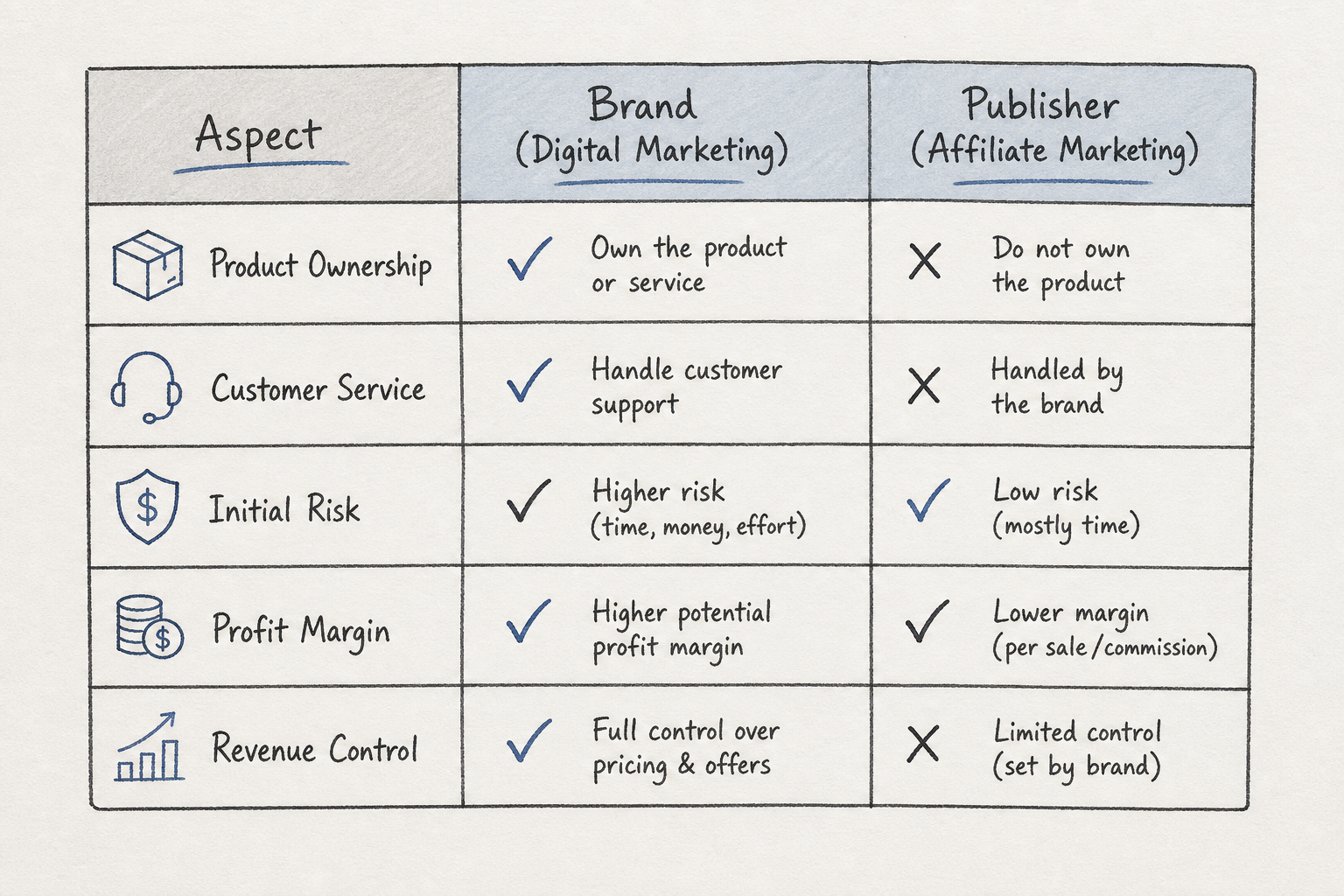
8 Key Differences Between Digital Marketing and Affiliate Marketing
While they are intrinsically linked, practicing digital marketing for your own business looks very different from practicing digital marketing as an affiliate. According to channel strategy experts at 20NorthMarketing, the distinction usually comes down to ownership, control, and intent.
Here are eight fundamental differences you must understand before choosing your focus.
1. Scope and Focus (Broad Strategy vs. Revenue Tactic)
Digital Marketing: Focuses on the holistic growth of a brand. A digital marketer cares about brand sentiment, customer lifetime value (LTV), churn rates, and multi-touch attribution. They might run a branding campaign that generates zero immediate sales but builds essential market trust.
Affiliate Marketing: Focuses almost entirely on direct-response conversions. The affiliate's primary goal is to get targeted traffic to click a link and buy now. They are less concerned with long-term brand equity for the merchant and hyper-focused on Return on Ad Spend (ROAS) or Earnings Per Click (EPC).
2. Risk and Initial Investment
Digital Marketing: High risk. If you are a brand doing your own digital marketing, you have to fund the product creation, the website, the ad spend, and the staff. If a product fails, you absorb the total loss.
Affiliate Marketing: Low risk. You only invest your time (and perhaps minor hosting or ad costs). If an affiliate offer doesn't convert, your only loss is the time spent writing the blog post or testing the ad. You simply pivot to one of the most profitable affiliate marketing niches and try again.
3. Ownership of the Asset
Digital Marketing: You own the customer list, the product intellectual property, and the brand. You can pivot the company, sell it, or rebrand it.
Affiliate Marketing: You do not own the product. You are a highly paid middleman. If you build a successful campaign promoting a specific SaaS tool, and that tool shuts down its affiliate program (which happens occasionally in the tech space), your revenue stream disappears overnight. This is why successful affiliates diversify their partnerships using directories to find reliable, high-paying alternatives.
4. Control Over the Customer Journey
Digital Marketing: Total control. You dictate the ad copy, the landing page design, the checkout experience, the welcome emails, and the post-purchase upsells. You can A/B test every single button color to optimize conversions.
Affiliate Marketing: Fragmented control. You control the