
Eventbrite Affiliate Program: 3 Ways to Earn from Events
Discover the 3 hidden ways to earn from the Eventbrite affiliate program. Learn how to promote events, refer organizers, and set up your own creator commissions.
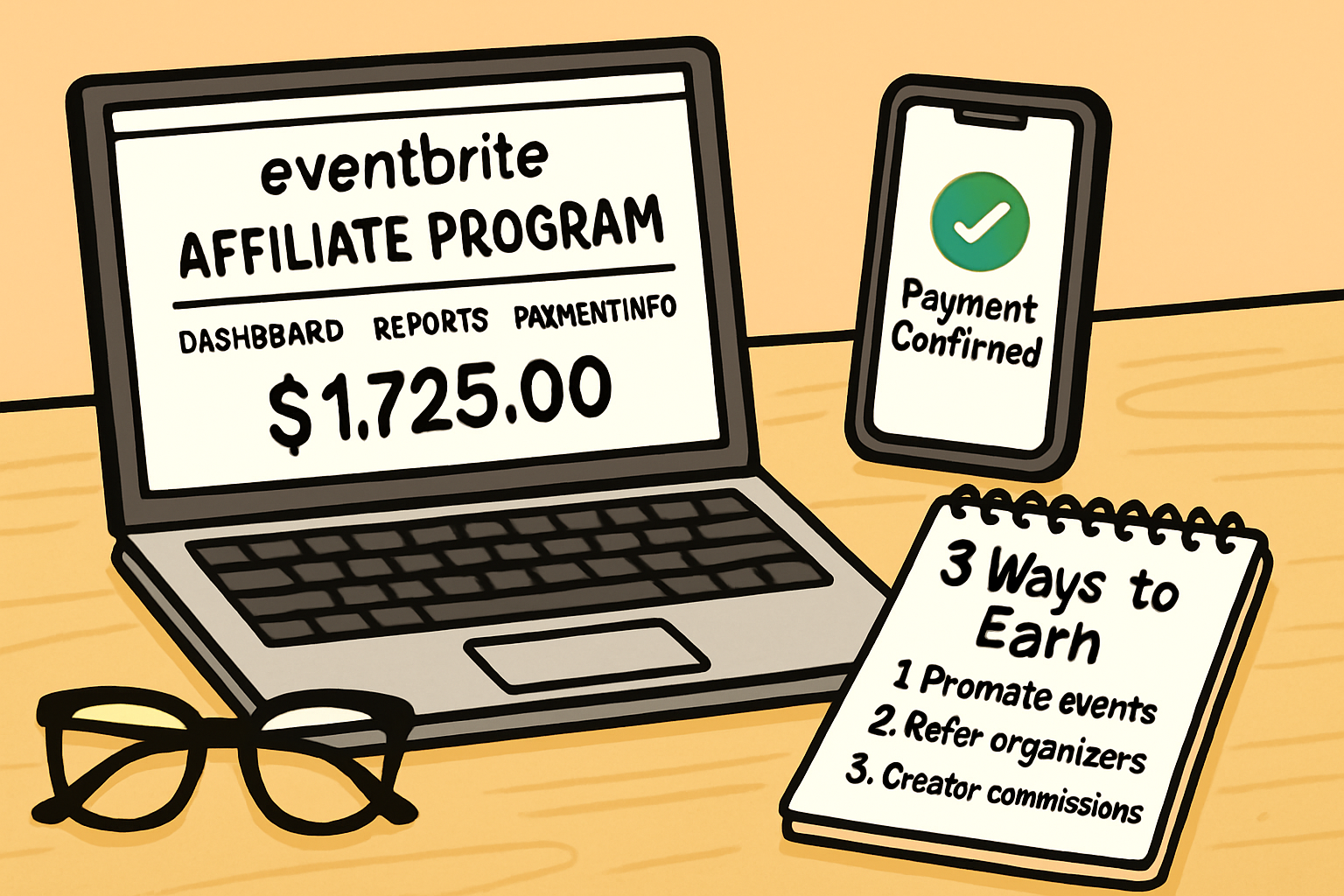
Most marketers looking for the Eventbrite affiliate program expect a standard, Amazon Associates-style setup: a centralized dashboard where you can search for any concert, conference, or workshop on the platform, grab a universal tracking link, and start earning commissions.
That dashboard does not exist.
Because Eventbrite operates primarily as a ticketing infrastructure rather than a traditional marketplace, it doesn’t offer a universal, sitewide affiliate program for ticket sales. You cannot simply log in, pick a random local food festival, and automatically earn a cut of the tickets.
Instead, Eventbrite’s partnership opportunities are divided into three entirely distinct pathways. Whether you are a B2B software reviewer looking to monetize SaaS traffic, a local city blogger wanting to monetize weekend event guides, or an event organizer trying to turn your attendees into a street team, there is a mechanism for you.
Here is exactly how the Eventbrite affiliate ecosystem works in 2026, the failure modes to avoid, and the three legitimate ways you can earn from the platform.
1. The B2B SaaS Angle: Promoting Eventbrite to Organizers
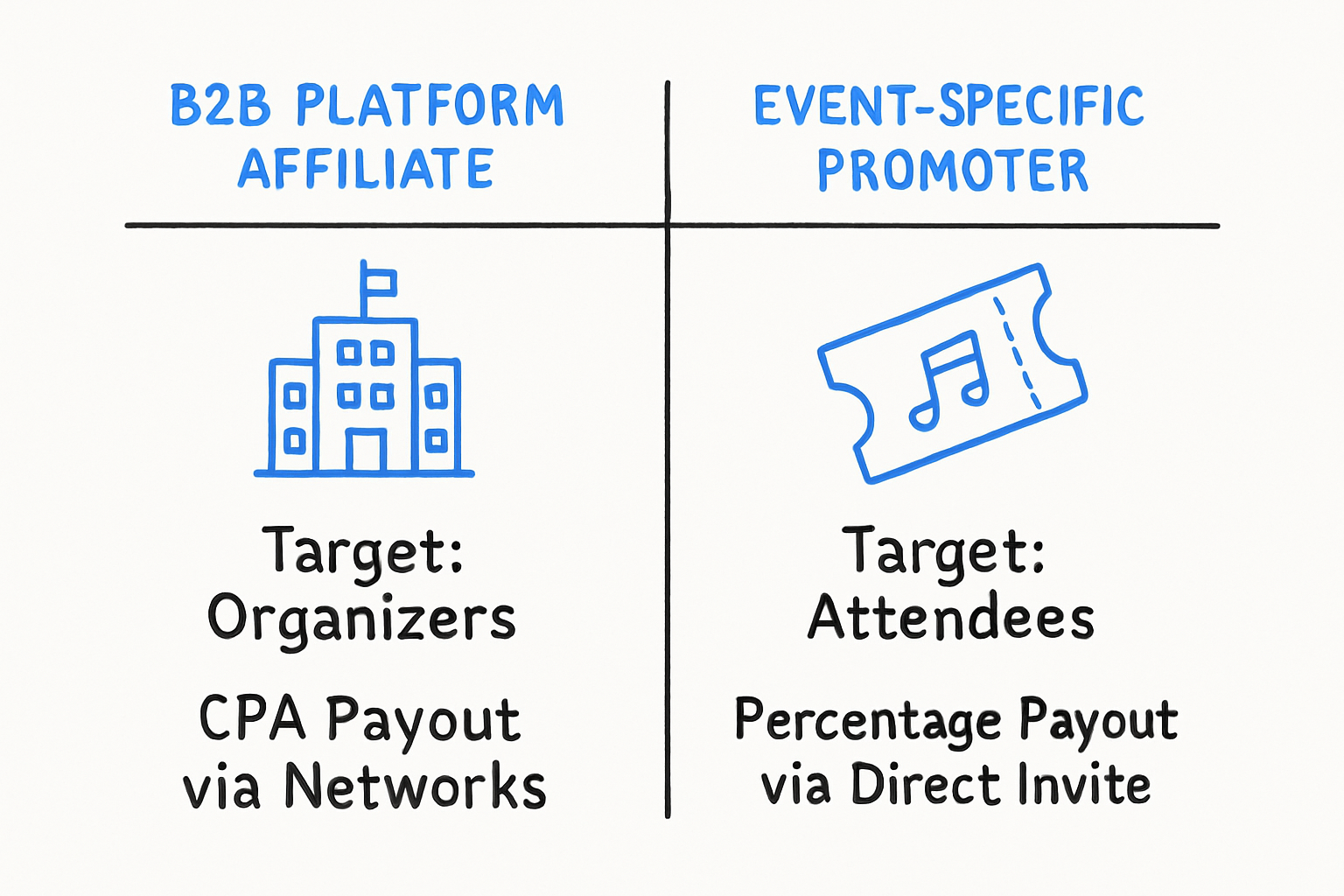
If you want to earn commissions directly from Eventbrite’s corporate marketing budget, you need to think B2B. Eventbrite runs a traditional CPA (Cost Per Action) affiliate program aimed at acquiring new event organizers, not event attendees.
Instead of earning a small percentage when someone buys a $20 ticket, you earn a bounty when an event planner signs up for Eventbrite and publishes a paid event.
How the B2B Program Operates
Eventbrite manages this partner program through third-party affiliate networks like FlexOffers, Admitad, and occasionally impact.com. To join, you must apply through one of these networks, not directly through the Eventbrite homepage.
- Target Audience: Event planners, HR managers, corporate trainers, community leaders, and small business owners.
- Commission Structure: Typically a flat CPA bounty (e.g., $10 to $20) for every new creator who successfully publishes a paid event.
- Cookie Duration: Usually 30 days.
Who Should Use This Strategy?
This pathway is highly lucrative if you operate in the best niches for affiliate marketing (SaaS & digital). If you run a business blog, a YouTube channel about starting a side hustle, or a newsletter for community managers, promoting the infrastructure of event management is far more scalable than promoting individual tickets.
Failure Modes in B2B Event Promotion
The biggest mistake affiliates make when promoting Eventbrite to creators is driving low-intent, "free event" traffic. Eventbrite’s commission triggers almost universally require the new user to publish a paid ticketed event.
If you write an article titled "How to Organize a Free Neighborhood Potluck," you will drive hundreds of sign-ups to Eventbrite, but you will earn zero commissions because free events do not generate ticketing revenue for the platform. Your content strategy must target commercial intent: "How to Host a Paid Webinar," "Best Ticketing Software for Music Venues," or "How to Sell Out Your First Workshop."
2. The Promoter Angle: Earning from Specific Events
What if you do want to promote specific events and earn a cut of the ticket sales? You can do this, but it requires a fundamental shift in how you view affiliate tracking.
Eventbrite has a built-in affiliate infrastructure, but it is strictly event-by-event. An event organizer must manually enable the "Affiliate Programs" feature for their specific event and generate a unique tracking link specifically for you.
How Event-Specific Commissions Work
- The Organizer Configures the Offer: The event creator logs into their Eventbrite dashboard, navigates to the marketing tab, and sets up a referral program. They decide the commission rate (either a flat dollar amount or a percentage of the ticket price).
- The Invitation: The organizer sends you a unique affiliate link via email directly from the Eventbrite system.
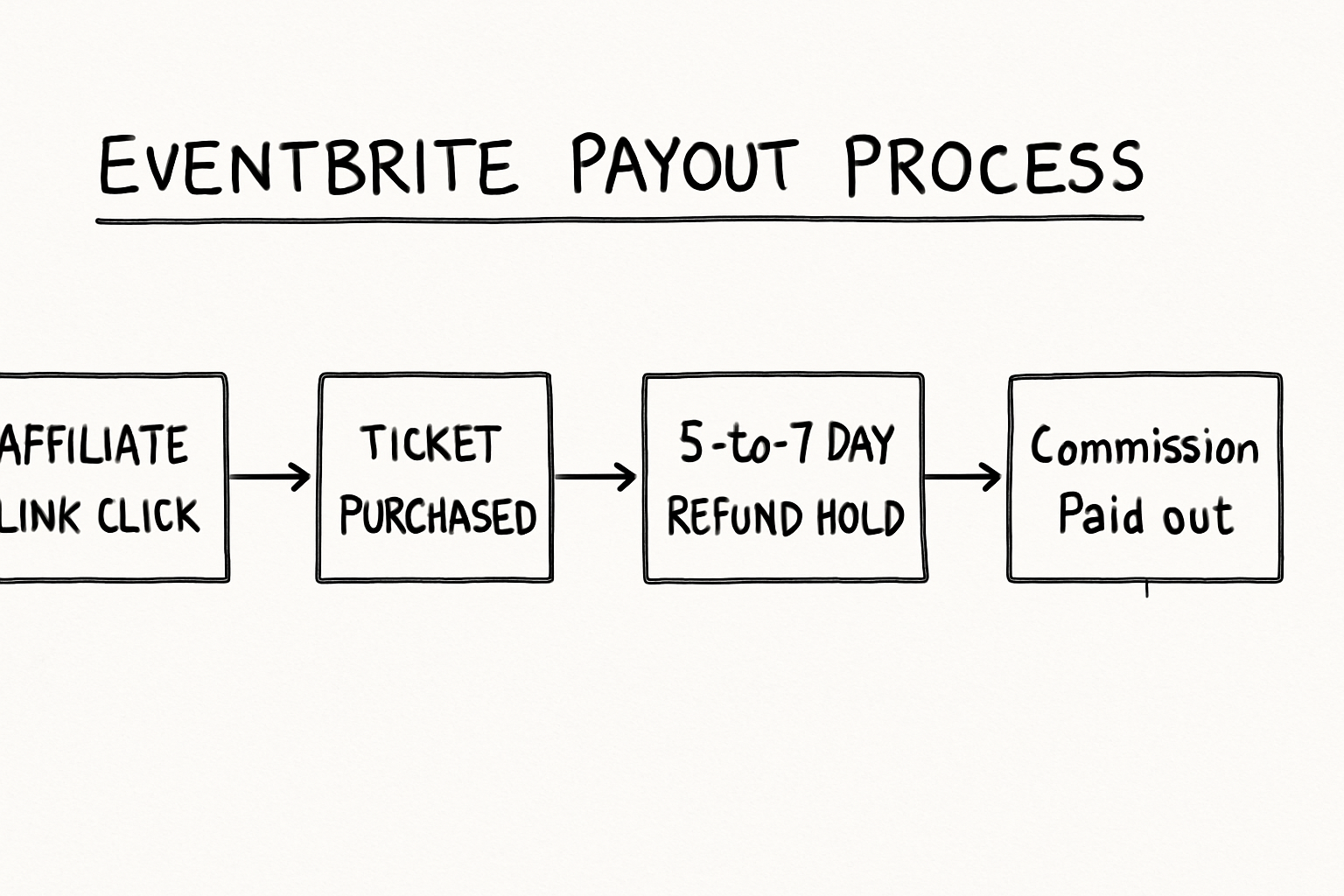
- The Tracking: When a user clicks your link, a tracking cookie is placed. If they purchase a ticket to that specific event, the sale is credited to your promoter account.
- The Payout Hold: Eventbrite handles the payouts automatically, but they do not pay you immediately. To protect against refunds and canceled events, Eventbrite holds the affiliate commissions until roughly 5 to 7 days after the event has successfully concluded.
The "Missing Directory" Problem
The most frustrating aspect of this system for a niche site owner is the lack of a public directory. Eventbrite does not publish a list of events that have affiliate programs turned on. You cannot browse the site filtering by "highest commission."
Because of this, finding commissionable events requires direct networking. This makes it feel closer to traditional sales or affiliate marketing jobs than passive income.
A Case Study: The Local City Blogger
Consider a publisher running a blog called "Weekend in Austin." Every Thursday, they publish a listicle of the top 10 things to do in Austin, Texas.
If they simply link to Eventbrite pages, they earn nothing. Instead, the publisher uses a direct outreach strategy. They find 20 upcoming high-ticket events (e.g., wine tasting courses, tech networking mixers, exclusive DJ sets). They email the organizers directly with this pitch:
"Hi [Organizer Name], I run Weekend in Austin (15,000 local subscribers). We're featuring your upcoming wine mixer in our Thursday newsletter. We work on a performance basis. If you enable the Eventbrite affiliate feature for us at a 15% commission, we will upgrade your event to the #1 featured spot in the email. Let me know if you can send over the link!"
This transforms a standard informational blog into a high-converting affiliate marketing side hustle. The blogger bypasses the need for a public directory by manufacturing their own private affiliate deals.
Edge Cases and Refund Risks
When acting as a promoter for individual events, you carry the risk of event cancellation. If an outdoor festival is rained out and tickets are refunded, your commission is clawed back. Always factor in a 10-15% "shrinkage" rate when projecting your revenue from live events, as personal emergencies and scheduling conflicts inevitably lead to attendee refunds.
3. The Organizer Angle: Recruiting Your Own Affiliates
The third way to leverage the Eventbrite affiliate ecosystem is from the reverse side of the table: as the event creator. If you are hosting an event, your biggest bottleneck is reach. While Eventbrite provides some organic discovery through its app, you are largely responsible for your own marketing.
By turning on the affiliate feature, you can build a decentralized street team of influencers, past attendees, and sponsors who are financially motivated to sell your tickets.
Eventbrite Boost vs. Affiliate Marketing
Recently, Eventbrite has heavily pushed "Eventbrite Boost" (their internal marketing and ad-buying suite) as the primary way for creators to sell more tickets. While Boost is effective for running targeted Meta and Google ads, it requires upfront capital. If you spend $500 on Boost ads and sell no tickets, you lose $500.
Setting up an affiliate program, however, is entirely performance-based. You pay zero marketing dollars upfront. You only part with revenue when a confirmed sale occurs. For bootstrapped event creators, this makes affiliate tracking a superior early-stage growth mechanism.
Step-by-Step: Setting Up Your Event’s Affiliate Program
- Navigate to Marketing: Log into your Eventbrite creator dashboard, select your event, and go to the "Marketing" tab in the left-hand menu.
- Select Affiliate Programs: Click on the "Affiliate Programs" option. (Note: If your event is free, this option will not function meaningfully, as you cannot pay a percentage of zero).
- Define the Terms: Choose whether you will offer a flat fee (e.g., $5 per ticket) or a percentage (e.g., 20% of the ticket price).
- Create Custom Links: You can generate specific tracking links for individual partners. Name them clearly (e.g., "Local_Radio_Station_Promo" or "Speaker_John_Doe").
- Distribute and Track: Send the links to your partners. Eventbrite’s dashboard will track clicks, ticket sales, and total commission owed in real-time.
Strategic Implementation: Speaker Bounties
One of the most effective, lesser-known tactics for conference organizers is using the Eventbrite affiliate tool as a "Speaker Bounty."
Instead of paying industry speakers a massive upfront speaking fee—which carries the risk that they won't actually promote the event to their audience—you offer a hybrid model. You pay a smaller baseline speaking fee, but provide them with a custom Eventbrite affiliate link set to a generous 30% commission. This aligns their financial incentives with yours, practically guaranteeing they will aggressively promote the conference to their email list and social media followers.
Decision Matrix: Which Pathway is Right for You?
To simplify the ecosystem, here is how you should decide which of the three Eventbrite affiliate methods to pursue based on your current business model:
- Choose the B2B SaaS Network Route if: You have a B2B audience, you talk about software, marketing, or business logistics, and you prefer standard 30-day cookie tracking through reliable networks like FlexOffers. You want to earn a flat CPA.
- Choose the Event Promoter Route if: You have a geographically restricted audience (local city blog) or a highly specific consumer niche (e.g., electronic music fans). You are comfortable doing direct outreach to organizers to negotiate custom links. You want to earn a percentage of consumer ticket sales.
- Choose the Organizer Route if: You are the one putting on the event, you control the ticket inventory, and you want to acquire customers with zero upfront customer acquisition cost (CAC).
Best Alternatives to Eventbrite’s Affiliate Offerings
If navigating Eventbrite’s event-by-event setup process feels too cumbersome, or if you simply want a traditional, sitewide ticketing affiliate program, there are several robust alternatives in the live event space.
Ticketmaster / Live Nation Affiliate Program
Ticketmaster offers a much more traditional affiliate structure. Available through networks like Impact, the program allows you to link to almost any concert, sports game, or theater production on the platform. The commissions are typically lower (often a small percentage of the service fee rather than the total ticket price), but the sheer volume and brand recognition make it a staple for mainstream entertainment bloggers.
SeatGeek Affiliate Program
SeatGeek operates a popular affiliate and influencer program, heavily utilized by YouTubers and podcasters. They are famous for their custom promo codes (e.g., "Use code BREAD for $20 off your first ticket"). SeatGeek generally pays a strong CPA for new customer acquisition, making it one of the high paying affiliate programs in the consumer ticketing space.
StubHub Affiliate Program
As the largest secondary ticket marketplace, StubHub offers an affiliate program through Partnerize (and occasionally other networks). Because it is a resale market, ticket prices can be exceptionally high for sold-out events. Earning a percentage of a $1,500 VIP resale ticket can result in massive single-sale payouts, though conversion rates tend to be lower than primary ticketing sites.
Essential Advice for Affiliate Ticket Promoters
If you decide to pursue the event promotion pathway (earning from individual Eventbrite tickets), you must treat it differently than promoting software or physical products. Live events are ephemeral. A link to an event that happened yesterday is a dead link that harms your SEO and user experience.
1. Build an Automated Link Maintenance System
One of the biggest operational hurdles for event affiliates is "link rot." If you write an article about "Best Summer Tech Conferences," those Eventbrite links will expire the moment the conferences end. You must schedule calendar reminders to update your content, swapping out past events with upcoming ones. Stale content is a rapid way to lose trust and search rankings.
2. Disclose Your Partnerships Clearly
Because event promoters often blend their affiliate links seamlessly into local guides or "things to do" listicles, it is easy to accidentally run afoul of FTC guidelines. Always include a clear, plain-language disclosure near the top of your guide. If your audience questions the validity of your recommendations, you can point them to resources explaining is affiliate marketing legit to maintain transparency.
3. Negotiate Tiered Commissions
When reaching out to an Eventbrite organizer to request an affiliate link, do not settle for a flat percentage if you know you can drive volume. Propose a tiered structure. For example: "10% commission on the first 20 tickets, and 20% commission on any tickets sold beyond that." Eventbrite's system may require manual adjustment by the organizer to support this, but framing it this way demonstrates that you are a serious performance marketer, not just a casual sharer.
Conclusion: Navigating the Eventbrite Ecosystem
The Eventbrite affiliate program is not the easy, plug-and-play solution that many beginners hope for. It lacks a centralized marketplace for consumer ticket offers, and its payouts are heavily delayed by the necessity of post-event refund windows.
However, its fragmented nature is exactly what makes it profitable for those willing to do the work. Because the average blogger will give up when they realize they can't just grab a universal link, the barrier to entry is artificially high. By understanding the three distinct pathways—B2B SaaS promotion, direct event promoter outreach, and internal creator networks—you can tap into revenue streams that your competitors simply don't know how to access.
Whether you decide to target event planners through FlexOffers or build a hyper-local newsletter powered by custom organizer links, the key to success with Eventbrite is treating event ticketing not as passive income, but as an active, relationship-driven partnership.