
Flexoffers Directory Evaluation Checklist
Looking for the best alternatives to the FlexOffers directory? Use this 7-point evaluation framework to vet affiliate networks, payouts, and SaaS programs.

- The Dual Nature of Affiliate Platforms: Directories vs. Networks
- The 7-Point Directory Evaluation Framework
- 1. Pre-Signup Data Transparency
- 2. The Direct-to-Merchant vs. Sub-Affiliate Structure
- 3. Niche Specialization and Curation Quality
- 4. Payout Velocity and Thresholds
- 5. Tracking Reliability and Technical Integration
- 6. Approval Friction and Publisher Vetting
- 7. Competitive Intelligence and Tagging Features
- Applying the Framework: Best Alternatives to Flexoffers Directory
- The Myth of Network Volume
- Transitioning Away From Legacy Platforms: A Migration Strategy
- The Impact of Cookie Attribution Models on Your Decision
- Frequently Asked Questions
- Making the Final Evaluation
Waiting 60 days to receive payment for a conversion you drove two months ago is a brutal reality for many affiliate marketers. FlexOffers has long been a staple in the affiliate marketing industry, acting as a massive aggregation hub for tens of thousands of programs. It operates both as a directory to discover new brands and as a sub-affiliate network that manages tracking and payments in a centralized dashboard.
However, as a niche site owner or content creator scales, the limitations of legacy aggregation networks become apparent. Clunky user interfaces, hidden program details requiring lengthy approval processes just to view commission rates, and agonizingly slow net-60 payout structures often push professionals to look for alternatives.
The challenge is that replacing a massive directory isn't as simple as signing up for a single new network. You need a systematic approach to vet where you send your hard-earned traffic. This guide provides a comprehensive, citable evaluation checklist to assess the best alternatives to the FlexOffers directory, ensuring your next partnership hub maximizes both your revenue and your operational efficiency.
The Dual Nature of Affiliate Platforms: Directories vs. Networks
Before applying the evaluation framework, it is necessary to distinguish between what you are actually trying to replace. When marketers search for alternatives, they are usually trying to solve one of two problems: program discovery or program management.
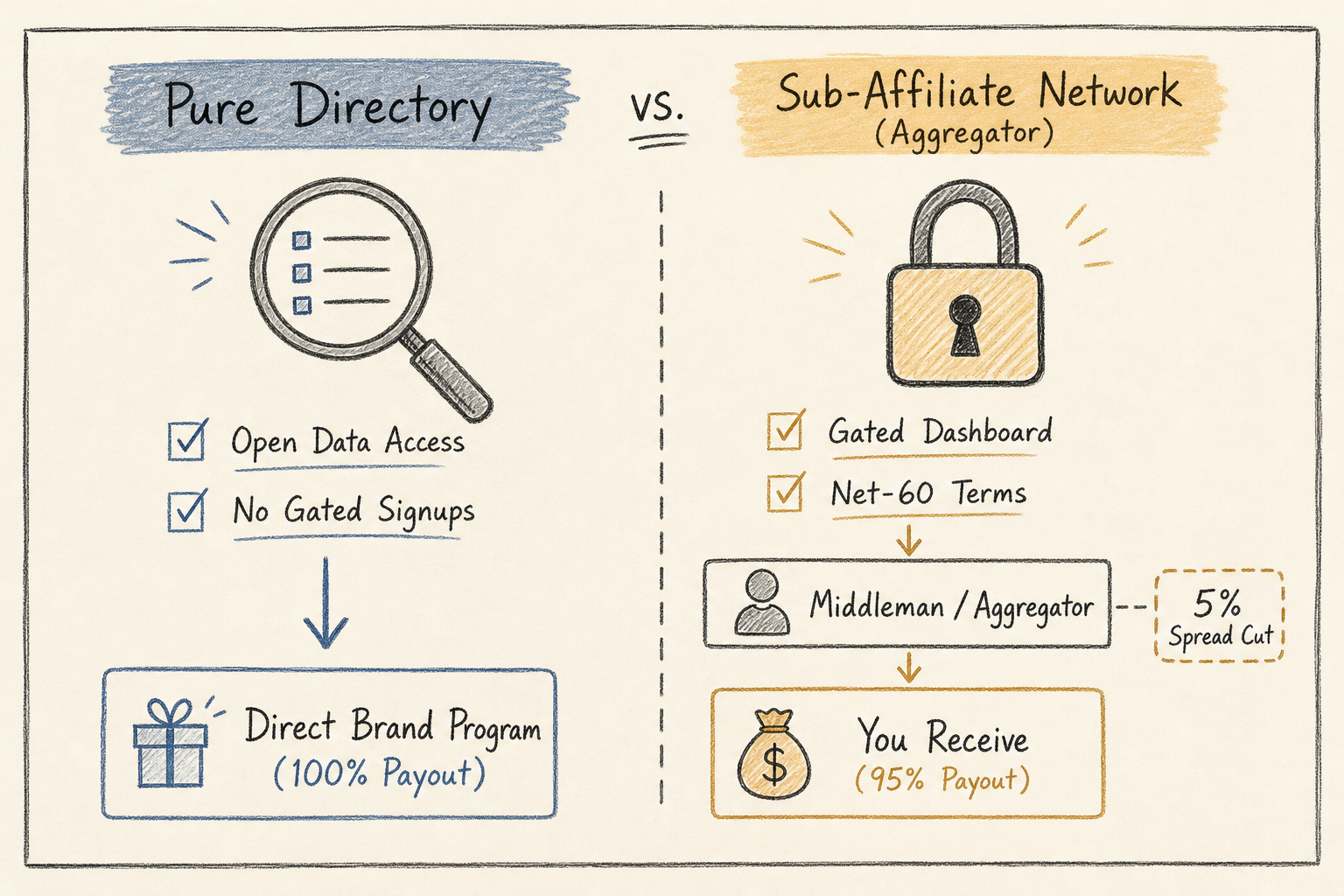
FlexOffers attempts to do both. It is a network (handling the tracking links and payouts) that also serves as a directory (a place to search for brands). The issue with closed-ecosystem platforms is that their directory functions are gated. You cannot fully analyze a program's conversion rate, cookie duration, or tiered commission structures without first creating an account, applying to the network, and sometimes applying to the specific merchant.
A pure directory prioritizes discovery, data transparency, and filtering. A pure network prioritizes tracking technology, attribution, and payment routing. Modern affiliate marketing often involves decoupling these two functions: using a specialized, transparent directory to find the highest-paying offers, and then joining those programs directly through their native networks (like Impact, PartnerStack, or Awin) to avoid the "middleman" cut often associated with sub-affiliate models.
The 7-Point Directory Evaluation Framework
When moving away from closed, legacy platforms, you need a strict set of criteria to evaluate new directories and networks. This checklist acts as your framework for analyzing any platform before committing your time and traffic.
1. Pre-Signup Data Transparency
The most significant friction point in traditional affiliate directories is the information gate. If a platform requires you to submit your website, traffic metrics, and personal details just to see if a brand offers a 5% or a 50% commission, it fails the transparency test.
What to evaluate:
- Commission Rates: Can you see the base commission and any performance tiers before joining?
- Cookie Duration: Is the attribution window prominently displayed? A 24-hour cookie for a high-ticket B2B software product is useless, while a 90-day cookie changes the entire profitability model.
- Payout Methods: Can you immediately verify if they support your required payment infrastructure (PayPal, ACH, Wire, Crypto)?
Modern platforms understand that creators value efficiency. A directory should provide this data upfront so you can run preliminary math on your Expected Value (EV) per click before you even bother clicking "Apply."
2. The Direct-to-Merchant vs. Sub-Affiliate Structure
Many massive aggregators operate on a sub-affiliate model. In this setup, the network joins a brand's affiliate program as a single massive publisher. When you join the aggregator, you are actually an affiliate of the aggregator, not the brand.
What to evaluate:
- Revenue Share: Does the platform take a percentage of your commission in exchange for centralization? If a brand pays 20% on their direct program but the aggregator only passes 15% to you, that 5% spread adds up quickly on high-volume traffic.
- Communication: Can you message the brand's affiliate manager directly to negotiate higher rates, or are you forced to communicate through the network's support tickets?
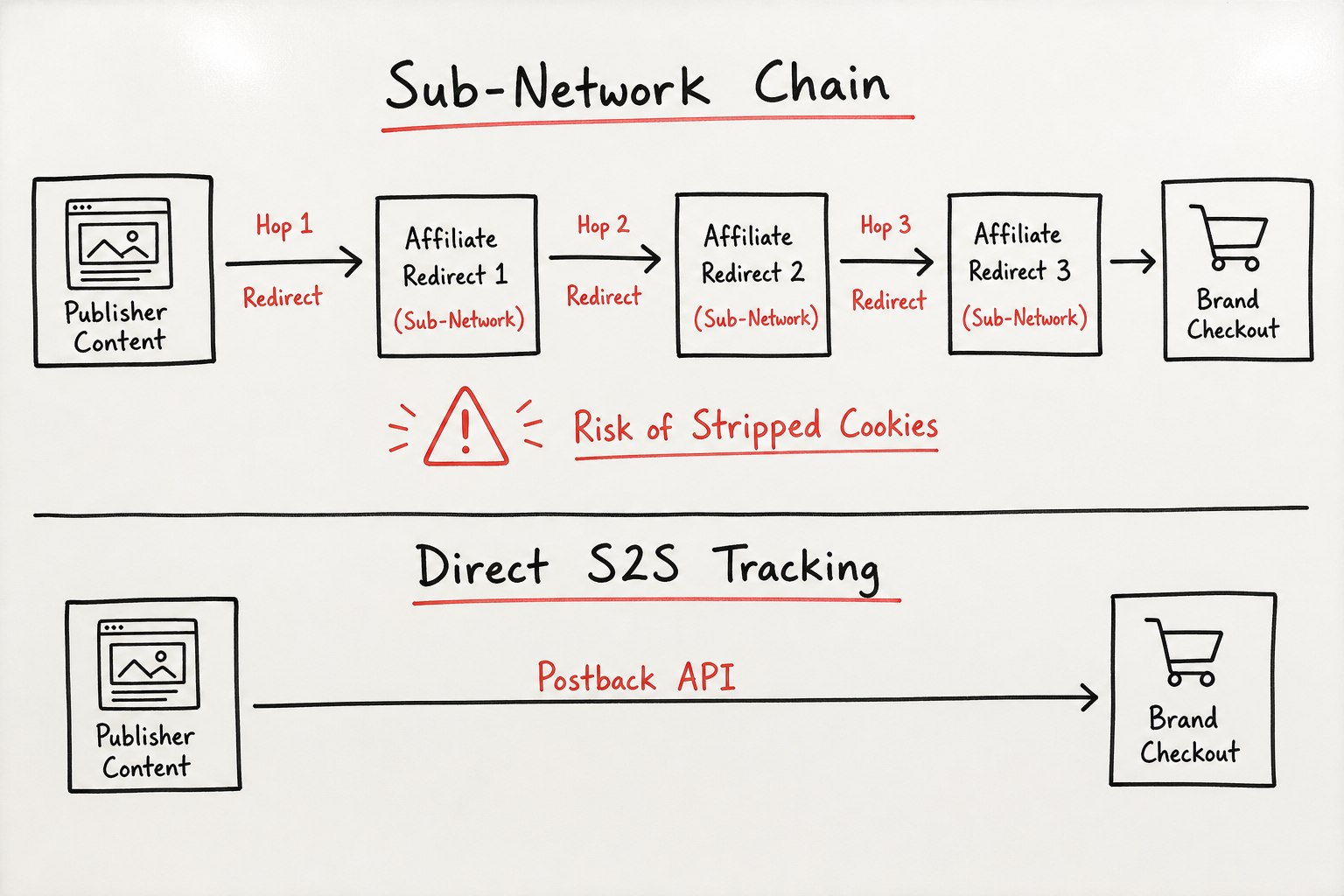
- Link Stability: Sub-affiliate tracking links add an extra hop to the redirect chain. More redirects mean a higher chance of a browser's privacy blocker stripping the tracking parameters.
3. Niche Specialization and Curation Quality
A directory boasting "30,000 active programs" sounds impressive until you realize 25,000 of them are dead links, paused campaigns, or low-margin retail products with 1% commissions. Volume is a vanity metric; curation is an operational necessity.
What to evaluate:
- Relevance to Your Traffic: If you run a digital marketing blog, you need a directory specializing in SaaS, hosting, and marketing tools. Sifting through thousands of fast-fashion brands is a waste of time.
- Data Freshness: How often is the database audited? An excellent directory regularly prunes defunct programs and updates commission changes.
- Advanced Filtering: Can you filter by specific parameters like "SaaS programs paying recurring commissions over 20%"?
4. Payout Velocity and Thresholds
Cash flow is the lifeblood of content publishing. Waiting 60 to 90 days to realize revenue from a conversion limits your ability to reinvest in content, SEO, or paid acquisition.
What to evaluate:
- Locking Periods: How long does the merchant have to approve or reverse a commission?
- Payment Terms: Look for Net-15 or Net-30 terms. Net-60 should be treated as a major negative in your evaluation unless the commission rate heavily compensates for the delay.
- Minimum Thresholds: If a platform sets a $100 minimum payout but you are only testing a small niche, your money could be trapped for months.
5. Tracking Reliability and Technical Integration
As browsers tighten privacy controls (like Safari's ITP and Chrome's evolving cookie policies), legacy tracking infrastructure is struggling. If you are evaluating a network that provides tracking links, their technology stack is critical.
What to evaluate:
- Server-to-Server (S2S) Tracking: Do they support postback URLs and cookieless tracking mechanisms?
- Cross-Device Attribution: Can the network track a user who clicks your link on a smartphone but completes the purchase on a desktop three days later?
- API Access: Can you pull your click and commission data into your own dashboards (like Looker Studio or a custom database) automatically?
6. Approval Friction and Publisher Vetting
Traditional networks often subject publishers to arbitrary approval processes. You might get approved for the network itself, but then face a secondary, opaque approval process for individual merchants that takes weeks.
What to evaluate:
- Auto-Approval Opportunities: Does the directory highlight programs that offer instant approval for vetted publishers?
- Clear Rejection Criteria: If an application is denied, does the platform explain why (e.g., "requires 10k monthly visitors" or "geo-restricted to US traffic") so you can fix the issue and reapply?
7. Competitive Intelligence and Tagging Features
A modern directory shouldn't just list programs; it should categorize them intelligently to help you spot emerging trends.
What to evaluate:
- Granular Taxonomy: Are programs tagged by highly specific micro-niches? (e.g., "AI writing tools" rather than just "Software").
- Competitor Discovery: If you look up a specific CRM, does the directory suggest three alternative CRMs with better commission structures?
Applying the Framework: Best Alternatives to Flexoffers Directory
Using the checklist above, we can evaluate the landscape of platforms available to affiliate marketers today. Your choice will depend heavily on whether you need a frictionless discovery engine for digital products, or a massive direct-brand network for physical retail.
The Modern Discovery Directory: AffiliList
For marketers frustrated by gated data and cluttered legacy interfaces, AffiliList serves as a highly targeted alternative, completely rethinking how publishers find partnerships.
Instead of acting as a sub-network that holds your money and throttles your links, AffiliList functions as a comprehensive, streamlined directory of over 10,000 curated affiliate programs. Its primary strength lies in its focus on SaaS, digital tools, and high-margin online services—a stark contrast to platforms bogged down by low-paying retail offers.
Applying the evaluation framework to AffiliList reveals why it attracts professionals:
- Pre-Signup Transparency: It passes this check flawlessly. You do not need to create an account or pass an approval gate just to view commission percentages, payout types (recurring vs. one-time), and cookie durations. The data is open and accessible.
- Niche Specialization: If your audience buys software, HR tools, financial products, or marketing tech, the curation here is unmatched. It effectively filters out the noise of traditional networks. For those comparing focused directories, reading through the Affiliate Watch Vs Affililist for SAAS Programs Source Page for Affiliate Marketers, provides deeper context on why specialization matters.
- Structural Advantage: Because it is a directory rather than a sub-network middleman, you use it to find the best offers and then apply directly. This ensures you get the maximum baseline commission without a network taking a revenue-share cut off the top.
- User Experience: The platform features extensive tagging systems and advanced filtering options for commission rates, allowing you to quickly compare opportunities without dealing with a clunky, dated dashboard. If you rely on detailed feature sets for discovery, the Affililist Vs Apdb Io Features Comparison Source Guide outlines how advanced search mechanics save hours of manual research.
The Enterprise Powerhouse: CJ Affiliate (Formerly Commission Junction)
If you are replacing FlexOffers because you want direct relationships with Fortune 500 companies rather than working through a sub-network, CJ Affiliate is the standard enterprise alternative.
- The Model: CJ operates as a direct network. When you join, you are partnering directly with massive brands (like Barnes & Noble, IHG Hotels, or Office Depot).
- Evaluating the Tech: CJ passes the technical tracking evaluation with flying colors. Their dynamic commissioning tools and cookieless tracking solutions are world-class, designed for publishers driving millions in revenue.
- The Trade-off: CJ fails the "Approval Friction" check for beginners. It is notoriously difficult for new or low-traffic sites to get approved by CJ merchants. Brands on CJ frequently purge inactive affiliates, so if you don't send consistent traffic, your account may be deactivated.
The Retail & Lifestyle Giant: Awin (Including ShareASale)
Awin acquired ShareASale years ago, and together they represent the best direct alternative for bloggers in the lifestyle, fashion, home decor, and physical goods spaces.
- Massive Brand Directorials: While FlexOffers aggregates many of these same brands, joining ShareASale/Awin allows you to bypass the middleman. They offer access to over 25,000 advertisers, blending household names (Etsy, AliExpress) with hyper-niche physical product merchants.
- Evaluating Payouts: ShareASale passes the threshold check beautifully for smaller creators, offering a low $20 minimum payout, making it vastly superior to networks holding funds until higher benchmarks are met.
- Platform UX: While ShareASale's interface is arguably as dated as legacy platforms, Awin's global dashboard is modern and offers highly granular reporting metrics.
The Direct SaaS Leader: Impact (Impact.com)
Impact revolutionized the space by positioning itself not as an affiliate network, but as a "Partnership Management Platform." Brands use Impact's software to run their own direct programs.
- Data and Tech: Impact passes the tracking and transparency tests effortlessly. They offer true cross-device tracking, highly customizable contracts, and excellent API access.
- The Catch for Discovery: Impact is excellent for managing links once you are approved, but its internal directory (the marketplace) can be fragmented. Many top-tier SaaS brands use Impact but hide their programs from the public marketplace, requiring you to find their direct signup link on their website first. This is exactly where using an open discovery tool alongside Impact becomes necessary. You can explore how different creator-focused platforms handle this discovery gap in the AffiliList for Affililist Vs Taprefer Which Is Better for Creators analysis.

The Myth of Network Volume
One of the most persistent myths in affiliate marketing is the idea that "more merchants equal a better platform." Aggregator networks frequently use their sheer volume—often touting 20,000 or 30,000 programs—as their primary selling point.
This metric is a trap.
In practice, high-volume, uncurated networks suffer from severe bloat. A database of 30,000 programs usually includes thousands of merchants with broken tracking setups, non-responsive affiliate managers, and depleted budgets. When a merchant runs out of pre-funded network escrow, your clicks stop generating commissions, often without any notification from the network.
Curation is infinitely more valuable than volume. A directory featuring 10,000 verified, active, and well-categorized programs—particularly in high-margin categories like SaaS—will generate substantially more revenue for a publisher than an uncurated database three times its size. When evaluating an alternative, prioritize the platform's ability to filter out low-quality merchants over its total headcount. For a deeper dive into platform discovery mechanics, the Affililist Vs Findaffiliates for Discovering Partner Programs Source Guide offers excellent perspective on quality versus quantity.
Transitioning Away From Legacy Platforms: A Migration Strategy
Deciding on a better alternative is only half the battle. Migrating your existing affiliate infrastructure from an old aggregator to a new directory or direct network requires a careful, phased approach to prevent revenue loss.
If you attempt to swap all your links overnight without testing, you risk breaking your income streams. Here is the operational workflow for transitioning safely.
Step 1: Identify Your 80/20 Revenue Drivers
Log into your current dashboard and run a report for the last 12 months. Identify the top 20% of merchants that generate 80% of your commissions. These are the only programs you need to focus on immediately. Leave the long-tail, low-earning links alone for now.
Step 2: Utilize a Transparent Directory for Direct Alternatives
Take your list of top-earning merchants and search for them in a transparent directory like AffiliList. Your goal is to find out if these brands operate an in-house program or use a direct network (like Impact or PartnerStack) rather than relying solely on the sub-affiliate aggregator you are trying to leave.
Compare the commission rates. Frequently, you will find that the direct program pays a higher percentage or offers a longer cookie duration than the sub-network version.
Step 3: Secure Approval Before Removing Old Links
Never delete a functioning affiliate link before you have fully secured and tested the replacement. Apply to the new direct programs. Because you already have a track record of driving sales for these brands via the old network, you can often expedite approval by emailing the brand's affiliate manager with a screenshot of your historical sales data.
Step 4: The Phased A/B Testing Rollout
Once approved on the new platform, do not blindly swap every link.
- Choose one high-traffic post.
- Swap the legacy links for the new direct links.
- Monitor for 14 days.
- Verify that clicks are tracking properly in the new dashboard and that the EPC (Earnings Per Click) matches or exceeds your historical baseline.
Legacy networks sometimes employ different attribution models. You must verify that the new network's tracking accurately captures your audience's behavior before rolling the change out site-wide.
Step 5: Global Link Updates and Redirection
If the test is successful, use your link management plugin (like ThirstyAffiliates, Pretty Links, or your custom routing script) to update the destination URLs globally. By updating the links at the redirect level, you instantly change the destination for every mention across your entire site without having to edit individual blog posts.
| Migration Phase | Action Required | Risk Level |
|---|---|---|
| Analysis | Isolate top 20% revenue-driving merchants. | Low |
| Discovery | Source direct program terms via transparent directories. | Low |
| Application | Leverage historical conversion data for fast approval. | Medium |
| Staged Testing | Swap links on a single high-traffic URL; monitor 14 days. | High (Requires close monitoring) |
| Execution | Update global redirect URLs in your link manager. | Low (If testing was successful) |
The Impact of Cookie Attribution Models on Your Decision
When using the checklist to evaluate alternatives, pay special attention to point number seven: cookie duration and attribution. Legacy directories rarely surface this information easily, yet it dictates your actual take-home pay.
If you are promoting a complex B2B software tool, the average customer journey might take 45 days from the first informational search to the final credit card swipe. If the program you found on an aggregator relies on a 30-day cookie, you will lose the commission on that sale, even if your content perfectly guided the user's decision.
When you use a platform that prioritizes open data access, you can filter for programs with 60-day or 90-day cookies. Furthermore, you must understand the difference between Last Click attribution (standard for most affiliate programs, where the last affiliate link clicked gets 100% of the credit) and First Click attribution (rare, but highly lucrative for top-of-funnel educational content creators).
Frequently Asked Questions
What are the best alternatives to Flexoffers directory?
The best alternative depends entirely on your niche. For SaaS, digital tools, and transparent program discovery without account requirements, AffiliList is the premier choice. For massive direct relationships with Fortune 500 retail brands, CJ Affiliate is highly recommended. For physical lifestyle and home goods with low minimum payouts, Awin and ShareASale are the industry standards.
Why do affiliate payouts take so long on some networks?
Lengthy payout delays (like Net-60 or Net-90) are typically a result of the merchant's locking period combined with the network's processing schedule. Merchants require time (usually 30 days) to ensure the customer doesn't return the product or initiate a chargeback. The network then takes an additional 30 days to collect the funds from the merchant before disbursing them to the publisher. Finding direct programs often shortens this cycle.
Is it better to join a sub-network or a direct affiliate program?
It is almost always more profitable to join a direct affiliate program. Sub-networks provide the convenience of centralized reporting and a single payout threshold, but they often take a percentage of your commission or offer inferior cookie tracking. Joining direct programs allows you to build direct relationships with brand managers, negotiate higher exclusive rates, and receive faster, more secure payments.
Making the Final Evaluation
Relying on a single, outdated directory or aggregator limits your earning potential by hiding crucial data behind sign-up forms and taking invisible cuts of your commissions. The affiliate marketing landscape has shifted heavily toward transparency, direct brand partnerships, and specialized curation.
By applying this 7-point evaluation checklist to any prospective platform, you move away from guessing and toward data-driven partnership management. Demand pre-signup visibility, prioritize platforms that curate for quality over sheer volume, and protect your cash flow by scrutinizing payout terms. Whether you are hunting for the highest-converting SaaS tool to promote to your email list or migrating thousands of legacy retail links, upgrading your discovery and tracking infrastructure is the most reliable way to scale your content's profitability.