
Best high-paying recurring affiliate programs for SaaS marketers
Discover the top high-paying recurring affiliate programs for SaaS marketers. Compare commission rates, cookie windows, and strategies to stack monthly MRR.
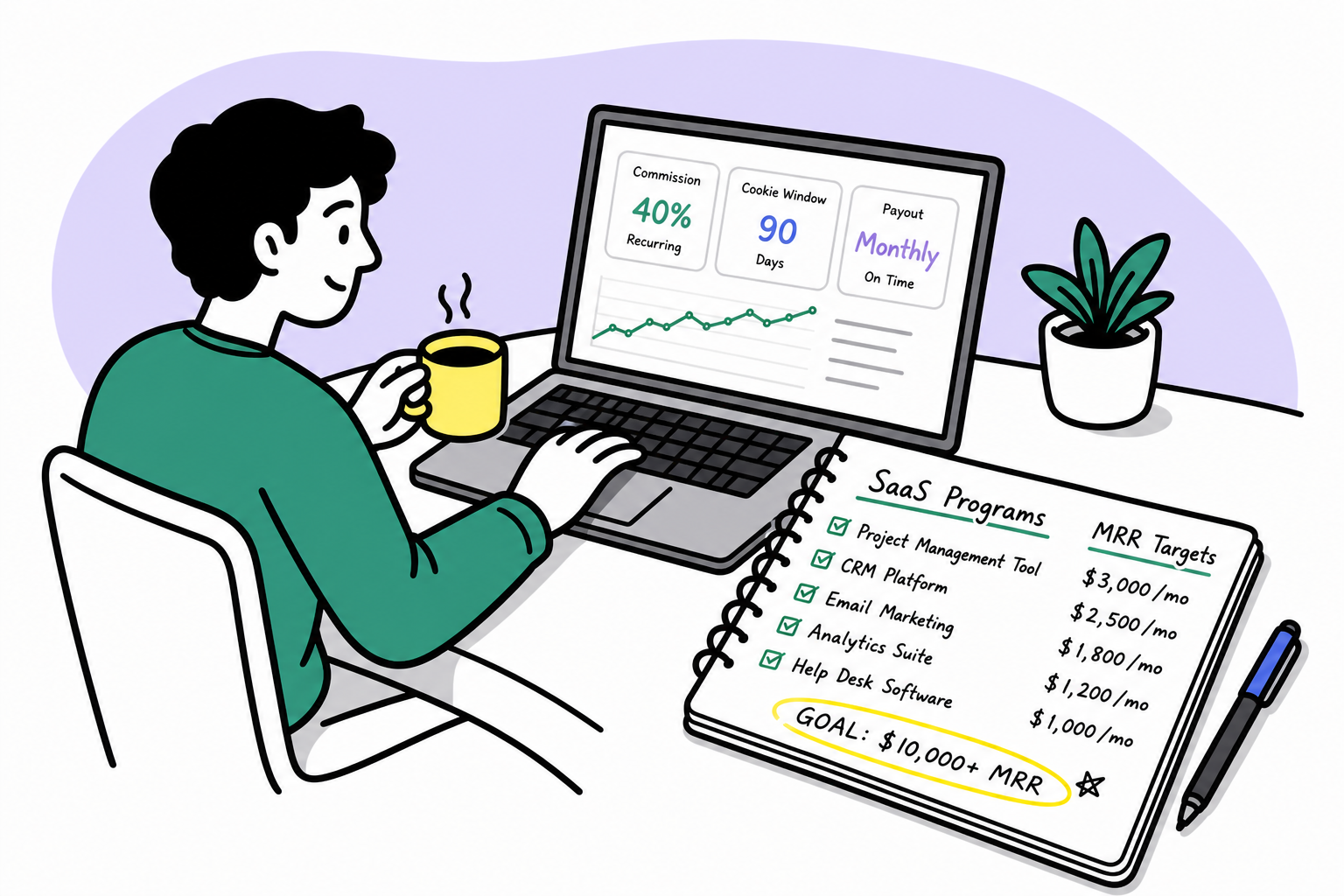
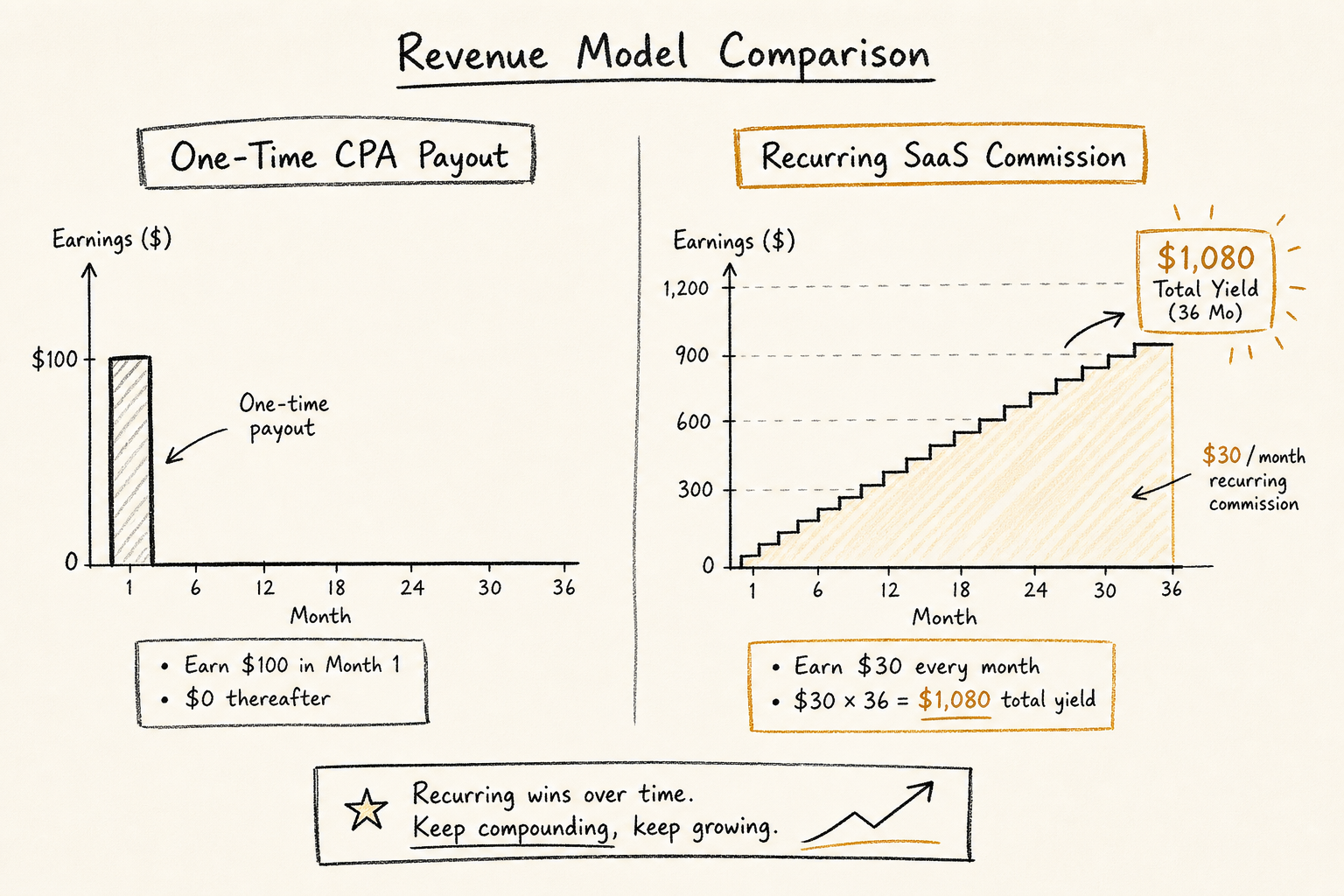
A one-time CPA payout of $100 feels great the moment it hits your dashboard. But every month, your revenue resets to zero. You have to hunt down a brand new customer just to make that same $100 again.
This relentless cycle is why veteran affiliate marketers eventually pivot their portfolios toward a different model: recurring commissions. By promoting subscription-based products—primarily Software as a Service (SaaS)—you earn a percentage of the customer's monthly payment for as long as they remain a user. A $30 commission doesn't sound as exciting as $100 upfront, but if that customer uses the software for 36 months, your total yield is $1,080.
Software companies can afford to pay out 30% to 50% of their monthly recurring revenue (MRR) to affiliates because their gross margins on digital products often exceed 80%. They offset their Customer Acquisition Cost (CAC) entirely onto you, paying you only when you deliver a paying user. It is a mutually beneficial arrangement that forms the backbone of the most profitable affiliate portfolios.
However, the internet is flooded with outdated listicles promoting programs that either quietly shut down years ago or slashed their commission rates. At AffiliList, our directory processes data on over 10,000 affiliate programs, prioritizing transparency so you can bypass the clutter and find verified commission structures.
If you are a SaaS marketer, blogger, or niche site owner looking to stack compounding revenue, here is a detailed breakdown of the best high-paying recurring affiliate programs available right now, categorized by use case, alongside the strategies required to actually convert your traffic into long-term subscribers.
The Economics of SaaS Affiliate Marketing
Before jumping into the programs, you need to understand the math that dictates how these companies operate and why some offer 10% while others offer 50%.
When an in-house affiliate manager sets their commission rates, they are looking at three metrics: LTV (Lifetime Value), Churn Rate, and CAC Payback Period. If a customer pays $100 a month and typically stays for 24 months, their LTV is $2,400. If the company pays you a 30% recurring commission, they are giving you $30 a month, or $720 total. They keep $1,680.
Because they don't have to pay you that $720 upfront, their cash flow remains healthy. This is why B2B SaaS is arguably the strongest category out of the 11 Best Niches for Affiliate Marketing (SaaS & Digital).
 When evaluating any recurring program, do not just look at the headline percentage. A 50% commission on a product that frustrates users and has a 20% monthly churn rate will yield less money than a 15% commission on an enterprise tool that becomes deeply embedded in a company's daily operations.
Here is what you should be evaluating for every program:
- Cookie Duration: B2B software purchases involve multiple stakeholders and research phases. A 30-day cookie is often insufficient for high-ticket SaaS. Look for 60 to 90 days.
- Attribution Model: The industry standard is last-click attribution. Ensure the program does not use aggressive retargeting ads that overwrite your affiliate cookie right before the user converts.
- Payout Caps and Time Limits: Some "recurring" programs cap out at 12 or 24 months. Read the fine print to see if it is truly lifetime recurring.
- Minimum Payout Thresholds: If the threshold is $500 and the product pays out $5 per month, you will be waiting a long time for your first check.
High-Paying Recurring Programs: Email Marketing & CRM
Email marketing software and Customer Relationship Management (CRM) tools have some of the highest retention rates in the software industry. Once a business uploads their contact list, builds their automation sequences, and integrates the tool with their website, switching to a competitor becomes a massive logistical headache. This high switching cost protects your recurring commissions.
1. GetResponse
GetResponse is a legacy player in the email marketing space that has successfully pivoted to offer webinars, landing pages, and AI-driven campaigns. They offer a highly flexible affiliate model.
- Commission Structure: You can choose between a 33% recurring commission or a flat $100 one-time bounty per sale [1].
- Cookie Life: 120 days.
- Target Audience: Small to medium-sized businesses (SMBs), course creators, and e-commerce stores looking for an all-in-one marketing suite.
- Why it Converts: The dual commission structure lets you hedge your bets. If you are driving high-quality, established businesses that will stick around for years, take the 33%. If your audience consists of beginners who might churn after trying to build their first affiliate marketing side hustle, take the $100 upfront bounty.
- Failure Mode to Avoid: Promoting GetResponse solely as a basic newsletter tool. To capture higher-tier signups, focus your content on their advanced marketing automation and webinar funnels.
2. ActiveCampaign
ActiveCampaign is a heavyweight in the marketing automation space, known for its visual automation builder and deep CRM integrations.
- Commission Structure: Starts at 20% recurring and scales up to 30% based on the volume of new business you refer.
- Cookie Life: 90 days.
- Target Audience: Advanced marketers, agencies, and B2B sales teams who have outgrown simpler tools like Mailchimp.
- Why it Converts: ActiveCampaign is rarely a company's first email tool; it is the tool they upgrade to. Your content should target users searching for migration guides (e.g., "How to migrate from ConvertKit to ActiveCampaign"). Because the average account size is much higher than basic email tools, your 20% cut translates to a substantial monthly check.
- Failure Mode to Avoid: Do not market ActiveCampaign to absolute beginners. The learning curve is steep, and beginners will churn within the 14-day trial, yielding you nothing.
3. ConvertKit (Soon to be Kit)
Designed explicitly for the creator economy, ConvertKit is the tool of choice for bloggers, podcasters, and YouTubers.
- Commission Structure: 30% recurring commission for up to 24 months per referred account. (Note the 24-month cap, which differs from true lifetime recurring).
- Cookie Life: 90 days.
- Target Audience: Content creators, authors, and solo entrepreneurs.
- Why it Converts: ConvertKit has a massive cultural footprint in the creator space. They offer a generous free tier, meaning you can drive a massive volume of free signups. When those creators eventually grow their lists and upgrade to paid plans, your cookie tracking (if still valid) kicks in.
- Failure Mode to Avoid: Relying entirely on the free tier to generate revenue. You must actively educate your referrals on why they need the paid automation features.
4. AWeber
AWeber is one of the oldest email marketing platforms, priding itself on high deliverability rates and excellent customer support.
- Commission Structure: Tiered recurring commissions up to 50% (base starts lower, scaling based on referrals).
- Cookie Life: 365 days (one of the most generous in the industry).
- Target Audience: Local businesses, traditional offline businesses moving online, and beginner affiliate marketers.
- Why it Converts: A full year-long cookie means that if someone clicks your link in January, forgets about it, and finally decides to sign up in November, you still get paid. This is incredibly rare in the SaaS space.
High-Paying Recurring Programs: B2B Operations & Productivity
While marketing tools are the traditional stomping ground for affiliates, B2B operations and productivity software represent a massive, less competitive opportunity. These tools solve distinct bottlenecks for agencies and startups.
5. Reclaim.ai
Reclaim.ai is an intelligent calendar and time-blocking application that integrates directly with Google Calendar to optimize schedules for busy teams and individuals.
- Commission Structure: 25% recurring commission for up to one year [4].
- Cookie Life: 90 days.
- Target Audience: Startup founders, product managers, and remote teams struggling with meeting overload.
- Why it Converts: The productivity niche is fiercely passionate. AI-driven scheduling is a highly searchable topic right now. Reclaim has a viral loop built in—when someone uses Reclaim to send a booking link, the recipient sees the software. By creating content that teaches time management frameworks (like "Timeboxing for Product Managers") and positioning Reclaim as the solution, conversions are exceptionally high.
- Failure Mode to Avoid: Focusing too much on the AI buzzword rather than the practical time saved. Your content needs to show exact calendar workflows.

6. Emposola
Emposola operates in the B2B operations and streamlining space, serving as a backend solution for small businesses trying to organize their workflows.
- Commission Structure: $20 to $120+ per client per month, recurring for as long as they stay an active customer [1].
- Cookie Life: Standard 60 days.
- Target Audience: Agency owners, operational managers, and small business consultants.
- Why it Converts: The flat-fee recurring structure means you aren't reliant on the customer upgrading to higher percentage tiers to make meaningful money. Even at the entry-level $20/month tier, referring 50 businesses creates a baseline $1,000/month passive income stream.
- Failure Mode to Avoid: Promoting this to solopreneurs who do not have the operational complexity to warrant the software.
7. LiveChat
LiveChat provides premium customer service software, ticketing systems, and chatbot integrations for e-commerce and enterprise websites.
- Commission Structure: 20% to 22% lifetime recurring commission [5].
- Cookie Life: 120 days.
- Target Audience: E-commerce store owners, SaaS companies, and B2B service providers.
- Why it Converts: LiveChat directly correlates with increased sales for the end-user. When you write content about "How to increase Shopify conversion rates by 15%," pitching a live chat widget is an easy, logical close. The lifetime recurring model is highly lucrative because enterprise customers rarely change their support infrastructure once their team is trained on it.
High-Paying Recurring Programs: Growth, SEO, and Analytics
The users in this category are highly technical. They do not need to be convinced why they need a proxy network or a link tracker; they are searching for the best one. Your job is to capture middle and bottom-of-funnel traffic.
8. Smartproxy
Smartproxy provides residential and datacenter proxies used for web scraping, ad verification, and localized SEO research.
- Commission Structure: Up to 50% recurring commissions.
- Cookie Life: 60 days.
- Target Audience: SEO agencies, data scientists, sneaker botters, and market researchers.
- Why it Converts: Proxy usage is almost always a recurring, high-volume expense. A single data scraping agency might spend thousands of dollars a month on bandwidth. Capturing 50% of a heavy user's monthly proxy bill can result in single commissions that rival high paying affiliate programs for $500+ commissions.
- Failure Mode to Avoid: Creating generic content. This is a deeply technical niche. If your review does not discuss success rates, IP bans, and concurrent threads, buyers will bounce to a more authoritative technical review.
9. ClickMagick
ClickMagick is a heavy-duty link tracking and click fraud prevention tool designed for media buyers and performance marketers.
- Commission Structure: 35% lifetime recurring commission.
- Cookie Life: 365 days.
- Target Audience: Media buyers running Facebook Ads, Google Ads, or TikTok Ads at scale.
- Why it Converts: Ad costs are continually rising, making click fraud a massive pain point. ClickMagick's ability to filter bot traffic saves media buyers money instantly, making the software pay for itself. Because media buyers are analytical by nature, presenting case studies showing ROI improvements is the most effective way to drive conversions.
10. GrowthList & Repixel
These two programs represent the emerging market of hyper-targeted B2B marketing tools. GrowthList provides validated leads for tech companies, while Repixel allows companies to pixel other companies' websites for B2B retargeting.
- Commission Structure: GrowthList offers 40% recurring; Repixel offers up to 30% recurring [2].
- Cookie Life: 60 to 90 days.
- Target Audience: B2B growth hackers, outbound sales teams, and demand generation managers.
- Why it Converts: Both tools offer direct lines to new revenue for their users. B2B lists and retargeting audiences are addictive; once a sales team builds a pipeline using GrowthList, they will not cancel the subscription.
- Failure Mode to Avoid: Wasting traffic on beginners. You need to target content toward established companies that actually have outbound sales SDRs (Sales Development Representatives) who can utilize these tools.
High-Paying Recurring Programs: Infrastructure & Hosting
Web hosting is notorious for offering massive one-time CPA payouts (sometimes up to $200 per signup). However, a few premium hosts offer recurring models, which are far more valuable in the long run.
11. Cloudways
Cloudways is a managed cloud hosting platform that lets users deploy servers on DigitalOcean, AWS, or Google Cloud without needing command-line knowledge.
- Commission Structure: They offer a hybrid model ($30 upfront + 7% lifetime recurring) or a straight CPA model (up to $125 per sale) [3].
- Cookie Life: 90 days.
- Target Audience: Web design agencies, high-traffic bloggers, and e-commerce stores moving away from shared hosting.
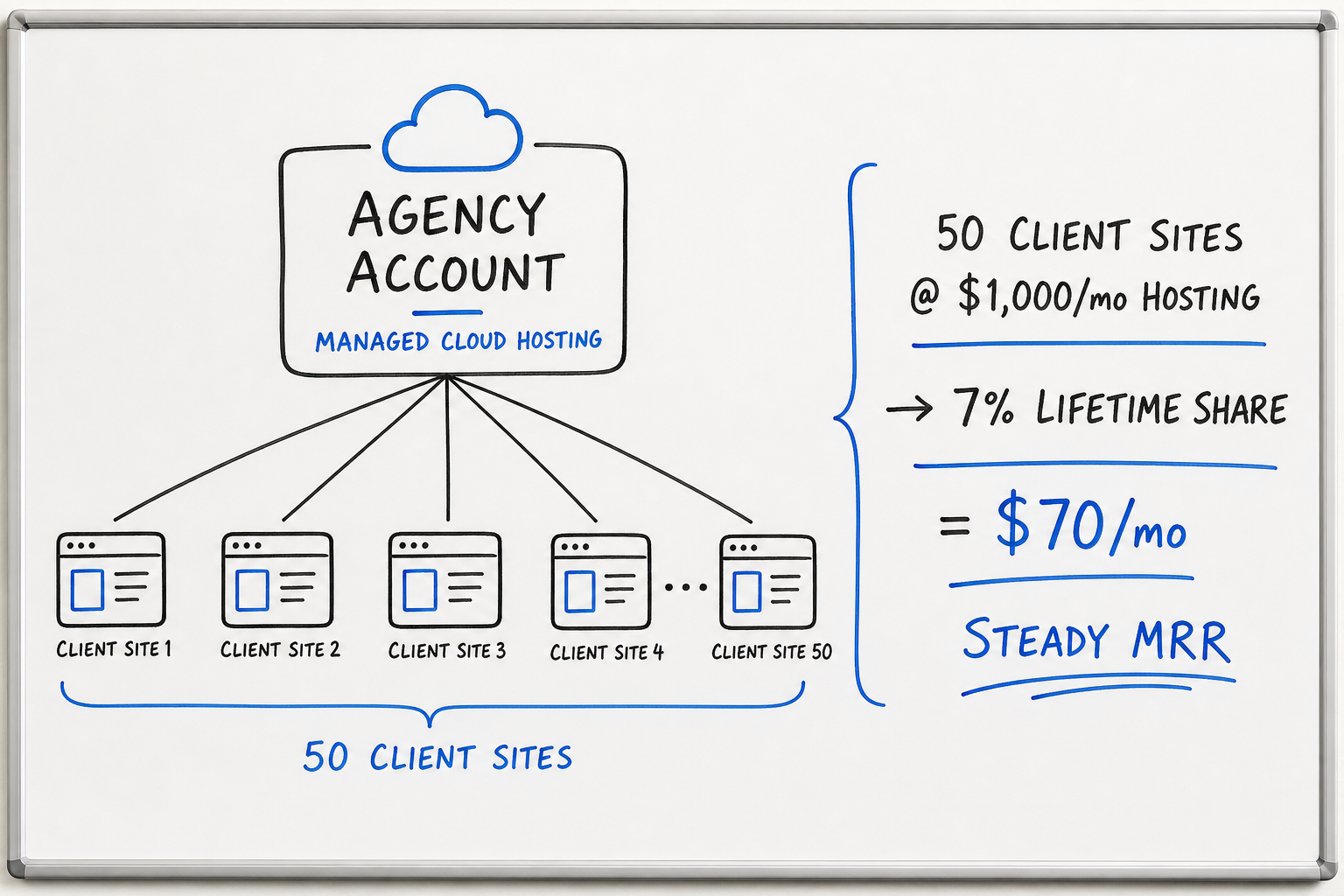
- Why it Converts: The 7% lifetime recurring might sound small compared to 30% on email software, but hosting bills scale infinitely with traffic. If you refer an agency that hosts 50 client websites on Cloudways, their monthly bill could be $1,000+. Your 7% cut on that single agency is $70 a month, forever.
- Failure Mode to Avoid: Pitching Cloudways to someone trying to start their very first affiliate marketing blog. Cloudways is a premium, performance-oriented host. Your content should target users searching for things like "How to speed up WooCommerce" or "Best managed VPS for WordPress."
Strategic Implementation: How to Actually Sell SaaS
Listing high-paying recurring affiliate programs is the easy part. The internet is full of marketers who sign up for 50 programs, slap banners on their sidebars, and wonder why their dashboard stays at zero. To generate meaningful MRR, you have to move beyond standard listicles and integrate the software into utility-driven content.
Strategy 1: The "Workflow Tutorial" Approach
Nobody wakes up wanting to buy project management software; they wake up wanting their agency to stop dropping the ball on client deliverables. Instead of writing "Reclaim.ai Review 2026", write a comprehensive guide titled "The Exact Calendar Workflow We Use to Save 10 Hours a Week."
Within the tutorial, document the specific steps using the software. Provide screenshots of your actual dashboard. Explain how to configure the settings. When you show people how a tool solves their specific pain point, clicking your affiliate link to replicate your exact setup feels natural, not forced.
Strategy 2: Targeting "Versus" and "Alternative" Keywords
When a user searches for "ActiveCampaign vs GetResponse", they have their credit card in hand. They already know they need email marketing software; they just need a trusted authority to push them off the fence.
To win these highly lucrative comparison queries:
- Do not declare a universal winner. It ruins your credibility. Instead, segment the recommendation: "Choose ActiveCampaign if you have a dedicated sales team. Choose GetResponse if you need integrated webinar hosting."
- Highlight the UI. Software buyers care deeply about how a tool looks and feels. Share screenshots comparing the automation builders side-by-side.
- Include a standard markdown comparison table. Summarize the pricing, cookie length, and key features so skimmers can make quick decisions.
| Feature / Criteria | ActiveCampaign | GetResponse |
|---|---|---|
| Best For | Advanced B2B automations | SMBs and course creators |
| Pricing Start | ~$29/month | ~$15/month (Free tier available) |
| Affiliate Cookie | 90 days | 120 days |
| Commission Type | 20-30% Recurring | 33% Recurring or $100 CPA |
Strategy 3: The "Integration Trap"
A highly uncompetitive content strategy for promoting B2B SaaS is writing about obscure software integrations. For example, search volume for "Best CRM" is dominated by massive media conglomerates. But search volume for "How to connect LiveChat to HubSpot CRM" is often wide open.
Write the integration guide. Explain the data flow. At the beginning of the article, state: "Don't have a LiveChat account yet? You can grab a 14-day free trial here [Affiliate Link] to follow along with this tutorial." This targets long-tail, high-intent operational queries.
The Myth of Passive Income in SaaS Affiliate Marketing
There is a pervasive myth in this industry that recurring affiliate revenue is entirely passive. You refer a customer in 2024, and you collect checks through 2028 while sleeping on a beach.
This is factually incorrect. If the SaaS company updates its user interface, changes its pricing tiers, or removes a key feature, your top-ranking review will suddenly become inaccurate. Conversion rates will plummet because the screenshots in your article no longer match the software the user sees when they click your link.
Furthermore, if the software is difficult to use, the customers you refer will churn. When they cancel their subscription, your MRR vanishes. You are not just responsible for the acquisition; if you want to keep your recurring checks, you are implicitly responsible for customer success.
This means you must continually update your tutorial content, maintain an email list where you share tips on how to get the most out of the tools you promote, and occasionally warn your audience if a tool's quality begins to slip. If you notice a program has stopped paying on time, pivot your links to a competitor. Maintaining trust with your audience is infinitely more valuable than protecting a single affiliate relationship. (If you aren't sure how to vet the integrity of these programs, read our guide: Is Affiliate Marketing Legit? (How to Spot Real Offers)).
Common Pitfalls to Avoid with Recurring Programs
As you build out your directory of partnerships, keep an eye out for these common failure modes that trap newer marketers.
1. The Feature Update Trap SaaS companies ship new features constantly. If you wrote a review of ConvertKit in 2024 complaining that it lacked advanced reporting, and they released advanced reporting in 2025, your review is now actively costing the company sales. In-house affiliate managers monitor top referrers. If your content is outdated, they may lower your commission tier or ask you to update the post.
2. Chasing High Percentages Over High Conversions A completely unknown CRM startup might offer you 60% recurring commissions to get you to promote them over ActiveCampaign. But if the unknown CRM has a terrible landing page, bugs in the software, and zero brand recognition, your conversion rate will be 0.1%. Earning 20% on a tool that converts at 4% is always better than earning 60% on a tool that converts at 0.1%.
3. Ignoring the Payout Terms Always read the affiliate terms of service. Some programs mandate a "Net-60" payout structure, meaning commissions earned in January are not paid out until the end of March. This accounts for refunds and chargebacks. Additionally, watch out for high minimum payout thresholds. If you need the cash flow to run paid ads, Net-60 terms can cripple your business.
4. Not Leveraging Affiliate Managers Once you start driving 10 to 15 sales a month for a specific SaaS company, do not just sit back. Find out who is hiring affiliate marketing jobs at the company, reach out to their affiliate manager on LinkedIn, and negotiate a private rate. Software companies are highly motivated to retain top affiliates. If you ask for a bump from 20% to 25%, or request custom coupon codes for your audience, they will almost always accommodate you.
Expanding Beyond Traditional Search Traffic
While SEO remains the most reliable way to capture software buyers, waiting six months for an article to rank is frustrating. You should actively diversify how you put these recurring offers in front of relevant audiences.
If you are promoting highly visual SaaS tools—like landing page builders, graphic design software, or visual automation pipelines—you can map out the entire funnel visually and drive traffic from alternative search engines. Our guide on Setting Up Affiliate Marketing on Pinterest details exactly how to turn visual workflows into high-converting pins that link directly to your deep-dive tutorials.
Similarly, utilizing YouTube for SaaS reviews is highly effective. A screen-share video showing you actively building a campaign in GetResponse provides undeniable proof that the tool works. You can then embed that video directly into your written blog post, increasing time-on-page and boosting both your SEO and your overall conversion rate.
Frequently Asked Questions (FAQs)
What is a recurring affiliate program? A recurring affiliate program pays you a commission on a repeating basis (usually monthly or annually) for as long as the customer you referred continues to pay for their subscription. This is in contrast to CPA (Cost Per Action) programs, which pay a single, flat fee upon the initial sale.
Are lifetime recurring commissions actually "lifetime"? In theory, yes. However, "lifetime" means the lifetime of the customer's account under the current affiliate terms of service. If the SaaS company is acquired, shuts down, or completely restructures its affiliate program, your "lifetime" commissions can be terminated. Always rely on a diversified portfolio of programs rather than a single software tool.
What is the most profitable affiliate marketing niche for recurring income? Software as a Service (SaaS), specifically in the B2B sector (marketing, finance, operations, and web hosting), is consistently the most profitable. B2B software has high switching costs, leading to high retention rates, which protects your monthly recurring revenue. For a broader look, explore the 7 Most Profitable Affiliate Marketing Niches to Target.
How do I choose which recurring program to promote first? Start by looking at the tools you already use to run your business. It is exponentially easier to write authentic, high-converting content about a tool you log into every day. If you don't use any yet, decide on a specific sub-niche (like tools for podcast editors or CRMs for real estate agents) and review our guide on how to pick a niche for affiliate marketing in 5 steps.