9 Highest Paying Affiliate Programs for Beginners
Discover the 9 highest paying affiliate programs for beginners in 2026. Learn how to get approved, promote high-ticket offers, and scale your income faster.
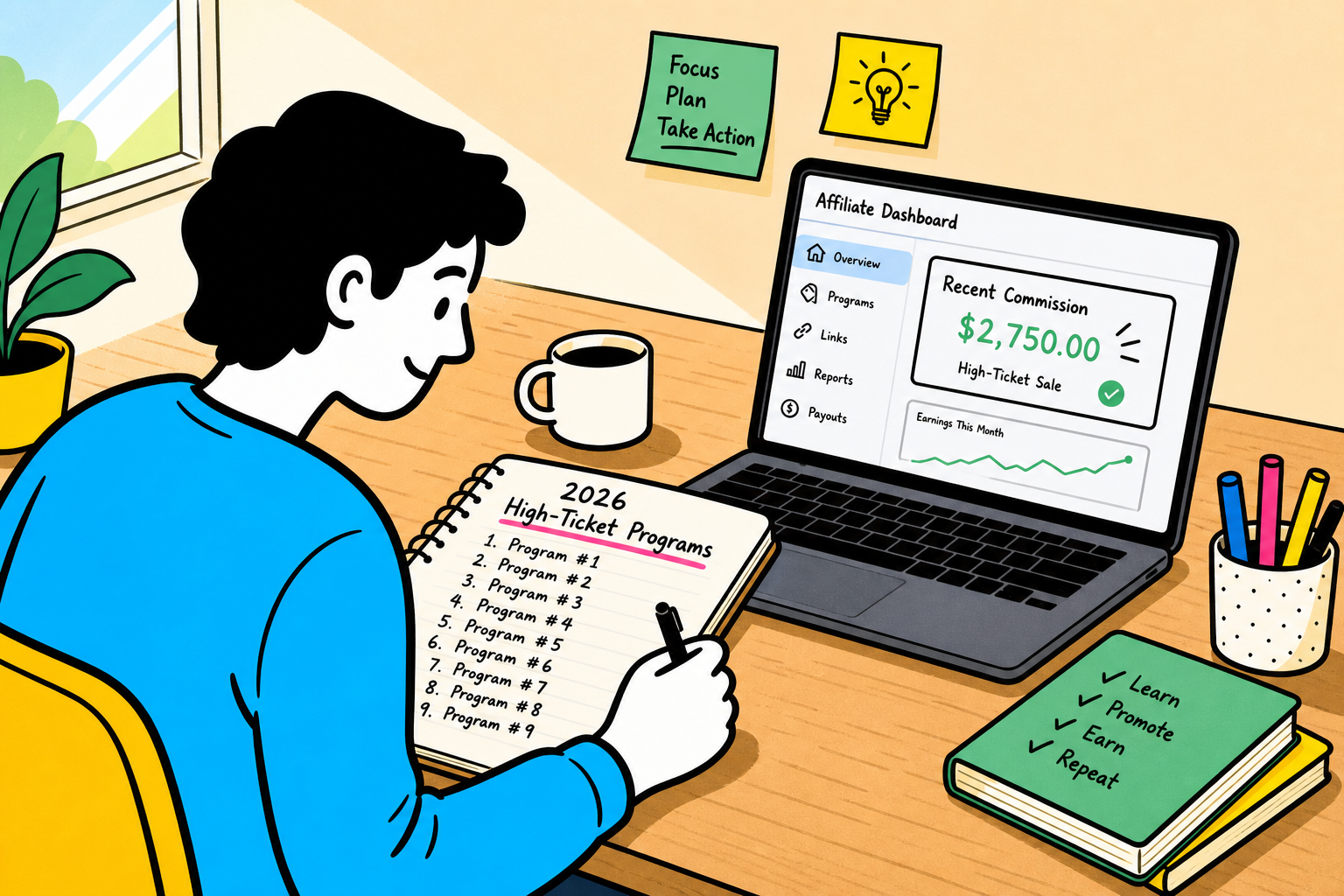
Grinding out a living on 3% commissions is a harsh introduction to affiliate marketing. If you build a niche site and funnel 1,000 readers to a $20 Amazon product, a 5% conversion rate yields 50 sales. At a 3% commission, you earn a grand total of $30 for your effort. It is mathematically grueling to scale a business on pennies.
The alternative is shifting your focus to high-paying affiliate programs.
Many new marketers assume that premium, high-ticket, or high-CPA (Cost Per Action) programs are gated behind impossible approval processes or require massive, established audiences. This is a misconception. While some exclusive networks demand 100,000 monthly visitors, hundreds of lucrative programs are perfectly accessible to beginners—provided you have a professional website and a clear traffic strategy.
Whether you are promoting B2B software, specialized courses, or premium consumer goods, aligning yourself with high-paying offers means you only need a handful of conversions a month to generate a meaningful income. If you are building an affiliate marketing side hustle to reach your first $1,000 a month, doing so with five $200 commissions is infinitely easier than hunting down 1,000 $1 commissions.
Here is a curated look at 9 of the highest paying affiliate programs that are accessible to beginners, complete with strategies on how to actually promote them.
What Makes a "High Paying" Program Beginner-Friendly?
Before detailing the specific programs, it helps to understand what criteria make a program both profitable and viable for someone just starting out.
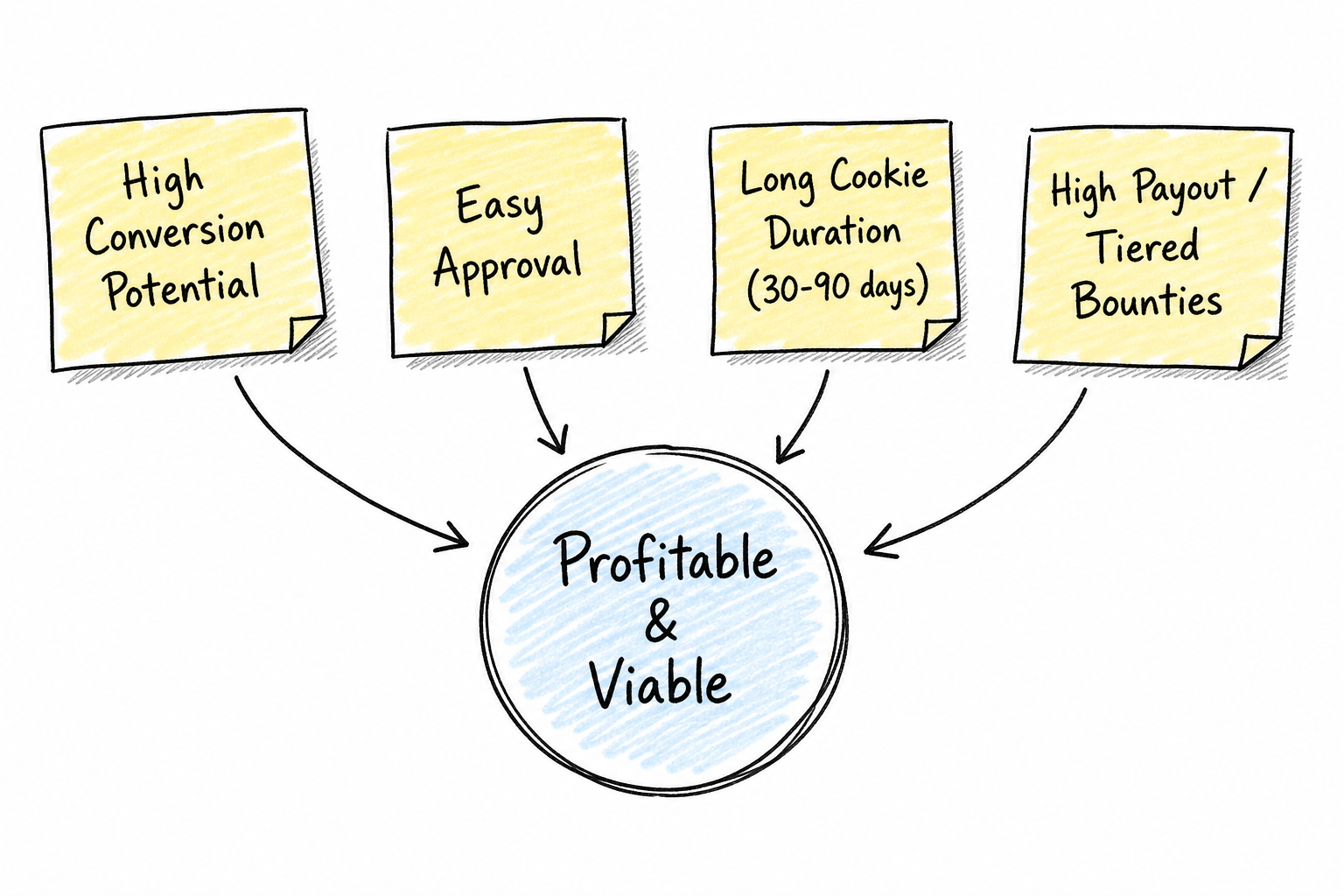
- Accessible Approval Requirements: The program should not require a six-figure traffic history. They should evaluate applications based on the quality of your content, the clarity of your promotion methods, and the relevance of your niche.
- High Conversion Potential: A $1,000 commission on a terrible product is worthless because it will never convert. Beginner-friendly programs have strong brand recognition, excellent landing pages, and a product that actually solves a problem.
- Favorable Cookie Durations: A cookie duration dictates how long after a click you can earn a commission. High-paying items often require a longer buying cycle. A 30-to-90-day cookie is essential so you get credited when the user inevitably takes a week to think about their purchase.
- Tiered Payouts or Bounties: Some of the best programs for beginners pay you just for generating a lead or a free trial, which removes the friction of asking a reader to pull out their credit card immediately.
With these criteria in mind, let's look at the programs.
1. Semrush
Semrush is a heavyweight in the digital marketing and SEO software space. It is a tool used by marketers, bloggers, and enterprise businesses for keyword research, competitor analysis, and site audits.
The Numbers
- Commission: $200 per new subscription sale, $10 per new trial lead, $0.01 per new sign-up.
- Cookie Duration: 120 days
- Network: Impact Radius
Why It's Beginner-Friendly
Semrush is arguably one of the most generous SaaS affiliate programs available. What makes it incredibly viable for beginners is the $10 payout for a free trial. You do not need to convince a reader to buy a $129/month subscription right away; you only need to convince them to try the software for free. If they eventually upgrade within the massive 120-day cookie window, you secure the $200 bounty.
Promotion Strategy
Do not just write a "Semrush Review." The SERPs (Search Engine Results Pages) are too crowded. Instead, create highly specific tutorials. Write articles like "How to find low-competition keywords for a pet blog" or "Step-by-step technical SEO audit for Shopify stores." Use Semrush in your screenshots to demonstrate the process, and place your affiliate link contextually, offering the free trial as the logical next step for the reader to follow along.
Common Failure Mode
Beginners often try to sell the enterprise features to an audience of casual bloggers. Match the pitch to the audience. If your readers are beginners, focus heavily on the basic keyword research tools and the free trial.
2. Kinsta
Kinsta is a premium managed WordPress hosting provider. They are known for lightning-fast speeds, top-tier security, and excellent customer support, catering to businesses and serious bloggers who have outgrown cheap shared hosting.
The Numbers
- Commission: $50 to $500 upfront bonus (depending on the plan), plus 10% lifetime recurring commissions.
- Cookie Duration: 60 days
- Network: In-house (Kinsta Affiliate Program)
Why It's Beginner-Friendly
Kinsta's in-house dashboard is notoriously well-designed, giving beginners excellent tracking data. While Kinsta is a premium product (starting around $35/month), the churn rate is incredibly low. Because it offers a hybrid payout model (upfront bounty + recurring revenue), it provides both immediate cash flow and long-term passive income.
Promotion Strategy
Kinsta is perfect if you run an affiliate marketing blog or a web design tutorial channel. The highest converting angle is usually "The Migration." Target users who are currently frustrated with their slow, cheap hosting. Articles comparing "Site Speed: Cheap Hosting vs. Managed WordPress" often convert well because they address an immediate pain point: slow websites losing traffic.
Common Failure Mode
Pitching Kinsta to someone who just wants to start a personal journal for $3 a month. Kinsta is a business expense. Target small business owners, agencies, or growing site owners.
3. Fiverr
Fiverr is a massive freelance marketplace where users can hire professionals for everything from logo design and voiceovers to complex coding and SEO audits.
The Numbers
- Commission: Fiverr CPA ($15 - $150 flat depending on category) or Fiverr Hybrid ($10 CPA + 10% revenue share for 12 months).
- Cookie Duration: 30 days
- Network: In-house
Why It's Beginner-Friendly
Fiverr is highly recognizable and boasts services that appeal to almost any niche. Whether you are in the real estate niche (promoting virtual staging services), the gaming niche (promoting Twitch overlay designers), or the business niche (promoting copywriters), you can seamlessly integrate Fiverr links into your content.
Promotion Strategy
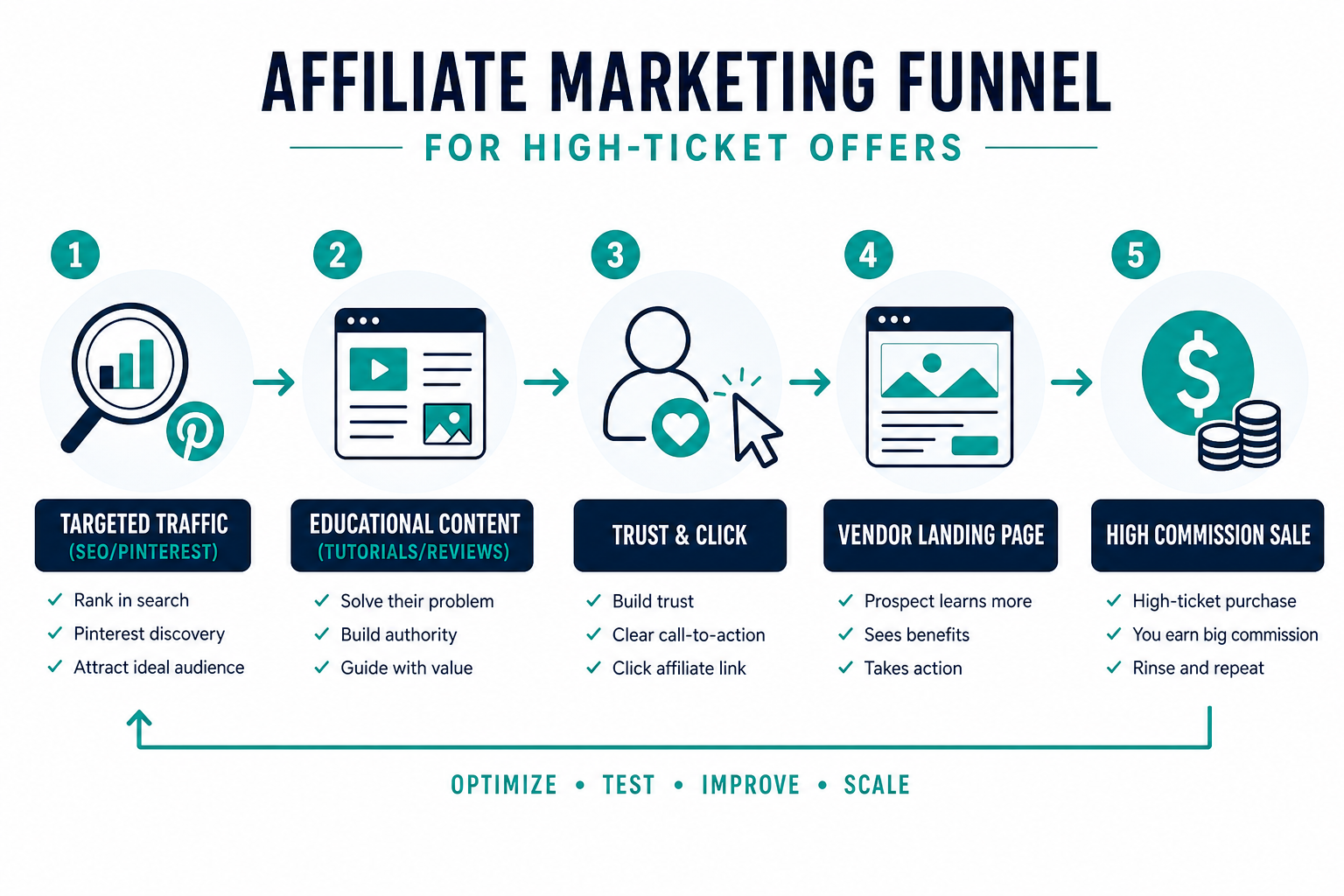
Curate lists of the best service providers. An article titled "5 Best Freelancers to Design Your Custom Shopify Theme" allows you to link directly to specific, highly-rated Fiverr gigs. By curating the quality for the reader, you bypass the overwhelming nature of the marketplace, making them much more likely to click and purchase.
Common Failure Mode
Linking generically to the Fiverr homepage. Generic links rarely convert. Always deep-link to specific, high-quality sellers or highly targeted category pages.
4. FreshBooks
FreshBooks is a cloud-based accounting and invoicing software designed specifically for freelancers, solopreneurs, and small service-based businesses.
The Numbers
- Commission: Up to $10 per free trial, up to $200 per paid subscription.
- Cookie Duration: 120 days
- Network: ShareASale
Why It's Beginner-Friendly
The two-tier payout structure (lead generation and sales) is a massive advantage. You get paid for generating a trial, and the 120-day cookie ensures you capture the commission when the user converts to a paid plan at tax time. Furthermore, the barrier to entry for the software is low, and the target audience (freelancers) is constantly looking for ways to save time on admin tasks.
Promotion Strategy
FreshBooks fits perfectly into content aimed at new business owners. If you write about profitable affiliate marketing niches or freelance writing, include FreshBooks in a "Tools You Need to Start" checklist. Create content around invoicing, tracking expenses, or preparing for self-employment taxes, positioning FreshBooks as the frictionless solution.
Common Failure Mode
Failing to establish the pain point first. Don't just say "use FreshBooks." Describe the nightmare of tracking receipts in a shoebox and losing thousands in unbilled hours before presenting the solution.
5. AuthorityHacker
AuthorityHacker is one of the most respected education platforms in the digital marketing space. They teach people how to build highly profitable authority sites and navigate SEO.
The Numbers
- Commission: Up to $990 per sale.
- Cookie Duration: 60 days
- Network: In-house (via ThriveCart)
Why It's Beginner-Friendly
While it is a high-ticket product, AuthorityHacker is beginner-friendly to promote because their free training funnel is exceptional. As an affiliate, you do not have to sell a multi-thousand-dollar course. Your only job is to get a reader to register for their free webinar. Their internal sales team and automated email sequences do the heavy lifting to close the sale.
This is a staple program often cited when exploring high paying affiliate programs because the conversion mechanics are built directly into the vendor's funnel [taboola.com].
Promotion Strategy
If you teach people how to make money online, how to blog, or how to escape the 9-to-5, AuthorityHacker is an ideal recommendation. Review their free webinar, share your personal takeaways, and direct your audience to watch the training. Transparency works best here: share your own journey of building a site and point to them as the experts who provide the blueprint.
Common Failure Mode
Trying to hard-sell the expensive course directly in a blog post. Let the vendor's webinar do the selling. Just sell the click to the free training.
6. Shopify
Shopify is the undisputed leader in e-commerce platforms, allowing anyone to set up an online store and sell products.
The Numbers
- Commission: Varies by region and current promotional structure, but typically offers a high flat bounty (often $150+) for full-priced plan sign-ups.
- Cookie Duration: 30 days
- Network: Impact Radius
Why It's Beginner-Friendly
Shopify has immense brand authority. When people decide to start an e-commerce business, they already know they are likely going to use Shopify. Your content serves as the final nudge. Their affiliate managers are also responsive and provide plenty of resources, banners, and training for new affiliates.
Promotion Strategy
Case studies and step-by-step build guides dominate this space. A 4,000-word guide on "How to Start a Dropshipping Store in 2026" or "Moving from Etsy to Your Own Storefront" provides exactly the right context. Capture readers who are in the "research" phase of starting a business, provide a comprehensive roadmap, and offer your affiliate link as the starting line.
Common Failure Mode
Ignoring the diverse use cases. Shopify isn't just for physical products. It's for digital downloads, print-on-demand, and services. Expanding your content to cover these sub-niches reduces competition.
7. DreamCloud
DreamCloud is a luxury hybrid mattress brand. The mattress-in-a-box industry is famous for its aggressive affiliate marketing programs.
The Numbers
- Commission: $150 flat per sale.
- Cookie Duration: 365 days
- Network: ShareASale
Why It's Beginner-Friendly
A 365-day cookie is almost unheard of in the affiliate industry. If a user clicks your link and buys a mattress 11 months later, you still get paid. Mattresses are high-consideration items, meaning consumers read multiple reviews before buying. If you can rank for specific comparison keywords, the conversion rates are surprisingly high.
Promotion Strategy
General mattress reviews are completely saturated by massive media companies. Beginners must niche down. Focus on hyper-specific angles: "Best mattress for side sleepers with lower back pain" or "DreamCloud vs. [Competitor] for heavy sleepers." By targeting long-tail, highly specific search queries, a beginner blog can bypass the giants and capture high-intent buyers.
Common Failure Mode
Writing generic "DreamCloud Review" posts. You will never outrank Forbes or Sleep Foundation for those head terms as a beginner. Specificity is your only leverage.
8. HubSpot
HubSpot is an all-in-one CRM, marketing, sales, and customer service platform. It is a fundamental tool for scaling businesses.
The Numbers
- Commission: 30% recurring for up to one year, or a 15% flat recurring rate depending on the selected program tier.
- Cookie Duration: 180 days
- Network: Impact Radius
Why It's Beginner-Friendly
HubSpot provides a massive suite of free tools (Free CRM, free email marketing limits). Beginners can drive traffic to the free tools with minimal friction. Once a company adopts the free CRM and scales, they naturally upgrade to the paid tiers (which range from $20 to thousands a month). The 180-day cookie ensures you get credit when that upgrade happens.
Promotion Strategy
B2B content is the play here. Articles targeting small agency owners, freelance consultants, or local business marketers work well. Focus on organizational pain points: "How to track your client leads without using Excel." Walk them through setting up the free HubSpot CRM.
Common Failure Mode
Focusing on the enterprise features. A small business reader doesn't care about advanced custom reporting arrays; they care about not losing a client's phone number. Sell the immediate utility of the free CRM.
9. ClickFunnels
ClickFunnels is a software that allows entrepreneurs to build sales funnels, landing pages, and membership sites without coding.
The Numbers
- Commission: Up to 30% recurring commission on software subscriptions.
- Cookie Duration: 30 days
- Network: In-house
Why It's Beginner-Friendly
ClickFunnels has one of the most dedicated affiliate ecosystems in the world. They provide comprehensive affiliate training (often free or low-cost challenges) to teach you how to sell their product. The recurring commission structure is highly appealing; a few dozen active referrals can create a reliable baseline income to cover your own business expenses.
Promotion Strategy
ClickFunnels converts best when paired with a "Share Funnel." The software allows you to build a high-converting template, generate a unique link for that template, and give it away. If a user clicks the link to import the template but doesn't have an account, they are prompted to start a free trial (crediting you as the affiliate). Give away free, niche-specific funnels (e.g., "Free Lead Generation Funnel for Dentists") to drive sign-ups.
Common Failure Mode
Promoting the software simply as a website builder. It is a marketing tool. If you pitch it against cheap website builders like Wix purely on price or basic features, you will lose. Pitch it based on its ability to increase average order value and conversion rates.
Difference Between Affiliate Programs and Affiliate Networks
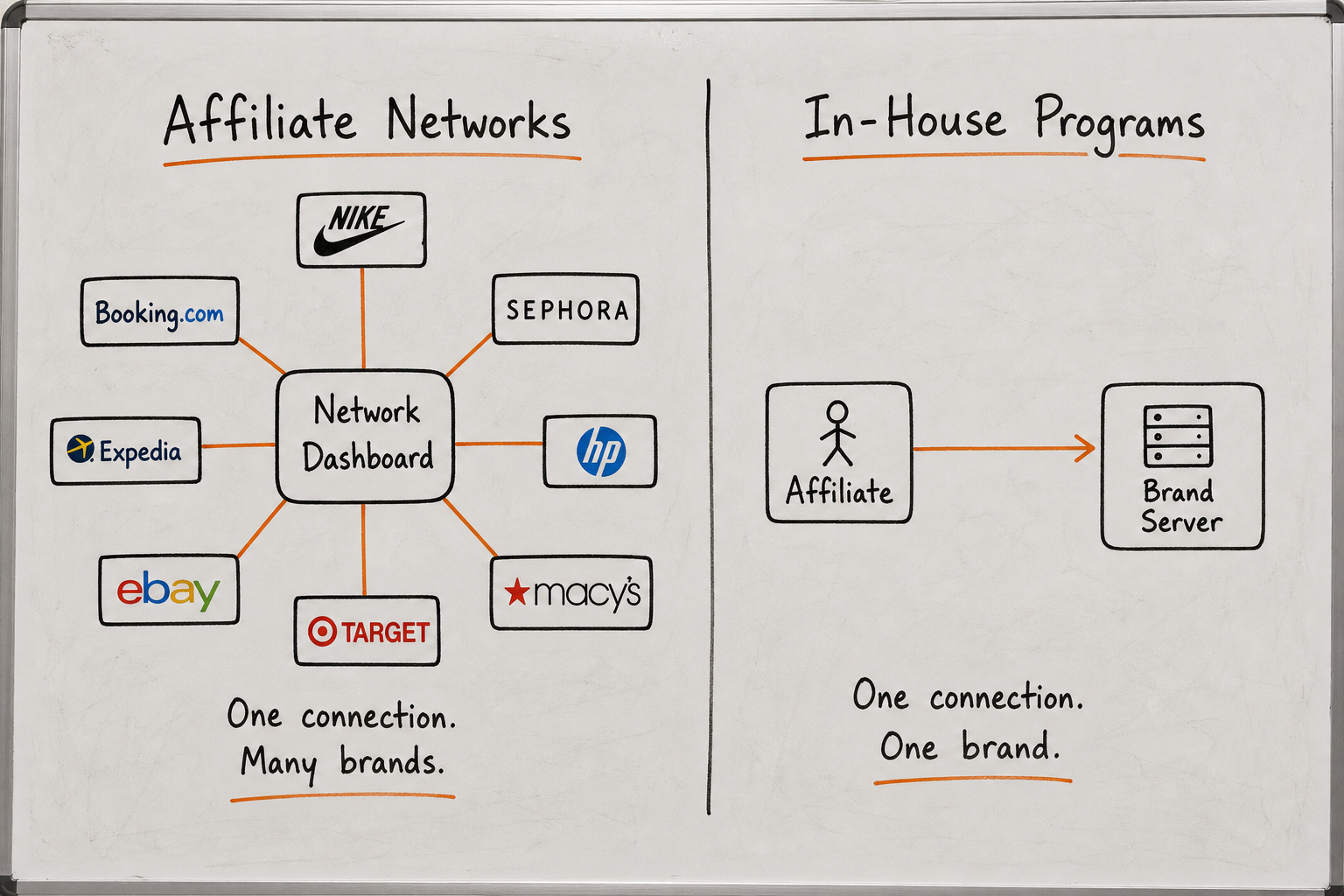
As a beginner navigating these high-paying opportunities, you will quickly notice that some brands manage their own programs, while others use third-party platforms. Understanding this distinction is vital for a smooth workflow [getresponse.com].
Affiliate Networks (like ShareASale, CJ Affiliate, Awin, Impact Radius, and ClickBank) are marketplaces. They act as middlemen between merchants and affiliates.
- Pros for Beginners: You only have to build a profile once. From a single dashboard, you can apply to hundreds of programs, track all your clicks in one place, and receive a consolidated paycheck. If you are exploring the best niches for affiliate marketing, networks allow you to pivot quickly without signing up for dozens of disparate systems.
- Cons: Networks take a cut of the merchant's profit, which sometimes results in slightly lower payouts compared to private programs.
In-House Affiliate Programs (like Kinsta or AuthorityHacker) are managed directly by the brand using specialized software.
- Pros for Beginners: They often offer higher commissions, longer cookie durations, and direct access to an affiliate manager who actually works for the brand.
- Cons: You have to manage separate logins, reach separate minimum payout thresholds, and handle different tax forms for each program you join.
Many experts recommend that beginners start by joining 2-3 major networks to build momentum, then seek out lucrative in-house programs once they have proven their ability to generate traffic.
How to Get Approved as a Beginner
The biggest hurdle for beginners isn't finding high-paying programs; it's getting accepted into them. High-paying merchants protect their brands fiercely. They do not want spammers associating with their products.
To ensure approval, follow these non-negotiable steps:
- Have a Functional, Professional Website: You do not need a masterpiece, but you do need a site with a custom domain, a clean theme, an About page, and a Contact page. Never apply using a free subdomain (like yoursite.wordpress.com).
- Publish Foundational Content First: Never apply to a premium program with an empty website. Have at least 10-15 high-quality, published articles relevant to the niche. When the affiliate manager reviews your application, they need to see that you are a legitimate content creator.
- Use a Domain Email Address: Applying with a Gmail or Yahoo address signals amateurism. Use an email tied to your website (e.g., hello@yourdomain.com).
- Be Transparent About Your Traffic Methods: In the application form, there is usually a box asking how you intend to promote the product. Do not leave it blank, and do not exaggerate. A simple, honest answer works best: "I am building an SEO-driven blog in the [Niche] space. I plan to feature your software in a series of detailed tutorial articles and comparison guides. Currently focusing on organic search and building an email list."
- Ensure Legal Compliance: Make sure your site has a clear Privacy Policy and Affiliate Disclosure page. Merchants will check for this to ensure you are compliant with FTC guidelines.
If you want to dive deeper into vetting offers and ensuring you aren't falling for scams, our guide on Is Affiliate Marketing Legit? (How to Spot Real Offers) covers red flags in detail.
High-Ticket vs. Recurring Commissions: Which is Better?
When evaluating high-paying programs, beginners usually face a choice between two highly profitable models: High-Ticket (one-time massive payouts) and Recurring (monthly payouts for the lifetime of the customer).
| Feature | High-Ticket (Flat Rate) | Recurring (Revenue Share) |
|---|---|---|
| Typical Payout | $100 to $1,000+ per sale | 10% to 40% of the monthly fee |
| Cash Flow Speed | Fast. You get a large sum upfront once the return period ends. | Slow. It takes months to build up a substantial income stream. |
| Long-Term Stability | Lower. You start at $0 every month. If traffic drops, revenue stops immediately. | High. A portfolio of active referrals can sustain you through traffic dips. |
| Best For | Courses, Mattresses, Luxury E-commerce, High-end consulting. | SaaS (Software as a Service), Web Hosting, Membership communities. |
| Beginner Strategy | Great for injecting immediate capital into your business to pay for tools or content. | Ideal for building a resilient, long-term business asset that eventually becomes passive. |
Most seasoned marketers suggest a hybrid approach. Anchor your site with a high-quality recurring product to build stability, and pepper in high-ticket recommendations to capture windfall revenue.
Frequently Asked Questions (FAQs)
Is high-ticket affiliate marketing hard for beginners?
It is not necessarily harder than low-ticket marketing, but it requires a different approach. Selling a $20 product on Amazon requires volume; you can rely on impulsive clicks. Selling a $1,000 course or a $150/month software requires trust. Beginners find high-ticket marketing challenging only when they try to use low-ticket tactics (like spamming links on social media). If you focus on building deep, educational content that solves complex problems, high-ticket items will convert natively [reclaim.ai].
What is the most profitable affiliate niche?
The most profitable niches historically involve money, health, and software. The SaaS (Software as a Service) space, personal finance, web hosting, and specialized B2B tools consistently offer the highest payouts because the lifetime value (LTV) of a customer in these sectors is exceptionally high. When a company knows a customer will stay for 3 years and spend $5,000, they are more than happy to pay an affiliate a $300 bounty upfront.
Can I do affiliate marketing without an audience?
Yes, but you have to build one simultaneously. You do not need a pre-existing massive following on Instagram or a 50k subscriber YouTube channel to start. Building an SEO-optimized blog, learning Pinterest marketing, or leveraging paid ads are all ways to build an audience organically as you promote your links. If visual search appeals to you, learning the ropes of an affiliate marketing program for pinterest is a highly effective way to drive beginner traffic without relying purely on Google.
Wrapping It Up
The transition from low-paying consumer goods to high-paying digital products and services is the defining moment in most affiliate marketers' careers. By leveraging programs like Semrush, Kinsta, or FreshBooks, you shift your business model from a game of exhausting volume to a game of targeted quality.
Your next step is to choose one specific sub-niche, pick one or two of the programs listed above, and build out a silo of deeply informative content around them. Stop worrying about getting a thousand clicks. Focus on answering one specific search intent perfectly, capturing the trust of the reader, and guiding them toward a premium solution that genuinely solves their problem. The commissions will naturally follow.