
How to use a contact database to find affiliate partners
Find affiliate partners by matching audiences first, then use a contact database to identify the person who handles partnerships.
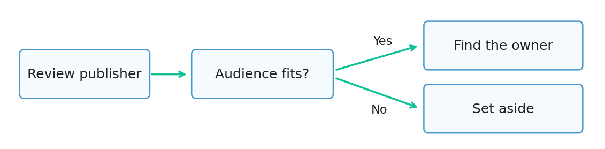
Use a contact database after you know which publishers can reach the people who buy your product. Start with a small list of sites whose readers have a reason to care. Look up the person who handles partnerships, then record why your program fits before you send an invitation.
Suppose you run an affiliate program for scheduling software used by small clinics. A newsletter for clinic owners may be a better fit than a general deals site with a larger audience. The newsletter has a reason to explain how the software fits into a front desk workflow. The deals site might generate clicks from readers who will never need it.
Which publishers belong on an affiliate prospect list?
Read two or three recent pieces from each publisher. Look for evidence that readers already make decisions in your category. A review of appointment software or a guide to handling cancellations gives you something specific to reference. A broad category label such as “business tools” tells you little on its own.
Check how the publisher works with advertisers. Look for a partner page, affiliate disclosures, sponsorship examples, or an editor’s notes about what they accept. A publisher that limits its reviews to products it has tested will need access and time. Sending an invitation with a tracking link skips the work the editor cares about.
Keep a column for the proposed placement. Write down whether you see a product comparison, a newsletter mention, or a tutorial. If you cannot describe a placement that would help the audience, leave that publisher off the first round.
Who should receive an affiliate partnership invitation?
Use the publisher’s partnership form or designated mailbox if it has one. At a small site, the founder may handle commercial requests alongside editing. At a bigger publication, a partnerships manager may own affiliate deals while an editor decides what readers see. Their roles can overlap, so check the site’s instructions before choosing a contact.
A sales database can help you search by company and job title when the publisher does not name a contact. Try roles such as affiliate manager, partnerships manager, and publisher. Check the person’s current role against a recent byline, staff page, or professional profile before adding them to your list.
Match the employer carefully. A publication’s brand, corporate owner, and parent company can have different names. Two publications under the same owner may also have separate partnership teams. Keep the publisher and the contact’s employer in separate fields so a colleague can see why you chose that person.
When does a phone lookup make sense?
For a first approach, the channel a publisher lists for partnerships is usually the clearest choice. A professional phone number from LinkedIn may be useful if you already have a conversation underway and the partner has invited you to call. Check that the number belongs to the intended person and fits the context before dialing.
If the contact record contains only a personal number, keep working from the official route. Some publishers have different addresses for support, press, and commercial requests. A support agent may forward your email, but you can spare them that work by using the partnership page when it exists.
| Evidence you found | What to record | Next step |
|---|---|---|
| A form for partnership proposals | Form URL and required fields | Prepare the submission for that route |
| A named partnership lead | Role, company, and source date | Check the business contact details |
| A recent review in your category | Article URL and what the author tested | Explain how the proposed placement helps readers |
| A former employee listed in search | Date and source of the role change | Find the current owner before sending |
What belongs in the first affiliate pitch?
Open with the placement you have in mind. For the clinic newsletter, you could offer access to a test account for a piece on reducing missed appointments. Explain what the software does and why those readers would have a use for it. If you have a product limitation that affects the proposed use, mention it early.
Give the publisher the terms it needs to judge the offer. State how you calculate commission, what counts as a qualifying purchase, when you pay, and what happens after a refund. If the program has promotion restrictions, share them before the partner plans its content. Leave the editorial decision with the publisher.
Make the next step small. Ask whether the topic fits an upcoming issue or whether another colleague handles affiliate arrangements. A direct reply tells you more about the prospect than an open or a click.
How should you review the first batch?
Start with ten publishers from one audience segment. Keep the offer consistent so you can compare replies. Log whether the publisher declined, referred you to someone else, asked for terms, or wanted to test the product. That record gives you a better next question than a single response rate.
If most replies are referrals, revisit the roles you selected. If publishers like the topic but ask for different terms, review the offer before adding more contacts. Keep opt-outs on file and check them before anyone starts another round. Open your tracker and fill in the reader, placement, and contact route for your first ten prospects.