
Impact Radius Affiliate Program: A Guide for Beginners
Learn how to navigate the Impact Radius (impact.com) affiliate program. Discover how to get approved, secure direct brand partnerships, and maximize payouts.
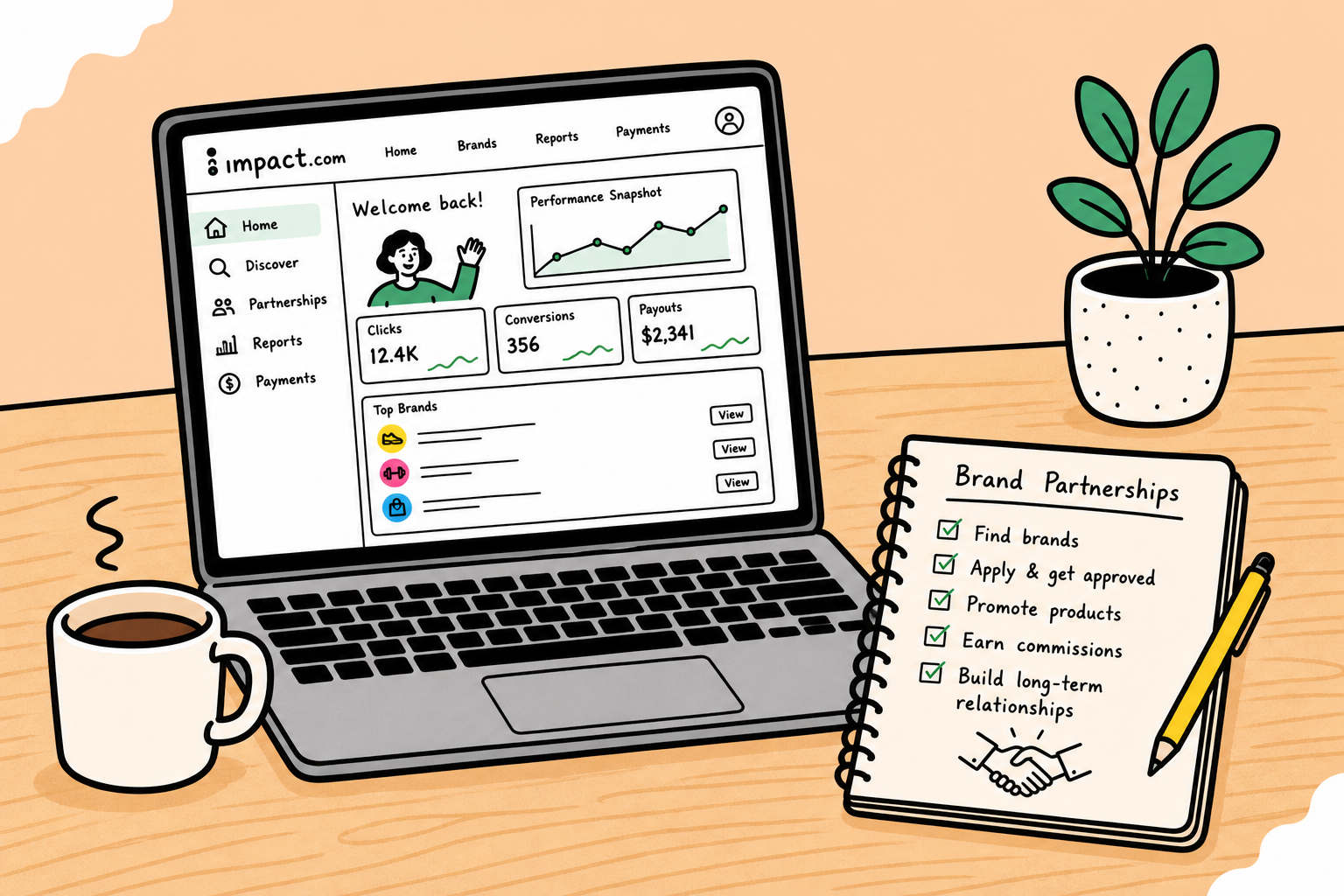
Most affiliate marketers start their journey relying on legacy networks. They accept rigid cookie windows, opaque reporting, and dated interfaces because basic platforms feel like the only option. But as your traffic scales, you quickly realize that relying on older platforms limits your earning potential. To secure higher payouts and work directly with premium software and retail companies, you need a modern infrastructure.
Enter the Impact Radius affiliate program.
Now officially rebranded as impact.com, this platform has shifted how performance marketing operates. Instead of acting as a traditional middleman holding the keys to brand relationships, Impact operates as a comprehensive partnership management platform. It provides the software framework for brands and creators to connect, negotiate, and track performance directly.
Whether you are running a niche site or building a reliable affiliate marketing side hustle, navigating Impact is a core requirement. Many of the most lucrative SaaS, fintech, and digital product programs have migrated exclusively to this platform.
This guide breaks down exactly what Impact is, how to get your media properties approved, and how to leverage its advanced tracking tools to maximize your commissions.
What is the Impact Radius Affiliate Program?
Impact Radius was founded in 2008 by the original founders of Commission Junction. Their goal was to solve the trust and transparency issues that plagued early affiliate networks. Over the years, the company expanded its capabilities, acquired tracking technologies, and rebranded to impact.com.
The platform currently serves as a central hub where publishers (affiliates, influencers, and content creators) can discover brands, apply to their programs, track link clicks, and receive consolidated payments.
The Shift from Network to Direct Partnership
Understanding the difference between a traditional affiliate network and a partnership platform is critical for beginners.
In a traditional network model, the network acts as a broker. The network controls the tracking, sets the overarching rules, and often takes a significant cut of the commissions before the affiliate is paid. If a brand leaves the network, the affiliate loses their income stream instantly.
Impact flips this model. Impact operates as a Software-as-a-Service (SaaS) product for brands. Brands pay a subscription fee to use Impact's tracking and payment infrastructure. Because of this, brands have total control over their programs. They can negotiate custom contracts, set specific commission tiers, and communicate directly with their affiliates.
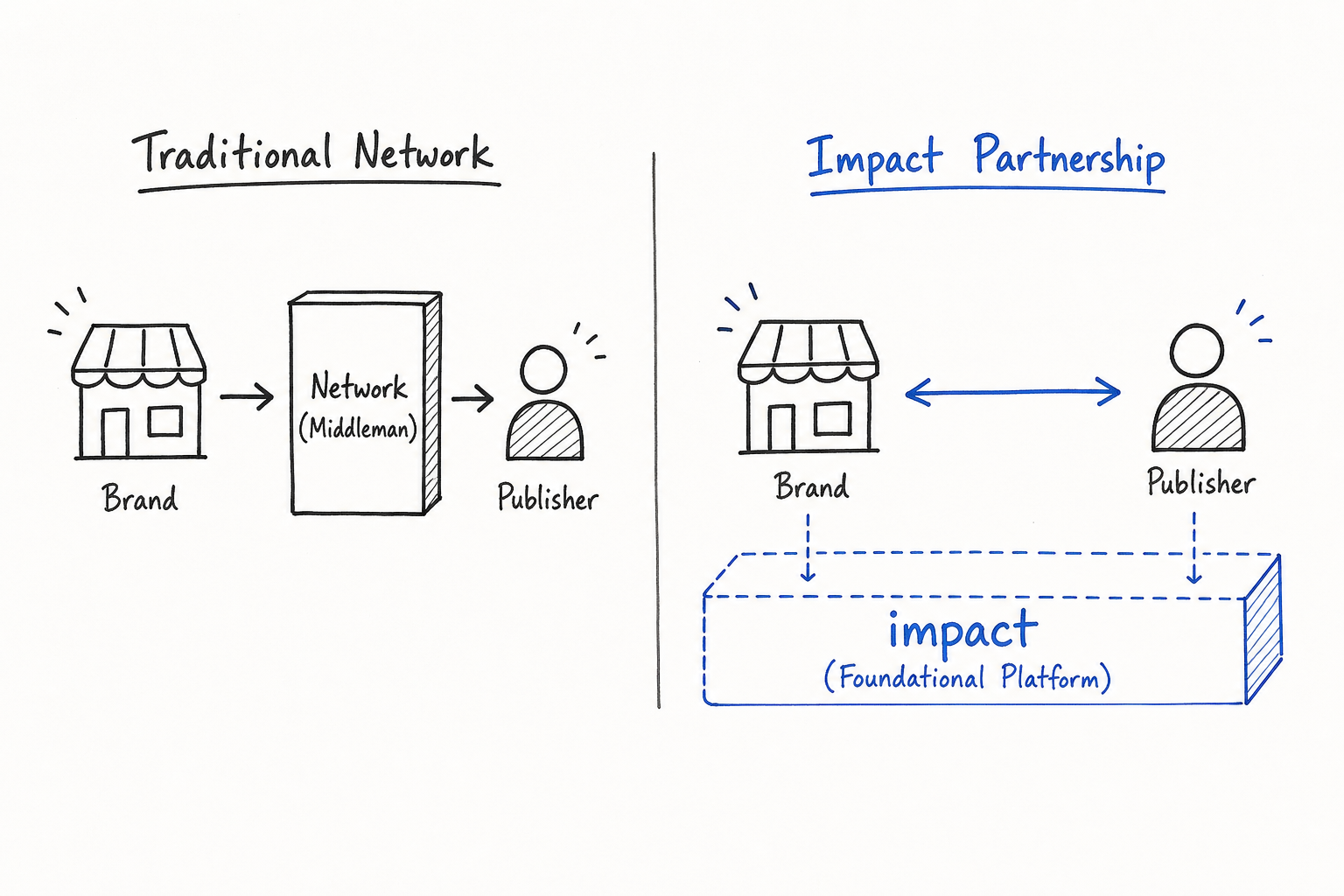 This direct relationship benefits you as a publisher. You are not forced to accept a blanket commission rate. If you drive high-quality traffic, you can message the brand's affiliate manager directly within the Impact dashboard and request a higher payout.
Is Impact Free for Affiliates?
Joining Impact as a publisher is entirely free. The platform does not charge application fees, and there are no monthly subscription costs for affiliates. The revenue model relies entirely on the brands paying for the software.
This low barrier to entry makes it an excellent starting point for new creators, provided you have the right digital assets in place to get approved by individual brands. If you ever wonder is affiliate marketing legit, reviewing the caliber of global brands using Impact to run their official programs quickly answers the question.
Why Top Earners Are Migrating to Impact
Affiliate marketers are highly protective of their tracking. If a click is not tracked properly, you do not get paid. The migration of top-tier publishers to Impact is driven primarily by technical reliability and flexible payment options.
Advanced Cross-Device Tracking
Consumer behavior is rarely linear. A user might read your blog post on their mobile phone during a commute, but wait until they are on their desktop computer at home to make a purchase.
Older networks rely heavily on simple browser cookies. If the user switches devices, the cookie is lost, and you lose your commission. Impact utilizes identity resolution and cross-device graphs to track users across smartphones, tablets, and desktops. This multi-device tracking ensures you receive credit for the final sale, even if the user changes hardware before converting.
Vanity Promo Code Tracking
Not all affiliate marketing relies on clickable links. If you run a podcast, a YouTube channel, or an Instagram account, getting users to click a specific URL is difficult.
Impact solves this through robust promo code tracking. Brands can assign you a unique vanity code (e.g., "AFFILILIST20"). When a customer uses that code at checkout, Impact attributes the sale to your account, even if the customer never clicked an affiliate link. This feature allows creators to monetize audio and video platforms effortlessly.
Flexible Payment Processing
Managing cash flow is a major part of running an affiliate business. Impact provides granular control over how and when you get paid.
You can configure your withdrawal settings based on a specific threshold (e.g., auto-transfer when your balance reaches $50) or a specific day of the month (e.g., transfer on the 1st and 15th). The platform supports direct Electronic Funds Transfer (EFT), PayPal, and wire transfers. It also handles multi-currency conversions, allowing international affiliates to receive payments in their local currency without exorbitant bank fees.
Navigating the Impact UI: A Realistic Look at the Learning Curve
While the technology is powerful, the Impact dashboard is notoriously dense for beginners. The interface is built for enterprise data analysis, which can feel overwhelming when you just want to grab a tracking link.
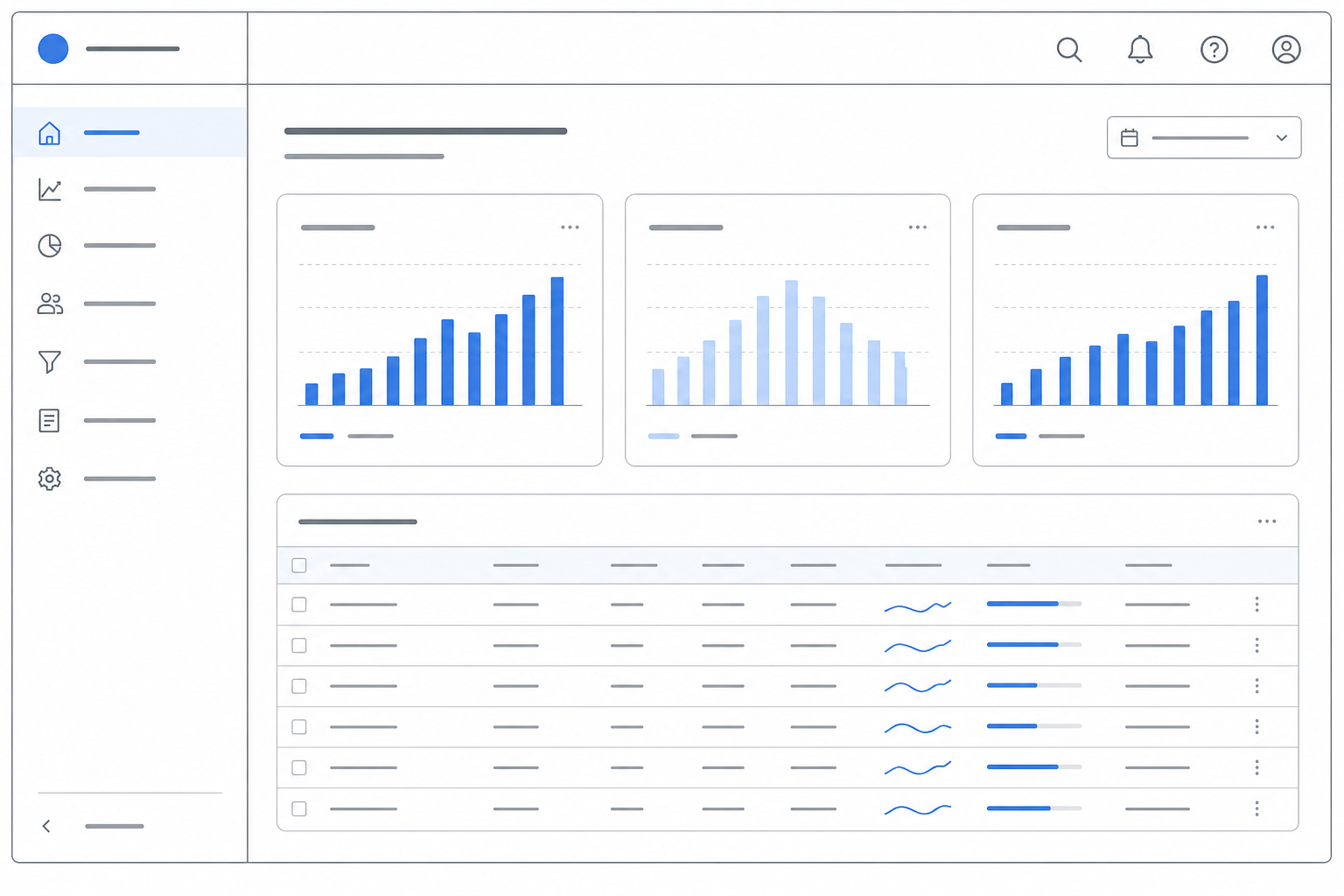 Here is how to focus your attention when you first log in:
- The Brands Tab: This is your marketplace. Use the search filters to sort brands by category, payout model (CPA, CPS, CPL), and approval rate. The "Find Brands" section is where you will spend most of your time during the first month.
- The Reports Tab: Ignore the complex custom reports at first. Focus on the "Performance by Day" and "Performance by Brand" reports. These two views provide a clear picture of your clicks, actions, and pending earnings.
- The Ads & Links Widget: Located on the right side of the main dashboard, this tool allows you to instantly generate a tracking link for any approved brand. You simply paste the specific product URL you want to promote, and the tool outputs your unique affiliate link.
How to Get Approved on Impact (and Land Premium Brands)
Creating an Impact account is only the first step. To start earning, you must apply to individual brand programs within the platform.
Brands are highly selective. They receive hundreds of applications daily and routinely reject affiliates with thin content or unclear promotional strategies. If you want to secure high paying affiliate programs that offer $500+ commissions, you need to present your business professionally.
1. Build an Established Media Property
Brands review your website or social media channels manually before approving your application. If your site has only three posts and a default WordPress theme, you will face instant rejection.
Before applying to programs on Impact, ensure you have a functional, user-friendly platform. Publish at least 15 to 20 high-quality articles. Create an "About" page that explains your audience demographics, and ensure your site is easy to navigate. If you are starting from scratch, take the time to learn how to start a profitable affiliate marketing blog before sending out brand applications.
2. Complete Your Impact Media Kit
Impact features a built-in "Media Kit" within your profile settings. Most beginners leave this blank.
Your Media Kit is your digital resume. You can connect your Google Analytics, YouTube, and social media accounts directly to Impact via API. This pulls in your verified traffic numbers and follower counts. When a brand manager reviews your application, seeing verified data builds immediate trust. Fill out the description field detailing exactly how you plan to promote partners (e.g., SEO traffic, email newsletters, or video tutorials).
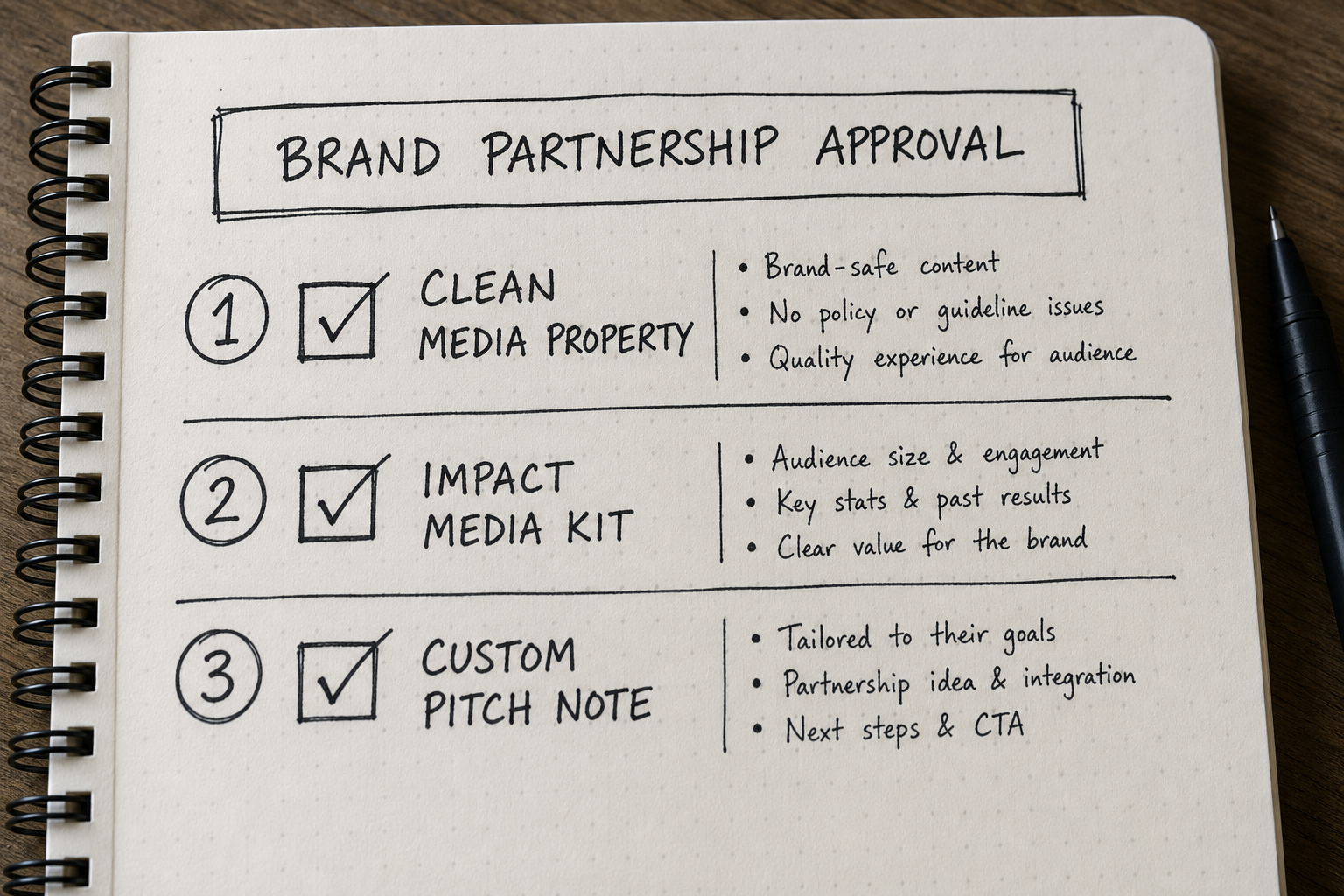
3. Craft a Custom Pitch Note
When you click "Apply" on a brand's profile, a small text box appears allowing you to send a message to the affiliate manager. Never leave this blank.
Write a concise, two-sentence pitch. State who your audience is and exactly where the brand's link will be placed.
Example Pitch: "Hi team, I run a B2B software review site reaching 10,000 monthly readers. I am writing a comparison guide on project management tools and plan to feature your software in the top three recommendations. Looking forward to partnering."
This simple step separates you from the thousands of automated applications brands receive.
The Best Niches and Categories to Target on Impact
Impact hosts thousands of merchants, but certain categories perform exceptionally well due to the platform's advanced tracking capabilities. If you are currently evaluating how to pick a niche for affiliate marketing, consider the ecosystems that thrive on this platform.
SaaS and B2B Software
Software companies love Impact because it integrates cleanly with their CRM systems (like Salesforce or HubSpot). This allows them to track lead quality and pay affiliates based on free trial signups or paid upgrades. You will find massive names like Canva, Shopify, and HostGator running their programs here. This category remains one of the best niches for affiliate marketing due to high recurring commission structures.
Finance and FinTech
Credit cards, investing apps, and accounting software are heavily represented on Impact. Finance brands require strict compliance and fraud monitoring, which Impact provides natively. These programs often pay high flat-rate CPA (Cost Per Action) bounties, sometimes exceeding $100 just for a qualified lead.
Retail and Direct-to-Consumer (DTC)
Major lifestyle brands like Adidas, Levi's, and Uber rely on Impact to manage their influencer and affiliate networks. While retail commissions are generally lower than software, the conversion rates are often much higher due to brand recognition.
If you want to explore more options, you can review our breakdown of 9 profitable affiliate marketing niches to see how these categories align with your content strategy.
Impact Radius vs. Traditional Affiliate Networks
Understanding the contrast between Impact and legacy platforms helps you allocate your time and traffic effectively.
| Feature | Impact (impact.com) | Traditional Networks (CJ, ClickBank) |
|---|---|---|
| Tracking Technology | Cross-device tracking, cookie-less promo codes. | Primarily standard browser cookies. |
| Brand Relationship | Direct messaging with brand affiliate managers. | Network acts as a gatekeeper. |
| Payment Flexibility | Custom thresholds, multi-currency, any day withdrawal. | Fixed payment dates (e.g., Net-30 or Net-60). |
| Contract Structure | Dynamic payouts based on customer type (new vs. returning). | Flat rate per sale for all affiliates. |
| User Interface | Modern, data-heavy, customizable dashboard. | Often dated, rigid reporting structures. |
3 Pro Tips to Maximize Your Earnings on Impact
Once you have your account set up and a few brand approvals secured, you can optimize your strategy to increase your monthly revenue.
1. Negotiate Dynamic Payout Contracts
Impact allows brands to set "Dynamic Payouts." This means the commission rate can change based on specific parameters.
Instead of accepting a flat 10% commission, you can negotiate with the brand manager. You might propose a contract where you receive 10% for returning customers, but 20% for entirely new customers. You can also request a tiered structure, where your commission bumps up to 25% if you drive more than 50 sales in a single month. Because Impact handles the math automatically, brand managers are highly receptive to performance-based tiers.
2. Leverage Visual Platforms with Custom Tracking
If you rely on visual search engines or social media for traffic, Impact's link customization is invaluable. For example, if you are setting up affiliate marketing on Pinterest, you can append specific Sub-ID tags to your Impact links.
By tagging a link with "Pinterest-Spring-Board" and another with "Pinterest-Fall-Board," you can view exactly which graphic drove the final sale within your Impact reporting dashboard. This granular data tells you exactly what type of content to produce next.
3. Automate Your Reporting Alerts
Checking your dashboard every day is a waste of time. Impact allows you to set up automated email alerts based on performance thresholds.
You can configure an alert to notify you if your daily clicks drop by 50%, which usually indicates a broken link or a website layout issue. You can also set positive alerts, notifying you when a single commission exceeds a certain dollar amount. Automating these insights frees you up to focus on content creation.
Expanding Your Career in the Partnership Economy
The growth of platforms like Impact has created entirely new career paths. Brands no longer just need affiliates; they need professionals who understand how to operate the software.
If you master the Impact dashboard, you possess a highly monetizable skill. Many companies actively recruit partnership managers to recruit affiliates, negotiate contracts, and analyze performance data. If you are interested in moving from a solo creator to an in-house role, mastering this platform is the first step toward securing affiliate marketing jobs in the broader digital economy.
Choosing the right programs to promote is the foundation of a successful digital business. While the Impact dashboard presents a slight learning curve, the benefits of direct brand relationships, reliable tracking, and flexible payments far outweigh the initial friction. By building a clean media property, crafting targeted pitches, and utilizing the platform's advanced tools, you can position yourself to partner with some of the highest-converting brands on the internet.