Which Influencer Affiliate Program Pays Best? (2026 List)
Discover the best high-paying influencer affiliate programs for 2026. Compare top networks like Mavely and Amazon, plus high-ticket SaaS commission rates.
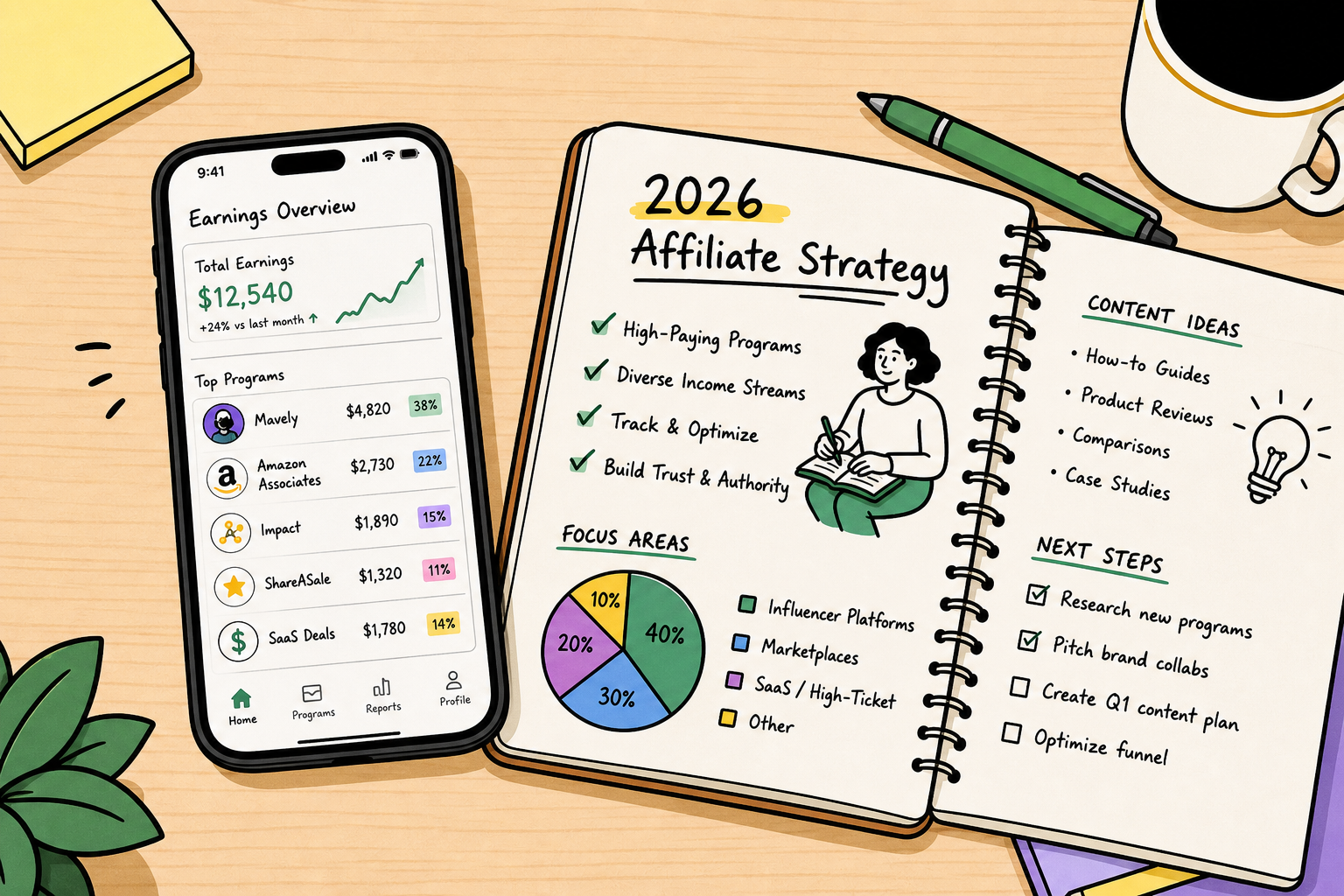
Brands are quietly changing how they pay creators. If you rely solely on flat-fee sponsorships or brand deals, you are likely leaving the majority of your earning potential on the table. In 2026, marketing budgets have shifted heavily toward performance-based models, making a high-converting influencer affiliate program the most reliable income source for content creators.
The challenge is no longer finding brands willing to work with you; it’s filtering out the programs with terrible terms. A 2% commission on a $15 product with a 24-hour cookie window will not pay the bills, no matter how viral your reel goes. To actually build a sustainable affiliate marketing side hustle, you need partnerships that offer favorable attribution, long cookie durations, and substantial payout structures.
At AffiliList, we analyze thousands of partnership structures, filtering out the noise to highlight programs that actually reward creators fairly. Whether you are a micro-influencer with a hyper-engaged beauty audience or a tech reviewer building an audience around SaaS products, the platform you choose dictates your revenue ceiling.
Here is a comprehensive breakdown of the highest-paying influencer affiliate programs available right now, categorized by niche, payout structure, and creator requirements.
Why Brands Want Micro-Influencers in 2026
Traditional celebrity endorsements are losing their grip on consumer trust. Audiences are highly sensitive to obvious, unauthentic product placements. Instead, brands are pivoting toward micro-influencers—creators with 5,000 to 50,000 followers who possess deep, niche expertise.
Micro-influencers typically boast higher engagement rates and stronger parasocial trust. When a micro-influencer recommends a specific email marketing tool or a specialized skincare routine, their audience listens because the recommendation feels like advice from a knowledgeable friend, rather than a paid commercial.
Because of this, major affiliate networks and direct-to-consumer brands have dropped their strict follower minimums. They realize that 10,000 highly targeted followers are often more valuable for conversions than 1,000,000 generic followers.
What Makes a Good Affiliate Program for Creators?
Before jumping into specific platforms, it helps to understand how to evaluate them. Not all 10% commissions are created equal.
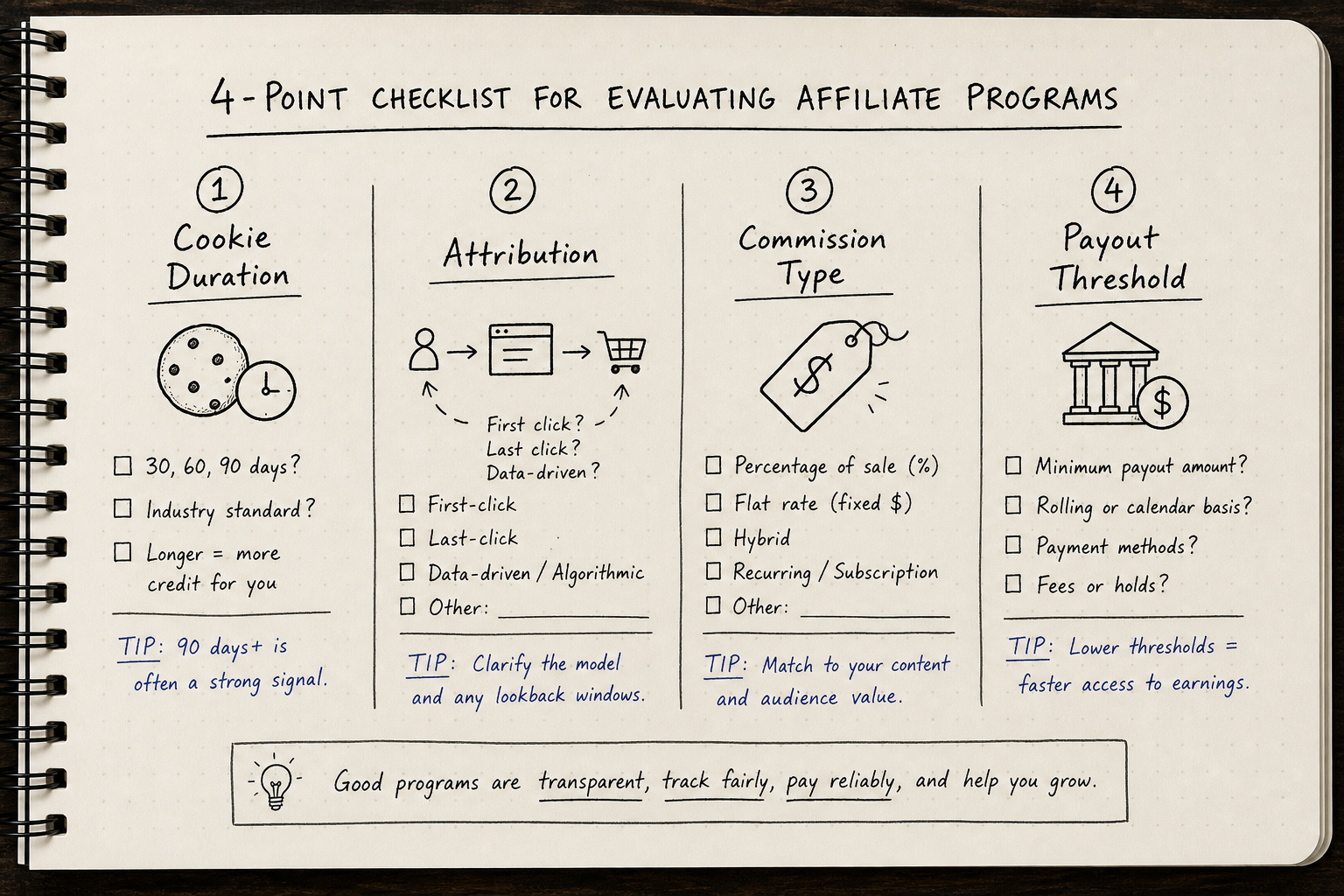 When evaluating an influencer affiliate program, scrutinize these four factors:
- Cookie Duration: This is the window of time after someone clicks your link during which you can still earn a commission. A 24-hour cookie (like Amazon's default) means if they buy tomorrow, you get nothing. A 30-day or 90-day cookie gives your audience time to consider the purchase.
- Attribution Model: Does the program use "last-click" attribution? If a user clicks your link, but later clicks a coupon site's link before checking out, the coupon site steals your commission. Look for programs with influencer-friendly attribution or exclusive custom promo codes that track sales back to you regardless of the link clicked.
- Commission Structure: Is it a one-time flat fee, a percentage of the cart, or a recurring commission? Recurring commissions (common in SaaS) pay you every month the user remains a customer.
- Payout Thresholds: If a network requires you to earn $500 before they issue a payout, and you are selling low-ticket items, your money might be trapped for months.
Top Affiliate Networks for Micro-Influencers
If you want to manage multiple brand partnerships from a single dashboard, joining an aggregator network is the most efficient route. These platforms connect creators directly with hundreds of recognizable brands.
1. Mavely
Mavely has positioned itself as one of the most creator-friendly platforms, especially for those just starting out. Unlike exclusive networks that require rigorous vetting and high traffic volume, Mavely is accessible to micro-influencers and everyday creators.
- Commission Rate: Varies by brand, but generally highly competitive in the retail space.
- Key Benefit: No follower minimums or strict application barriers. Mavely's own creator resources emphasize their focus on micro-influencers.
- Features: They offer robust creator tools, including custom link generation and a single dashboard to track analytics across hundreds of retail partners like Target, Walmart, and Anthropologie.
- Best For: Lifestyle, fashion, and home decor creators who want immediate access to household name brands without jumping through hoops.
2. The Amazon Influencer Program
The Amazon Influencer Program is distinct from the standard Amazon Associates program. It is designed specifically for social media creators with qualifying followings on Instagram, TikTok, YouTube, or Facebook.
- Commission Rate: 1% to 20% depending on the product category (Amazon Games and luxury beauty tend to pay the most; electronics pay the least).
- Key Benefit: You get a custom storefront (e.g., amazon.com/shop/yourname).
- Features: The biggest advantage of this program is "onsite commissions." If you upload a shoppable video to your storefront, Amazon may display it directly on the product's sales page. If a random Amazon shopper watches your video and buys, you earn a commission without ever driving the traffic yourself.
- Best For: Generalist creators, reviewers, and anyone whose audience prioritizes fast shipping and convenience.
3. Awin
Awin is a global affiliate network that has made significant strides in accommodating non-traditional publishers. While it originally catered heavily to massive coupon and cashback sites, it now has dedicated infrastructure to support content creators and influencers.
- Commission Rate: Brand-dependent. Awin hosts over 25,000 advertisers.
- Key Benefit: Excellent tracking reliability and a vast international presence, making it great if your audience is spread across Europe and North America.
- Features: Awin offers a Chrome extension that allows you to instantly generate tracking links while browsing an advertiser's website.
- Best For: Established bloggers and mid-tier influencers who want access to major finance, telecom, and travel brands alongside retail.
The Best Niches for High-Paying Affiliate Programs
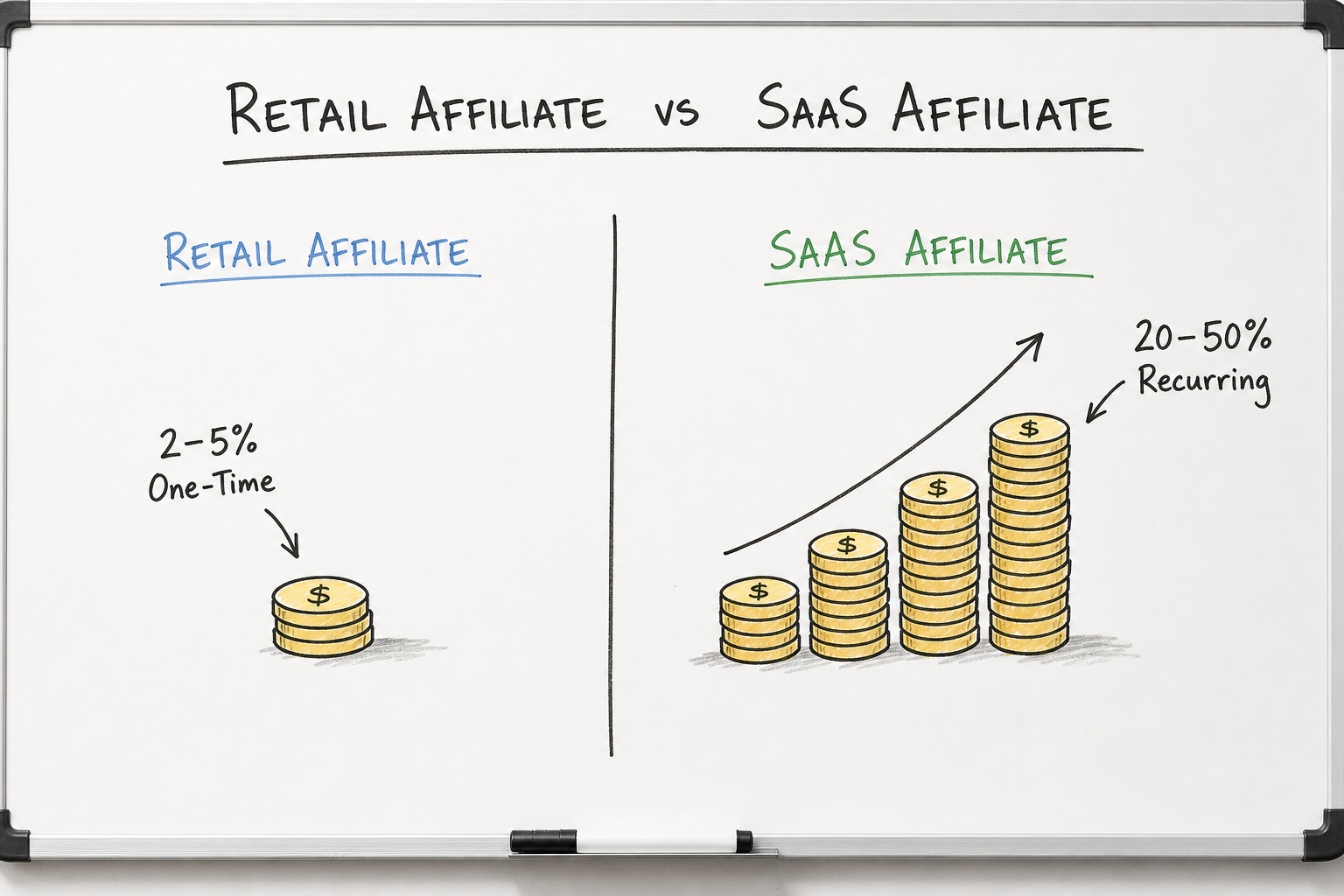
While retail networks offer convenience, the commission rates are mathematically limited by physical product margins. If you want to scale your income rapidly, you have to look at the most profitable affiliate marketing niches, specifically software and digital products.
Here is how the top programs break down by category.
SaaS and Digital Tools (Highest Earning Potential)
Software as a Service (SaaS) companies have virtually zero marginal cost to produce another copy of their software. Because of this, they can afford to pay affiliates incredibly high rates—often 20% to 50% of the subscription cost, month after month. For creators in the B2B, marketing, or productivity spaces, this is where the real money lives.
 1. GetResponse
Email marketing is a mandatory expense for businesses, making it a highly lucrative product to promote. The GetResponse influencer program offers two distinct paths, allowing you to choose the model that fits your audience's buying behavior.
1. GetResponse
Email marketing is a mandatory expense for businesses, making it a highly lucrative product to promote. The GetResponse influencer program offers two distinct paths, allowing you to choose the model that fits your audience's buying behavior.
- Commission: Choose between a $100 flat bounty per sale, or a 33% recurring lifetime commission.
- Cookie Duration: 120 days.
- Why it works: If you teach a course or post tutorials about how to start a profitable affiliate marketing blog, recommending an email provider is a natural, high-value integration.
2. Notion Productivity influencers on YouTube and TikTok have built massive revenue streams through Notion's affiliate program.
- Commission: 50% of all payments for the first 12 months.
- Cookie Duration: 90 days.
- Why it works: Notion’s visual nature makes it incredibly easy to showcase in short-form video content. Creators share their custom templates, and naturally link to Notion in their bio.
3. Shopify For creators speaking to entrepreneurs and e-commerce founders, Shopify remains the gold standard.
- Commission: Varies by region and plan, but often features a highly lucrative bounty for full-price plan sign-ups.
- Cookie Duration: 30 days.
- Why it works: High brand trust. You don't have to convince someone that Shopify is good; you just have to be the catalyst that gets them to finally start their store.
If you want to dig deeper into software payouts, we keep an updated directory of 11 high paying affiliate programs for $500+ commissions right here on AffiliList.
Beauty, Fashion & Lifestyle
While the percentages are lower than SaaS (typically ranging from 3% to 15%), the conversion rates in beauty and fashion are astronomically high. Followers are highly susceptible to impulse buys when they see a piece of clothing styled well or a makeup product demonstrated effectively.
1. Ulta Beauty
- Commission: 1% to 5% depending on the network.
- Cookie Duration: 30 days.
- Why it works: Massive product catalog. Whether you are reviewing a $10 drugstore mascara or a $400 Dyson hair tool, Ulta carries it.
2. Function of Beauty
- Commission: Up to 10% on sales.
- Cookie Duration: 30 days.
- Why it works: The customized nature of the product makes for highly engaging review content. It requires an explanation, which is the exact format where influencers thrive.
3. HelloFresh
- Commission: Flat bounties (often $10 to $25 per new subscription).
- Cookie Duration: 14 days.
- Why it works: Broad appeal. Whether your niche is fitness, parenting, or personal finance, food delivery solves a universal problem: saving time on dinner.
The Reality Check: Affiliate vs. Flat-Fee Sponsorships
A common debate in influencer marketing communities like Reddit centers on whether to accept affiliate-only deals.
Many creators feel that affiliate-only deals pass all the risk onto the influencer. If a video flops algorithmically, the creator worked for free. Conversely, with a flat-fee sponsorship, you get paid $1,000 whether the video gets 500 views or 500,000 views.
However, flat fees cap your earning potential. Consider a real-world scenario of a tech creator on TikTok:
They accept a $500 flat fee to promote a new video editing software. The video goes viral, hitting 2 million views. They drive 1,000 sign-ups for a $20/month software.
- Under the flat fee: They made $500.
- Under a 30% recurring affiliate model: They would have made $6,000 in the first month alone, and continued earning thousands in subsequent months as those users retained their subscriptions.
The most successful strategy in 2026 is the hybrid model. Negotiate a lower flat fee to cover your base production costs (e.g., $250 to cover time and editing), coupled with a strong affiliate commission on the backend to capture the upside of a viral hit.
Red Flags: How to Spot Bad Programs
Not every brand sliding into your DMs with an "ambassador opportunity" is legitimate. The creator economy is unfortunately riddled with companies trying to extract free marketing. If you are wondering is affiliate marketing legit, the answer is absolutely yes—but you must learn to identify the bad actors.
Walk away from an influencer affiliate program if you see any of these red flags:
- Pay-to-Play Requirements: If a brand asks you to buy their product at a "steep discount" to join their ambassador program, they are not looking for partners. They are looking for customers. Legitimate programs either provide the product for free or do not require you to own it (though owning it helps with content creation).
- Hyper-Short Cookies: A 24-hour cookie on a $2,000 mattress is predatory. Nobody buys a mattress on a whim within 24 hours of swiping up on an Instagram story. High-ticket items require 30 to 90-day cookies.
- Coupon Code Leaks Canceling Commission: Some brands will void your commission if a buyer uses a browser extension (like Honey) at checkout. Ensure the brand's terms of service protect the original referrer.
Platform Strategies: Getting Clicks That Actually Track
Having the best affiliate link in the world means nothing if the social media platform actively prevents users from clicking it. Each platform has different friction points for affiliate marketers.
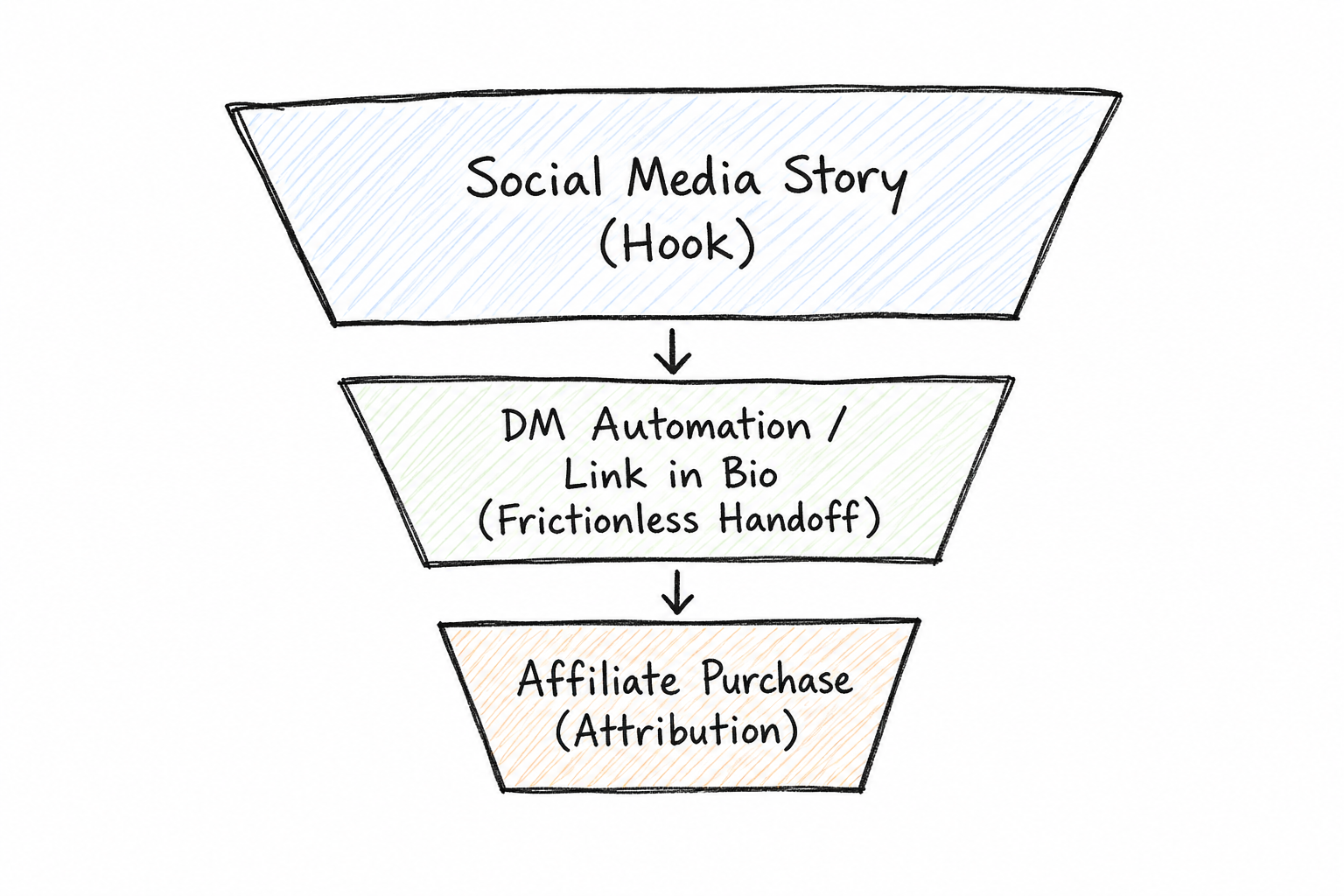
Instagram relies heavily on Stories for affiliate conversions. The "Link" sticker is your best tool, but you must pair it with a strong call-to-action (CTA). Do not just drop a link on a photo. Speak to the camera, explain the specific problem the product solved for you, and tell them exactly what to expect when they click.
For feed posts and Reels, direct users to a link-in-bio tool. Alternatively, in 2026, many creators are successfully using DM automation tools (like ManyChat). You tell your audience, "Comment the word GLOW, and I'll DM you the exact link." This boosts the post's algorithmic engagement while delivering the affiliate link directly to the user's inbox.
TikTok
TikTok is notoriously hostile to outbound links. If you don't have a link in your bio, your options are severely limited. TikTok also frequently suppresses videos that aggressively push users off-platform.
The best strategy here is soft selling. Focus heavily on storytelling and education, naturally mentioning the tool or product. Let the user actively seek out the link in your bio, rather than screaming at them to click it.
Pinterest is quietly one of the most powerful platforms for affiliate marketing because it functions as a visual search engine, not a social network. Users go to Pinterest with high commercial intent—they are actively planning weddings, redesigning living rooms, or building a tech stack.
If you create highly optimized pins that link directly to your affiliate partners, those pins can generate passive traffic for years, unlike a TikTok that dies in the feed after 48 hours. If you haven't tapped into this traffic source, read our guide on setting up an affiliate marketing program for Pinterest.
How to Choose the Right Program for Your Audience
Choosing the best influencer affiliate program ultimately comes down to understanding your specific audience's purchasing behavior.
If you run a broad lifestyle page with a highly engaged but diverse audience, an aggregator network like Mavely or the standard Amazon Associates portal provides the lowest barrier to entry and the widest variety of products.
However, if you want to maximize your revenue per click, you must specialize. Choosing to review B2B software, professional financial tools, or high-end technical gear unlocks access to programs that pay hundreds of dollars per conversion. If you are struggling to narrow down your focus, start by learning how to pick a niche for affiliate marketing.
The affiliate landscape in 2026 is transparent, highly lucrative, and largely democratized. By filtering your partnerships through reliable directories like AffiliList, prioritizing long cookie durations, and demanding fair attribution, you can turn a sporadic social media hobby into a predictable, scalable business.