
Insurance Affiliate Marketing: How to Earn $20+ Per Lead
Discover how to earn $20+ per lead with insurance affiliate marketing. Learn the difference between CPL and CPA, top programs, and compliance rules for 2026.
- The Economics of Insurance Affiliate Marketing
- Choosing Your Insurance Niche
- The 12 Best Insurance Affiliate Programs for 2026
- Strategic Traffic Generation: How to Promote Insurance Offers
- The Regulatory Challenge: Staying Compliant
- Building Your Insurance Affiliate Funnel: Step-by-Step
- Addressing the Drawbacks
- Frequently Asked Questions (FAQ)
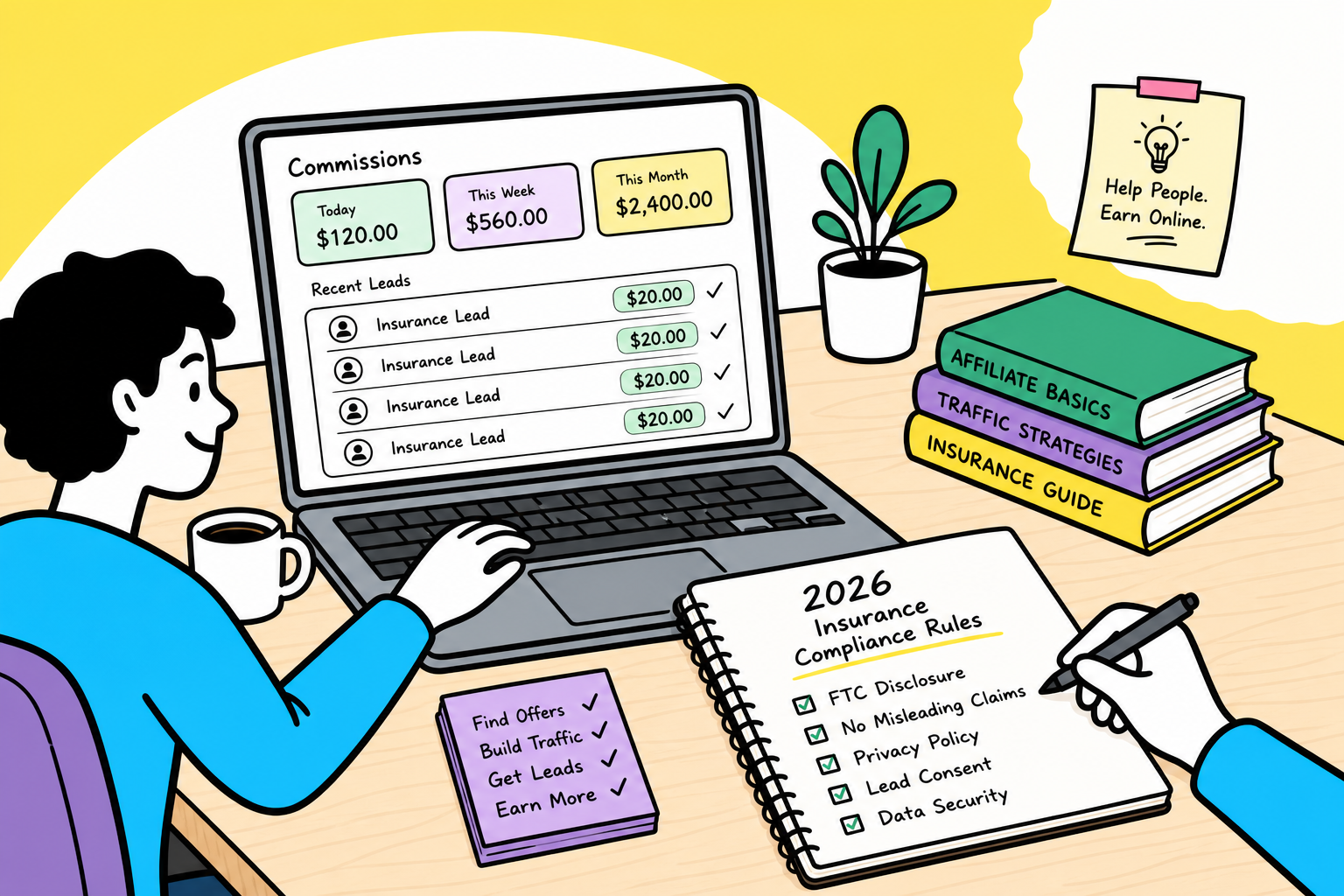
Most beginners flock to retail affiliate programs, grinding out content for a meager 3% commission on a $40 physical product. They spend months building traffic just to earn pennies per click. Meanwhile, seasoned marketers are quietly routing their traffic to a completely different sector, earning $15, $20, or even $30+ every time a user simply requests a free quote.
Welcome to the lucrative math of insurance affiliate marketing.
The insurance industry thrives on lead generation. Because the Lifetime Value (LTV) of an insurance policyholder often reaches into the thousands of dollars, carriers and brokers are willing to pay aggressive bounties to acquire prospective customers. You do not need to sell a policy. You do not need the user to pull out their credit card. In many insurance verticals, you get paid the moment a user submits a valid ZIP code and completes a quote form.
If you want to move away from low-ticket physical goods and start promoting offers that reward you handsomely for your traffic, high paying affiliate programs in the insurance space are the ultimate upgrade.
This guide breaks down the mechanics of insurance affiliate marketing, the difference between lead generation and cost-per-acquisition (CPA), and the top programs across auto, life, health, and travel insurance that you can join today.
The Economics of Insurance Affiliate Marketing
To succeed in this niche, you have to understand why insurance carriers pay so much for traffic. Insurance is a highly regulated, highly competitive, and recurring revenue business. When someone buys an auto insurance policy, they typically stay with that carrier for three to seven years.
Because the backend revenue is so predictable, insurers operate with massive marketing budgets. They buy television ads, sponsor stadiums, and—most importantly for you—fund massive affiliate programs.
The CPL vs. CPA Advantage
Unlike traditional affiliate marketing where you only earn a commission when a sale is finalized, insurance affiliate programs primarily operate on a Cost Per Lead (CPL) model.
- Cost Per Lead (CPL): You are paid when a user completes an action that generates a lead for the insurance company. This usually involves filling out a form to get a quote. The user does not have to buy the insurance. Payouts typically range from $5 to $35 depending on the insurance type and the amount of data collected.
- Cost Per Action/Acquisition (CPA): You are paid only when the user actually purchases a policy. While harder to convert, CPA payouts are massive, often ranging from $50 to over $200 per sale.
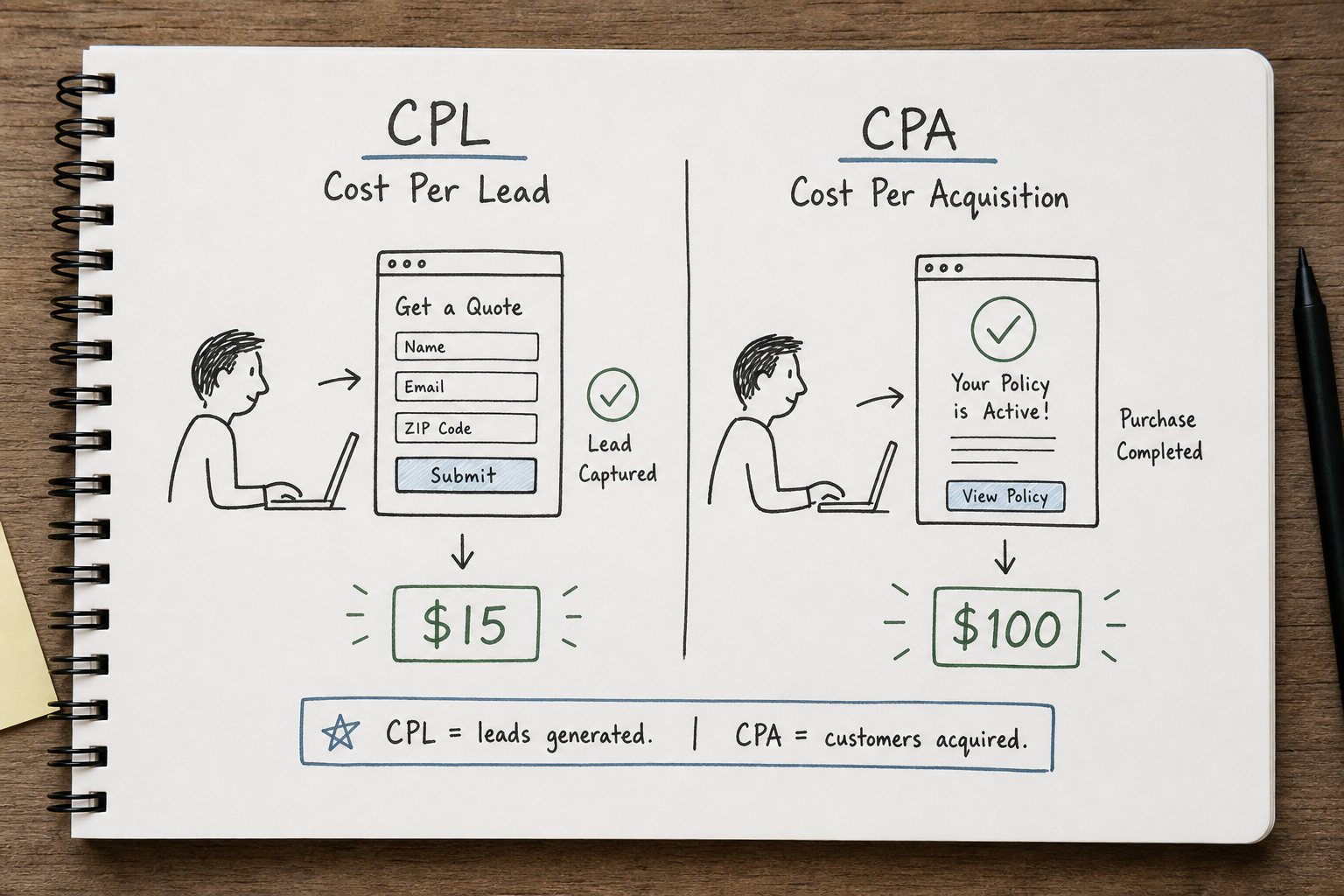 Here is a quick comparison of how these structures behave in the wild:
| Feature | CPL (Cost Per Lead) | CPA (Cost Per Acquisition) |
|---|---|---|
| Trigger | User submits a quote request | User pays for a policy |
| Conversion Difficulty | Low (It's free for the user) | High (Requires financial commitment) |
| Average Payout | $10 - $30 per valid lead | $50 - $250+ per sale |
| Best Traffic Source | Broad content, top-of-funnel SEO | Deep product reviews, bottom-funnel SEO |
| Risk of Chargebacks | Low | Moderate (if policy is immediately canceled) |
For affiliates, CPL is the holy grail. It shifts the burden of selling the policy onto the insurance company's highly trained sales agents. Your only job is to deliver the prospect to the quote form.
Choosing Your Insurance Niche
Insurance is too broad to tackle as a single topic. A blog trying to cover both commercial liability insurance and pet insurance will struggle to build topical authority or gain trust. How to pick a niche for affiliate marketing involves looking at search volume, payout structures, and your own expertise.
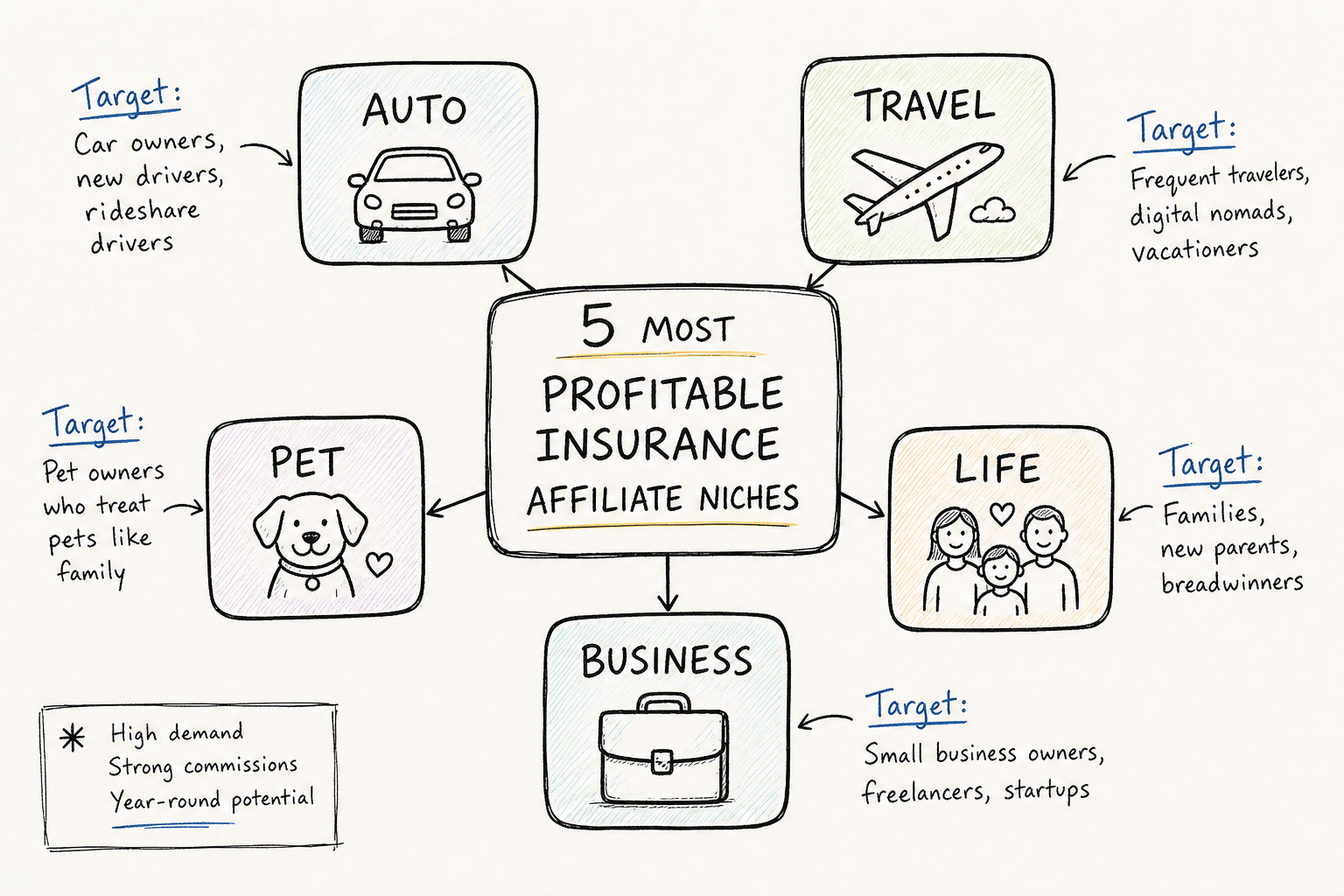
Here are the most profitable sub-niches within the insurance vertical.
1. Auto Insurance
Auto insurance is the highest-volume sector in the industry. Because it is legally required in almost every jurisdiction, you are not convincing people whether they need it, but rather where they should get it.
- Target Audience: New car buyers, teenagers getting their license, people looking to lower their monthly bills, and individuals with recent driving infractions looking for specialized "high-risk" coverage.
- Typical Payout: $10 to $20 per CPL.
- The Angle: Price comparison. Users are highly motivated to save $50 a month, making "compare quotes" angles highly effective.
2. Travel Insurance
Travel insurance operates primarily on a CPA (Cost Per Sale) model rather than CPL. However, the conversion rates are exceptionally high if the traffic is highly targeted. If you run a travel blog, adding travel insurance links is one of the easiest ways to monetize your existing readership.
- Target Audience: International travelers, digital nomads, backpackers, and older couples taking expensive cruises.
- Typical Payout: 10% to 20% of the policy premium (CPA).
- The Angle: Fear of loss and medical emergencies abroad.
3. Pet Insurance
Pet insurance is one of the fastest-growing niches in the profitable affiliate marketing niches ecosystem. As veterinary costs skyrocket, pet owners are increasingly looking for ways to protect themselves from sudden $5,000 surgery bills.
- Target Audience: New puppy/kitten owners, specific breed enthusiasts (e.g., French Bulldog owners who know the breed has health issues).
- Typical Payout: $20 to $35 CPL, or $50+ CPA.
- The Angle: Emotional protection. Pet owners view their animals as family members.
4. Life Insurance
Life insurance has traditionally been sold face-to-face by brokers, but digital disruptors have moved the process online. Because the lifetime value of a life insurance policy is massive, the payouts here are among the highest in the entire affiliate industry.
- Target Audience: New parents, newly married couples, new homeowners.
- Typical Payout: $25 to $40 CPL, or $100 to $300 CPA.
- The Angle: Protecting your family's financial future.
5. Business & Commercial Insurance
Small business owners need general liability, professional liability, and workers' compensation insurance. The B2B nature of this niche means higher payouts and a highly professional audience.
- Target Audience: Freelancers, small business owners, contractors, and specialized professions (e.g., personal trainers, consultants).
- Typical Payout: $25 to $50 CPL.
- The Angle: Compliance and lawsuit protection.
The 12 Best Insurance Affiliate Programs for 2026
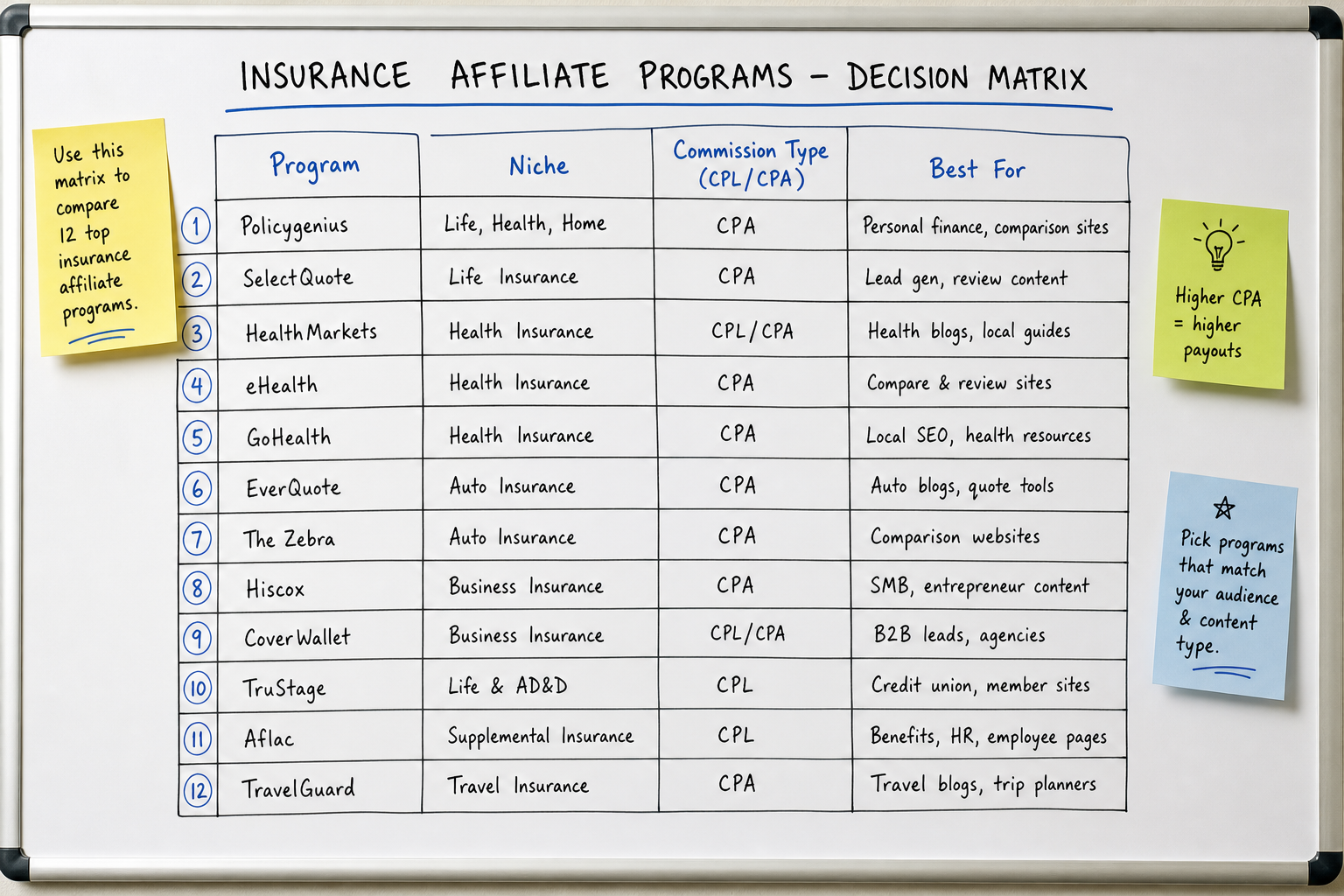
Finding the right programs requires navigating a mix of direct carrier relationships and specialized affiliate networks. Below are some of the highest-converting programs available today.
1. Liberty Mutual
Liberty Mutual operates one of the most famous and reliable CPL programs in the industry. As a Fortune 100 company, their brand recognition does the heavy lifting for your conversions. Users already trust the brand, making them highly likely to fill out a quote form.
According to their official affiliate program portal, becoming a Liberty Mutual affiliate partner is free and easy to apply. They offer distinct payouts for different types of leads.
- Niche: Auto, Home, Renters.
- Commission Type: CPL (Cost Per Lead).
- Typical Payout: ~$10 per auto quote, ~$10 per home quote, ~$3 per renters quote.
- Cookie Duration: 30 days.
- Why it works: Massive brand authority and multiple product lines allow you to cross-sell to the same audience.
2. Lemonade
Lemonade disrupted the insurance industry with its AI-driven, app-first approach. They target millennials and Gen Z, making them an incredible fit for bloggers and influencers with younger audiences. Their quote process is famously fast, acting like a chatbot, which drastically reduces form abandonment.
- Niche: Renters, Home, Pet, Life.
- Commission Type: CPL & CPA (depends on the network).
- Typical Payout: $15 to $25 per lead.
- Cookie Duration: 30 days.
- Why it works: The UI/UX is flawless. Users don't feel like they are filling out a tedious insurance form.
3. Hiscox
Hiscox specializes in small business insurance. If you run a blog about entrepreneurship, freelancing, or starting a business, Hiscox is a must-have integration. They cover over 180 professions, from IT consultants to landscape architects.
- Niche: B2B / Commercial Insurance.
- Commission Type: CPL.
- Typical Payout: ~$25 per quote.
- Cookie Duration: 7 days.
- Why it works: B2B traffic is highly targeted. A single post about "Why Freelancers Need Liability Insurance" can generate passive quotes for years.
4. World Nomads
If you are in the travel niche, World Nomads is likely already on your radar. They are the darling of the travel blogging community because they cover high-risk activities like scuba diving and skiing that other insurers exclude.
- Niche: Travel Insurance.
- Commission Type: CPA (Percentage of sale).
- Typical Payout: 10% of the policy premium.
- Cookie Duration: 60 days.
- Why it works: Highly endorsed by major travel brands (like Lonely Planet), making it an easy sell to backpackers.
5. IMG (International Medical Group)
For expats, long-term travelers, and international students, IMG offers comprehensive global health insurance. Their IMG Affiliate Program is highly respected in the international travel space.
- Niche: International Health & Travel Insurance.
- Commission Type: CPA.
- Typical Payout: Varying percentages based on the policy.
- Cookie Duration: 30 days.
- Why it works: Expats and digital nomads require these policies for visa applications, making them a necessity rather than an optional purchase.
6. Haven Life
Haven Life is backed by MassMutual and offers term life insurance entirely online. The traditional life insurance process requires a medical exam, but Haven Life offers instant decisions for qualified applicants up to a certain coverage amount.
- Niche: Life Insurance.
- Commission Type: CPL & CPA.
- Typical Payout: Up to $30+ per lead.
- Cookie Duration: 30 days.
- Why it works: The instant-decision algorithms remove the biggest friction point in life insurance (the medical exam), leading to higher affiliate conversions.
7. Embrace Pet Insurance
Embrace is one of the most comprehensive pet insurance providers on the market, covering alternative therapies and behavioral conditions. They are highly active in affiliate networks.
- Niche: Pet Insurance.
- Commission Type: CPL.
- Typical Payout: ~$36 per completed lead.
- Cookie Duration: 60 days.
- Why it works: One of the highest CPL payouts in the pet space, combined with a long cookie duration.
8. Allstate
Another titan of the auto and home insurance world. Allstate’s "You're in good hands" marketing makes their affiliate links highly clickable.
- Niche: Auto, Home, Renters.
- Commission Type: CPL.
- Typical Payout: $5 to $12 per quote (varies by state and demographic).
- Cookie Duration: 30 days.
- Why it works: Strong brand trust and aggressive pricing in specific zip codes.
9. eHealth Insurance
eHealth is a massive aggregator for health insurance, Medicare, and short-term health plans. During open enrollment seasons, the search volume for these terms skyrockets.
- Niche: Health Insurance & Medicare.
- Commission Type: CPA.
- Typical Payout: Up to $50 - $75+ per sale.
- Cookie Duration: 120 days.
- Why it works: Incredible cookie length. Health insurance takes time to research, so a 120-day cookie ensures you get credited even if they take months to decide.
10. Allianz Global Assistance
A massive player in travel insurance, often partnered with airlines and major travel agencies.
- Niche: Travel Insurance.
- Commission Type: CPA.
- Typical Payout: Variable percentage.
- Cookie Duration: 45 days.
- Why it works: Excellent for older demographics and luxury travelers who buy expensive, comprehensive trip cancellation policies.
11. State Farm
State Farm operates slightly differently, often routing leads to local agents. Their affiliate presence fluctuates based on regional demand, but when active, they are a conversion powerhouse.
- Niche: Auto, Home, Life.
- Commission Type: CPL.
- Typical Payout: ~$10 per auto quote.
- Cookie Duration: 30 days.
- Why it works: The largest property and casualty insurance provider in the US.
12. Gabi (Experian)
Gabi is an insurance comparison tool (now owned by Experian). Instead of acting as a single carrier, they take a user's current insurance PDF, scan it, and find a cheaper rate across dozens of carriers.
- Niche: Auto & Home Comparison.
- Commission Type: CPL.
- Typical Payout: $5 per valid registration.
- Cookie Duration: 90 days.
- Why it works: The value proposition is unbeatable: "Upload your current policy and we'll tell you if you're overpaying." It is a very low-friction offer.
Strategic Traffic Generation: How to Promote Insurance Offers
Having access to a $30 CPL offer is useless if you cannot drive targeted traffic. Slapping a banner ad on a generic blog will yield a zero percent conversion rate. You must intercept users at the exact moment they are experiencing a life change or feeling financial pain.
Strategy 1: The "Life Event" SEO Strategy
People rarely wake up and decide to browse insurance for fun. They look for insurance triggered by life events: buying a house, getting married, having a baby, or getting a dog.
Instead of trying to rank for impossible terms like "cheap auto insurance," target long-tail queries related to these life events. If you are building an affiliate marketing blog, structure your content silos around these transitions.
- Life Event: Buying an engagement ring.
- Keyword Target: "How to insure an engagement ring against loss."
- Affiliate Offer: Lemonade or Jewelers Mutual.
- Life Event: Adopting a specific dog breed.
- Keyword Target: "Common health problems for Maine Coon cats."
- Affiliate Offer: Embrace Pet Insurance.
- Life Event: Starting a freelance business.
- Keyword Target: "Do freelance graphic designers need LLCs and insurance?"
- Affiliate Offer: Hiscox.
Strategy 2: Embedded Insurance Opportunities
The future of the industry is shifting toward contextual placements. As noted by industry analysts, affiliate marketing for insurance means better customer reach, largely because modern technology allows affiliates to embed the quoting experience directly into their native content.
Instead of forcing a user to click a link and leave your site, embedded insurance widgets allow the user to select their drop-down options right on your blog. If you are writing a review of a new piece of camera equipment, an embedded widget offering equipment insurance right next to the buy button captures the user at the peak of their buyer intent.
Strategy 3: Comparison and Calculator Tools
Calculators are link magnets. If you can build a simple "How much life insurance do I need?" calculator using a WordPress plugin, you can generate immense value for the user.
Once the calculator spits out a number (e.g., "You need $750,000 in term life coverage"), immediately present a call-to-action: "Click here to see if you qualify for a $750k policy with Haven Life without a medical exam." This perfectly bridges the gap between education and conversion.
Strategy 4: Social Media and Pinterest
While SEO is powerful, visual platforms can work exceptionally well for life-event marketing. An affiliate marketing program for Pinterest strategy works brilliantly for niches like wedding planning (jewelry insurance) or travel planning (travel insurance).
Create infographics like "The 5 Things You Must Pack for Bali" and ensure travel insurance is listed as a non-negotiable item, linking directly to World Nomads or Allianz.
The Regulatory Challenge: Staying Compliant
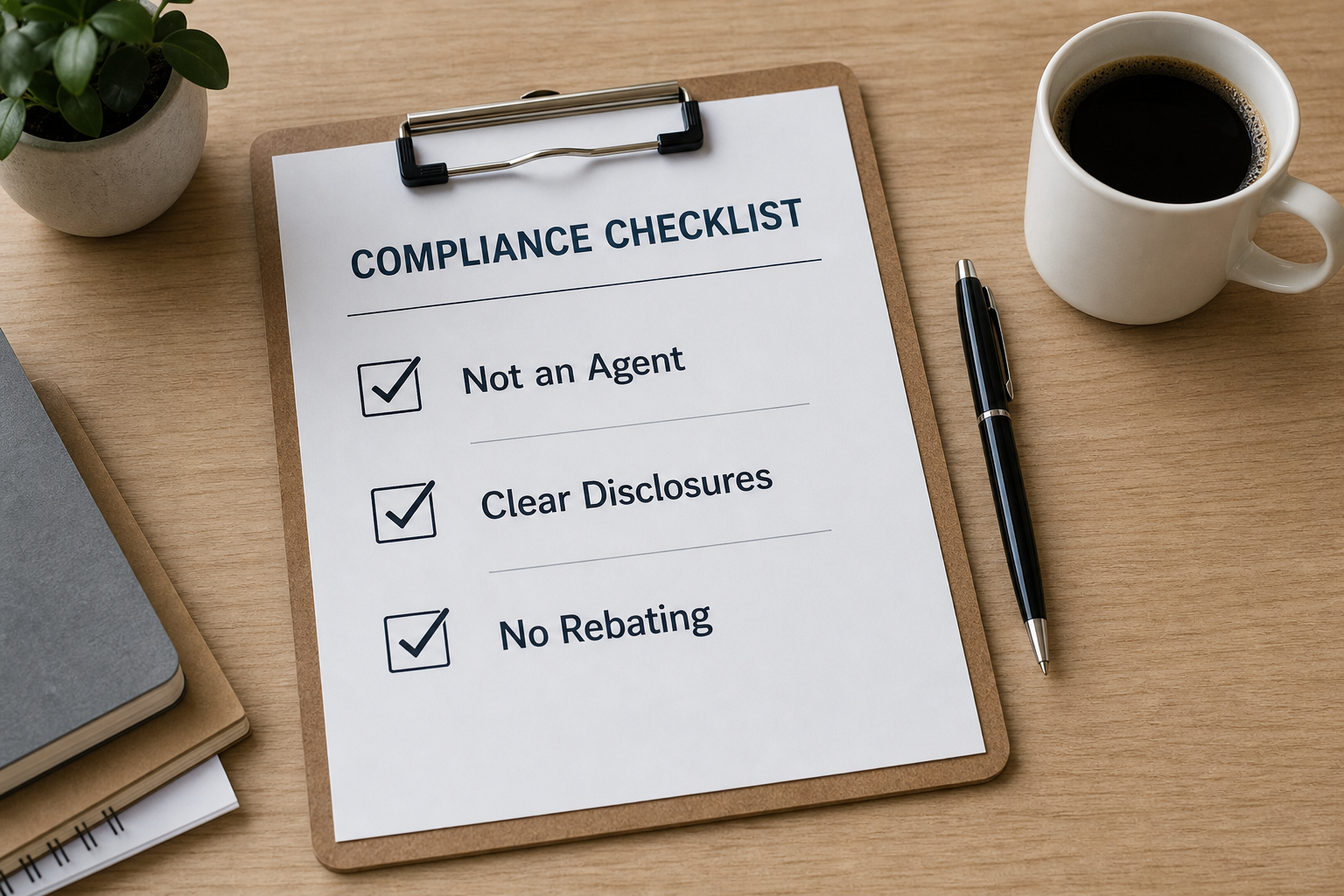
Insurance is not like software or sneakers. It is heavily regulated by state and federal governments. Top ranked insurance affiliate marketing companies understand that compliance is the most critical aspect of the job. A single misleading claim can get you banned from an affiliate network or, worse, face regulatory fines.
1. You Are Not an Agent
Unless you hold an active insurance license in the state where the user resides, you cannot act as an agent.
- Do not advise users on exactly which policy they must buy.
- Do not guarantee coverage or specific pricing (e.g., never say, "Liberty Mutual will give you a $50 rate").
- Do use phrases like "You may be able to save," "Compare quotes," and "Find out if you qualify."
2. Disclose Your Affiliate Relationship
The FTC requires clear and conspicuous disclosures. This is a non-negotiable part of determining if affiliate marketing is legit and operating above board. Place a clear disclaimer at the top of your post stating that you receive compensation if the user clicks a link and generates a quote.
3. Beware of Rebating Laws
In many jurisdictions, it is illegal to offer a financial incentive to a consumer in exchange for them buying an insurance policy or getting a quote (a practice known as rebating). You cannot say, "Get a quote through my link and I will send you a $10 Amazon gift card." This will result in an immediate ban from the carrier's program.
Building Your Insurance Affiliate Funnel: Step-by-Step
If you want to turn this into a serious affiliate marketing side hustle capable of generating thousands per month, you need a structured approach. Do not rely solely on direct linking from blog posts.
Step 1: The Lead Magnet Create a downloadable resource that solves a specific problem. For example, "The First-Time Homebuyer's Inspection Checklist."
Step 2: The Opt-In Drive organic or paid traffic to a landing page where users trade their email address for your checklist.
Step 3: The Welcome Sequence Deliver the checklist. Over the next three days, send educational emails about the home buying process.
Step 4: The Pitch On day four, introduce the concept of homeowners insurance. Explain that rates vary wildly by zip code and that shopping around 30 days before closing can save them $1,000 a year. Provide your affiliate links to Lemonade, Allstate, and Liberty Mutual.
By capturing the email first, you own the audience. If they don't click the insurance link today, you can promote a home warranty affiliate program to them next week, or a furniture financing offer next month.
Addressing the Drawbacks
To be completely transparent, insurance affiliate marketing is not without its hurdles.
First, the networks scrub leads vigorously. If a user enters a fake phone number (like 555-1234) or a fake name into a quote form, the insurance carrier will invalidate the lead and you will not be paid. High-quality, high-intent traffic is the only way to maintain a good relationship with your affiliate managers.
Second, geographic restrictions are common. A carrier might pay $15 for an auto quote in Texas, but only $3 for a quote in California due to state profitability metrics. Or, they might pause accepting leads entirely in Florida during hurricane season. You have to actively manage your links and use geo-targeting tools to route users to the best available offer in their specific location.
As noted by Strackr's breakdown of top insurance affiliate programs, utilizing an affiliate tracking platform is essential to monitor these dynamic payouts and route traffic efficiently.
Frequently Asked Questions (FAQ)
Do I need an insurance license to be an affiliate? No. As long as you are merely providing a link to a licensed broker or carrier and not discussing specific policy details, giving financial advice, or negotiating contracts, you do not need a license. You are acting as a marketer, not an agent.
What is the average conversion rate for CPL insurance offers? Because the user does not have to pay anything to get a quote, conversion rates are significantly higher than retail affiliate programs. Depending on traffic warmth, a 10% to 25% click-to-lead conversion rate is standard for highly targeted SEO traffic.
Where do I find these programs? While some carriers host their programs in-house, most rely on major affiliate networks. CJ Affiliate (Commission Junction), Impact Radius, and specialized financial networks like Fintel Connect or Bankrate Credit Cards (which also handles insurance) are the primary hubs for top-tier insurance offers.
Can I buy Facebook Ads directly to insurance affiliate links? This is known as media buying or arbitrage. While possible, it is extremely difficult for beginners. Advertising policies on Facebook and Google for financial products are strict, and direct linking is often disapproved. You must use a compliant pre-sell landing page, and your cost-per-click (CPC) must be meticulously managed to ensure you are paying less for the click than you earn from the CPL payout.