
Lasso Alternatives for Competitors of Lasso for Finding Affiliate Links
Discover top competitors and alternatives to Lasso for finding, managing, and displaying affiliate links. Compare speed, pricing, and features for 2026.
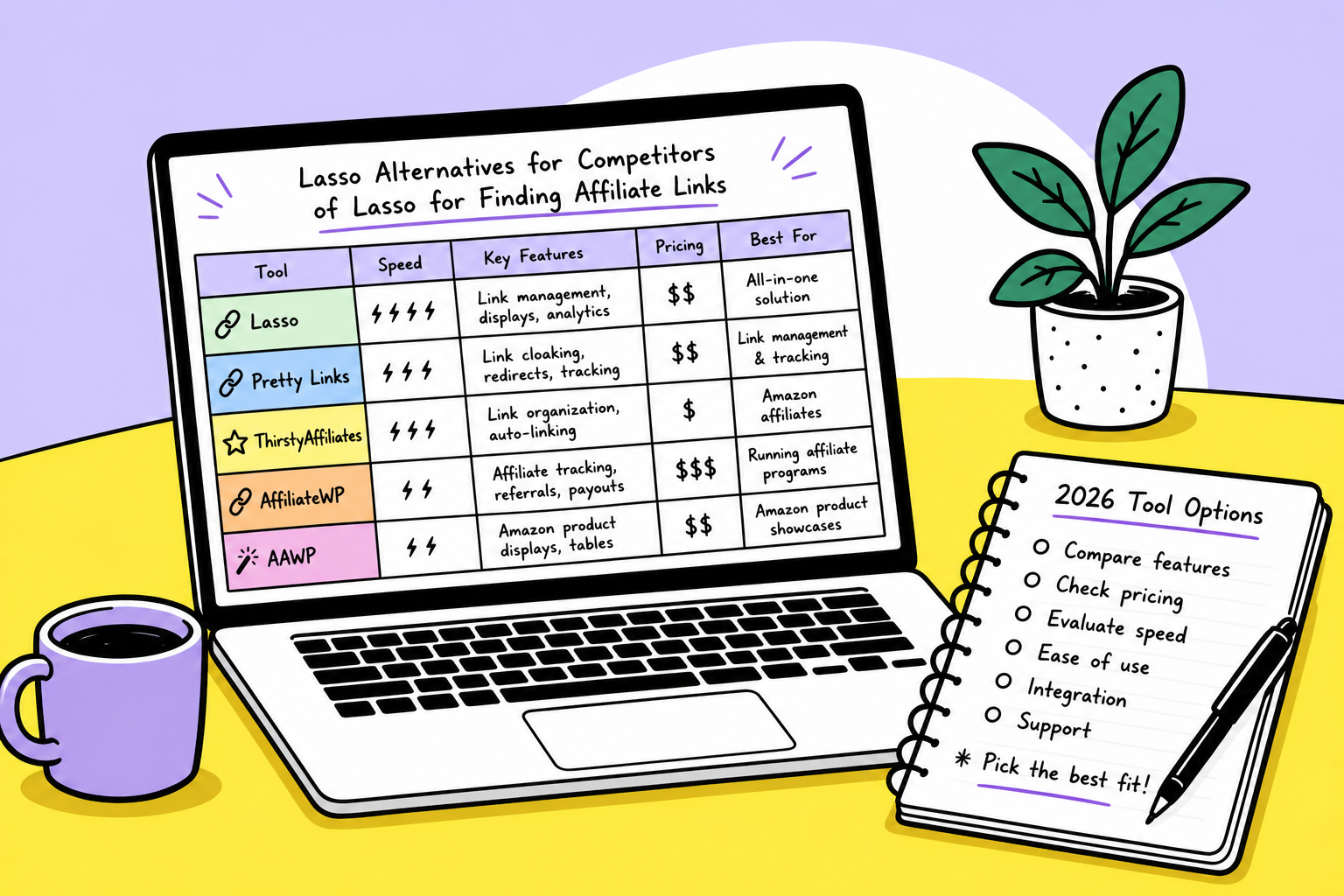
Managing hundreds of affiliate links across an growing content site usually starts with simple spreadsheets and standard WordPress hyperlinking. As your publishing volume scales, manual link management quickly breaks down. Broken URLs slip through undetected, unmonetized product mentions sit static on old posts, and default Amazon text links fail to grab reader attention.
Lasso (GetLasso) became popular by addressing these pain points in a single WordPress plugin. By combining customizable product display cards, automated keyword insertion, Amazon link importing, and broken link notifications, Lasso set a high benchmark for on-site monetization management.
However, many site owners actively seek competitors and alternatives to Lasso. Subscription costs have risen significantly over recent years, heavy custom plugins can add database overhead to large WordPress sites, and Lasso's native feature set focuses heavily on managing existing links rather than discovering new high-paying affiliate programs across diverse niches.
Whether you are looking to lighten your site's technical footprint, lower your software overhead, or find a dedicated ecosystem for discovering lucrative SaaS and digital partnership offers, several specialized alternatives deliver targeted solutions.
Understanding Lasso's Dual Core Functions
Before evaluating competitors, it helps to break down what Lasso actually does for a publishing stack. Marketers generally search for Lasso alternatives for two distinct operational needs:
- On-Site Link Management and Display: Creating eye-catching product display boxes, comparison tables, automated keyword linking, and auditing broken links already on a website.
- Affiliate Program Discovery: Finding new, high-converting merchant offers and partner programs to join outside of standard Amazon Associates listings.
Lasso excels at on-site display and internal link auditing. However, when it comes to discovering fresh affiliate programs outside of major consumer marketplaces, content creators often need dedicated directories alongside their link display tools. Understanding this split prevents you from overpaying for plugin features you do not use while missing out on profitable monetization opportunities.
Direct On-Site Display and Management Competitors
If your primary goal is building high-converting product boxes, comparison matrices, and auto-linking keywords within your content management system, several direct Lasso competitors specialize in on-site presentation.
1. Affiliatable: Cloud-Based Speed and Custom Display Boxes
Affiliatable is one of the most prominent cloud-based alternatives to Lasso. Unlike traditional WordPress plugins that store dynamic display layouts directly inside your WordPress database, Affiliatable operates through an external cloud interface. You build your product cards, comparison tables, pros/cons boxes, and rating widgets inside the Affiliatable dashboard, then embed them onto your site via lightweight scripts or clean HTML snippets.
- Key Strengths: Because rendering happens on external cloud servers, Affiliatable puts virtually zero strain on your WordPress database or page load speed. It includes built-in geo-targeting, schema markup for rich snippets, and customizable call-to-action (CTA) buttons.
- Where It Differs from Lasso: Affiliatable focuses heavily on visual display blocks and comparison matrices rather than serving as a full-suite URL shortener or unlinked mention scanner.
- Best For: High-traffic publishers who prioritize Core Web Vitals and lightning-fast site speed over deep internal URL management.
2. AAWP (Amazon Affiliate WordPress Plugin): The Gold Standard for Amazon Associates
For niche site builders whose revenues derive primarily from Amazon, AAWP remains a dominant force. While Lasso handles multiple affiliate networks alongside Amazon, AAWP is laser-focused on maximizing Amazon Associates commissions.
- Key Strengths: AAWP automatically pulls real-time pricing, product images, star ratings, and discount tags directly via the Amazon Product Advertising API. It generates dynamic bestseller lists, automated comparison grids, and targeted product boxes that comply strictly with Amazon’s Operating Agreement.
- Where It Differs from Lasso: AAWP is strictly built for Amazon. It does not handle custom links for SaaS tools, non-Amazon networks, or general URL shortening.
- Best For: Amazon-centric affiliate sites requiring automated price updates, API compliance, and dynamic product grids without ongoing monthly cloud fees.
3. Tasty Links (by WP Tasty): Lightweight and Editorial-Friendly
Part of the WP Tasty suite built specifically for content creators and bloggers, Tasty Links provides a clean, unobtrusive method for inserting affiliate links into blog posts.
- Key Strengths: Tasty Links lets you assign specific affiliate links to targeted keywords so they auto-link across your entire post library. It allows you to drop in "Featured Link Blocks"—clean, card-style display boxes with product images, custom descriptions, and CTA buttons. It also handles Amazon disclosure text automatically.
- Where It Differs from Lasso: It intentionally avoids complex database architecture, keeping the interface minimal and beginner-friendly. It lacks complex comparison table builders and advanced link-health scanning.
- Best For: Lifestyle, food, travel, and editorial bloggers who want simple keyword auto-linking and attractive product callouts without paying premium software rates.
4. Amalinks Pro: Native WordPress Builder with Flexible API Access
Amalinks Pro is designed specifically for Amazon affiliates who want full control over their visual elements without relying strictly on the Amazon API during early site growth.
- Key Strengths: Amalinks Pro lets users create text links, image links, call-to-action buttons, and custom showcase boxes. Crucially, it provides options for creators who have not yet unlocked Amazon API access by enabling compliant manual search and image embedding.
- Where It Differs from Lasso: Interface design feels closer to native WordPress block editing rather than a SaaS dashboard.
- Best For: Newer Amazon affiliate sites working to reach their first three required sales before gaining API access.
5. ThirstyAffiliates & Pretty Links: Specialized Link Cloaking and Organization
If you primarily used Lasso to shorten long tracking links, categorize partner programs, and auto-link keywords without needing complex product display boxes, dedicated link management plugins offer a streamlined alternative.
-
ThirstyAffiliates: Offers advanced features like automatic keyword linking, geolocation redirects, proactive unlinked mention scanning, and Google Analytics event integration.
-
Pretty Links: Highly popular for redirect management, vanity URL creation, and simple link tracking directly inside the WordPress dashboard.
-
Where They Differ from Lasso: Neither plugin offers native visual product display cards or visual comparison tables out of the box. However, combining a dedicated cloaker like ThirstyAffiliates with a cloud table tool like Affiliatable often costs less annually while offering superior speed performance.
The Other Half of the Equation: Tools for Finding New Affiliate Programs
While Lasso helps you organize links already in your database or pull Amazon products, it does not actively curate or help you discover new, high-paying non-Amazon affiliate partnerships. Amazon commission rates often hover between 1% and 4%, prompting serious publishers to diversify into SaaS, digital tools, and direct brand partnerships with commissions exceeding 30% to 50% or recurring payouts.
To build a balanced income structure, content managers rely on specialized program discovery channels alongside their link display software. If you are learning how to start a profitable affiliate marketing blog, finding reliable, high-converting offers is just as important as how you display them on the page.
1. Curated Program Directories (AffiliList)
When moving beyond standard Amazon affiliate displays, discovering reliable SaaS and software affiliate programs often involves navigating fragmented network sign-ups. Many affiliate networks require lengthy approval applications before you can even view their commission structures or payout terms.
Platforms like AffiliList solve this discovery bottleneck by operating as an open, curated directory of over 10,000 verified affiliate programs with a heavy focus on SaaS and digital tools.
- Open Transparency: Unlike traditional affiliate networks that gate program details behind login portals, open directories allow you to review exact commission percentages, cookie durations, and payout rules immediately.
- Advanced Filtering: Marketers can quickly isolate high-converting recurring commission models, high-ticket offers, and niche-specific tools across categories like finance, HR software, and digital marketing.
- Synergy with Display Tools: Once you find a high-paying offer in a directory, you can generate your custom tracking link, plug it into a lightweight tool like ThirstyAffiliates or Affiliatable, and deploy dynamic visual cards across your content without paying extra SaaS fees for discovery tools.
If you are exploring 11 high paying affiliate programs for $500+ commissions or evaluating 7 most profitable affiliate marketing niches to target, using open directory data streamlines program selection significantly compared to trial-and-error searching inside WordPress plugins.
2. Major Affiliate Networks
For physical products, enterprise software, and direct retail brands, traditional affiliate networks remain standard infrastructure:
- Impact.com: Excellent for top-tier SaaS, direct-to-consumer brands, and fintech offers.
- PartnerStack: The premier network for modern SaaS platforms and B2B digital tools with recurring payout models.
- ShareASale / Awin: Comprehensive marketplaces for mid-sized retail brands, digital products, and physical merchandise.
- CJ Affiliate (Commission Junction): Enterprise-level network featuring legacy global brands across travel, retail, and finance.
Feature and Cost Comparison Matrix
To help you evaluate which tool stack fits your technical setup and budget, the matrix below compares Lasso with its primary display and discovery competitors.
| Feature / Metric | Lasso (GetLasso) | Affiliatable | AAWP | Tasty Links | ThirstyAffiliates Pro | AffiliList (Directory) |
|---|---|---|---|---|---|---|
| Primary Focus | Display & Management | Cloud Display Blocks | Amazon Displays | Simple Keyword Linking | Link Cloaking & Redirection | Program Discovery |
| Hosting Architecture | WordPress Plugin | Cloud / External CDN | WordPress Plugin | WordPress Plugin | WordPress Plugin | Web Directory |
| Impact on Database | Moderate to High | Extremely Low | Low to Moderate | Very Low | Low | None (External) |
| Comparison Tables | Yes | Yes (Advanced) | Yes | No | No | N/A |
| Amazon API Sync | Yes (Plus non-API) | Yes | Required | Optional | Optional | N/A |
| Auto Keyword Linker | Yes | No | No | Yes | Yes | N/A |
| Broken Link Health | Yes | No | Yes (Amazon status) | No | Yes | N/A |
| Program Search/Directory | Basic Amazon/Link Opportunities | No | Amazon Only | No | No | Extensive (10,000+ SaaS & Digital) |
| Ideal Niche Fit | Multi-niche blogs | Fast-loading content sites | Pure Amazon sites | Food, Travel, Editorial | SaaS, General Affiliates | B2B, SaaS, Digital Marketers |
Scenario-Based Selection: Which Tool Stack Should You Choose?
Selecting the right replacement for Lasso depends on your site's specific business model, technical infrastructure, and monetization strategy.
Scenario A: High-Traffic Bloggers Focused on Speed and Core Web Vitals
If your top priority is site performance and mobile page load speeds, heavy database plugins can degrade user experience and Core Web Vitals scores.
- Recommended Stack: Affiliatable for display cards and comparison tables + ThirstyAffiliates (Free or Pro) for URL shortening.
- Why It Works: Affiliatable offloads image rendering and table CSS to external edge networks, while ThirstyAffiliates handles redirects cleanly within native WordPress rewrite rules.
Scenario B: Dedicated Amazon Product Review Sites
If 80% or more of your revenue comes from Amazon Associates, you do not need generalized affiliate link shorteners designed for SaaS tools.
- Recommended Stack: AAWP + Amazon SiteStripe / Native API.
- Why It Works: AAWP handles prime badging, real-time price updates, discount percentage indicators, and compliance disclaimers far more reliably for Amazon-specific inventories than general-purpose tools.
Scenario C: SaaS, Tech, and B2B Digital Marketers
If you operate in digital niches where single sales yield $50 to $500 recurring commissions, your primary focus should be finding high-converting software programs and embedding clean callout boxes.
- Recommended Stack: AffiliList (for program discovery) + Pretty Links Pro or ThirstyAffiliates (for cloaking) + Affiliatable (for feature matrix comparisons).
- Why It Works: You get open access to verified SaaS commissions without network lock-in, paired with lightweight presentation tools that make software comparison charts look modern and responsive. Evaluating 11 best niches for affiliate marketing (SaaS & digital) helps ensure you target offers with durable recurring payouts.
Scenario D: Multi-Channel Publishers (Pinterest, Social, and Blog)
If you drive traffic across multiple platforms—such as building an affiliate marketing program for Pinterest while running a blog—you need link management that works outside of standard WordPress post content.
- Recommended Stack: Pretty Links Pro (for custom short links shareable on social platforms) + Tasty Links (for quick blog integrations).
- Why It Works: Provides memorable short URLs that survive direct social sharing while keeping blog editorial workflows frictionless.
Practical Workflow: Finding and Deploying Affiliate Links Efficiently
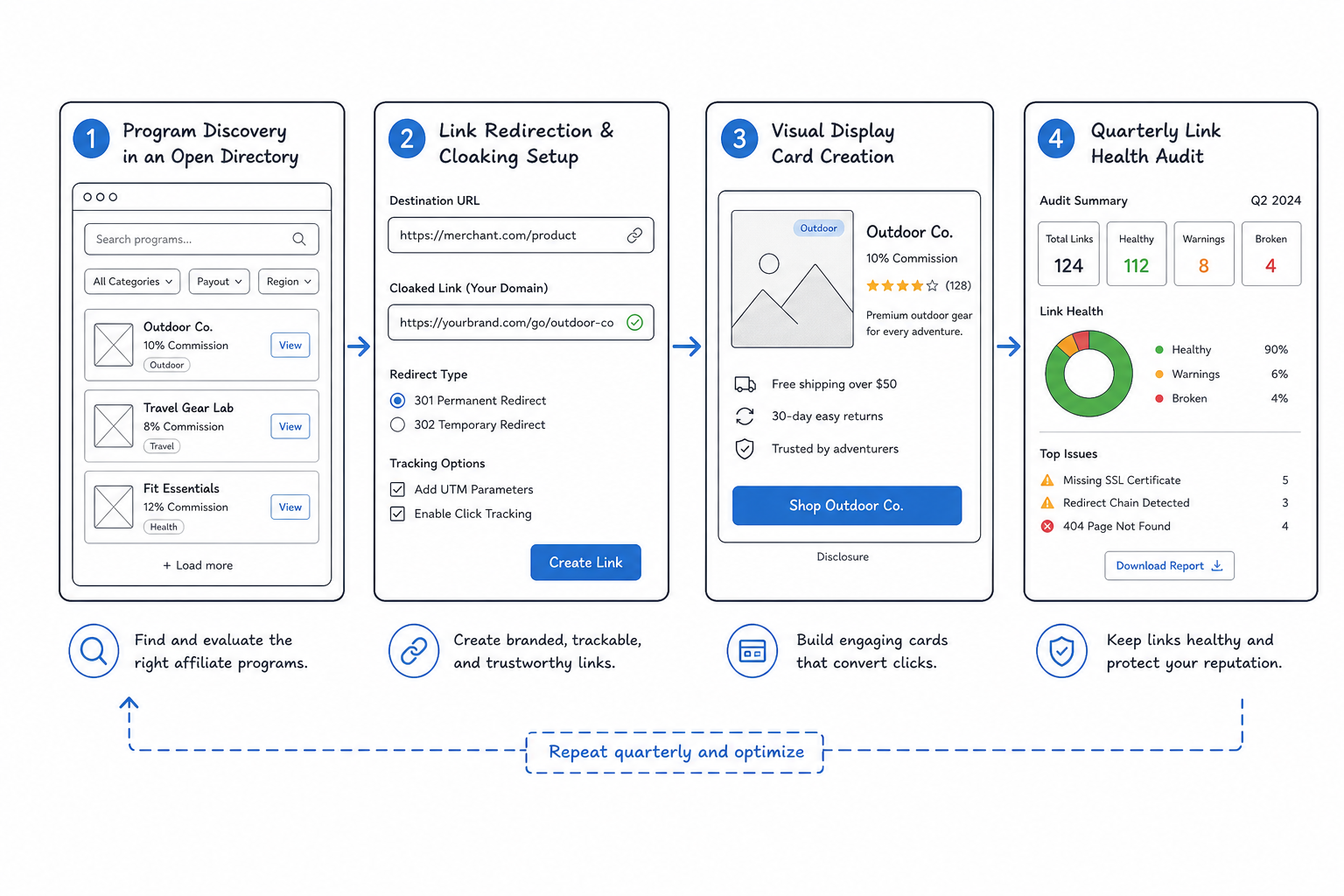
Replacing an all-in-one plugin like Lasso with a specialized tool stack is straightforward when broken down into systematic steps. Here is how professional site owners manage the lifecycle of an affiliate link from discovery to conversion tracking.
Step 1: Discover High-Yield Merchant Offers
Rather than applying blindly to networks, start by researching verified offers in your specific vertical.
- Check curated databases like AffiliList to review program terms, cookie windows, and commission models.
- Select programs offering competitive payout structures (e.g., 30% recurring vs 5% one-time).
- If you are still deciding on a content vertical, follow a structured process for how to pick a niche for affiliate marketing in 5 steps to align audience demand with vendor availability.
Step 2: Establish Clean Redirection Architecture
Create structured vanity URLs that protect tracking codes and maintain brand trust:
- Use standard category subfolders such as
yourdomain.com/recommend/product-nameoryourdomain.com/go/product-name. - Ensure redirects use
302or307temporary redirect codes rather than301permanent redirects so search engine crawlers interpret them correctly as affiliate tracking redirects. - Set default link attributes to
rel="nofollow sponsored"andtarget="_blank"to comply with Google search guidelines.
Step 3: Build Conversion-Focused Visual Callouts
Text links embedded deep within paragraphs convert at modest rates. Deploy structured visual elements at high-intent decision points:
- Place a highlighted product card after your introduction for readers who want quick recommendations.
- Use comparison tables near the middle of review posts to summarize key features, pricing tiers, and ratings side by side.
- Include pros and cons lists with distinct visual styling (green checkmarks and red indicators) to build editorial trust.
Step 4: Audit Link Health and Monitored Mentions
Link maintenance is an ongoing process. Set up quarterly operational routines:
- Run periodic broken link scans using lightweight plugins or crawling tools like Screaming Frog.
- Scan old posts for high-value brand keywords that remain unlinked, converting non-monetized traffic into affiliate touchpoints.
- Monitor merchant status changes—if a merchant updates their domain or closes a program, update your redirection slug once in your link manager to fix every instance site-wide.
Strategic Considerations: Plugin Overhead vs. Cloud Performance
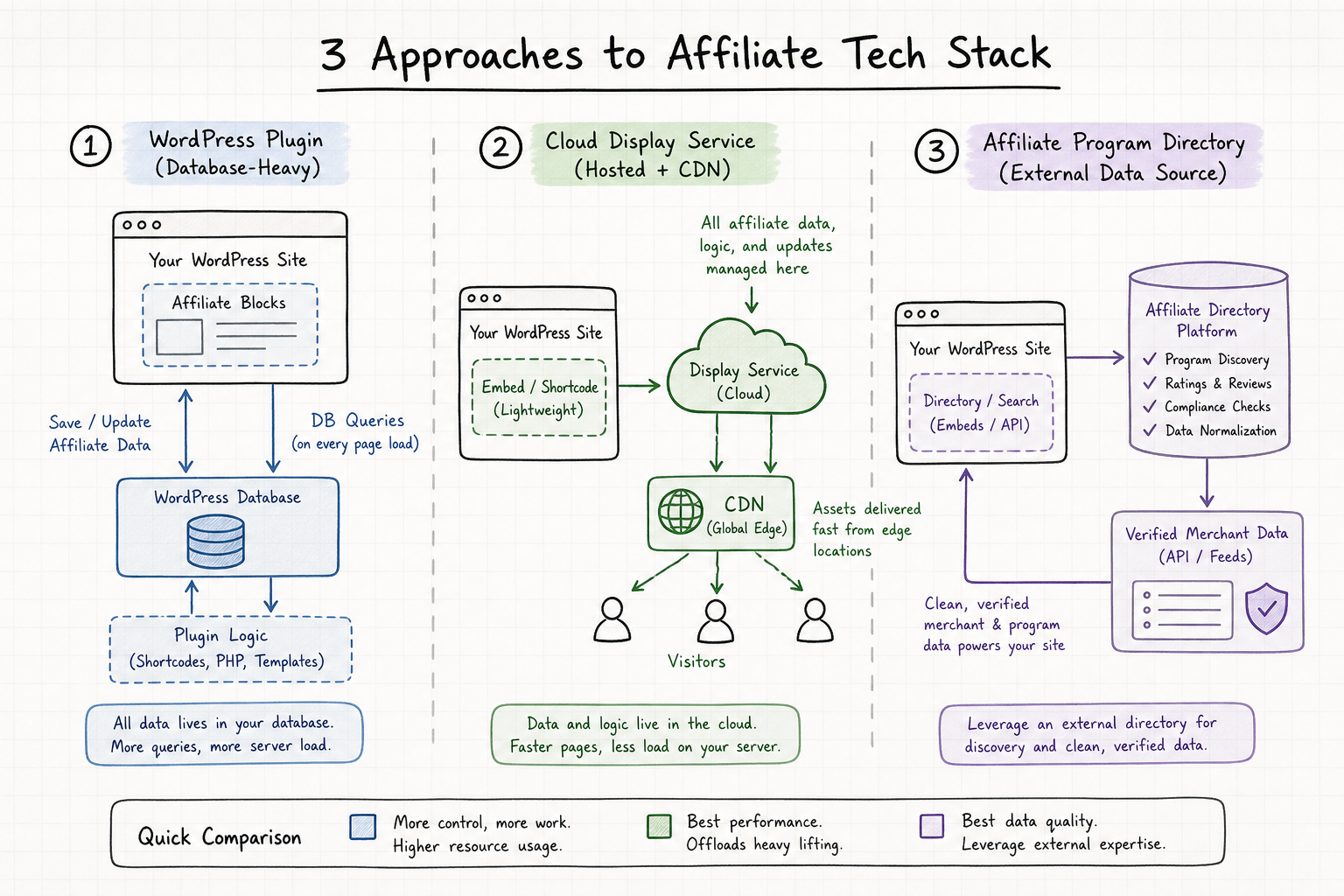
A major reason content creators move away from Lasso is the issue of database scaling. When a plugin manages link redirects, display styling, Amazon API caching, click tracking, and unlinked mention scanning all within your WordPress backend, every page load triggers database queries.
For a site with 50 articles, this overhead is negligible. However, for established publications with 1,000+ posts and millions of monthly pageviews, database bloat directly impacts server response times (TTFB) and mobile rendering speeds.
Comparing Architectures
-
Monolithic WordPress Plugins (e.g., Lasso, older cloakers):
- Pros: Everything managed in one WordPress dashboard; deep integration with post editors.
- Cons: Increases database size with dynamic revisions, tracking logs, and custom post types; potential speed penalty if server resources are limited.
-
Decoupled / Cloud Architecture (e.g., Affiliatable + External Program Directories):
- Pros: Zero database bloat; visual assets served via fast edge CDNs; easier to scale traffic without upgrading host tiers.
- Cons: Requires managing logins across two separate web dashboards.
If you are treating affiliate publishing as an affiliate marketing side hustle, starting with simple, lightweight tools keeps fixed monthly costs minimal while keeping technical maintenance hassle-free.
Myth-Busting: Do You Need an All-in-One Plugin to Succeed in Affiliate Marketing?
A common myth in the niche publishing community is that you must purchase expensive, all-in-one display plugins to achieve high click-through rates. In reality, conversion rates depend far more on intent match, audience trust, and offer value than on specific software badges.
Consider these realistic observations:
- Text Links Often Outperform Complex Cards: In deep technical reviews and tutorial content, inline contextual text links frequently achieve higher click-through rates than large display boxes because readers view them as natural editorial citations rather than ads.
- Speed Drives Conversions: A fast-loading site using simple, clean callout buttons will consistently outperform a sluggish site laden with heavy scripts and dynamic comparison widgets.
- Offer Quality Beats Visual Polish: Promoting a mediocre offer through a gorgeous display box yields lower revenue than promoting a high-demand, top-tier software tool via a standard button. Understanding is affiliate marketing legit comes down to selecting reputable vendors with high customer retention rates.
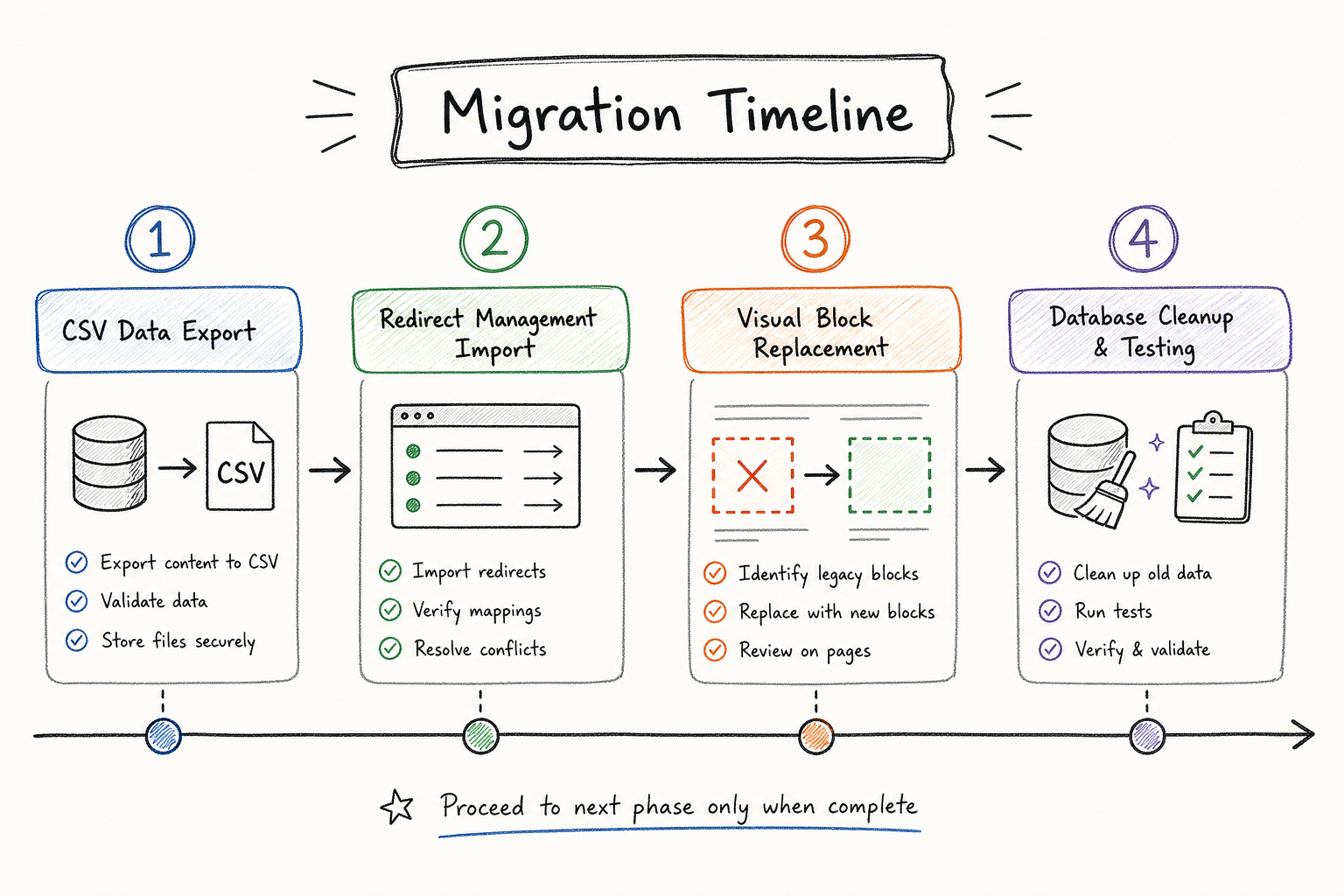
Step-by-Step Guide: Migrating Away from Lasso Without Breaking Links
If you currently use Lasso and want to transition to a lighter or more cost-effective stack, careful planning prevents broken links, 404 errors, and lost commissions.
Phase 1: Export Your Link Inventory
- Access the Lasso dashboard and export your complete link database to a CSV file.
- Ensure the export includes target affiliate URLs, redirect slugs, custom display titles, and assigned category tags.
Phase 2: Set Up Your New Link Management Tool
- Install your chosen alternative (e.g., ThirstyAffiliates or Pretty Links).
- Import the CSV file or manually create matching redirect slugs (
yourdomain.com/go/product-name). - Verify that the destination tracking URLs match your original affiliate links down to sub-ids and tracking tags.
Phase 3: Replace Visual Display Elements
- Identify high-traffic posts containing Lasso display shortcodes or Gutenberg blocks.
- Replace Lasso blocks with your new display tool (such as Affiliatable cards or native WordPress visual callout blocks).
- Test destination URLs across desktop and mobile devices to ensure target pages load properly in new browser tabs.
Phase 4: Deactivate and Clean Database Tables
- Deactivate the Lasso plugin on a staging environment or during low-traffic hours.
- Test critical site pages to confirm no broken shortcodes remain visible to visitors.
- Clean residual database tables using a database optimization plugin to reclaim storage space.
Frequently Asked Questions
What is the closest free alternative to Lasso?
For basic link cloaking and keyword auto-linking, the free version of ThirstyAffiliates or Pretty Links provides core redirect functionality without cost. For Amazon displays, manual product tables built with WordPress native block editors serve as effective free alternatives.
Does removing Lasso impact my existing affiliate tracking?
As long as you replicate the exact redirect slug structure (e.g., keeping /go/product-name unchanged) in your new redirect manager, existing tracking links embedded across your site will continue directing traffic to your affiliate partners without interruption.
How do cloud display tools like Affiliatable handle Amazon price updates?
Cloud-based display tools connect directly to the Amazon Product Advertising API on their external servers. When Amazon updates a product price, the cloud service updates the rendered element on your site via API sync, ensuring compliance with Amazon's requirements for accurate pricing data.
Can I find affiliate marketing career opportunities in software program management?
Yes, as direct brand affiliate programs expand outside traditional retail networks, demand for dedicated partnership managers has grown rapidly across B2B software companies. Exploring affiliate marketing jobs provides insight into career paths managing merchant programs behind modern affiliate directories.
What is the best strategy for diversifying away from Amazon Associates?
Combine curated SaaS directories like AffiliList to identify recurring software programs with lightweight link cloakers and custom comparison tables. Diversifying into recurring digital offers builds recurring revenue streams that buffer against Amazon commission changes.
Choosing the Right Tool Stack for Your Site
Replacing or supplementing Lasso comes down to evaluating what your publishing workflow actually needs. If your focus is purely Amazon product displays, dedicated tools like AAWP deliver specialized features at a fraction of annual SaaS subscription fees. If you prioritize site speed and Core Web Vitals, decoupling display cards with cloud platforms like Affiliatable combined with lightweight WordPress redirect plugins provides a responsive user experience.
When your primary objective expands to finding new, high-converting digital partnerships, leveraging open directories like AffiliList ensures you spend less time searching through restricted networks and more time deploying high-yielding offers across your content. By aligning your software stack with your site's operational demands, you keep technical overhead low while maximizing your publishing revenue.