
Best New Affiliate Programs to Promote Tools Beyond Shareasale
Discover how to find profitable new affiliate programs beyond legacy networks. Learn discovery tiers, competitor reverse-engineering, and SaaS vetting steps.
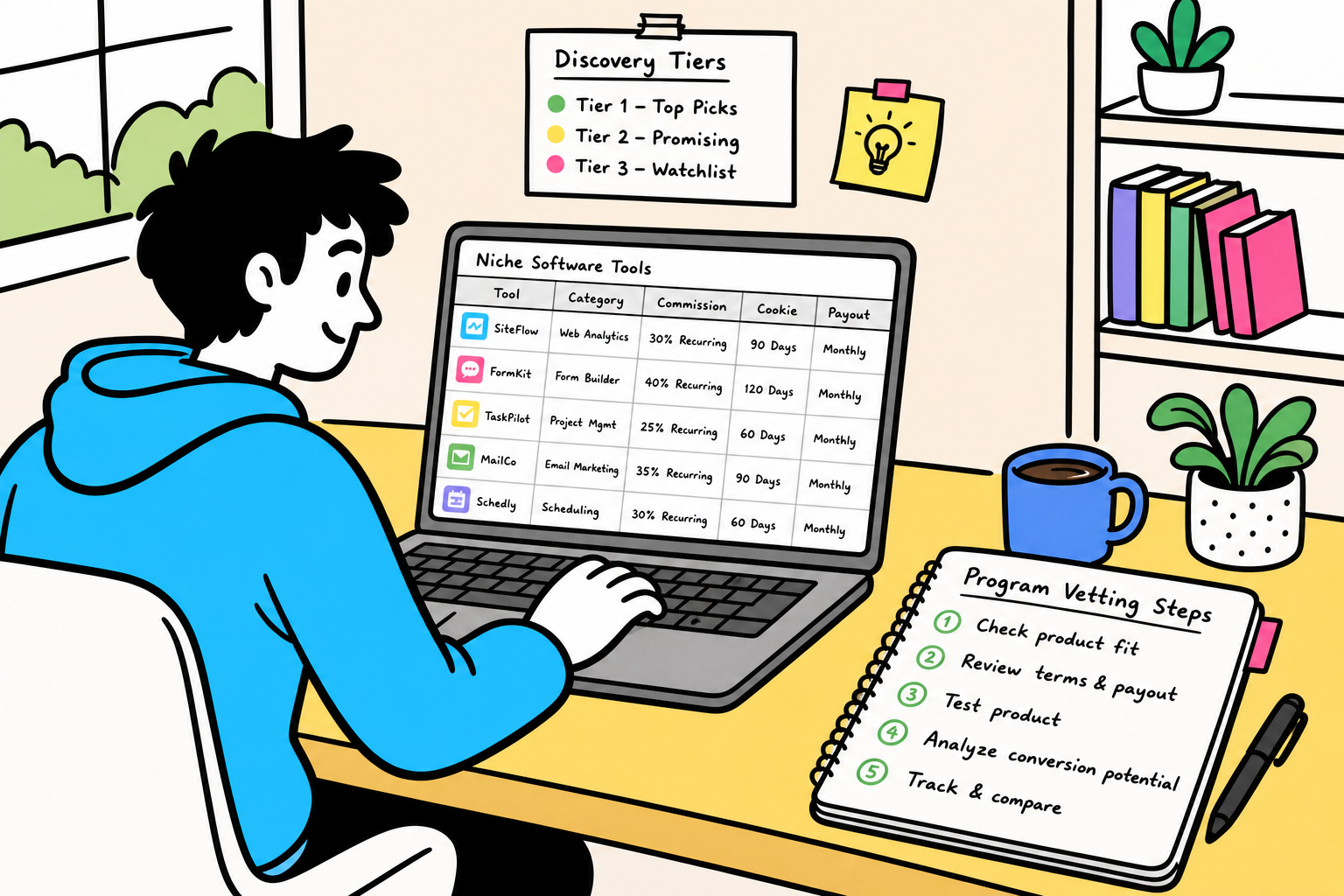
Most affiliate marketers hit a predictable wall around their second year in the business. You log into a legacy network, sift through an outdated interface, and realize the programs in your niche either offer microscopic commissions, haven't updated their banners since 2018, or suffer from abysmal conversion rates.
If you are asking where can I find new affiliate programs to promote, defaulting to the same three networks everyone else uses is a recipe for stagnation. While ShareASale, CJ Affiliate, and ClickBank paved the way for performance marketing, the most lucrative opportunities—especially in SaaS and digital products—have migrated elsewhere. Today, the most profitable partnerships are often hidden in specialized directories, private micro-networks, or direct-to-brand agreements.
Relying exclusively on legacy platforms exposes you to "zombie programs": merchants who keep their network accounts open but stopped actively supporting their affiliates years ago. To build a resilient affiliate marketing side hustle, you need to look beyond the default options.
Here is exactly how to discover, vet, and partner with the best new affiliate programs on the market.
The Three Tiers of Affiliate Discovery
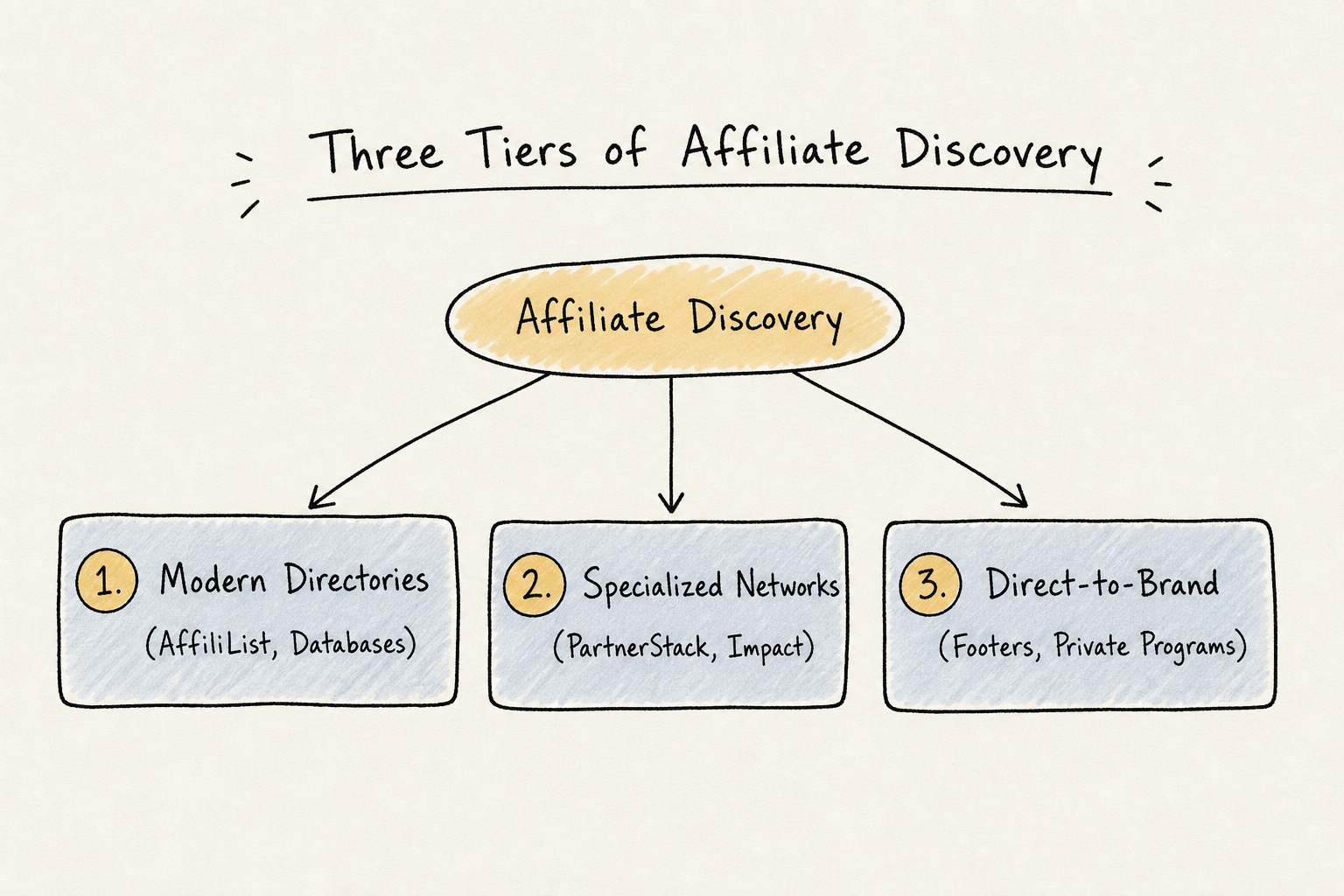
Finding fresh offers requires a systematic approach. The digital landscape has fragmented, meaning brands no longer rely on a single aggregator to manage their partnerships. Instead, opportunities are split across three primary tiers: modern directories, specialized networks, and direct brand programs.
1. Modern Affiliate Directories (The Clean Approach)
Historically, finding a program meant signing up for a network, waiting for approval, and only then getting access to basic data like commission rates and cookie durations. Modern directories flip this model by prioritizing transparency.
Platforms like AffiliList function as comprehensive, streamlined databases where you can filter over 10,000 affiliate programs—heavily focused on SaaS and digital tools—without jumping through registration hoops just to see the payout terms. You can filter by commission percentage, recurring versus one-time payouts, and specific sub-niches.
Using aggregators prevents the blind search problem. Instead of guessing which software companies have public programs, you can leverage databases to sort opportunities by their actual earning potential. You can also browse aggregators like Affiliate.Watch to sort by specific payouts, product categories, and payment methods to see what matches your traffic source.
When utilizing a directory, focus your search on:
- Recurring Revenue: Software tools that pay a monthly percentage as long as the user remains a customer.
- High-Ticket B2B: Enterprise tools that may only convert once a quarter but pay out hundreds of dollars per lead.
- Emerging Tools: Newly listed programs that haven't been saturated by established competitors.
2. Specialized and Next-Generation Networks
If you want the centralized tracking and consolidated payouts of a network without the clutter of legacy platforms, several modern platforms have captured the high-end digital market.
PartnerStack PartnerStack dominates the B2B and SaaS affiliate space. Unlike traditional retail networks, it was built specifically for software companies. The interface is clean, the tracking is heavily geared toward software sales cycles (which often involve free trials and delayed conversions), and the merchants actively recruit tech-focused content creators.
Impact.com For global brands and sophisticated media buyers, Impact has largely replaced the older generation of networks. It offers highly customizable contracting, allowing you to negotiate custom rates directly within the platform. If you manage multiple traffic channels, you can use impact.com to manage partnerships across social media and web channels, integrating smoothly with custom attribution models.
FlexOffers If your niche straddles the line between digital tools and physical products, FlexOffers remains a powerful alternative. While it operates similarly to older networks, its vast inventory allows you to explore digital and multi-category options that might be exclusive to their platform. They are particularly aggressive about onboarding new brands, making it a good hunting ground for fresh offers.
3. Direct-to-Brand Programs (The Footer Strategy)
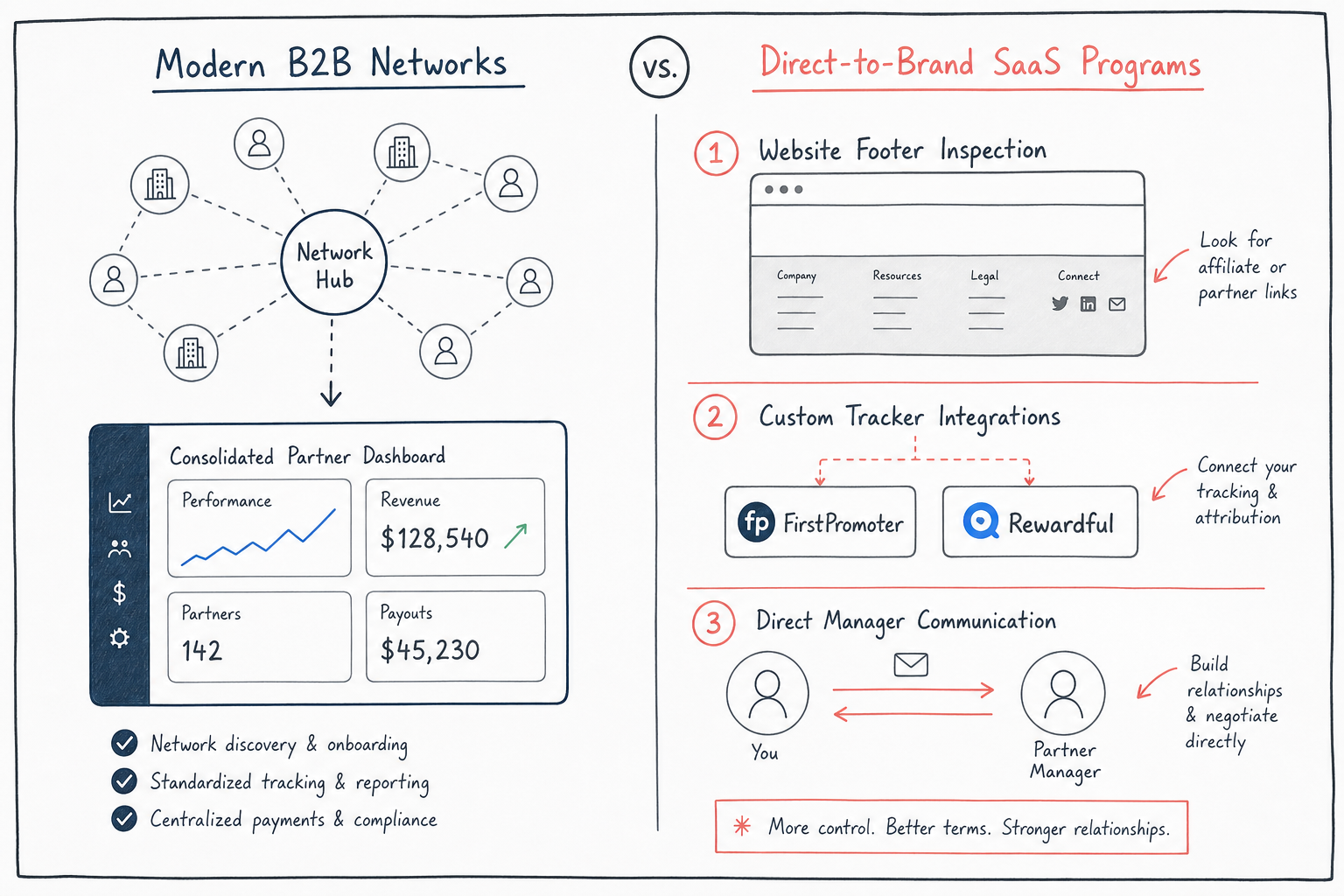
Many of the highest-converting software tools refuse to join public networks. The fees networks charge merchants (often 20% to 30% on top of the affiliate commission) eat into margins. Instead, companies use white-label tracking software (like Rewardful or FirstPromoter) to host private programs.
Finding these requires manual digging:
The Footer Check Scroll to the bottom of the websites for the tools you already use every day. Look for links labeled "Partners," "Affiliates," "Refer-a-Friend," or "Ambassadors." Because these programs are direct, they often approve affiliates faster and provide direct access to an in-house affiliate manager.
Advanced Search Operators
You don't have to check sites one by one. Use Google search operators to uncover hidden pages within your niche. If you are in the project management space, type:
"project management" inurl:affiliate OR site:competitor.com intitle:"partner program"
SaaS and Digital Product Targeting Highly-rated software programs often host their own tracking because they offer lucrative recurring commissions. A tool like GetResponse, for example, allows affiliates to choose between a hefty upfront bounty or a long-term recurring percentage. Direct relationships often give you the leverage to negotiate these terms once you prove you can drive volume.
Reverse-Engineering Competitor Success
If a competing site is heavily promoting a specific tool, they are doing it because the math works. Marketers do not waste prime above-the-fold real estate on offers that fail to convert.
To find out what your competitors are promoting:
- Analyze Outbound Links: Run a competitor's domain through an SEO tool (like Ahrefs or Semrush) and look at their outbound links. Filter for common tracking parameters like
?ref=,?via=, or domains liketrack.,go., andpartners.. - Check Redirections: Many sites use link cloakers (e.g.,
yoursite.com/recommends/product). Click these links and watch the URL bar load. You will often see the tracking software they use flash on the screen before the final landing page loads. - Mine Community Insights: Do not underestimate the value of raw practitioner feedback. On communities like Reddit's Affiliate Marketing forum, users strongly recommend checking competitors' footer disclosures to see exactly which networks they partner with. Often, sites are legally required to disclose their specific network affiliations on their privacy or disclosure pages.
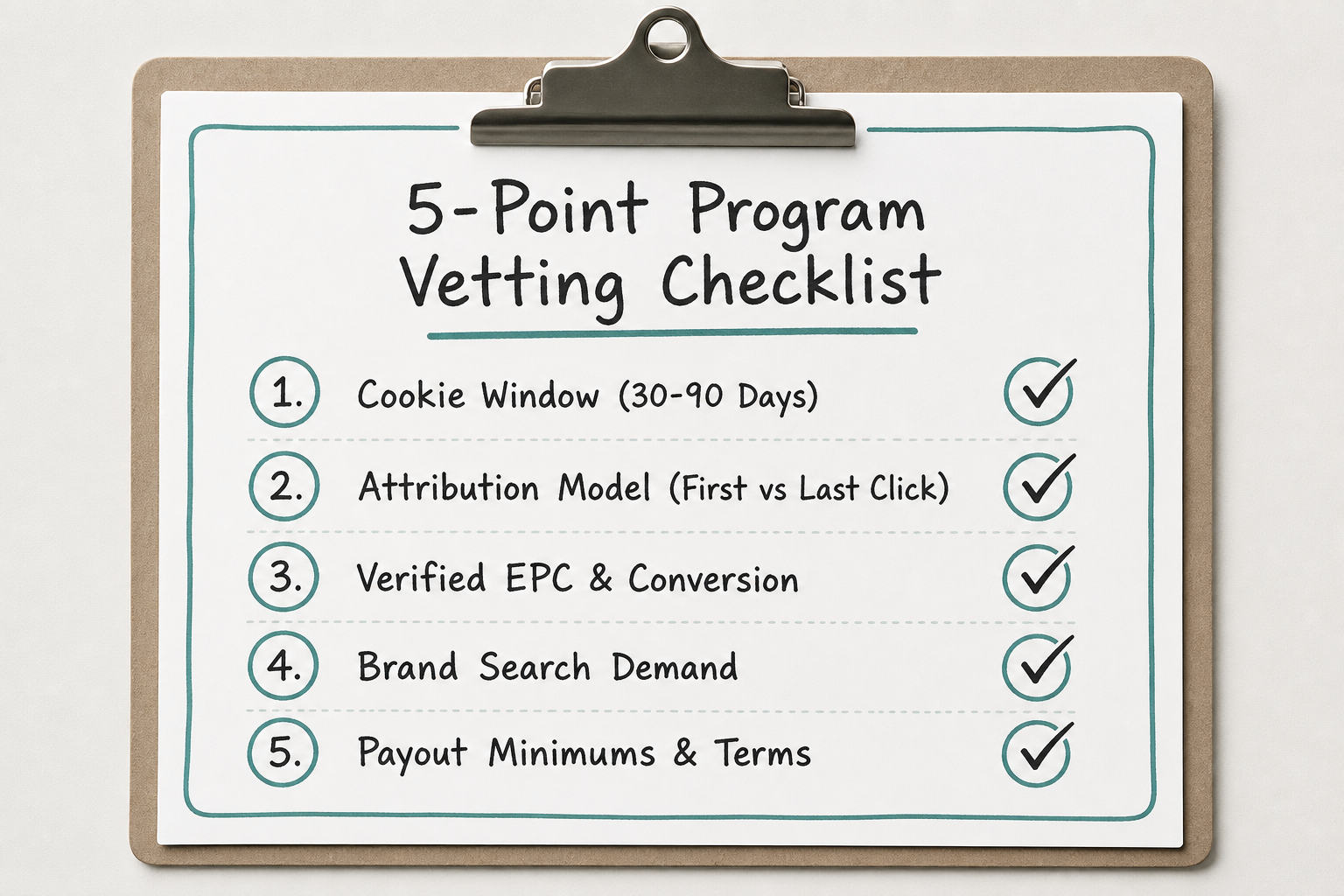
The 5-Point Program Vetting Checklist
Finding a new program is only 20% of the battle. Deciding whether it is actually worth your traffic is where most beginners fail. Before you swap out your links, run the new program through this vetting process to ensure the affiliate marketing offers are legit.
1. The Cookie Duration Reality Check
The cookie duration determines how long you have to earn a commission after someone clicks your link. In the software space, a 30-day cookie is the bare minimum, but 60 to 90 days is standard.
Be wary of high-ticket B2B software that only offers a 7-day cookie. Enterprise software decisions require budget approvals, committee meetings, and lengthy trials. If a product takes three months to sell but only tracks your lead for a week, you are doing free marketing for the merchant.
2. Attribution Models
How does the merchant credit the sale?
- Last-Click: The standard model. The last affiliate link clicked before the purchase gets 100% of the commission.
- First-Click: Rare, but highly favorable for content creators who introduce a user to a tool, even if the user later clicks a coupon site's link to buy. If you write top-of-funnel educational content (like a profitable affiliate marketing blog), aggressively seek out first-click programs. If you are forced into last-click models, you will constantly lose commissions to coupon and cashback extensions hijacking your traffic at checkout.
3. Earnings Per Click (EPC) and Network Averages
Do not be blinded by the commission percentage. A 50% commission on a product that no one buys is worse than a 5% commission on a product that sells itself.
Look for the 7-day and 30-day EPC metrics. This tells you exactly how much money, on average, an affiliate makes for every 100 clicks they send. If a network hides their EPC data, or if a direct program manager refuses to share their baseline conversion rate, walk away.
4. Search Volume vs. Brand Awareness
A brand new SaaS tool might offer an incredible 40% recurring commission, but if no one is searching for their brand, you have to do all the heavy lifting. You will have to educate the market on the problem and the solution.
Ideally, balance your portfolio. Promote a few established tools with high search volume (easier conversions, lower payouts) alongside a few emerging tools (harder conversions, massive payouts).
5. Payout Thresholds and Terms
Always read the payout terms. Some private programs have a "minimum threshold" of $500 before they cut a check. Others require you to refer at least two separate customers before releasing funds (to prevent people from using affiliate links for personal discounts). Ensure the terms align with your expected traffic volume.
Why the SaaS and Digital Tool Niche Wins
If you are evaluating which niches to target, SaaS (Software as a Service) and digital tools consistently outperform physical products.
Consider the economics. A physical product has manufacturing costs, shipping fees, warehousing, and returns. The merchant's margins are thin, meaning they can only afford to pay you 3% to 8%.
Software has near-zero marginal cost of replication. Once the code is written, adding one more user costs the company pennies. Because their margins are incredibly high, they can afford to pay affiliates 30%, 40%, or even 50% of the sale. Furthermore, software operates on subscription models. Promoting high paying affiliate programs in the SaaS space often means doing the work once and getting paid every month for years.
Categories currently seeing massive influxes of new programs include:
- AI Writing and Video Generators: New tools launch weekly, heavily relying on affiliates for initial user acquisition.
- HR and Remote Work Software: Tools for payroll, employee tracking, and asynchronous communication.
- No-Code Builders: Platforms allowing users to build apps or websites without knowing how to code.
The Myth of Exclusive Programs
There is a persistent myth that the best programs are highly exclusive and require millions of pageviews to join. This is rarely true. What affiliate managers actually want is relevance.
A SaaS company selling specialized accounting software for freelancers would much rather partner with a small, hyper-focused niche site owner pulling 2,000 highly targeted visitors a month than a generic coupon site with 2 million visitors.
If you find a closed or "invite-only" program, reach out directly. Find the Head of Partnerships or Affiliate Manager on LinkedIn. Send a concise message explaining exactly how you plan to promote them (e.g., "I am writing a 3,000-word comparative review of accounting tools for freelancers and currently rank on page one for [Keyword]."). More often than not, they will bypass the public requirements and generate a tracking link for you manually.
Frequently Asked Questions
Is it better to join an affiliate network or a direct program?
Both have their place. Networks offer consolidated reporting and a single tax form at the end of the year, which drastically simplifies accounting. Direct programs, however, often offer slightly higher commissions because the merchant isn't paying network fees. Use directories like AffiliList to identify the best offers regardless of where they are hosted, and let the data dictate your choice.
How do I find untracked or private affiliate programs?
If a company doesn't have an affiliate page in their footer, email their support team. Many B2B SaaS companies have informal referral programs designed for agencies or consultants. If you explain your traffic metrics, they will often create a custom discount code or manual tracking link for you, effectively creating a private affiliate agreement.
What is considered a "good" commission rate for SaaS?
For one-time payouts (bounties), expect anywhere from $50 to $150 per paid account. For recurring models, 20% to 30% is standard. Anything below 15% recurring in the software space is uncompetitive unless the tool is an absolute market leader with effortless conversion rates.
Moving Forward
The days of relying on a single legacy network to dictate your monetization strategy are over. Finding new affiliate programs requires leveraging transparent directories, targeting private SaaS platforms, and aggressively reverse-engineering what is already working in your space.
By prioritizing platforms that focus on clean data, reliable attribution, and high-margin digital tools, you can ensure your traffic is yielding the highest possible return on investment. Stop guessing what converts and start making data-driven partnership decisions.