
Find Online Marketing Affiliate Jobs (Remote Openings)
Explore remote online marketing affiliate jobs. Discover the difference between corporate affiliate manager salaries and independent high-ticket programs.

When you search for online marketing affiliate jobs, you immediately run into a fork in the road. Half the results point to salary-paying, W-2 corporate roles managing partner networks for large brands. The other half promise uncapped, performance-based commissions for solo creators building niche sites.
This split intent confuses both career-switchers and experienced marketers. Are you looking to get hired by a company to manage their affiliates, or are you looking to become an affiliate yourself and build an independent revenue stream?
Both paths offer lucrative, fully remote opportunities, but they require entirely different skills, risk tolerances, and daily routines.
This guide breaks down the reality of affiliate marketing careers in 2026. We cover the specific roles companies are hiring for, the salary expectations for corporate affiliate managers, and how independent marketers are bypassing clunky networks to find high-converting, direct partnerships.
The Two Paths of Online Marketing Affiliate Jobs
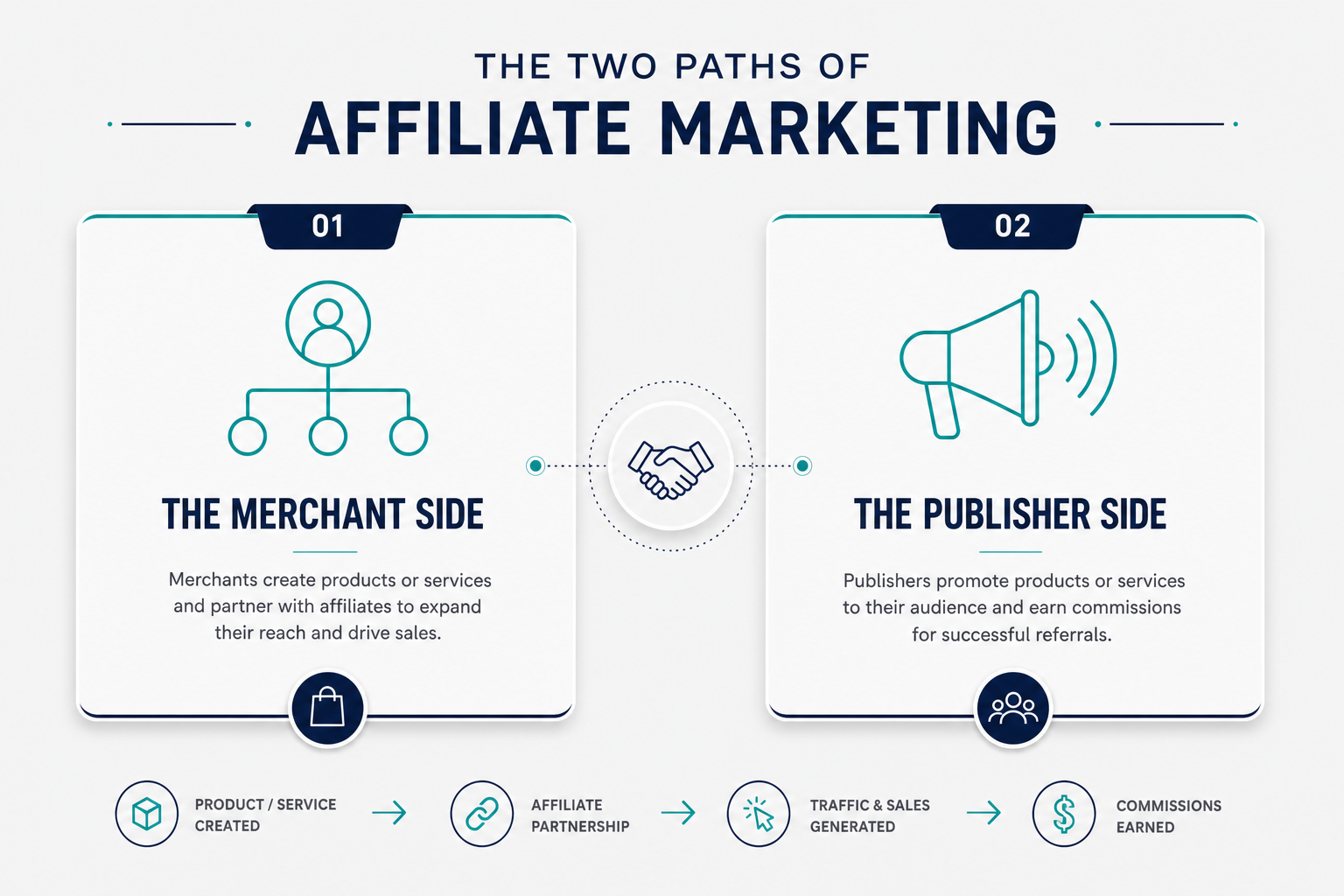
Before updating your resume or buying a domain name, you need to decide which side of the partnership equation you want to sit on. The affiliate ecosystem requires two players: the merchant (the brand with a product) and the publisher (the affiliate driving traffic).
Path A: The Corporate Affiliate Manager (W-2 or Freelance)
In this role, you work for the merchant. Your job is to recruit publishers, negotiate commission rates, monitor for fraud, and optimize the overall affiliate program. You are an employee or a retained freelancer earning a predictable baseline income, often with performance bonuses tied to the revenue your affiliates generate.
Path B: The Independent Publisher (Solo Affiliate)
In this role, you are the marketing engine. You build an audience through search engine optimization, paid ads, or social media, and you monetize that attention by promoting the merchant's products. Your income is 100% performance-based. If you drive zero sales, you make zero dollars. If you drive ten thousand sales, your earning potential is virtually uncapped.
Comparing the Two Career Paths
| Feature | Corporate Affiliate Manager | Independent Affiliate Publisher |
|---|---|---|
| Income Structure | Base salary ($55k-$120k+) + performance bonuses. | 100% commission. Highly variable. |
| Risk Level | Low to Moderate. You get paid regardless of immediate conversions. | High. You carry the cost of traffic generation and software. |
| Core Daily Tasks | Recruitment outreach, compliance auditing, A/B testing offers, reporting. | Content creation, keyword research, running PPC ads, email marketing. |
| Autonomy | Standard corporate structure. Subject to KPIs and manager oversight. | Total freedom. You choose your hours, niches, and promotional methods. |
| Job Security | High, provided the channel remains profitable for the brand. | Variable. Subject to algorithm updates and program term changes. |
Path A: Who is Hiring for Corporate Affiliate Roles in 2026?
If you prefer the stability of a paycheck, the demand for partnership and affiliate managers is robust. Brands across SaaS, e-commerce, and fintech recognize that a well-managed affiliate program often delivers a higher return on ad spend (ROAS) than traditional paid social.
To understand the current hiring landscape, you can explore resources that track Who is Hiring? 9 Affiliate Marketing Jobs for 2026.
Remote Affiliate Marketing Jobs: Entry Level vs. Specialist
The structure of an affiliate marketing department varies by company size, but most remote roles fall into three distinct tiers:
1. Entry-Level: Affiliate Coordinator / Junior Partnerships Associate
- Average Base Salary: $45,000 - $60,000
- The Role: Coordinators handle the heavy lifting of recruitment. They scrape competitor backlink profiles to find active affiliates, send cold outreach emails, review incoming applications, and handle basic support tickets from existing partners.
- Where to Find Them: General job boards are heavily populated with these roles. Indeed lists thousands of entry-level affiliate jobs, particularly for direct-to-consumer (DTC) brands scaling their initial programs.
2. Mid-Level: Affiliate Manager / Partnerships Manager
- Average Base Salary: $65,000 - $90,000
- The Role: Managers own the strategy. They negotiate exclusive payouts for top-tier affiliates, audit the program to ensure partners aren't bidding on branded trademark terms (PPC compliance), and plan promotional calendars for Q4 and major software launches.
- Where to Find Them: Specialized digital marketing hubs and Commerce & Affiliate Marketing Jobs boards on Martech Record frequently list mid-to-senior openings for experienced program managers.
3. Freelance/Agency: Outsourced Program Manager (OPM)
- Average Earnings: $3,000 - $8,000+ per month per client.
- The Role: Many brands do not want the overhead of a full-time employee. Instead, they hire freelance OPMs to launch and run their programs on a retainer basis.
- Where to Find Them: If you want to consult, Workana highlights freelance affiliate marketing jobs geared toward international talent, while established consultants often source clients directly via LinkedIn.
Path B: High-Paying Affiliate Programs for Solo Marketers
If you choose the independent route, your "job" is finding the right offers to promote. You don't need a resume; you need traffic.
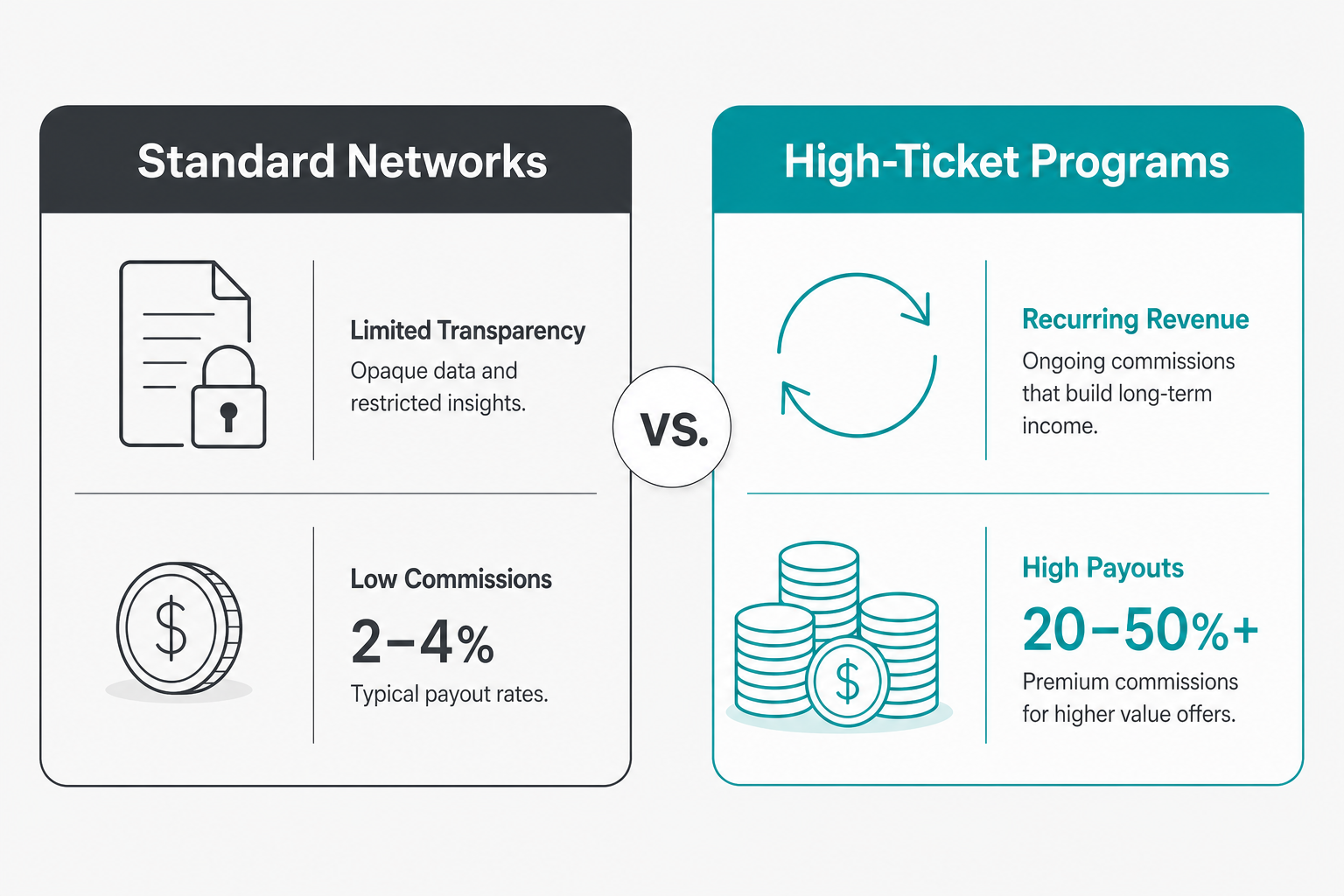
The biggest mistake new solo affiliates make is joining massive, cluttered networks that obfuscate their data, hide commission terms behind arbitrary approval processes, and offer meager 2-4% payouts.
Professional affiliates prefer transparency. They want to know exactly what the cookie duration is, whether the commission is a one-time bounty or recurring revenue, and what the baseline payout percentage is before they commit to building a campaign.
This is where AffiliList changes the game. As a curated directory of over 10,000 affiliate programs, AffiliList bypasses outdated lists and allows you to instantly compare commission structures across hundreds of niches. Instead of applying blindly to clunky networks, you can use the platform's advanced filtering options to locate highly profitable SaaS, digital tool, and B2B software programs that match your audience.
If you want to maximize your immediate return on effort, check out these 11 High Paying Affiliate Programs for $500+ Commissions.
Best Niches for Affiliate Marketing in 2026
Choosing the right sector dictates your earning ceiling. Physical products rarely pay more than 10% due to manufacturing and shipping margins. Digital products, software, and financial services often pay 30% to 50% because their marginal cost of replication is zero.
To build a defensible solo career, focus on sectors with high lifetime value (LTV):
- SaaS (Software as a Service): Email marketing tools, CRM software, and project management platforms often pay recurring monthly commissions. If a customer stays for three years, you get paid for three years.
- Fintech & Crypto: Trading platforms, budgeting software, and business credit cards offer massive CPA (Cost Per Action) payouts, sometimes exceeding $200 just for a funded account.
- B2B Services: HR software, payroll platforms, and compliance tools have high price tags and long sales cycles, but the rewards are substantial.
For a deeper dive into profitable verticals, read our breakdown of the 11 Best Niches for Affiliate Marketing (SaaS & Digital).
Must-Have Skills for Online Marketing Affiliates in 2026
Whether you are applying for a W-2 Affiliate Manager role or launching your own niche site, the underlying skills remain identical. The affiliate industry is highly technical and data-driven. Relying on sheer networking charisma is no longer enough.
1. Advanced Tracking and Attribution Software
Affiliate marketing lives and dies by the cookie. You must understand how to configure postbacks, read server-to-server tracking data, and troubleshoot broken affiliate links. If tracking breaks, affiliates don't get paid, and trust evaporates instantly. Familiarizing yourself with platforms like Impact, PartnerStack, and Post Affiliate Pro is mandatory. Many professionals use the Partnerships Experience Academy (PXA) by Impact to gain free certifications in partnership management.
2. Search Engine Optimization (SEO)
For independent publishers, SEO is the highest-margin traffic source. Understanding keyword search intent, on-page optimization, and technical site structure is non-negotiable. If you want to see how this translates into a practical business model, review How to Start a Profitable Affiliate Marketing Blog.
3. Conversion Rate Optimization (CRO)
Getting traffic to a page is only half the battle. Affiliates must rigorously A/B test their call-to-action buttons, comparison tables, and landing page copy to maximize the Earnings Per Click (EPC). A small tweak in button placement can double your commissions overnight.
4. Partner Relationship Management
For corporate affiliate managers, relationship building is your core KPI. Top affiliates (super affiliates) receive dozens of pitches a week. To win their traffic, you must offer custom landing pages, co-branded creatives, increased cookie windows, and exclusive discount codes.
How to Qualify with Zero Experience (The 3-Step Roadmap)
If you have no digital marketing experience, you cannot expect to land a remote $80,000 Partnerships Manager role tomorrow. Nor can you expect to launch a blog and make $10,000 next month.
However, the barrier to entry is lower than in traditional tech roles. Here is the realistic roadmap for breaking into the industry.
Step 1: Build a Sandbox Project
You cannot manage affiliates effectively if you have never been an affiliate. Buy a domain, set up WordPress, and attempt to rank for a low-competition topic. Apply to a few transparent programs via AffiliList and try to generate a single dollar online.
This exercise teaches you the pain points of content creation, tracking link deployment, and traffic generation. When you eventually interview for a corporate role, showing them your small niche site proves you understand the publisher's perspective. Need help choosing a topic? Learn How to Pick a Niche for Affiliate Marketing in 5 Steps.
Step 2: Master Paid and Organic Traffic Channels
Don't try to be everywhere at once. Pick one traffic source and master it. If you hate writing long-form content, master visual search and intent-based algorithms. For example, learning the Step-by-Step: Setting Up Affiliate Marketing on Pinterest can yield targeted traffic without the grind of Google SEO.
Step 3: Transition via Freelancing
Before applying for full-time corporate roles, take on small, low-risk freelance gigs. Many small businesses need help auditing their existing affiliate setups or finding new partners. You can frequently find entry-level freelance affiliate marketing jobs on Upwork to build your resume. Even managing a micro-program a few hours a week is enough to establish professional credibility.
If you are using this as a stepping stone, read our guide on building an Affiliate Marketing Side Hustle: 5 Steps to $1k/Mo (2026).
FAQ: Is Affiliate Marketing a Legit Career?
Because of the rampant "get rich quick" messaging on social media, many job seekers worry that the entire industry is a scam.
Is affiliate marketing legit? Yes. It is a multi-billion dollar performance marketing channel utilized by nearly every Fortune 500 company, including Amazon, Target, Microsoft, and Shopify. The problem isn't the business model; the problem is the offers you choose to associate with.
Legitimate affiliate marketing involves promoting high-quality products that solve real problems for your audience. Shady affiliate marketing involves pushing low-quality, overpriced courses with misleading income claims.
If you want to protect your reputation, strictly promote vetted software and tools. We cover how to identify red flags in our guide: Is Affiliate Marketing Legit? (How to Spot Real Offers).
How quickly can an online affiliate job replace my salary? If you are hired for a corporate Path A role, immediately. If you are building an independent Path B affiliate site, you should expect 12 to 18 months of consistent, unpaid work before seeing a full-time income. Affiliate SEO is a compounding game, not an overnight lottery.
Do I need to pay to join an affiliate program? Never. Legitimate affiliate programs are free to join. The merchant pays you to bring them customers. If a program asks for a sign-up fee or requires you to purchase expensive "training materials" before granting you an affiliate link, it is likely a multi-level marketing (MLM) scheme, not an affiliate program.
Next Steps: Launching Your Affiliate Career
The landscape for online marketing affiliate jobs is vast, but it requires deliberate action to navigate successfully.
If you want the W-2 path, start auditing brand programs. Look at SaaS companies you already use, analyze their current affiliate outreach, and pitch them a freelance proposal to optimize their partner recruitment.
If you want the independent path, your immediate next step is offer selection. Do not waste months driving traffic to a program that pays 3% on a $20 item. You need high-margin, reliable programs with favorable cookie terms.
Skip the noisy network applications and head over to AffiliList. Use the directory's tagging system and advanced filters to sort through 10,000+ opportunities. Find a digital product or SaaS tool that fits your specific audience, grab a link with a competitive payout, and start building your first campaign today.