
7 Personal Finance Affiliate Programs for High ROI
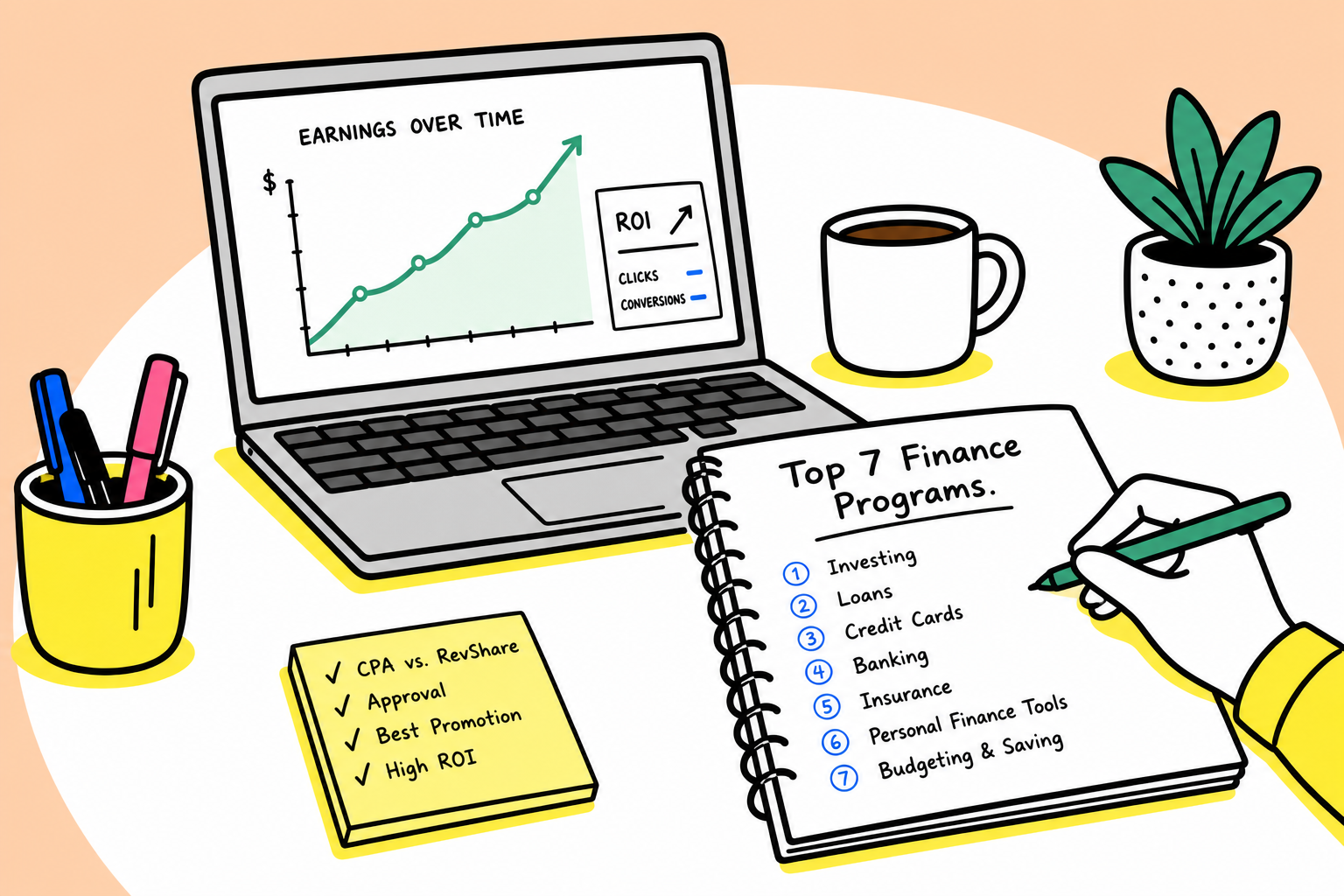
Discover 7 high-converting personal finance affiliate programs. Compare CPA vs. RevShare models, approval requirements, and the best ways to promote them.
- The YMYL Reality in Affiliate Marketing
- 1. Empower (Formerly Personal Capital)
- 2. SoFi (Social Finance)
- 3. Acorns
- 4. CIT Bank
- 5. Credit Karma
- 6. Binance / Coinbase (Crypto Exchanges)
- 7. Chime
- Comparing Finance Affiliate Structures: CPL vs. CPA vs. RevShare
- 3 Failure Modes to Avoid in Finance Affiliate Marketing
- Finding the Right Fit for Your Platform
The personal finance niche is notorious for two things: intense search competition and astronomical commission rates. If a wealth management firm knows a qualified client brings a lifetime value of $15,000, they will gladly pay you $100 just for a valid lead, and upwards of $500 for a funded account.
But slapping a credit card banner ad on a generic lifestyle blog won't cut it. Financial traffic is skeptical. Readers are actively looking for catches, hidden fees, and scams. To convert in this space, you have to align your audience’s exact financial pain points—debt, low savings, investment confusion—with trustworthy products that solve them.
Whether you are scaling a dedicated affiliate marketing blog or looking for high-ticket offers to monetize an email newsletter, personal finance offers some of the best margins in the industry.
Here is a breakdown of seven personal finance affiliate programs that deliver high ROI, along with the strategic nuance of how to actually get them to convert.
The YMYL Reality in Affiliate Marketing
Before diving into the programs, you have to understand the environment you are operating in. Personal finance falls squarely under Google’s YMYL (Your Money or Your Life) classification. This means search engines apply the strictest possible scrutiny to your content's accuracy, authority, and trustworthiness.
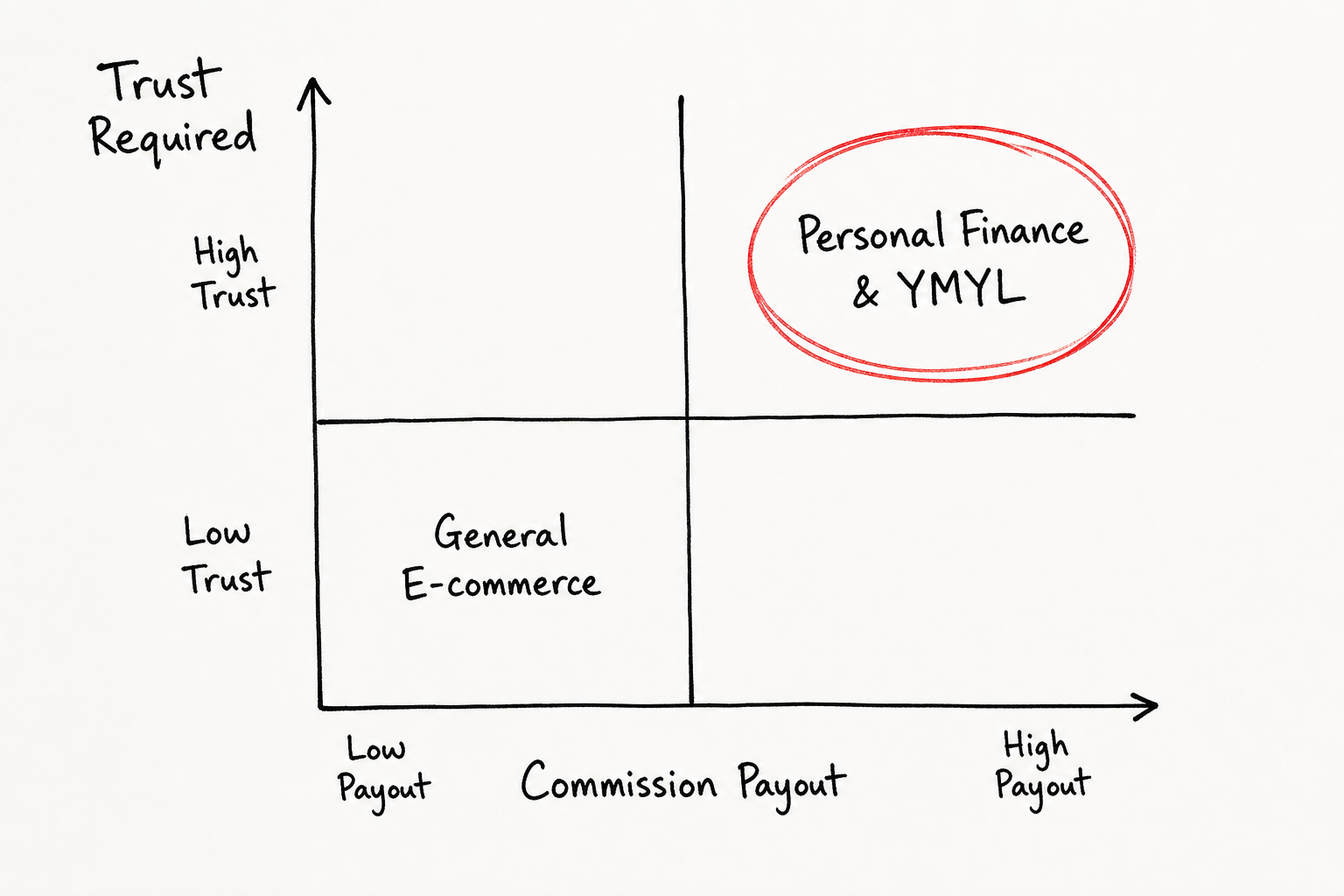 If you are a beginner, trying to outrank massive institutional sites for terms like "best credit cards" is a guaranteed path to frustration. Instead of broad SEO plays, high-ROI affiliates in the finance space win through:
- Hyper-niche targeting: Ranking for "best budget app for freelance graphic designers" instead of "best budget apps."
- Proprietary data: Building custom spreadsheets, calculators, or templates that naturally lead to an affiliate product recommendation.
- Email funnels: Capturing leads through a free budgeting course and pitching high-yield savings accounts or investing platforms on day three of the sequence.
With that baseline established, let's look at the programs that warrant your traffic.
1. Empower (Formerly Personal Capital)
Empower is a wealth management and financial tracking tool. It offers one of the best free net-worth trackers on the market, which makes it remarkably easy to promote to an audience interested in taking control of their finances.
- The Payout: ~$100 CPA (Cost Per Action).
- The Catch: You don't get paid just for a sign-up. The user must link at least $100,000 in investable assets to their free dashboard for the lead to qualify.
- Best For: Mid-career professionals, real estate investors, and high-income earners.
Why it works: You are promoting a free, highly useful tool. The barrier to entry for the user is just setting up an account and syncing their banks. Because Empower’s business model involves upselling wealth management services to high-net-worth individuals, they can afford to pay you $100 for a free user.
Promotion Strategy: Position Empower as the ultimate dashboard for tracking FIRE (Financial Independence, Retire Early) goals. Compare it against manual spreadsheet tracking to highlight its automated syncing benefits.
2. SoFi (Social Finance)
SoFi started as a student loan refinancing company but has aggressively expanded into an all-in-one financial ecosystem offering personal loans, mortgages, investing, and checking accounts.
- The Payout: Varies by product. Personal loans can pay $100–$150+, while funded checking accounts often pay $50–$100.
- Cookie Duration: 30 days.
- Best For: Millennials and Gen Z professionals looking to consolidate debt or move away from traditional brick-and-mortar banks.
Why it works: SoFi has massive brand recognition and a modern, user-friendly app. They also frequently run "sign-up bonuses" (e.g., "Get $250 when you set up direct deposit"), which you can use as the primary hook in your marketing.
Promotion Strategy: If you are building an affiliate marketing side hustle, targeting long-tail keywords around "how to consolidate high interest credit card debt" and positioning SoFi's personal loans as the mechanism is a high-converting angle.
3. Acorns
Acorns is a micro-investing app that rounds up spare change from everyday purchases and invests it into ETFs. It’s designed specifically for people who feel like they don't have enough money to start investing.
- The Payout: $10 to $60 CPA (depending on the network and current promotional tiers).
- Cookie Duration: 30 days.
- Best For: Beginners, college students, and broad consumer audiences.
Why it works: The friction to start is virtually zero. You aren't asking your audience to wire $5,000 to a brokerage; you are asking them to connect a debit card to invest their spare pennies. This makes Acorns one of the easiest personal finance programs to convert, offsetting its lower CPA with high volume.
Promotion Strategy: Acorns performs exceptionally well on visual and social platforms. If you are learning the ropes of a dedicated affiliate marketing program for pinterest, creating infographics about "How to start investing with $0" and directing traffic to Acorns is a classic, effective playbook.
4. CIT Bank
In a macroeconomic environment where interest rates are high, High-Yield Savings Accounts (HYSAs) become incredibly popular. CIT Bank consistently offers some of the most competitive APYs (Annual Percentage Yields) on the market.
- The Payout: $30 to $50 per funded account.
- Cookie Duration: 30 days.
- Best For: Risk-averse savers, emergency fund builders, and older demographics.
Why it works: Unlike promoting risky crypto exchanges or complex trading platforms, promoting an FDIC-insured HYSA is a low-risk recommendation that builds trust with your audience. You are literally helping them earn free money on cash they already have sitting around.
Promotion Strategy: Create an "Emergency Fund Calculator" or a comparison table showing the math of keeping $10,000 in a traditional bank (0.01% APY) versus CIT Bank. The stark mathematical difference does the selling for you.
5. Credit Karma
Credit Karma is a household name for checking credit scores for free. They monetize by recommending credit cards and loans based on the user's specific credit profile.
- The Payout: Often a hybrid model. $2–$5 per qualified free sign-up, with potential back-end revenue shares if they apply for products through the platform.
- Cookie Duration: 30 days.
- Best For: Audiences focused on debt recovery, first-time homebuyers, and credit card churners.
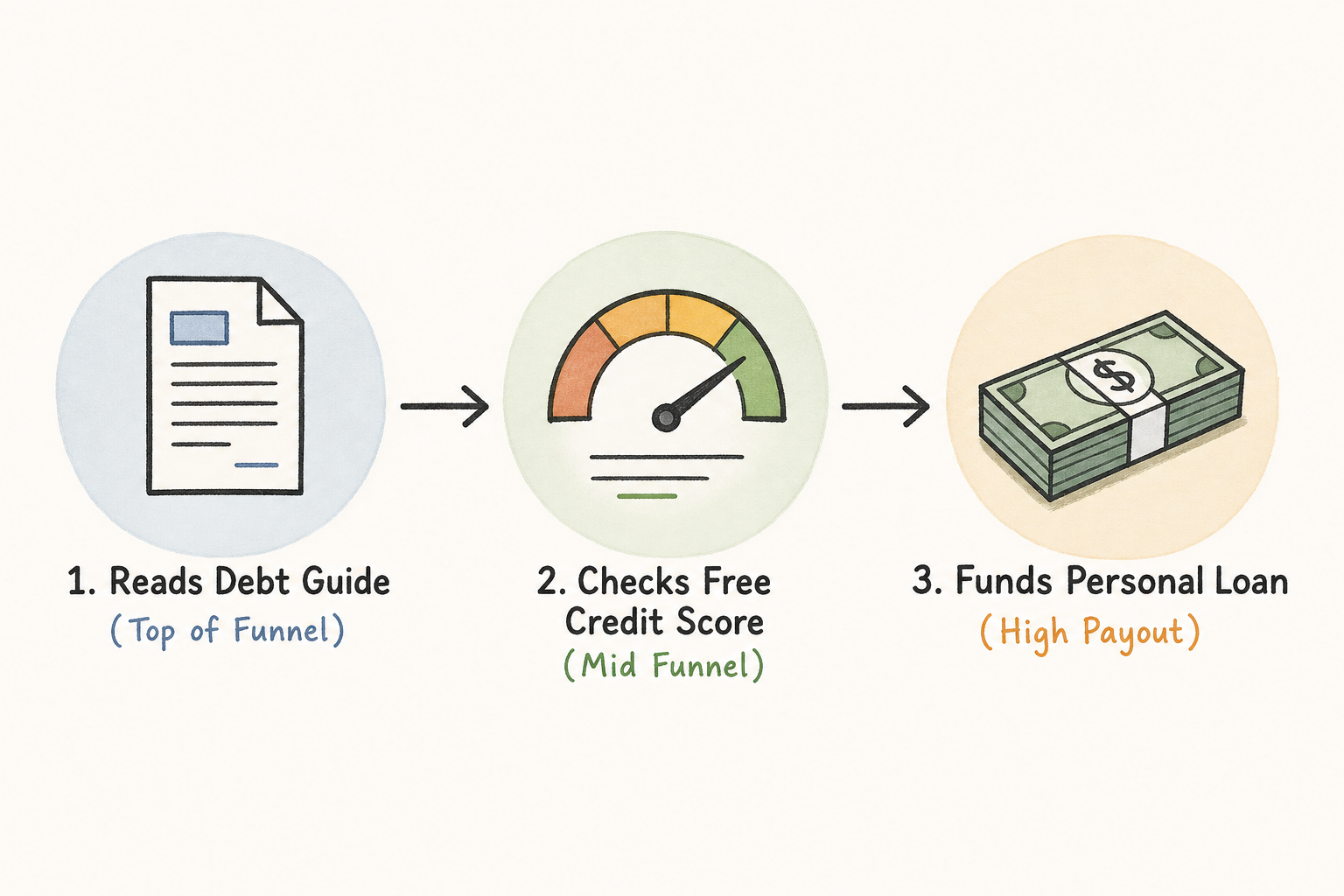
Why it works: Everyone needs to know their credit score, and Credit Karma provides it for free. The conversion rate on a "check your score for free" call-to-action is exceptionally high compared to "apply for this premium credit card."
6. Binance / Coinbase (Crypto Exchanges)
While the crypto market is cyclical, the affiliate payouts remain some of the highest in the broader finance category. Exchanges need liquidity and active traders, and they pay handsomely to get them.
- The Payout: Varies wildly. Coinbase often pays a flat bounty (e.g., $10-$50) or a percentage of trading fees. Binance frequently offers a lifetime revenue share (up to 40%–50%) of the trading fees generated by your referrals.
- Best For: Tech-savvy audiences, active day traders, and risk-tolerant investors.
Why it works: If you secure a lifetime revenue share model, a handful of high-volume traders can generate passive income for years. This is one of the most profitable affiliate marketing niches if you can stomach the volatility and regulatory shifts.
Promotion Strategy: Focus on technical tutorials. "How to set up a cold wallet and transfer from Binance" or "Coinbase vs. Kraken for altcoin fees." High-intent users looking for platform comparisons convert best.
7. Chime
Chime is a financial technology company (not a bank) that offers fee-free banking services. Their massive appeal lies in early direct deposits, no overdraft fees, and a seamless mobile experience.
- The Payout: ~$10 to $20 CPA for a qualified lead.
- Cookie Duration: 7 days (shorter than average).
- Best For: Lower-to-middle income earners, young adults, and users frustrated by traditional bank fees.
Why it works: Chime’s marketing is built entirely around anti-fee messaging. If your content speaks to living paycheck-to-paycheck, escaping predatory bank fees, or budgeting on a tight income, Chime is an incredibly natural fit.
Comparing Finance Affiliate Structures: CPL vs. CPA vs. RevShare
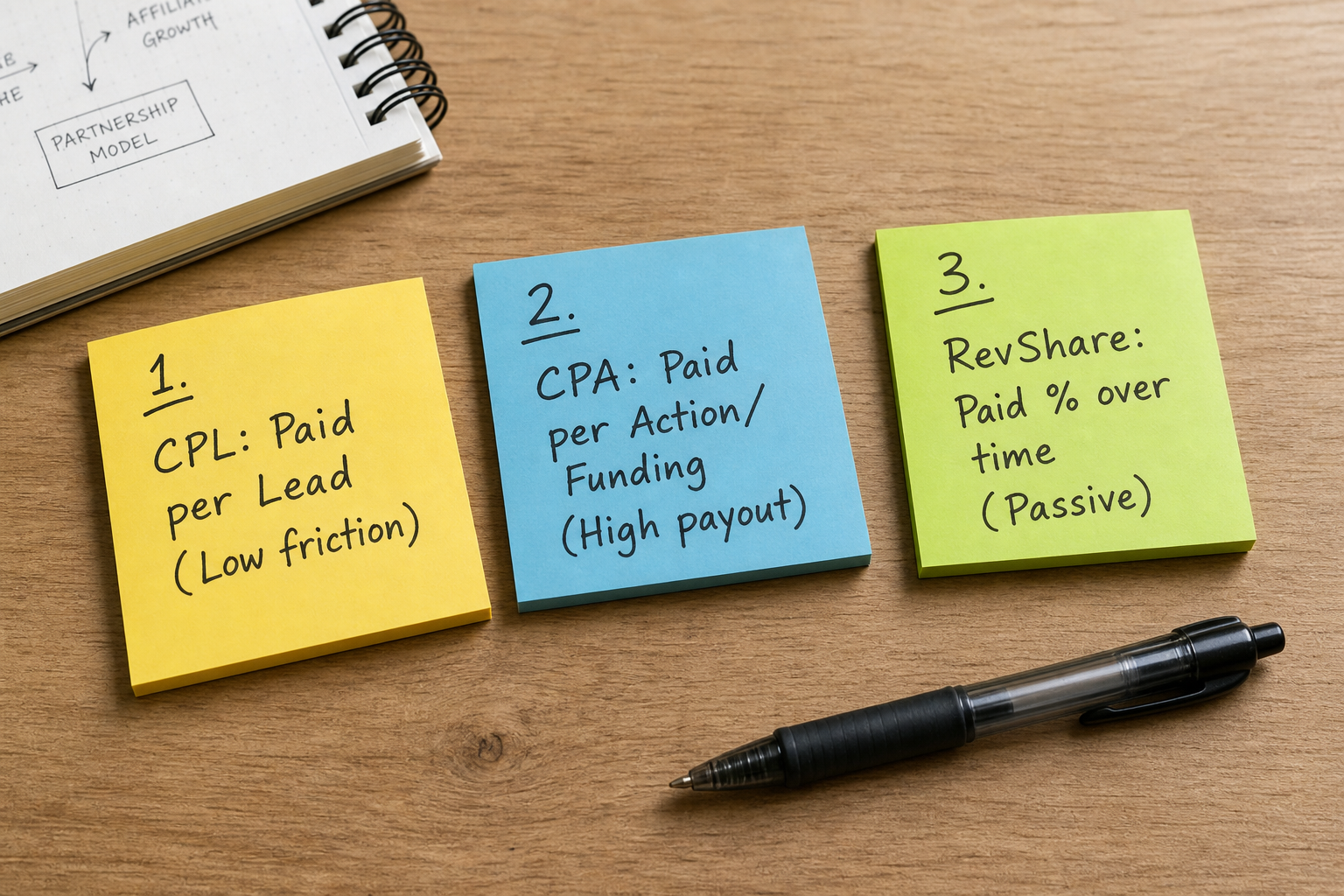
Understanding how personal finance programs pay out is critical. Unlike physical products on Amazon where you earn a flat 4%, finance programs use complex payout triggers.
| Payout Model | What It Means | Common Examples | Pros | Cons |
|---|---|---|---|---|
| CPL (Cost Per Lead) | You get paid when someone submits an application or creates a free account, regardless of approval. | Credit Karma, Insurance quotes | High conversion rate. | Lower payouts per conversion. |
| CPA (Cost Per Action) | You get paid when a specific action happens (e.g., account funded, loan approved). | SoFi, Empower, CIT Bank | Very high payouts. | Lower conversion rates; requires audience with capital. |
| RevShare (Revenue Share) | You earn a percentage of the revenue the company makes from the user over time. | Crypto exchanges, Trading platforms | Potential for long-term passive income. | Unpredictable; requires users who remain highly active. |
If you are evaluating high paying affiliate programs across different networks, you will often find different networks offering different structures for the exact same product.
This is where a directory like AffiliList is invaluable. Instead of signing up blind to Impact, CJ Affiliate, and PartnerStack just to compare terms, you can use our transparent tagging system to find which network currently holds the best CPA for SoFi or Acorns.
3 Failure Modes to Avoid in Finance Affiliate Marketing
Because the payouts are so high, marketers often force finance offers into places they don't belong. Avoid these three common traps:
1. Recommending Products Above Your Audience's Capacity
If your audience consists of college students trying to save money on textbooks, pitching them Empower (which requires $100k in assets to trigger your commission) is a waste of a click. You will see hundreds of sign-ups and $0 in commissions. Match the financial capacity of your audience to the conversion trigger of the program. Acorns is for beginners; Empower is for established professionals.
2. Ignoring Compliance and Disclosures
Finance companies have strict compliance departments. If you promise "guaranteed returns" or hide the fact that you are an affiliate, you won't just get kicked out of the program—you could face regulatory heat.
Always use clear, prominent disclosures. If your readers are wondering, "is affiliate marketing legit?" your transparency is what will convince them to trust your links.
3. Relying Solely on "Top 10" Listicles
The days of spinning a generic "Top 10 Credit Cards" article and ranking on page one are gone. The SERPs are dominated by massive publications like NerdWallet and Bankrate.
Instead, embed affiliate links into deep-dive utility content:
- Instead of: "5 Best Budgeting Apps"
- Write: "How to Manage Variable Income as a Freelance Writer (My Exact System)"
The latter builds trust, demonstrates authority, and naturally segues into your recommended tools.
Finding the Right Fit for Your Platform
The most successful affiliates treat their partnerships like matchmaking. A high-ROI program isn't just about the highest CPA—it's about the path of least resistance between your reader's current problem and the financial tool that solves it.
Start by integrating one or two of these programs into your highest-traffic pages. Track the EPC (Earnings Per Click), test different calls-to-action, and gradually expand your portfolio as you understand exactly what your audience is willing to sign up for.