
Recurring commission programs for affiliate marketing
Learn how recurring commission affiliate programs build compounding revenue. Discover top SaaS niches, evaluation criteria, and strategic content tips.
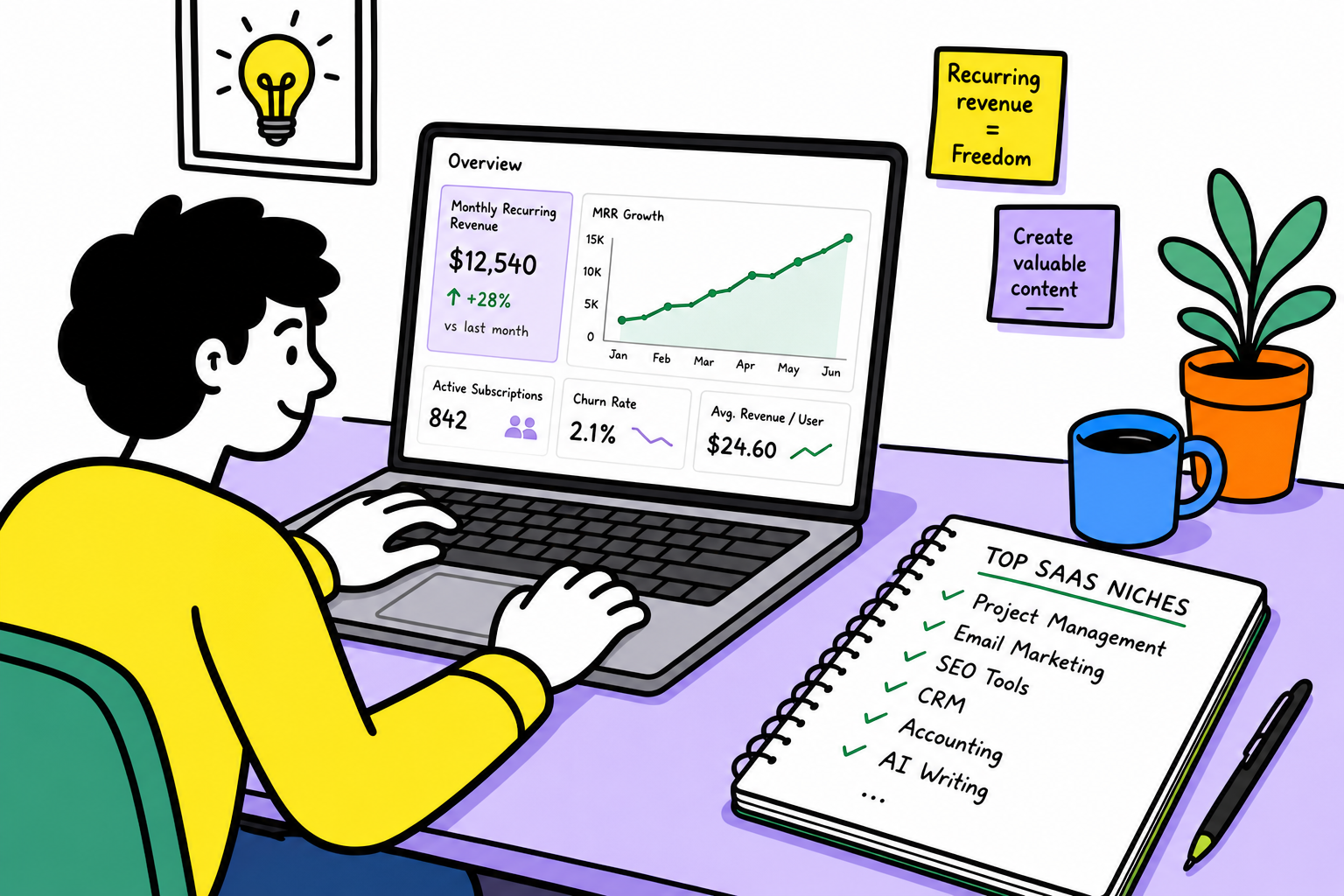
- The economics of compounding affiliate revenue
- Why SaaS and digital tools dominate the recurring model
- High-retention categories for recurring commissions
- Evaluating a recurring affiliate program: Beyond the headline percentage
- Strategic content approaches for recurring offers
- Common pitfalls and failure modes
- How to find and vet the best recurring programs
- Frequently asked questions about recurring commissions
If you rely entirely on one-time Cost Per Action (CPA) affiliate programs, you start every month at zero. You might generate twenty sales on the last day of October, but when November first arrives, your baseline revenue is empty again. This relentless treadmill forces content creators and affiliate marketers into a constant cycle of acquiring new traffic just to maintain their income, let alone grow it.
The alternative is the recurring commission model. When you promote a subscription product with a recurring affiliate program, you earn a percentage of the revenue for as long as the customer continues to pay for the service. One well-placed referral in January could still be generating monthly income for you three years later. Over time, your efforts compound.
The most lucrative opportunities for this model almost exclusively exist within Software as a Service (SaaS), digital tools, and membership communities. These products inherently rely on recurring billing. However, navigating the landscape of recurring commissions requires a different strategic approach than traditional CPA marketing. You are no longer just looking for a product that converts easily; you are looking for a product that retains users for years.
The economics of compounding affiliate revenue
To understand why recurring commissions fundamentally change the trajectory of an affiliate business, you have to look at the math behind customer lifetime value (LTV) and churn.
In a traditional retail affiliate program, you might earn 5% on a $100 purchase. You get $5, and the transaction is complete. If you refer a customer to a B2B software tool offering a $50 CPA, you get your $50 upfront, and again, the transaction is closed.
Now consider a SaaS product that costs $50 per month and offers a 30% recurring commission. Your first month's earnings are only $15. On the surface, the $50 CPA looks much better. But software products, particularly those deeply integrated into business operations, often have a low churn rate—meaning customers rarely cancel.
If that referred customer stays with the software for 36 months, your total commission from that single referral becomes $540. If you refer ten customers a month, your monthly revenue begins to stack, creating a predictable, baseline income that grows even if your traffic temporarily dips.
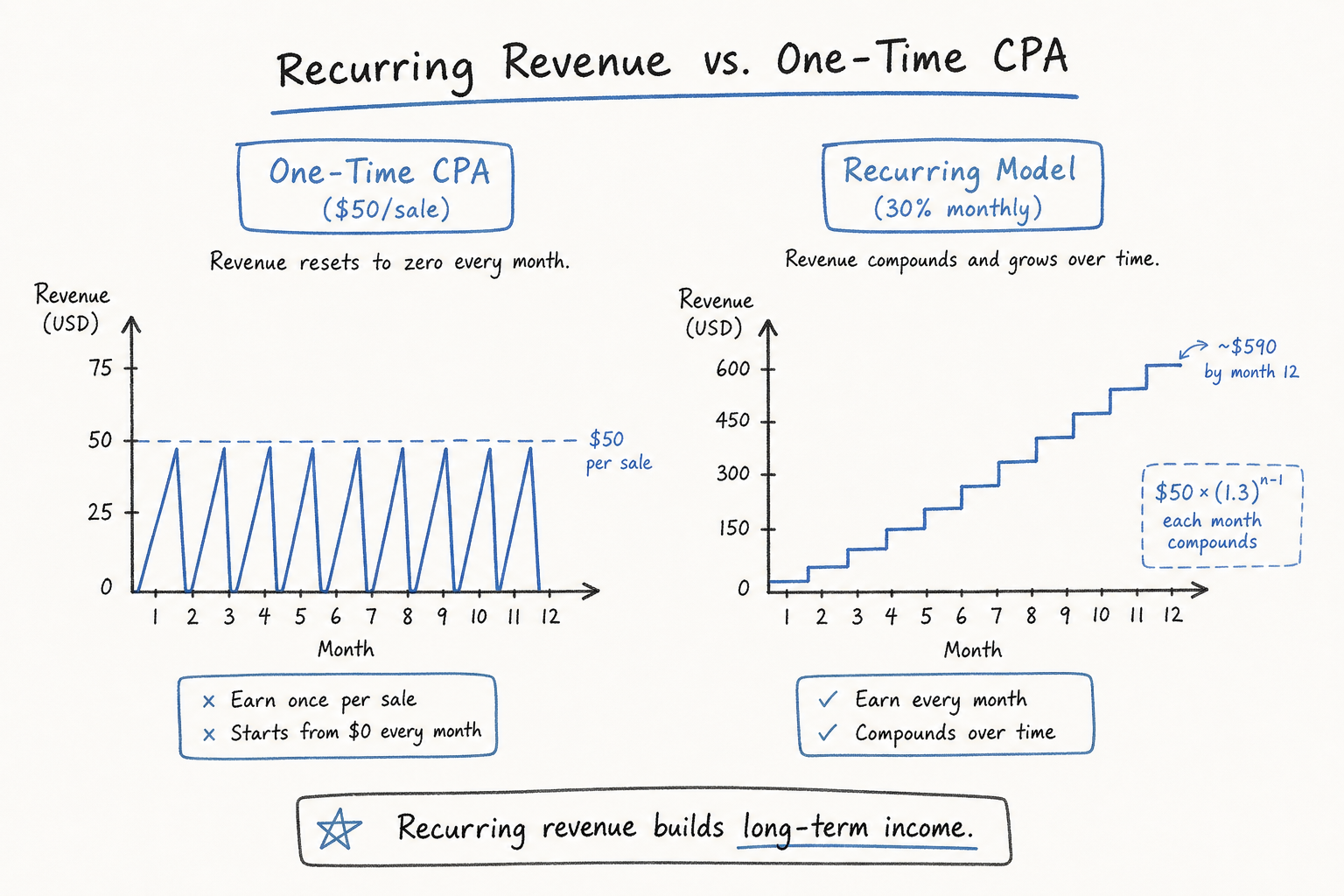 This compounding effect transforms a content website from a high-maintenance cash flow machine into a stable, highly valued digital asset. Website brokers and potential acquirers assign significantly higher multiples to affiliate sites with a high percentage of recurring revenue compared to those relying on Amazon Associates or one-time CPA networks.
Why SaaS and digital tools dominate the recurring model
The recurring affiliate model thrives in the SaaS industry for three specific reasons: high profit margins, subscription-based billing, and high switching costs.
Software companies have negligible marginal costs. It costs them virtually nothing to add a new user to their servers. Because their gross margins often exceed 80%, they can afford to pass 20%, 30%, or even 50% of the ongoing revenue back to the affiliate who acquired the customer.
More importantly, B2B SaaS products boast incredibly high switching costs. Once a business builds its email list, customer relationship management (CRM) workflows, or billing systems on a specific platform, migrating to a competitor becomes a massive operational headache. This "stickiness" works entirely in the affiliate's favor. You want to promote products that are hard to leave.
If you are looking to pivot your strategy toward these high-retention products, you can explore our directory of software affiliate programs with high payouts.
High-retention categories for recurring commissions
Not all recurring programs are created equal. A consumer subscription box might have a churn rate of 15% per month, meaning most users cancel within six months. Conversely, core business infrastructure might have a churn rate of less than 2% per month. Here are the categories that offer the best retention and the most reliable recurring payouts.
Email marketing and automation platforms
Email marketing is the backbone of most online businesses. Once a creator or business imports their subscribers and sets up automated welcome sequences, they rarely switch providers unless the service degrades severely.
A prime example in this space is the MailerLite Affiliate Program, which offers a 30% recurring commission. MailerLite is popular among bloggers and small businesses due to its generous free tier and intuitive interface. As the business grows and their subscriber count increases, their monthly bill goes up—and consequently, so does your 30% cut. It is a natural revenue expansion that requires zero extra work from you. You can review their official guide to affiliate payouts and commissions to see how transparent programs structure their tiered earnings.
All-in-one business and course platforms
Platforms that host websites, manage sales funnels, and deliver digital products are incredibly sticky. If a user cancels, their entire business goes offline.
Systeme.io is a major player in this category, aggressively acquiring market share with a systeme.io affiliate program that offers a staggering 60% lifetime recurring commission. They also run a two-tier system, allowing you to earn a smaller percentage on the affiliates you refer. This type of aggressive payout structure is designed to turn users into evangelists.
When evaluating these all-in-one platforms, always read the fine print. For instance, reviewing the systeme.io affiliate agreement ensures you understand attribution rules, payout thresholds, and what constitutes a qualified referral.
Search Engine Optimization (SEO) tools
Professionals use SEO software daily to track rankings, audit sites, and analyze backlinks. Because agencies and in-house marketers rely on historical data stored in these tools, retention is naturally high. Many of the industry-standard tools offer 20% to 30% recurring commissions. The barrier to entry is higher here—you need to deeply understand SEO to write convincing content that drives trials—but the LTV of an agency customer is enormous.
Specialized B2B niche software
Some of the best recurring programs are for highly specialized software that nobody outside a specific industry has ever heard of. Think of field service management software for plumbers, legal practice management tools for lawyers, or inventory management systems for warehouses.
These programs often pay well and face virtually zero competition in search engine results. If you can build an audience in a specific offline industry and introduce them to digital transformation tools, you can build a massive recurring revenue base.
Evaluating a recurring affiliate program: Beyond the headline percentage
Amateur affiliates sort directories by the highest commission percentage and simply sign up for whatever is at the top. Professionals know that a 20% commission on a phenomenal product is infinitely better than a 75% commission on a buggy product that everyone refunds.
Before committing to a recurring affiliate program, you must evaluate several critical factors.
The "Lifetime" commission myth
You will frequently see programs advertise "lifetime recurring commissions." Let's clear up a pervasive myth: this rarely means your lifetime, and it does not even guarantee the lifetime of the customer's account. It simply means commissions continue for the lifespan of that specific subscription under the current terms.
If the merchant alters their affiliate terms next year, gets acquired by private equity, or decides to shut down their public affiliate program, your "lifetime" commissions can be capped or terminated. Always prioritize promoting companies with a track record of treating their affiliates as true partners, rather than companies that view affiliates as a temporary growth hack to be discarded once they achieve scale.
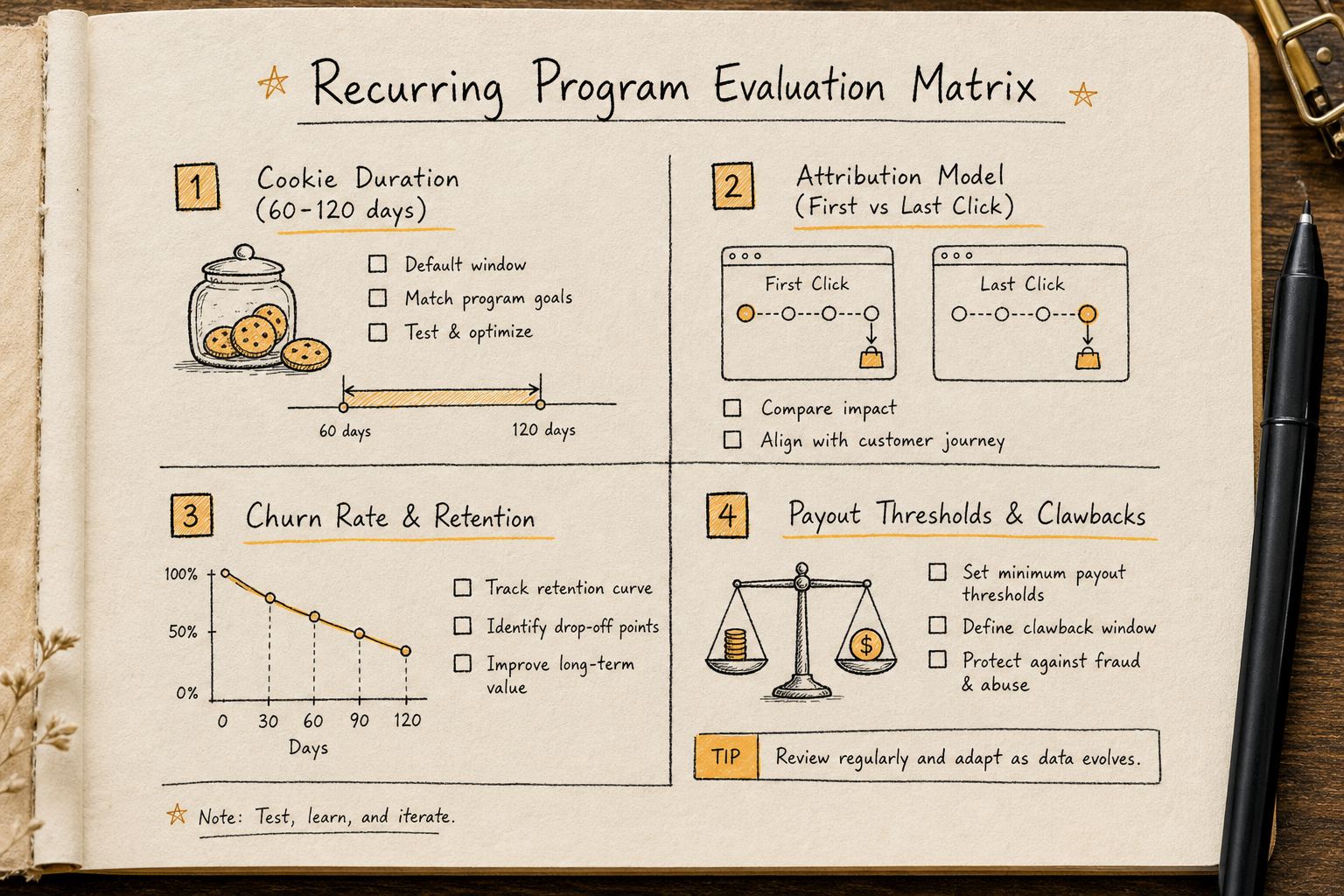
First-click vs. last-click attribution
Attribution models dictate who gets paid when a customer interacts with multiple affiliates before buying.
Most software programs use a last-click attribution model. If a user reads your blog post on Monday and clicks your link, but then watches a YouTube review on Wednesday and clicks that creator's link before buying, the YouTuber gets the commission.
Some programs, however, use first-click attribution. In this model, you get the credit for introducing the user to the brand, regardless of whose link they click right before the purchase. First-click is ideal for top-of-funnel content (like "what is email marketing"), while last-click favors bottom-of-funnel content (like "MailerLite vs ConvertKit"). Knowing the attribution model tells you exactly what kind of content you need to produce.
Cookie duration
The cookie duration is the window of time between a user clicking your link and completing a purchase. For recurring SaaS products, look for a minimum of 60 days, though 90 or 120 days is preferable. Enterprise software often has sales cycles lasting several months; if the cookie expires after 30 days, you will lose the commission even if your content initiated the trial.
Clawbacks and minimum payout thresholds
When a customer disputes a charge or requests a refund, the merchant will "claw back" the commission from your account. This is standard practice. However, you should check the minimum payout threshold. If a program requires a $500 minimum balance before releasing funds, and you only send them one $20/month customer, you will be waiting years to see that money. Look for thresholds of $50 or $100.
Strategic content approaches for recurring offers
Generating conversions for high-ticket or long-term recurring subscriptions requires more trust than getting someone to buy a $15 phone case. Your content must shift from simple promotion to deep education and operational integration.
The integration tutorial approach
The most effective way to secure a long-term software referral is to teach your audience how to build something specific with it.
Instead of writing a generic review of a CRM, write a highly specific tutorial: "How to automate client intake for your accounting firm using [Software Name]."
In this tutorial, provide the exact templates, workflows, and tagging systems they need. When a user follows a step-by-step guide to build their business infrastructure on your recommended software, they are highly motivated to keep the software active. They aren't just trying out a tool; they are implementing your system. This reduces churn drastically, protecting your recurring commission.
Migration guides and cost-saving calculators
Another high-converting angle is targeting users who are already paying for a competitor's product but are unhappy with the price.
Create migration guides showing exactly how to export data from the expensive tool and import it into your recommended, more affordable tool. Include a calculator or a breakdown showing how much money they will save over the next 12 months. When you frame the affiliate offer as a massive cost-saving measure rather than a new expense, the friction to convert disappears.
Scenario: The agency baseline strategy
Consider a real-world scenario of a small web design agency. Historically, they built websites for local businesses, handed over the keys, and walked away. Revenue was lumpy and unpredictable.
The agency decided to pivot. They mandated that all new client builds be hosted on a specific premium infrastructure platform that offered a 20% recurring affiliate commission. They also standardized their client contact forms using a specific CRM that offered a 30% recurring commission.
By integrating these tools into their standard client handover process, the agency wasn't just doing affiliate marketing; they were standardizing their tech stack. After building 50 client sites over two years, the agency generated a baseline of $4,000 in monthly recurring revenue purely from affiliate commissions. This covered their office rent and basic overhead before they even signed a new design contract.
Common pitfalls and failure modes
While recurring commissions are highly desirable, the pursuit of them often leads marketers into specific traps.
Promoting mediocre products for the payout
It is tempting to promote a subpar tool simply because it offers a 50% recurring cut, while the industry leader only offers 15%. This is almost always a mathematical error.
A terrible product has high churn. If you earn 50% of a $50 subscription, but the user cancels after two months, you made $50. If you earn 15% on a $50 subscription for a world-class product that the user keeps for four years, you make $360.
Furthermore, recommending bad software destroys your audience's trust. Once you lose credibility, your conversion rates across all future recommendations will plummet. Always optimize for customer retention, which naturally aligns with promoting the best possible product.
Ignoring the free tier trap
Many SaaS products offer generous "freemium" tiers to acquire users. As an affiliate, you usually only get paid when the user upgrades to a paid plan.
If a tool’s free tier is too good, users may never need to upgrade. You might send 1,000 sign-ups to the platform, pat yourself on the back, and then realize six months later that only three of them have entered a credit card. When evaluating a program, look closely at the paywall. Ensure that the features users genuinely need to run their business are gated behind the paid plans.
Relying solely on merchant dashboards
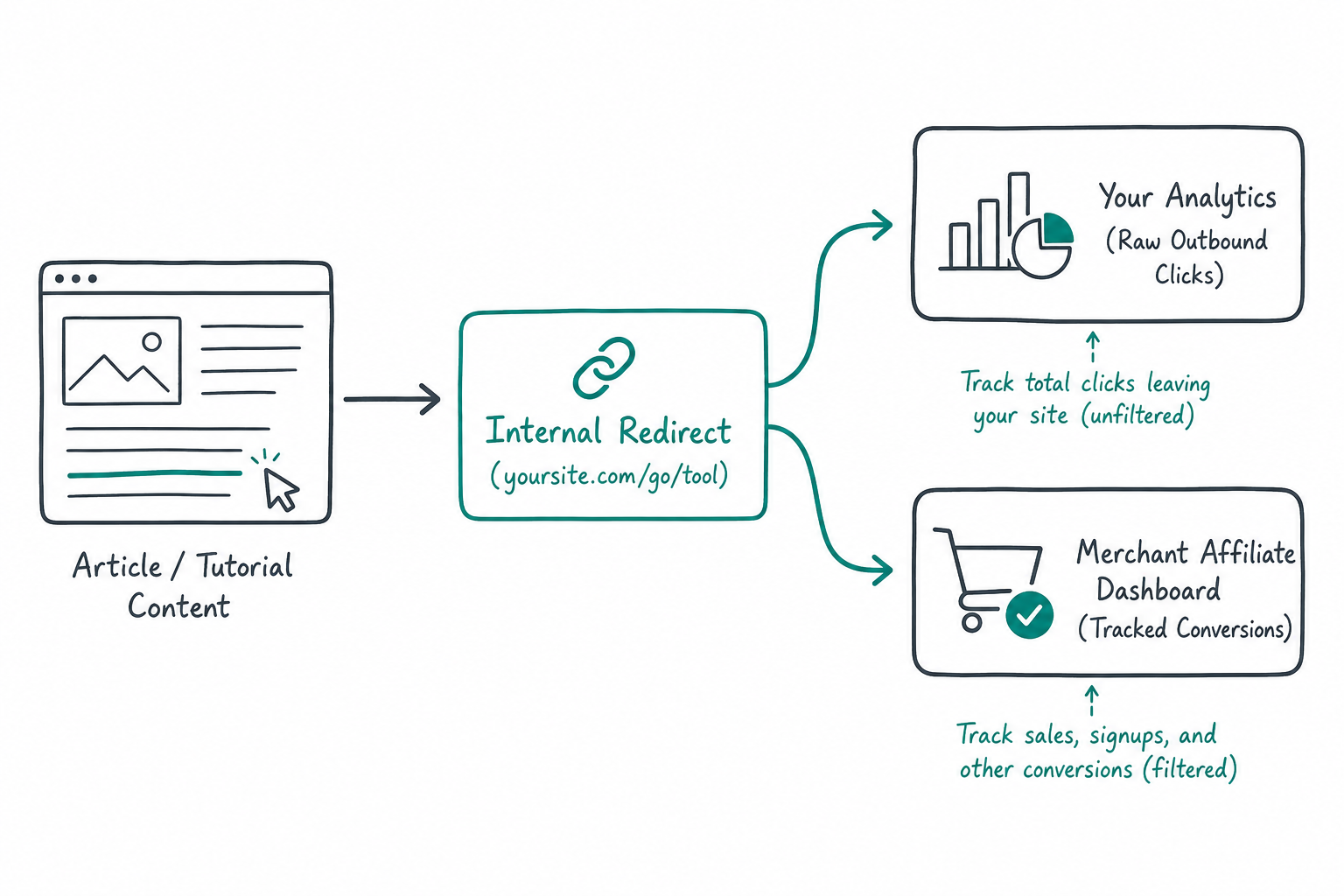
Never rely entirely on a merchant's internal affiliate dashboard for your analytics. Sometimes software updates break tracking scripts, or merchants quietly change their attribution models.
You should use a link-cloaking or redirect tool on your own domain (e.g., yoursite.com/go/software) to track exactly how many raw clicks you are sending to a partner. If your internal tracking shows 500 outbound clicks, and the merchant dashboard shows 12 visitors, you immediately know there is a technical problem with the tracking link or the affiliate platform.
How to find and vet the best recurring programs
Finding high-quality recurring programs used to require manually scouring the footers of SaaS websites or wading through cluttered, outdated affiliate networks. Today, the process is much more streamlined.
Using dedicated and transparent directories
The most efficient way to discover new opportunities is to use a modern database designed specifically for affiliate professionals. AffiliList operates as a comprehensive, streamlined directory focusing heavily on SaaS and digital tools.
Unlike traditional platforms that force you to create an account and apply before you can even see the commission terms, AffiliList provides open access to over 10,000 programs. You can immediately see the commission percentages, cookie durations, and whether the payout is one-time or recurring. If you are comparing directory options, you can read our breakdown of AffiliList vs Affiliate Program Database: Features and Data Comparison to understand why transparency matters in your research phase.
The tagging and filtering systems allow you to isolate recurring programs in specific niches, whether you are targeting HR software, crypto, or YouTube marketing tools. For those looking for zero-cost research avenues, we have also compiled a list of the best free directories to find high commission products.
Moving away from legacy networks
Historically, many SaaS companies launched their affiliate programs on massive, general-purpose networks like ShareASale or CJ Affiliate. While these networks are reliable for retail, they often lack the sophisticated tracking required for B2B software sales, which might involve extended trials, demo calls, and offline upgrades.
As a result, many top-tier software companies are migrating to specialized B2B partner platforms like PartnerStack, Impact, or running their programs in-house using tools like Rewardful. If you are frustrated by the lack of good recurring software options on legacy networks, you should explore the best ShareASale alternatives for software and SaaS affiliate programs.
Monitoring new and emerging tools
The best time to join a recurring program is often right as the company transitions from a startup to a scale-up. They have product-market fit, but they haven't yet saturated the market, meaning there is still massive search volume available for you to capture.
You can leverage AffiliList's submission portal, where merchants list their own programs, to spot emerging opportunities before they become mainstream. Staying ahead of the curve is critical. For more strategies on spotting these early trends, read our guide on where to find new affiliate programs. For digital marketers demanding strict quality control, our list of verified affiliate programs for digital marketers offers pre-vetted options.
Frequently asked questions about recurring commissions
How long do recurring commissions usually last?
This depends entirely on the merchant's specific terms and the customer's lifespan. Some programs cap recurring commissions at 12 or 24 months. Others, like systeme.io, advertise "lifetime" recurring commissions, which last as long as the referred user keeps their subscription active (subject to the program's ongoing terms of service). Always read the affiliate agreement.
Do I lose my recurring commission if the customer upgrades or downgrades?
In most modern SaaS affiliate programs, your commission scales with the customer's billing. If a user signs up for a $30 plan and you earn 30% ($9), and they later upgrade to a $100 plan, your commission automatically increases to $30. Conversely, if they downgrade, your commission decreases. However, if a user completely cancels and then signs up again a year later directly through the company, you generally will not receive commissions on the new account.
Can I run paid ads directly to recurring affiliate programs?
Brand bidding (bidding on the merchant's trademarked name in Google Ads) is almost universally prohibited across software affiliate programs. If you bid on a term like "MailerLite pricing" and use your affiliate link, you will likely be banned from the program and forfeit your commissions.
However, many programs allow you to run ads to your own landing pages, reviews, or generic industry terms (like "best email marketing software"), provided you are not pretending to be the official brand. Always check the PPC (Pay-Per-Click) policy in the affiliate agreement before spending money on ads.
What happens to my commissions if the company is acquired?
When a SaaS company is acquired, the acquiring company often audits expenses. Affiliate payouts are usually respected during the transition, but the new parent company may eventually update the terms, lower the commission rate, or migrate the program to a different tracking network. It is crucial to monitor emails from your affiliate managers so you can update your links if a migration occurs, ensuring your recurring revenue stream isn't abruptly cut off due to dead tracking URLs.
Building a portfolio of recurring affiliate commissions is not a get-rich-quick strategy. It requires patience, technical accuracy in your tracking, and a commitment to promoting genuinely useful software. But by shifting your focus from the zero-sum game of one-time CPA offers to the compounding nature of subscriptions, you build a resilient digital business that rewards your past efforts month after month.