
SaaS affiliate directory list
Discover how to leverage a SaaS affiliate directory list to find high-converting, recurring revenue programs. Learn to filter for the best payouts and terms.
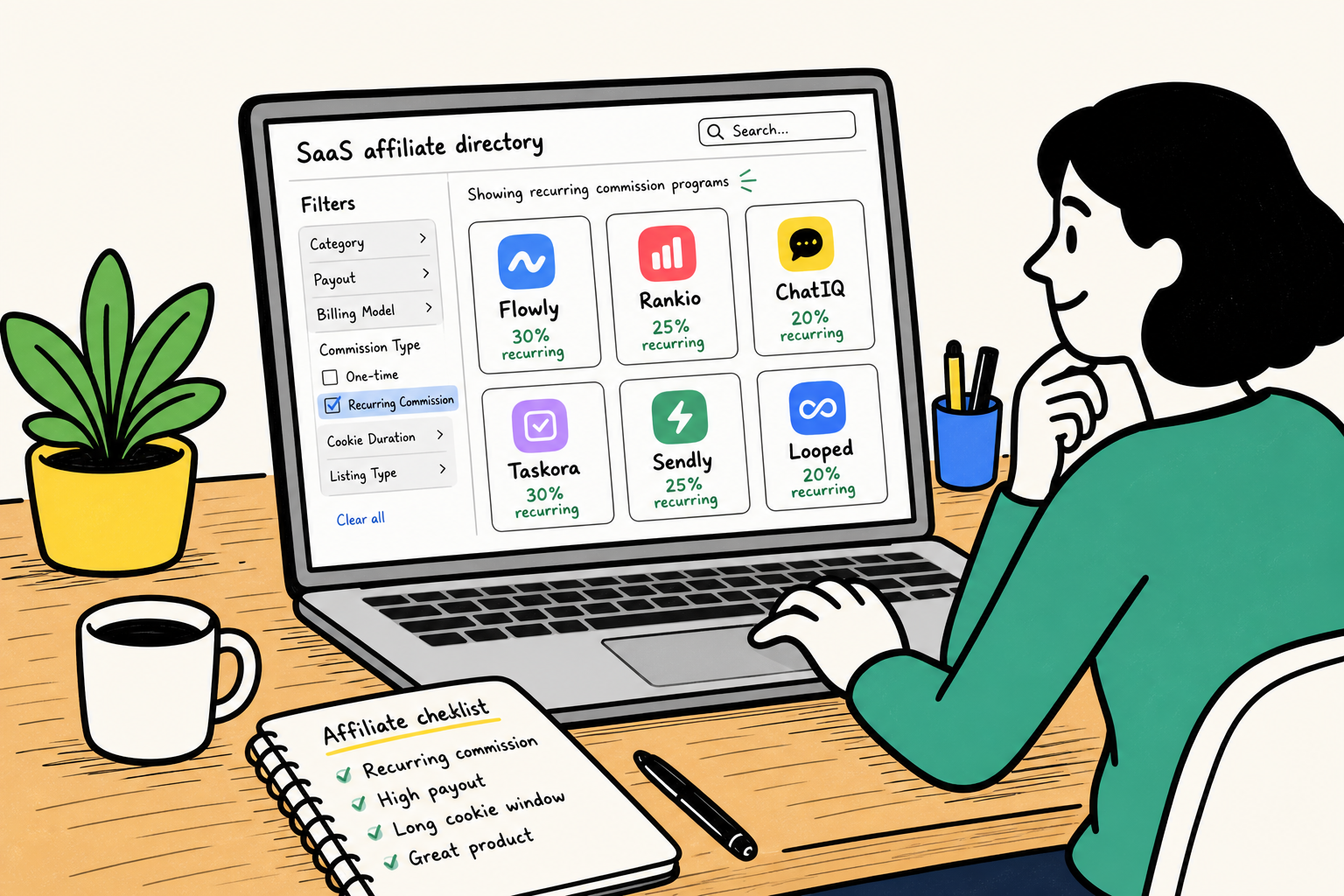
Hunting for profitable affiliate programs is often the most frustrating bottleneck for content creators and digital entrepreneurs. If you rely on standard search queries, you usually hit a wall of static "Top 10" blog posts from three years ago. The links are broken, the commission rates have changed, or the program was quietly shut down.
This friction is exactly why a dedicated SaaS affiliate directory list has become the primary tool for serious marketers.
Software as a Service (SaaS) offers some of the highest margins in the digital economy. Because software products have virtually zero marginal cost of reproduction, SaaS merchants can afford to pay affiliates incredibly generous commissions—often ranging from 30% to 50% recurring. But to capture that revenue, you need accurate, real-time data to evaluate which programs actually convert.
In this guide, we will break down the economics of software affiliate marketing, how to navigate and filter a comprehensive directory, the red flags that ruin conversion rates, and how to build a portfolio of high-converting SaaS partnerships.
The Broken State of Finding Affiliate Programs
Historically, marketers found SaaS affiliate programs through one of three highly inefficient methods:
- Scraping competitors: Looking at what other blogs in your niche are promoting and manually signing up for the same programs.
- Blindly applying to massive networks: Joining giant, legacy affiliate networks that obscure program details until you pass a lengthy approval process.
- Googling "[Software Name] + affiliate program": A tedious, one-by-one process that offers zero comparative data on whether a competitor's software pays out better.
These methods share a common flaw: they lack transparency. You spend hours applying to a program only to discover they have a $500 minimum payout threshold, a brief 7-day cookie window, or a commission structure that heavily favors the merchant.
This is where a modern platform like AffiliList changes the workflow. As a comprehensive and streamlined directory of the best affiliate programs available, AffiliList bypasses the clutter. With a curated database of over 10,000 affiliate programs and a strong focus on SaaS and digital tools, it provides open access to critical program details—like commission percentages and payout terms—without requiring an extensive sign-up just to look around.
When you can view the data transparently, your strategy shifts from hoping you find a good program to systematically filtering for the best possible match for your audience.
The Economics of SaaS Affiliate Marketing
Why focus on SaaS? The answer lies in unit economics, customer lifetime value (LTV), and product stickiness.
When you promote physical goods on a network like Amazon, your commission is typically capped between 1% and 5%. The merchant has physical manufacturing costs, warehousing, shipping, and return overhead.
When you promote a SaaS product—whether it's an email marketing tool, a CRM, or HR software—the merchant's cost to serve one additional customer is fractions of a cent in server space. This allows them to pass aggressive acquisition budgets directly to affiliates.
Recurring vs. One-Time Payouts (CPA)
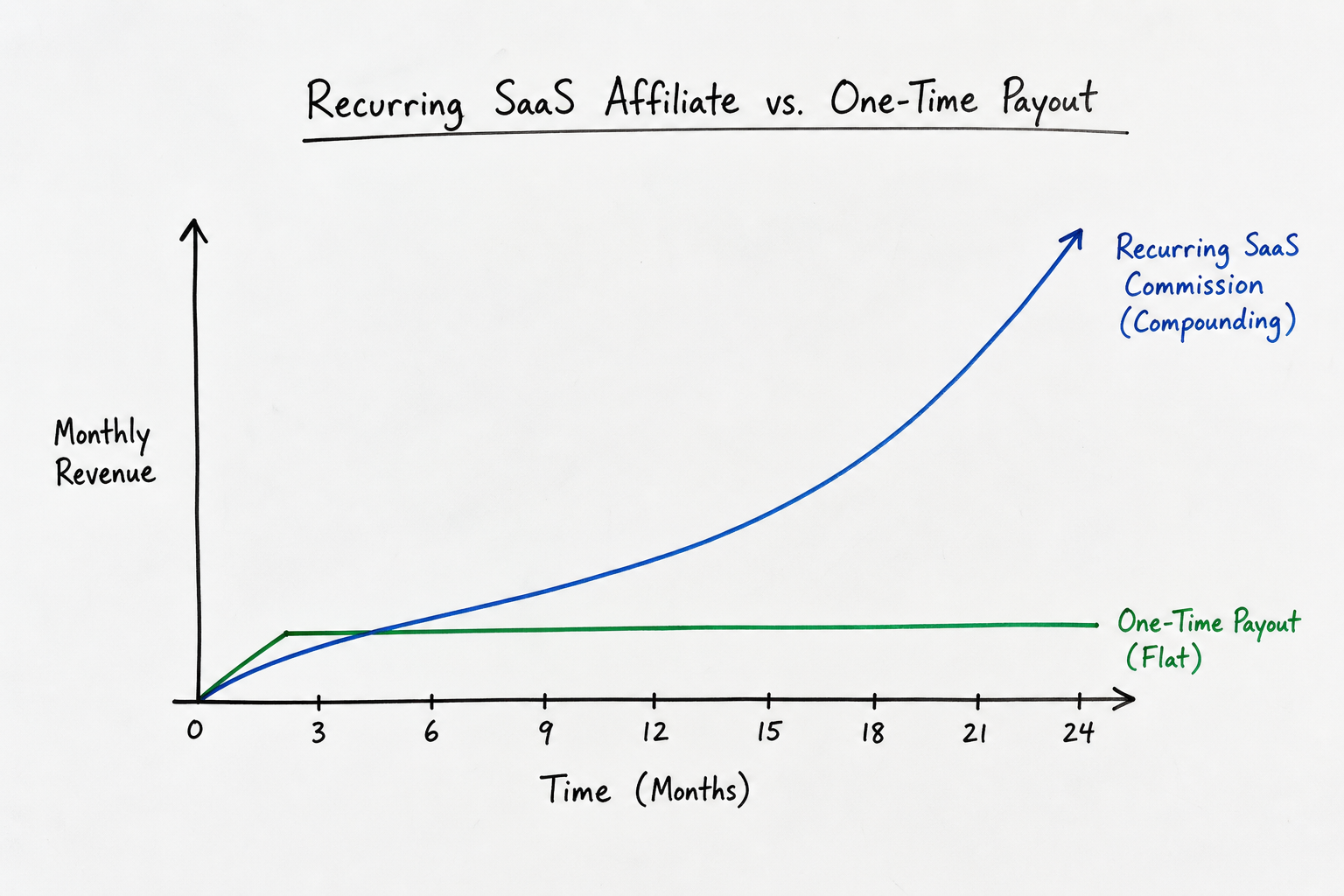
SaaS programs generally offer two types of commission structures. Understanding how to balance these in your portfolio is the foundation of a successful affiliate marketing side hustle.
| Feature | Recurring Commission | One-Time CPA (Cost Per Action) |
|---|---|---|
| Typical Rate | 20% to 40% of the monthly subscription fee. | 100% to 200% of the first month's fee, or a flat high-ticket rate ($100-$500+). |
| Revenue Timeline | Slow build, compounds month over month. | Immediate cash flow upfront. |
| Best For | Sticky products (CRMs, web hosting, email marketing) where users rarely cancel. | Products with higher churn rates or high upfront implementation costs. |
| Risk Factor | If the product is bad and the user churns in month two, your total payout is tiny. | None regarding churn. Once the lock-in period passes, you keep the commission. |
Building a reliable income stream usually involves a mix of both. You want high-ticket CPA offers to generate immediate cash flow to reinvest in content or ads, while recurring commissions build a baseline of passive income that compounds over time. For examples of large upfront payouts, you can explore some of the 11 high paying affiliate programs for $500+ commissions.
The Power of "Stickiness"
Not all recurring SaaS programs are created equal. The profitability of a recurring commission relies entirely on how "sticky" the software is.
If you promote a generic AI writing tool, the user might subscribe for one month to finish a specific project, then cancel. Your 30% recurring commission on a $20/month plan nets you a grand total of $6.
Conversely, if you promote a piece of core business infrastructure—like an invoicing platform or a website builder—the switching costs for the user are immense. Once a business uploads their client database, configures their payment gateways, and trains their staff on a new CRM, they are highly unlikely to switch providers. That same 30% commission on a $100/month CRM could last for 36 months, netting you over $1,000 per referral.
When browsing a SaaS affiliate directory list, don't just look at the percentage. Evaluate the product's natural churn rate.
Anatomy of a High-Converting SaaS Program
When you dive into a directory with over 10,000 listings, the sheer volume can be overwhelming. To separate the mediocre offers from the highly profitable ones, you need a strict vetting criteria.
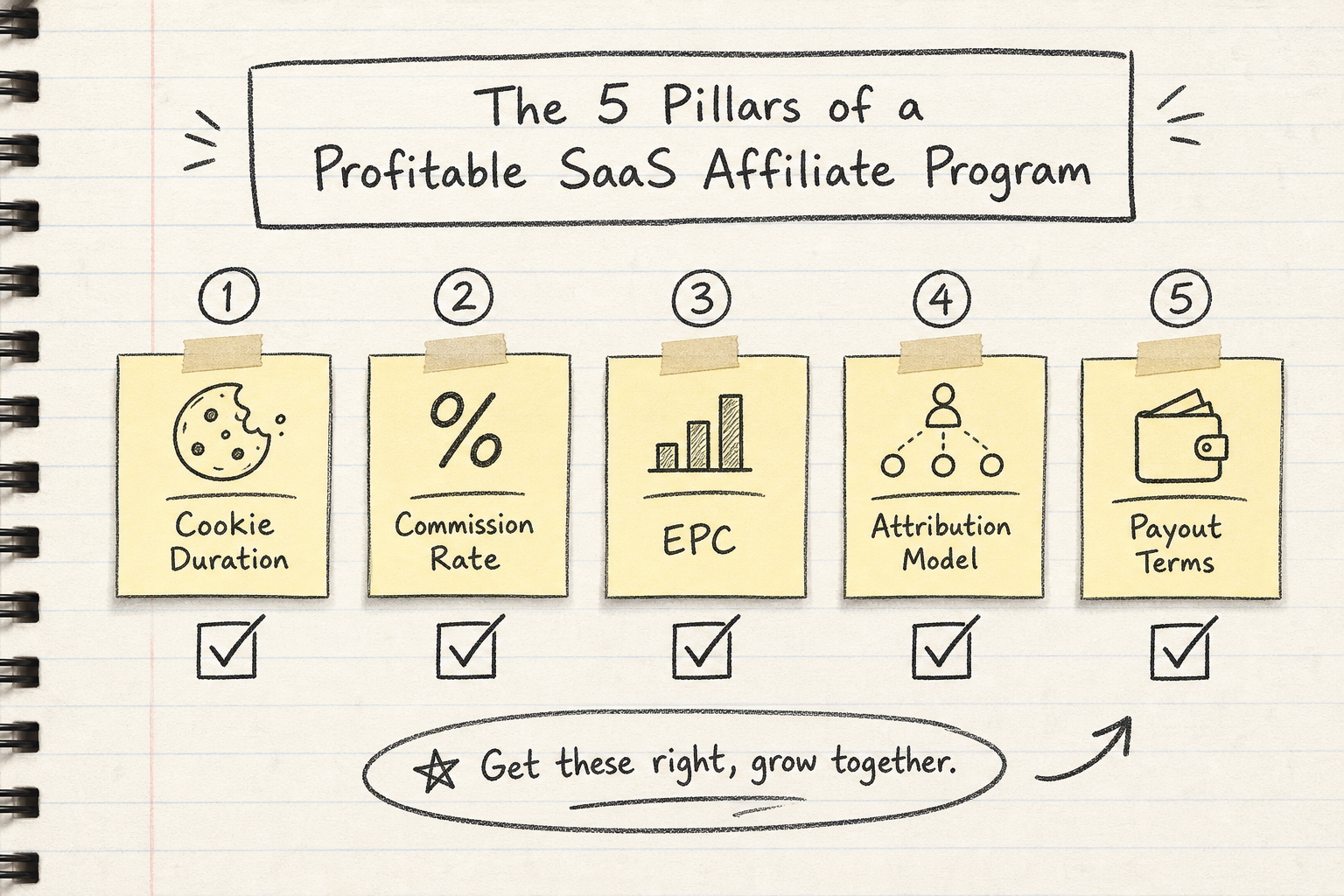 Here are the core metrics and terms you must evaluate before grabbing an affiliate link:
1. The Cookie Duration (Attribution Window)
In B2B SaaS, the buying cycle is rarely instantaneous. A user might read your blog post on "Best HR Software" on a Tuesday, click your link, browse the landing page, and then close the tab. They might need to get approval from their manager, sit through a product demo, and finally purchase three weeks later via a direct branded search.
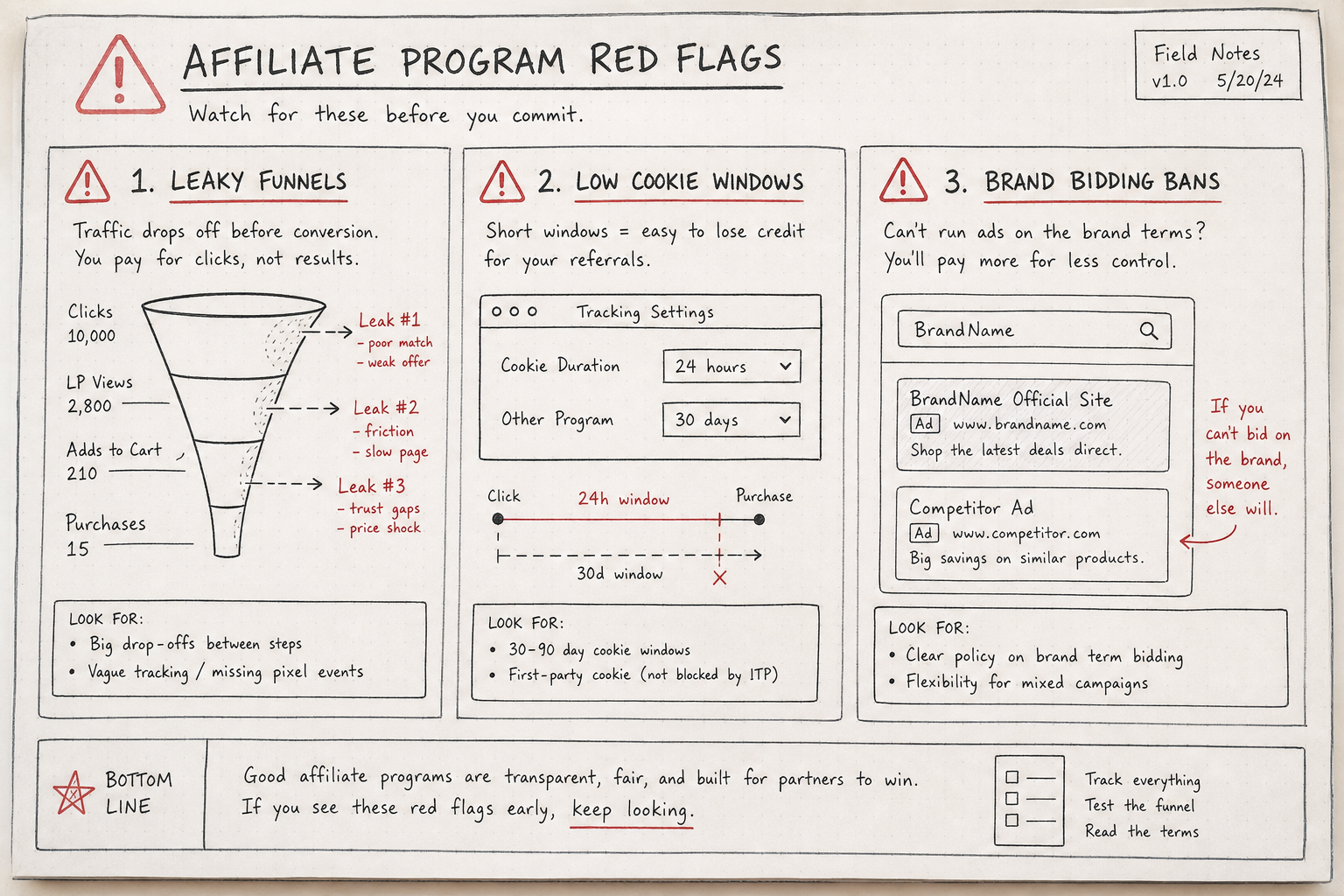
If the affiliate program has a 7-day cookie window, you lose the commission.
- Poor: 1 to 14 days
- Standard: 30 to 60 days
- Excellent: 90 days to 365 days, or Lifetime
Always prioritize software programs with a minimum 30-day cookie window, particularly for enterprise or high-ticket SaaS tools where the decision-making process is slow.
2. Attribution Models (First-Click vs. Last-Click)
How does the software company decide which affiliate gets paid if the customer clicks multiple links before buying?
- Last-Click: The most common model. The affiliate whose link was clicked immediately prior to the purchase gets 100% of the commission. This favors affiliates operating at the bottom of the funnel (e.g., "Software A vs Software B" review posts or coupon sites).
- First-Click: The affiliate who introduced the customer to the brand first gets the commission, regardless of what links the customer clicks later. This favors top-of-funnel content creators and educators.
If you are running educational content—like a step-by-step tutorial on setting up affiliate marketing on Pinterest—first-click attribution is incredibly valuable, as you are likely introducing the tool to a beginner who won't buy until later.
3. Payout Thresholds and Frequencies
Cash flow is the lifeblood of an affiliate business. A directory list allows you to immediately see a program's payment terms.
A major red flag is an unusually high payout threshold. If a program requires you to earn $500 in commissions before they issue a payment, but their software only costs $10/month and pays out 20%, you will need 250 successful referrals just to see your first check. Many smaller affiliates never reach this threshold, leaving their hard-earned money in the merchant's pocket.
Look for programs with Net-30 payout terms and thresholds of $50 or less.
4. Branded Search Rules
Many SaaS companies strictly prohibit affiliates from bidding on their brand name in Google Ads (e.g., you cannot run ads for the keyword "[SaaS Brand] pricing"). This is standard practice. However, some companies take this a step further and penalize affiliates if their organic blog posts rank for branded terms.
Always check the terms and conditions in the directory listing to ensure your promotional methods align with their rules. If you are unsure is affiliate marketing legit for a specific merchant due to confusing terms, it's usually best to pass and find a more transparent partner.
Top Categories in a SaaS Affiliate Directory List
When exploring a vast database like AffiliList, utilizing the tagging system and advanced filtering options is crucial. The software landscape is vast, and picking the right niche heavily dictates your earning potential.
If you are currently deciding how to pick a niche for affiliate marketing, here is a breakdown of the most profitable SaaS categories you will encounter in a directory.
Marketing and SEO Tools
- The Products: Keyword research tools, rank trackers, social media schedulers, email marketing automation, and funnel builders.
- The Audience: Other marketers, agency owners, and small business founders.
- The Economics: High recurring commissions (often 20-40%). These tools are highly sticky because they integrate deeply into a marketer's daily workflow.
- Content Strategy: Tutorials, "How-To" guides, and intense comparison posts (e.g., "Tool A vs Tool B for Agency Owners").
Web Hosting and Website Builders
- The Products: Cloud hosting, managed WordPress hosting, domain registrars, and drag-and-drop site builders.
- The Audience: Entrepreneurs starting new ventures, brick-and-mortar stores moving online, and bloggers.
- The Economics: Massive upfront CPA payouts. It is common for hosting companies to pay $100 to $250 for a single referral, even if the user only bought a $5/month plan. They do this because the LTV of a hosting customer is incredibly high.
- Content Strategy: If you want to know how to start a profitable affiliate marketing blog, writing foundation guides (like "How to start a business website") is a classic, highly lucrative angle.
Finance, Crypto, and Invoicing Software
- The Products: Accounting software, tax preparation tools, crypto portfolio trackers, and payroll systems (HR software).
- The Audience: Freelancers, small-to-medium businesses (SMBs), and investors.
- The Economics: This sector has some of the highest EPCs (Earnings Per Click) in the affiliate space. Financial tools are the ultimate "sticky" product. No business wants to migrate their accounting data if they don't have to.
- Content Strategy: Case studies, compliance guides, and efficiency breakdowns.
Specialized B2B Niches
Exploring sub-niches is where a robust directory list shines. While everyone promotes the biggest CRM platforms, there are thousands of highly specific SaaS tools catering to niche industries: dental practice management software, inventory management for Shopify sellers, or specialized video editing tools for YouTube marketers.
Targeting these micro-niches means far lower SEO competition and highly motivated buyers. You can explore more about these specific sectors in our guide to the 11 best niches for affiliate marketing (SaaS & digital).
Step-by-Step Workflow: Extracting Value from a Directory
Having access to 10,000+ programs is only useful if you have a system for processing that data. Here is a practitioner's framework for using a SaaS affiliate directory list to build a high-performing partnership portfolio.
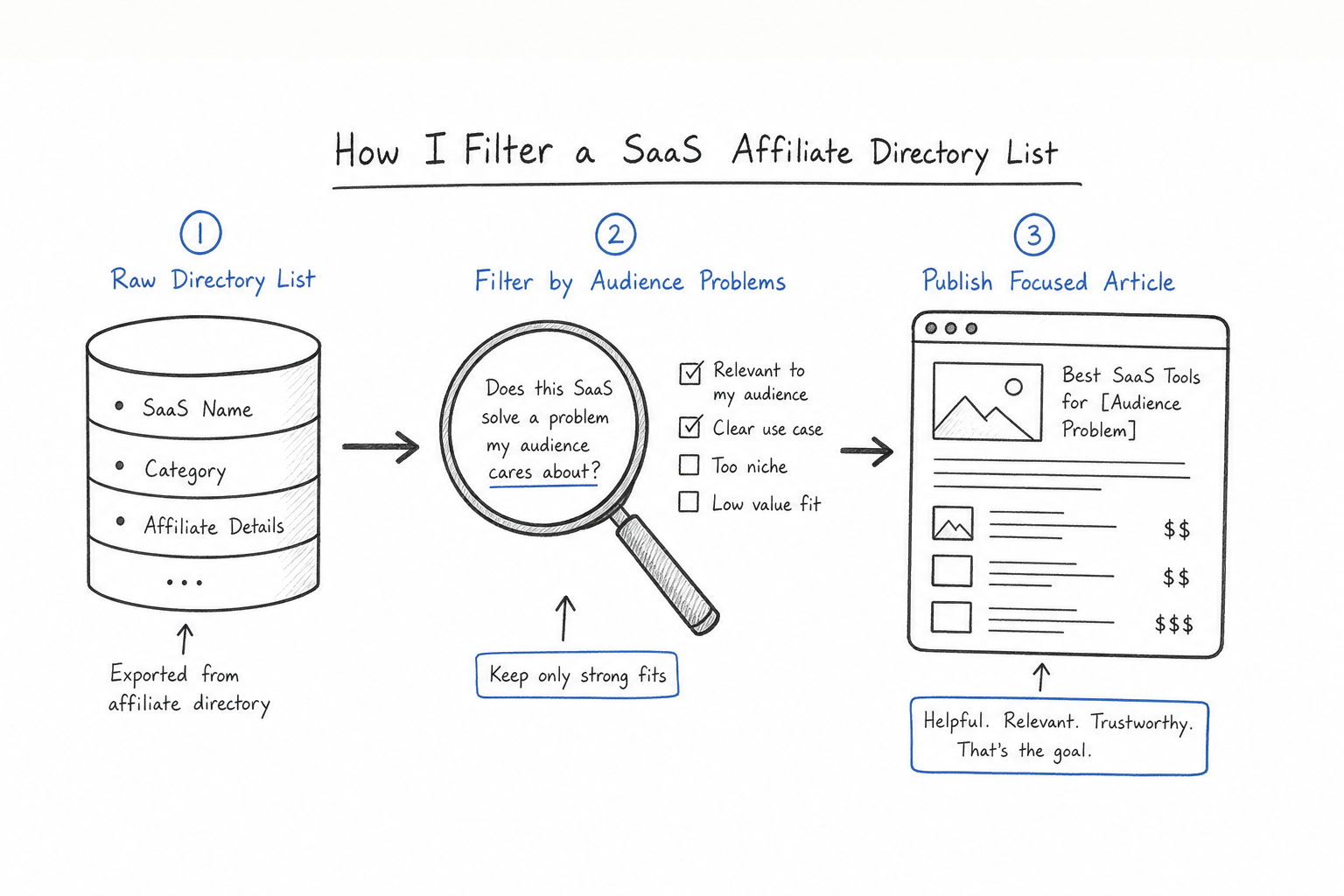
Step 1: Define Your Audience's Urgent Problems
Before you open the directory, write down the three biggest operational bottlenecks your audience faces. If your audience consists of freelance graphic designers, their problems might be: client onboarding, invoicing, and large file storage.
Your goal is to find software that solves these specific pain points, rather than just looking for the highest commission rate.
Step 2: Set Your Directory Filters
Navigate to the directory and apply your non-negotiable filters. A clean and efficient platform will let you filter by:
- Category/Niche: E.g., "Finance" or "Design".
- Commission Type: "Recurring" only, or "CPA".
- Cookie Length: Minimum 30 days.
By layering these filters, you reduce a massive database down to a manageable list of 20 to 30 highly qualified candidates.
Step 3: Analyze the Merchant's Landing Page (The "Leaky Funnel" Test)
An affiliate program can offer a 50% commission, but if their landing page converts at 0.1%, you will make zero dollars. Once you find a promising program in the directory, click through to the merchant's actual website and pretend to be a customer.
Ask yourself:
- Is the pricing clear and transparent?
- Is the design modern and trustworthy?
- Is there a clear Call-to-Action (CTA)?
- Crucial: Are there "leaks" in the funnel? (For example, does the site heavily promote a free trial that doesn't require a credit card, but their affiliate terms state they only pay on immediate paid sign-ups? Do they push users to download a mobile app where tracking cookies might drop off?)
Step 4: Verify Support and Resources
Top-tier SaaS affiliate programs provide their partners with extensive resources: swipe copy, high-resolution banners, upcoming feature roadmaps, and dedicated affiliate managers.
Programs that treat their affiliates as true marketing partners—rather than an afterthought—will dramatically improve your workflow. In fact, managing these partnerships has become such a critical business function that there is a growing market for specialized affiliate marketing jobs just to handle affiliate-merchant relationships.
Common Red Flags to Watch Out For
Even with a vetted directory list, you must remain vigilant. Affiliate marketing is a dynamic industry, and merchant terms can be subtly structured to disadvantage the publisher. Watch out for these four common red flags:
1. The "Self-Hosting" Tracking Trap
Some smaller, unverified SaaS companies attempt to build their own affiliate tracking software from scratch rather than using established platforms like Impact, PartnerStack, or Rewardful.
Custom-built affiliate dashboards are notoriously buggy. They frequently drop cookies, fail to attribute cross-device sales, and leave you guessing if your traffic is actually being measured accurately. Unless the SaaS company is a massive enterprise with world-class engineering, prefer programs managed through trusted third-party tracking networks.
2. Overly Aggressive Cookie Overriding
We discussed Last-Click attribution, but be wary of how a merchant handles non-affiliate links.
Imagine you send a user to a SaaS tool via your affiliate link. The user browses, leaves, and a week later receives a retargeting email from the merchant offering a 10% discount. If the user clicks that email link and buys, does the merchant's internal email link overwrite your affiliate cookie?
In fair programs, organic and internal marketing touchpoints do not overwrite an active affiliate cookie. In predatory programs, they do.
3. Missing Deep Linking Capabilities
Deep linking allows you to create an affiliate link that points to a specific page on the merchant's site, rather than just the homepage.
If you are writing a tutorial about a very specific feature of a software tool, you want to link the reader directly to the page discussing that feature. If the affiliate program only allows you to link to their generic homepage, the user is forced to hunt for the information themselves, resulting in massive drop-off rates.
Always ensure the program allows for custom deep link generation.
The Future of SaaS Affiliate Directories
As we move deeper into 2026, the digital landscape is undergoing massive shifts in privacy, tracking, and artificial intelligence. How will these changes impact how we use SaaS affiliate directory lists?
Server-Side Tracking Becomes Mandatory
With the continuous deprecation of third-party cookies by major browsers, traditional pixel-based affiliate tracking is becoming less reliable. Forward-thinking SaaS companies are shifting to server-side tracking (S2S).
Instead of relying on a fragile browser cookie to track your referral, S2S tracking passes a unique identifier directly from the merchant's server to the affiliate network's server. When browsing a directory list, you will increasingly see affiliates prioritizing merchants that explicitly advertise S2S tracking, ensuring that their commissions are protected from aggressive ad-blockers and privacy updates.
AI and Dynamic Commission Tiers
We are beginning to see SaaS companies implement dynamic commission structures powered by predictive analytics. Instead of a flat 30% rate, a merchant might evaluate the quality of the traffic you send.
If an affiliate consistently refers enterprise clients who upgrade their software tiers and never churn, the affiliate program's algorithm will automatically bump their commission rate to 40% or 50%. Conversely, affiliates sending low-quality, high-churn leads will see their rates decrease.
For professional publishers, this means the focus will shift heavily toward attracting highly qualified, high-intent traffic rather than raw volume.
Building a Sustainable Strategy
The real secret to winning with a SaaS affiliate directory list isn't finding one "golden ticket" program that makes you rich overnight. It's about utilizing the data effectively to build a diversified portfolio of digital assets.
By leveraging platforms that prioritize transparent, verified data and clutter-free interfaces, you eliminate the guesswork. You can rapidly compare commission percentages, filter out programs with poor payout terms, and zero in on the software tools that perfectly match your audience's intent.
Treat the directory as your command center. Cross-reference cookie durations, aggressively vet the merchants' landing pages for leaks, and balance your portfolio with a mix of high-CPA upfront payouts and long-term recurring revenue.
The tools for finding the best partnerships have never been better—success now simply relies on your ability to filter the noise and execute on the data.