
Shareasale Alternatives for Affiliate Codes and Terms
Discover top ShareASale alternatives for tech bloggers. Learn where to find SaaS affiliate codes, recurring commission terms, and direct partner programs.

Legacy affiliate networks once held a monopoly on how bloggers discovered products, pulled tracking links, and checked commission rates. For over two decades, platforms like ShareASale served as the default starting point for digital publishers. However, if you run a tech blog, software review site, or developer-focused publication, the limitations of legacy networks quickly become an operational headache.
Tech blogging operates on a distinct monetization model compared to traditional lifestyle or fashion publishing. Tech audiences buy subscription software, developer APIs, cloud hosting, smart home hardware, and specialized digital tools. Sifting through thousands of generic retail merchants just to find an outdated software merchant with a broken tracking script wastes valuable editorial time. Furthermore, legacy networks often lock commission percentages, cookie windows, and payout thresholds behind tedious approval processes, preventing you from evaluating a partnership before you apply.
Tech bloggers today source their affiliate codes, vanity coupons, and contract terms from modern partner platforms, dedicated SaaS networks, direct merchant programs, and open program directories. Knowing where to look—and how to evaluate alternative platforms—allows you to secure higher commission rates, accurate tracking, and transparent operating terms.
Why Tech Bloggers Are Moving Beyond Legacy Networks
The tech publishing niche moves at the speed of software releases. When an artificial intelligence tool launches a new API or a hosting provider updates its server architecture, publishers need immediate access to program terms, promotional assets, and direct communication with affiliate managers. Legacy networks frequently struggle to support this workflow for several key reasons.
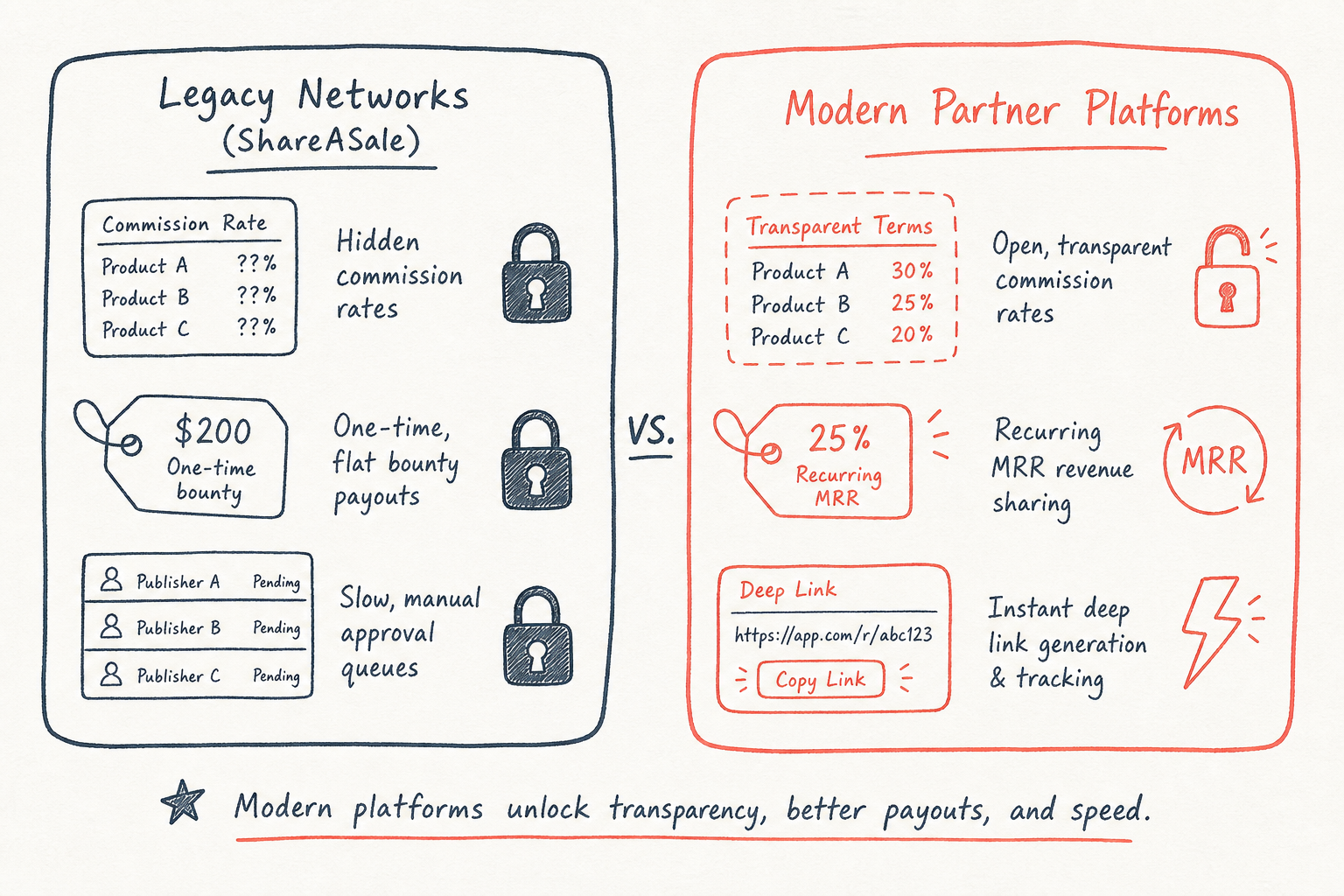
Opaque Pre-Approval Terms
On traditional networks, merchants frequently hide their commission structures, cookie durations, and conversion payout rules until after an affiliate submits an application and receives manual approval. For a tech publisher planning an in-depth product comparison between five different project management tools, waiting two weeks just to discover that one brand offers a 5% one-time bounty while another offers a 30% recurring monthly commission creates unnecessary friction.
Lack of Native SaaS and Subscription Tracking
Most traditional networks were engineered around one-time physical e-commerce transactions. They struggle with recurring monthly recurring revenue (MRR) tracking, tiered seat-based software upgrades, free-trial-to-paid conversion attribution, and annual renewal splits. When a reader signs up for a 14-day free trial through your link and converts three weeks later, legacy tracking scripts sometimes drop the attribution entirely.
Clunky Link Generation and Asset Workflows
Modern tech sites rely heavily on deep linking to specific documentation pages, pricing tiers, feature changelogs, and custom landing pages. Traditional platforms often require five separate clicks inside a dated user interface just to generate a single deep link. Modern alternatives provide browser extensions, clean URL parameters, and automated API endpoints that generate tracking links instantly.
If you are building an affiliate marketing blog tailored to digital tools, relying exclusively on legacy platforms leaves substantial revenue on the table.
The 6 Best ShareASale Alternatives for Tech Affiliate Programs
Finding the right alternative depends on the type of tech content you publish. Software reviewers require different platforms than hardware unboxers or developer tutorial writers. Below are the primary platforms and networks where tech publishers find active programs, verified terms, and tracking codes.
| Platform / Network | Primary Focus | Best For | Typical Commission Models |
|---|---|---|---|
| PartnerStack | B2B SaaS & Enterprise Software | Productivity tools, CRM, marketing tech | 15%–40% recurring or high flat CPA |
| AffiliList | Curated SaaS & Digital Tool Directory | Finding verified terms before applying | Transparently listed across all models |
| Impact.com | Enterprise Tech & Global Brands | Big tech, cloud platforms, consumer electronics | Dynamic CPA, multi-touch, flat rate |
| Rewardful / FirstPromoter | Indie SaaS & Developer Tools | AI tools, niche web apps, micro-SaaS | 20%–50% recurring MRR |
| CJ Affiliate | Established Tech Hardware & Utilities | VPNs, cybersecurity, web hosting, electronics | Flat bounty ($50–$200) or 10%–25% |
| Direct Merchant Portals | Hardware Brands & Specialized Tech | Smart home devices, 3D printers, IoT gear | 5%–15% per sale plus custom promo codes |
1. PartnerStack: The Leader in B2B SaaS Partnerships
PartnerStack has become the dominant ecosystem for business software, team collaboration apps, and productivity suites. Brands like Webflow, monday.com, Notion, and Evernote manage their partner programs through PartnerStack.
For tech bloggers, PartnerStack solves the recurring revenue problem. The platform is designed specifically to track subscription lifecycles. When you log into your publisher dashboard, you can see active trials, converted paying customers, churn events, and monthly recurring payouts in one centralized view.
PartnerStack also simplifies link generation. Instead of dealing with nested redirection URLs, you receive clean partner links and sub-ID tracking parameters that allow you to track performance across different blog posts, YouTube video descriptions, and newsletter issues.
2. AffiliList: Fast Discovery with Open Program Terms
One of the biggest hurdles for tech publishers is evaluating whether a program is worth joining before committing time to an application. Many networks force you to register an account, submit tax documents, and wait for network-level approval before you can even view what individual merchants pay.
AffiliList functions as a specialized directory of affiliate programs, concentrating heavily on SaaS, developer tools, and digital platforms. It indexes over 10,000 partner programs, providing open access to commission structures, payout methods, cookie durations, and category tags without requiring an initial account sign-up.
When you are researching software categories to decide how to pick a niche for affiliate marketing, using a transparent directory lets you compare payout models across hundreds of tools simultaneously. You can filter programs offering recurring lifetime revenue versus one-time bounties, identify high-paying enterprise contracts, and click directly through to the merchant's official signup portal.
3. Impact.com: Enterprise Software and Flexible Contracts
Impact (formerly Impact Radius) has captured many of the largest enterprise tech brands, domain registrars, and cloud service providers. Companies such as Microsoft, Canva, Namecheap, and Shopify run their partner ecosystems on Impact.
The major benefit of Impact for tech bloggers is contract flexibility. Rather than forcing every affiliate into a generic commission rate, Impact allows merchants to establish dynamic payout rules. For example, a tech merchant might offer you:
- $10 for an authenticated free trial registration
- $100 when the user converts to a paid business tier
- An extra 10% bonus if the user signs up for an annual enterprise plan
Impact also features robust API integrations and custom promo code tracking. This allows tech creators to track sales generated via vanity coupon codes shared in podcasts or video streams without relying purely on browser cookies.
4. Rewardful and FirstPromoter: The Indie SaaS and AI Tool Hub
Not all tech programs are hosted on giant networks. Over the last five years, thousands of fast-growing software companies, bootstrapped SaaS platforms, and artificial intelligence startups have chosen self-hosted affiliate software like Rewardful or FirstPromoter connected directly to their Stripe billing systems.
These programs do not exist inside a single unified public marketplace. Instead, merchants host their own affiliate portal on a dedicated subdomain (such as partners.brandname.com or brandname.rewardful.com).
SaaS programs powered by Rewardful and FirstPromoter almost universally favor publishers with aggressive recurring commission rates, frequently between 20% and 40% for the first 12 months or the lifetime of the customer account. Finding these programs requires checking merchant websites directly or searching specialized indexes that track self-hosted SaaS programs.
5. CJ Affiliate: Established Tech Hardware, VPNs, and Hosting
CJ Affiliate (formerly Commission Junction) remains a primary platform for legacy tech hardware manufacturers, consumer electronics brands, cybersecurity software, and major web hosts. Companies like Norton, McAfee, HostGator, and Dell maintain programs on CJ.
For bloggers covering cybersecurity, networking gear, and consumer hardware, CJ provides high-volume reliability. Many tech merchants on CJ offer substantial flat-rate CPA bounties that pay out between $50 and $200 per transaction. This makes it an attractive platform for top-of-funnel review sites operating in the most profitable affiliate marketing niches.
However, CJ enforces strict account activity policies. If your blog does not generate a commission within your first six months, your account may be deactivated, requiring you to reapply.
6. Direct Merchant Affiliate Hubs
Many hardware manufacturers, IoT device makers, and specialized tech vendors run independent in-house programs to maintain full control over partner relationships and margins.
For instance, smart home automation and DIY electronics brand SONOFF maintains a dedicated partner program directly on its website. Through direct programs, publishers receive an affiliate dashboard with unique tracking IDs, direct promotional coupon codes, and marketing collateral designed specifically for maker and home automation audiences.
Hardware and smart tech creators often prefer direct programs because they establish a one-on-one relationship with the brand's internal marketing team. This direct contact frequently leads to free review hardware units, exclusive discount codes for readers, and higher custom commission tiers that are unavailable on public networks.
Where Tech Bloggers Find Hidden Codes and Direct Terms
Experienced tech publishers rarely limit their search to browsing network dashboards. High-earning publishers use specific research tactics to uncover direct partner programs, custom coupon codes, and unlisted terms.
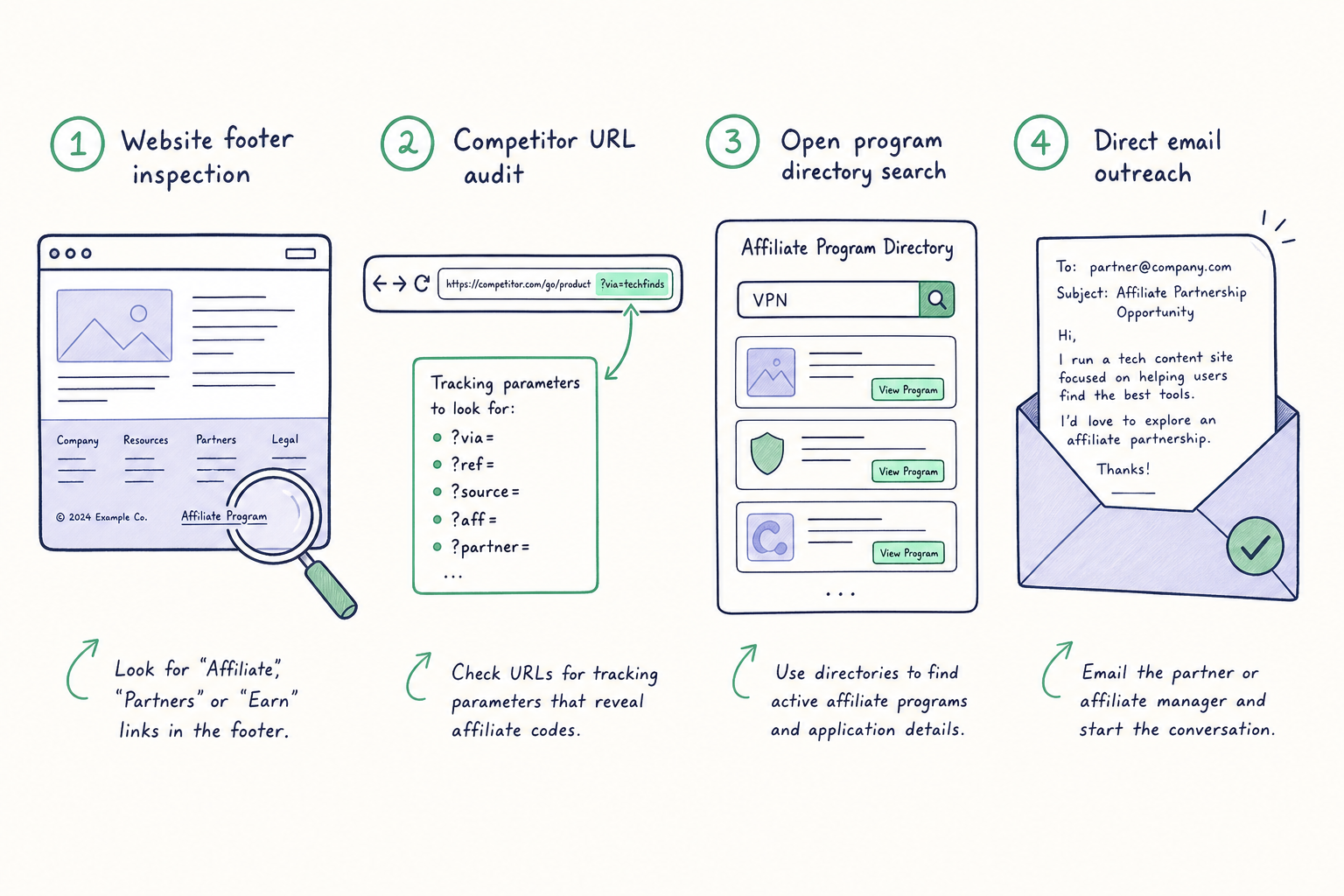
1. The Website Footer Audit
The simplest and most reliable method to find a software or hardware brand's affiliate program is inspecting their website footer. Look for links labeled:
- Affiliate Program
- Partners
- Referral Program
- Ambassadors
- Publishers
Tech brands usually link directly to their affiliate landing page from their site footer. This page outlines base commission rates, cookie lengths, payout schedules, and the specific platform they use to manage tracking.
2. Sourcing Terms from Curated Tech Guides
Tech bloggers also discover niche programs by consulting curated industry lists and publisher guides. Resources like the Blogging Guide directory of tech affiliate programs break down specific tech sub-verticals, comparing payout structures for cloud storage, developer tools, WordPress plugins, and electronics.
These curated lists help publishers identify which software brands offer recurring payouts versus one-time bounties, making it easier to prioritize content production around the most lucrative tools in a given category.
3. Competitor Disclosure Analysis
Because the Federal Trade Commission (FTC) requires affiliate publishers to disclose paid partnerships, you can study top-ranking articles in your niche to identify which affiliate platforms your competitors use.
Inspect the destination URLs of links on competing review blogs. By hovering over a link or examining its URL structure, you can immediately identify the tracking platform:
- Links containing
partnerstack.kctmrw.netorgrsm.iopoint to PartnerStack. - Links containing
impact.com,evyy.net, orsjv.ioindicate an Impact partnership. - Links containing
firstpromoterorrewardfulindicate a direct SaaS partner program. - Links containing standard URL parameters like
?ref=usernameor?via=bloggerreveal direct merchant tracking software.
Once you know which software the competitor is using, you can navigate directly to the vendor's site and apply for the identical program.
4. Direct Outreach to Affiliate Managers
Brands frequently maintain unadvertised partner tiers reserved for high-traffic sites, professional review portals, and niche authority blogs. If a tech brand does not advertise an affiliate program, or if their public terms are mediocre, direct outreach can yield bespoke agreements.
Merchant outreach works both ways. As discussed in Easy Affiliate's guide on finding affiliate bloggers, affiliate managers actively search for reputable publishers who rank for high-intent software search terms. When you reach out directly with proof of relevant organic traffic, managers can issue private contract terms, higher commission percentages, and exclusive vanity promo codes created specifically for your publication.
Understanding Contract Terms: What Tech Bloggers Must Audit
Before publishing a single link or inserting a promo code into an article, you must review the merchant’s terms of service. Tech affiliate programs carry unique legal and operational stipulations that can directly impact your earnings.
┌─────────────────────────────────────────────────────────────┐
│                 CRITICAL PROGRAM TERMS AUDIT                │
├──────────────────────────────┬──────────────────────────────┤
│ 1. Attribution Model         │ First-Click vs. Last-Click   │
│ 2. Revenue Type              │ Recurring MRR vs. One-Time   │
│ 3. Cookie Lifespan           │ 30, 60, 90 Days or Lifetime  │
│ 4. Paid Search (PPC) Rules   │ Brand Bidding Restrictions   │
│ 5. Deep-Linking Permissions  │ Sub-ID / Custom Query Params │
│ 6. Payout Mechanics          │ Minimum Balance & Net Terms  │
└──────────────────────────────┴──────────────────────────────┘
Attribution Models and Cookie Windows
The attribution model determines which partner receives credit when a customer interacts with multiple touchpoints before purchasing.
- Last-Click Attribution: The affiliate whose link was clicked immediately prior to the purchase receives 100% of the commission. This is the industry standard on most networks.
- First-Click Attribution: The publisher who introduced the user to the brand receives credit, even if the user clicks other links later. This model is advantageous for in-depth educational content and introductory tech guides.
- Cookie Duration: Tech buyers rarely purchase expensive software or hardware immediately. A 30-day to 90-day cookie window ensures you receive credit after the reader finishes their evaluation phase. Avoid programs offering short 24-hour windows unless conversion rates are exceptionally high.
Recurring MRR vs. One-Time Flat CPA
Understanding the distinction between recurring revenue and flat bounties is fundamental to building a sustainable business. If you are pursuing an affiliate marketing side hustle, building an inventory of recurring SaaS links provides predictable compounding income over time.
For example, promoting a developer tool that costs $100 per month with a 30% lifetime recurring commission yields $30 every single month for each active user. If you refer 50 active teams, that single link generates $1,500 per month in passive cash flow. Conversely, a one-time $100 bounty on a legacy network pays once and requires you to generate new sales continuously to maintain your revenue.
For publishers targeting enterprise software or high-ticket sales, exploring high paying affiliate programs that provide four-figure upfront payouts can also be highly lucrative when matched with enterprise decision-maker traffic.
Paid Search (PPC) and Keyword Bidding Restrictions
Nearly all reputable tech affiliate programs explicitly prohibit affiliates from bidding on their trademarked brand terms in Google Ads, Bing Ads, or other search networks (e.g., bidding on "[Brand Name] coupon" or "[Brand Name] review"). Violating paid search restrictions is the fastest way to get your account permanently banned and your unpaid commissions confiscated.
Always check whether the merchant permits:
- Bidding on generic non-branded keywords (e.g., "best cloud backup software")
- Direct linking from PPC ads to their landing page
- Using their brand name inside review ad copy
Self-Referral and Team Account Rules
Tech bloggers often purchase the software and hardware they review. However, using your own affiliate link to purchase a tool for your personal or company use (known as self-dealing or self-referral) is strictly banned by almost every affiliate platform. Always purchase software through standard channels before applying your affiliate link on your blog.
Scenario: Migrating from Legacy Network Links to Modern SaaS Partnerships
To understand the financial impact of choosing the right platform and terms, consider how a tech review blog covering web development tools transitioned away from a legacy network setup.
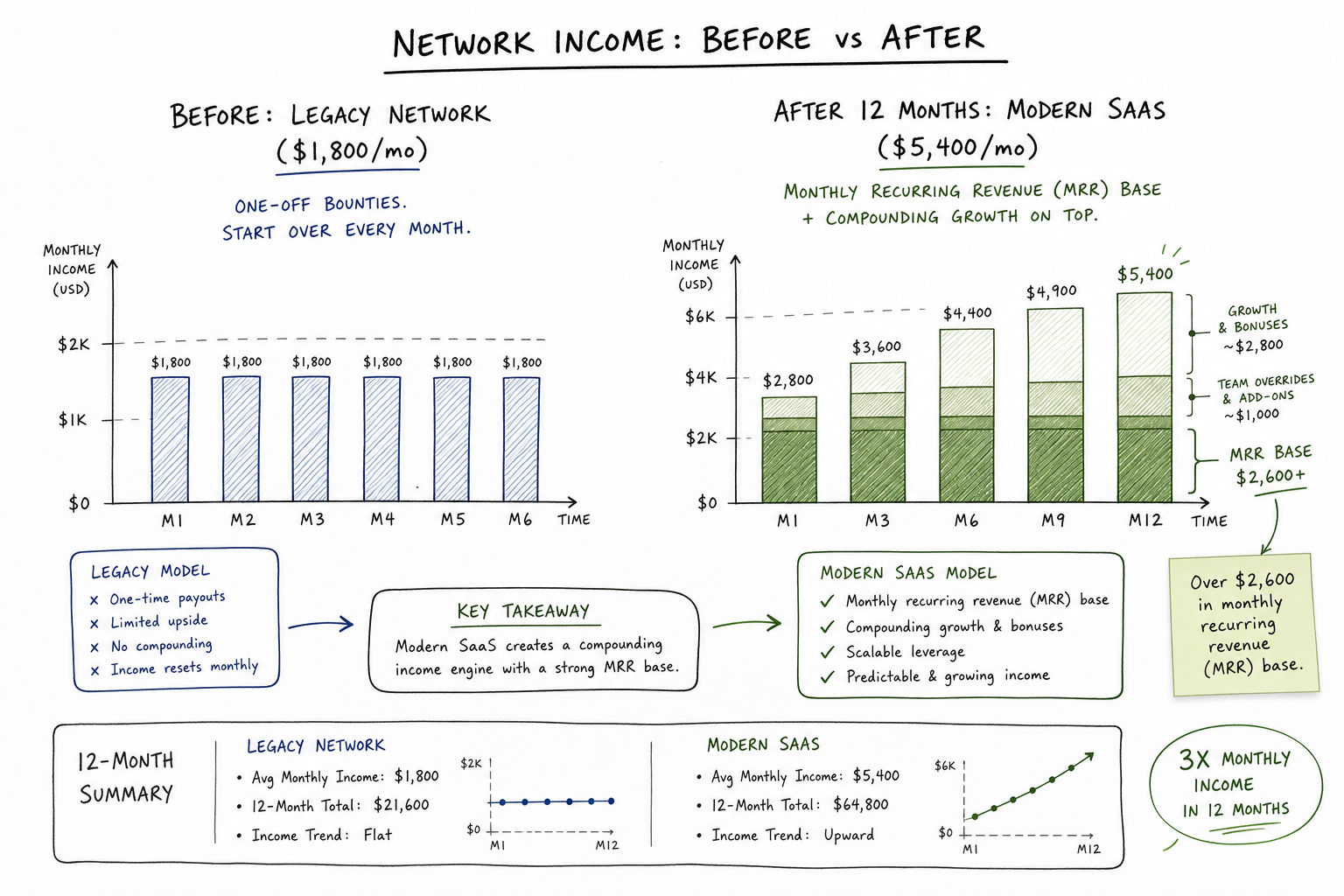
The Starting Situation
A mid-sized programming blog generated 80,000 monthly pageviews reviewing website builders, code editors, and hosting platforms. The site monetized entirely through a legacy network, linking to 12 different tools.
- Average monthly earnings: $1,800
- Payout structure: One-time $50 CPA on all conversions
- Cookie window: 15 days
- Monthly link rot / broken tracking rate: 8%
The Strategic Audit
The publisher audited their top 20 revenue-generating articles and discovered three major problems:
- Two primary software recommendations on the legacy network had lowered their commission rates from $50 down to $20 without notifying affiliates.
- The 15-day cookie window meant readers who took a 14-day free trial and converted on day 16 yielded zero commission for the blog.
- Competing direct programs on PartnerStack and FirstPromoter offered 25% recurring monthly commissions for the exact same software categories.
The Implementation
Over three weeks, the publisher systematically audited their content:
- Replaced 8 legacy network software programs with direct SaaS programs offering 20%–30% recurring MRR.
- Joined high-tier hosting partner programs directly via Impact to secure 60-day cookie windows.
- Embedded custom coupon codes into technical tutorial articles for readers using ad blockers.
The 12-Month Result
Within one year of the migration, the blog's traffic grew modestly by 15%, but its monthly revenue surged to $5,400. More importantly, over $2,600 of that monthly total consisted of compounding recurring subscription payments from software customers referred in prior months.
Technical Link Implementation: Custom Codes vs. Tracking Parameters
Tech readers are uniquely tech-savvy. A substantial percentage of developers, cybersecurity professionals, and tech enthusiasts utilize browser extensions that block third-party cookies, tracking scripts, and redirect domains. Understanding how affiliate codes function helps you preserve conversions.
Standard Tracking URLs
Standard affiliate links rely on URL query parameters (such as ?aff=12345 or ?via=techblog) or intermediate redirect bridges. When a reader clicks the link, the merchant's tracking script drops a first-party or third-party cookie in the reader's browser.
- Advantage: Completely frictionless for the reader; requires no manual action at checkout.
- Vulnerability: Privacy-focused browsers and ad blockers may strip standard affiliate query strings or block tracking redirect domains.
Custom Discount and Vanity Codes
To overcome tracking drop-off, modern partner platforms allow affiliate managers to tie attribution directly to a coupon code.
When a merchant assigns you a unique vanity code (such as TECHBLOG20), the checkout system credits your affiliate account whenever a customer types that code into the coupon field, regardless of:
- Whether the reader clicked an affiliate link
- Whether the reader used an incognito browser window
- Whether browser extensions blocked tracking cookies
Displaying both a clickable tracking link and a highlighted promo code in callout boxes gives your readers an incentive to use your code while guaranteeing attribution even in strict browser environments.
Best Practices for Managing Tech Affiliate Links at Scale
As your tech blog expands across hundreds of software reviews, tutorials, and comparison tables, managing links across multiple platforms becomes an engineering task. Implementing structured link management early prevents broken redirects and revenue loss.
┌─────────────────────────────────────────────────────────────┐
│                TECH BLOG LINK MANAGEMENT STACK              │
├─────────────────────────────────────────────────────────────┤
│ 1. Centralized Redirection Engine (e.g., /go/product-name)  │
│ 2. Mandatory rel="sponsored" or rel="nofollow" Link Tags    │
│ 3. Quarterly Automated 404 & Expired Offer Scans            │
│ 4. Clear Site-Wide FTC Affiliate Disclosure Notices         │
│ 5. Dedicated Spreadsheet or Directory Tracking Terms/Rates  │
└─────────────────────────────────────────────────────────────┘
1. Implement Cloaked Link Redirects
Never hardcode raw affiliate tracking URLs directly into your blog content. If a merchant changes affiliate platforms from ShareASale to PartnerStack, updating 50 individual blog posts manually is tedious and error-prone.
Use a link management plugin or server-level redirection rule to create clean, internal redirect paths:
- Raw link:
https://brand.partnerstack.com/track/a8f92j?subid=tutorial - Cloaked redirect:
https://yourtechblog.com/go/brand/
When a merchant updates their tracking platform or terms, you simply update the target destination inside your redirection plugin once, and every link across your entire website updates instantly.
2. Comply with Search Engine Guidelines
Search engines require webmasters to disclose monetization links to avoid search ranking penalties. Always add appropriate link relationship attributes to every affiliate link:
rel="sponsored": The modern attribute recommended by search engines for paid and affiliate links.rel="nofollow": The legacy standard attribute that remains widely accepted across the web.
Failing to mark paid affiliate links with rel="sponsored" or rel="nofollow" can result in algorithmic penalties for outbound link spam.
3. Maintain an Active Terms Log
Commission rates in the tech industry fluctuate. Venture-funded startups frequently launch with high 40% affiliate payouts to acquire early users, only to scale back to 15% once they reach market saturation.
Maintain a centralized log of your active partnerships that records:
- Merchant name and partner platform login URL
- Base commission percentage and payout schedule
- Cookie duration
- Assigned affiliate manager contact email
- Last audit date
Conducting a quarterly review of your top-performing links ensures you catch unannounced commission changes, expired promotional codes, and discontinued software products before your revenue drops.
If you are exploring new verticals to expand your content library, reviewing the best niches for affiliate marketing can provide fresh data on high-converting software and digital categories.
Frequently Asked Questions
Where do tech bloggers get custom coupon codes instead of standard tracking links?
Tech bloggers obtain custom vanity coupon codes directly from merchant affiliate managers or through platforms like Impact and PartnerStack that support promo code attribution. If a program only provides standard tracking links in its dashboard, you can email the affiliate manager with proof of your site traffic and request a custom discount code tied directly to your account.
Why do some tech companies hide their affiliate program terms until after approval?
Legacy networks and some enterprise merchants keep their terms private to prevent competitors from analyzing their customer acquisition costs and partner incentives. However, this practice creates friction for publishers. Many bloggers now prioritize programs hosted on transparent directories or SaaS networks that list commission percentages, cookie windows, and payout thresholds publicly.
How do tech bloggers compare commission rates across competing software products?
Publishers compare rates by utilizing open affiliate directories like AffiliList, auditing competitor link structures, and reviewing curated niche affiliate roundups. Comparing terms across multiple tools in the same vertical allows publishers to focus their content production on software that offers favorable recurring commissions, long cookie windows, and high conversion rates.
Is affiliate marketing still a legitimate monetization strategy for tech blogs?
Affiliate marketing remains one of the primary revenue streams for independent tech publishers, software reviewers, and developer educators. When publishers provide honest, thoroughly tested recommendations and clearly disclose commercial relationships, affiliate partnerships provide a transparent way to monetize technical expertise without relying on intrusive display advertisements. Readers seeking advice on identifying authentic offers can review our guide on is affiliate marketing legit.
What should a tech blogger do if an affiliate network deactivates their account for inactivity?
If a legacy platform deactivates your account due to a temporary lack of sales, check whether the merchant runs a direct in-house program or maintains a presence on another platform like PartnerStack or Impact. Applying directly through the merchant's dedicated partner page often provides faster approval and direct contact with the program manager. For individuals looking to turn monetization skills into a broader career, examining current affiliate marketing jobs can provide insight into how agencies and software companies manage partner programs internally.