
Shareasale Alternatives for Directories for Discovering SAAS Partner Programs
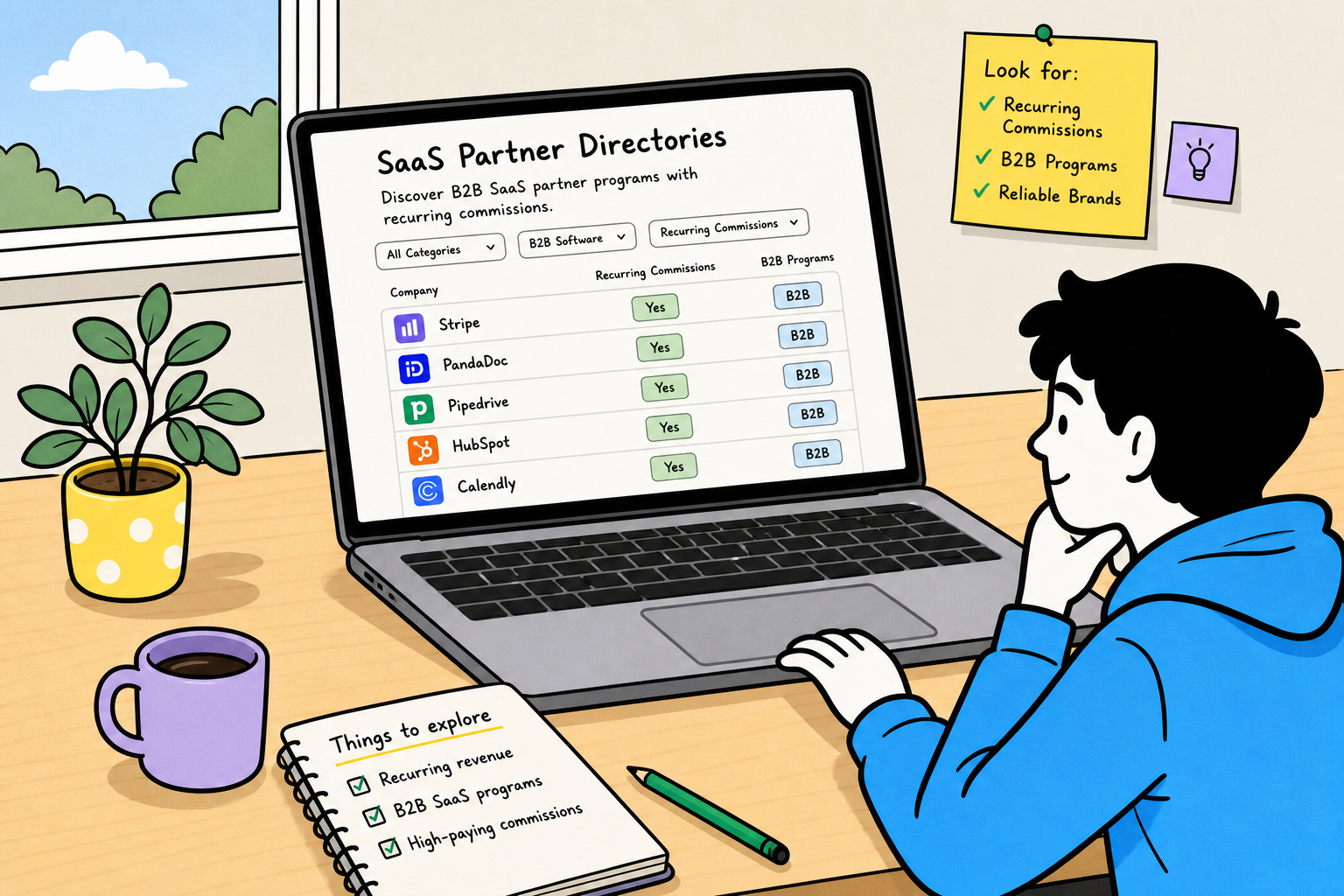
Explore top ShareASale alternatives and directories to discover high-paying B2B SaaS partner programs, recurring commissions, and software affiliate deals.
- The Distinction Between Networks and Directories
- Top Directories and Open-Access Databases for SaaS Discovery
- Top Network Platforms Built for SaaS
- Unconventional SaaS Partner Discovery: The Outbound Approach
- How to Evaluate a SaaS Partner Program Before Committing
- A Real-World SaaS Transition Scenario
- Matching Your Marketer Profile to the Right Platform
- Common Pitfalls in SaaS Affiliate Discovery
- Frequently Asked Questions
- Moving Forward with Your SaaS Strategy
If you have spent any time monetizing an audience, you likely have a ShareASale account. It is one of the oldest and largest affiliate networks on the internet, housing thousands of merchants. But if your goal is to monetize B2B traffic, software reviews, or a highly technical newsletter, you have probably noticed a glaring issue: traditional generalist networks are built for retail, not software.
Finding a 30% lifetime recurring commission for a project management tool requires digging through hundreds of 5% one-time payout offers for garden hoses and nutritional supplements. Furthermore, traditional networks often gate their data. You cannot see detailed earning metrics, conversion rates, or specific terms without first applying to the network, waiting for approval, and then applying to the specific merchant.
This friction is exactly why the industry has shifted toward specialized directories and modern partnership platforms designed explicitly for the software-as-a-service (SaaS) ecosystem. To find lucrative, high-retention software offers, you need tools that categorize software accurately, expose commission structures transparently, and cater to modern digital entrepreneurs.
Here is a breakdown of the best alternatives to ShareASale for discovering SaaS partner programs, how to evaluate the offers you find, and unconventional methods for sourcing software partnerships that your competitors are missing.
The Distinction Between Networks and Directories
Before diving into the platforms, it is important to clarify a frequent point of confusion in the affiliate space: the difference between an affiliate network and an affiliate directory.
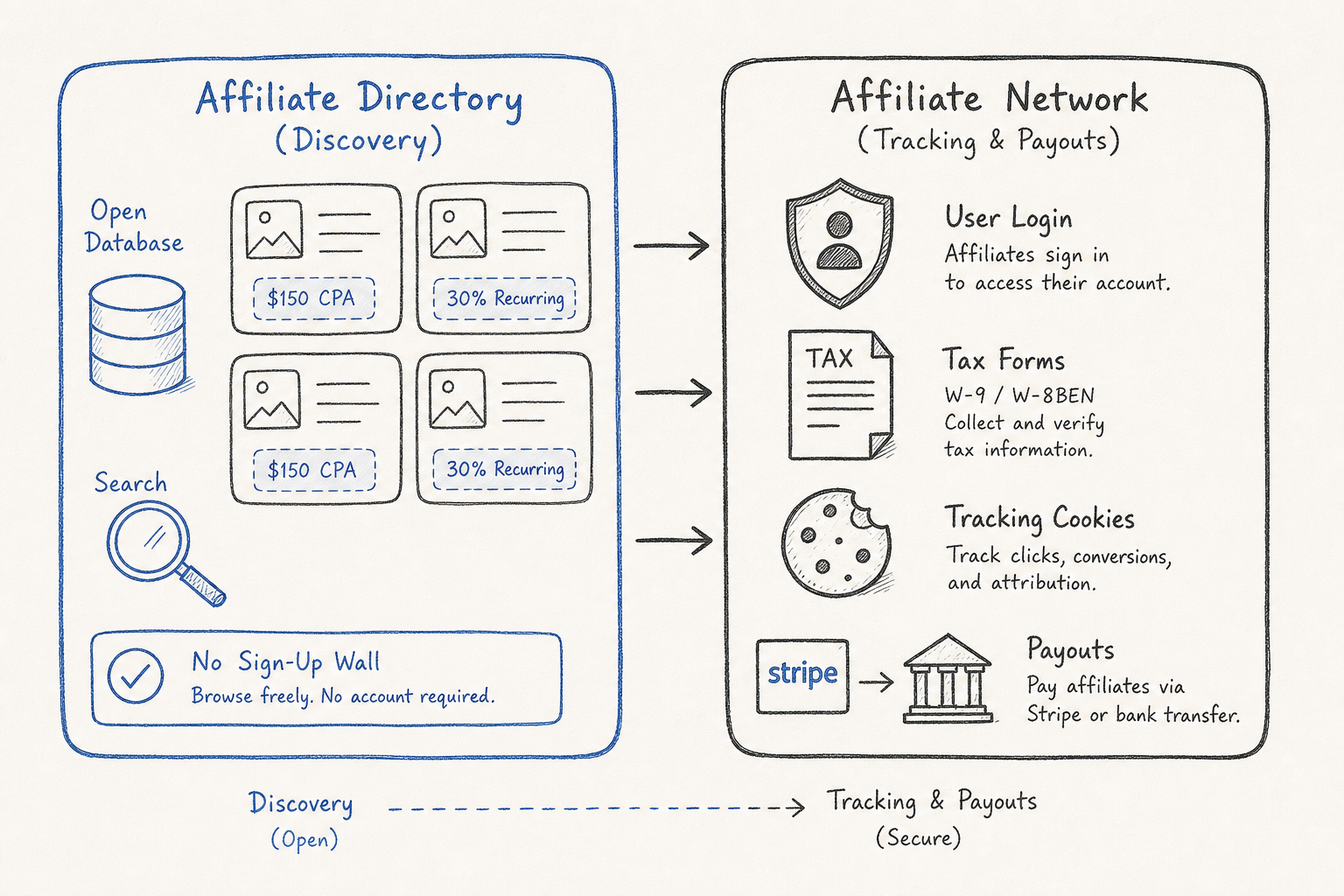
A network (like ShareASale, Impact, or PartnerStack) provides the underlying tracking infrastructure. They generate your affiliate links, track the cookies, collect funds from the SaaS company, and issue your payout. To browse a network, you typically have to sign up, hand over your tax information, and pass a vetting process.
A directory is a searchable database that aggregates affiliate programs across hundreds of different networks and direct-in-house programs. You use a directory for discovery. The primary advantage of a high-quality directory is open access. You can instantly compare a program hosted on PartnerStack against a program hosted on Impact, without having to create accounts on both platforms just to view the commission structures.
Both serve crucial, distinct roles when you are mapping out profitable affiliate marketing niches and looking for the exact products that fit your audience.
Top Directories and Open-Access Databases for SaaS Discovery
When you want to bypass the gated onboarding of traditional networks and quickly filter the market for the best software offers, dedicated directories are your most efficient starting point.
AffiliList: The Transparent SaaS Directory
AffiliList was built specifically to solve the visibility problem inherent in traditional affiliate marketing platforms. Rather than forcing you to apply just to see what a program pays, AffiliList serves as an open, streamlined directory of over 10,000 affiliate programs, with a heavy emphasis on SaaS, digital tools, and emerging tech.
The platform eliminates the cluttered, outdated lists found on generic blog posts. Instead, it provides a centralized hub where marketers can quickly filter programs by niche—whether you are looking for HR software, crypto exchanges, or YouTube marketing tools.
Key advantages for SaaS discovery include:
- Open Access to Terms: You can immediately see commission percentages, flat-rate payouts, and cookie durations without creating an account.
- Advanced Filtering: You can sort by commission rate to quickly identify high paying affiliate programs that offer $500+ payouts or high recurring percentages.
- Verified Data: The directory bypasses the unverified, often stale data that plagues forum lists, offering a clean interface focused purely on essential program details.
- Direct Merchant Submissions: Because SaaS companies submit their own programs to the portal, the directory frequently features emerging, high-growth startups before they hit the massive, saturated legacy networks.
For niche site owners and content creators looking to pivot into digital tools, AffiliList removes the friction of discovery, allowing you to compare dozens of CRM or email marketing payouts side-by-side.
Work-management.org and Niche Ecosystem Hubs
While AffiliList covers the broader digital economy, there are micro-directories dedicated strictly to specific sub-verticals. Work-management.org, for instance, is a specialized directory that curates top partner programs exclusively for work management, project management, and CRM ecosystems.
These highly specialized lists are incredibly useful if you have already determined how to pick a niche for affiliate marketing and want to dominate a narrow software category. By utilizing niche-specific hubs, you can find ancillary tools (like a time-tracking plugin for Asana) that offer less competition but highly targeted conversion rates.
App Marketplaces (Shopify, Salesforce, Atlassian)
One of the most overlooked "directories" for SaaS partner programs is not an affiliate platform at all—it is the native app marketplaces of giant software ecosystems.
If you are writing about e-commerce, the Shopify App Store is a goldmine for discovery. Similarly, the Salesforce AppExchange or Atlassian Marketplace host thousands of third-party SaaS tools designed to integrate with the core platform.
- Browse the top-rated or "trending" apps in these marketplaces.
- Navigate to the app developer's actual website.
- Check their footer for "Partners" or "Affiliates."
Because these tools are built on top of massive platforms, they inherently have product-market fit, and their affiliate programs are often managed in-house or through specialized B2B networks, offering high commissions for quality referrals.
Top Network Platforms Built for SaaS
Once you discover a program, you will inevitably be routed to a network to manage the tracking. If you prefer to discover programs from within the networks themselves, you should bypass retail-heavy platforms and focus on those that specialize in software.
PartnerStack: The B2B SaaS Powerhouse
If there is a direct antithesis to ShareASale in the modern software era, it is PartnerStack. Widely regarded as the premier marketplace specifically for B2B SaaS, PartnerStack is engineered around recurring revenue models, which are notoriously difficult for legacy networks to track accurately over long periods.
PartnerStack caters heavily to the nuances of software sales, supporting the 4 different kinds of partnerships for SaaS: standard affiliate links, referral programs (where you submit a lead's email), reseller models for agencies, and technology integrations.
When you browse the PartnerStack network, you are generally looking at high-growth, venture-backed companies. They frequently highlight 10 Star B2B SaaS Partner Programs that are actively scaling their growth teams. Because the platform is built for software, the onboarding, asset management (swipes, banners), and payout mechanisms are deeply integrated with tools like Stripe and PayPal, making it the best partnerships platform for growth teams and the marketers who promote them.
Impact: The Modern Partnership Automation Platform
Impact (formerly Impact Radius) bridges the gap between B2B software and massive D2C brands. While it is not exclusively a SaaS network, its technology infrastructure is far more advanced than legacy platforms, making it a favorite for major software companies like Canva, HubSpot, and HostGator.
Impact’s discovery marketplace is robust, though it still requires you to be an approved partner to view the most granular data. What sets Impact apart for SaaS discovery is its contract flexibility. When negotiating the 9 best SaaS partner programs and what they offer, you will often find that Impact allows merchants to easily adjust commission tiers based on your performance. If you drive a high volume of sign-ups to a SaaS tool, the merchant can seamlessly upgrade your tracking link from a 20% commission to a 30% commission without migrating systems.
CJ (Commission Junction): The Enterprise Software Hub
CJ is a legacy network like ShareASale, but it has a distinct corporate lean. While ShareASale is heavily populated with independent creators and mid-market physical goods, CJ is frequently utilized by mature, enterprise-level SaaS companies (think established cybersecurity firms, massive web hosting conglomerates, and legacy accounting software).
The interface can be complex, and their account deactivation policies for inactivity are strict. However, if your audience consists of enterprise decision-makers or IT professionals, CJ is often the only place you will find the affiliate programs for the heavy-hitting, institutional software they purchase.
Unconventional SaaS Partner Discovery: The Outbound Approach
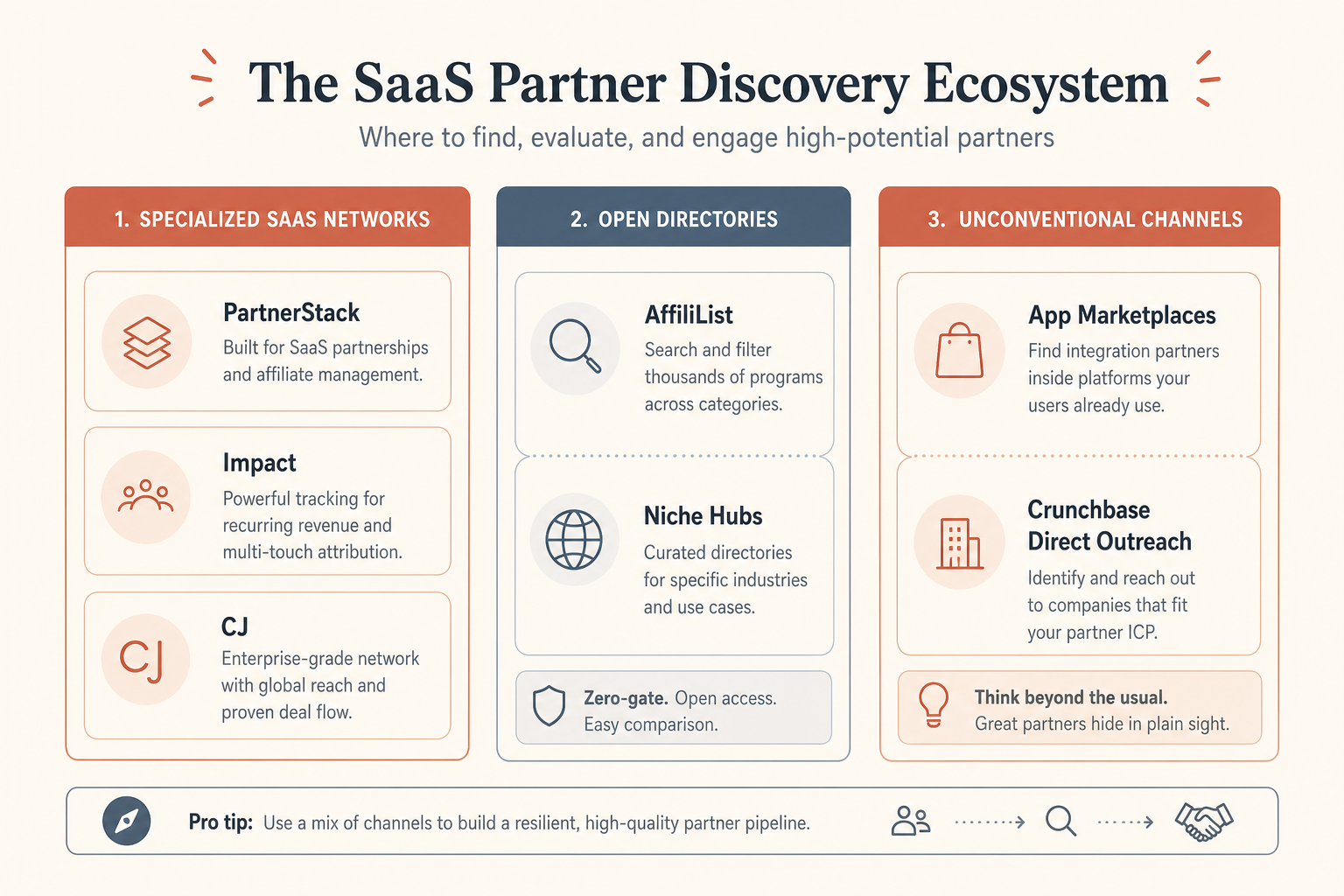
Relying purely on networks and directories means you are only seeing companies that have already decided to launch a public affiliate program. The most lucrative SaaS partnerships are often the ones you initiate yourself.
Leveraging Crunchbase for Direct Partnerships
Crunchbase is a database of startup funding, acquisitions, and company data. It is a profoundly powerful tool for affiliate marketers willing to do outbound outreach.
If you want to know how to build a list of thousands of SaaS companies that have money to spend, Crunchbase is the answer. You can filter companies by industry (e.g., "AI writing tools"), funding round (e.g., "Series A or Series B in the last 6 months"), and company size.
When a SaaS company raises a Series A, they are under immense pressure from venture capitalists to acquire users rapidly. If you run a high-traffic affiliate marketing blog in their niche, you can reach out directly to their Head of Growth or VP of Marketing. Even if they do not have a public affiliate program listed on a network, they will frequently set up a custom tracking link in their backend or use a lightweight tool like Rewardful to give you a 30-40% cut of the revenue you generate.
How to Evaluate a SaaS Partner Program Before Committing
Discovering a program is only the first step. SaaS affiliate marketing requires a different evaluation matrix than selling physical products on Amazon or ShareASale. Before you dedicate a top-three spot in a "Best Of" listicle to a software product, you must evaluate the underlying economics of the partnership.
1. Recurring vs. One-Time Bounties (CPA)
SaaS programs generally pay out in one of two ways:
- Recurring Revenue Share: You earn a percentage (typically 15% to 30%) of the customer's subscription fee for as long as they remain a paying customer (or for a capped period, like the first 12 months).
- Cost Per Action (CPA) Bounty: You earn a flat, one-time fee (e.g., $150) when a user converts from a free trial to a paid plan.
Which is better? It depends entirely on the product's churn rate. If you are promoting a complex, sticky CRM that a business will use for five years, a 20% recurring commission is exponentially more valuable than a $200 upfront bounty. Conversely, if you are promoting a lightweight graphic design tool that users frequently subscribe to for one month and then cancel, take the upfront CPA bounty.
2. Cookie Duration and Attribution Windows
B2B software purchases are rarely impulsive. A marketing manager might click your affiliate link to read a review of an email marketing platform, but they likely need to consult their team, sit through a demo, and get budget approval before swiping a credit card.
For SaaS, a 30-day cookie is the absolute bare minimum, and a 60- to 90-day cookie is standard. If you find a B2B SaaS program offering a 7-day cookie, walk away. The sales cycle is too long, and you will lose attribution for the leads you generate.
3. Lead vs. Sale Payouts
Some SaaS directories will highlight programs that pay per qualified lead (CPL), not just per sale. This is highly prevalent in enterprise software where a single sale might be worth $50,000 annually. The company knows it takes their internal sales team to close the deal, so they pay you simply for delivering a qualified prospect (e.g., $50 for a verified demo booking).
This model requires you to ensure your audience matches the software's ideal customer profile perfectly; otherwise, the merchant will kick you out of the program for driving "junk" leads. It is a critical factor to weigh when wondering is affiliate marketing legit for enterprise software—the programs are real, but the lead quality thresholds are strictly enforced.
A Real-World SaaS Transition Scenario
Consider the trajectory of a niche site owner operating in the remote work space. Originally, their monetization strategy relied on Amazon Associates and ShareASale to promote ergonomic desk chairs and standing desks. The volume was high, but the commissions were capped at 3% to 5%, yielding a one-time payout of $15 per sale.
Realizing the ceiling on physical products, the owner pivoted their content strategy to focus on the software that remote teams use to collaborate. Instead of searching ShareASale, they used a directory like AffiliList to map out the best niches for affiliate marketing within software. They discovered a project management tool offering a 25% lifetime recurring commission.
By ranking an article for "best remote collaboration tools for agencies," they began referring users to a $100/month software platform. Each referral generated $25 per month.
Within a year, they had referred 100 active accounts. Instead of starting at zero every month—as they did selling physical desks—they now had a baseline passive income of $2,500 per month, purely because they shifted their discovery process away from retail networks and toward recurring SaaS platforms. This compounding effect is the core mechanic behind building a sustainable affiliate marketing side hustle.
Matching Your Marketer Profile to the Right Platform
Not all directories and networks serve the same type of marketer. Your approach to discovery should align with your business model.
The Content Creator (Bloggers, YouTubers, Niche Sites)
If your primary traffic source is SEO or organic social, your goal is high-volume discovery with low friction. You want to generate a standard affiliate link, place it in your content, and let it work.
- Best Discovery Tool: AffiliList. The open-access nature allows you to rapidly source dozens of tools to include in listicles without waiting on network approvals.
- Best Networks: Impact, PartnerStack. They offer clean interfaces and simple link generation without requiring you to manually log leads.
The Agency or Consultant (B2B Services)
If you run an agency (e.g., an SEO agency, a web development shop, or an HR consultancy), your volume is lower, but your trust factor is immensely high. You do not just refer software; you implement it for your clients.
- Best Discovery Tool: PartnerStack and direct outreach (Crunchbase).
- Ideal Model: Reseller and Referral programs. You do not want a basic affiliate link; you want a dashboard where you can register a client's email, ensuring you get credit for the sale even if the client navigates to the software's site days later on a different device.
The Tech Integrator (SaaS Founders)
If you own a software tool and want to build integrations with other tools to share audiences.
- Best Discovery Tool: Native App Marketplaces (Salesforce, Shopify).
- Ideal Model: Technology partnerships. You co-market to each other's audiences. This requires direct relationships, not affiliate networks.
Common Pitfalls in SaaS Affiliate Discovery
As you transition away from ShareASale into specialized SaaS directories, there are a few failure modes to watch out for.
Ignoring the Payout Threshold Many high-paying SaaS programs have high payout thresholds. If a program pays a 20% commission on a $15/month product ($3/month to you), but their minimum payout threshold is $100, you will need to generate 34 months' worth of subscriptions before you see a single dollar. Always check the payout terms in the directory before committing content to the product.
Failing to Monitor Churn A program might offer 50% recurring commissions, which sounds incredible. However, if the software is terrible and users cancel after the first month, your recurring revenue is an illusion. Always test the software yourself, or read aggressive third-party reviews, to ensure the product is actually sticky enough to warrant promoting on a recurring model.
Applying to Gated Networks Without a Traffic Source Platforms like PartnerStack and Impact are highly curated. If you apply to a premium SaaS merchant without a live website, a clear traffic generation strategy, or an established audience, you will be rejected automatically by their compliance teams. Build your platform first, use open directories like AffiliList to plan your content roadmap, and apply to the specific networks only when you have content ready to capture intent.
Frequently Asked Questions
Are all SaaS partner programs structured as recurring commissions? No. While recurring revenue share is the most sought-after model, many mature SaaS companies prefer one-time CPA bounties. They do this to cap their customer acquisition costs. Generally, early-stage startups use recurring commissions to incentivize affiliates, while established enterprise tools use flat CPA bounties.
Why shouldn't I just use ShareASale for software? ShareASale does have a software category, and some excellent companies host their programs there. However, the interface is heavily optimized for physical retail (shipping, SKUs, inventory). Tracking complex SaaS events—like a user upgrading from a free tier to a Pro tier six months later—is historically handled much better by platforms purpose-built for software, like PartnerStack.
How do I track my metrics if I use multiple programs from a directory? When using a directory like AffiliList to discover programs, you will ultimately end up registering across several different networks (some on Impact, some on PartnerStack, some on in-house tools like Rewardful). To manage this, professional affiliate marketers use third-party dashboard aggregators (like Affluent) to pull all their network data into a single unified dashboard, saving them from logging into a dozen different platforms daily.
Moving Forward with Your SaaS Strategy
Relying solely on legacy networks to find modern software partnerships limits your earning potential. The friction of hidden terms, clunky interfaces, and retail-first tracking models makes it difficult to scale a B2B or digital-first affiliate business.
By shifting your discovery process to open, transparent directories, you regain control of your monetization strategy. You can evaluate commission models, payout triggers, and cookie durations upfront, allowing you to design your content strategy around the most profitable tools rather than settling for whatever you stumble across inside a gated platform.
Start treating partner discovery as a strategic research phase. Use open databases to map out the market, match the software to your specific audience profile, and focus relentlessly on tools that offer long-term, compounding value.