
Shareasale Alternatives for Directory for E-commerce Affiliate Partnerships
Explore top ShareASale alternatives and directories for e-commerce affiliate programs. Discover platforms like Impact, CJ, AffiliList, and independent D2C apps.
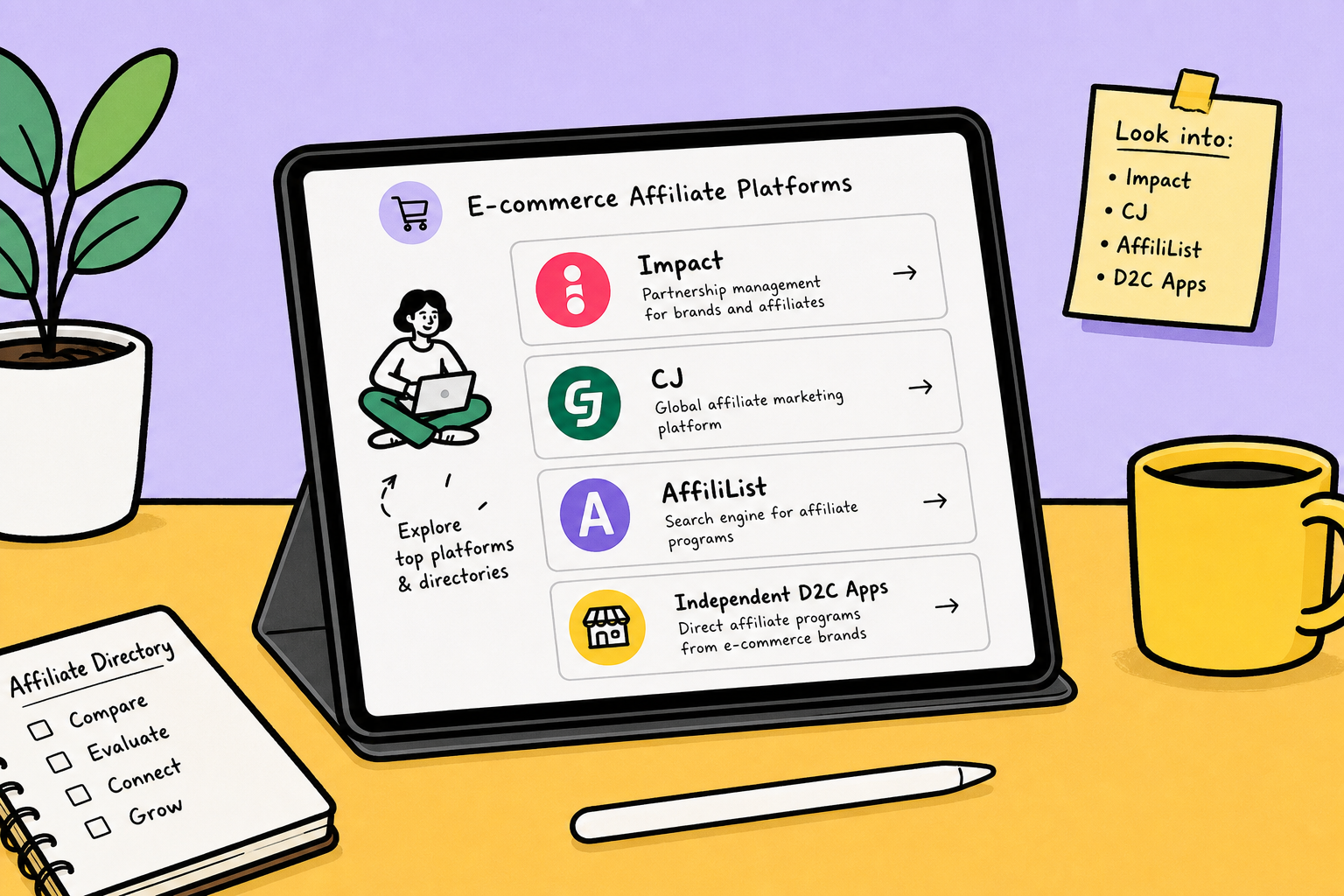
The best directories and networks for e-commerce affiliate partnerships include Impact, CJ Affiliate, and Awin for large-scale brand management, while platforms like ClickBank and the Shopify App Store dominate independent direct-to-consumer (D2C) brands. For marketers who prefer open discovery without network gatekeeping, AffiliList serves as a transparent directory indexing over 10,000 programs without requiring an account just to view commission structures.
For over a decade, ShareASale operated as the default starting point for anyone monetizing a blog or niche site with physical products. It offered a massive footprint of independent e-commerce merchants and a relatively low barrier to entry. However, as the digital economy evolves into 2026, the landscape of affiliate discovery is shifting. Marketers are moving away from legacy platforms burdened by cluttered interfaces, fragmented tracking, and opaque terms that hide critical payout data behind lengthy application processes.
Whether you are scaling a highly targeted niche site or managing a portfolio of digital assets, relying on a single, aging network limits your revenue potential. Brands are migrating to modern partnership management platforms, building their own native programs, or listing on open directories that prioritize data transparency.
Here is a comprehensive breakdown of the top ShareASale alternatives and how to rethink your approach to finding high-converting e-commerce affiliate partnerships.
The Walled Garden Problem: Why Leave Legacy Networks?
If you have spent any time navigating older affiliate networks, you know the friction involved. You find a brand that fits your audience perfectly, but to see their cookie duration, commission tiers, or specific payout terms, you have to create an account on the network, fill out a tax profile, verify your website, and submit a custom application to the merchant. Days later, you are approved—only to discover the commission rate is a flat 2% with a 24-hour cookie. You just wasted hours on due diligence that should have taken three seconds.
This "walled garden" approach to affiliate data is the primary reason content creators are seeking alternatives. Legacy platforms often prioritize the merchant's privacy over the affiliate's time. In contrast, modern marketers require speed, transparency, and data portability. They need to rapidly compare the EPC (Earnings Per Click), conversion rates, and baseline payouts across dozens of competitors before committing space on a high-traffic page.
While legacy systems are still widely considered the benchmark for finding physical consumer goods and boutique D2C brands—as noted in guides covering how to find affiliate programs—the friction of finding and verifying those programs is driving top-tier affiliates toward more transparent platforms.
The Open Discovery Model: AffiliList
The most direct alternative to traditional, closed-door affiliate networks is an open directory built entirely for the marketer. This is where the model shifts from "apply to view" to "search and compare."
AffiliList operates differently than a traditional network acting as a middleman for payments and tracking. Instead, it functions as a comprehensive, streamlined directory of the best affiliate programs available, with a heavy emphasis on SaaS, digital tools, and high-converting e-commerce offers.
The core advantage of an open directory is transparency. AffiliList maintains a curated database of over 10,000 affiliate programs, pulling the critical data you need—commission percentages, payout terms, cookie durations, and software categories—out from behind the login screens. If you are researching a roundup post on how to pick a niche for affiliate marketing, you can filter the database by commission rate and instantly identify which sub-niches offer the most lucrative baseline payouts.
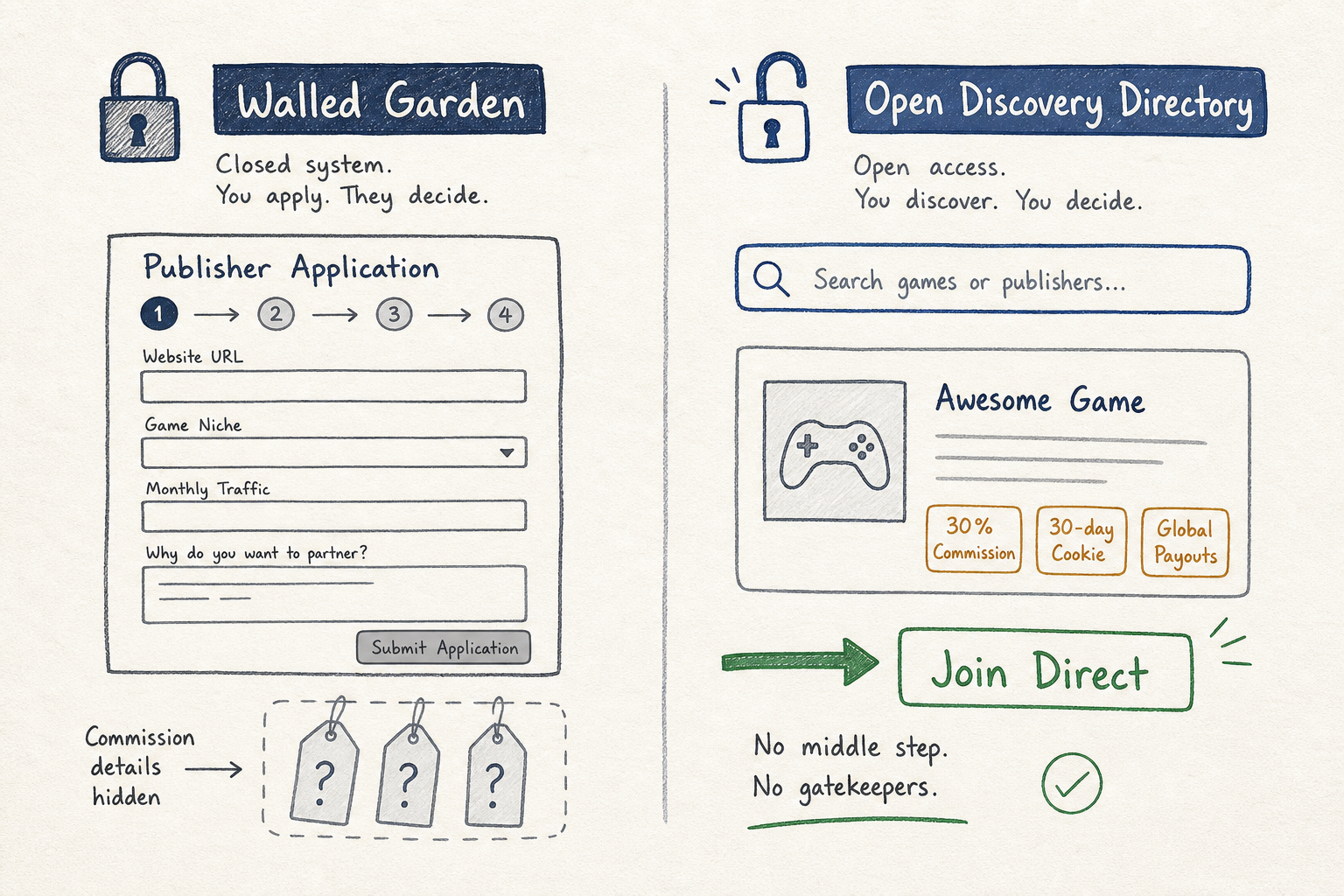 By utilizing an extensive tagging system and advanced filtering, niche site owners can bypass outdated lists scattered across search results. You find the program, verify the terms, and click directly through to the merchant's actual sign-up page—whether that page is hosted on Impact, CJ, or their own internal software. It removes the clutter and focuses solely on verified program details, making it the fastest way to map out monetization for a new project.
Top General E-commerce Affiliate Networks
When brands outgrow simple referral plugins, they migrate to enterprise-grade tracking platforms. If you want to partner with recognizable, mid-market to enterprise e-commerce brands, you will inevitably need to join the networks where they host their programs.
Impact (Formerly Impact Radius)
Impact is arguably the most aggressive competitor to ShareASale and has spent the last five years absorbing a massive share of the e-commerce market. Favored by major brands, it functions as a modern partnership management platform capable of handling traditional affiliates, high-profile influencers, and B2B partnerships in one unified dashboard.
Impact’s interface is exceptionally clean compared to legacy networks. It provides robust cross-device tracking, which is critical in an era where a user might click your link on their phone while commuting but complete the purchase on their desktop two days later. Impact allows brands to set up highly customized contracting. For example, a brand can automate a contract that pays you 5% on standard products, 10% on clearance items, and a flat $50 bonus if you drive a new customer rather than a returning one.
Discussions among marketers building master lists of affiliate marketing platforms frequently highlight Impact as the modern standard, particularly for its smooth integration with influencer workflows and flexible payout automation. This sentiment is echoed across industry resources detailing top affiliate creator platforms for e-commerce, noting its dominance in managing multifaceted partnership programs.
CJ Affiliate (Commission Junction)
CJ Affiliate caters primarily to large-scale enterprise brands, big-box retailers, and legacy e-commerce giants. If you want to promote household name hardware stores, major airlines, or global fashion brands, those programs are likely managed through CJ.
CJ is notoriously strict. They frequently deactivate affiliate accounts that fail to generate commissions within a specific timeframe (usually six months). Their interface is heavily data-driven, offering deep insights into network EPC (Earnings Per 100 Clicks) and network earnings metrics. This allows you to see how a brand performs across the entire CJ ecosystem, providing a reliable baseline for what you can expect if you send them targeted traffic.
Because CJ partners with massive retailers, conversion rates are typically very high due to brand trust. However, the trade-off is often lower commission percentages. A large retailer might only pay 1% to 3% on physical goods, requiring significant volume to make a full-time income.
Awin
Awin is a massive global platform boasting a directory of over 30,000 brands. While it has a strong presence in North America (having acquired ShareASale years ago, though they operate as separate platforms), Awin’s true strength lies in its European footprint.
If your blog or niche site receives significant traffic from the UK, Germany, or broader Europe, Awin is indispensable. They dominate the European retail, fashion, finance, and telecommunications sectors. Their platform includes useful features like the Opportunity Marketplace, where you can pitch specific promotional placements (like a dedicated email blast or a homepage banner) directly to brands for a flat fee in addition to standard CPA (Cost Per Action) commissions.
Niche and Platform-Specific Directories
General networks are great for finding large brands, but some of the most profitable partnerships exist in specific ecosystems or niche directories. If you want to target specialized offers, you need to look where those specific merchants congregate.
The Shopify App Store and Native D2C Programs
A massive shift in e-commerce over the last few years is the rise of the independent D2C brand operating entirely on Shopify. Instead of paying hefty network fees to a platform like CJ or Impact, these merchants install third-party tracking apps directly into their Shopify stores.
Apps like Refersion, UpPromote, and GoAffPro power tens of thousands of independent affiliate programs. For marketers, the challenge is discovery. Because these programs are self-hosted, they aren't listed in a centralized network dashboard.
To find them, you have to look for footprints. If you spot a fast-growing D2C brand on social media, scroll to their website footer and look for "Ambassador," "Partner," or "Affiliate" links. Often, these lead to a Refersion or UpPromote signup page. Because these brands avoid large network fees, they frequently pass those savings on to affiliates, offering 15% to 20% on physical products—rates that are virtually unheard of on traditional networks.
ClickBank for Hybrid and Digital Commerce
While primarily known for digital products—courses, e-books, and software—ClickBank has evolved into a powerhouse for specific types of physical e-commerce, notably in the health, wellness, and supplement spaces.
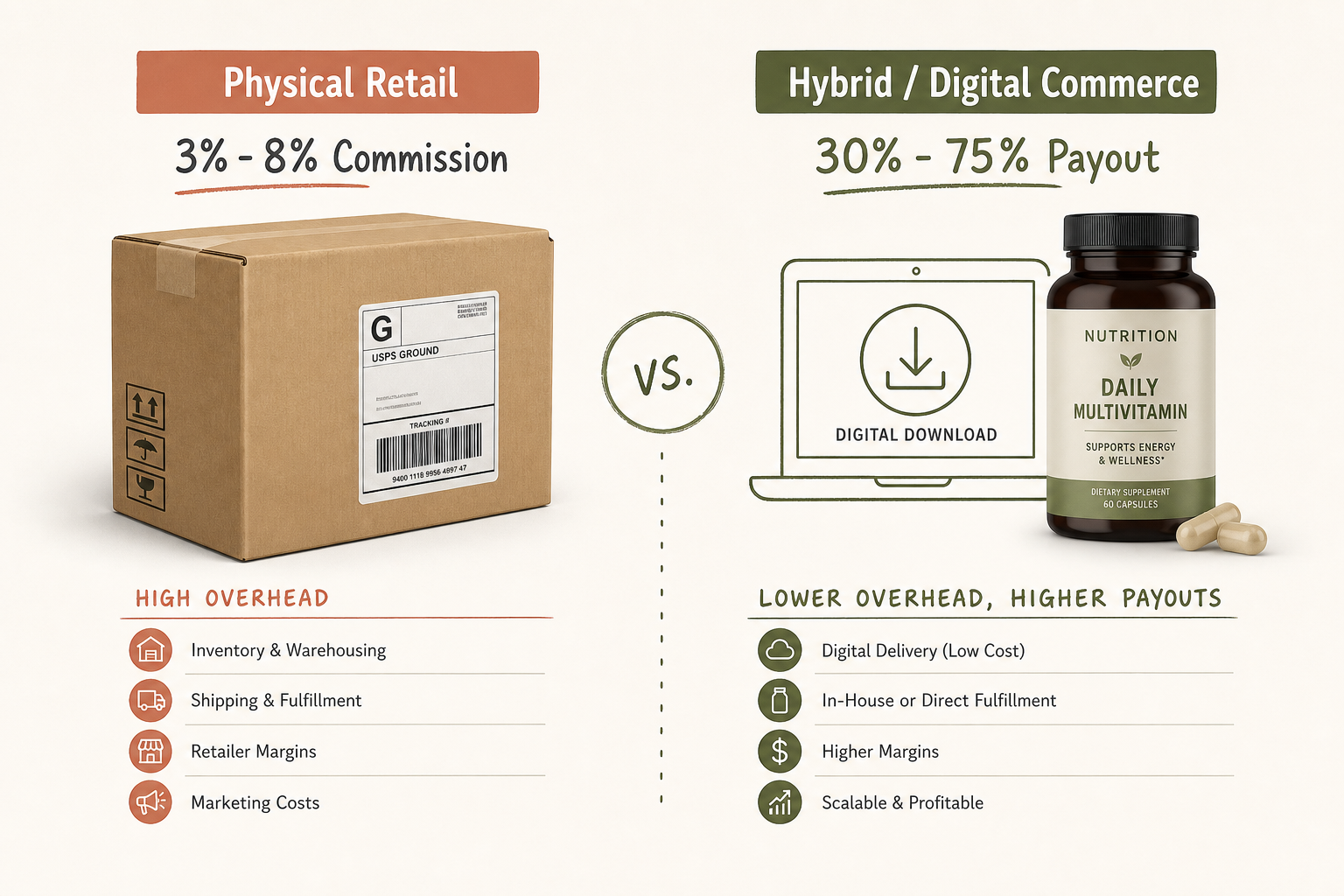
If your niche involves fitness, dietary advice, or self-improvement, ClickBank offers physical product offers with massive margins. Because the merchants on ClickBank often manufacture their own high-margin supplements or bundle them with digital information products, they can afford to pay affiliates up to 50% or even 75% per sale.
Industry analysis on e-commerce affiliate platforms points out that ClickBank remains the top choice if your focus leans heavily toward digital products or high-margin health physical products, offering payout structures that traditional retail networks simply cannot match. If you are exploring profitable affiliate marketing niches, the health and wellness overlap on ClickBank is highly lucrative.
Levanta for Amazon Sellers
For years, Amazon Associates was the undisputed king of e-commerce affiliate marketing. While it remains the easiest way to monetize a broad consumer site, its commission rates have steadily dropped, and its 24-hour cookie is notoriously unforgiving.
Levanta is a newer platform designed specifically to bridge the gap between Amazon sellers and affiliate marketers. Many private label brands selling on Amazon want external traffic to boost their organic rankings. Through Levanta, Amazon sellers can offer direct, higher commissions (often 10% to 20%) to affiliates who drive traffic directly to their Amazon product listings.
This gives the affiliate the high conversion rate of Amazon's checkout process combined with the higher commission rates typically reserved for D2C websites.
Community-Driven Master Lists
Sometimes the best directories aren't software platforms at all; they are curated lists maintained by active practitioners. E-commerce professionals regularly discuss, rate, and compile directories of specialized programs on community forums.
A prime example is the Reddit Affiliate Marketing Community, where marketers continuously update master lists of direct-to-brand platforms. If you are specifically looking to answer what are the best affiliate platforms for physical products, digging into these threads often reveals hidden gems. Marketers will frequently share warnings about merchants who shave commissions or highlight boutique networks that specialize in hyper-specific verticals, like tactical gear or sustainable fashion.
While these lists lack the clean UI of an indexed database like AffiliList, they provide unvarnished, peer-reviewed feedback that corporate directories lack.
How to Evaluate E-commerce Partnerships Outside Legacy Networks
When you transition away from a centralized network where thousands of programs are vetted by the platform, you take on more responsibility for due diligence. Joining an independent program or finding a merchant through a directory requires knowing exactly what to look for before placing their links on your site.
1. Scrutinize the Cookie Window (And Tracking Logic)
In e-commerce, the cookie duration is just as important as the commission rate. A 10% commission is worthless if the cookie expires in 24 hours and the product requires a two-week consideration cycle (like high-end furniture or specialized electronics).
Standard physical e-commerce cookies range from 7 to 30 days. Furthermore, ask the merchant about their attribution model. Are they using First-Click or Last-Click attribution?
- Last-Click: The industry standard. The affiliate whose link was clicked immediately before the purchase gets the commission.
- First-Click: You get the commission if you introduced the customer to the brand, even if they later clicked a coupon site's link before checking out. First-click is rare but highly favorable for content creators writing top-of-funnel educational content.
2. Verify Earnings Per Click (EPC) Metrics
Whenever possible, calculate the EPC. If a directory provides this data, prioritize it.
EPC tells you the reality of a program's conversion rate. A merchant might offer a massive 30% commission on a $200 physical product. However, if their website is poorly designed, shipping is astronomically expensive, and their checkout process is broken, no one will actually buy.
- Merchant A: 5% commission on a $100 product. High conversion rate (5%). For every 100 clicks, 5 people buy. Earnings = $25. (EPC = $0.25).
- Merchant B: 20% commission on a $100 product. Terrible conversion rate (0.5%). For every 100 clicks, 0.5 people buy (1 in 200). Earnings = $10 per 100 clicks. (EPC = $0.10).
Even though Merchant B offers a commission rate four times higher, Merchant A is the more profitable partnership.
3. Review the Reversal Rate
In e-commerce, returns happen. If a customer buys a pair of shoes through your link and returns them two weeks later, the merchant will reverse your commission. This is standard practice.
However, some shady independent merchants use "returns" as an excuse to deny legitimate commissions. If a network or directory shows a merchant has a commission reversal rate higher than 10%, proceed with caution. This indicates either a terrible quality product that customers constantly return, or a merchant playing games with affiliate payouts.
If you are looking to build a sustainable income—perhaps following a blueprint for an affiliate marketing side hustle—you need partners who reliably approve payouts on time.
4. Look for Tiered Structures and Performance Bonuses
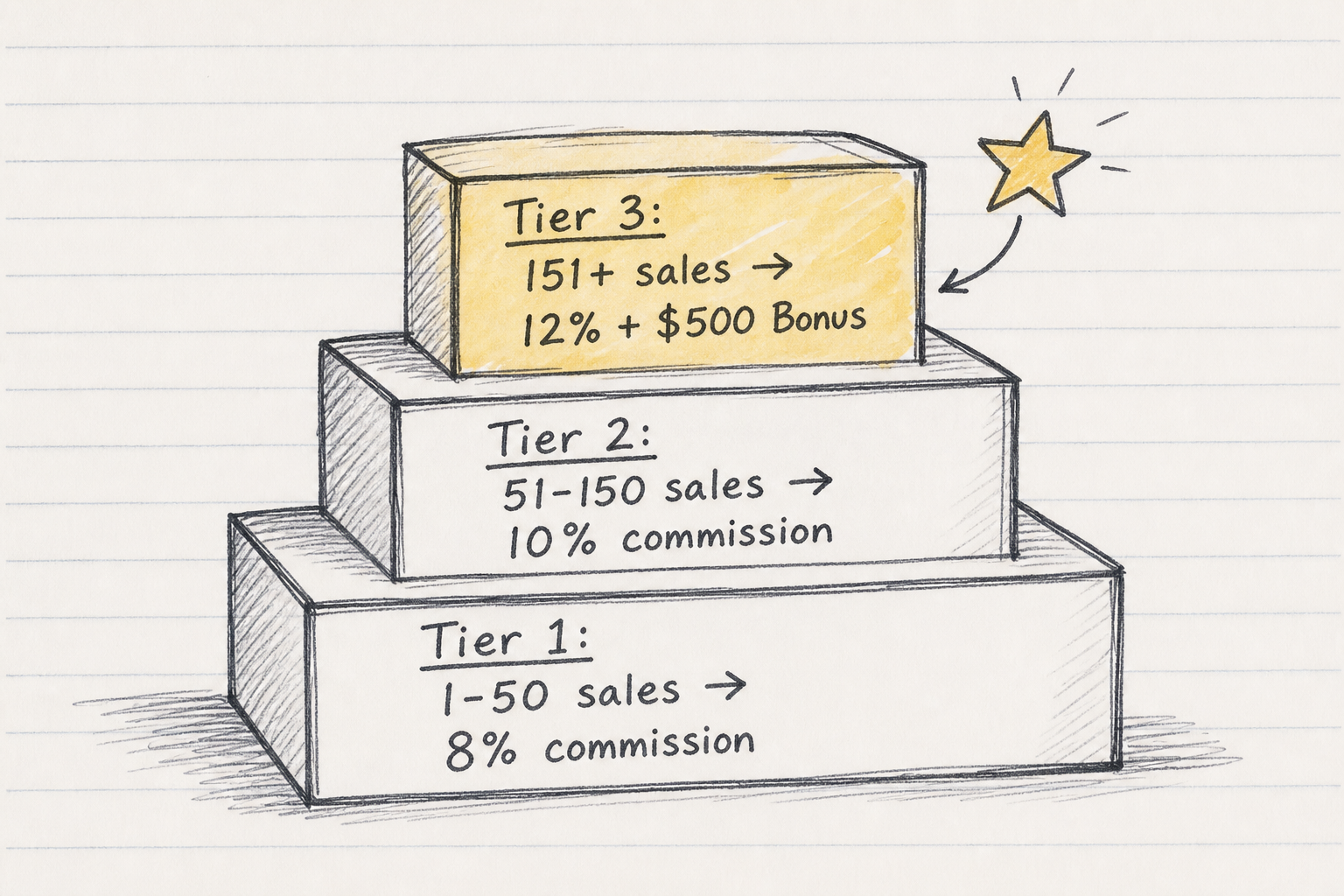
The best e-commerce programs reward volume. Look for partnerships that outline clear tiers. For example:
- Sales 1-50 per month: 8% commission
- Sales 51-150 per month: 10% commission
- Sales 151+ per month: 12% commission + $500 monthly bonus
Programs that offer these structures are usually managed by experienced affiliate managers who understand that top-tier publishers require incentives to prioritize their brand over competitors.
Making the Transition: Consolidating Your Links
One of the main reasons people stay with ShareASale despite its flaws is convenience. Having fifty merchants under one login means one aggregated payment hitting your bank account each month.
When you branch out to AffiliList to discover independent programs, or join Impact, CJ, and a dozen native Shopify programs, managing your links and payments becomes complex.
To handle this, you need a solid infrastructure:
- Use a Link Cloaker or Manager: Tools like ThirstyAffiliates, Pretty Links, or Lasso allow you to manage all your affiliate links from your WordPress dashboard. If a merchant moves from ShareASale to Impact, you simply update the destination URL once in your plugin, and it updates across all 500 blog posts where you mentioned them.
- Standardize Your UTMs: When working across multiple directories, use consistent SubID tracking. Appending
?subid=best_coffee_makers_postto your links allows you to track exactly which articles are driving sales, regardless of which network the merchant uses. - Monitor Payment Thresholds: Independent programs often have minimum payout thresholds (e.g., $100). If you spread your traffic too thin across twenty different niche programs, you might struggle to hit the threshold for any of them. Focus your traffic on the top 3-5 programs in your niche until you are consistently cashing out.
Rethinking the SaaS vs. E-commerce Divide
While physical products have a tangible appeal, many marketers eventually transition a portion of their portfolio to digital goods and software. If you are frustrated by the 3% to 5% margins typical of physical retail, exploring the best niches for affiliate marketing (SaaS & digital) can be eye-opening.
Directories like AffiliList heavily emphasize SaaS because the economics are fundamentally different. A physical product requires manufacturing, warehousing, and shipping, which eats into the margin the brand can share with you. A software product has near-zero marginal cost of reproduction. This allows SaaS brands to offer 30%, 40%, or even 50% recurring commissions month after month.
If your niche allows for it—for example, recommending specialized design software alongside drawing tablets, or inventory management tools alongside business equipment—blending high-ticket physical e-commerce with recurring SaaS offers is the most reliable way to stabilize your income.
FAQs about E-commerce Affiliate Directories
Do I have to pay to join these networks or directories?
No legitimate affiliate network or directory will ever charge you a fee to join as a publisher/affiliate. Platforms like Impact, CJ, and discovery hubs like AffiliList are completely free for marketers. The merchants pay the platforms to host their programs. If a program asks for an upfront fee to become an affiliate, it is a scam. To learn more about vetting programs safely, review is affiliate marketing legit? (How to spot real offers).
Can I use multiple networks at the same time?
Absolutely. Most successful niche sites use a combination of platforms. You might use Amazon Associates for long-tail, obscure products, Impact for your main mid-tier brand partnerships, and AffiliList to hunt down independent SaaS tools or high-paying D2C offers that aren't listed on standard networks.
Why was I rejected by a brand on CJ or Impact?
Unlike open directories where you can view data freely, applying to specific merchants on closed networks often requires manual approval. Brands reject affiliates for several reasons: your site lacks sufficient traffic, your content doesn't align with their brand guidelines, your site looks spammy, or you operate in a restricted geography. If rejected, focus on building quality content, increasing your organic traffic, and reapplying in six months with a customized pitch to the affiliate manager.
How do I contact an independent brand's affiliate manager?
When you find a great program on a directory like AffiliList, the listing often provides direct sign-up links. Once registered, look for the welcome email. The sender of that email is usually the affiliate manager. Reply directly to them, introduce yourself, link to the content where you plan to feature them, and ask if they can provide product samples or a custom coupon code for your audience. Building a direct relationship bypasses the anonymity of the large networks and often leads to better commission rates.