
Shareasale Alternatives for Free Directories to Discover High Commission Products
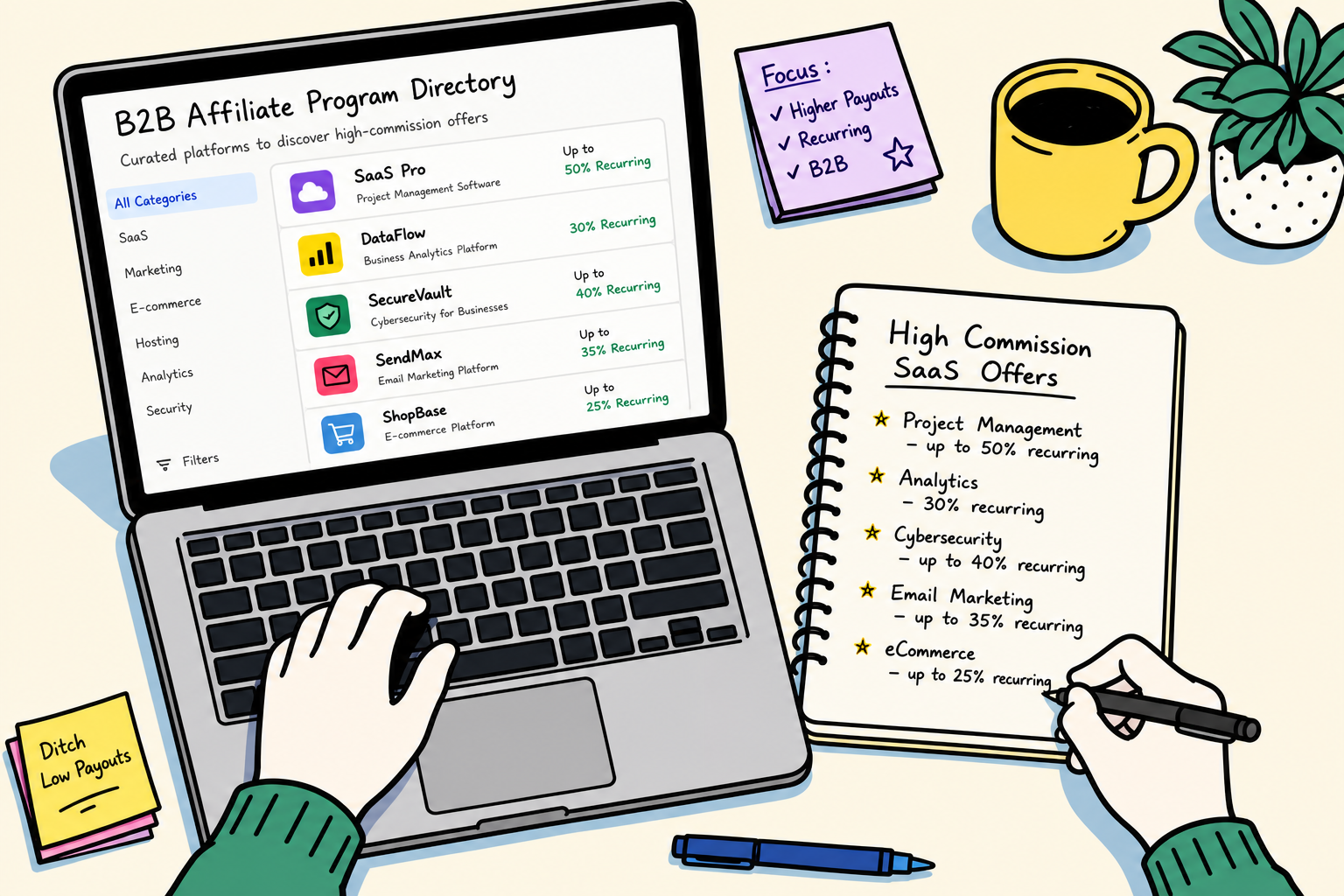
Ditch low payouts and legacy networks. Discover the best free directories and platforms to find high-commission SaaS, B2B, and digital affiliate offers.
- The Flaw in Using Legacy Networks for Discovery
- The Best Free Directories and Marketplaces for High Commissions
- How to Evaluate a High-Commission Offer (Before You Apply)
- A Mini-Case Study: The Pivot to B2B Software
- Leveraging Directories to Negotiate Better Rates
- Frequently Asked Questions About Affiliate Directories
- Moving Beyond Legacy Constraints
If you have spent any time trying to monetize a website, you have likely clicked your way through the ShareASale interface. It is a staple of the affiliate industry, but logging into the platform often feels like opening a time capsule from a decade ago. You are instantly met with a cluttered dashboard, thousands of dormant merchant accounts, and pages of physical products offering a meager 2% to 4% commission.
When you are hunting for high-commission products—specifically SaaS tools that offer 30% recurring revenue or digital products paying out hundreds of dollars per sale—you cannot afford to waste hours applying to programs just to find out their payout structure is terrible. The modern affiliate landscape has shifted. Relying on legacy networks for discovery is inefficient because the most lucrative programs are increasingly spread across private tech stacks or modern B2B platforms.
To find the offers that actually move the needle, you need specialized directories and modern marketplaces. These platforms index the programs, expose the commission structures upfront, and allow you to filter for exactly the metrics you care about.
Here is how to bypass the outdated legacy networks and use modern, free directories to source the highest-paying affiliate products available today.
The Flaw in Using Legacy Networks for Discovery
Before looking at the alternatives, it helps to understand why platforms like ShareASale, CJ Affiliate, or Rakuten often fail affiliates who are specifically looking for high-ticket or recurring offers.
These platforms are built primarily as tracking and payment networks, not discovery engines. Their primary customers are the merchants paying them network fees, not the affiliates trying to find good offers. Because of this structural bias, the search interfaces are notoriously clunky.
Worse, legacy networks suffer from an extreme lack of transparency. You often have to submit a formal application to a merchant and wait days for approval before you can see the finer details of their program, such as attribution rules, cookie lifespans, or tier structures. If a merchant has a leaky sales funnel or a history of reversing commissions, you rarely find out until you have already driven traffic.
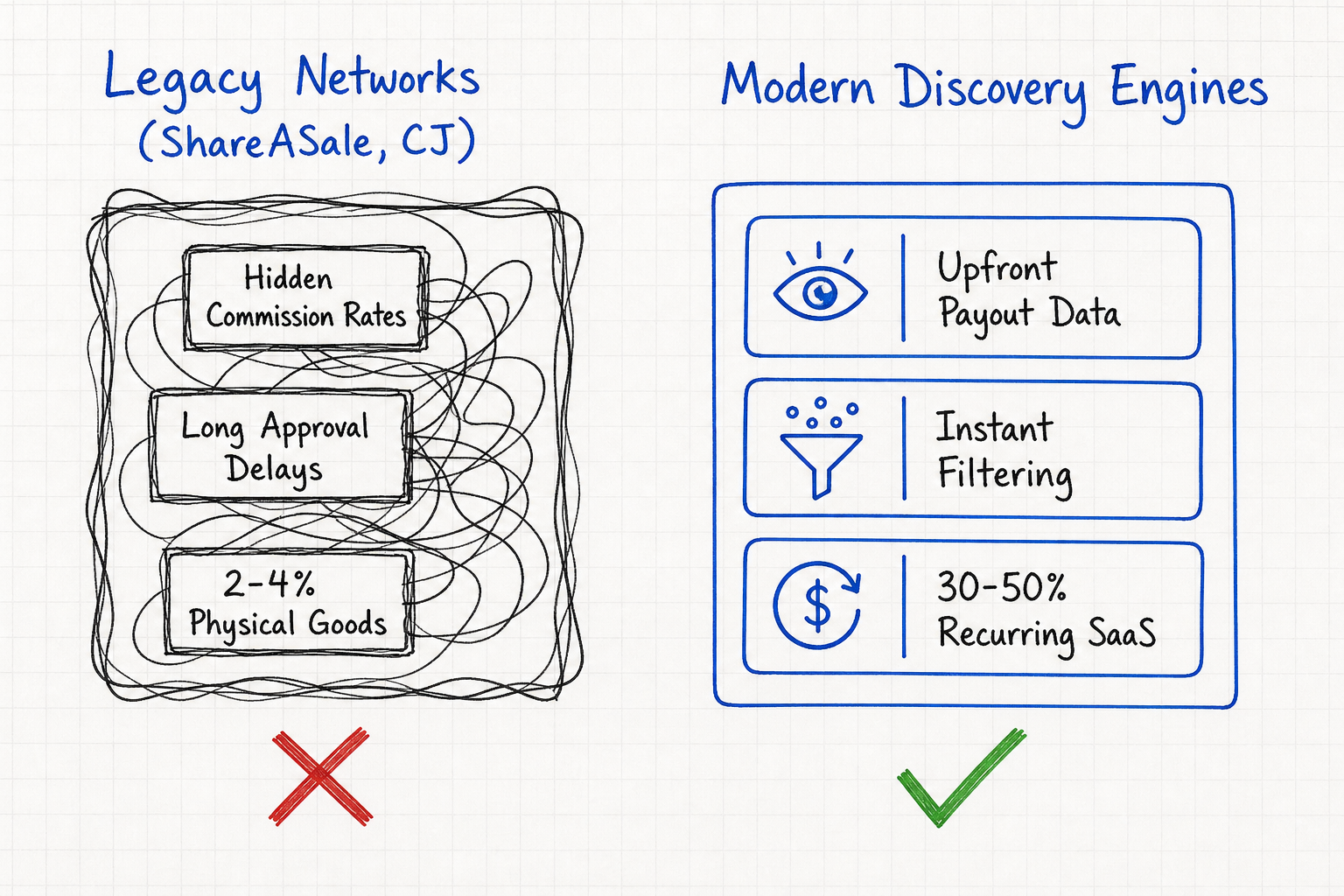 To build a sustainable income, you need discovery platforms that prioritize affiliate needs: upfront data, advanced filtering, and a heavy focus on digital goods and software where the margins are actually high enough to support massive payouts.
The Best Free Directories and Marketplaces for High Commissions
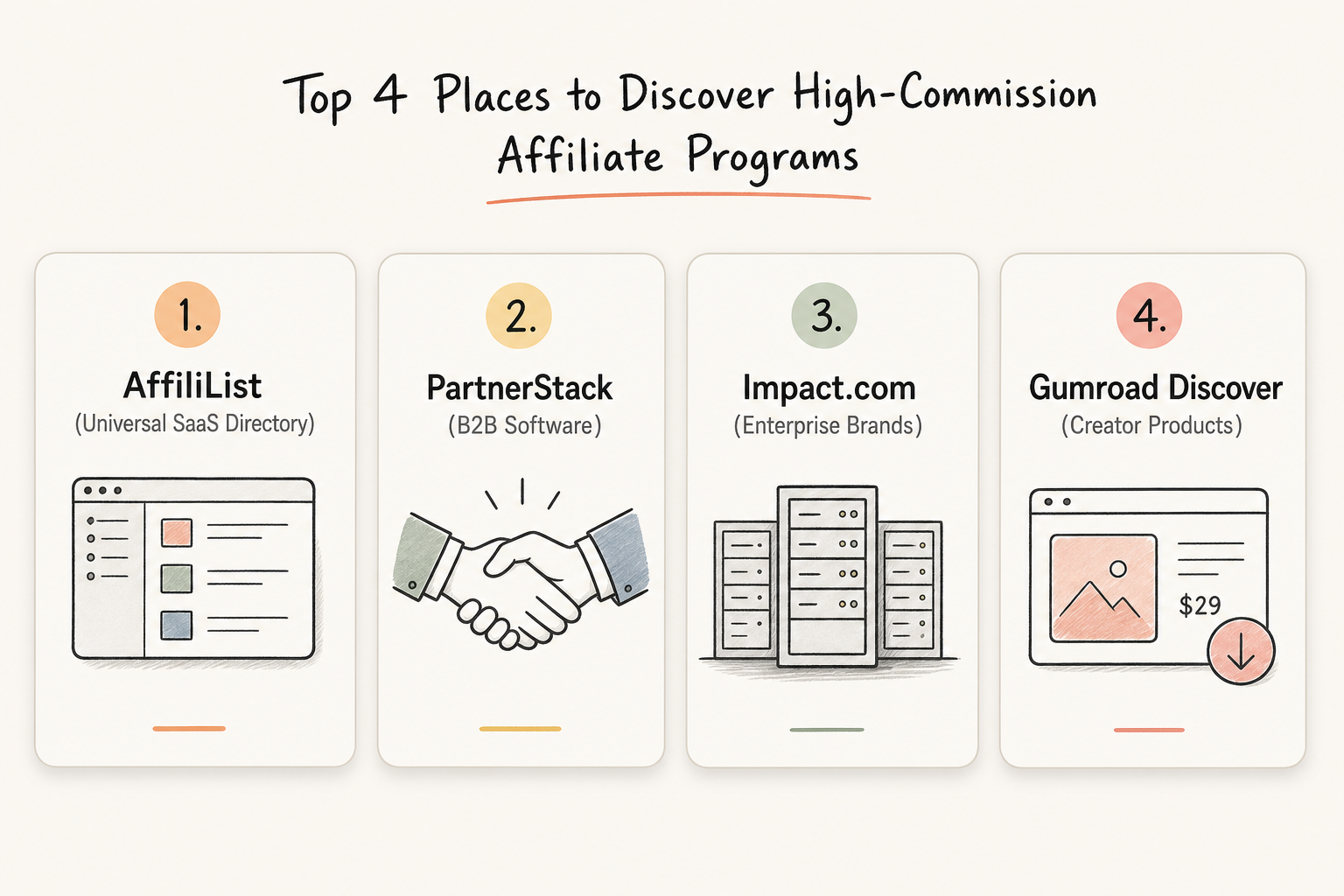
When transitioning away from low-ticket retail platforms, your focus should shift to directories that aggregate Software-as-a-Service (SaaS), B2B technology, and premium info-products. Because these digital products have near-zero marginal costs of replication, merchants can comfortably afford to pay affiliates 30%, 50%, or even 75% of the sale price.
1. AffiliList: The Modern Affiliate Discovery Engine
If you are tired of signing up for dozens of networks just to see what programs exist, AffiliList is designed specifically to solve this problem. Instead of functioning as a closed-off tracking network, AffiliList is a comprehensive directory that aggregates the best affiliate programs across the entire market, regardless of which backend network they use.
With a curated database of over 10,000 affiliate programs, AffiliList eliminates the friction of discovery. The platform is entirely free to browse and places a massive emphasis on SaaS and digital tools—the exact categories where high commissions live.
What sets AffiliList apart as a true ShareASale alternative is its commitment to transparency. You do not need to create an account, wait for approval, or jump through hoops to see the data you actually care about. The platform provides a clutter-free interface where you can instantly view:
- Exact commission percentages and flat-rate payouts.
- Whether the commission is a one-time CPA (Cost Per Action) or a recurring monthly revenue share.
- Cookie durations and payout thresholds.
- The underlying tracking network the merchant uses (so you know where to apply).
By offering an extensive tagging system and advanced filtering options for commission rates, AffiliList acts as a central hub. Niche site owners can pinpoint exact matches for their audience, whether they need HR software, crypto tools, or YouTube marketing suites. It is the most efficient starting point if you are researching 11 Best Niches for Affiliate Marketing (SaaS & Digital).
2. PartnerStack Marketplace: The B2B SaaS Goldmine
If your audience includes business owners, freelancers, or agency operators, PartnerStack is a mandatory addition to your directory list. Unlike ShareASale, which tries to be everything to everyone, PartnerStack focuses almost exclusively on B2B software and SaaS partnerships.
Because B2B software subscriptions often run into the thousands of dollars per year, the payouts here are exceptional. It is common to find programs on the PartnerStack Marketplace offering 20% to 30% recurring commissions for the lifetime of the customer.
The discovery experience on PartnerStack is highly curated. Brands that use PartnerStack (like Webflow, Monday.com, and Gorgias) are thoroughly vetted. This means you rarely encounter abandoned programs or merchants with broken tracking. The dashboard cleanly presents your clicks, sign-ups, and expected payouts, making it easy to manage multiple high-ticket software partnerships from a single login.
3. Impact.com: The Premium Brand Hub
Impact (formerly Impact Radius) operates closer to a traditional network than a standalone directory, but its internal discovery marketplace is lightyears ahead of older alternatives.
Impact was built around the concept of "partnership automation" rather than simple affiliate tracking. This subtle shift means brands on Impact often treat affiliates more like direct partners. The platform hosts massive enterprise software brands, financial services, and high-end direct-to-consumer goods.
The discovery directory within Impact is highly visual and data-rich. You can filter brands by specific payout structures, such as only showing merchants that offer payouts above a certain dollar amount or percentage. Impact also excels at cross-device tracking, ensuring you actually get credited when a user clicks your link on a phone but completes the purchase on their desktop three days later. If you are learning How to Pick a Niche for Affiliate Marketing in 5 Steps, browsing Impact's category breakdowns provides immediate validation on whether a niche is profitable.
4. Gumroad Discover: The Independent Creator Market
Not all high-commission products are enterprise software. Independent digital products—like specialized masterclasses, Notion templates, premium community access, and niche software tools—frequently offer the highest percentage commissions on the internet.
Gumroad is a storefront platform used by thousands of independent creators. What many affiliates do not realize is that Gumroad features a massive public directory called Gumroad Discover.
Because creators on Gumroad have zero overhead on digital delivery, they frequently offer 50% to 60% commissions to affiliates who can drive targeted traffic. You can browse the Discover directory by category (Design, Wealth Building, Software Development), find high-converting products, and reach out directly to the creators to request an affiliate link. This direct-to-creator approach often bypasses the corporate red tape found on major networks, allowing you to quickly secure highly lucrative deals.
5. ClickBank: The Classic High-Ticket Marketplace
ClickBank is the oldest platform on this list, but it remains highly relevant for one specific reason: information products with massive profit margins.
While the interface is slightly dated and the marketplace contains a mix of both high-quality and questionable offers, the sheer volume of high-commission products is undeniable. ClickBank specializes in direct-response marketing offers in niches like health, wealth, and relationships. It is not uncommon to find products here paying 70% to 80% commissions, often with recurring upsells built into the funnel.
The key to using ClickBank successfully as a directory is heavily utilizing their "Gravity" metric. Gravity indicates how many unique affiliates have successfully made a sale of a specific product in the last 12 weeks. High gravity means the sales page converts; low gravity means you will likely waste your traffic. If you want to dive deeper into vetting these types of offers, check out our guide on Is Affiliate Marketing Legit? (How to Spot Real Offers).
How to Evaluate a High-Commission Offer (Before You Apply)
Finding a product that claims to pay a 40% commission is only the first step. A directory might highlight a massive payout, but inexperienced marketers often make the mistake of choosing products based purely on that top-line percentage.
A 50% commission on a product with a broken sales page will always pay less than a 10% commission on a highly optimized, high-converting funnel. When you use directories like AffiliList or PartnerStack to source 11 High Paying Affiliate Programs for $500+ Commissions, you must run the offer through a strict evaluation framework.
Earnings Per Click (EPC) Over Commission Percentage
If a directory or network provides an EPC (Earnings Per Click) metric, this should be your primary deciding factor. EPC tells you exactly how much money affiliates are making on average for every 100 clicks they send to the merchant.
For example, Merchant A offers a $100 flat commission. Merchant B offers a $50 flat commission.
- Merchant A has a terrible landing page that converts at 0.5%. If you send 1,000 clicks, you make 5 sales. (5 x $100 = $500). Your EPC is $0.50.
- Merchant B has a streamlined checkout that converts at 3%. If you send 1,000 clicks, you make 30 sales. (30 x $50 = $1,500). Your EPC is $1.50.
Always favor products with high historical conversion rates over those with artificially inflated commission percentages.
The Cookie Duration Trap
When dealing with high-ticket products—such as a $2,000 online course or a $300/month enterprise software suite—buyers rarely purchase on the first click. They click your link, read the sales page, discuss it with their team, and return to buy two weeks later.
If you source a high-ticket offer that only provides a 7-day or 14-day cookie, you will lose a massive percentage of your rightful earnings. The attribution window simply expires before the buyer makes their decision.
When searching directories, immediately filter out high-ticket products with short cookie windows. You want a minimum of 30 days for mid-tier products, and 60 to 90 days for anything costing over $500. Some of the best SaaS programs offer 120-day or even lifetime cookies, ensuring that your initial referral is always credited.
Recurring Revenue vs. One-Time Payouts
One of the main reasons affiliates migrate away from ShareASale physical products to software directories is the power of recurring revenue.
| Structure | Typical Niches | Pros | Cons |
|---|---|---|---|
| One-Time CPA | Info-products, Web Hosting, E-commerce | High immediate cash flow, massive upfront payouts. | You start at $0 every month. Constant traffic generation required. |
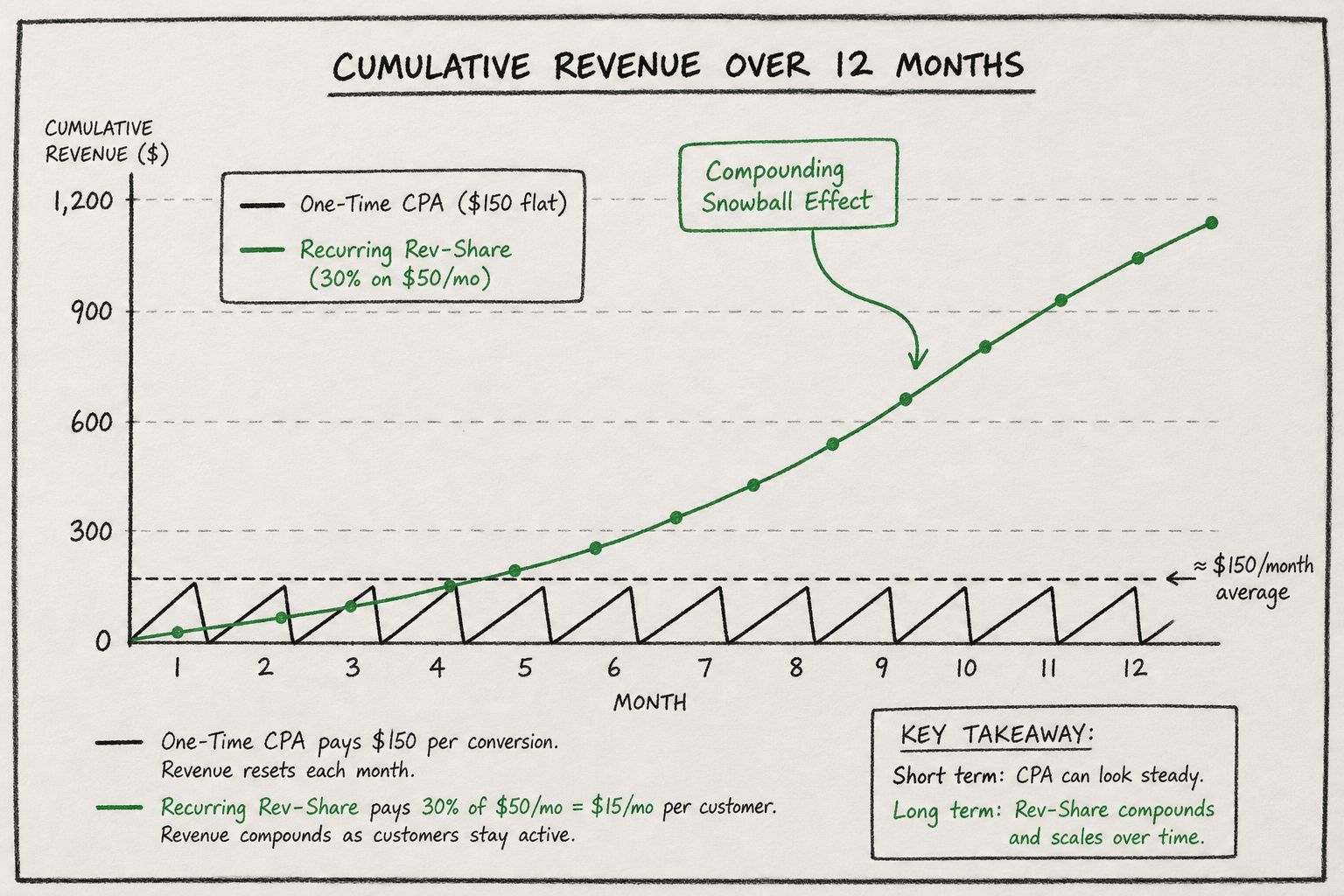
| Recurring Rev-Share | SaaS, Memberships, Subscription Boxes | Snowball effect builds passive income over time. | Initial payouts are smaller. Subject to customer churn rates. |
A one-time payout of $150 might look better on paper than a 20% recurring cut of a $50/month software. But if the average customer stays with that software for 36 months, the recurring offer actually pays out $360 over its lifetime. When using a directory like AffiliList, specifically filter for "Recurring" if your goal is long-term stability.
Leaky Funnels and Commission Theft
A "leaky funnel" occurs when a merchant provides numerous ways for a visitor to exit the sales page without your affiliate tracking staying intact.
Before committing to a product you found in a directory, click your own affiliate link and navigate the merchant's landing page. Look for these red flags:
- Prominent phone numbers encouraging the user to "Call to Buy" (unless the program offers strict call tracking).
- Live chat pop-ups where sales reps close the deal manually without appending your affiliate ID.
- Alternative payment links that route away from the tracked cart.
If a merchant intercepts the traffic you sent and closes the sale through an untracked medium, you earn nothing.
A Mini-Case Study: The Pivot to B2B Software
To illustrate the difference a specialized directory can make, consider the trajectory of a typical marketing blog.
An affiliate we will call Sarah ran a digital marketing blog receiving 20,000 visitors a month. For two years, she monetized purely through traditional legacy networks, linking to physical tech gear (cameras, microphones) and general business books. Her average commission was 4%, and despite her solid traffic, the site was only generating about $400 a month.
Sarah realized she needed to change her monetization model, not her content. She used a high-commission directory to identify three distinct SaaS tools relevant to her audience: an email marketing platform, a social media scheduler, and a project management tool. All three offered 30% recurring commissions.
She systematically went through her top 15 highest-traffic articles and replaced the low-ticket physical product links with deep links to the new software tools. She did not write new content; she simply swapped the offers.
Because she moved from one-time 4% payouts to 30% recurring payouts, her income began to stack. By month six, those same 20,000 monthly visitors were generating over $3,200 a month. The traffic remained identical, but the monetization vehicle was drastically optimized. If you want to replicate this model, reading Affiliate Marketing Side Hustle: 5 Steps to $1k/Mo (2026) breaks down the execution strategy in detail.
Leveraging Directories to Negotiate Better Rates
A closely guarded secret among successful affiliates is that the commission rates listed in directories are often just the starting point. Directories provide you with the baseline data, but once you prove you can drive volume, those numbers are entirely negotiable.
If you find a SaaS product on AffiliList offering a 20% baseline payout, you can use that information to open a dialogue with the merchant's affiliate manager.
Here is the exact approach to take once you have generated your first 10 to 15 sales:
- Identify the Manager: Most modern directories list the contact information for the program manager directly on the offer page.
- Send a Performance Update: Email them highlighting the sales you have generated and, more importantly, the quality of the leads. (e.g., "My audience consists of agency owners, so the churn rate on these 15 sign-ups will be exceptionally low.")
- Propose a Tiered Bump: Do not just ask for more money. Ask for a performance tier. "If I can scale this to 50 sales a month, can we bump the recurring commission from 20% to 30%?"
Merchants are desperate for high-quality, targeted traffic. They are almost always willing to sacrifice an extra 10% of their margin to an affiliate who consistently delivers paying customers rather than spammy coupon traffic.
Frequently Asked Questions About Affiliate Directories
Are these directories actually free to join?
Yes. Platforms like AffiliList, PartnerStack, and Impact do not charge affiliates to join or browse their databases. The business model of these platforms relies on charging the merchants a network fee or subscription fee to list their programs and utilize the tracking software. If an affiliate directory ever asks you for a membership fee or a credit card to view their offers, leave immediately.
Do I need a fully established website to get approved?
If you are applying directly to premium programs on networks like Impact or PartnerStack, merchants will manually review your application. They typically look for an established website, a dedicated YouTube channel, or a highly engaged email list. They want to see where their brand will be promoted. If you are just starting out, prioritize building a hub first. Reviewing How to Start a Profitable Affiliate Marketing Blog will give you the blueprint for creating a site that gets automatically approved by high-tier merchants.
Directories like AffiliList bypass this initial friction by letting you browse the data without applying, allowing you to build your content strategy around known, high-paying offers before you ever submit an application.
What is considered a "high commission" in 2026?
The definition depends entirely on the product category. For physical goods, anything above 10% is exceptionally high. For B2B software and SaaS, the industry standard for a strong offer is 20% to 30% recurring monthly revenue. For digital info-products (courses, templates, e-books), a high commission starts at 50% and can reach up to 75%, since there are zero costs associated with fulfilling the digital order.
Can I promote these high-commission products without an audience?
You can, but it requires a shift from organic content to paid acquisition. Many affiliates successfully promote high-ticket software using Google Ads or targeted LinkedIn campaigns. However, you must carefully read the terms of service in the directory listing. Many high-paying SaaS brands strictly prohibit affiliates from bidding on their branded keywords (e.g., bidding on the search term "Monday.com alternatives" might be allowed, but bidding on "Monday.com pricing" is often banned).
Moving Beyond Legacy Constraints
Relying solely on older networks limits your earning potential because the platform architecture hides the best data. When your goal is maximizing revenue through high-ticket and recurring offers, your discovery process needs to be as optimized as your landing pages.
Transitioning to modern directories allows you to bypass the noise of low-converting physical products. By utilizing platforms like AffiliList to quickly filter for SaaS, digital tools, and transparent payout structures, you equip yourself with the data needed to partner with brands that actually value your traffic. Focus on the earnings per click, demand a long cookie window, and secure recurring partnerships that build your baseline revenue month over month.