
Best ShareASale alternatives for software and SaaS affiliate programs
Discover the best ShareASale alternatives for SaaS and software affiliate programs. Compare PartnerStack, Impact, Rewardful, and top recurring revenue models.
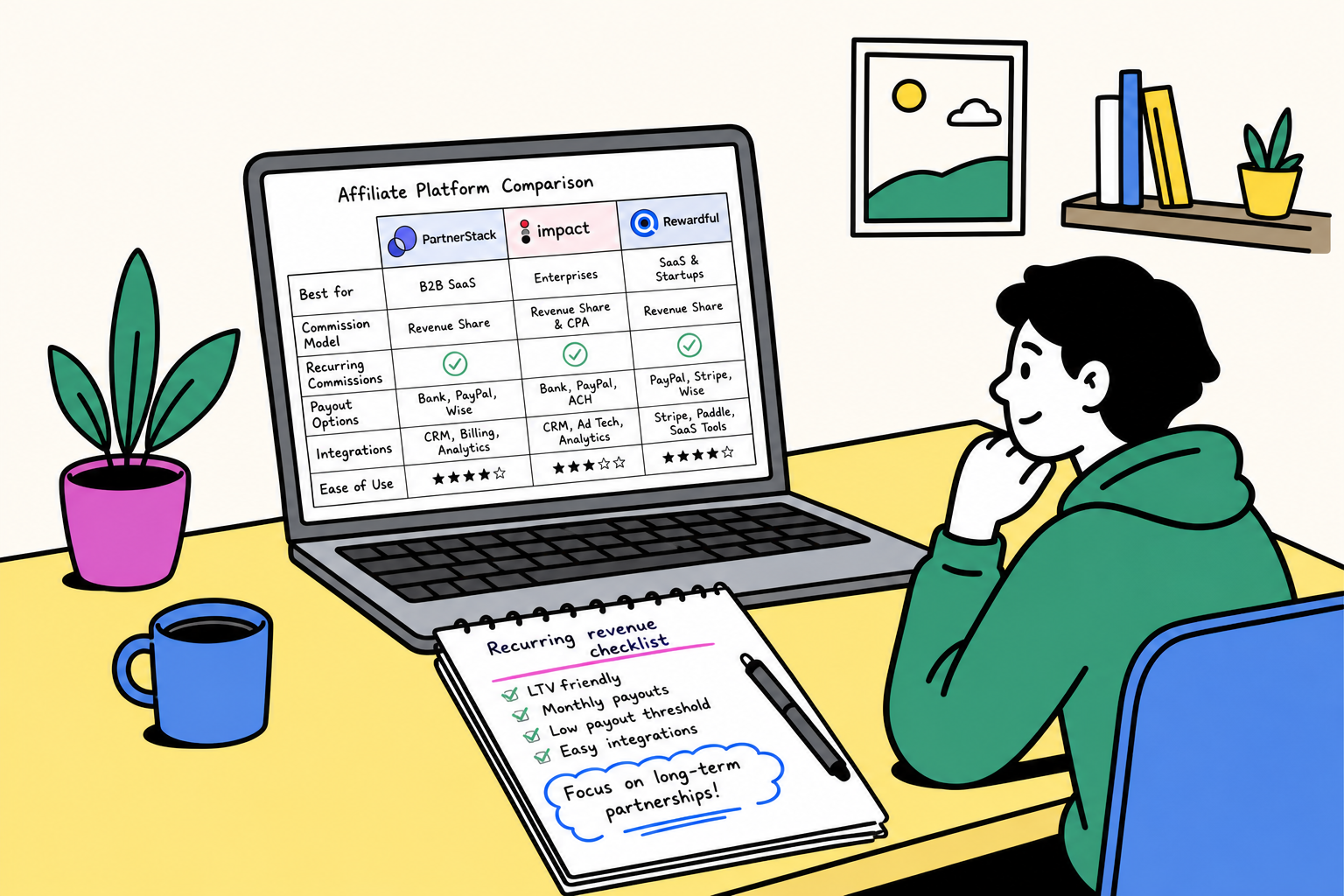
- The Paradigm Shift: Why Retail Networks Struggle with SaaS
- PartnerStack: The Undisputed Home of B2B SaaS
- Impact.com: The Enterprise Powerhouse
- Specialized and Emerging SaaS Networks
- Finding High-Paying Software Affiliates Without Blind Signups
- Commission Structures: Software vs. Retail
- How to Evaluate a Software Affiliate Program
- The Strategy: Building a Software Affiliate Funnel
- Negotiating Better Rates with SaaS Affiliate Managers
- Frequently Asked Questions (FAQ)
- Moving Beyond Legacy Directories
Log into a traditional affiliate network, and you will likely see a dashboard built two decades ago, heavily weighted toward retail goods, fashion, and physical products. While platforms like ShareASale remain incredibly popular for consumer goods and entry-level digital tools, the requirements of modern software and B2B SaaS (Software as a Service) affiliate marketing have outgrown these legacy architectures.
Selling a $20 kitchen gadget requires a simple link, a quick click, and an immediate purchase. Selling a $2,000-a-year enterprise CRM involves a completely different buyer journey. B2B buyers read comparison guides, sign up for free trials, attend webinars, consult their procurement teams, and eventually pull out a company credit card 45 days later. If your affiliate network relies on a basic 30-day cookie and single-device tracking, you are actively losing commissions on deals you initiated.
Finding high-paying software affiliate programs requires shifting your focus to platforms and discovery engines built specifically for recurring revenue, high average order values (AOV), and complex sales funnels.
The Paradigm Shift: Why Retail Networks Struggle with SaaS
ShareASale is a marketplace of thousands of affiliate products that is notably easy to sign up for, with a low minimum payout of $50. It handles everything from fashion to basic web tools under one roof. For a long time, it was the default choice for bloggers launching their first monetized site.
However, as the software industry shifted from one-time software licenses to cloud-based monthly subscriptions, the affiliate networks needed to adapt. Legacy networks often struggle with the nuances of subscription billing.
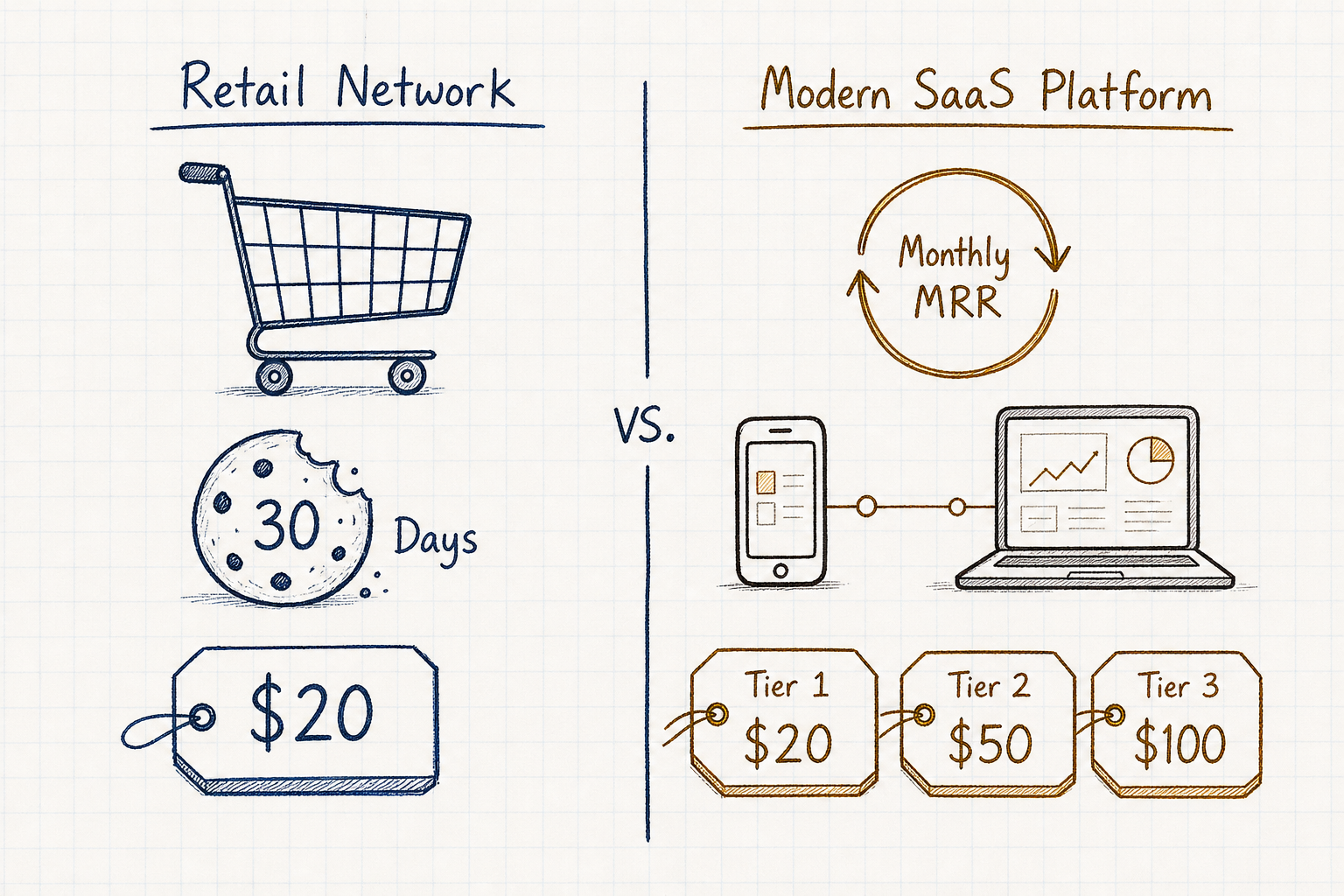 Here is where standard retail-focused networks typically fall short for software marketers:
- Weak MRR Tracking: Monthly Recurring Revenue (MRR) is the lifeblood of SaaS. If an affiliate program offers a 20% lifetime recurring commission, the network must accurately track the user’s monthly billing cycles, upgrades, downgrades, and eventual churn. Legacy networks often handle this poorly, requiring manual spreadsheet uploads from the merchant.
- Inflexible Attribution: B2B software sales rarely happen on the first click. A user might click your review on their phone, sign up for a trial on their work laptop a week later, and upgrade to paid a month after that. Networks lacking robust cross-device tracking or server-to-server API integrations miss these conversions entirely.
- Lack of Lead Generation Support: Many high-ticket software programs pay for qualified leads (CPL) rather than waiting for a finalized sale (CPA). Standard networks are heavily biased toward the immediate shopping cart checkout.
- Cluttered Interfaces: Wading through thousands of unrelated consumer brands to find a legitimate B2B software program is inefficient.
For publishers looking for the most lucrative software partnerships, the market has fractured into specialized SaaS platforms and enterprise partnership management systems.
PartnerStack: The Undisputed Home of B2B SaaS
If there is a direct answer to the question of where top-tier software companies host their affiliate programs today, it is PartnerStack. Built from the ground up entirely for software and B2B partnerships, PartnerStack operates on a fundamentally different philosophy than retail networks.
Built for Recurring Revenue
Unlike traditional networks that focus on a one-time flat fee, PartnerStack’s architecture natively integrates with major payment gateways like Stripe and Chargebee. This means when you refer a customer to a software tool, PartnerStack automatically sees every time that customer pays their monthly bill and credits your account accordingly.
High-Caliber Software Directory
PartnerStack hosts programs for some of the most recognizable names in the modern tech stack, including Webflow, Monday.com, Gorgias, and Notion. Because the network caters exclusively to software, the internal marketplace is highly relevant for tech bloggers, agencies, and B2B influencers.
The Partner Dashboard
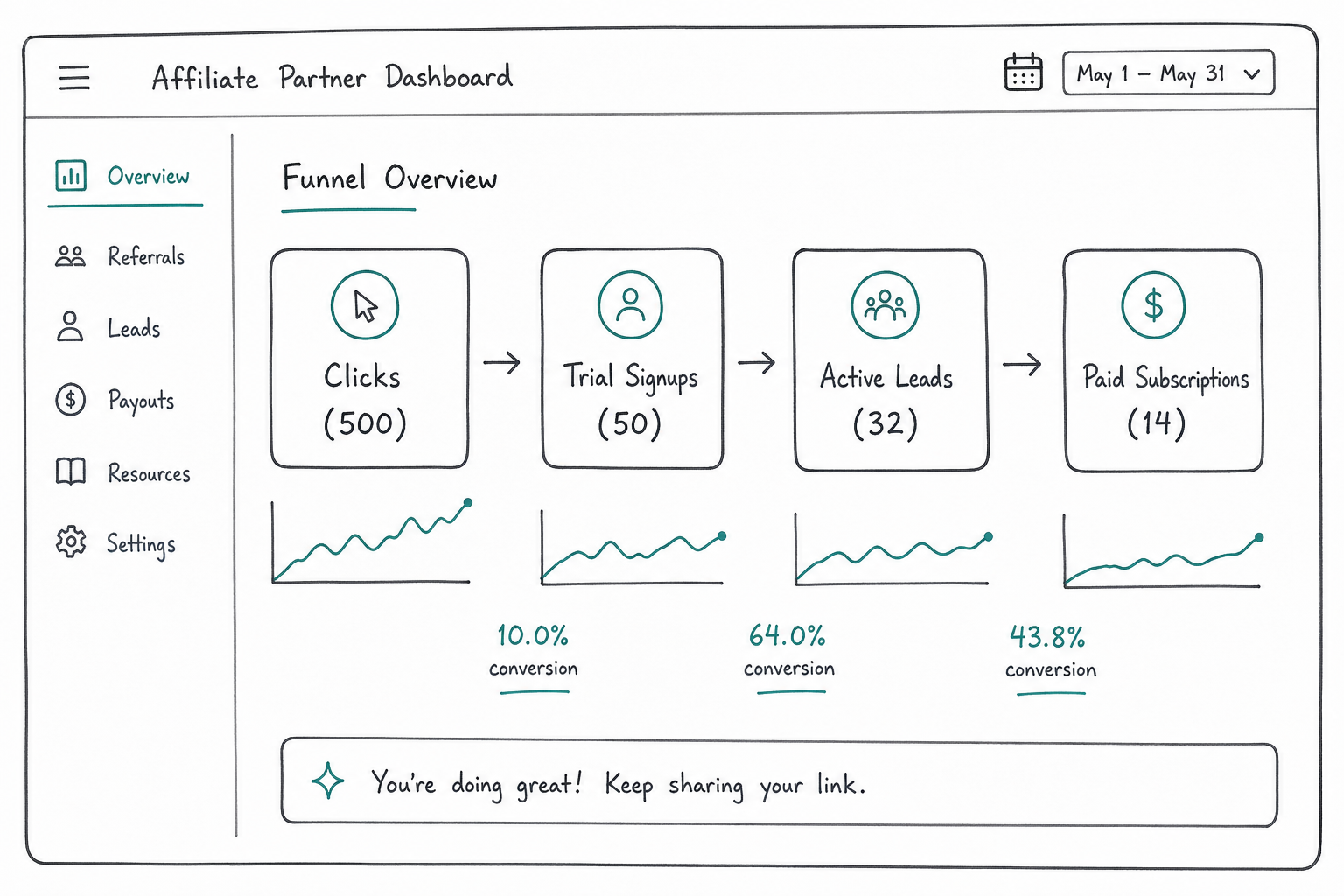
The reporting interface on PartnerStack feels like a modern SaaS product itself. It tracks clicks, signups, active trials, and paid conversions separately. This granularity allows content creators to see exactly where their traffic is stalling. If you have 500 clicks and 50 trials, but zero paid conversions, you know the software's onboarding might be the issue, or you are attracting the wrong intent.
Impact.com: The Enterprise Powerhouse
Impact.com (often referred to simply as Impact) is a massive partnership management platform that has inherited many of the web's premium tech and software brands. While it is not exclusively for software like PartnerStack, it has become the default choice for heavily funded tech startups and enterprise software giants looking for advanced tracking capabilities.
Flexible Contracting
Impact's strongest feature is its dynamic contracting engine. An affiliate manager on Impact can set highly specific rules for payouts. For example, they might pay you $10 for a free trial signup, $50 when the user upgrades to a basic tier, and $500 if the user upgrades to an enterprise tier. This flexibility attracts major software brands that have complex, multi-tiered pricing models.
Brands available on Impact include massive, high-converting tech names like Canva, Shopify, HubSpot, and Semrush. According to community data, the payouts for top-tier software can be exceptionally high. For instance, Canva has been known to offer up to 80% on initial subscriptions through their partnership channels.
Approval Requirements
Getting approved on Impact requires a slightly higher standard of professionalism than older networks. As one creator notes, even as a beginner you can get approved, if you show that you'll post genuinely. When you create an account and apply to brands, the merchants are looking for an active, authentic audience. A well-designed website or an engaged YouTube channel is generally required to pass the manual review process.
Specialized and Emerging SaaS Networks
Beyond the two major players, the software affiliate space includes several highly specialized platforms that power in-house programs. You will frequently encounter these platforms when applying directly through a software company’s "Partner with us" page.
Rewardful
Rewardful is a lightweight, incredibly popular affiliate platform built specifically for Stripe. Thousands of independent software vendors and bootstrapped SaaS founders use Rewardful because it connects to their billing system in minutes.
From an affiliate's perspective, Rewardful is straightforward. You get a dashboard showing visitors, leads, conversions, and your pending payouts. Because it ties directly to Stripe, recurring commissions are highly accurate. The downside is that Rewardful does not operate a centralized marketplace where you can browse all their merchants; you have to find the programs independently.
Tapfiliate
Tapfiliate operates similarly to Rewardful, providing white-label affiliate tracking for SaaS companies. It is widely used by mid-market software tools that want complete control over their branding rather than listing their program on a massive public network. Affiliates benefit from reliable tracking and clean reporting, though, again, discovery happens outside the platform.
FirstPromoter
FirstPromoter is another dominant force in the independent SaaS space. If you are researching an AI writing tool, an SEO tracker, or a specialized CRM, there is a high probability their affiliate program is powered by FirstPromoter. It tracks MRR efficiently and handles team-based payouts, making it a favorite among software founders.
Finding High-Paying Software Affiliates Without Blind Signups
The fragmentation of the software affiliate industry presents a distinct challenge: discovery.
Ten years ago, you could join one or two major networks, search their directories, and find almost every program available. Today, a top-tier CRM might be on PartnerStack, an email marketing tool on Impact, a specialized AI tool on FirstPromoter, and a web hosting company on an entirely custom backend.
If you spend your time applying to dozens of separate networks just to see if they have good software programs, you are wasting hours of potential content creation time. Furthermore, many networks hide the specific commission rates and payout terms until after you go through the hassle of creating an account, verifying your website, and waiting for approval.
This is exactly why dedicated directories have become highly valuable for publishers. Instead of guessing which network hosts the best tools, you can use a platform like AffiliList to bypass the clutter. AffiliList maintains a curated database of over 10,000 affiliate programs, prioritizing SaaS and digital tools.
Because AffiliList emphasizes transparency, you get open access to program details, commission percentages, and payout types without needing to sign up for a network first. You simply use the advanced filtering options to find software in your specific niche—whether that is HR software, crypto tax tools, or YouTube marketing extensions—compare the commission structures side-by-side, and then follow the direct link to the correct network or in-house platform to apply.
If you are looking for specific resources on program discovery, reviewing Where to Find New Affiliate Programs and checking out the Best free directories to find high commission products will save you weeks of manual research.
Commission Structures: Software vs. Retail
To succeed in software affiliate marketing, you must understand the financial models software companies use to acquire customers. Unlike physical goods, where the profit margin is fixed on a single sale, software has a high upfront acquisition cost but incredibly high profit margins on ongoing subscriptions.
This dynamic results in two primary types of affiliate payouts.
The Recurring Revenue Model (RevShare)
Under a recurring model, you earn a percentage of the customer's subscription fee for as long as they remain a paying customer (or for a set period, like the first 12 months).
- Standard Rates: Software recurring commissions typically range from 15% to 30%.
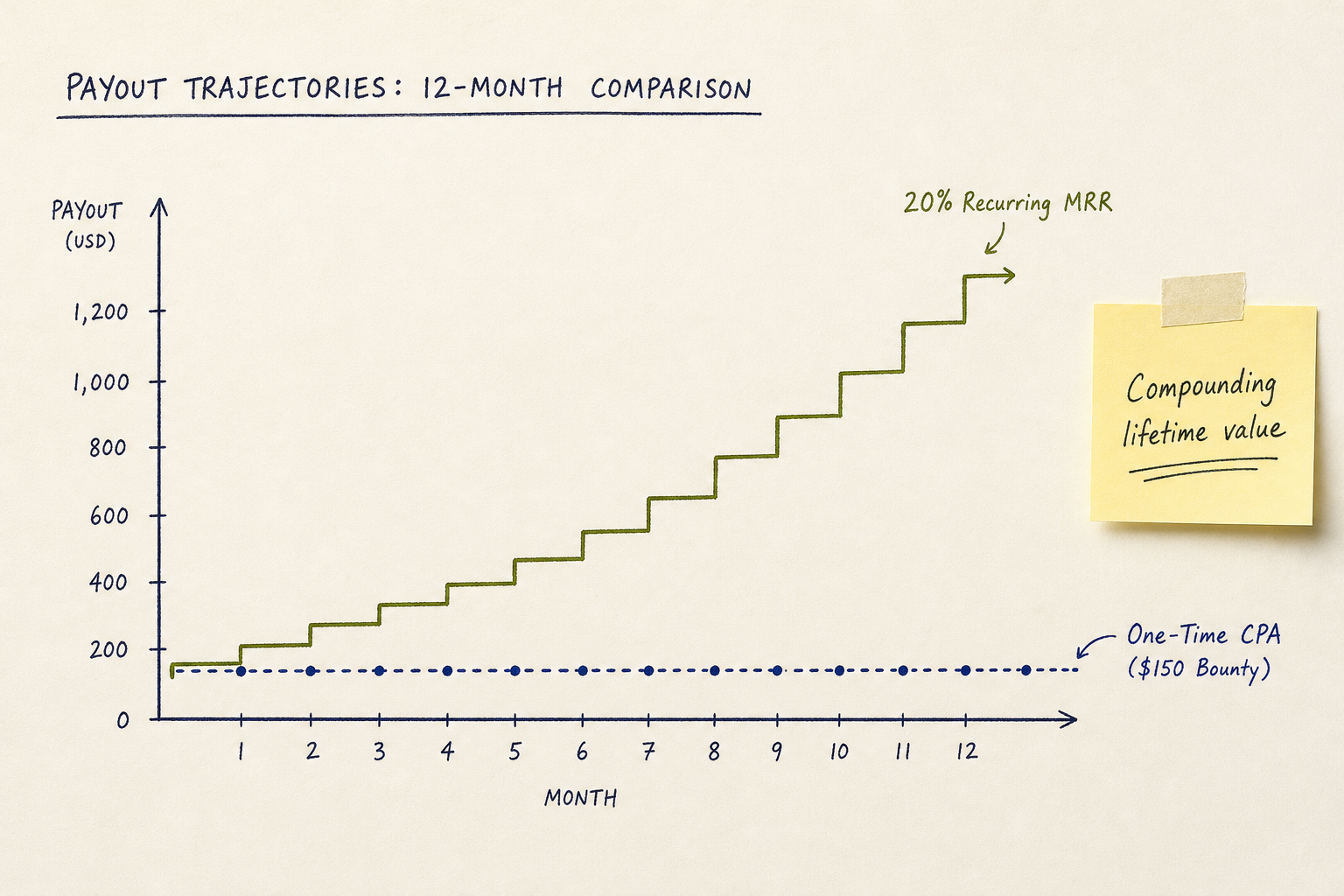
- The Advantage: This creates compound growth. If you refer 10 customers a month to a $100/month software at a 20% commission, your monthly income stacks. Month one is $200. Month two (assuming no churn and 10 new referrals) is $400. By month twelve, you are earning $2,400 a month passively.
- Examples: VPNs frequently use this model to maximize lifetime value. NordVPN / PureVPN offer up to 100% initial + 30% recurring.
The High-Ticket Flat Rate (CPA)
Instead of sharing ongoing revenue, many mature software companies prefer to pay a large upfront bounty for a new customer. They calculate the Average Lifetime Value (LTV) of a user and are willing to pay a significant portion of that upfront to acquire them.
- Standard Rates: Bounties can range from $50 for basic software to $500+ for enterprise plans.
- The Advantage: Immediate cash flow. You do not have to wait a year to realize the full value of the referral. If the customer cancels after two months, you still keep the upfront bounty.
- Examples: Web hosting and design software heavily favor this model. Bluehost offers up to $65 for each referral... while Adobe allows affiliates to earn commissions by promoting their range of software.
Hybrid Models
Some of the most aggressive and lucrative software programs combine both approaches. They might offer a $100 activation bonus plus a 10% ongoing revenue share. Finding these hybrid models is rare, but they are exceptionally profitable for niche site owners. Leveraging platforms that catalog these specific financial structures, such as reading through the Findaffiliates for High Paying Software Source Guide, can help you identify these hybrid outliers.
How to Evaluate a Software Affiliate Program
Finding a software alternative to legacy networks is only half the battle. Once you locate a program, you must evaluate its terms to ensure your traffic will actually convert and that you will be credited fairly.
When analyzing a program's terms, focus heavily on the following metrics:
1. Cookie Duration
The cookie duration dictates how long after a user clicks your link you are eligible to receive a commission if they buy. In consumer retail, a 7-day or 30-day cookie is standard because the purchase decision is fast.
For software, a 30-day cookie is often a dealbreaker. B2B software requires research, free trials, and team approvals. You should look for software programs that offer at least a 60-day cookie, with 90 days being the industry standard for high-ticket SaaS. Some programs even offer 365-day cookies.
2. Lead vs. Sale Tracking (CPL vs CPA)
Pay close attention to what triggers the payout. Does the program pay for a qualified lead (CPL - Cost Per Lead) or only when the user pays (CPA - Cost Per Acquisition)?
If a software company has a 14-day free trial, a robust network will track the initial trial signup as a "Lead" and then automatically convert it to a "Sale" when the trial ends and the card is charged. If the program only tracks the final sale, you have zero visibility into how many people are actually testing the software based on your recommendations.
3. First-Click vs. Last-Click Attribution
Most affiliate programs operate on a "Last-Click Wins" model. If a user reads your review, clicks your link, but doesn't buy immediately—and then a week later clicks a coupon code site's link and buys—the coupon site gets 100% of the commission.
When evaluating programs for high-quality content sites, look closely at their attribution rules. Some progressive SaaS programs are moving toward "First-Click Wins" or even split attribution, recognizing that content creators do the heavy lifting of educating the customer. For a deep dive into vetting these specific technical details, consult the Vetted Tech Affiliate Listings for Social Media Influencers Evaluation Checklist.
4. Availability of Marketing Assets
Software is intangible. You cannot hold it up to a camera to show its build quality. To sell software effectively, you need screenshots, demo environments, webinar recordings, and case studies.
The best SaaS affiliate programs provide a robust library of assets. They give their partners free access to sandbox accounts so you can record your own tutorials. If a software company expects you to promote their tool but refuses to grant you a free testing account, that is a massive red flag regarding how they value their partners.
If you are a publisher trying to ensure the merchants you partner with actually support their affiliates, it helps to review resources like Verified Affiliate Programs for Digital Marketers to understand what standard of support you should expect.
The Strategy: Building a Software Affiliate Funnel
Once you have migrated away from legacy platforms and sourced high-quality programs on PartnerStack, Impact, or via independent discovery, your promotional strategy must also evolve. Sticking a banner ad on your sidebar will not sell a $300/month project management tool.
Intent-Based Content
Software buyers search with high intent. They rarely browse casually. You need to target the exact moments they are ready to make a decision.
- "Alternative To" Keywords: If a dominant software in your niche is expensive or difficult to use, targeting "[Competitor] alternatives" is highly lucrative. You capture an audience already educated on the software category but dissatisfied with their current provider.
- "Vs" Comparisons: "Software A vs Software B". These readers are at the very bottom of the funnel. They have narrowed their choices down to two tools and just need a final push. If you provide a thorough, unbiased comparison and link to the one you genuinely recommend, conversion rates here are incredibly high.
- Integration Guides: Tutorials on how to connect two tools (e.g., "How to connect Shopify to HubSpot") naturally attract users who either need one of the tools or both.
The Value of the Email List
Because the software sales cycle is long, relying entirely on direct search traffic is risky. The most successful software affiliates use their content to capture email addresses first.
Instead of linking directly to a software free trial, you might offer a free downloadable template (e.g., a free CRM setup checklist). Once they are on your email list, you can send an automated sequence that educates them on the software over several weeks, embedding your affiliate links throughout the emails. This effectively neutralizes the problem of short cookie durations because you can continually put the link in front of them right up until they are ready to buy.
For independent creators looking to map out this kind of strategy alongside profitable product selection, the Tools for Side Hustlers to Find Profitable Affiliate Products Evaluation Checklist offers excellent foundational criteria.
Negotiating Better Rates with SaaS Affiliate Managers
A lesser-known fact about software affiliate programs is that the listed commission rate is almost always negotiable for high-performing publishers.
Because the profit margins on SaaS are so high, an affiliate manager has significant leeway to bump your rates if you can prove you bring in quality traffic. If the standard commission is 20% recurring, you can often negotiate this up to 30% or even request a hybrid model (e.g., a $100 flat fee plus 20% recurring) once you hit a specific volume threshold.
How to approach the negotiation:
- Prove Your Value: Do not ask for a rate bump before you have sent a single sale. Send 5 to 10 high-quality, converting leads first to prove your traffic does not churn.
- Focus on LTV: Software companies care about Lifetime Value. If you can show that the customers you refer stay subscribed for an average of 18 months, whereas their average customer only stays for 12 months, you have massive leverage.
- Offer Placements: Instead of just asking for money, offer a trade. Ask for a higher commission tier in exchange for putting their software in the #1 spot on your highest-trafficked "Best [Category] Software" listicle.
Frequently Asked Questions (FAQ)
What is the best ShareASale alternative for B2B SaaS?
PartnerStack is widely considered the premier alternative for B2B SaaS. It is custom-built to handle monthly recurring revenue, team tracking, and complex sales funnels for digital products, featuring brands like Webflow and Notion.
Are alternatives to FindAffiliates for high-paying software reliable?
Yes. As the industry matures, relying on single outdated databases is risky. Using transparent, modern directories like AffiliList or specialized network platforms ensures you are getting accurate, up-to-date commission data on high-paying software without navigating cluttered, legacy interfaces. If you are comparing independent discovery platforms, reading about Databases Similar to Apdb for Affiliate Marketing Evaluation Checklist can help clarify the differences.
Can beginners get approved on enterprise networks like Impact?
Yes, beginners can secure approval on Impact, provided they have a professional presentation. Affiliate managers are looking for genuine content creation, not necessarily millions of visitors. A clean website with high-quality articles or a focused YouTube channel is often enough to prove you are a legitimate partner.
Why do some software programs prefer in-house tracking over big networks?
Large networks charge the merchant significant fees (often 20% to 30% on top of whatever they pay the affiliate). For bootstrapped SaaS companies, this network fee is too expensive. Instead, they use white-label software like Rewardful or FirstPromoter to run the program themselves, keeping costs down and maintaining direct relationships with their partners.
Moving Beyond Legacy Directories
Transitioning from retail-focused networks to specialized software platforms requires an adjustment in how you evaluate partnerships, track conversions, and structure your content. The compensation, however, scales far beyond what physical product commissions can offer.
By prioritizing networks that understand recurring revenue, cross-device attribution, and long sales cycles, you position your content to capture the true lifetime value of the leads you generate. Use centralized, transparent discovery tools to bypass the friction of outdated directories, vet the technical terms of the programs you find, and focus your energy on building high-intent content that actually converts.