
Shareasale Alternatives for Search for Verified Affiliate Opportunities
Tired of gated legacy networks? Discover the top ShareASale alternatives, open affiliate directories, and direct search strategies to find verified offers.
- The Shift Away From Legacy Networks
- Method 1: Using Modern Affiliate Directories (The Transparent Approach)
- Method 2: Exploring Alternative Third-Party Networks
- Method 3: Direct Brand Searches
- How to Verify an Affiliate Opportunity Before Promoting It
- Matching Your Audience to the Right Program
- Step-by-Step Scenario: Finding a High-Paying Offer in HR Tech
- Building a Reliable Affiliate Portfolio (Diversification)
- Alternative Career Paths in Affiliate Marketing
- Frequently Asked Questions
- Final Steps for Securing Verified Offers
If you have spent any time trying to monetize a website, you know the traditional drill: sign up for a legacy affiliate network, wait days for account approval, navigate a dashboard that looks like it was built in 2004, and apply to individual merchants who may or may not ever respond to your request. For years, platforms like ShareASale were the default starting point for digital entrepreneurs. But as the creator economy has matured, the friction associated with these legacy platforms has pushed marketers to search for better, faster ways to find verified partnerships.
Finding the right affiliate program is no longer just about gaining access to a tracking link. It is about transparency. You need to know the commission structure, the cookie duration, the payout terms, and the conversion rates before you invest hours into creating content. Hiding these crucial details behind a gated sign-up wall is an outdated model.
Whether you are scaling an affiliate marketing side hustle or managing a portfolio of authority sites, relying solely on one traditional network limits your earning potential. To search for verified affiliate opportunities safely and efficiently, you need to diversify your approach, exploring modern directories, alternative third-party networks, and direct brand partnerships.
Here is exactly how to bypass the clutter, evaluate the alternatives, and secure high-converting offers in 2026.
The Shift Away From Legacy Networks
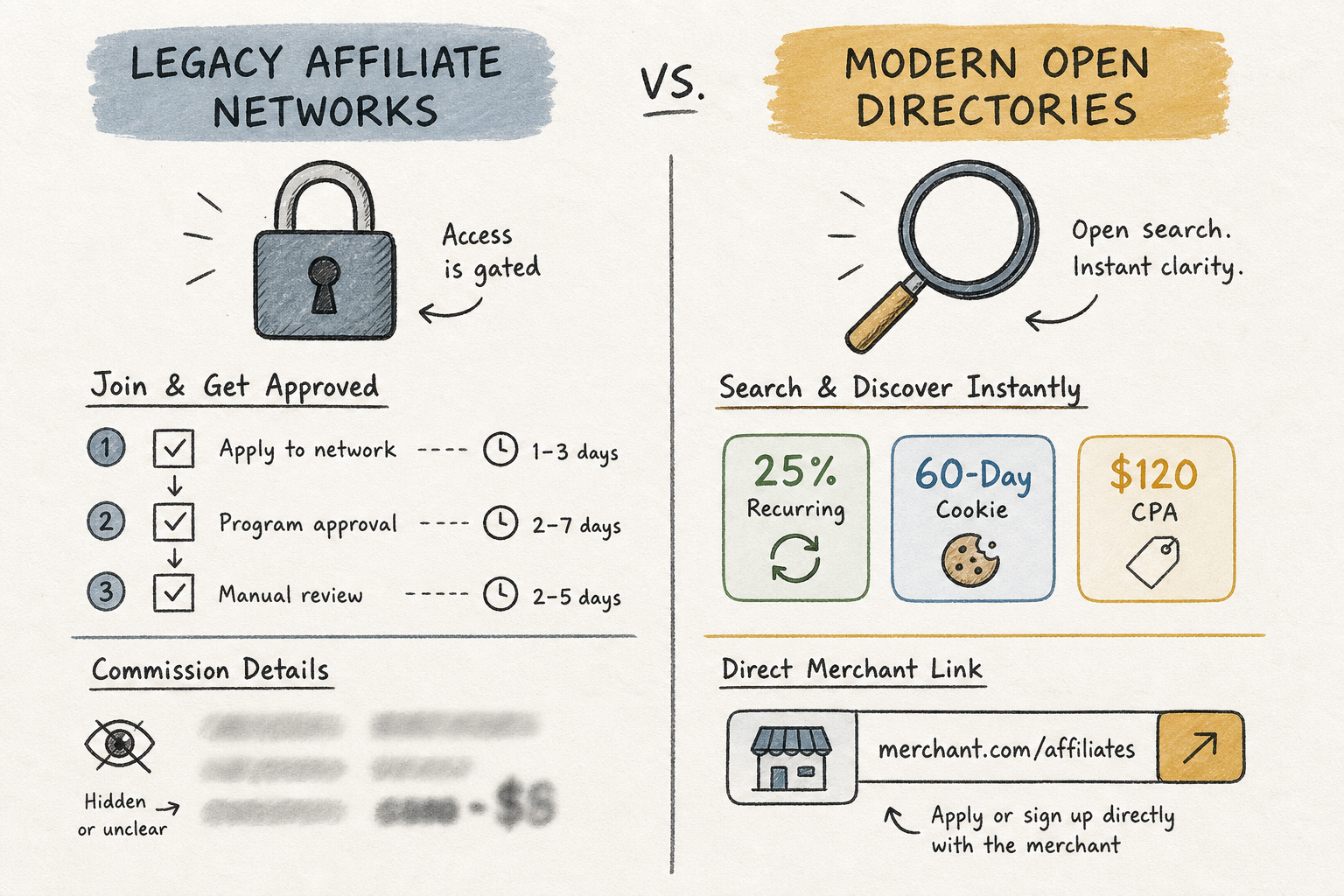
For decades, third-party affiliate networks acted as necessary gatekeepers. Brands did not have the internal infrastructure to track clicks, issue payouts, or manage tax forms for thousands of individual partners. Networks solved this problem by aggregating merchants and affiliates under one roof.
However, the landscape has changed. The rise of white-label partner software (like PartnerStack, Rewardful, and Post Affiliate Pro) means that brands no longer need legacy networks to run robust affiliate programs. This shift has exposed several ongoing pain points with traditional platforms:
- Data Gatekeeping: Many traditional networks force you to create an account, verify your website, and wait for approval before you can even see which brands are on the platform, let alone what they pay.
- The Double-Approval Process: Being approved for the network does not mean you can promote the products. You still have to apply to individual merchants, a process that can take weeks and often results in unexplained rejections.
- Cluttered Interfaces: Navigating thousands of dead, paused, or low-converting offers takes hours of manual filtering.
- Payout Minimums and Delays: Networks often aggregate your earnings but hold them until you hit a specific threshold, sometimes implementing a net-30 or net-60 delay on top of that.
This does not mean legacy networks are useless. As noted in industry roundups, platforms like ShareASale still feature thousands of trusted merchants and use robust screening tools to prevent fraudulent activity and protect affiliates. But they should no longer be your only method for finding offers.
Method 1: Using Modern Affiliate Directories (The Transparent Approach)
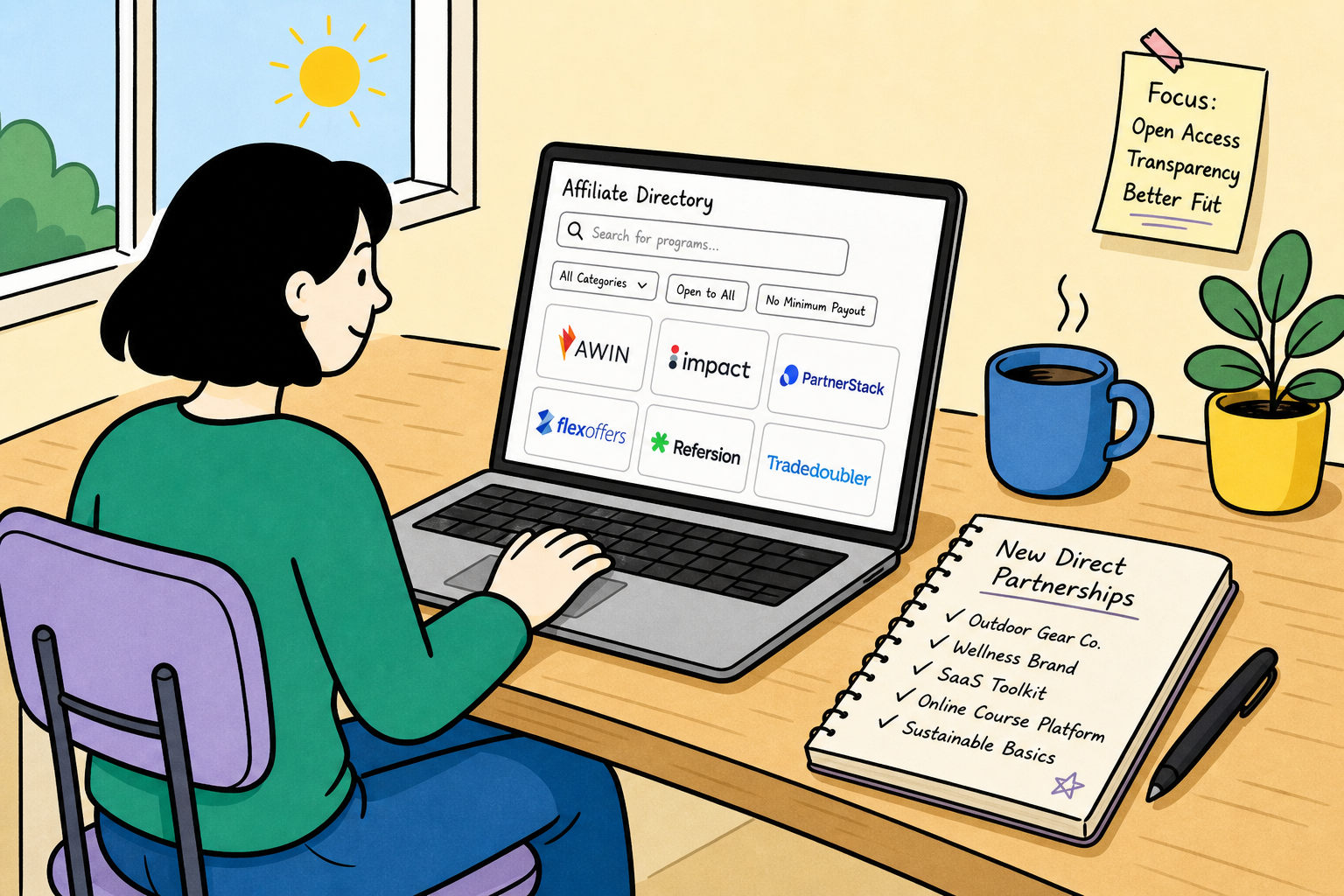
The most efficient alternative to a gated network is a dedicated, open-access affiliate directory. If you want to compare different opportunities based on niche, commission rates, and payout structures without jumping through hoops, modern search directories are the answer.
This is exactly why AffiliList was built. Instead of acting as a middleman that holds your commissions, AffiliList serves as a comprehensive, streamlined directory of the best affiliate programs available on the market.
Why Directories Outperform Blind Searches
When you use a curated directory, you bypass the outdated lists scattered across the web. Here is how a dedicated directory streamlines the search for verified opportunities:
- Open Access to Program Details: Unlike traditional networks that require extensive sign-ups just to view terms, a modern directory offers immediate transparency. You can instantly view commission percentages, flat rates, cookie durations, and payout methods.
- Advanced Filtering: You can filter a database of over 10,000 programs by specific parameters. If you only want to see SaaS products that pay recurring lifetime commissions via PayPal, you can filter for exactly that.
- Niche Specificity: Broad networks often push retail goods with low margins. Curated directories allow you to drill down into highly specific B2B and B2C niches—from HR software and YouTube marketing tools to finance and crypto.
- Bypassing the Middleman: Directories often point you directly to the brand’s in-house program (hosted on modern SaaS tracking tools), allowing you to form a direct relationship with the merchant rather than being just another ID number in a massive network.
If your focus is on digital tools, you already know that software pays better than physical retail. Finding these offers is easier when you search platforms built explicitly to highlight the best niches for affiliate marketing (SaaS & digital).
Method 2: Exploring Alternative Third-Party Networks
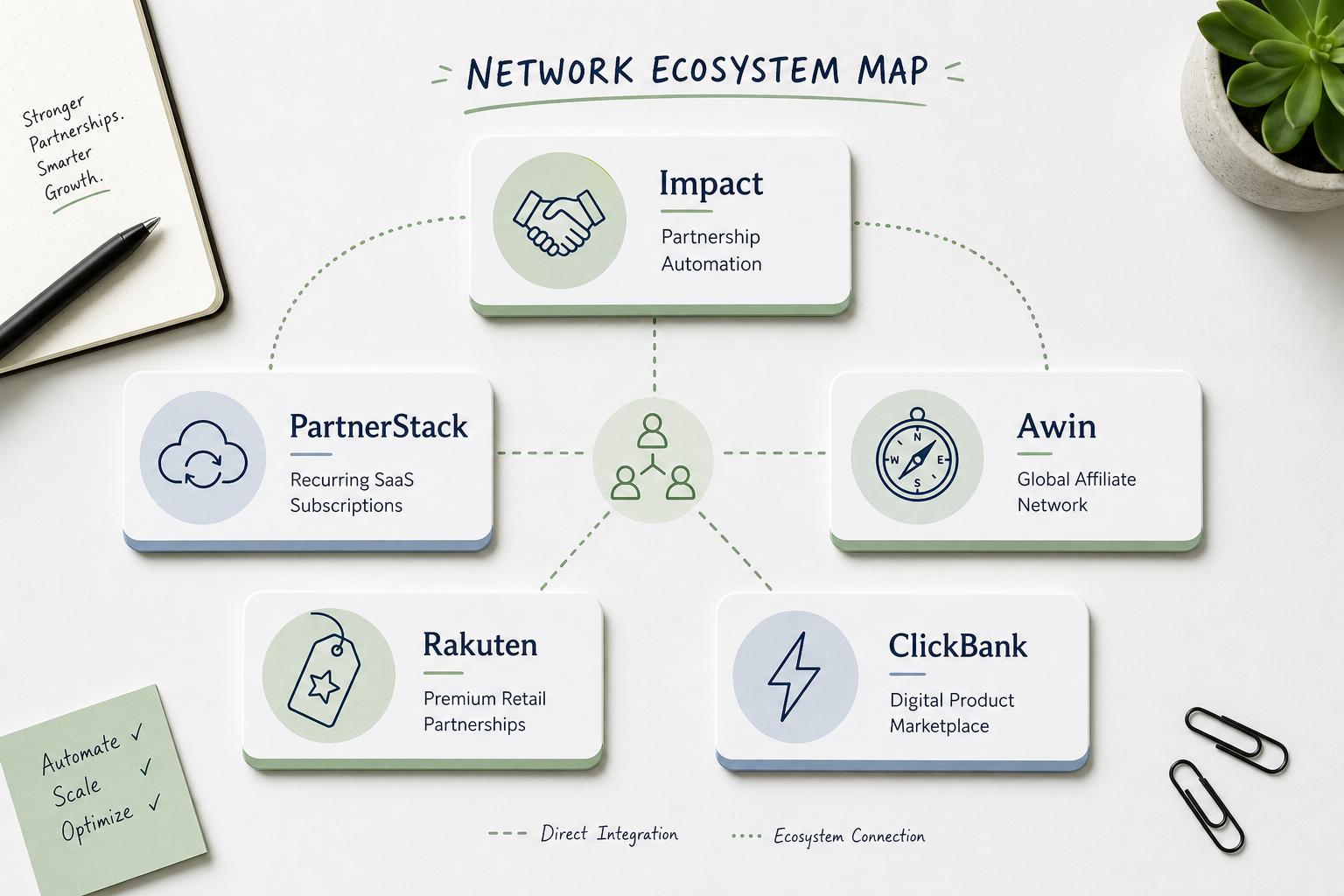
If you still prefer the aggregated approach where one platform handles all your tax documents and payments across multiple brands, there are several robust alternatives to ShareASale. To search for verified affiliate opportunities safely, it is wise to rely on established third-party networks, as they rigorously vet both merchants and products, protecting you from scams.
Here are the top-tier networks you should consider adding to your portfolio.
Awin
Awin is a massive global platform that carefully screens both affiliates and advertisers before accepting them. If you are targeting an international audience or promoting finance, telecommunications, or travel, Awin is a powerhouse.
- The Advantage: Their advertiser directory is incredibly detailed, showing you the average earnings per click (EPC) and validation periods for merchants.
- The Trade-off: Awin historically charges a small, refundable deposit (usually around $5) to verify your identity during sign-up, which can deter absolute beginners.
Rakuten Advertising
Rakuten is a legacy player but has consistently maintained a reputation for partnering with premium, household-name brands. If you are in the fashion, luxury, or high-end consumer goods space, this is a necessary network.
- The Advantage: Rakuten Advertising connects you with major global brands, ensuring secure tracking and payout solutions.
- The Trade-off: Their interface is notoriously complex, and premium brands on Rakuten tend to have strict approval requirements, often requiring significant, established traffic.
ClickBank
ClickBank is one of the largest and easiest networks to sign up for, focusing heavily on digital products and info-products. They vet vendors before they are listed to ensure baseline quality, though the ecosystem is very different from B2B SaaS.
- The Advantage: Immediate access. You do not need to wait for merchant approval for most offers; you simply generate a HopLink and start promoting. Commission rates are famously high (often 50% to 75%).
- The Trade-off: The platform has a high volume of low-quality, aggressive direct-response offers. You must carefully filter by "Gravity Score" (a metric showing how many affiliates are successfully selling the product) to find the gems.
Impact (Formerly Impact Radius)
Impact represents the modern evolution of the affiliate network. It operates more like a partnership automation platform. Many major SaaS companies, financial tools, and direct-to-consumer brands have migrated from legacy networks to Impact over the last five years.
- The Advantage: The user interface is clean, modern, and highly intuitive. Impact allows for dynamic commission structures (e.g., paying you more for a new customer versus a returning customer) and makes it very easy to communicate directly with brand managers.
- The Trade-off: Approval is strictly at the merchant's discretion, and brands on Impact often routinely audit their partners, removing those who do not drive active sales.
PartnerStack
If you are operating in the B2B SaaS space—perhaps running a blog about project management software or email marketing—PartnerStack is practically mandatory. It was built from the ground up to support software partnerships.
- The Advantage: Unmatched focus on recurring revenue programs. It handles the complexities of SaaS billing (upgrades, downgrades, churn) flawlessly.
- The Trade-off: It is highly specialized. If your site focuses on physical goods or lifestyle products, PartnerStack will not have what you need.
Method 3: Direct Brand Searches
Sometimes, the best affiliate programs are not listed on any public network. Brands with highly lucrative, private programs often manage them in-house using tools like Post Affiliate Pro or FirstPromoter.
According to seasoned marketers, the easiest way to match a product you already use with an affiliate program is simply to search for it directly.
How to Execute Advanced Direct Searches
When looking for specific brands, a straightforward Google search works best, but you can refine this process to uncover hidden opportunities.
1. The Standard Search
Simply Google [Company Name] affiliate program or [Company Name] partner program.
2. Footer Hunting If you are already on a brand's website—perhaps evaluating a tool for your own business—scroll directly to the footer. Companies rarely put their partner links in the main navigation. Look for specific terminology:
- Affiliates
- Partner Program
- Referral Program
- Ambassador
- Become a Partner
3. Advanced Search Operators If you know your niche but don't have a specific brand in mind, use Google search operators to find in-house programs.
"your niche" + "affiliate program"inurl:affiliate "your niche"site:firstpromoter.com "your niche"(This searches for brands using FirstPromoter software, heavily favored by modern SaaS companies).
The Cold Outreach Strategy for Unlisted Programs
What happens if a tool you love does not have a public affiliate program? You pitch them.
Many B2B software companies and high-ticket service providers have the capability to track referrals but do not advertise an open program because they want to avoid spammy affiliates. Reaching out directly can secure you an exclusive partnership, often with higher custom rates than public programs.
When executing cold outreach, do not ask for a handout. Present a business case.
The Outreach Framework:
- Subject: Partnership inquiry / referring clients to [Brand]
- Context: State that you use their product or have an audience that desperately needs it.
- Proof: Provide one sentence proving you have traffic or a dedicated audience (e.g., "I run a newsletter with 5,000 HR professionals").
- The Ask: Ask if they have a private referral or ambassador program.
This approach is highly effective for discovering high paying affiliate programs that competitors don't even know exist.
How to Verify an Affiliate Opportunity Before Promoting It
Finding a program is only step one. Validating it ensures you actually get paid for your hard work. The internet is littered with fly-by-night programs that happily accept free traffic but vanish when it is time to issue a payout.
If you want to know is affiliate marketing legit, the answer lies entirely in your vetting process. You must scrutinize the terms and the merchant's history.
Essential Metrics to Analyze
When looking at a directory listing or a network dashboard, do not just look at the commission percentage. A 50% commission on a product that nobody buys yields zero dollars. You need to evaluate the entire package.
1. Earnings Per Click (EPC) EPC is the most critical metric in affiliate marketing. It tells you the average amount of money an affiliate earns for every 100 clicks they send to the merchant. (Note: Networks calculate EPC differently; some show earnings per 100 clicks, while others show it per 1 click).
- Low EPC: The landing page converts poorly, the product is overpriced, or the tracking is broken.
- High EPC: The brand knows how to close the traffic you send them.
2. Cookie Duration The cookie duration determines how long after a click you are eligible to receive a commission if the user buys.
- A 24-hour cookie (common with major retail giants) requires an impulse buy. You must send highly transactional, ready-to-buy traffic.
- A 30, 60, or 90-day cookie (common in SaaS and digital products) allows the user to click your link, read reviews, think about it, and buy weeks later—while still crediting you.
3. Commission Structure (Recurring vs. Flat)
- CPA (Cost Per Action) / Flat Fee: You get paid a set amount (e.g., $50) when someone buys or signs up.
- Percentage: You get a cut of the cart value.
- Recurring: (The gold standard). You get a percentage of the customer's subscription fee every single month for as long as they remain a customer.
4. The Reversal Rate Some networks display a merchant's reversal rate. This is the percentage of commissions that the merchant cancels after the sale. High reversal rates (anything above 10%) are a massive red flag. It means customers are returning the product at alarming rates, or worse, the merchant is fraudulently denying legitimate commissions to save money.
Red Flags to Watch Out For
- Pay-to-Play: If a program requires you to buy their $997 course before you are "allowed" to promote it, run. Legitimate affiliate programs are free to join.
- Excessive Minimum Payouts: If a product pays a $10 commission, but the minimum payout threshold is $500, the merchant is banking on you never reaching the threshold so they can keep your money. Look for reasonable thresholds ($50 is standard).
- Leaky Funnels: Click the affiliate link yourself and look at the merchant's landing page. Are there pop-ups offering the user a discount if they leave the page? Are there external links leading away from the checkout? A "leaky funnel" means your traffic will get distracted, and you will lose the commission.

Matching Your Audience to the Right Program
You can find the highest-paying, most transparent, beautifully verified affiliate program in the world, but if it does not align with your audience's exact intent, it will fail. Conversion relies heavily on context.
Intent Matching
The mistake most beginners make is forcing a high-paying offer into content where it doesn't belong. If you write a blog post about "how to organize your desk," inserting an affiliate link for a $5,000 enterprise B2B software tool makes no sense, even if the commission is incredible.
Your job is to solve the reader's immediate problem with a tool or product. If you are running an affiliate marketing blog, you must categorize your content by intent:
- Informational Intent: The user is asking "how to." (Harder to convert directly, better for building email lists).
- Investigational Intent: The user is asking "X vs Y." (High conversion rate. This is where you place comparison links).
- Transactional Intent: The user is looking for "X discount code" or "buy X." (Highest conversion rate).
Selecting the Right Niche
If you are struggling to find programs, you might be in the wrong niche. Highly monetizable niches have a desperate audience, high customer lifetime value, and plenty of digital tools to solve problems.
If you are looking to pivot, explore some of the most profitable affiliate marketing niches to target. Finance, health tech, B2B SaaS, and digital marketing tools consistently offer the best verified programs because the margins on software and digital goods allow for generous partner payouts.
For a deeper dive into establishing your focus, review how to pick a niche for affiliate marketing in 5 steps.
Step-by-Step Scenario: Finding a High-Paying Offer in HR Tech
To illustrate how to search for verified affiliate opportunities outside of standard legacy networks, let’s walk through a practical scenario.
Imagine you run a management and leadership blog. You want to monetize an article titled "Best Employee Onboarding Software for Remote Teams."
Step 1: Skip the Broad Retail Networks You know that major retail networks like ShareASale or CJ Affiliate might have a few basic office supplies, but you want high-ticket B2B software. You need a platform that aggregates SaaS programs, so you head to a directory like AffiliList.
Step 2: Filter for the Specifics Using the directory, you filter the category to "HR & Recruiting." You set the commission type to "Recurring."
Step 3: Evaluate the Contenders The directory shows you three verified options:
- Software A: 15% recurring commission, 30-day cookie.
- Software B: 25% recurring commission, 90-day cookie.
- Software C: $100 flat bounty per sign-up, 60-day cookie.
Step 4: Analyze the Product Quality Software B looks like the best deal on paper. However, before applying, you open a new tab and search for reviews of Software B. If it has terrible customer support and high churn (users cancel after one month), that 25% recurring commission is worthless because no one stays subscribed.
You find that Software A, despite the lower percentage, is the industry standard and has a 95% customer retention rate. A 15% cut of a user who stays for three years is vastly superior to a 25% cut of a user who cancels in two weeks.
Step 5: Apply with Context Because the directory provides a direct link to Software A's in-house program, you bypass the middleman. When you fill out the application, you do not just drop your homepage URL. You provide the exact link to your "Best Employee Onboarding Software" draft, proving to the affiliate manager that you have immediate, relevant placement ready for their brand. You are approved within 24 hours.
Building a Reliable Affiliate Portfolio (Diversification)
Relying on a single affiliate network—or even a single merchant—is a critical point of failure for your digital business. Affiliate programs change their terms, reduce commission rates, or shut down entirely all the time. Amazon Associates is famous for slashing commission categories overnight, wiping out millions of dollars in affiliate revenue for niche site owners.
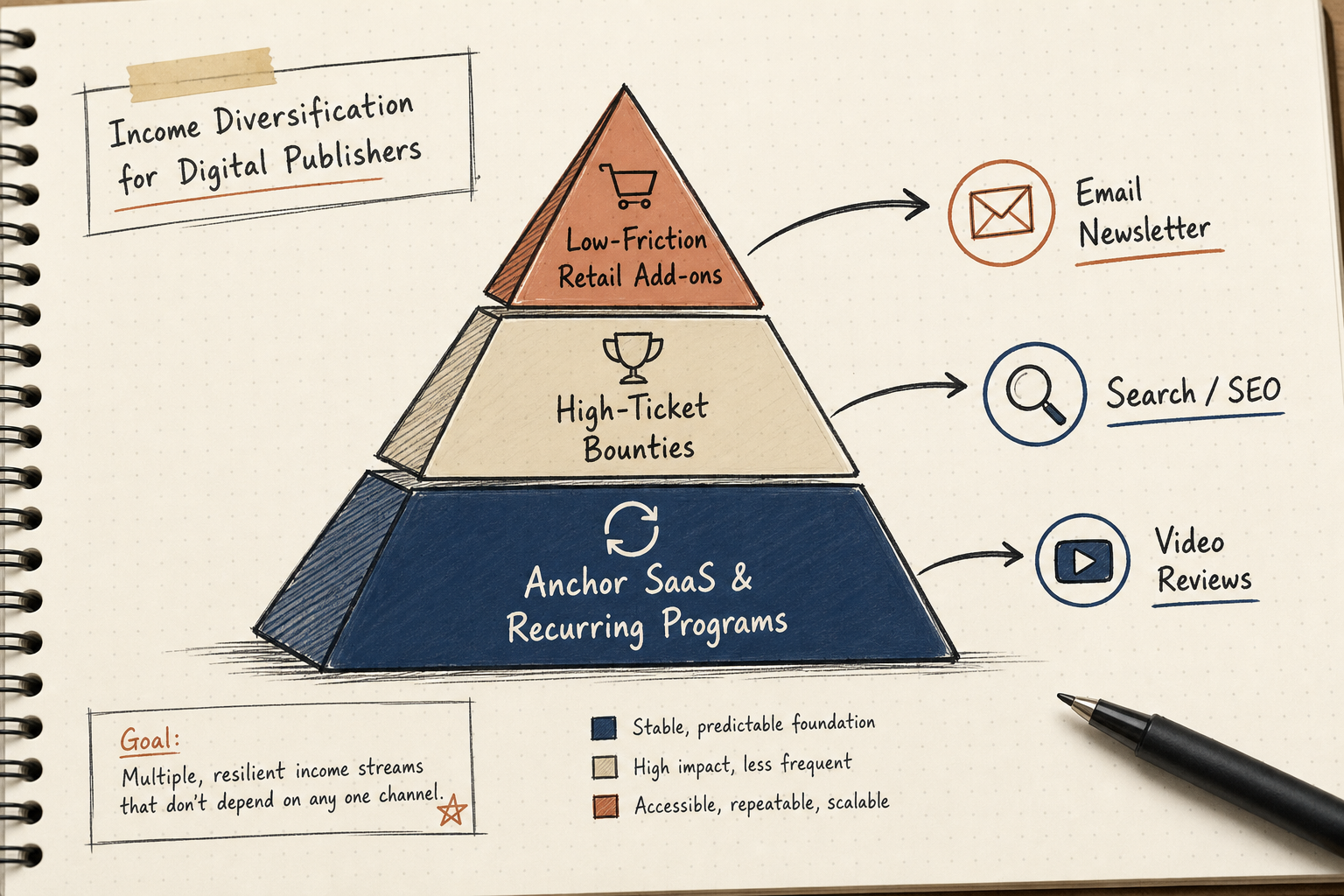
To protect your income, you must build a diversified portfolio of verified opportunities.
The Mix-and-Match Strategy
A robust affiliate site should not rely on one type of offer. Aim for a mix of the following:
- Anchor Products (SaaS/Recurring): These are the digital tools your audience must use every month to operate. For a cooking blog, it might be a premium recipe meal planner app. For a marketer, it is email marketing software. Recurring commissions build your baseline revenue.
- High-Ticket Bounties: These are one-off purchases that pay substantial flat rates. Think premium online courses, expensive equipment, or high-end consulting services. A few of these conversions a month can double your income.
- Low-Friction/Retail Add-ons: These are lower commission, highly recognizable physical products (books, minor accessories) that you link to naturally. They don't make you rich, but they convert easily because the buyer already trusts the retail platform.
If you are just starting out, this diversification strategy is essential for hitting early revenue goals. You can read more about structuring your efforts in our guide on the affiliate marketing side hustle.
Promotional Diversification
Just as you diversify your programs, you must diversify how you promote them. Depending purely on Google SEO is risky due to algorithmic volatility.
Verified affiliate opportunities should be integrated into:
- Email Newsletters: The most reliable traffic source you own.
- YouTube Descriptions: Highly intent-driven video reviews.
- Social Search: Platforms with visual search engines are highly lucrative. For example, learning the affiliate marketing program for Pinterest can drive massive, sustained traffic to lifestyle and design offers.
Alternative Career Paths in Affiliate Marketing
It is worth noting that finding verified opportunities doesn't always mean acting as an independent publisher. As the industry grows, so does the demand for professionals who understand the ecosystem.
Brands are desperately searching for people who know how networks operate, how to recruit partners, and how to spot fraudulent clicks. If you master the process of finding and evaluating programs, you possess a highly monetizable skill set in the B2B job market.
Many successful affiliates eventually transition into in-house management or agency roles. If this side of the industry appeals to you, explore who is hiring in affiliate marketing jobs to see how brands value these skills.
Frequently Asked Questions
Is ShareASale still worth using in 2026? Yes. While the interface is older and the approval process can be tedious, ShareASale remains a trusted entity with thousands of legitimate merchants. It shouldn't be your only tool, but it is entirely safe and reliable for securing verified partnerships, particularly in consumer goods and mid-market retail.
Do I need a live website to get approved for top-tier affiliate programs? In most cases, yes. High-quality merchants want to see where their brand will be promoted. A live website, a robust YouTube channel, or a highly engaged email newsletter serves as proof that you are a legitimate marketer. "Coming soon" pages or empty social media profiles are almost universally rejected by in-house affiliate managers.
How do I know if an affiliate directory is reliable? A reliable directory prioritizes transparency. It should not require you to pay a subscription fee to view basic program metrics (like commission rates or cookie length). Platforms like AffiliList are designed to present the data clearly and direct you straight to the merchant or host platform, removing friction rather than adding it.
What is a "leaky funnel" and why should I care? A leaky funnel occurs when a merchant's sales page is filled with distractions that cause the buyer to leave before purchasing. Examples include highly visible links to their social media, pop-ups prompting the user to "call for a custom quote" (which often strips your affiliate tracking), or prominent coupon code boxes that send users back to Google to search for discounts. Always test a merchant's funnel before sending them traffic.
Final Steps for Securing Verified Offers
Finding the right affiliate programs requires moving beyond the default choices. While legacy networks still hold value, the highest-converting, most lucrative opportunities—especially in SaaS and digital tools—are often found through modern, transparent directories and direct brand research.
Stop wasting time manually clicking through outdated network dashboards trying to find out what a merchant actually pays. Use search operators, scrutinize the EPC and cookie durations, evaluate the merchant's landing page for leaks, and leverage curated databases to compare your options side-by-side. By treating your affiliate search as a vetting process rather than a blind application game, you ensure that every click you generate has the highest possible chance of turning into verified revenue.