
Shareasale Alternatives for Comprehensive Database of Software Affiliate Networks
Explore the best ShareASale alternatives for software and SaaS affiliate programs. Compare PartnerStack, Impact, CJ, and open databases for recurring payouts.
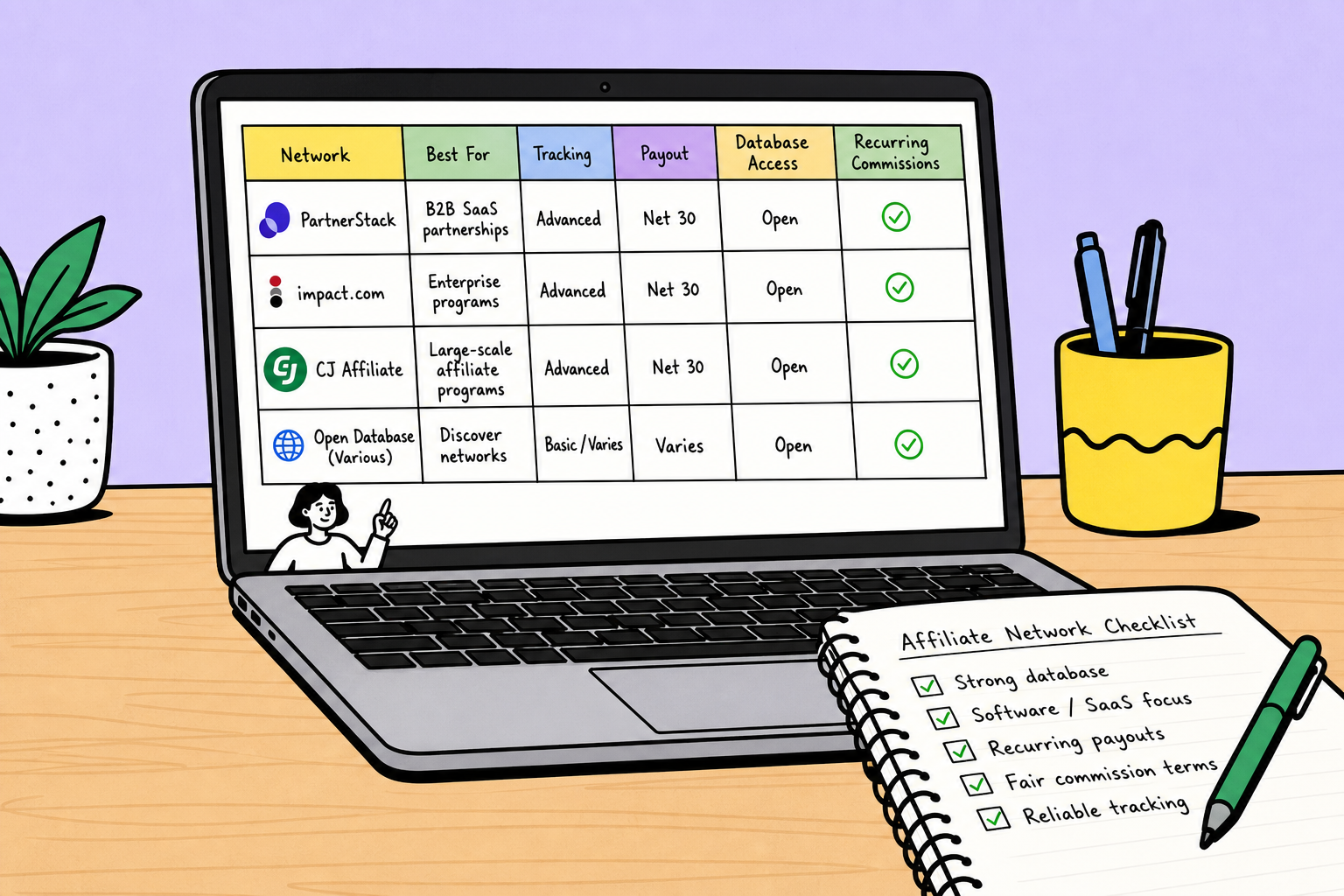
For over two decades, legacy affiliate networks like ShareASale served as the default starting point for digital publishers looking to monetize their traffic. If you ran a website in the early 2000s or 2010s, signing up for a legacy network gave you immediate access to thousands of merchant programs under a single umbrella.
The affiliate ecosystem has changed dramatically, particularly in software, SaaS, and digital tools. Modern software companies operate on subscription models, tiered monthly pricing, customer lifetime value metrics, and automated product onboarding. Traditional generalist networks were built primarily for one-time physical goods transactions, with rigid tracking scripts, manual invoice approvals, and interfaces that feel decades behind contemporary web standards.
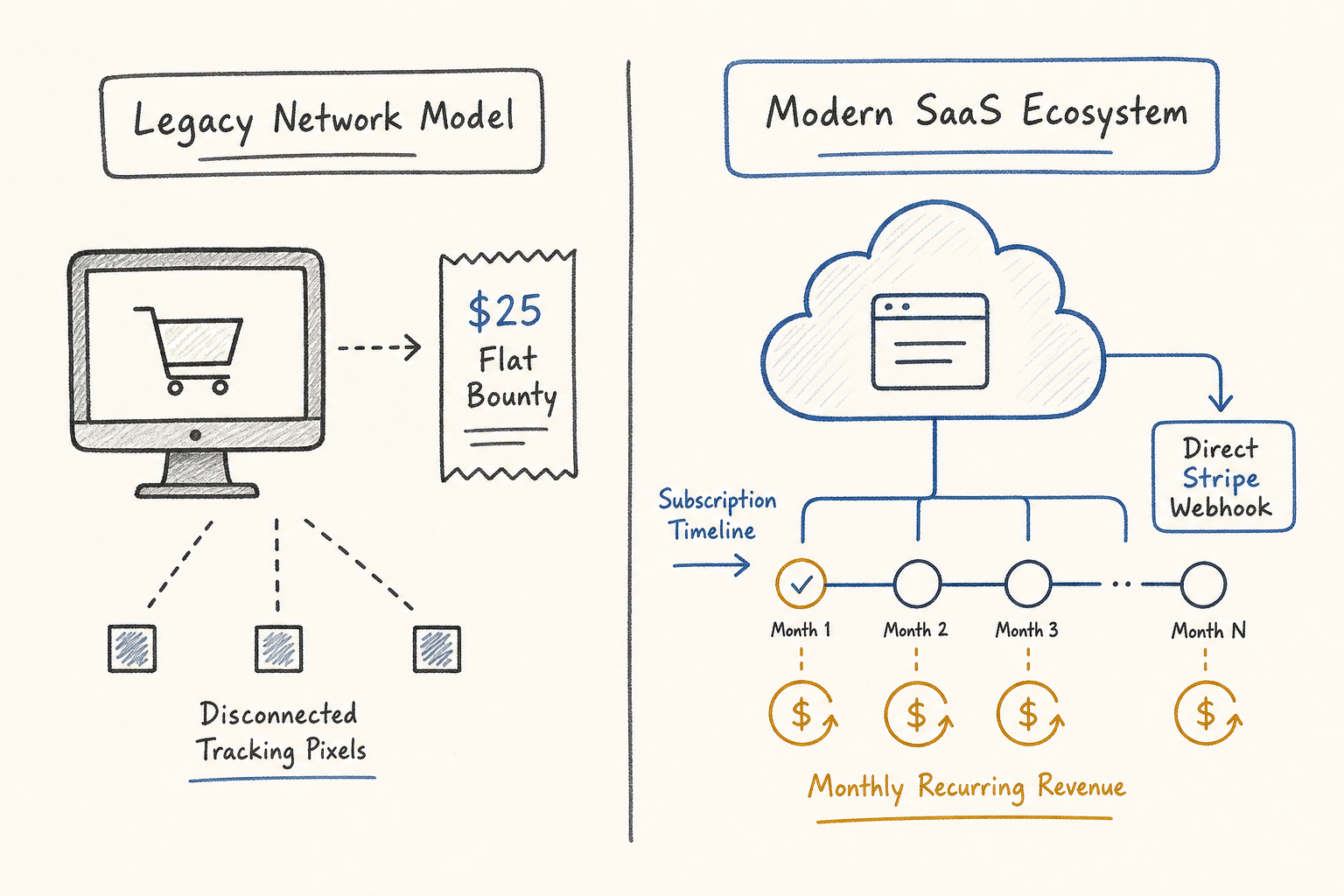 Marketers building an affiliate marketing blog or scaling software review platforms face friction when using legacy networks to find high-performing digital tools. Program terms are frequently hidden behind application walls, merchant programs go dormant without warning, and recurring commission tracking remains clumsy or non-existent.
Finding reliable software partnerships requires moving beyond legacy networks to platforms built specifically for SaaS, as well as open databases that provide full transparency upfront. Here is an in-depth breakdown of the best ShareASale alternatives for software affiliate networks, how they compare, and how to source the most profitable digital partnerships.
Why ShareASale Falls Short for Modern Software Affiliates
ShareASale remains an active network in the retail and direct-to-consumer spaces. However, when evaluating it specifically as a comprehensive database for software and SaaS partnerships, several structural limitations become clear.
+-------------------------------------------------------------------------+
| Legacy Affiliate Networks vs. Modern SaaS Ecosystem Requirements        |
+-------------------------------------------------------------------------+
| Feature                     | ShareASale (Legacy) | Modern SaaS Hubs    |
+-----------------------------+---------------------+---------------------+
| Primary Product Focus       | Physical Goods, DTC | Cloud Software, B2B |
| Recurring Commission Engine | Limited / Workaround| Native MRR Tracking |
| Directory Transparency      | Account Wall / Gated| Open Search / Rates |
| Developer Integration       | Basic Pixel/Postback| Webhooks & API-First|
| Payout Reliability          | Account-level Holds | Automated Monthly   |

+-------------------------------------------------------------------------+
1. Clunky Interface and Opaque Program Terms
On legacy platforms, discovering whether a software merchant offers competitive rates often requires creating an account, getting approved, navigating dated search filters, and applying blindly to individual merchants. Crucial metrics such as cookie life, average conversion rate, reversal rates, and exact payout tiers are often obscured until you are fully approved into the individual program.
2. Lack of Native Recurring Commission Support
Software products thrive on subscription billing. Affiliates targeting high paying affiliate programs often prioritize recurring monthly payouts (e.g., 20% to 30% lifetime revenue share on monthly active subscriptions). ShareASale was engineered around one-time bounty payouts. While merchants can technically hack together recurring payouts via custom transaction scripts, it is prone to tracking breaks, attribution drops, and reconciliation disputes.
3. "Ghost" Programs and Inactive Merchants
Legacy networks house tens of thousands of registered merchant accounts, but a significant portion are abandoned. It is common to apply to a promising software vendor on a legacy network only to wait weeks without a response because the merchant’s affiliate manager left the company or abandoned the platform without closing the account.
4. Limited Niche Depth for B2B and Developer Tools
Modern tech audiences look for specialized software: developer APIs, AI workflows, no-code database engines, cybersecurity tools, and team collaboration suites. Legacy platforms are heavily weighted toward consumer retail, lifestyle products, and apparel, offering only a thin slice of modern B2B SaaS.
The Top ShareASale Alternatives for Software Partnerships
When moving away from legacy generalist platforms, your options divide into two categories: specialized SaaS partner management platforms and enterprise-scale global networks that have invested heavily in tech partnerships.
1. PartnerStack: The Leader in B2B SaaS Partnerships
PartnerStack has established itself as the premier partner ecosystem platform designed exclusively for B2B software and SaaS companies. Unlike legacy retail networks, PartnerStack was architected from the ground up around recurring subscriptions, product-led growth, and B2B sales cycles.
Why It Outperforms Legacy Platforms for Software
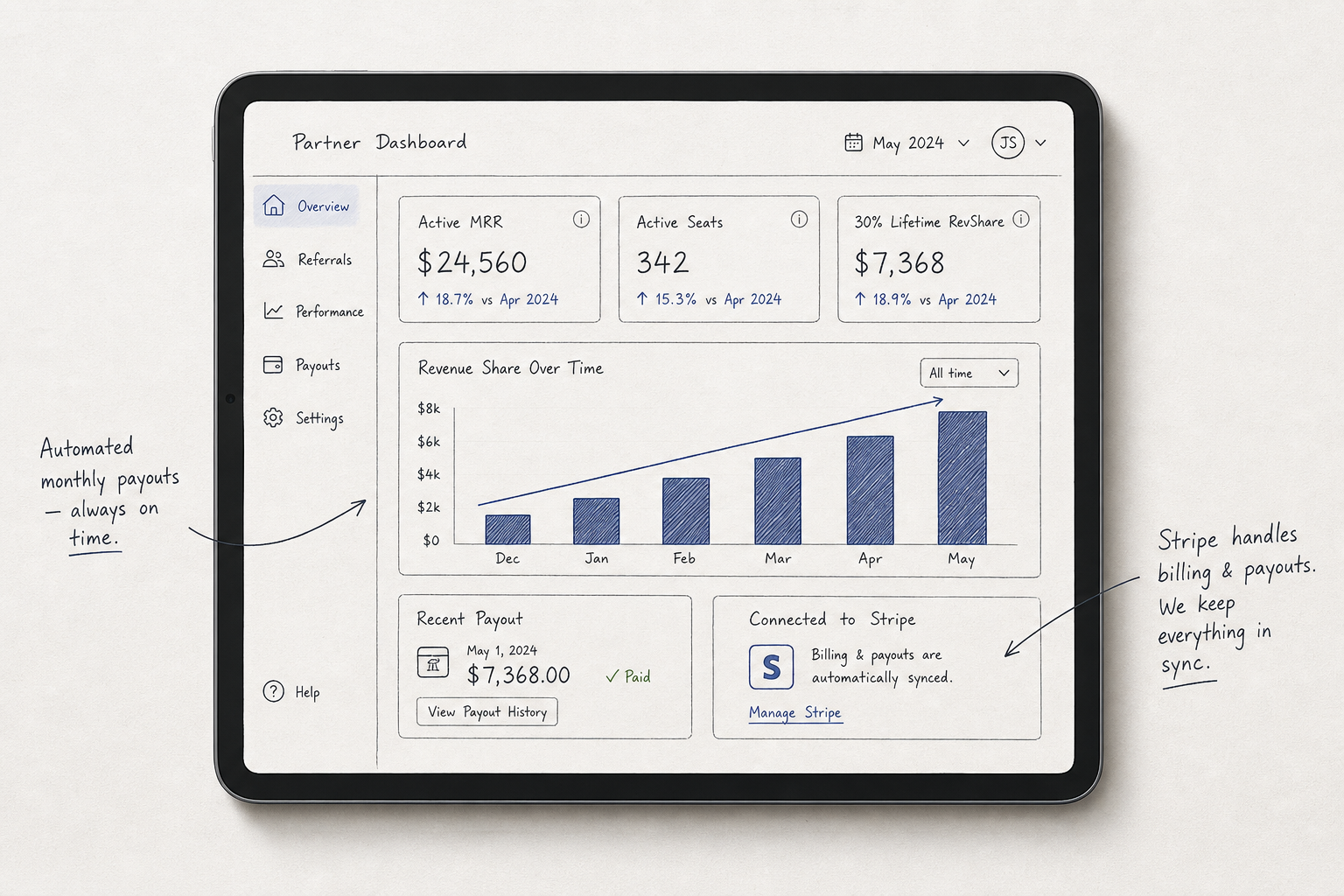
- Native Recurring Tracking: PartnerStack directly integrates with billing engines like Stripe and Chargebee. When a referred user upgrades their tier or renews their monthly seat license, the commission automatically calculates and posts to your partner dashboard.
- Top-Tier Tech Portfolio: The platform hosts many of the most prominent software companies in the world, including Webflow, Notion, monday.com, Looker, and Asana.
- Multi-Program Management: Marketers can manage affiliate links, lead submissions, referral commissions, and agency co-selling arrangements within a single unified workspace.
- Automated Payouts: PartnerStack handles automated monthly payouts via Stripe and PayPal, eliminating the need to chase down individual vendor accounting departments.
Limitations to Keep in mind
Because PartnerStack caters to high-growth B2B software companies, individual program managers maintain strict vetting standards. If you do not have an established tech audience, software review platform, or relevant digital footprint, your application to individual merchant programs on the network may be rejected.
2. Impact: Enterprise Tech and Global Tracking
Impact (formerly Impact Radius) is a modern partnership automation platform that transformed the affiliate landscape by offering enterprise-grade contract customization and flexible attribution.
Why It Outperforms Legacy Platforms for Software
- Sophisticated Attribution Models: Impact supports multi-touch attribution, allowing software brands to reward partners for customer journey influence, dynamic promo codes, or non-cookie referral paths.
- Direct Brand Relationships: Impact functions more like a technology layer between you and the brand rather than a restrictive middleman. Contracts, payment terms, and creative assets are configured directly by the brand’s affiliate team.
- Massive Enterprise Tech Roster: Leading tech, hosting, cybersecurity, and productivity tools host their private affiliate programs on Impact (such as Canva, Shopify, Namecheap, and Envato).
- Cross-Device Tracking: Advanced fingerprinting and server-side tracking ensure that referrals are preserved even across long B2B software consideration cycles and mobile-to-desktop switches.
Limitations to Keep in Mind
The interface can be overwhelming for beginners. Because each brand sets its own contract terms, payment schedules, and action thresholds, managing dozens of software programs on Impact requires careful monitoring of individual brand insertion orders.
3. CJ Affiliate: Enterprise Authority with Deep Digital Inventory
CJ Affiliate (formerly Commission Junction) is one of the oldest affiliate networks in existence, but unlike other legacy systems, it has made substantial investments in modern tracking APIs, cookieless measurement, and enterprise brand acquisition.
Why It Works for Software Affiliates
- Established Tech and Infrastructure Brands: CJ hosts massive web services, web hosting companies, domains, VPNs, and consumer software providers (including GoDaddy, NordVPN, Barnes & Noble, and Intuit).
- High-Converting Network Tools: CJ provides robust product feed APIs, deep-linking tools, and deep data analytics that allow affiliates to examine historical network earnings per click (EPC).
- Financial Stability: As part of Publicis Groupe, CJ guarantees reliable, consolidated monthly payouts across all accepted merchant programs.
Limitations to Keep in Mind
CJ enforces an account deactivation policy if your account does not generate qualifying commission actions within a set introductory timeframe. This makes it less ideal for early-stage publishers still testing traffic strategies.
4. Rakuten Advertising: High-Value Global Technology Networks
Rakuten Advertising is consistently ranked among the top global performance marketing networks, known for strict quality controls and high-value brand partnerships.
Why It Works for Software Affiliates
- Curated Quality Over Quantity: Rakuten avoids low-quality or spam-heavy merchant listings. The software and consumer tech brands hosted on the platform are vetted household names.
- Advanced Deep Linking Tools: Rakuten provides developer-friendly browser extensions and link generators that streamline the process of routing traffic directly to specific software pricing pages or feature landing pages.
- Global Footprint: If your tech audience spans Europe, Asia-Pacific, and the Americas, Rakuten provides native international currency settlement and multilingual tracking.
Limitations to Keep in Mind
The merchant application process on Rakuten is notoriously selective. Many technology merchants on the network require direct manual approval from an internal brand manager before you receive tracking links.
5. Dedicated Open Databases and Curated SaaS Directories
While partner management platforms like PartnerStack and Impact process transactions, they are not designed as open, browsable catalogs for casual research. If you want to evaluate commission models across hundreds of tools without creating accounts on dozens of networks, open affiliate directories offer a faster path.
Platforms like the Affiliate Program Database (APDB) and curated directories like AffiliList serve as central repositories that index thousands of software partnerships across the web.
+-------------------------------------------------------------------------+
| How Directory Models Compare to Transaction Networks                    |
+-------------------------------------------------------------------------+
| Dimension                   | Transaction Networks| Open Directories    |
|                             | (Impact, PartnerStk)| (AffiliList, APDB)  |

+-----------------------------+---------------------+---------------------+
| Primary Function            | Tracking & Payments | Search & Discovery  |
| Account Required to View    | Yes                 | No (Open Access)    |
| Software Niche Depth        | Limited to Clients  | Entire Market Index |
| Commission Transparency     | Hidden behind apply | Displayed Upfront   |
| Tracking Integration Method | Proprietary Tag     | Direct to Brand     |

+-------------------------------------------------------------------------+
Open directories solve the discovery problem by aggregating:
- Commission structures: Upfront data showing whether a brand pays a flat fee, a percentage, or recurring lifetime revenue share.
- Network placement: Immediate details on whether the software company hosts its program on PartnerStack, Impact, CJ, or an in-house platform like Rewardful or FirstPromoter.
- Cookie duration and payout minimums: Critical operational metrics displayed before you invest time building content or applying.
Using an open directory lets you select target niches—such as the best niches for affiliate marketing—and map out competitor payout rates across an entire vertical in minutes.
Comparing the Top Software Affiliate Networks
When choosing where to anchor your software affiliate efforts, review the platform capabilities side by side:
| Platform / Network | Primary Focus | Best For | Recurring Revenue Support | Minimum Payout | Account Vetting Difficulty |
|---|---|---|---|---|---|
| PartnerStack | B2B SaaS & Cloud Tools | SaaS Reviewers, Agencies, B2B Marketers | Native / High | $5.00 (Stripe/PayPal) | Moderate to High |
| Impact | Enterprise SaaS, Tech & Retail | Large Publishers, Tech Media Brands | Custom Contract Rules | Flexible ($10+) | Moderate |
| CJ Affiliate | Enterprise Web Services & Tech | Established Tech Blogs, Deal Sites | Rare / Bounty Driven | $50 (Direct Deposit) | High (Activity Rules) |
| Rakuten Advertising | Consumer Tech & Global Brands | High-Traffic Portals, Media Houses | Rare / Fixed Payout | $50 | High |
| AffiliList / Open DBs | SaaS & Digital Tool Discovery | Marketers Sourcing New Programs | Informational Directory | N/A (Direct Links) | None (Open Access) |
Direct-to-Merchant Software Programs vs. Network-Hosted Programs
One major shift in the software affiliate landscape is the growth of independent, self-hosted affiliate programs. Understanding this dynamic helps you find lucrative offers that never appear on ShareASale or other traditional networks.
+-------------------------------------------------------------------------+
| SaaS Partner Program Architectures                                      |
+-------------------------------------------------------------------------+
|                                                                         |
|  [Network-Hosted Model]                [In-House / Direct Model]         |
|  +------------------------+            +----------------------------+   |
|  | Software Merchant      |            | Software Merchant          |   |
|  +-----------+------------+            +-------------+--------------+   |
|              |                                       |                  |
|              v                                       v                  |
|  +------------------------+            +----------------------------+   |
|  | Centralized Network    |            | Specialized In-House Tool  |   |
|  | (Impact, CJ, Rakuten)  |            | (Rewardful, FirstPromoter) |   |
|  +-----------+------------+            +-------------+--------------+   |
|              |                                       |                  |
|              v                                       v                  |
|  +------------------------+            +----------------------------+   |
|  | Affiliate Partner      |            | Affiliate Partner          |   |
|  +------------------------+            +----------------------------+   |
|                                                                         |

+-------------------------------------------------------------------------+
The In-House SaaS Affiliate Stack
Rather than paying massive enterprise setup fees and monthly network overrides to legacy intermediaries, thousands of bootstrapped and venture-backed SaaS startups manage their programs directly using dedicated software:
- Rewardful: Deeply integrated with Stripe; standard for SaaS tools offering monthly recurring commissions.
- FirstPromoter: Built specifically for tracking SaaS subscriptions, churn, and multi-tier affiliate structures.
- Tolt / Reditus: Tailored specifically for micro-SaaS and European B2B startups.
Advantages of In-House Direct Programs
- Higher Commission Rates: Because merchants avoid paying a 20% to 30% network override fee on every transaction, they pass those savings on to partners in the form of higher commissions (e.g., 30% to 40% recurring).
- Direct Line to Product Teams: You interact directly with internal growth leaders and product marketers, making it easier to negotiate custom landing pages, co-branded webinars, or exclusive discount codes.
- Faster Product Updates: When the software launches a new feature, direct partners receive direct notifications, beta access, and dedicated enablement material.
The Downside of In-House Programs
The primary tradeoff is payout fragmentation. If you promote 15 different SaaS tools that each use an independent in-house tracker, you must track 15 different dashboards, tax forms, and individual payment thresholds. Using a centralized database helps you monitor terms across disparate platforms without losing track of your revenue streams.
Evaluating a Software Affiliate Program: A Practitioner's Checklist
Not all software affiliate programs are worth the effort required to produce in-depth reviews, comparison tables, and workflow tutorials. Before committing content resources to a new software tool, evaluate the program against these criteria:

1. Payout Structure: Monthly Recurring vs. One-Time Bounty
A 20% recurring monthly commission on a $100/month team subscription produces $240 per year per active customer. Over three years, assuming healthy customer retention, a single conversion yields $720. In contrast, a one-time $100 flat bounty looks attractive immediately but caps your upside. When choosing between programs, weigh short-term cash flow against long-term portfolio stability.
2. Cookie Duration and Attribution Hygiene
Software purchasing decisions—especially for team, enterprise, or productivity tools—frequently involve multiple stakeholders, trial periods, and long evaluation windows. Look for cookie durations of at least 30 to 90 days. Additionally, check whether the merchant awards commission on a first-click or last-click basis, and whether their attribution models credit partners when a user signs up for a free trial that upgrades 45 days later.
3. Target Audience Churn Rates
A 40% recurring commission is worthless if the software experiences a 15% monthly churn rate. If users abandon the product after two months, your recurring income evaporates. Investigate the product's market reputation:
- Does the tool solve a mission-critical workflow problem?
- Are reviews on platforms like G2 and Capterra positive regarding customer support and reliability?
- Does the product offer annual billing options with upfront affiliate payouts?
4. Direct Merchant Solvency and Tracking History
Before driving high volumes of targeted traffic to an emerging software tool, verify that the program has an active affiliate manager and clear payment histories. If you are just starting out, reading up on is affiliate marketing legit can help you identify warning signs, such as unclear attribution terms or unresponsive merchant contacts.
Scenario: Transitioning a Tech Blog from Legacy Networks to Modern SaaS Hubs
Consider the practical path of Sarah, a tech creator running an editorial site focused on project management tools, no-code builders, and remote team workflows.
+-------------------------------------------------------------------------+
| Workflow Evolution: From Legacy Network to Specialized SaaS Directory   |
+-------------------------------------------------------------------------+
|                                                                         |
|  PHASE 1: Legacy Model (ShareASale / Retail Networks)                   |
|  [Search Retail Catalog] -> [Apply blindly] -> [One-Time $25 Bounties]  |
|  Result: High Traffic, High Reversals, Stagnant Flat Revenue            |
|                                                                         |
|  PHASE 2: Direct SaaS Discovery (PartnerStack + Open Directories)       |
|  [Scan Open SaaS Database] -> [Filter 30% MRR] -> [Targeted B2B Guides] |
|  Result: Compounding Monthly Subscriptions, Direct Partner Support      |
|                                                                         |

+-------------------------------------------------------------------------+
The Initial Bottleneck
Sarah originally monetized her content using generalist retail networks like ShareASale and legacy physical tech affiliates. Her primary monetization came from one-time flat bounties ($20 to $50 per sale) for basic utilities and desktop software downloads.
Despite driving over 40,000 monthly organic visitors to software buying guides, her monthly earnings remained flat. Every month, her commission balance reset to zero. She spent hours navigating outdated dashboards, only to discover that several key software merchants had turned off tracking or abandoned their programs without notice.
The Strategic Pivot
Sarah restructured her monetization engine:
- Auditing the Inventory: She reviewed her top 20 traffic pages and identified every tool monetized via low-paying flat bounties.
- Database Discovery: Instead of searching retail affiliate networks, she used specialized SaaS directories to locate modern cloud-based alternatives offering lifetime recurring revenue shares.
- Consolidating on Modern Networks: She migrated core partnerships to platforms like PartnerStack and Impact, securing 20% to 30% recurring monthly commissions on products like workspace tools, database software, and automation platforms.
- Negotiating Custom Terms: With clear performance data from modern dashboards, she contacted partner managers directly to secure customized onboarding discounts and exclusive demo access for her readers.
The Long-Term Outcome
Within 12 months, Sarah's traffic remained relatively stable, but her gross affiliate revenue increased by more than 300%. By building a portfolio of active, recurring software subscriptions, her baseline monthly revenue became predictable, eliminating the stress of starting from zero at the beginning of each billing cycle.
Best Practices for Scaling a Software Affiliate Portfolio
Succeeding in software affiliate marketing requires a systematic approach to link management, content structuring, and traffic routing.
1. Diversify Across Niches and Market Verticals
Do not limit your portfolio to a single software category. Build content clusters across multiple complementary verticals. If you are deciding on directions for expansion, explore the most profitable affiliate marketing niches and follow a structured process for how to pick a niche for affiliate marketing.
For example, a site reviewing email marketing software can naturally expand into CRM suites, landing page builders, automation platforms, and customer service ticketing tools.
+-------------------------------------------------------------------------+
| Integrated Software Content Cluster Strategy                            |
+-------------------------------------------------------------------------+
|                                                                         |
|                          [Core Pillar Page]                             |
|                    "Best Marketing Tech Stack"                          |
|                                 |                                       |
|        +------------------------+------------------------+              |
|        |                        |                        |              |
|        v                        v                        v              |
|  [Hub 1: Email/CRM]      [Hub 2: No-Code]       [Hub 3: Analytics]      |
|  - MailerLite Review     - Webflow Review       - Fathom Analytics      |
|  - HubSpot Alternatives  - Bubble Comparisons   - Mixpanel Tutorials    |
|                                                                         |

+-------------------------------------------------------------------------+
2. Focus on Bottom-of-Funnel Product Comparisons
General informational keywords ("what is cloud storage") rarely drive software buying decisions. High-intent commercial traffic focuses on:
- Alternative Searches: "[Competitor] alternatives" (targeting users dissatisfied with existing pricing or features).
- Direct Matchups: "[Tool A] vs. [Tool B]" (capturing buyers in their final decision phase).
- Pricing Analyses: "[Tool] pricing & plans explained" (assisting decision-makers evaluating ROI).
Producing comprehensive, hands-on tutorials and comparative analyses establishes topical authority and drives qualified users directly to sign-up flows.
3. Maintain an Internal Link and Redirection Hub
Never paste raw network tracking links directly into your content management system. Instead, use a link management plugin or redirection engine (e.g., yoursite.com/go/partnerstack-brand).
If a software merchant migrates from one affiliate network to another, updates their custom subdomain, or shifts to an in-house tracking platform, you can update the destination URL once in your central dashboard rather than manually editing dozens of published articles.
4. Monitor Payout Health and Program Changes
Software companies are acquired, change leadership, and adjust affiliate budgets. Build a quarterly routine to audit your top revenue-generating affiliate links:
- Test tracking redirects to ensure they resolve to live, secure landing pages.
- Verify that commission rates have not been quietly adjusted downward.
- Check payment history to ensure automated payouts clear without manual intervention.
If you are exploring alternative monetization channels alongside traditional blogging, consider testing visual discovery platforms using an affiliate marketing program for pinterest or targeting full-time corporate roles in partner management by reviewing affiliate marketing jobs.
Frequently Asked Questions
What is the difference between an affiliate network and a partner management platform?
An affiliate network (like ShareASale or CJ Affiliate) acts as a traditional third-party intermediary, hosting hundreds of merchants, processing batch payouts, and maintaining a centralized merchant directory. A partner management platform (like Impact or PartnerStack) acts as an enterprise software layer that brands license to manage their partner relationships, customized contracts, and tracking infrastructure directly.
Can beginners join modern software networks like PartnerStack or Impact?
Yes, but application requirements vary by merchant. While creating a publisher account on PartnerStack or Impact is straightforward, individual software programs hosted on those platforms review applications manually. Having an established website, clear traffic sources, and relevant tech content significantly improves your acceptance rate.
How do recurring commissions work if a customer upgrades their software plan?
In modern SaaS affiliate setups integrated with payment processors like Stripe, your affiliate tracking ID is tied to the customer's account profile. If a customer signs up at a $29/month tier and upgrades six months later to a $199/month enterprise tier, your percentage commission automatically adjusts upward to reflect the new recurring billing total.
Building a Resilient Software Monetization Strategy
Relying solely on legacy networks like ShareASale restricts your ability to capitalize on the high-margin, recurring world of modern software and SaaS. By transitioning to specialized partner platforms like PartnerStack and Impact, while using open software directories to streamline discovery, you can build a more transparent, profitable, and durable affiliate marketing portfolio.
Whether you are scaling an affiliate marketing side hustle or managing an established media portfolio across profitable affiliate marketing niches, prioritizing direct SaaS partnerships and recurring revenue models provides the baseline needed for sustainable growth. Focus on high-intent software comparisons, choose programs with transparent terms, and leverage modern affiliate infrastructure to maximize every visitor who reads your content.