
Shareasale Alternatives for Vetted Tech Affiliate Listings for Social Media Influence
Discover top ShareASale alternatives for tech influencers and SaaS creators. Compare recurring MRR payouts, vetting criteria, and bio-link tools.

Legacy affiliate networks were built during the desktop blogging era. They relied heavily on banner ads, long text reviews, and complex tracking tags embedded into self-hosted WordPress sites. For years, platforms like ShareASale served as default hubs for affiliate marketers. However, social media creators who review software, unbox consumer electronics, or demonstrate productivity workflows operate under completely different mechanics.
If you produce tech content on YouTube, TikTok, X, LinkedIn, or Instagram, relying on generalist legacy networks often creates friction. You encounter drawn-out approval cycles for software startups, outdated reporting dashboards, broken deep-linking tools on mobile devices, and unverified merchant listings that can harm your credibility. A dead link or a merchant that fails to pay commissions burns audience trust faster than a bad brand deal.
Navigating modern monetization requires moving away from bloated legacy directories and embracing networks tailored for digital tools, software-as-a-service (SaaS), and consumer hardware. Evaluating vetting criteria, comparing performance metrics across specialized platforms, and matching the right tech offers to specific social media formats are key to building reliable affiliate revenue.
Why Legacy Networks Struggle to Support Modern Tech Creators
ShareASale remains one of the largest affiliate networks on the web, but its architecture was not optimized for social media influencers focused on tech. Understanding why these traditional platforms lag behind helps explain what to look for in a modern alternative.
+-----------------------------------------------------------------------+
|                      LEGACY AFFILIATE NETWORK                         |
|  - Generalist catalog (apparel, crafts, physical retail)              |
|  - Approval: Requires self-hosted blog URL & manual review            |
|  - Linking: Complex long URLs, poor mobile deep-linking support       |
|  - Commission: Single one-time flat rate (5-10%)                      |
|  - Vetting: Static merchant lists, frequent inactive/broken links     |

+-----------------------------------------------------------------------+
                                   VS
+-----------------------------------------------------------------------+
|                    MODERN TECH CREATOR ECOSYSTEM                      |
|  - Specialized Focus: Developer tools, B2B SaaS, AI, desk setups      |
|  - Approval: Immediate or creator-centric social handle verification  |
|  - Linking: Dynamic deep-links, clean bio-tool & link-in-bio routing  |
|  - Commission: Recurring Monthly Revenue (15-30% MRR) or high flat $  |
|  - Vetting: Active tracking audits, verified payout data, transparent  |

+-----------------------------------------------------------------------+
Mobile Deep-Linking and Link-in-Bio Bottlenecks
Social creators rely on bio links, YouTube video descriptions, pinned comment links, and link aggregators. Legacy networks frequently generate long, parameter-heavy tracking links that trigger security flags in social media in-app browsers. Furthermore, if a viewer clicks a link on mobile and gets redirected to a non-responsive desktop landing page, conversion rates plummet.
Cookie Attribution vs. Tech Buying Cycles
Consumer hardware might sell within a 24-hour impulse window, but B2B SaaS tools and developer software have longer evaluation periods. Legacy network programs often enforce rigid 30-day cookie windows without cross-device tracking. If your YouTube subscriber watches a video on their phone, saves the link, and tests the app on their desktop three weeks later, legacy tracking tools frequently drop the attribution.
Approval Delays and Abandoned Merchants
In the fast-moving tech sector, software tools launch, pivot, or get acquired in weeks. Applying to a brand on a generalist network often means waiting 14 to 21 business days for a manual review by an outside program manager. Worse, generalist directories contain hundreds of "ghost" listings—programs where tracking pixels are broken or merchants have run out of prepaid account funds, leaving creators unpaid for generated sales. Before applying to any network, creators often research whether a platform is reputable; understanding how to verify program integrity is a critical step, as detailed in our guide on is affiliate marketing legit.
What Defines a Truly "Vetted" Tech Affiliate Program?
Not all affiliate listings are equal. A vetting process screens out fraudulent offers, ensures payout stability, and protects your reputation with your followers.
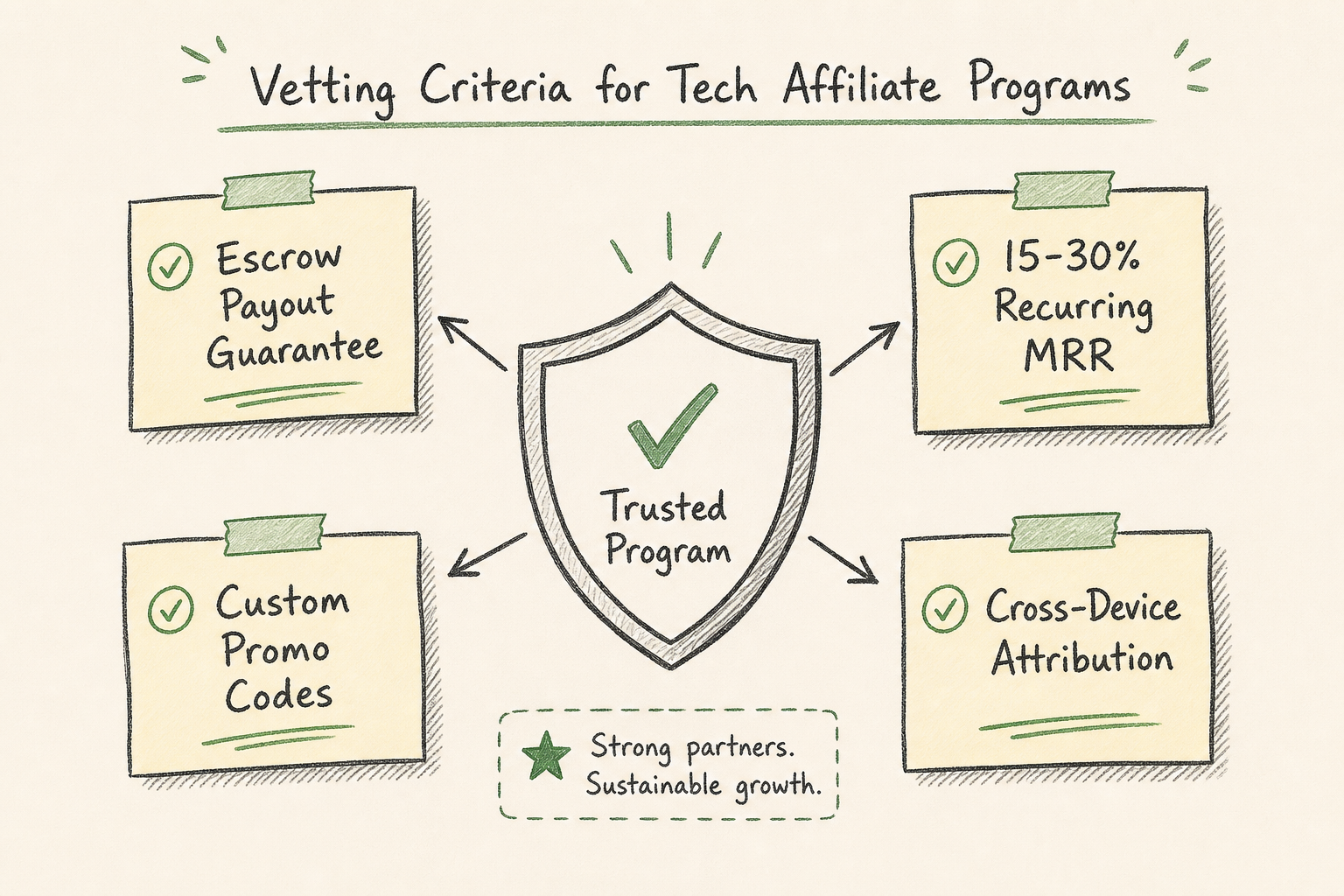 When evaluating tech affiliate listings for social media campaigns, inspect these critical factors before inserting a link into your bio or video descriptions:
1. Payment Infrastructure and Escrow Rules
A vetted program specifies its payout terms clearly (e.g., Net-30 or Net-60) and operates through a system that guarantees funds are set aside for partner payouts. Be cautious of self-hosted programs that lack transparent payment thresholds or hide clawback policies in long terms-of-service documents.
2. Conversion Mechanics: Free-Trial vs. Direct Purchase
Tech software generally converts through free trials, freemium sign-ups, or direct paid subscriptions. Vetted listings clarify whether commissions trigger on:
- Pay-per-lead (PPL): Earning when a user verifies a work email or completes a free trial.
- First-month payment: Earning a fixed or percentage amount on the initial transaction.
- Recurring MRR: Receiving a percentage (typically 15% to 30%) for the life of the subscriber's account.
For social influencers with recurring content streams, recurring MRR programs provide income stability that smooths out algorithm fluctuations across social feeds.
3. Active Program Management and Fraud Protections
High-quality programs maintain an active affiliate manager who responds to creator requests, provides updated branding assets, and issues custom promo codes. Direct promo codes mapped specifically to your channel name bypass cookie-blocking issues entirely on platforms like Instagram Reels or TikTok.
Vetting Criteria Checklist
| Vetting Criteria | Legacy Generalist Networks | Vetted Tech & SaaS Alternatives |
|---|---|---|
| Payout Transparency | Standardized net terms; manual balance checks | Automated payouts; real-time dashboard tracking |
| Link Integrity | High rate of stale/dead links | Dynamic URL validation & active status monitoring |
| Attribution Model | Single-device last-click cookies | Cross-device tracking, custom promo code mapping |
| Commission Potential | Low one-time fees (3%–8%) | Recurring SaaS rates (15%–30%) or high-ticket flat fees |
| Creator Verification | Requires website traffic audits | Evaluates social handle reach, engagement, & context |
Top ShareASale Alternatives for Tech & SaaS Affiliate Listings
To replace legacy platforms, tech creators can combine curated open directories with specialized creator-centric networks. According to research on influencer partnership models published by GetResponse and creator platform analyses from Sprout Social, matching network capabilities with creator formats is critical for long-term channel monetization.
Here are the top alternatives offering verified tech and SaaS opportunities:
+-----------------------------------------------------------------------------------+
|                        THE MODERN TECH AFFILIATE DIRECTORY                        |
+-----------------------------------------------------------------------------------+
|  [AffiliList] -> Open Directory: SaaS, AI, Digital Tools (No Approval Gates)      |
+-----------------------------------------------------------------------------------+
|  [PartnerStack] -> Dedicated SaaS Hub: High MRR B2B Software                      |
+-----------------------------------------------------------------------------------+
|  [Impact.com] -> Enterprise Tech: Global Brands, Advanced API Tracking            |
+-----------------------------------------------------------------------------------+
|  [Afluencer / LTK Tech] -> Direct Brand Collaboration & Creator Sponsorships      |
+-----------------------------------------------------------------------------------+
|  [Direct SaaS Networks] -> FirstPromoter / Rewardful Self-Hosted Brand Hubs        |
+-----------------------------------------------------------------------------------+
1. AffiliList
While traditional networks act as gated middlemen requiring tedious registration before showing program terms, AffiliList serves as a streamlined, open-access directory covering over 10,000 affiliate programs, with a heavy emphasis on SaaS, AI applications, and digital productivity tools.
- Why it fits tech creators: You can browse verified commission percentages, cookie durations, and payout structures without filling out multiple applications just to inspect program terms.
- Key Feature: Extensive tagging and search filtering allow you to instantly separate low-yield offers from high-ticket recurring software programs.
- Best for: Social influencers needing to compare software monetization options quickly across specific niches without waiting days for legacy network gatekeepers.
2. PartnerStack
PartnerStack has become a leading network for B2B software, developer tools, and productivity SaaS products.
- Why it fits tech creators: It hosts prominent B2B software brands (e.g., Monday.com, Notion ecosystem tools, Webflow accessories, and marketing automation software).
- Payout Structure: Primarily recurring monthly payouts, allowing creators to accumulate recurring revenue as their audience adopts recommended tools.
- Creator Experience: Clean, unified dashboard that tracks sign-ups, active subscriptions, and monthly earnings across multiple software partners in one place.
3. Impact.com
Impact offers modern attribution, clean deep-linking technology, and a roster of enterprise tech and consumer hardware brands.
- Why it fits tech creators: Outstanding mobile link generation tools. You can create short, clean target URLs using their browser extension or mobile app, making it straightforward to drop links directly into social bio tools or YouTube descriptions.
- Brand Catalog: High-end consumer hardware, cloud hosting, domain registrars, and large-scale consumer software VPNs.
- Contracts: Flexible payment structures, including performance bonuses for high-volume content creators.
4. Direct SaaS Ecosystems (FirstPromoter & Rewardful)
Many modern software companies skip public affiliate networks entirely. Instead, they run in-house partner programs built on infrastructure like FirstPromoter, Rewardful, or Tolt.
- Why it fits tech creators: Higher commission percentages. Because startups do not have to pay hefty network override fees to legacy platforms like ShareASale, they pass those savings along to creators, offering 20% to 40% recurring MRR.
- How to discover them: Using curated resources like AffiliList allows you to discover these hidden, high-converting direct SaaS opportunities that are invisible on traditional networks.
5. Afluencer
For creators who prefer a blend of traditional affiliate links and direct brand sponsorships, Afluencer connects influencers directly with merchants seeking social media promotion.
- Why it fits tech creators: Eliminates middleman barriers by letting you pitch tech merchants directly through integrated messaging.
- Best for: Video-first creators on TikTok and YouTube looking for sponsored product access alongside performance-based commission structures.
Detailed Platform Comparison Matrix
Evaluating networks requires matching technical capabilities against content formats. The table below outlines how modern alternatives stack up against ShareASale for tech-focused creators:
| Network / Platform | Primary Tech Niche | Commission Models | Deep-Linking Capability | Gatekeeping / Approval Level |
|---|---|---|---|---|
| ShareASale (Legacy Baseline) | General retail, mixed consumer products | One-time flat fee (5%–10%) | Standard manual links, high mobile drop-off | Moderate-to-high application friction |
| AffiliList | SaaS, AI, Digital Tools, Cloud | Full visibility into recurring MRR & flat fees | Direct links to vendor programs | Open Access (Unrestricted directory search) |
| PartnerStack | B2B SaaS, Marketing Tech, Dev Tools | Recurring MRR (15%–30%) | Clean direct URLs & native promo codes | Account application required per merchant |
| Impact.com | Hardware, Consumer Tech, VPNs, SaaS | Hybrid (Flat fee, CPL, performance tiers) | Excellent mobile app link builder & deep-links | Instant network registration, brand-level approval |
| Direct SaaS (Rewardful/FirstPromoter) | Emerging AI apps, Micro-SaaS, Developer APIs | High Recurring MRR (20%–40%) | Direct custom domains & vanity URLs | Quick merchant approval via creator application |
| Afluencer | Consumer Electronics, Gadgets, Web3 | Hybrid (Affiliate + Paid Campaign Fees) | Direct brand portal links | Profile verification required |
Niche-by-Niche Offer Selection Strategy for Social Platforms
To maximize earnings from tech affiliate links, align the software or hardware category with the viewer's mindset on each social platform. Creators looking to select high-yield categories should read our breakdown of best niches for affiliate marketing to analyze long-term demand trends.
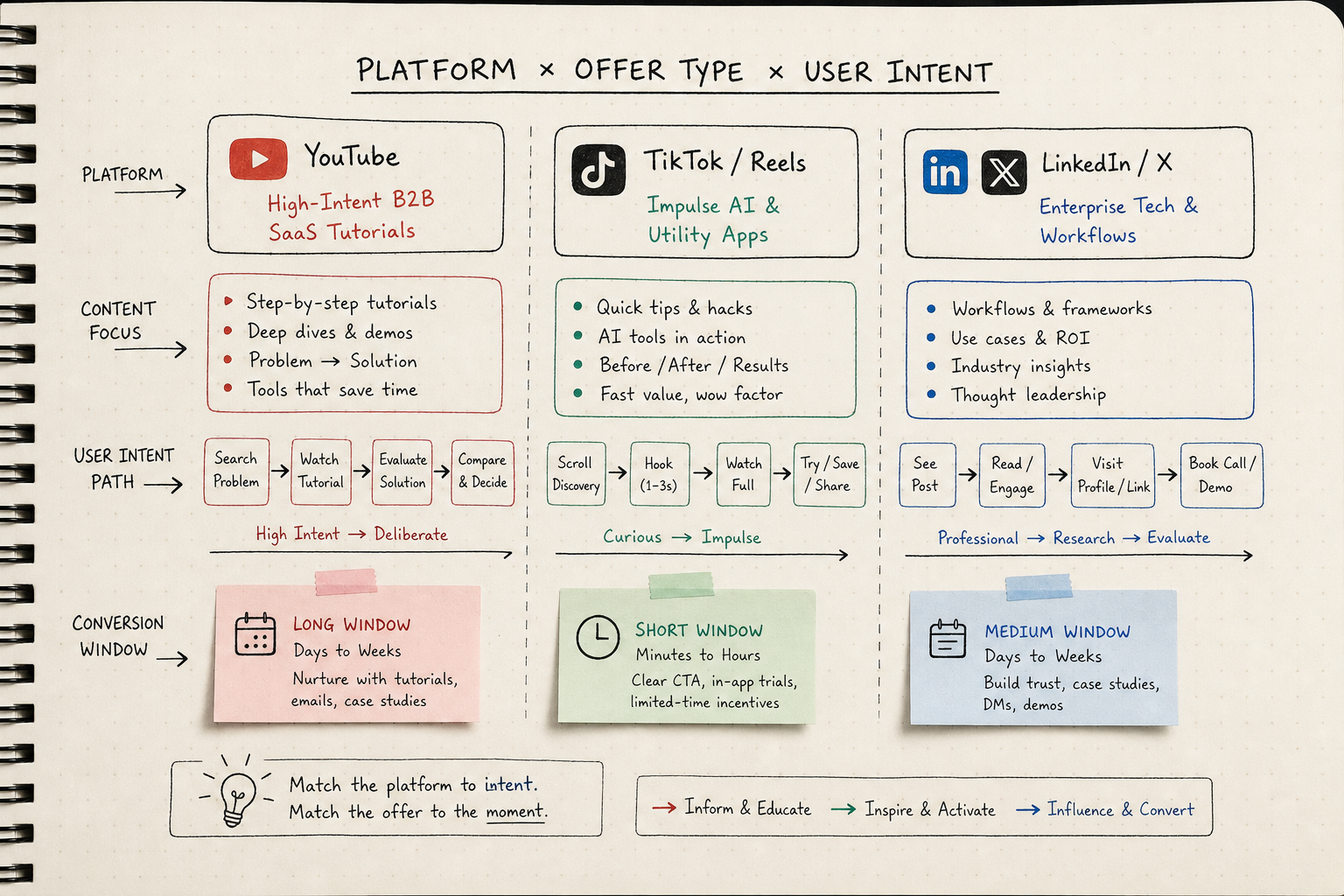
+-----------------------------------------------------------------------------------+
|                        SOCIAL MEDIA INTENT vs TECH OFFER MATRIX                    |
+-----------------------------------------------------------------------------------+
|  YOUTUBE (High Intent / Search Driven)                                            |
|  - Content: In-depth tutorials, full tech reviews, workflow builds                |
|  - Recommended Offers: B2B SaaS, Developer APIs, Video Editing Suites             |
|  - Conversion Window: Long (7 to 30 days)                                         |

+-----------------------------------------------------------------------------------+
|  TIKTOK & INSTAGRAM REELS (Low Intent / Impulse Discovery)                        |
|  - Content: Quick tips, desk aesthetic shots, "AI apps you missed"               |
|  - Recommended Offers: Consumer AI apps, mobile utilities, desk accessories       |
|  - Conversion Window: Immediate (0 to 48 hours via Bio Link or Code)              |

+-----------------------------------------------------------------------------------+
|  LINKEDIN & X / TWITTER (Professional Intent / Text & Screen Captures)            |
|  - Content: Case studies, teardowns, operational stack breakdowns                 |
|  - Recommended Offers: Enterprise SaaS, CRM software, Cloud hosting, Analytics    |
|  - Conversion Window: Moderate (3 to 14 days)                                     |

+-----------------------------------------------------------------------------------+
1. Developer Tools and Cloud Infrastructure
- Primary Social Channels: YouTube (in-depth code-alongs), X/Twitter (build-in-public threads), LinkedIn.
- Top Product Categories: Cloud hosting providers, API services, AI coding assistants, code repository extensions.
- Monetization Mechanics: Cloud hosting and infrastructure tools usually offer substantial usage credits alongside revenue-share payments. Focus on products that solve immediate developer pain points demonstrated step-by-step on video.
2. Productivity Apps and Consumer AI Tools
- Primary Social Channels: TikTok, Instagram Reels, Pinterest, Shorts.
- Top Product Categories: AI note-takers, visual design software, time-trackers, social scheduling dashboards.
- Monetization Mechanics: Visual tools convert well on short-form platforms when accompanied by quick screen recordings showing a clear "before-and-after" result. Linking to optimized visual platforms requires platform-specific tactics; review our guide on affiliate marketing program for pinterest to see how visual search engines route product traffic.
3. Consumer Hardware, Workspace & Audio/Visual Gear
- Primary Social Channels: YouTube (desk setup tours, gear reviews), Instagram, Pinterest.
- Top Product Categories: Ergonomic furniture, mechanical keyboards, studio lighting, capture cards, podcast microphones.
- Monetization Mechanics: Hardware sales rely heavily on explicit product tags, description list callouts, and clean link aggregators. Hardware commissions operate on lower percentages (typically 3% to 8%), so success depends on directing high traffic volumes toward premium products.
Practical Scenario: Shifting from Legacy Links to Recurring SaaS Offers
Analyzing real channel transformations highlights the financial benefits of transitioning from generalist physical affiliate networks to modern tech ecosystems.
The Baseline Channel Setup
Consider a tech creator running a mid-sized YouTube channel (30,000 subscribers) focused on workflow optimization and workspace tech.
Originally, the creator monetized using legacy physical network links and general retail hardware programs:
- Primary Content: Workspace tours and peripheral hardware reviews.
- Offers Promoted: Mechanical keyboards, monitor arms, webcams, desk mats.
- Average Order Value (AOV): $120.
- Average Commission: 5% ($6.00 per sale).
- Monthly Sales Generated: 40 transactions.
- Total Gross Affiliate Earnings: $240/month.
Every month, the earnings reset to zero. If the creator published fewer videos, income dropped proportionally.
LEGACY MODEL (One-Time Payouts)
Month 1: 40 sales x $6.00 = $240
Month 2: 30 sales x $6.00 = $180
Month 3: 0 videos published = $30
-----------------------------------------
Cumulative 3-Month Total: $450
The Transition Strategy
The creator shifted focus away from basic desk accessories toward the software tools powering their workflow. They used AffiliList to identify high-converting, vetted B2B SaaS programs and applied via PartnerStack and direct FirstPromoter hubs.
- New Content Strategy: Tutorials showing how to build automated workflows using modern SaaS, AI project management tools, and cloud storage utilities.
- Offers Promoted: AI scheduling app ($30/mo base rate) and project management tool ($20/mo base rate).
- Average Commission: 25% recurring monthly revenue ($7.50/month per active user for the scheduling tool; $5.00/month per user for the project tool).
- New Conversions per Month: 30 new paying subscribers.
RECURRING SAAS MODEL (Cumulative MRR)
Month 1: 30 subscribers added x $6.25 avg MRR  = $187.50/mo
Month 2: 30 new subscribers + Month 1 retained  = $360.00/mo
Month 3: 30 new subscribers + Prior retained    = $525.00/mo
---------------------------------------------------------
Cumulative 3-Month Total: $1,072.50 (with ongoing base revenue)
By substituting one-time low-commission physical products with vetted SaaS listings, the creator built predictable monthly cash flow that continued generating revenue even during content breaks. To explore similar high-yield strategies, read our guide on high paying affiliate programs.
Common Traps in Tech Affiliate Marketing on Social Media
Navigating tech promotion on social media requires avoiding technical and operational missteps that can hurt reach and earnings.
+-----------------------------------------------------------------------------------+
|                            COMMON CREATOR TRAPS & SOLUTIONS                       |
+-----------------------------------------------------------------------------------+
| TRAP 1: Social Platform Link Penalties                                            |
|   Problem: Dropping raw, long affiliate tracking parameters suppresses reach.     |
|   Solution: Route through clean custom domains or micro bridge pages.              |

+-----------------------------------------------------------------------------------+
| TRAP 2: Low-Quality SaaS Churn Rates                                              |
|   Problem: Promoting unvetted software leads to high customer cancelations.       |
|   Solution: Audit software churn rates and test products personally before promotion. |

+-----------------------------------------------------------------------------------+
| TRAP 3: Unclear FTC & Local Regulatory Disclosures                                |
|   Problem: Fine or channel warnings for unflagged affiliate links.               |
|   Solution: Clear text overlays on video + verbal disclosures in opening frames.  |

+-----------------------------------------------------------------------------------+
1. Social Media Platform Link Penalties
Algorithms on X (Twitter), TikTok, and LinkedIn often reduce the distribution of posts containing raw external links—especially URLs with heavy tracking parameters.
- Mitigation: Avoid placing raw affiliate links directly in text posts or video captions. Instead, direct viewers to a short bio page, pinned comment, or a clean custom redirect domain that you own (e.g.,
yourname.tech/tool).
2. High Churn on Low-Quality Software Tools
Promoting buggy or unvetted software can lead to rapid customer cancellations, wiping out recurring payouts. If users cancel within 14 days, networks claw back earned commissions.
- Mitigation: Verify merchant track records using directories like AffiliList. Test the software thoroughly before recommending it to your audience. Recommending fewer high-quality tools leads to higher customer retention and long-term earnings.
3. Ignoring Disclosure Regulations
Regulatory authorities enforce strict rules regarding commercial disclosures. According to broad industry overviews on influencer partnerships from Business Insider, failing to disclose financial relationships can lead to account suspensions or regulatory fines.
- Mitigation: State clearly in your video audio and caption text that you earn a commission if viewers sign up through your links. Use standard, clear language such as: "This video is sponsored in part by [Brand], and the links below are affiliate links."
Step-by-Step Implementation Framework
Building a tech affiliate setup requires systematic execution. Follow this operational framework to establish reliable monetization across your social channels:
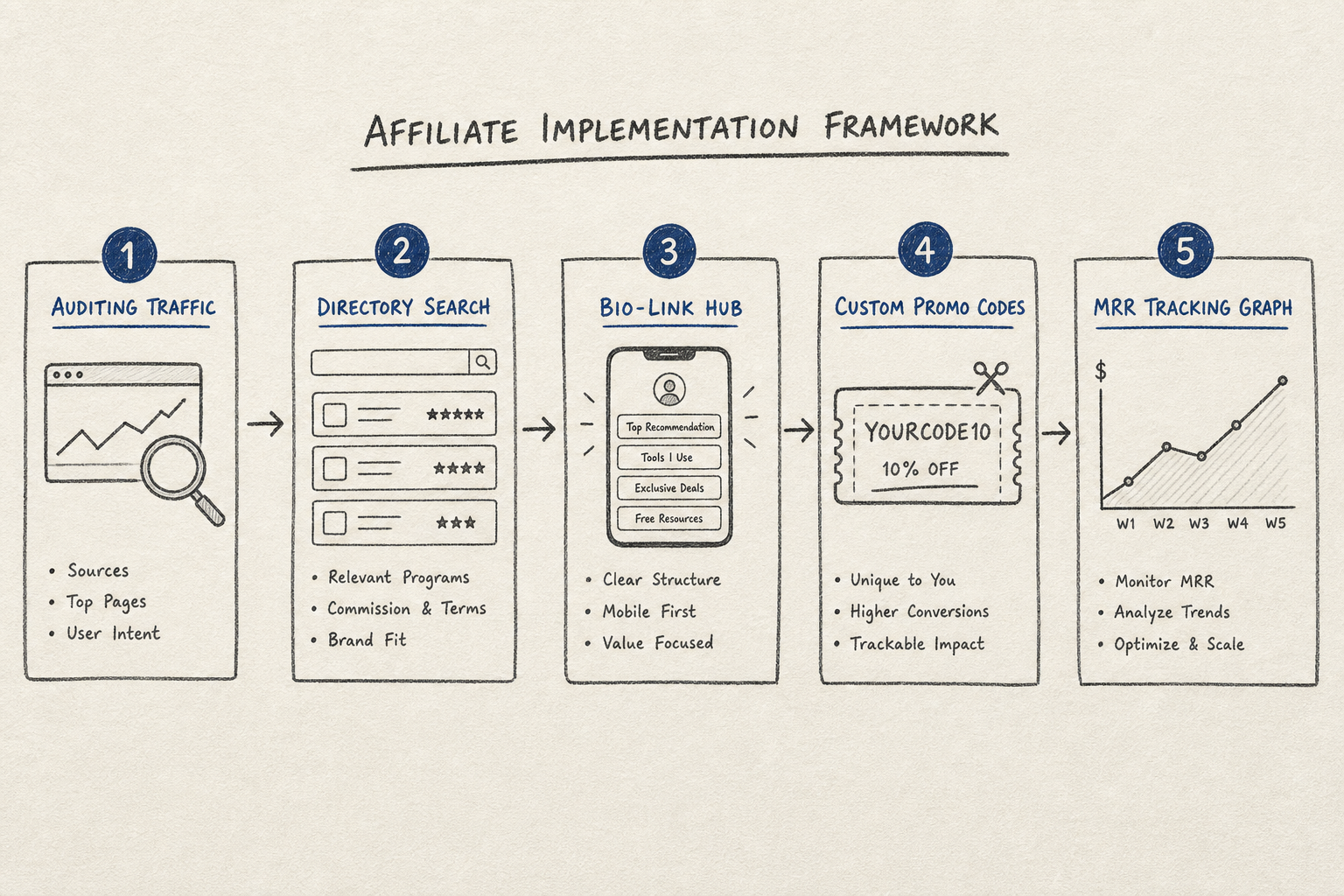
Step 1: Audit Channel Traffic and Audience Intent
Evaluate where your audience engages most. Categorize your content into Impulse/Discovery (short-form clips) vs. High-Intent Search (long-form tutorials).
Step 2: Source Vetted Offers via Clean Directories
Instead of signing up for dozens of gated platforms blind, use AffiliList to discover active programs in your specific software or tech sub-niche. Compare commission models, payout cadences, and cookie durations upfront.
Step 3: Set Up a Unified Bio and Link Routing System
Avoid cluttering your bio link with dozens of raw affiliate links. Deploy a clean link aggregator or build a minimalist landing page hosted on your custom domain. Organize links logically:
- Top Workflow Tools Recommended
- Hardware & Studio Gear Setup
- Current Software Discounts & Promo Codes
Step 4: Map Direct Promo Codes for Short-Form Video
For platforms where link clicks are difficult (e.g., Instagram Reels, TikTok video overlays), request custom promo codes directly from affiliate managers. A viewer typing YOURNAME10 at checkout bypasses cookie tracking dependencies entirely.
Step 5: Establish Earnings Tracking Metrics
Monitor key performance metrics monthly:
- Click-Through Rate (CTR): Are viewers clicking your bio links?
- Trial-to-Paid Conversion Rate: What percentage of users upgrading from free trials stick with the app?
- Monthly Recurring Revenue (MRR) Growth: Is your baseline passive income expanding month over month?
For creators building a broader media business, structuring these workflows effectively can transform a creative outlet into a structured venture; see our step-by-step roadmap on turning your work into an affiliate marketing side hustle.
Frequently Asked Questions
Is ShareASale still viable for physical tech hardware products?
ShareASale maintains partnerships with physical retail and consumer goods brands. However, for modern tech creators, dedicated hardware networks like Impact or specialized creator networks often provide superior deep-linking tools and faster approval times.
How do I promote tech affiliate links on platforms that restrict bio links?
Platforms like TikTok enforce minimum account requirements before enabling bio links. To monetize early:
- Use custom promo codes mentioned verbally and displayed in video overlays.
- Direct viewers to a simple, memorable domain that forwards to your central link hub.
- Pin comment directions guiding users to your primary channel profile.
What is the difference between recurring SaaS affiliate programs and pay-per-sale networks?
Pay-per-sale programs pay a single, one-time fee when a customer completes a purchase. Recurring SaaS programs pay an ongoing percentage of the customer's subscription fee every month for as long as they remain subscribed. Recurring models build predictable, compounding revenue over time.
Do I need a self-hosted blog to join top-tier tech affiliate programs?
Historically, legacy networks required a fully populated blog or website to approve applications. Modern tech networks like PartnerStack, Impact, and creator hubs evaluate social audience metrics, channel quality, and content relevance instead. Maintaining an active social channel with strong engagement is usually sufficient for approval.
How can I spot unvetted or untrustworthy tech affiliate programs?
Be cautious of programs that lack clear contact information, delay payouts past agreed terms, charge sign-up fees, or offer unrealistically high flat commission rates without verifying customer payment methods. Using open, vetted directories like AffiliList helps avoid unreliable programs.
Strategic Summary for Tech Creators in 2026
Relying on generalist legacy networks to monetize modern tech content creates unnecessary operational friction. By transitioning away from outdated platforms and embracing open directories, specialized B2B SaaS hubs, and direct brand partnerships, you can build a stable monetization engine.
- Prioritize Transparency: Use open directories like AffiliList to review commission structures, cookie terms, and payout track records before committing channel real estate to an offer.
- Focus on Recurring SaaS: Shift from low-margin, one-time physical payouts to high-margin SaaS subscriptions that build cumulative monthly recurring revenue (MRR).
- Protect Audience Trust: Recommend tools you actively use in your personal or professional workflows. Authenticity drives long-term customer retention and higher overall conversions.
By treating affiliate monetization as a structured system rather than an afterthought, social media influencers can turn content production into a scalable digital business.