
Best Comprehensive Database of Software Affiliate Networks Tools Beyond Shareasale
Looking beyond ShareASale? Discover the best software affiliate networks and comprehensive databases to find high-paying recurring SaaS partner programs.
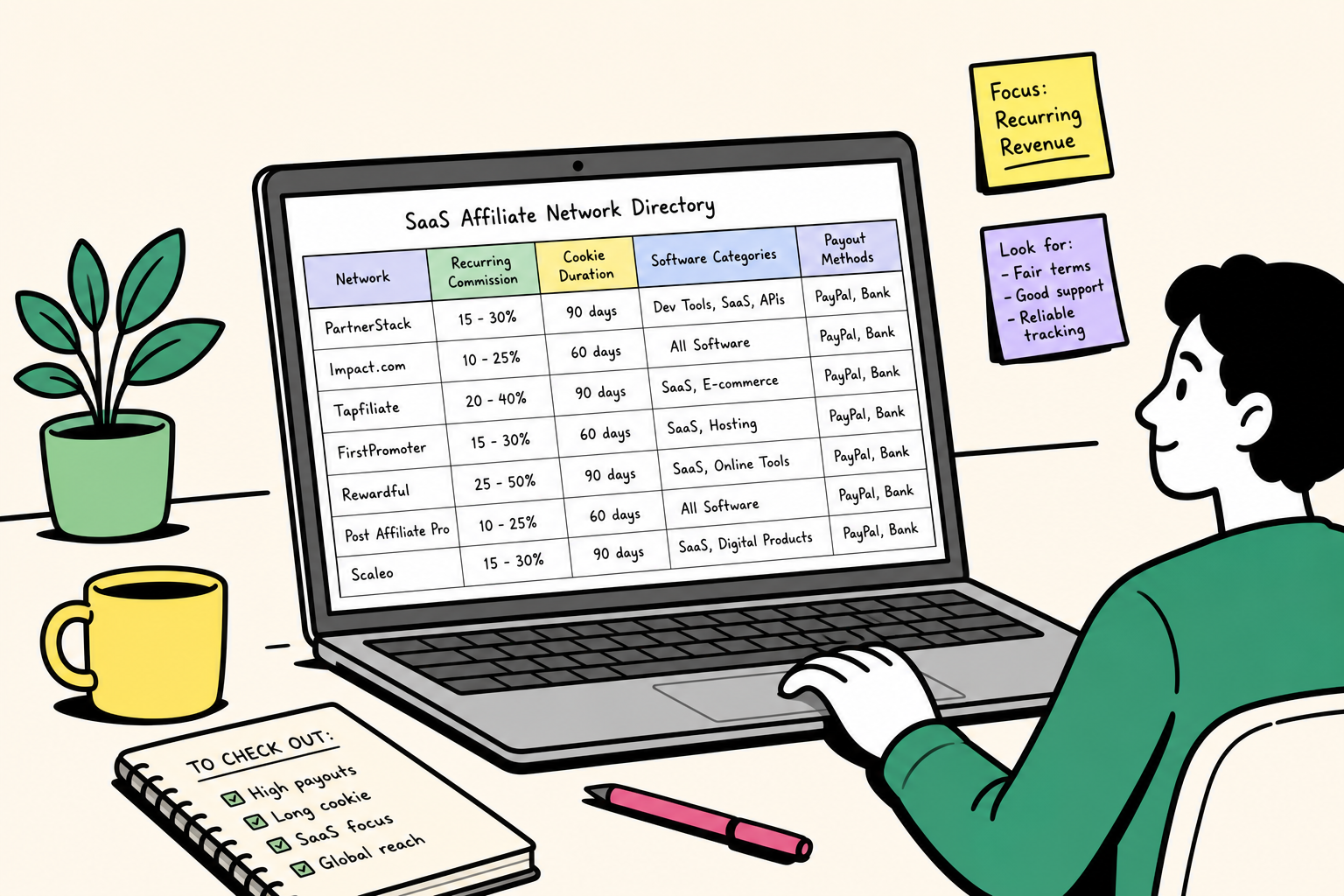
If you spend enough time monetizing digital content, you inevitably hit a wall with traditional affiliate networks. You log into a legacy platform, search for "CRM software" or "AI video editors," and are instantly greeted by a cluttered interface, broken tracking links, and 5% one-time commission offers from companies that haven't updated their banners since 2018. For years, ShareASale was the default starting point for finding digital products. But as the software as a service (SaaS) industry has exploded into a multi-trillion-dollar ecosystem, legacy networks have struggled to keep up with the complex recurring revenue models and multi-touch attribution required by modern tech brands.
There is no single, all-encompassing official database governed by a central authority for software and SaaS affiliate networks. Instead, the industry relies on a highly fragmented mix of specialized software directories and major general affiliate networks where tech companies choose to host their programs.
Because of this fragmentation, marketers waste countless hours creating accounts on dozens of platforms just to see if a product’s commission structure is worth their time. Finding a comprehensive database of software affiliate networks requires moving beyond legacy hubs and utilizing platforms designed specifically for the modern digital economy.
This guide explores the current landscape of software affiliate networks, why traditional platforms are losing ground in the SaaS space, and how dedicated directories like AffiliList are fundamentally changing how content creators find and evaluate high-converting partnerships.
The Fragmented Reality of Software Partnerships
To understand why finding a comprehensive database is so difficult, you have to understand how software companies manage their affiliates.
When a SaaS startup decides to launch a partner program, they face a choice. They can either build an in-house tracking system (which is expensive and prone to tracking errors) or they can rent space on a third-party affiliate network. These third-party networks handle the heavy lifting: tracking cookies, routing leads, managing international tax compliance, and issuing payouts.
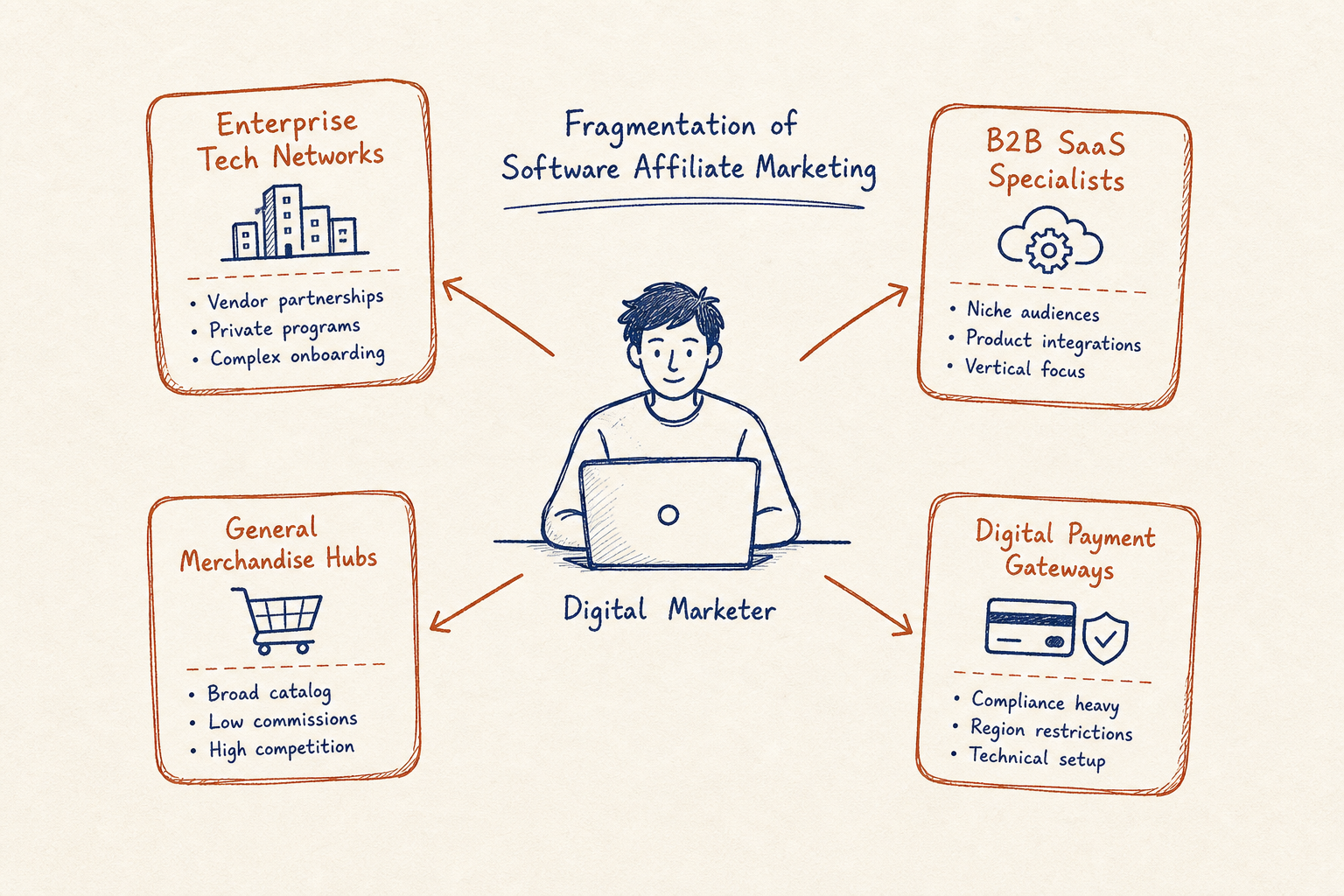
Because different networks cater to different types of businesses, the software affiliate landscape has splintered into distinct silos:
- Enterprise Tech Networks: Focused on massive, publicly traded software companies with highly complex sales cycles.
- B2B SaaS Specialists: Networks built specifically to handle recurring monthly commissions and lead-routing for mid-market software.
- General Merchandise Networks: Legacy platforms that host everything from physical mattresses to cheap web hosting.
- Digital-Only Payment Gateways: Platforms that act as the merchant of record for software downloads and bundle affiliate tracking into their checkout process.
As an affiliate marketer, this means the exact email marketing tool, HR software, or cybersecurity app you want to promote could be hiding in any one of these silos. Unless you maintain active, approved accounts across every major network, you operate completely in the dark.
Why ShareASale Struggles with Modern B2B SaaS
ShareASale has been a cornerstone of affiliate marketing for over two decades. It is a massive network with a deep directory of merchants. However, its architecture was fundamentally built for traditional e-commerce and retail—one-time purchases of physical goods or simple digital downloads.
Modern software affiliate marketing relies heavily on recurring commissions, where the affiliate earns a percentage of the user's subscription fee every month for the lifetime of that customer. Furthermore, high-ticket B2B software often involves a "lead" phase followed by a lengthy sales cycle, requiring multi-touch attribution to ensure the affiliate gets paid when the lead finally converts 90 days later.
While legacy platforms have tried to patch their systems to accommodate these models, the user interface remains deeply cluttered. Affiliate marketers looking for software offers on older networks often face:
- Opaque approval processes that leave applications pending for weeks.
- Inability to filter easily between one-time CPA (Cost Per Action) and lifetime recurring commissions.
- Poor categorization, where enterprise HR software is lumped into the same category as consumer antivirus downloads.
- Outdated program terms hidden behind layers of mandatory account sign-ups.
This friction is exactly why the industry has shifted toward specialized databases and next-generation networks.
The Major Affiliate Networks (Where Software Programs Live)
While a centralized directory helps you discover programs, the actual tracking and payouts still happen on the networks chosen by the merchants. If you are serious about software partnerships, you will eventually interact with these major platforms.
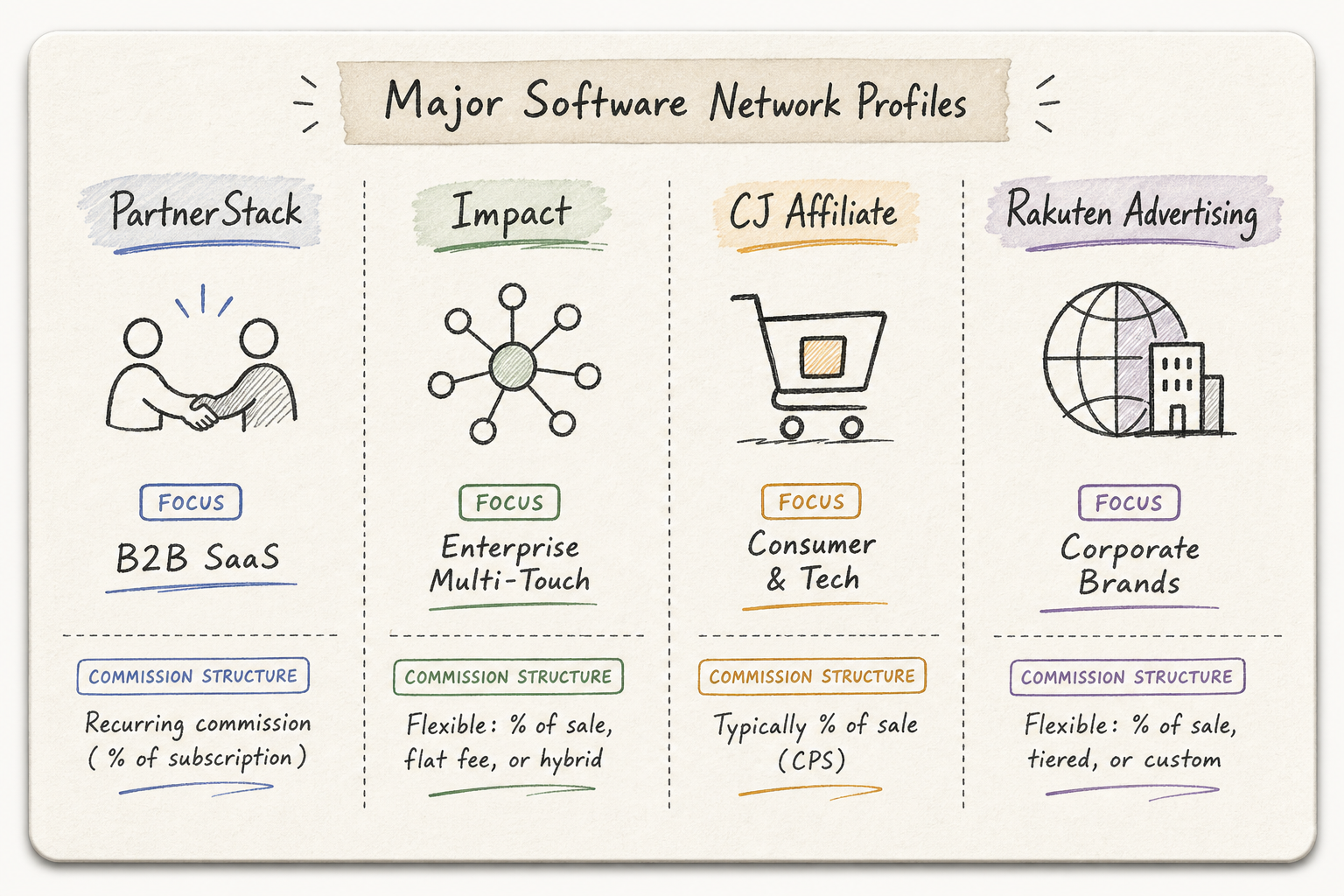
PartnerStack
When it comes to B2B SaaS, PartnerStack is widely considered the leading platform built specifically for software partnerships. Unlike legacy networks that treat affiliates as mere traffic drivers, PartnerStack treats them as an extension of the software company’s sales team.
The platform is engineered to handle complex recurring commissions, tiered payout structures, and lead sharing. If you are promoting B2B tools—such as project management software, CRM platforms, or cloud accounting tools—you will find a massive concentration of high-quality SaaS brands here. Their interface is exceptionally clean, focusing purely on software metrics like customer lifetime value (LTV) and churn rate.
Impact
Originally known as Impact Radius, Impact is an enterprise-level network that houses some of the largest software brands in the world. Impact shines in its attribution modeling. Many enterprise software purchases involve a user clicking an affiliate link, reading a review, signing up for a free webinar, and then finally purchasing via a sales call two months later. Impact’s cross-device and multi-touch tracking ensure affiliates are fairly credited for their role in the conversion funnel.
Impact also allows brands to heavily customize their contracts, meaning you can often negotiate custom payout rates directly within the platform once you prove your traffic quality.
CJ Affiliate
Formerly known as Commission Junction, CJ Affiliate is one of the oldest and largest general networks on the internet. While it is not exclusively dedicated to software, its sheer size means it hosts major software and web service programs, particularly in the hosting, domain registration, and consumer software verticals. CJ is heavily data-driven, providing excellent metrics on Earnings Per Click (EPC) and network performance, though its interface can feel overwhelming for beginners trying to isolate niche software tools.
Rakuten Advertising
Known for hosting large-scale corporate tech and software brands, Rakuten Advertising is a prestige network. Getting approved for the network itself is relatively straightforward, but getting approved by the individual software merchants on Rakuten can be notoriously difficult. They cater heavily to established publishers and major media buyers. If you are promoting massive corporate software suites or household-name cybersecurity tools, they are likely hosted here.
The Rise of Curated Affiliate Program Databases
Because no single network hosts every software program, affiliate marketers historically had to create a massive, messy spreadsheet to track who hosted what.
If you wanted to compare the commission rates of five different AI video editors, you had to guess which networks they used, apply to those networks, wait for approval, search for the merchant, and then read the terms.
To solve this, the industry saw the emergence of curated affiliate databases. These platforms don't track your clicks or issue your payouts; instead, they act as an aggregated search engine for affiliate programs, sitting a layer above the individual networks.
Exploring Dedicated Software Directories
Platforms like the Affiliate Program Database (APDB) emerged as dedicated platforms featuring lists of high-demand SaaS products and software affiliate programs. These early trackers proved there was a massive demand for transparency. Marketers wanted to know the commission rate, cookie length, and network host before they committed to signing up.
However, many basic directories suffer from a data decay problem. An affiliate program might move from CJ Affiliate to Impact, or drop its commission rate from 30% to 15%, and static directories quickly become graveyards of outdated information. Furthermore, many directories still gate their best data behind paywalls or complex sign-up walls.
AffiliList: The Comprehensive Database Alternative
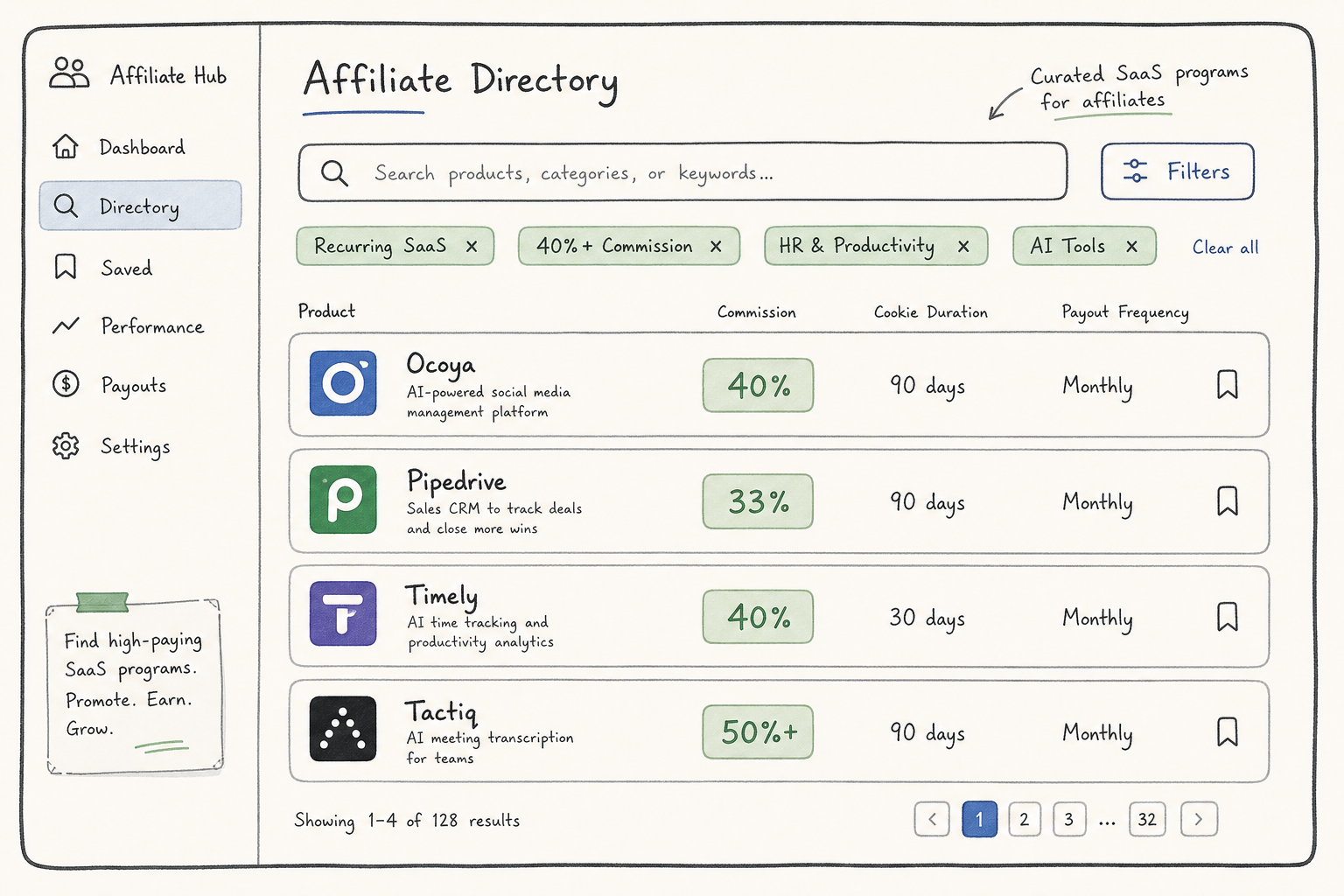
For marketers looking to bypass outdated or unreliable lists, AffiliList serves as a centralized, streamlined directory of the best affiliate programs available, with a heavy and specific focus on SaaS and digital tools.
Instead of forcing users to navigate the clutter of legacy networks just to view terms, AffiliList operates on a philosophy of transparency and simplicity. The platform curates a database of over 10,000 affiliate programs, acting as the ultimate aggregator for professionals who value verified data and user-friendly navigation.
What Makes a Modern Database Effective?
When evaluating a comprehensive database of software affiliate networks, the value lies in how quickly you can get from a vague idea ("I want to promote HR software") to a concrete, profitable partnership. AffiliList achieves this through several distinct features:
1. Open Access to Program Details The most frustrating aspect of traditional networks is the gated data. You shouldn't have to surrender your personal data, tax ID, and website analytics just to find out if a software company offers a 5% or 50% commission. AffiliList provides open access to program details, including exact commission percentages and commission types (e.g., flat CPA vs. recurring lifetime), allowing you to make rapid comparative decisions.
2. Advanced Filtering for Strategic Selection Not all traffic is created equal, and not all commission structures fit every business model. If you run a high-volume, low-intent blog, you might want flat-fee CPA offers that convert quickly. If you run a deep-dive, high-intent technical newsletter, you want recurring lifetime commissions. AffiliList features advanced filtering options for commission rates, allowing niche site owners to sort 10,000+ programs strictly by their financial parameters.
3. Extensive Tagging and Categorization Software is not a single niche; it is thousands of micro-niches. Lumping "crypto tax software" in with "YouTube thumbnail generators" makes a database useless. AffiliList utilizes an extensive tagging system that covers highly specific, diverse categories ranging from finance and crypto to HR software and YouTube marketing tools. This allows marketers to discover highly lucrative, low-competition software tools that are completely buried on general platforms like ShareASale.
4. Dedicated Submission Portal for Merchants A database is only as good as its freshest data. By providing a dedicated submission portal for merchants to list their own programs, AffiliList creates a self-updating ecosystem. As new SaaS startups launch partner programs, they use the submission portal to attract the exact affiliate marketers, bloggers, and content creators looking for emerging opportunities.
This combination of transparency, massive scale (10,000+ programs), and intelligent filtering makes it the premier hub for discovering profitable partnerships in the software space.
How to Evaluate a Software Affiliate Program
Having access to a comprehensive database like AffiliList solves the discovery problem. But once you find a list of potential software partners, how do you choose the right one?
If you are reading our guide on 11 High Paying Affiliate Programs for $500+ Commissions, you know that the highest percentage doesn't always equal the highest overall earnings. When comparing SaaS programs in a directory, you must evaluate four distinct criteria.
1. Recurring vs. One-Time CPA (Cost Per Action)
This is the most critical decision in software affiliate marketing.
- One-Time CPA: You receive a flat fee when a user buys a software license. For example, a web host might pay you $100 for a sign-up, even if the user only bought a $5/month plan. These are great for immediate cash flow.
- Recurring Commission: You receive a percentage (usually 20% to 40%) of the user's subscription fee for as long as they remain a customer. If the software costs $100/month, and the average customer stays for 24 months, a 30% recurring commission yields $720 over time.
As a general rule, highly sticky software (like CRM systems, email autoresponders, or billing software) is incredibly lucrative on a recurring model because businesses rarely switch once they are integrated.
2. Cookie Duration
The cookie duration dictates how long after clicking your link a user can make a purchase and still earn you a commission. Software purchases—especially B2B software—are rarely impulse buys. A business owner might click your review of an HR software suite on Tuesday, present it to their board on Friday, and actually purchase it three weeks later.
If a program has a 24-hour cookie (common with physical product networks), you will lose out on almost all B2B software sales. Look for software programs offering 30, 60, or 90-day cookie durations.
3. Sales Lifecycle and Attribution
You need to understand what triggers the commission. In software, this varies wildly.
- Free Trial Conversions: Do you get paid when they sign up for the 14-day free trial, or only if they put in their credit card at the end of the trial?
- Lead Generation: Some enterprise programs pay you just to get a verified business email to request a demo.
- Multi-touch Attribution: If someone clicks your blog post, but later clicks a Google Ad run by the company, who gets the commission? The best software networks use multi-touch attribution to ensure you get partial or full credit if you initiated the buyer journey.
4. Merchant Responsiveness and Collateral
The best software programs are actively managed by dedicated affiliate managers. When you view a program on AffiliList, pay attention to the brand's reputation. Do they provide landing pages optimized for conversions? Do they give you access to exclusive promotional codes? Programs that equip their partners with webinars, high-quality banners, and regular product updates consistently outperform those that just hand you a raw link and walk away.
Unconventional Strategies to Find Hidden Software Offers
While using a comprehensive database is the most efficient method, it helps to understand the manual tactics marketers historically used to uncover niche software programs.
One of the most common manual strategies is the "Review Site Footer Hunt." This involves using B2B software review aggregators like Capterra or G2.
The Strategy:
- You identify a highly specific niche, perhaps from our guide on How to Pick a Niche for Affiliate Marketing in 5 Steps. Let's say you choose "Inventory Management Software for Food Trucks."
- You search Capterra or G2 for that exact software category.
- You ignore the review sites' own affiliate links and systematically click through to the official homepage of every software tool listed in the top 10.
- You scroll to the absolute bottom footer of their website and look for the word "Partners," "Affiliates," or "Referral Program."
- You click it to see which underlying network they use.
The Reality: This strategy is highly actionable and occasionally uncovers private, invite-only programs that aren't publicly advertised on the big networks. However, it is agonizingly slow. You might click through 40 websites to find exactly two viable programs, only to discover one pays a paltry 5% and the other requires you to be a certified agency partner to join.
This is exactly why content creators migrate to platforms like AffiliList. The platform has already done the digital legwork, indexing thousands of these programs, verifying their terms, and categorized them neatly so you don't have to spend your weekend clicking footers.
Profitable Software Niches to Target Right Now
The software ecosystem moves incredibly fast. What was highly profitable three years ago might be saturated today. If you are browsing a database of affiliate programs, it helps to know which categories are currently surging in demand.
For a deeper dive into overall niche selection, you can review our breakdown of the 11 Best Niches for Affiliate Marketing (SaaS & Digital). Here are a few specific software sectors showing exceptional conversion rates right now:
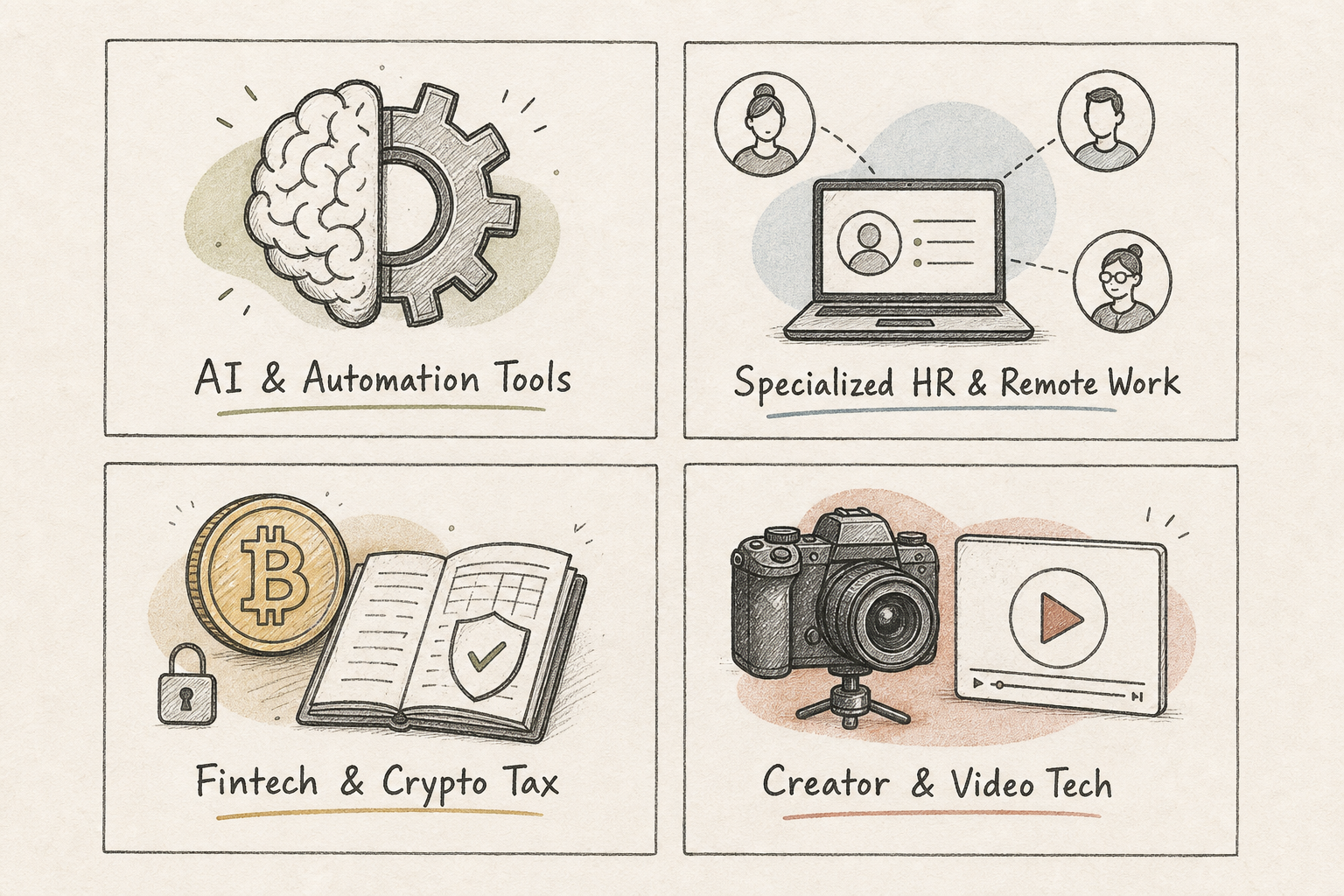
Artificial Intelligence and Automation Tools
The AI boom has created a gold rush of new SaaS products. From AI writing assistants and video generators to automated customer service chatbots, businesses are desperate to integrate AI to save time. These programs often feature aggressive customer acquisition budgets, meaning they offer incredibly high CPA payouts or very generous lifetime recurring percentages to capture market share quickly.
Specialized HR and Remote Work Software
With the permanent shift to hybrid and remote work, companies need specialized software to track employee engagement, handle international payroll compliance, and manage remote onboarding. B2B software in this space carries high price tags and incredible stickiness.
Financial Tech and Crypto Tracking
As regulations around digital assets tighten, there is massive demand for crypto tax software, portfolio trackers, and secure digital wallets. The finance software space generally offers some of the highest EPCs (Earnings Per Click) in the affiliate industry because the lifetime value of a finance customer is exceptionally high.
Video and YouTube Marketing Tech
The creator economy is booming. Software tools that help YouTubers A/B test thumbnails, analyze keyword volume, or automate video editing are incredibly popular. These tools appeal directly to other content creators, making them very easy to promote via tutorials and case studies.
Step-by-Step: Integrating Software Offers into Your Content Strategy
Finding the right software in a comprehensive database is only step one. The next phase is actually monetizing your traffic. Software requires a slightly different marketing approach than physical products. You rarely sell B2B SaaS through a quick Instagram post; it requires education and trust.
Step 1: Build the Foundation
To get approved by high-tier software programs, you need a professional digital presence. Most reputable SaaS affiliate managers will manually review your application to ensure your brand aligns with theirs. If you don't have a dedicated site yet, read our guide on How to Start a Profitable Affiliate Marketing Blog. Ensure you have a clear about page, professional branding, and a few pieces of high-quality cornerstone content before you start applying for the best programs on AffiliList.
Step 2: Create Intent-Driven Content
Software buyers usually search with specific intent. They are either looking to solve a problem or comparing two solutions. Focus your content strategy on:
- "Best [Software Category] for [Specific Audience]" (e.g., Best CRM Software for Solo Plumbers).
- "Tool A vs. Tool B" (e.g., Mailchimp vs. ConvertKit for Newsletter Growth).
- "How to [Achieve Result] using [Software Tool]" (e.g., How to Automate Client Onboarding using Zapier).
Step 3: Leverage Alternative Traffic Sources
While SEO is powerful, it is highly competitive. Many modern affiliates are driving high-quality traffic to software offers using alternative platforms. Pinterest, for example, is heavily underutilized for B2B software despite its massive search volume for business infographics and workflows. If you want to explore visual search traffic, our guide on Step-by-Step: Setting Up Affiliate Marketing on Pinterest provides a complete blueprint.
Step 4: The Case Study Method
One of the most effective ways to promote software is to become a power user yourself. Let’s say you find an amazing project management tool on AffiliList. Don't just list its features. Write a 2,000-word case study on exactly how that specific software saved your business 10 hours a week. Provide screenshots, actual workflows, and measurable results. When readers see the software solving a real problem in real-time, your conversion rates will skyrocket compared to generic review posts.
Overcoming Common Hurdles in Software Affiliate Marketing
As you navigate these directories and networks, you will encounter a few common pitfalls. Understanding how to bypass them separates the professionals from the amateurs.
The "Pending Application" Black Hole You apply to a program on a major network and hear nothing for weeks. This usually happens when a SaaS company delegates affiliate management to an intern who only checks the queue once a month. Solution: Find the software company on LinkedIn, locate their "Head of Partnerships" or "Affiliate Manager," and send a polite, direct message explaining exactly how you plan to promote them and linking to your site. Proactive affiliates skip the line.
Changing Terms and Commission Drops You build a beautiful review post around a software tool paying 30% recurring, and a year later, they quietly drop it to a 10% flat fee. Solution: Never rely on a single software product. Use a database like AffiliList to always have a "backup" tool in the same niche ready to go. If Tool A ruins their partner terms, you can instantly swap your links out for Tool B.
Attribution Theft and Leaky Funnels You send a user to a software homepage. They decide to buy, but right before checkout, they Google "[Software Name] Promo Code," click a massive coupon site, and buy. The coupon site steals your cookie, and you lose the commission. Solution: Promote software programs that offer you exclusive, vanity promo codes (e.g., "Use code YOURNAME20"). Even if the user clicks around, if they use your specific code at checkout, the network will manually attribute the sale to you regardless of the final cookie.
Frequently Asked Questions (FAQs)
What is the best comprehensive database of software affiliate networks? There is no single official database owned by a central authority. The industry relies on specialized directories. AffiliList is the premier modern database, curating over 10,000 affiliate programs with a strong focus on SaaS and digital tools, offering transparent commission details without requiring mandatory sign-ups.
Are SaaS affiliate programs better than physical products? In most cases, yes. Physical products (like those on Amazon Associates) usually offer low single-digit commissions (1-5%) because the manufacturer has to pay for raw materials, shipping, and warehousing. Software is infinitely scalable; it costs a SaaS company almost nothing to duplicate a digital license. Therefore, software companies can afford to pay affiliates massive margins—often 30% to 50%—and frequently offer recurring lifetime commissions, which physical products cannot do.
How do you find hidden software affiliate programs? You can use the manual "footer hunting" method by browsing B2B review sites like Capterra or G2, finding niche tools, and digging into their website footers for partner links. However, the much faster method is to use a directory with an extensive tagging system, like AffiliList, to filter and sort thousands of emerging SaaS programs instantly.
Can I run software affiliate marketing as a side hustle? Absolutely. Because software often relies on recurring commissions, it is one of the best models for building passive income over time. A few well-placed tutorials or comparison videos can yield monthly dividends for years. If you are starting from scratch, review our guide on the Affiliate Marketing Side Hustle: 5 Steps to $1k/Mo (2026).
Navigating the Future of Digital Partnerships
The days of relying solely on bloated, legacy networks to find the best digital products are over. The software industry is simply moving too fast, and the affiliate structures required to support modern SaaS are too complex for older platforms to handle elegantly.
While the tracking and payouts will continue to live on specialized networks like PartnerStack and Impact, the discovery of these lucrative partnerships requires a modern approach. Marketers need transparency, speed, and highly specific data to make informed decisions about where to invest their content creation efforts.
By leveraging a comprehensive database like AffiliList, you eliminate the guesswork. You bypass the messy sign-up walls, cut through the clutter of consumer junk, and gain immediate, open access to over 10,000 high-quality, verified software affiliate programs. Whether you are a seasoned media buyer looking for high-ticket enterprise tech, or a niche blogger searching for the perfect AI tool for your audience, having a centralized, reliable data source is the ultimate competitive advantage in the modern digital economy.