
Directory of software affiliate programs with high payouts
Discover high-payout software affiliate programs. Learn how to evaluate LTV, churn, cookie duration, and commission structures to maximize your earnings.
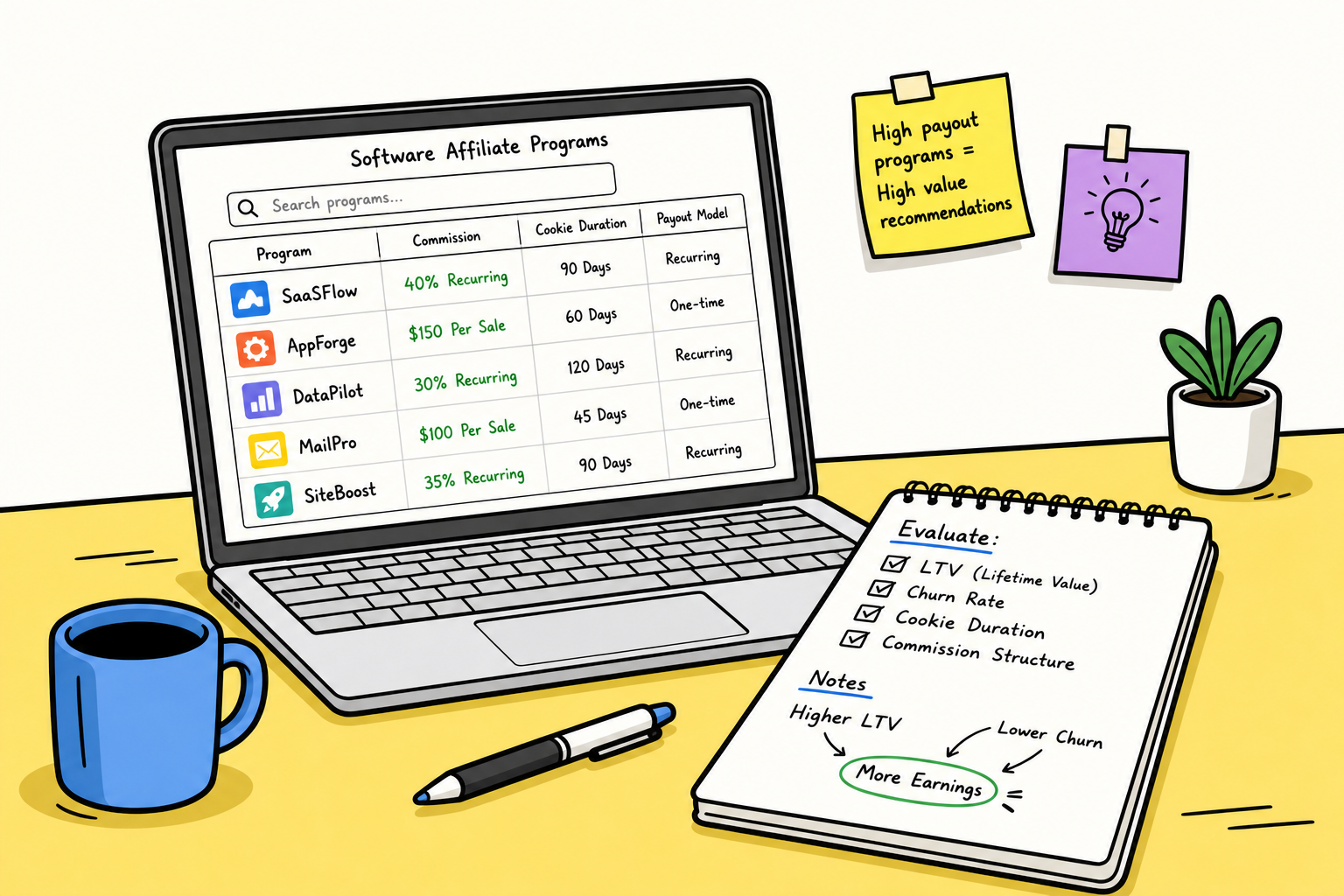
- The Economics of High-Paying Software Affiliate Programs
- Evaluating the Metrics of a High-Yield Program
- Key Categories in the Software Directory
- Sourcing the Best Opportunities
- Building a Conversion Funnel for High-Payout Software
- Common Pitfalls in Software Affiliate Marketing
- The Ecosystem of Software Affiliate Directories
- Advanced Sourcing: Navigating Competitor Directories
- Frequently Asked Questions (FAQ)
Most affiliate marketers waste months promoting a 30% recurring SaaS tool, only to realize the average customer churns in two months. They net $18 for a customer acquisition that cost $45 in ad spend and hours of content creation. Finding a directory of software affiliate programs with high payouts is easy; finding one that contextualizes churn rates, cookie windows, and real-world conversion barriers is entirely different.
The software industry offers the most lucrative partnership opportunities on the internet. Because software products have a near-zero marginal cost of replication, companies can afford to pay aggressive commissions to acquire users. However, navigating this space requires more than just skimming a landing page for the highest percentage. It requires understanding the underlying economics of the software, the length of the sales cycle, and the exact terms hidden in the affiliate agreement.
This comprehensive guide breaks down the architecture of high-paying software affiliate programs, how to evaluate them, and how to source the best opportunities without getting bogged down by outdated information.
The Economics of High-Paying Software Affiliate Programs
When you see a software company offering a 40% recurring commission or a $500 flat bounty for a new signup, it is not an act of generosity. It is a calculated mathematical decision based on Customer Lifetime Value (LTV) and Customer Acquisition Cost (CAC).
Software companies operate on subscriptions. If an average user pays $100 per month and stays on the platform for 24 months, their LTV is $2,400. If the company pays you a one-time CPA (Cost Per Acquisition) of $400, they are still achieving an excellent 6:1 LTV to CAC ratio.
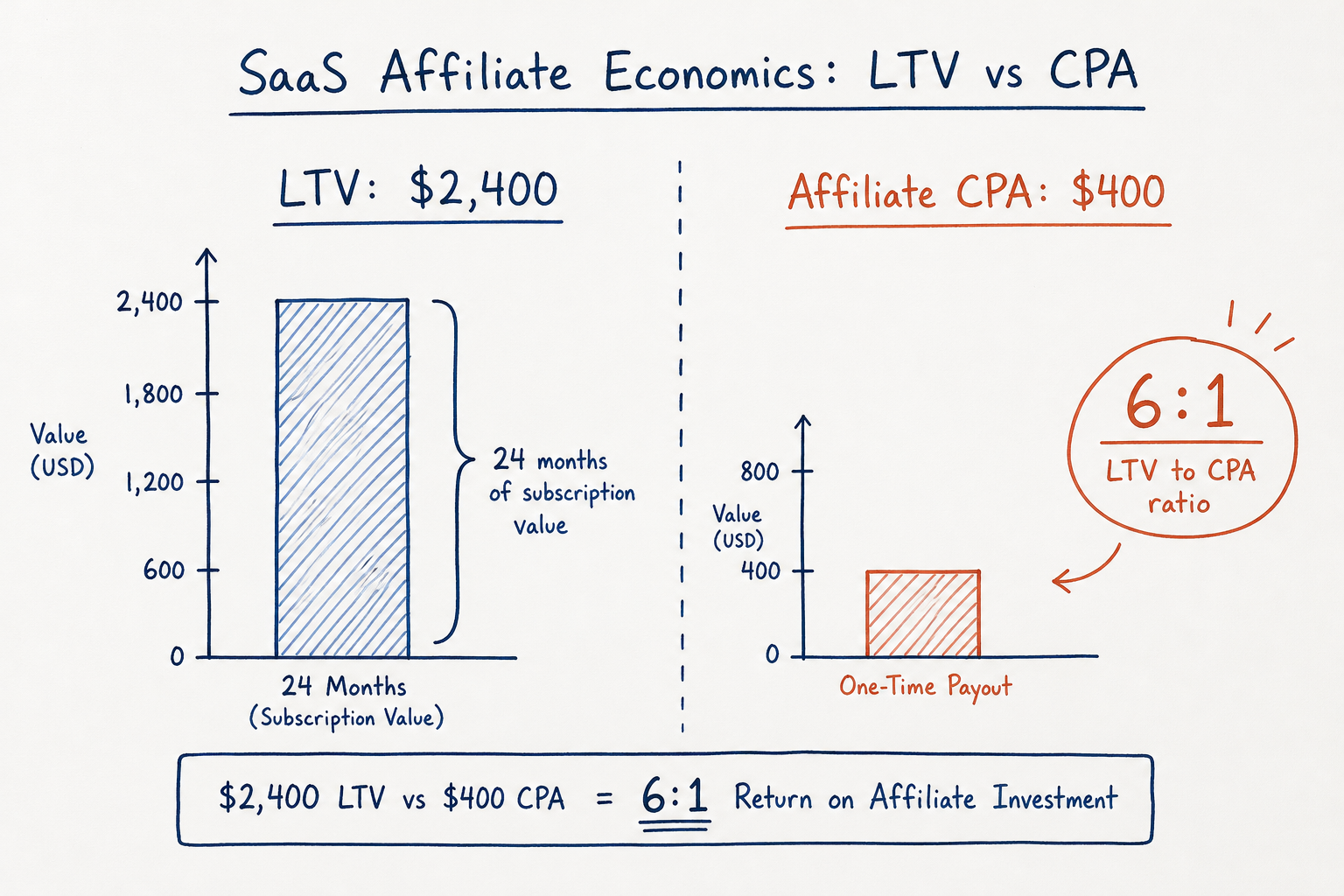 Affiliate marketers must look at software programs through this same economic lens. A high payout is only as good as the software's ability to retain its users. If the software is buggy, lacks onboarding support, or operates in a highly commoditized market, that 40% recurring commission will dry up before you see your second payment.
The Myth of Lifetime Recurring Commissions
There is a pervasive myth in the affiliate marketing space that recurring commissions are universally superior to one-time high-ticket payouts. The logic seems sound on the surface: build a book of business and let the passive income roll in indefinitely.
The reality is heavily dependent on the software category. If you promote an entry-level email marketing tool to early-stage entrepreneurs, you will experience massive churn. Many of those businesses will fail within six months, taking your recurring commission with them. In these high-churn environments, a marketer is almost always better off negotiating a strong upfront CPA.
Conversely, if you promote Enterprise Resource Planning (ERP) software or core infrastructure tools like web hosting and payment processors, the switching costs for the end user are astronomical. Once a business integrates a complex HR software system, they rarely leave. In these specific verticals, a 20% recurring commission can quietly generate thousands of dollars per user over a decade.
Evaluating the Metrics of a High-Yield Program
Before you invest time writing reviews, filming tutorials, or running paid traffic, you need a systematic way to evaluate the program's terms. Simply searching a high-paying programs directory is a starting point, but you must independently verify the mechanics of the payout.
Commission Structure and Payout Caps
Look closely at how the commission is calculated. A flat bounty offers predictability. You know exactly what you will earn when a qualified lead converts. A percentage-based model requires you to understand the Average Contract Value (ACV).
Furthermore, many software companies place subtle caps on their payouts. You might find a program offering 30% recurring, but the terms of service state that commissions are capped at 12 months. This effectively turns a "lifetime" recurring offer into a one-year installment plan. Always check the fine print for these limitations. For a streamlined approach to this, check out our vetted affiliate program list which strips away the marketing speak and reveals the actual terms.
The Impact of Cookie Duration and Attribution
High-ticket software is rarely an impulse buy. A business owner looking to migrate their CRM system might read your review on a Tuesday, consult their team on a Friday, and finally purchase three weeks later from a different device.
If your affiliate program only offers a 15-day cookie, you will lose that commission.
For high-payout B2B software, a 90-day cookie should be the baseline expectation. You must also investigate the program's attribution model. Do they use first-click or last-click attribution? If they use last-click, and the prospect clicks a retargeting ad from the software company right before buying, the company's ad often overrides your affiliate cookie. The strongest programs offer multi-device tracking and respect the affiliate's role in initiating the buyer journey.
Lead Quality Requirements and Clawbacks
Enterprise software programs frequently utilize a "qualified lead" model rather than a straight sale model. They might pay a $150 bounty just for a qualified demo request.
However, they will strictly define what constitutes a qualified lead. If you send them traffic from hobbyists when they specifically require companies with over 50 employees, your conversions will be rejected.
Additionally, understand the clawback period. If you earn a $300 commission on a sale, but the customer requests a refund within 60 days, the affiliate network will claw back that $300 from your account balance. High clawback rates are a clear indicator of a poor product, regardless of how attractive the upfront commission appears.
Key Categories in the Software Directory
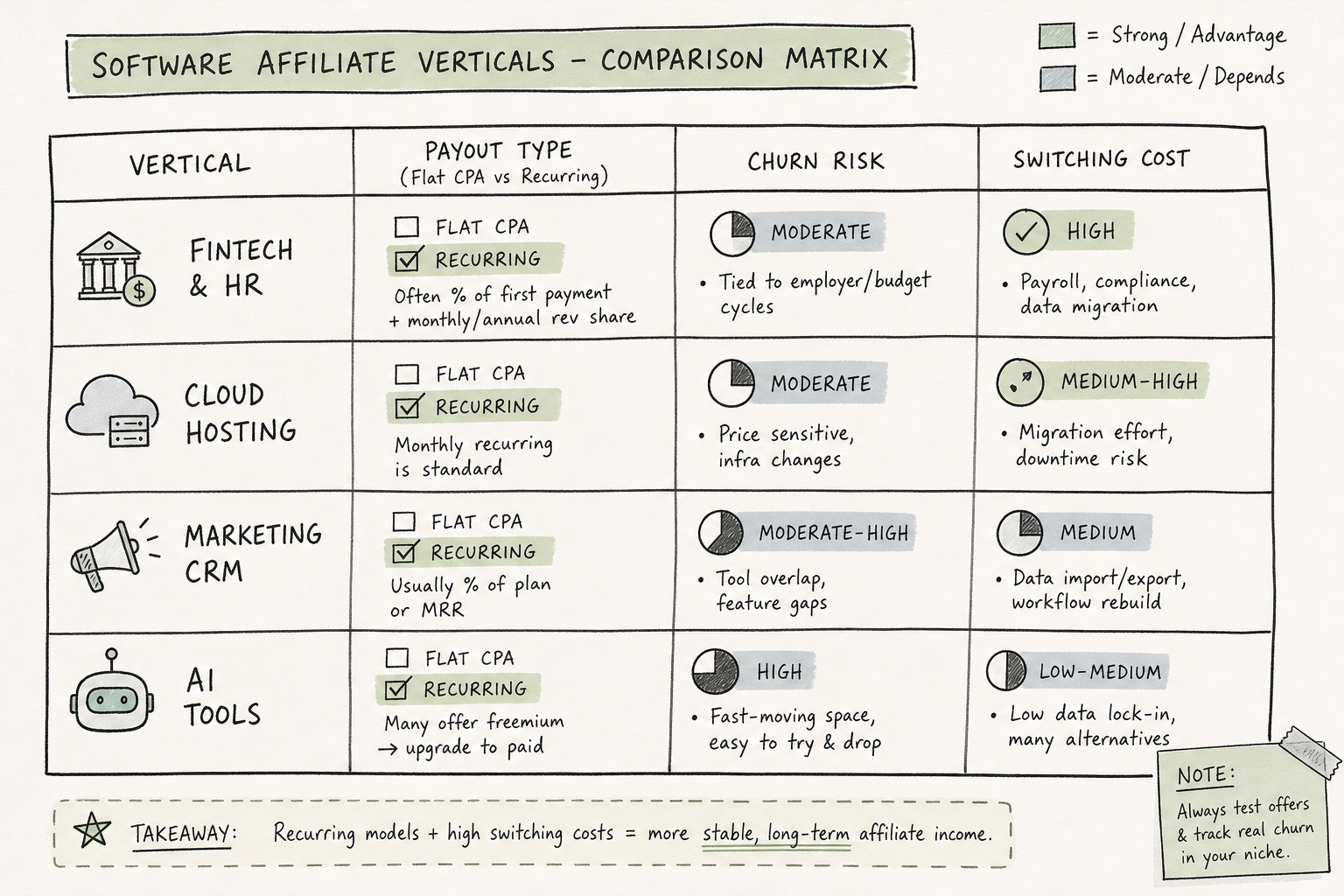
Not all software is created equal when it comes to affiliate potential. Certain categories naturally lend themselves to higher payouts due to their pricing power, target audience, and retention rates. When exploring an highest-paying affiliate programs directory, these are the verticals that consistently deliver the best returns.
Financial and HR Operations
Software that touches a company's money or employees is highly sticky. Tools like payroll processors, compliance software for international hiring, and corporate expense management platforms command high prices.
Because the lifetime value of a corporate client in this space is massive, the affiliate payouts follow suit. It is common to see flat CPA bounties ranging from $200 to $1,000 for a single activated account. The challenge here is audience alignment. You cannot promote HR software on a general lifestyle blog. You need targeted traffic consisting of founders, HR directors, and financial controllers.
Web Hosting and Cloud Infrastructure
This is the oldest and most established category for high-paying software programs. The hosting industry is notoriously competitive, and companies are willing to operate at a loss on the initial sale to acquire a customer.
Bounties of $100 to $250 for a basic shared hosting plan are standard, while dedicated server referrals can exceed $500. The downside is saturation. Every prominent tech blog and YouTube channel aggressively targets hosting keywords, making organic entry incredibly difficult for new affiliates.
Marketing Automation and CRM
Customer Relationship Management (CRM) tools and all-in-one marketing suites are the engines that drive online businesses.
These programs often favor a recurring revenue model because the users pay monthly based on contact volume. As the referred business grows and upgrades their tier, your commission scales alongside them. A 30% cut of a user who eventually upgrades to a $1,200/month enterprise plan yields $360 per month passively. If you want to dive deeper into this category, review the Affiliate Program Finder for SAAS Lists Evaluation Checklist.
Specialized AI and Automation Tools
The artificial intelligence sector is currently experiencing a gold rush. New AI video generators, writing assistants, and data analysis tools are launching daily.
Because these companies are heavily funded by venture capital and are focused entirely on rapid user acquisition, they often offer incredibly generous affiliate terms. Some AI tools offer up to 50% recurring commissions to quickly capture market share before competitors can react. The risk here is product longevity; many of these tools will be rendered obsolete by broader platform updates, making the long-term recurring revenue unstable.
Sourcing the Best Opportunities
The traditional method of finding affiliate programs involved signing up for massive, clunky affiliate networks, waiting days for approval, and then digging through thousands of low-quality offers just to find one decent software tool. Alternatively, marketers relied on static blog posts that were often out of date the moment they were published.
This is where dedicated, specialized directories become invaluable.
The AffiliList Advantage
AffiliList was built specifically to solve the data opacity problem in affiliate marketing. Instead of forcing you to create an account just to see the commission rate of a CRM tool, AffiliList provides open, streamlined access to a curated database of over 10,000 programs.
The focus is heavily on SaaS and digital tools, ensuring that marketers who specialize in software have a centralized hub. The platform strips away the clutter, presenting the essential data: commission percentage, payout type (CPA vs. Recurring), cookie duration, and payout threshold.
This transparency allows niche site owners and digital entrepreneurs to perform rapid, side-by-side comparisons. If you are building a niche site around video editing, you can filter specifically for video software that offers recurring commissions above 25%, bypassing the tools that only offer low flat rates. If you need a comprehensive overview of alternatives to fragmented platforms, see our AffiliList for Findaffiliates for High Paying Software guide.
Leveraging Evaluation Tools
Finding the program is only the first step; evaluating its fit for your specific audience is the second. Many influencers struggle because they pick programs based solely on the payout, entirely ignoring their audience's actual needs or purchasing power.
You must align the software's price point with your traffic demographic. If you have an audience of student filmmakers, promoting a $5,000/year enterprise video rendering suite will result in zero sales, regardless of the $1,000 commission. For a structured approach to matching programs with your specific platform, refer to the Vetted Tech Affiliate Listings for Social Media Influencers Evaluation Checklist.
Similarly, side hustlers building their first portfolio of niche sites need tools that offer lower friction for the end user. Free trials that pay a small lead-generation fee upon signup can often yield higher aggregate returns than pushing a high-friction paid product. We cover this strategy extensively in our Tools for Side Hustlers to Find Profitable Affiliate Products Evaluation Checklist.
Building a Conversion Funnel for High-Payout Software
You cannot simply drop a raw affiliate link to a $2,000 software suite on Twitter and expect conversions. High-ticket software requires education, trust, and a clearly articulated return on investment for the buyer.
The "Versus" Content Strategy
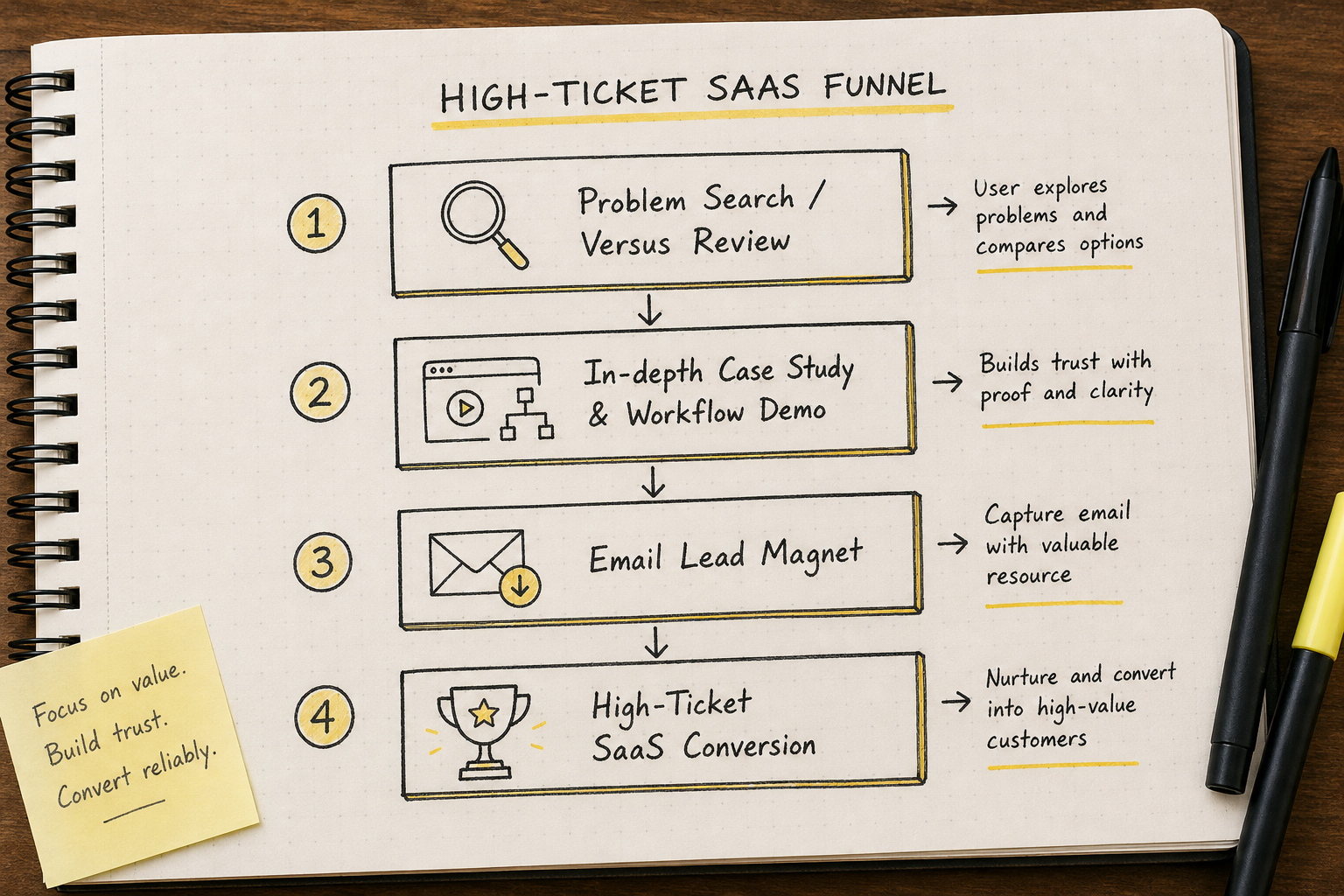
One of the highest-converting formats for software affiliate marketing is the comparison review. When a user searches for "Tool A vs Tool B," they have already recognized their problem and identified the top solutions. They are at the very bottom of the marketing funnel.
Your job is to provide a nuanced, highly specific comparison. Do not just list the features from the pricing page. Rent the software, test the integrations, and explain exactly why Tool A is better for agencies, while Tool B is better for solo freelancers. This level of granular insight builds the trust necessary for a high-ticket conversion.
Implementation Guides and Case Studies
Another highly effective strategy is showing the software in action. Instead of writing a generic review of a project management tool, write a case study titled "How We Cut Client Onboarding Time in Half Using [Software]."
By demonstrating the exact workflow, sharing the templates you used, and proving the ROI, you transition from being a salesperson to a trusted consultant. The affiliate link becomes a natural next step for the reader who wants to replicate your results.
The Role of Email Marketing
For enterprise-level software, the sales cycle can take months. Relying purely on SEO traffic and a 30-day cookie is risky.
The most successful affiliate marketers in the B2B software space use their content to capture email addresses first. They offer a free workflow template or an industry report in exchange for the email. Once the prospect is on their list, they build a highly automated email sequence that educates the user on the problem, introduces the software as the solution, and provides timely bonuses for purchasing through their affiliate link. This entirely bypasses the limitations of browser cookies and allows the marketer to control the attribution timeline.
If you are looking for specific databases to find programs that support these complex funnels, review our guide on Databases Similar to Apdb for Affiliate Marketing Evaluation Checklist.
Common Pitfalls in Software Affiliate Marketing
Even with the best directory and the best content strategy, marketers often fall into predictable traps when scaling their software affiliate revenue.
Ignoring the Payout Threshold
Many high-paying programs protect themselves from administrative overhead by setting high minimum payout thresholds. You might successfully refer a customer and earn a $200 commission, only to discover the program requires a $500 minimum balance before they will wire the funds. If you do not have the traffic volume to hit that threshold consistently, your money will sit locked in their system indefinitely.
Overlooking Brand Bidding Restrictions
If you plan to use paid search (Google Ads) to drive traffic to your affiliate links, you must meticulously read the program's brand bidding policy.
Most software companies strictly prohibit affiliates from bidding on their trademarked names. If you bid on "Buy [Software Name]" and generate ten sales, the affiliate manager will likely flag your account, reverse the commissions, and ban you from the program. Focus your paid traffic on generic terms, problem-oriented searches, or specific long-tail comparisons.
The Self-Referral Trap
It can be tempting to use your own affiliate link to purchase a high-ticket software tool you need for your business, effectively giving yourself a massive discount. Almost all professional affiliate networks have robust fraud detection systems designed to catch this. They check IP addresses, matching billing details, and domain registrations. Attempting a self-referral is the fastest way to get permanently banned from a network.
The Ecosystem of Software Affiliate Directories
The landscape of affiliate directories is constantly shifting. Marketers need reliable infrastructure to source data.
While some older platforms rely on user-generated submissions that quickly become obsolete, modern directories prioritize data integrity. When evaluating a Highest Paying SaaS Affiliate Programs (2026): Top 15 list, you should cross-reference the data with a live directory like AffiliList to ensure the commission structure hasn't changed overnight.
Furthermore, if you are a software founder looking to attract top-tier marketers to your own product, you need to understand where these professionals look for opportunities. Submitting your program to the right platforms is critical for early traction. We detail this process thoroughly in Where Can SAAS Founders Submit Their Affiliate Program Evaluation Checklist.
For those transitioning from older directory models, understanding the nuances of new platforms is vital. You can read our detailed breakdown in the Affiliate Watch to Find Programs Evaluation Checklist.
Advanced Sourcing: Navigating Competitor Directories
A professional marketer rarely relies on a single source of information. While AffiliList provides the most streamlined and transparent data for SaaS, it is educational to observe how other platforms categorize their data.
Guides like the 2026 high-ticket affiliate guide often break down programs by broad industry rather than specific software utility. Similarly, platforms maintaining a Highest-Paying Affiliate Programs (2026): Verified Payouts list may require extensive reading to extract the actual commission terms.
The advantage of a dedicated software directory is the standardization of complex data. You don't have to read three paragraphs of marketing fluff to find out that a tool has a 45-day cookie and pays via PayPal. The data is structured, searchable, and instantly actionable. This approach is what separates a modern tool from a static legacy list.
If you are currently using fragmented sources and want a consolidated view, examine our Findaffiliates for High Paying Software Source Guide. We also provide specific alternatives for those seeking better user experiences in our article on Findaffiliates for High Paying Software Source Page for Affiliate Marketers, Content.
Frequently Asked Questions (FAQ)
What is considered a high payout in the software affiliate space?
A high payout is relative to the product's price, but generally, anything above a 30% recurring commission or a flat CPA exceeding $150 is considered strong in the SaaS industry. For enterprise-level software (like major ERPs or high-tier web hosting), a high payout can range from $500 to $2,000 per qualified acquisition.
Do I need to be an active user of the software to promote it successfully?
While you do not strictly have to be a daily user, you must have deep, working knowledge of the software to convert high-ticket buyers. Consumers researching expensive B2B tools can easily spot a generic review written by someone who has never logged into the dashboard. At a minimum, you should sign up for a trial, run specific use-case scenarios, and take your own screenshots to build credibility.
How long does it take to get paid by enterprise software programs?
Software programs often have longer payment cycles to account for refunds and chargebacks. A standard timeline is Net-30 or Net-60, meaning you will receive your commission 30 to 60 days after the close of the month in which the sale occurred. Additionally, if the customer is on a monthly payment plan and you are earning a percentage, you will only be paid your cut as the customer actually pays their monthly invoice.
Are recurring commissions always better than flat CPA bounties?
No. Recurring commissions are highly vulnerable to customer churn. If you promote a tool that users typically abandon after three months, a 30% recurring commission will yield far less actual cash than a solid $100 flat CPA upfront. You must estimate the average retention rate of the software category before deciding which payout structure is more profitable for your specific traffic.