
Square Affiliate Program: 2026 Payouts and Signup Guide
Discover how the Square Affiliate Program works in 2026. Learn about ecosystem payouts, revenue-generating events, cookie policies, and B2B SaaS strategies.
Most affiliate marketers start their journey promoting low-ticket physical products on Amazon or consumer software that churns out users within three months. But if you want to build a sustainable, high-revenue portfolio in 2026, you need to pivot to B2B ecosystems.
B2B software provides higher lifetime values, lower churn, and significantly better payouts. This is why the Square Affiliate Program has become a primary target for professional content creators, niche site owners, and digital consultants.
Unlike traditional single-point solutions, Square isn't just a white card reader anymore. It is an expansive suite of business operating tools spanning payroll, retail management, restaurant point-of-sale systems, and website builders. As an affiliate, this ecosystem approach is your biggest advantage. You aren't just selling a piece of hardware; you are introducing business owners to an interconnected platform where a single referral can trigger lucrative commissions across multiple software tiers.
However, Square’s program isn't a free-for-all. They employ strict tracking mechanisms, specific "revenue-generating event" triggers, and require professional web properties for approval.
In this comprehensive 2026 guide, we'll break down how the Square Affiliate Program works, how commissions are structured across its vast product line, and the exact strategies you can use to turn small business traffic into consistent affiliate revenue.
The B2B Ecosystem Advantage
When evaluating affiliate programs, the concept of the "ecosystem" is arguably the most important metric. If you promote a standalone invoicing tool, your earning potential stops at the invoice.
Square operates differently. A small business owner might click your affiliate link because they are looking for a simple mobile card reader for a pop-up shop. But once they enter the Square ecosystem, they might realize they also need Square Payroll to pay their weekend staff, Square Invoices for corporate orders, and a Square Website to sell leftover inventory online.
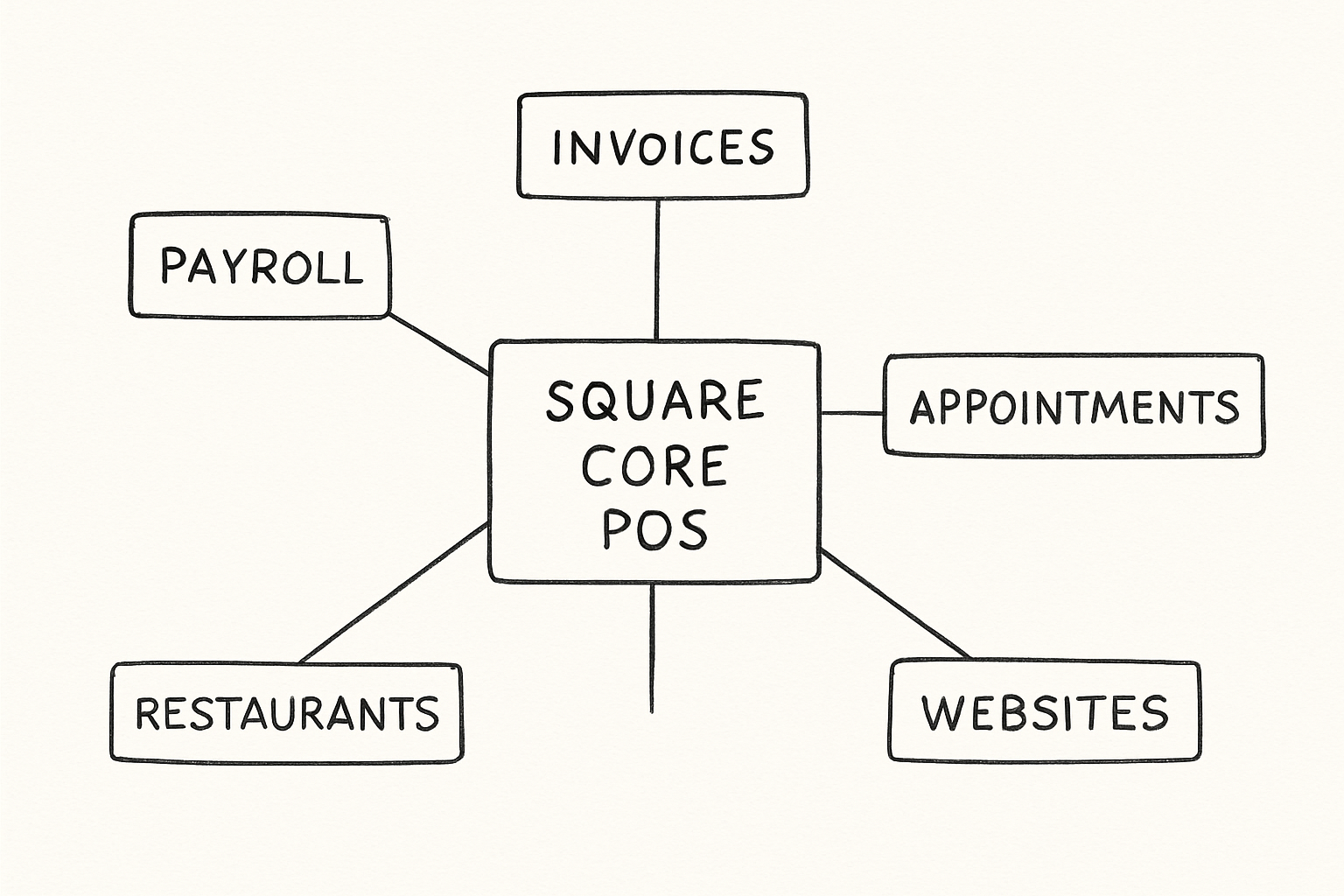 This interconnected web means your affiliate links function as an entry point into a multi-layered sales funnel heavily optimized by Square's own marketing team. Your job is simply to get the right business owner through the front door. If you've been exploring the best niches for affiliate marketing, B2B SaaS ecosystems like this are at the top of the food chain.
What Constitutes a "Revenue-Generating Event"?
A critical term you will see repeated throughout Square’s affiliate documentation is the "revenue-generating event."
In consumer affiliate programs, you often get paid for a simple email sign-up (CPL) or a direct checkout purchase (CPA). Square, however, requires a specific action to occur before a lead is considered "qualified" and a commission is paid.
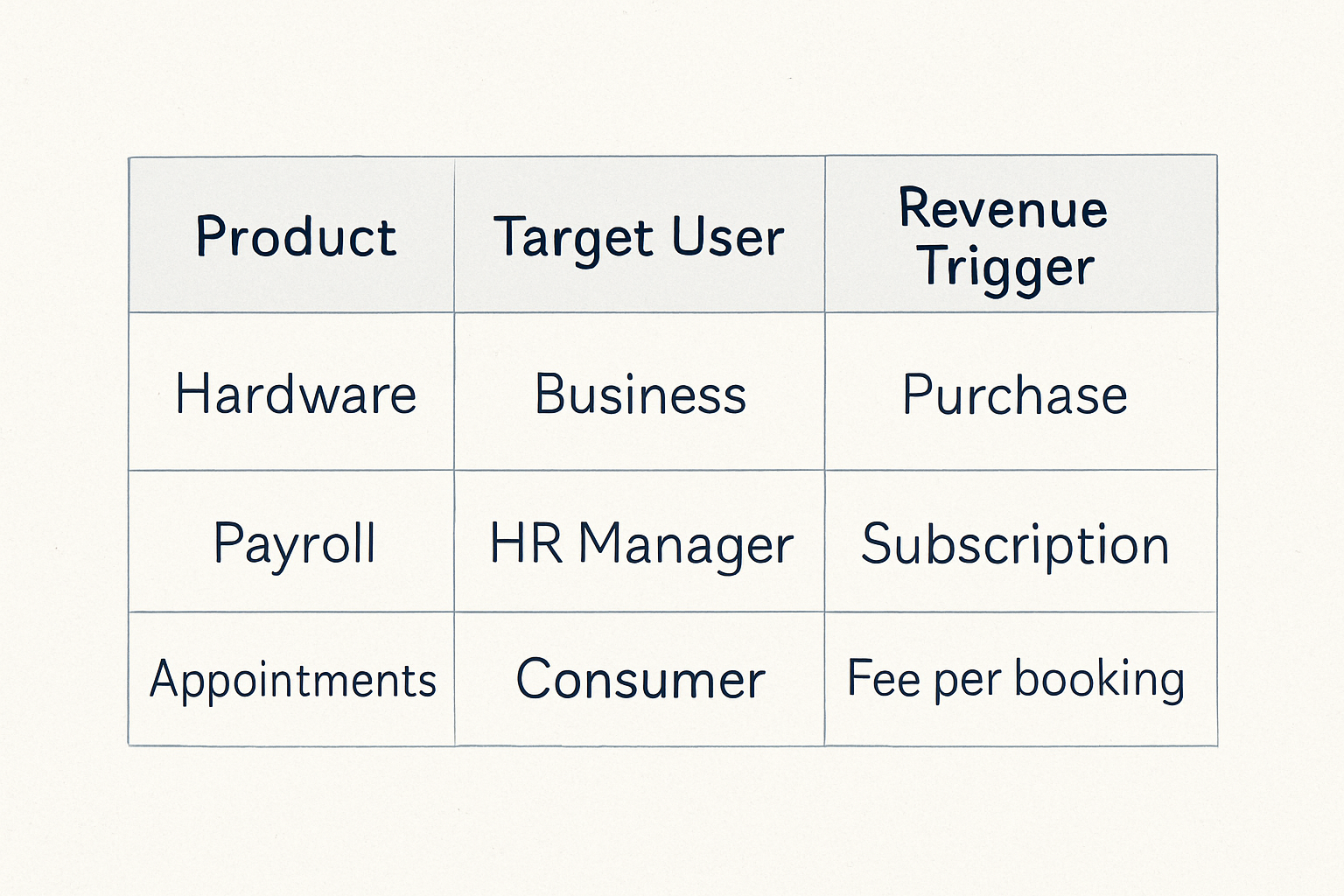
Because Square offers many of its core Point of Sale (POS) tools for free—making money off the transaction fees—an affiliate doesn't get paid just because a user creates a free Square account.
Instead, a revenue-generating event typically means the referred user has done one of the following:
- Processed their first credit card payment using Square's free POS app.
- Purchased physical hardware (like a Square Register or Square Terminal) directly from the Square Shop.
- Upgraded to a paid subscription for premium software like Square for Restaurants Plus or Square Payroll.
Understanding this distinction is vital for your content strategy. If you drive thousands of sign-ups who never actually run a transaction, your payout will be zero. Your content must attract active business owners who are ready to deploy the tool immediately, rather than casual tire-kickers.
Square's Eligible Products: Payout Triggers and Angles
To maximize your earnings, you need to understand the nuances of the different products under the Square umbrella. You earn when your referrals complete a revenue-generating event across any of Square's eligible products.
Let's break down the core offerings, what triggers the commission, and the best way to position them to your audience.
Square Payments and Point of Sale (POS)
The foundational products of the ecosystem. Square POS is a free app that turns any smart device into a payment terminal.
- The Trigger: The user must create an account and successfully process a minimum threshold of live payments (a revenue-generating event).
- The Angle: Target new business formations, side hustlers, and mobile service providers. Articles like "Best payment processors for food trucks" or "How to accept credit cards at craft fairs" convert incredibly well here.
Square Hardware
Square offers a range of hardware, from the simple $49 Square Reader to the fully integrated $799 Square Register.
- The Trigger: A direct purchase of hardware through the Square online store.
- The Angle: Hardware searches carry extremely high buyer intent. Create deep-dive comparison reviews. For example, "Square Terminal vs. Clover Flex" or "Is the Square Register worth the investment for coffee shops?" Buyers searching for these terms already have their wallets out.
Square Payroll
Payroll is notoriously complex, and small business owners are desperate for solutions that integrate seamlessly with their time-tracking and sales data.
- The Trigger: The business runs its first paid payroll cycle using the software.
- The Angle: Emphasize the integration. If a business already uses Square for sales, using Square Payroll means employee hours and commissions are calculated automatically. Target searches related to "Best payroll software for retail employees" or "How to pay hourly staff easily."
Square for Retail
This is a specialized POS system designed specifically for inventory-heavy retail stores, featuring advanced barcode scanning, vendor management, and multi-location tracking.
- The Trigger: The user subscribes to the paid "Plus" plan or processes a set amount of volume on the free tier.
- The Angle: Speak directly to boutique owners, independent bookstores, and apparel shops. Address the nightmare of stockouts and inventory reconciliation.
Square Appointments
A scheduling software integrated with payment processing, designed for service professionals like barbers, nail salons, and consultants.
- The Trigger: The user upgrades to a premium multi-staff plan or processes a payment through the booking link.
- The Angle: Focus on "no-show" protection. Square Appointments allows businesses to require a credit card on file to book. Content focusing on "How to stop client no-shows" naturally leads to a Square Appointments recommendation.
Square for Restaurants
A massive growth sector for Square. This tool handles table management, course firing, kitchen display systems (KDS), and auto-gratuity.
- The Trigger: The restaurant begins processing payments through the restaurant-specific POS or subscribes to the Plus plan.
- The Angle: The restaurant tech space is fiercely competitive. Compare Square directly against Toast or TouchBistro. Focus on the low barrier to entry—many legacy restaurant systems require long-term contracts, whereas Square offers month-to-month flexibility.
Square Invoices
A digital invoicing tool for B2B service providers, contractors, and freelancers to send estimates and collect payments online.
- The Trigger: A user sends an invoice and the client pays it online via credit card or ACH.
- The Angle: Target freelancers, agency owners, and home service providers (plumbers, HVAC). If you write content around how to build a profitable side hustle, teaching your audience how to properly invoice clients is a natural fit for this product.
Square Virtual Terminal
Allows businesses to manually enter credit card details on a computer without needing a physical card reader.
- The Trigger: The user processes a remote payment using the web-based terminal.
- The Angle: Best for B2B companies, medical billing offices, and remote consulting businesses that take orders over the phone.
Square Websites (Square Online)
Following Square's acquisition of Weebly, they built out Square Online to allow local businesses to easily spin up eCommerce stores or curbside pickup portals.
- The Trigger: Publishing a site and completing a qualifying online transaction or upgrading to a premium tier.
- The Angle: Focus on "omnichannel" selling. Explain how creating a Square Website allows retail stores to automatically sync their physical shelf inventory with their online store without dual-entry.
Commission Structures, Tracking, and Reporting
The exact dollar amounts for Square's payouts can fluctuate based on promotions, the affiliate network they are currently prioritizing (such as Impact Radius or PartnerStack), and the specific geography of the referral. However, understanding the model is more important than memorizing a transient dollar figure.
In the B2B affiliate space, tracking and attribution are paramount. Business software isn't bought on impulse; it requires research, committee approval, and technical deployment.
Payout Models You Can Expect
When looking at B2B affiliate platforms offering high commissions, you'll generally encounter two models: Revenue Share (RevShare) and Cost Per Action (CPA).
Square heavily leans toward the CPA model for its affiliate program.
- Hardware Sales: Usually calculated as a percentage of the cart value (e.g., 1% to 4% of the hardware price). A $799 Register will yield a moderate flat commission.
- Software Activations: This is where the money is. Driving a qualified activation for a complex product like Square Payroll or Square for Restaurants can yield flat CPA payouts ranging anywhere from $20 to $100+ depending on the specific product tier and your volume tier as an affiliate.
If you want to dive deeper into programs that offer massive CPAs, check out our guide on high paying affiliate programs for $500+ commissions.
Cross-Product Attribution
One of the most frequently asked questions is: "Do I earn commission credits if someone clicks a product on my site and then buys a different product?"
The answer is generally yes, within the bounds of the tracking software. Because Square uses robust enterprise tracking (often managed through platforms like Impact), their system drops a universal cookie.
Scenario: You write an article about "Best Invoicing Tools" and link to Square Invoices. A graphic designer clicks the link. While exploring the site, they realize they actually need a website builder and purchase a premium Square Website subscription instead.
Thanks to the ecosystem tracking, the affiliate program knows you drove that lead to the domain. As long as the purchase happens within the cookie window, you will receive credit for the revenue-generating event associated with the product they actually activated.
The Cookie Policy (Return Days)
What is Square's return days or cookie policy? While the exact duration can be subject to change based on network updates, B2B SaaS programs typically offer cookie durations ranging from 30 to 45 days.
This window is critical because B2B purchase cycles are longer. A restaurant owner might click your link on a Tuesday to read about Square for Restaurants, but won't actually sign up and buy the hardware until they consult their business partner two weeks later. As long as they haven't cleared their cookies or clicked another affiliate's link in the interim (last-click attribution), you secure the commission.
How Product Returns and Account Deactivations Affect Commissions
Affiliate marketing requires legitimate, high-quality traffic. If you are wondering how product returns and account deactivations affect your commission, the answer is straightforward: Clawbacks.
If a user buys a Square Terminal through your link, you are credited the commission. If that user returns the Terminal within Square's 30-day hardware return window, the affiliate network will reverse (claw back) that commission from your dashboard.
Similarly, if a user signs up for Square Payments, processes one fake transaction to trigger your CPA, and then deactivates the account (or is shut down by Square's risk department for fraud), your commission will be voided.
This protects the integrity of the program. It reinforces the need for affiliates to generate legitimate marketing offers rather than trying to game the system with low-quality incentivized clicks.
How to Apply and Get Approved
Applying to the Square Affiliate Program isn't as simple as clicking a button and instantly getting a link. Square protects its brand fiercely and manually reviews applications to ensure partner alignment.
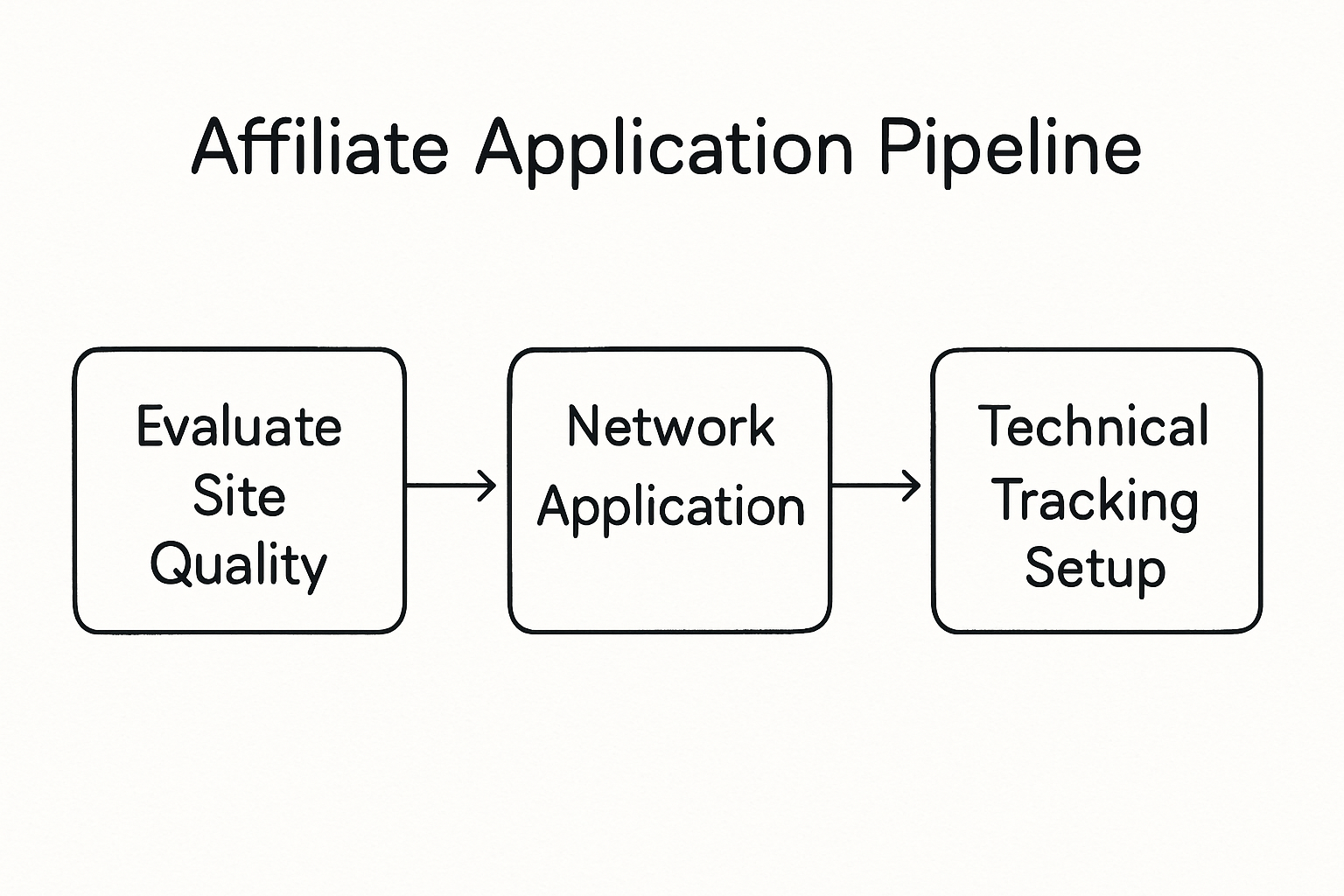
Step 1: Evaluate Your Platform
"Is my website eligible for the Affiliate Program?"
Square requires affiliates to have an established, professional online presence. If you only have a brand new Instagram account with 50 followers, you will likely be rejected.
Eligible websites typically include:
- B2B SaaS review blogs.
- Small business resource hubs.
- Industry-specific publications (e.g., a blog dedicated entirely to running a successful coffee shop).
- YouTube channels focused on business software or finance.
Your site must have an active SSL certificate, professional design, organic traffic, and content directly relevant to business owners. If you are just starting out, reading up on how to start a profitable affiliate marketing blog will give you the foundational steps needed to pass manual reviews.
Step 2: The Application Process
Square typically routes affiliates through major third-party networks (like Impact).
- Are there any fees? No. It is entirely free to apply and participate in the Square Affiliate Program. Never pay a third party promising to "expedite" your application.
- Multiple Websites: "If I have multiple websites, do I need to apply separately for each?" Usually, affiliate networks allow you to manage multiple web properties under a single account ID. However, you must list all domains where you intend to promote Square so their compliance team can vet them. Promoting links on unapproved domains can result in account termination.
Step 3: Technical Implementation
Once approved, you will gain access to a dashboard containing your unique tracking IDs, banners, and text links.
You may also be provided with specific JavaScript snippets to help with advanced tracking or to embed dynamic widgets. It is crucial to implement these correctly. If you use ad-blockers or aggressive caching on your site, ensure they aren't stripping out the required affiliate tracking parameters from your outbound URLs.
3 Highly Profitable Angles for Promoting Square in 2026
Approval is just the beginning. The real work is driving targeted traffic. Generic "Square Review" articles are highly competitive and dominated by massive financial publishers.
To succeed, you need to niche down. Here are three strategies that are crushing it in 2026.
1. The "Tech-Stack" Content Strategy
Instead of reviewing Square in isolation, write content that helps business owners build an entire operational tech stack.
Example Article Idea: "The Ultimate Tech Stack for a Mobile Pet Grooming Business." In this article, you recommend a specific CRM, a specific insurance provider, and Square Appointments for scheduling and payments.
By packaging the recommendation inside a highly specific use case, you capture high-intent readers who are looking for a done-for-you blueprint. This is one of the most profitable affiliate marketing niches to target because it combines multiple software commissions into one post.
2. The Migration Blueprint
Business owners hate migrating software, but they will do it if the pain of their current system is high enough.
Target long-tail keywords based on frustrations with legacy POS systems. Example Article Idea: "How to Switch from Micros to Square for Restaurants Without Losing Your Data."
Provide a step-by-step tutorial on exporting menus, retraining staff, and setting up the new Square hardware. You are acting as a digital consultant. By removing the friction of the migration, the reader is much more likely to click your link and execute the switch.
3. Visual Search and Pinterest Pipelines
While Google is highly competitive, visual search engines are often underutilized for B2B software.
Hardware aesthetics matter to modern retail owners. A beautifully designed boutique doesn't want an ugly, clunky cash register ruining their front desk. Create aesthetic boards featuring the sleek Square Register or Square Terminal integrated into minimalist, modern retail setups.
Link these pins to your detailed blog posts about retail management. If you aren't familiar with this traffic source, our guide on setting up affiliate marketing on Pinterest outlines the exact workflow for visual software promotion.
Square Partner Programs vs. Competitors
When writing about Square, acknowledging the competition actually increases your credibility and conversion rates.
Your readers are likely comparing Square to Shopify POS, Clover, and Toast.
- Square vs. Shopify POS: Shopify is generally preferred by businesses that are eCommerce first with a smaller physical retail footprint. Square is the dominant choice for businesses that are brick-and-mortar first with a secondary online presence. Make this distinction clear in your content.
- Square vs. Clover: Clover is heavily tied to traditional merchant service providers and banks, often requiring long-term contracts. Square's massive advantage is its transparent, flat-rate pricing and lack of lock-in contracts. Highlight this as a major selling point for risk-averse small businesses.
- Square vs. Toast: Toast is an absolute powerhouse in the restaurant space, but its hardware and onboarding costs can be prohibitive for a small, single-location cafe. Position Square for Restaurants as the accessible, rapid-deployment alternative to Toast.
By helping the reader make an informed decision, you build trust. And trust is the ultimate conversion multiplier.
Frequently Asked Questions (FAQ)
Navigating corporate affiliate programs can be dense. Let's address some of the most specific questions affiliates have about the Square program operations.
Can I become an affiliate if I live outside the United States?
Yes, but with caveats. Square operates internationally in countries like Canada, the UK, Australia, Japan, and parts of Europe. You can be based outside the US, but your promotional efforts must align with the regions where Square actually processes payments. Furthermore, Square often runs regional affiliate programs (e.g., a specific Square INT Affiliate Program). Ensure you apply for the program that matches your audience's geography.
Is there a minimum annual threshold?
Most enterprise affiliate programs do not have a strict "annual quota" you must hit to keep your account open, but they do have payment thresholds. For example, you may need to accumulate $50 in commissions before the network will initiate a payout to your bank account.
When and how do I get paid?
Payments are processed through the hosting affiliate network (such as Impact). Typically, commissions are "locked" a certain number of days after the end of the month (to account for the return and clawback window). Once locked, they are paid out on the network's standard schedule (e.g., Net-30 or Net-60) via direct deposit, PayPal, or wire transfer.
Can I use images from Square on my websites?
Yes, but you must use the approved assets provided in the affiliate portal. Square provides high-resolution product imagery, compliant banners, and proper brand guidelines. Do not scrape images from their homepage or alter their logos, as this can lead to compliance violations.
Does Square have a dedicated program manager to contact for more questions?
Yes. Enterprise-level affiliate programs provide access to dedicated affiliate managers or an agency team. If you are driving significant volume, you can reach out to these managers to negotiate custom CPAs, request specialized landing pages, or ask for clarification on tracking issues.
I do not know some of the terminology used here. Where can I learn more?
If terms like CPA, RevShare, Last-Click Attribution, or Cookie Duration are new to you, you are treating affiliate marketing as a hobby rather than a profession. To step up your game, explore the resources available for affiliate marketing jobs to understand the metrics that major companies expect you to track and optimize.
Final Thoughts: Building a B2B Portfolio
The Square Affiliate Program is not a "get-rich-quick" scheme. It requires you to produce high-value, educational content that solves real operational problems for business owners.
However, the payoff is substantial. By promoting a comprehensive ecosystem rather than a single tool, you maximize the earning potential of every click. You help a local cafe streamline their orders, a freelance consultant handle their invoices, and a retail shop manage their inventory—all while building a robust, predictable affiliate income stream for yourself.
Start by identifying which of the 9 profitable affiliate niches best aligns with your current audience, apply to the program, and begin integrating Square's solutions into your business tech stack recommendations today.