
How to submit your affiliate program to top directories
Learn how to submit your affiliate program to top directories. Follow this step-by-step guide to get approved, attract top affiliates, and scale distribution.
- Understanding the Affiliate Directory Ecosystem
- The Prerequisites: What You Need Before You Submit
- How to Optimize Your Affiliate Landing Page
- Selecting the Right Directories for Your Niche
- The Step-by-Step Directory Submission Process
- Analyzing the ROI of Directory Submissions
- Common Pitfalls That Get Your Submission Rejected
- Beyond Directories: Where Else to Find Affiliates
- The Long-Term Play: Updating and Maintaining Your Listings
- Frequently Asked Questions
You spent weeks setting up your affiliate program. You integrated the tracking software, defined your commission tiers, and polished a landing page. You launched the program, expecting a flood of content creators and niche site owners ready to promote your product. Instead, you hear crickets.
Building an affiliate program is only the first ten percent of the process. The remaining ninety percent is distribution—getting your offer in front of marketers who have the audience you need. While cold outreach and social media have their place, the highest-intent channel for recruiting partners is the affiliate directory. Marketers actively browse these hubs to find reliable, lucrative offers. But submitting your program blindly to every list on the internet usually results in low-quality applicants, coupon-spam sites, and wasted time.
To get your affiliate program listed in directories successfully, you need to prepare your core program details, choose the right platforms, and submit your application tailored to each directory's audience. Doing this correctly ensures you attract professional marketers rather than amateur spammers.
Understanding the Affiliate Directory Ecosystem
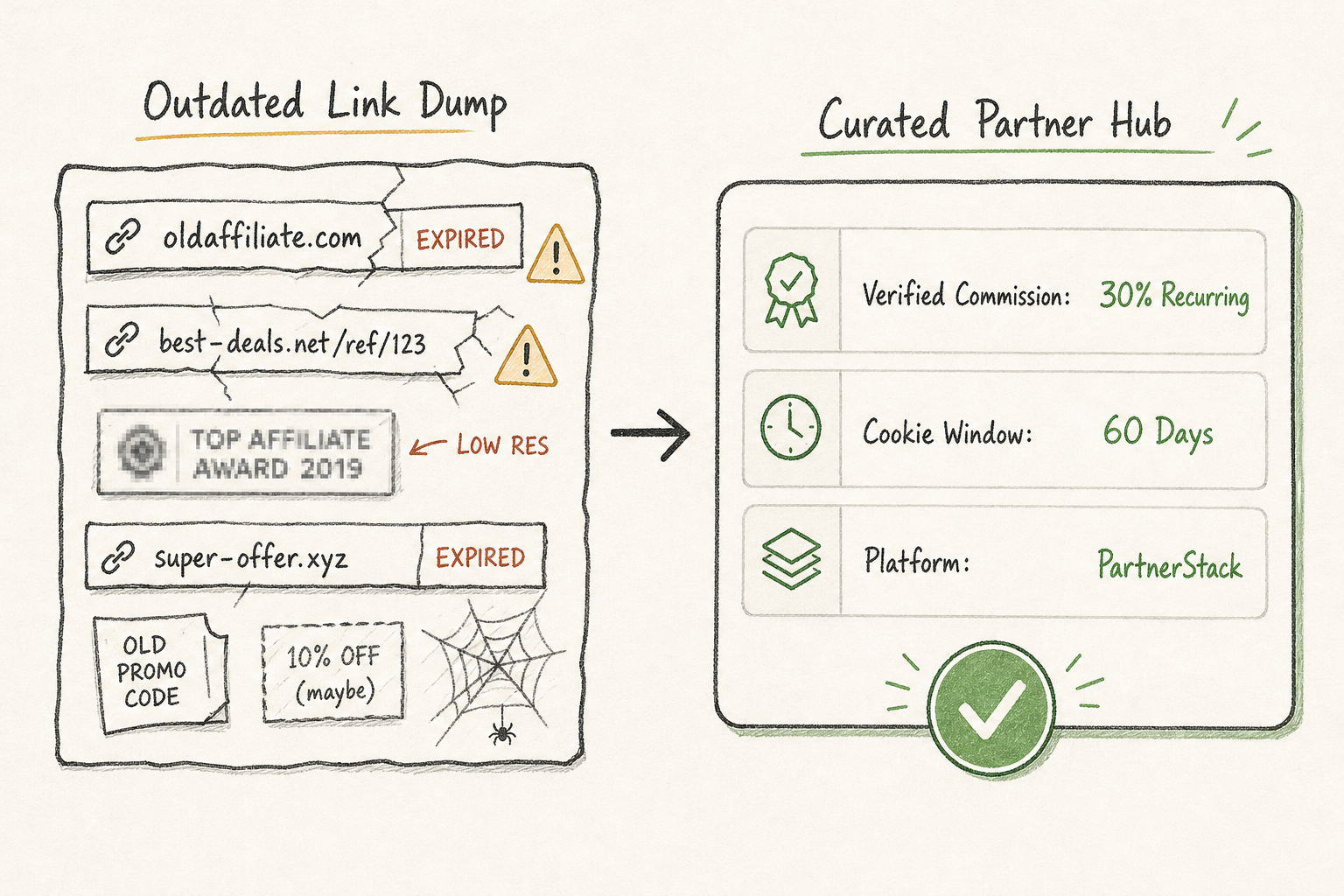
Not all directories are created equal. The landscape of affiliate program databases has fractured into two distinct categories: the old-school, cluttered link farms, and the modern, highly curated hubs.
Historically, affiliate directories were essentially SEO link dumps. Merchants would submit a brief description and a URL, and the directory would publish it without verification. These platforms were riddled with dead links, expired offers, and networks that no longer existed. For a professional affiliate marketer, browsing these sites was an exercise in frustration.
Today, top-tier affiliates rely on curated, vetted databases. They look for platforms that offer transparency, verified data, and advanced filtering options. When you submit your program to a modern directory, you are not just dropping a link; you are pitching a business partnership to professional marketers who rely on accurate commission data to run their cash-flow models.
If you run a SaaS company or a digital product business, understanding this shift is critical. You must position your submission to survive the editorial standards of the directory manager, while simultaneously appealing to the financial goals of the affiliate viewing your listing.
The Prerequisites: What You Need Before You Submit
Before reaching out to directories or filling out submission portals, ensure your program is actually ready for public scrutiny. Most high-quality directories have strict evaluation criteria. If your landing page is vague or your tracking setup is incomplete, your submission will be rejected before it ever sees the light of day.
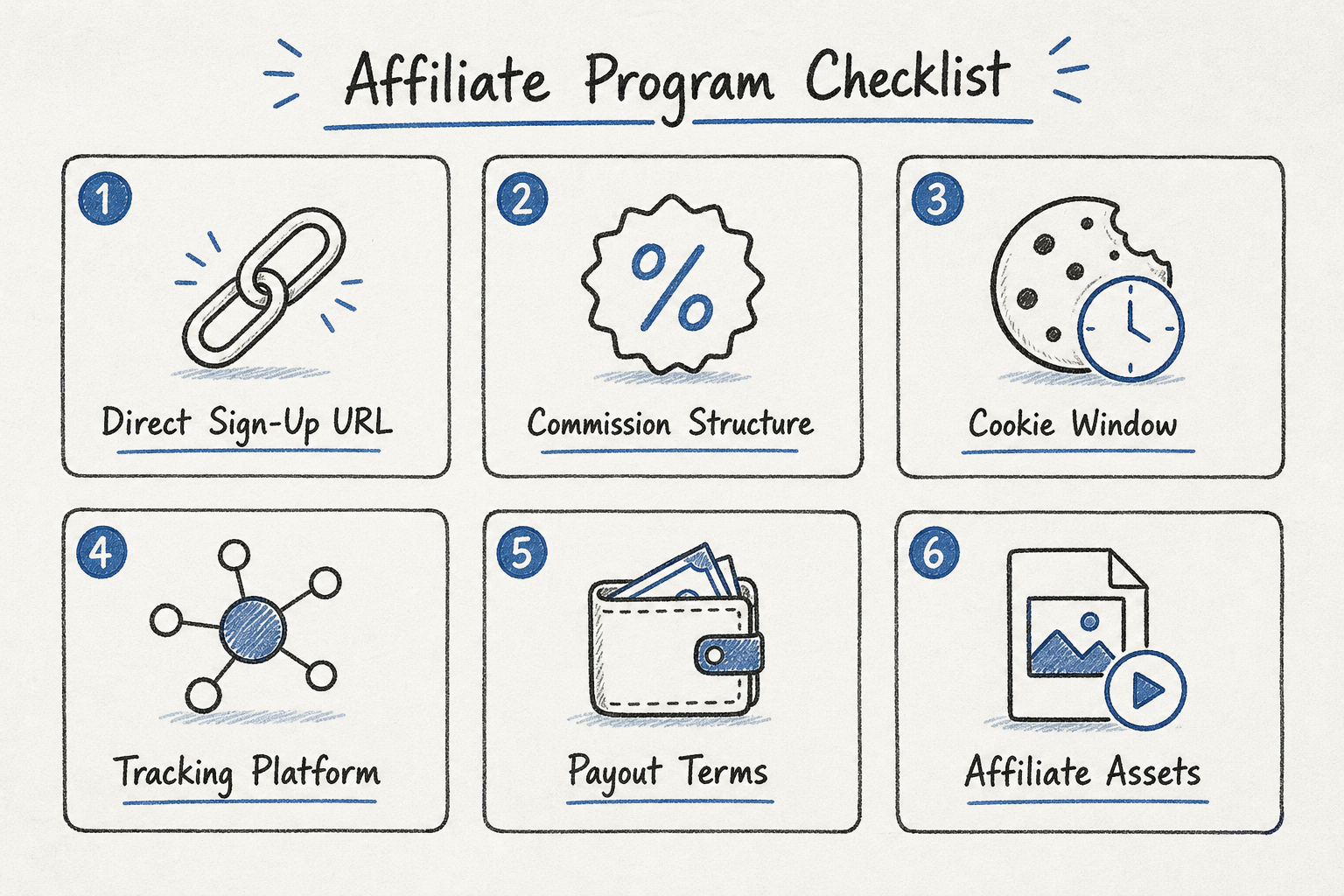
Directory managers and top affiliates generally look for six core elements. Gathering these details beforehand will streamline your submission process and drastically improve your approval rate [1].
1. Program and Brand URL
You need a direct link to your main website and a distinct URL for your affiliate sign-up page. Do not send directories to a generic contact form or your homepage. Your affiliate landing page should act as a sales page where the "customer" is the affiliate. It must clearly state what your product does, who it is for, and why promoting it is a profitable endeavor.
2. Commission Structure
Be incredibly specific about your commission model. Affiliates want to know immediately if you pay a percentage-based revenue share, a flat fee per acquisition (CPA), or recurring lifetime commissions. If you offer a tiered structure (e.g., 20% for the first 10 sales, 30% thereafter), document this clearly. Platforms that obscure their commission rates behind forced sign-ups are routinely skipped by professional marketers.
3. Cookie Window
Your cookie window dictates how long a tracking cookie lasts after a user clicks an affiliate link. Whether it is 30 days, 60 days, or 90 days, this metric is a major deciding factor for affiliates [1]. A B2B software product with a long sales cycle requires a 90-day or even 120-day cookie window, whereas a low-ticket B2C product might only need a 30-day window.
4. Affiliate Software or Network
Top directories and the affiliates who use them want to know the platform hosting your program. Mentioning industry-standard networks like Impact, PartnerStack, ShareASale, Rewardful, or Tapfiliate adds immediate legitimacy [1]. Professional marketers already have accounts with these major networks, making it frictionless for them to join your program. If you are using a proprietary, in-house tracking system, be prepared to face higher scrutiny, as affiliates are naturally skeptical of custom tracking scripts that might shave their commissions.
5. Payout Details
Clearly state your minimum payout thresholds (e.g., $50 minimum) and your payment methods (PayPal, Stripe, Wire Transfer). If you pay Net-30 or Net-60, declare it upfront. Ambiguity regarding money is the fastest way to lose the interest of a super-affiliate.
6. The Pitch and Creative Assets
You need a concise summary of your product's value proposition. This is not a customer-facing pitch; it is an affiliate-facing pitch. Explain your average order value (AOV), typical conversion rate, and customer lifetime value (LTV). Additionally, have a high-resolution logo and a standard hero image ready, as directories require visual assets to build your profile card [1][2].
How to Optimize Your Affiliate Landing Page
When you submit to a directory, the platform will link back to your affiliate landing page. If this page is poorly designed, even a premium directory placement will yield zero active partners. You must optimize this page for conversion.
First, treat your affiliate landing page like your primary product pricing page. The headline should immediately state the financial upside. Instead of "Join our affiliate program," use "Earn 30% recurring commissions promoting our HR software."
Below the fold, explicitly detail the terms. Remove the guesswork. Use a clean, standard markdown table or a bulleted list to show the commission rate, cookie duration, and payout schedule.
Second, provide proof of concept. If you have existing affiliates making money, include a brief testimonial or a disguised case study (e.g., "How one niche blogger earns $2,000/month with our program"). Affiliates want to know the offer actually converts traffic into buyers. If your conversion rate is above industry average, state that boldly.
Finally, outline the support you provide. High-quality marketers look for programs that offer dedicated affiliate managers, swipe copy for emails, banner ads, and early access to product updates. If you offer a comprehensive resource center, highlight it.
Selecting the Right Directories for Your Niche
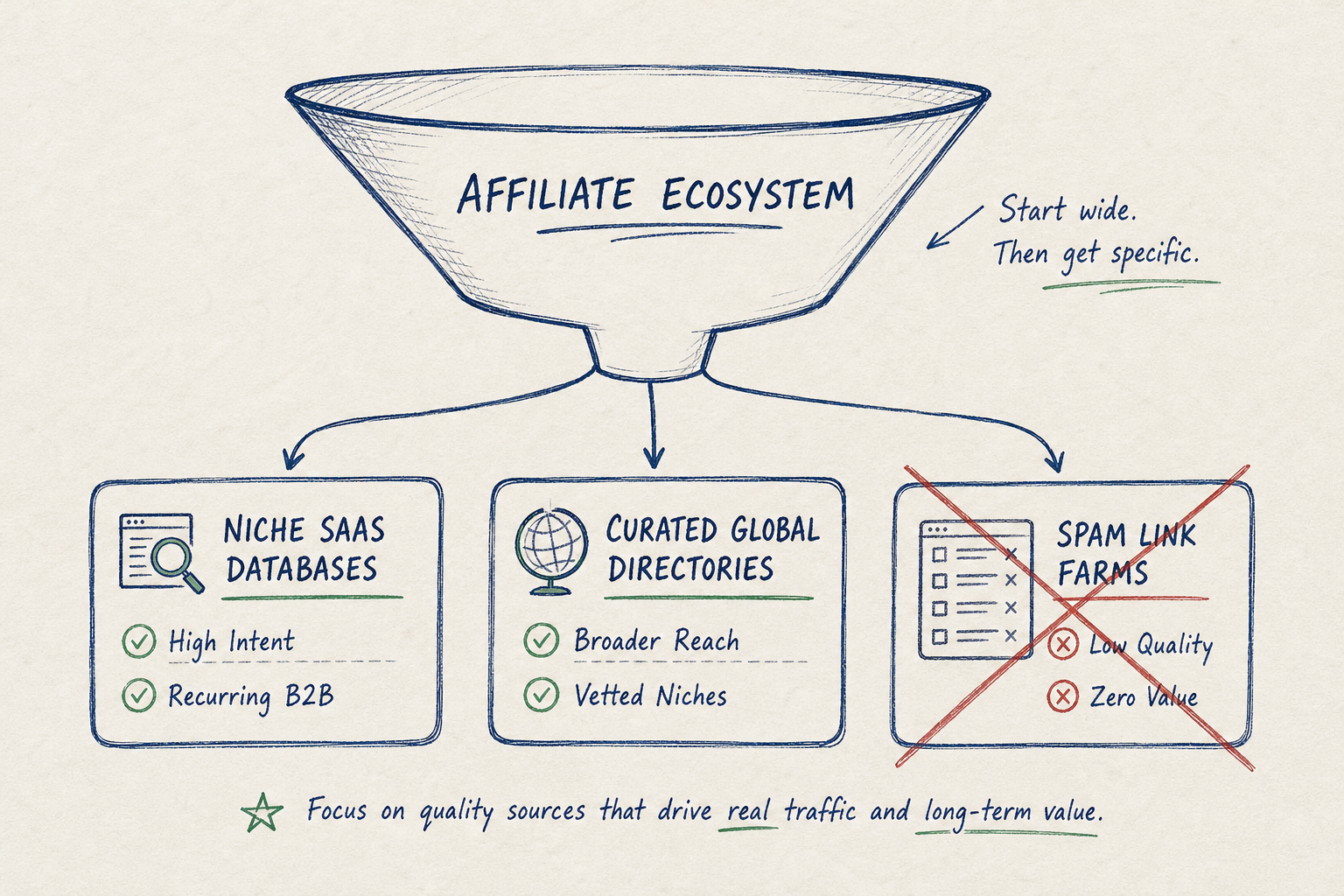
A common mistake merchants make is utilizing bulk-submission tools to blast their program to hundreds of obscure directories. This approach dilutes your brand, generates spam applications, and rarely reaches the professional marketers who can actually drive revenue. Select directories that match your specific niche or software type rather than dropping links randomly [3][1].
Software and SaaS Directories
If you are running a SaaS company or selling digital tools, you need platforms tailored to tech-focused creators. Directories like AffiliList are designed specifically for this ecosystem. AffiliList operates as a comprehensive database focusing strongly on SaaS and digital tools, boasting over 10,000 curated programs.
What makes specific SaaS hubs valuable is the audience intent. The bloggers and content creators browsing AffiliList are actively looking for software to recommend to their B2B audiences, meaning they understand recurring commissions and long sales cycles. Furthermore, submitting to a platform with a dedicated submission portal ensures your data is categorized accurately by niche, whether that is crypto, finance, or YouTube marketing tools. If you are struggling to map out your software submission strategy, consulting a Where Can SAAS Founders Submit Their Affiliate Program Evaluation Checklist can clarify the specific metrics tech directories demand.
Vetted General Databases
While niche directories are highly effective, broad but heavily vetted databases also offer significant value. Platforms like Affiliate Program Database (APDB) categorize global niches and provide sitewide search functionality [2]. Submitting to these platforms exposes your offer to marketers outside your immediate industry bubble. For example, a finance blogger might use a general database and stumble upon your specialized accounting software, leading to a lucrative cross-promotional partnership.
When comparing different hubs, look for transparency. A directory that forces affiliates to create an account just to see your commission rate will artificially bottleneck your visibility. This is a primary reason marketers often prefer open-access platforms. You can explore a detailed breakdown of these platform differences in the AffiliList vs APDBio: Which Affiliate Directory is Right for You analysis.
Avoid The Link Farms
How do you spot a bad directory? Look for platforms that have not been updated in months, feature broken images, or prominently display low-quality CPA offers (like survey scams or dubious weight-loss pills). Submitting your brand alongside these offers damages your credibility. If a directory charges a massive upfront fee just to "fast-track" an unverified listing with no guaranteed visibility, walk away.
The Step-by-Step Directory Submission Process
Once your assets are ready and your target list is built, it is time to execute the submission. Treat this as a structured marketing campaign, not a weekend chore.
Step 1: Create a Master Tracking Sheet
Do not rely on memory to track where you have submitted your program. Create a simple spreadsheet with the following columns:
- Directory Name
- Submission URL
- Date Submitted
- Status (Pending, Approved, Rejected, Live)
- Live Listing URL
- Login Credentials (if the directory requires an account to manage the listing)
This sheet will be invaluable when you need to update your commission rates or tracking software a year from now. Tracking where you are listed ensures you maintain control over your brand's public data.
Step 2: Adapt Your Pitch to the Platform
While you have your core program details ready, slightly tweak your pitch based on the directory. If you are submitting to a strictly B2B software directory, emphasize your high customer lifetime value (LTV) and low churn rate, as B2B affiliates care deeply about recurring revenue stability. If you are submitting to a platform heavily populated by social media influencers, emphasize your streamlined onboarding, instant payout options, and highly visual product nature.
Step 3: Navigate the Submission Portal
Most modern directories have a clear "Submit a Program" or "For Merchants" button in their footer or main navigation. When filling out the form, pay meticulous attention to the categorization tags. If the directory allows you to select up to three categories, choose the most specific ones available. Do not just select "Business." Select "HR Software," "Payroll," and "B2B Management." Proper tagging is how advanced filtering systems connect your program with the right marketers.
Step 4: Handle the Manual Review Process
High-quality directories enforce a manual review process to keep their databases clean. A human editor will likely click your link, read your terms, and verify your network integration. If your program is rejected or put on hold, the editor will usually email you asking for clarification. Respond promptly. Often, rejections happen simply because a cookie window wasn't stated on the landing page or the commission tiers were too confusing to distill into a directory profile.
Step 5: Verify the Live Listing
Once approved, the directory will send you a link to your live listing. Do not just file the email away. Click the link and audit your profile. Check the tracking link to ensure it actually routes to your sign-up page. Verify that the commission numbers are accurate and that your logo renders correctly. If the directory allows user reviews or ratings on the listing, monitor it closely over the first few weeks.
Analyzing the ROI of Directory Submissions
How do you know if your directory submissions are actually working? Unlike paid ads where you get a neat dashboard of clicks and conversions, directory traffic can sometimes be difficult to attribute, especially if marketers find your program on a directory but bypass the link to Google your brand directly.
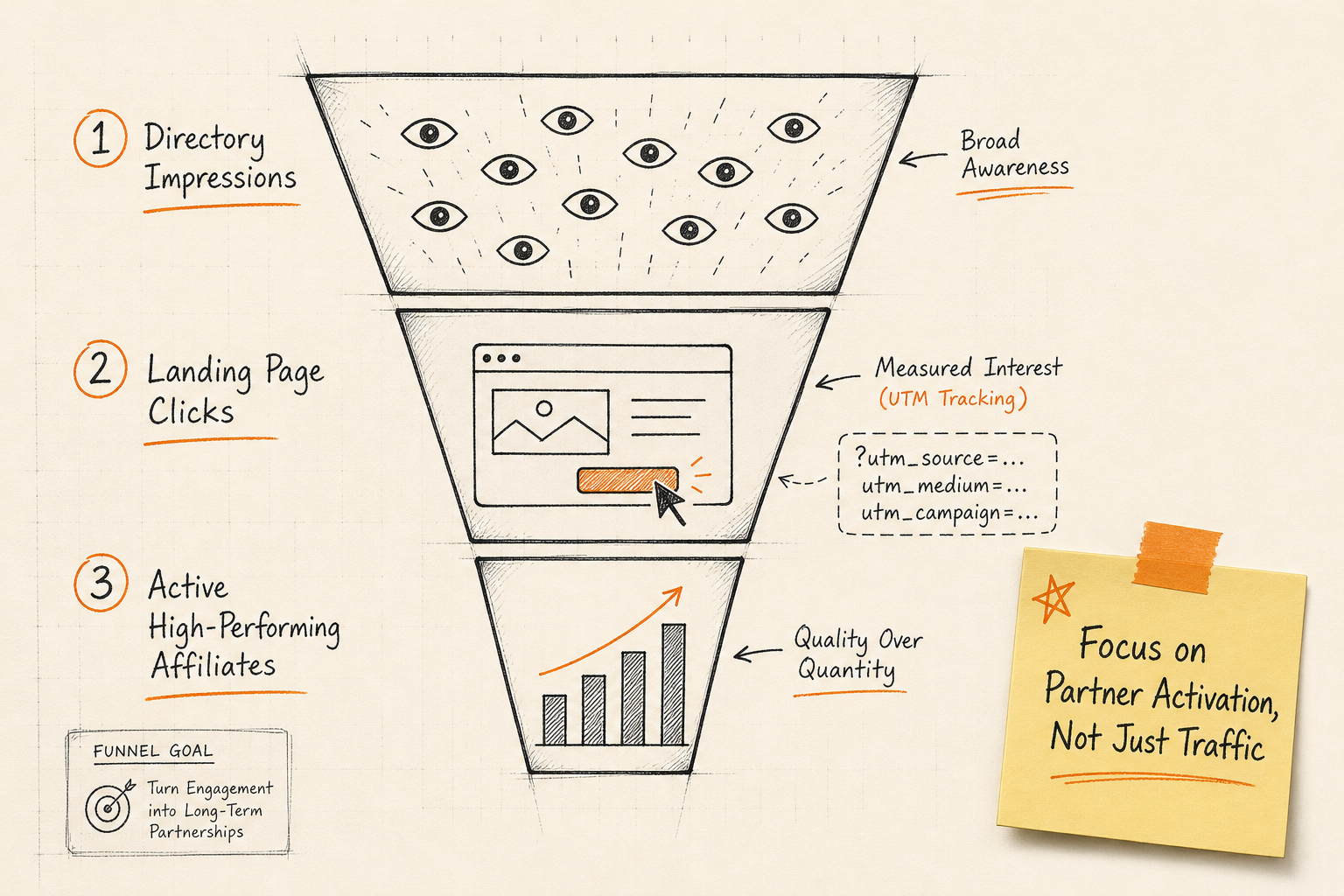
To combat this, utilize UTM parameters if the directory allows custom URLs. By tagging your submission link (e.g., ?utm_source=affililist&utm_medium=directory&utm_campaign=program_launch), you can track exactly how much traffic the platform sends to your landing page.
However, traffic is a vanity metric in affiliate recruitment. The real metric is activation. You might get 50 clicks from a general database that result in 10 sign-ups, but zero active affiliates. Conversely, you might get 5 clicks from a highly targeted vetted affiliate program list that results in 2 active partners who drive significant monthly revenue.
Evaluate the quality of the affiliates coming through the directory. Are they filling out your application thoughtfully? Do they have relevant, high-traffic websites? If a specific directory is sending you high-volume, low-quality leads, it might be worth pulling your listing to save your affiliate manager the time spent filtering through spam.
Common Pitfalls That Get Your Submission Rejected
Directory managers review hundreds of applications a month. They are adept at spotting red flags. If you want a seamless approval process, avoid these common mistakes.
The "Bait and Switch" Commission: Some merchants submit a claim of "Up to 50% commissions!" to a directory, but the fine print on their landing page reveals that the 50% only applies to an obscure, low-converting upsell, while the core product pays 5%. Directory editors hate this because it frustrates their user base. Be transparent. If your core commission is 15%, state 15%.
Vague Product Descriptions: "We help businesses grow online." That tells the affiliate and the directory manager absolutely nothing. A professional marketer needs to know exactly what the tool does to determine if it fits their content strategy. "We provide AI-driven email marketing automation for Shopify store owners" is a pitch that gets approved because it is highly specific.
No Clear Contact Method for Affiliates: If an affiliate has a question before joining, who do they email? Submissions often get delayed because the merchant fails to provide an affiliate manager's contact email on the landing page. Directories want to list programs that are actively managed and supported.
Multi-Level Marketing (MLM) Vibes: Affiliate marketing is a distinct, performance-based marketing channel. It is not network marketing or MLM. If your landing page uses heavy MLM terminology (e.g., "build your downline," "recruit friends and family for tier-3 bonuses"), premium directories will instantly reject the submission to protect their reputation.
Beyond Directories: Where Else to Find Affiliates
While directories are the foundational hub for professional marketers, they should not be your only recruitment channel. Once your program is successfully listed in the major databases, you should actively hunt for partners in other ecosystems [4].
Your Existing Customer Base: Your best affiliates are often people who already pay for and use your product. They understand the value proposition intimately and likely interact with other people in your target demographic. Set up an automated email sequence that invites highly active users or users who submit a high Net Promoter Score (NPS) to join the program.
Competitor Backlink Analysis: Identify your direct competitors who have successful affiliate programs. Use an SEO tool to analyze the backlinks pointing to their affiliate landing page or their product pages. The websites linking to them with parameter-heavy URLs are their active affiliates. You can compile a list of these sites and reach out to the site owners, offering a slightly better commission rate or a longer cookie window to test your product alongside the competitor's. If you need a broader strategy on locating fresh partners, review Where to Find New Affiliate Programs for advanced sourcing methods.
Community Engagement: Show up where affiliate marketers actually talk. Engage in dedicated Reddit communities, niche Slack groups, and specific Facebook groups tailored to content creators [5]. However, do not just spam your link. Provide value by answering questions about tracking software, sharing conversion rate optimization tips, and offering insights from the merchant side of the business. When you build authority in these spaces, marketers will naturally ask about your program. To navigate these alternative channels safely without seeming spammy, checking out a Databases Similar to Apdb for Affiliate Marketing Evaluation Checklist can guide your community choices.
The Long-Term Play: Updating and Maintaining Your Listings
Submitting your program to a directory is not a "set it and forget it" task. The digital economy evolves rapidly. You might migrate from Rewardful to PartnerStack, change your cookie window from 30 to 60 days, or rebrand your entire product suite.
When your program details change, you must update your directory listings. An affiliate who finds your listing on a directory, expects 30% recurring, and then clicks through to find you downgraded the program to a 10% flat fee will immediately bounce and likely warn other affiliates.
Set a calendar reminder every six months to audit your master tracking sheet. Visit every directory where you are listed. Ensure the tracking link still resolves perfectly, the commission data matches your current terms, and the branding reflects your latest visual identity. Proactive maintenance signals to the market that your program is healthy, actively managed, and ready for serious partnerships.
Frequently Asked Questions
How long does it take for an affiliate directory to approve my program? Approval times vary wildly depending on the platform's editorial resources. Highly curated, premium directories may take anywhere from 3 to 10 business days to review your submission, verify your tracking setup, and format your listing. General, automated directories might publish your link instantly, though these typically offer less value in terms of high-intent traffic.
Do I have to pay to submit my affiliate program to a directory? The best directories generally operate on a freemium model. Submitting your program to the core database is usually free, as these platforms need comprehensive, high-quality data to serve their user base. However, many directories offer paid "featured" or "sponsored" placements. Paying to boost your listing can be highly effective for a new SaaS product trying to gain immediate visibility among top-tier affiliates, provided the directory's audience aligns with your niche.
Are affiliate directories good for my website's SEO?
Yes, but with a caveat. While a backlink from a high-authority directory like AffiliList or APDB can pass some positive link equity, the primary goal of directory submission is partner recruitment, not purely SEO. Many directories use rel="nofollow" or redirect scripts on outbound affiliate links to comply with search engine guidelines regarding paid or partnership links. View the SEO benefit as a secondary bonus; the primary ROI is the revenue generated by the affiliates who discover you.
Building an attractive affiliate program requires transparency and fair terms. Distributing that program requires the exact same approach. By treating directory submissions as strategic pitches rather than bulk SEO tasks, you bypass the noise, elevate your brand, and connect with the professional marketers capable of scaling your product's growth. Take the time to gather your assets, polish your landing page, and submit your program to the curated hubs that matter.